Alaska Inside Passage or Gulf of Alaska: Round Trip vs One Way
Two seven night Alaska cruises leave Vancouver the same afternoon, and one of them comes back while the other drops you in Whittier with a flight to buy and a transfer to Anchorage. That second one is a different vacation.
My quick take
If Alaska is the only thing you are doing, book the round trip. It is cheaper, the flights are simpler, the water is calmer, and the southeast ports are the best part of the state for a first visit.
The one way earns its keep only when you attach the land half, which means Denali, the interior, and several more days off the ship. Book it for that reason and it is excellent, and book it for the ports alone and you have paid extra for a longer flight home.
The quick facts
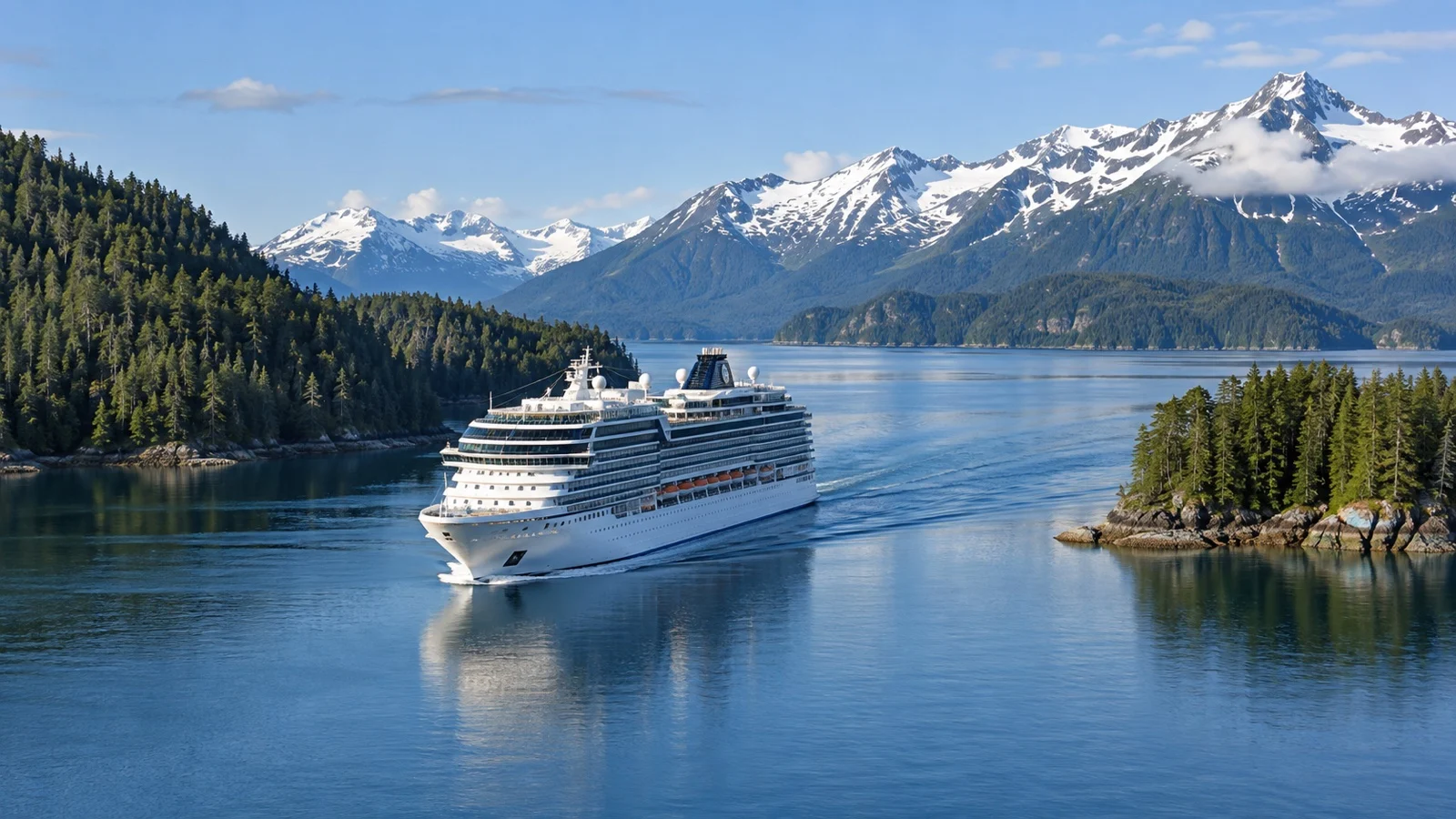
- Round trip: Sails from Seattle or Vancouver and returns there, hitting three or four southeast towns plus a glacier day.
- One way: Runs between Vancouver and Whittier or Seward, the two ports that feed Anchorage and the interior.
- Flights: The one way needs an open jaw booking, and the Anchorage end is usually the pricier half.
- Water: The round trip stays inside sheltered channels, and the one way crosses open Gulf of Alaska water.
- Season: Roughly May through September for both, with the one way tied to the land tour calendar.
What each one actually is
The round trip is a loop up the Inside Passage and back down it. You get three or four southeast Alaska towns, one big glacier day, and you sleep in the same cabin from the same airport you flew into.
The one way is often called the Gulf of Alaska or cross gulf sailing. It does the same southeast towns in one direction, then leaves the sheltered water, crosses the Gulf, and finishes in Prince William Sound or on the Kenai Peninsula.
Both are usually seven nights, which surprises people who assume the one way is longer. The extra length comes from the land tour bolted onto the end, not from the cruise itself, and our planner guide to every Alaska cruise port lays out which stops belong to which route.
Why the one way always touches Vancouver
This is not a preference, it is the law. Under the federal coastwise passenger rule, a foreign flagged ship may not carry you between two US ports, and nearly every big cruise ship is foreign flagged.
Seattle to Whittier would be two US ports, so it does not happen on these ships. Vancouver to Whittier is Canada to the US, which is fine, and that single rule is why the one way lives at Canada Place.
The same rule is why a Seattle round trip always stops in Victoria, often late in the evening for a few hours. If that seems like a wasted call, our explainer on why your Alaska cruise stops in Victoria covers what is actually going on.
The ports you get, and the ones you do not
Both routes share the southeast core: Juneau, Skagway and Ketchikan, with Sitka, Haines or Icy Strait Point turning up depending on the ship. Nobody is missing out on the famous towns by choosing one over the other.
The one way adds the far end. Whittier or Seward is not really a port day, it is a turnaround day, so treat it as the start of the land half rather than as another town to explore.
What the round trip usually gives you instead is one more southeast stop and a longer scenic day. That is a fair trade if you were never going to Denali anyway.
Glacier Bay and Hubbard are not the same day
The park at Glacier Bay covers 3.3 million acres (1.3 million hectares) of ice, rainforest and fjord, and access is rationed. Only a small number of cruise ships are permitted into the bay each day, and those slots are held by the lines through park contracts rather than sold to you.
That is why Glacier Bay is advertised so hard. Rangers come aboard for the day and narrate, and our guide to a Glacier Bay scenic cruising day explains why the ship never docks and what you actually see.
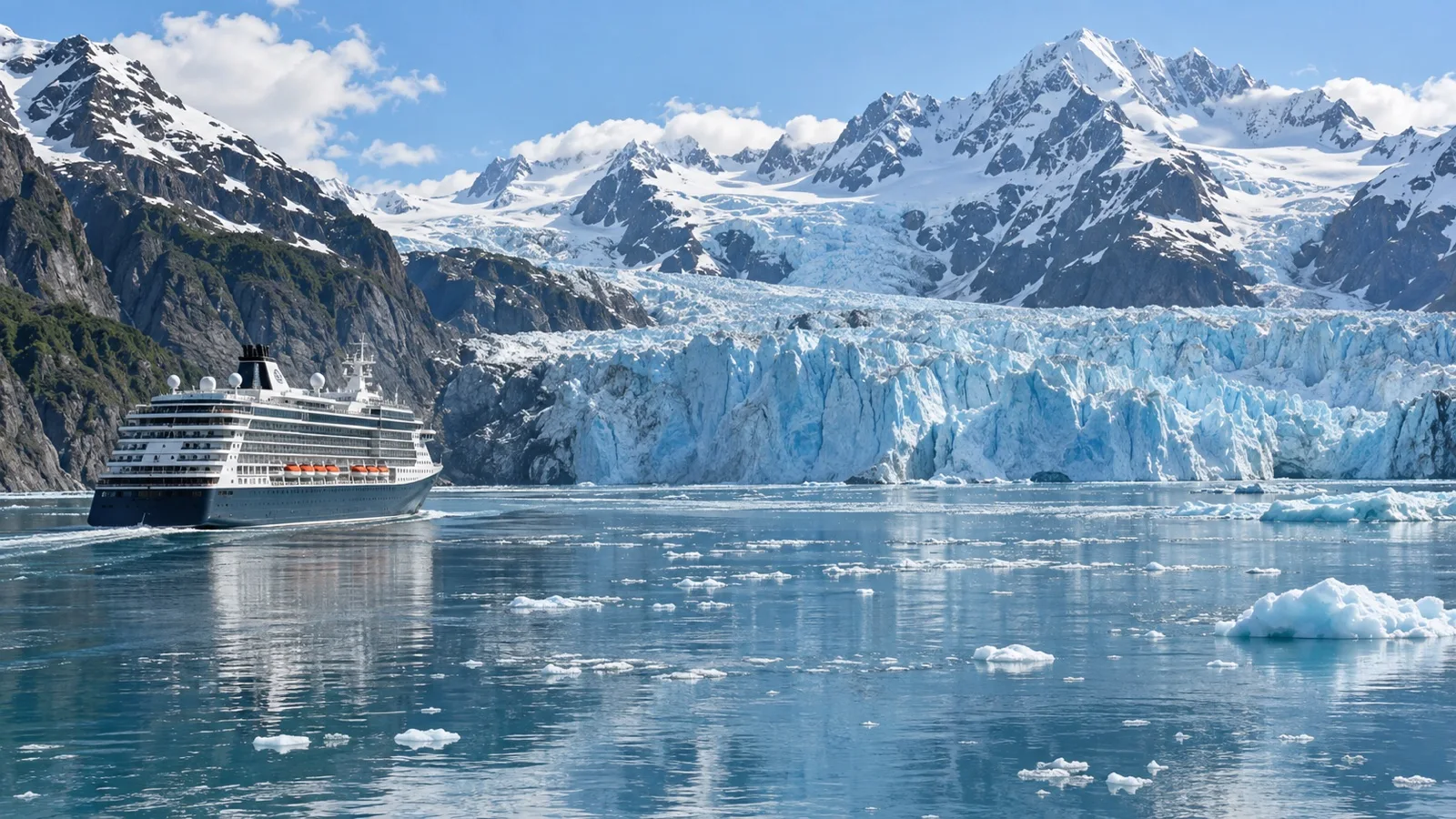
Hubbard is the other headline, sitting in Disenchantment Bay off the Gulf, and it is enormous at roughly 76 miles (122 km) long with a face about 600 feet (180 m) tall, much of that below the waterline. It shows up on Gulf crossings most often, though our guide to Hubbard Glacier notes it appears on some Inside Passage sailings too.
Neither one is guaranteed. Disenchantment Bay can pack with floating ice overnight, and the captain will stop where it is safe rather than where the brochure photo was taken.
The Gulf crossing is the rough part
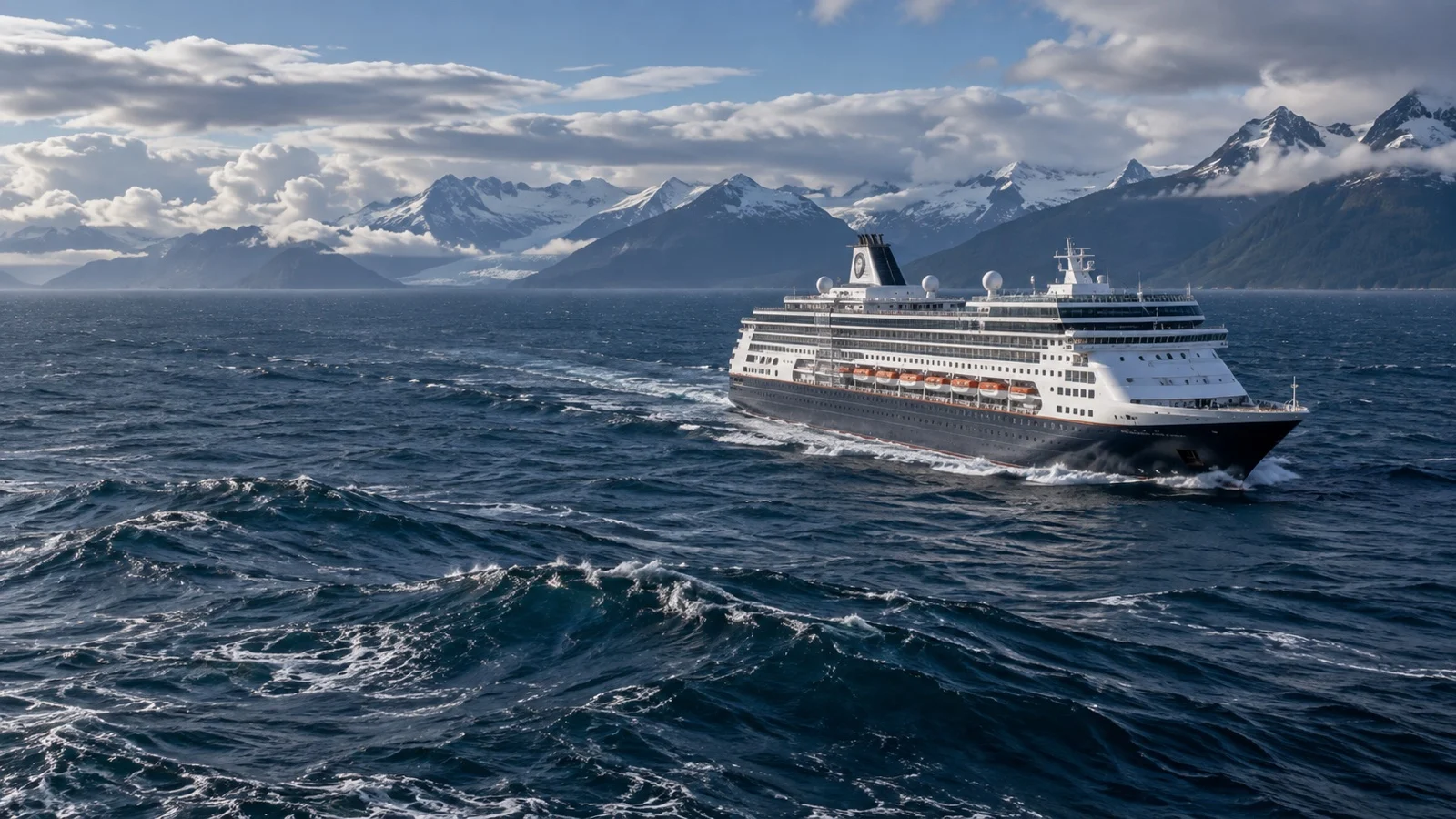
The Inside Passage is a maze of islands, and the ship spends most of the week behind them. That is why an Alaska round trip is often the calmest big cruise people have taken.
The Gulf of Alaska is the open North Pacific with nothing in the way. On a one way you get a stretch of exposed water, usually around a day, and it can be lively in a way the sheltered legs never are.
It is not a crossing to be scared of, and plenty of people sleep straight through it. If anyone in your group is prone to seasickness though, this is the single clearest reason to take the loop instead.
The flight math, which is where the one way gets expensive
A round trip needs one simple return ticket to Seattle or Vancouver, two of the easiest airports to reach cheaply from most of the country. A one way needs an open jaw booking, into one city and home from Anchorage.
Anchorage is the expensive half almost every time. It sits far from everywhere, the summer flight bank is limited, and the good departures leave late in the evening, so plan on a long travel day at the end.
Add the transfer on top. Getting from the pier to the airport is a coach or a train ride of a couple of hours, and it is a fixed cost the round trip simply does not have.
Whittier or Seward, and why it matters which you get
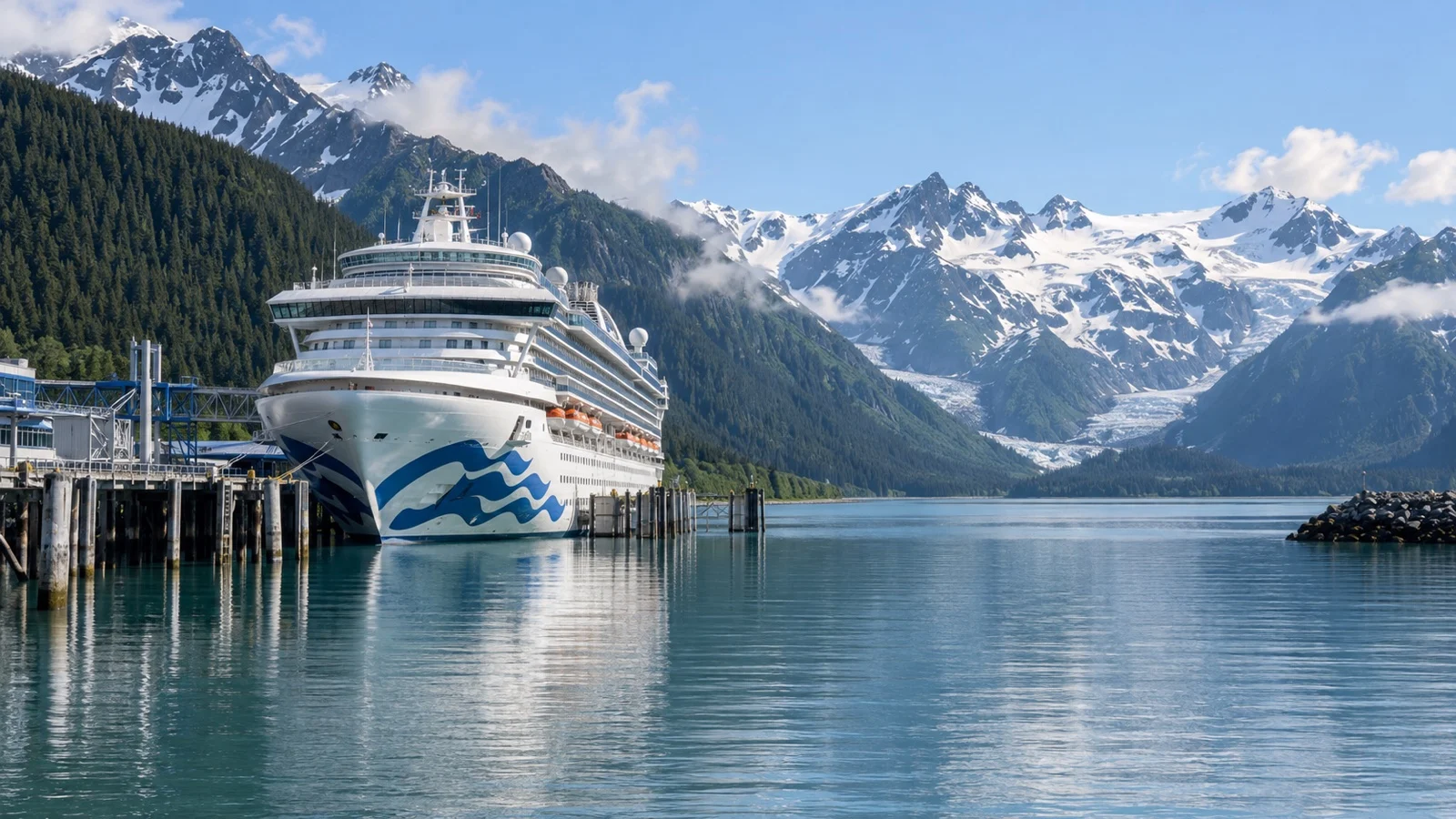
Whittier sits about 60 miles (95 km) from Anchorage, roughly 90 minutes by road, and the road goes through a mountain. The tunnel into town is the longest combined vehicle and railroad tunnel in North America, it runs one direction at a time, and it shares the bore with actual trains on a posted schedule.
Whittier is the only one of these I have stood in, and it is a strange, likable place. Much of the town lives in a single tower block, the mountains come straight down to the water, and there is not much to do beyond look at it, which is fine because you are leaving.
Seward is farther out, about 130 road miles (210 km) from Anchorage, but the drive is prettier and the seasonal train is a genuine highlight rather than a shuttle. It is also the gateway to the fjords, so a day either side buys you real scenery.
Either way, do not book a tight morning flight out of Anchorage. Our Whittier port guide makes the case better than I can: disembarkation, luggage, tunnel windows and traffic all sit between your cabin and the gate.
The land tour is the real reason to go one way
Everything about the one way makes sense once you add the land half. That is the cruisetour, typically several extra nights running north to the interior by coach or rail.
The six million acre park in the interior, about 2.4 million hectares, is the anchor, with one road running into it and most of that road open only to buses in summer. You cannot reach any of that from a southeast port, and no amount of glacier viewing from the ship replaces it.
So the honest framing is not round trip against one way. It is a seven night cruise against a ten to fourteen night trip that happens to start with a cruise.
What the round trip quietly does better
You unpack once and you fly twice, into one city and home from it. If you live within driving distance of Seattle you can skip flying altogether, which is not a small thing on an Alaska budget.
- Fares: Loop sailings are usually the cheaper of the two per night.
- Air: One return ticket, and often a much cheaper airport at both ends.
- Water: Sheltered channels for nearly the whole week.
- Flexibility: A missed flight home is an inconvenience, not a scramble in a small Alaska town.
None of that is glamorous. It is the reason the loop is the volume seller and the one I recommend to most first timers.
Seattle or Vancouver if you take the loop
Seattle is easier and cheaper to fly into for most Americans, and it comes with the Victoria stop attached. Vancouver puts you closer to the good scenery on night one and starts the sheltered run sooner.
Vancouver also means a border crossing, so build in the time and carry the documents. That is the whole difference, and it is smaller than people expect.
The part people get wrong
The common mistake is believing the one way shows you more Alaska by sea. It mostly shows you the same towns plus a crossing, and the extra Alaska is on land after the ship.
The second mistake is treating disembarkation day as a travel day like any other. Between the pier, the tunnel or the highway, and one busy airport, an early flight is how a great trip ends badly.
Who each one suits
Take the round trip if this is your first Alaska cruise, if you are watching the budget, if you get seasick, or if you can drive to the pier. It is the lower risk version and it gives up very little.
Take the one way if you want the interior, if you have ten days or more, or if you have already done the southeast loop and want new ground. It suits people who are treating Alaska as the trip rather than as the cruise.
What I would book
For a first Alaska cruise I would book the round trip out of Seattle or Vancouver, in late May or in early September if the fare matters, and I would pay for the sailing that includes Glacier Bay. That is the version with the fewest ways to go wrong and the least money spent on airfare.
If you know you want Denali, book the one way northbound from Vancouver to Whittier or Seward with the land tour attached, and give yourself a night in Anchorage before flying home. Do not buy the one way without the land half, because that is the version that costs more and delivers less.
Quick answers
Is a one way Alaska cruise better than a round trip?
Only if you add the land tour, since the ports themselves are close to identical. Without Denali or the interior you are paying more for a rougher crossing and a longer flight home.
Why can you not sail one way from Seattle to Alaska?
Foreign flagged ships are barred from carrying passengers between two US ports, and Seattle to Whittier is exactly that. Starting or ending in Vancouver solves it, which is why the one ways run from there.
Is the Gulf of Alaska rough on a cruise ship?
It can be, because it is open ocean rather than the sheltered channels the rest of the route uses. Most crossings are unremarkable, but it is the one stretch where a big ship really moves.
Do round trip Alaska cruises visit Glacier Bay?
Some do and many do not, because daily ship access to the bay is limited and allocated to specific lines and sailings. Check the itinerary rather than the region, since it is a named day when it is included.
Whittier or Seward, which is the better end port?
Whittier is closer to Anchorage and quicker to clear, while Seward is farther but far more scenic and better if you want a day either side. You rarely get to choose, since the ship decides.
Final word
The choice is not really about ports, because both routes give you the same southeast towns and a glacier day. It is about whether you are buying a cruise or buying a trip to Alaska that starts with one.
Buying a cruise, take the round trip, and take it from whichever of Seattle or Vancouver is cheaper to reach. Buying a trip to Alaska, take the one way to Whittier or Seward with the land tour attached, and budget for the flight home before you fall in love with the fare.
How this guide was researched: Route structures, the coastwise passenger rule, glacier access, transfer distances and park details were checked in October 2026 against federal law, official park and transport pages and our own Alaska port guides. Itineraries, tunnel schedules, land tour packages and air fares change every season, so confirm the details for your own sailing before you book. See our Editorial Policy.
More on this topic: browse every guide on choosing a cruise.