Tunisia Cruise Ports: Tunis, Carthage and La Goulette
Tunisia is the one North African stop that keeps disappearing off Mediterranean itineraries and then coming back. When it is on yours, you get Carthage, a blue and white clifftop village, and a capital that most cruise passengers never actually enter.
My quick take
Tunisia is a genuinely interesting port day and it asks more of you than an Italian stop does. The money is awkward, the language is Arabic and French, and the sights are spread across a suburb rather than packed into a walkable old town.
This is one of the few Mediterranean ports where I lean toward booking something rather than winging it, and I say that as someone who almost always goes independent. Not because it is dangerous, but because the day has three separate stops in it and the logistics are the part that eats your time.
The quick facts
- The port: La Goulette, the cruise and ferry harbor at the mouth of the Lake of Tunis, where ships berth alongside.
- Distance to Tunis: Roughly 6 to 7 miles (10 to 12 km), about 15 to 25 minutes by taxi depending on traffic.
- The headline sight: Carthage, which is a scatter of separate archaeological sites rather than one ruin.
- Money: The Tunisian dinar, which you generally cannot buy before you arrive or spend after you leave.
- Excursion needed: Not strictly, but this is the Mediterranean port where I most often take one anyway.
Tunisia has one cruise port, and it is La Goulette
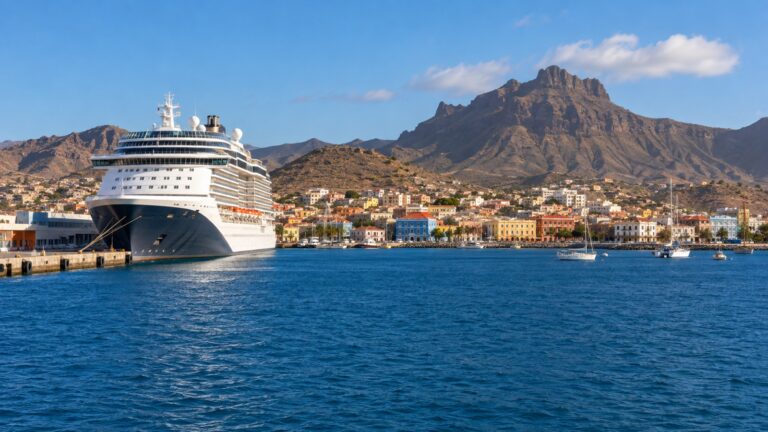
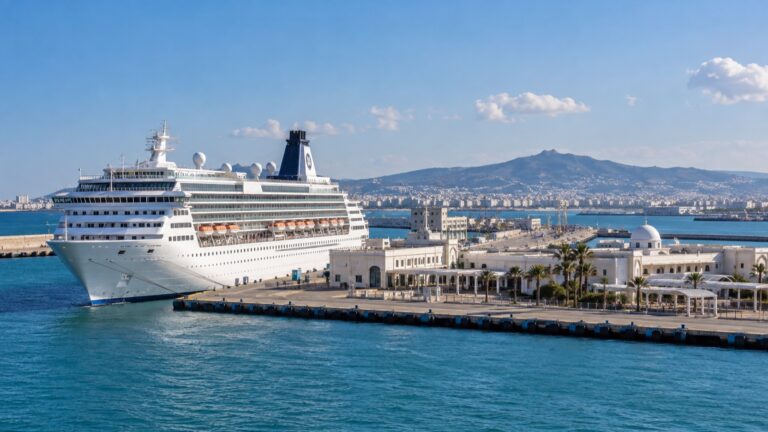
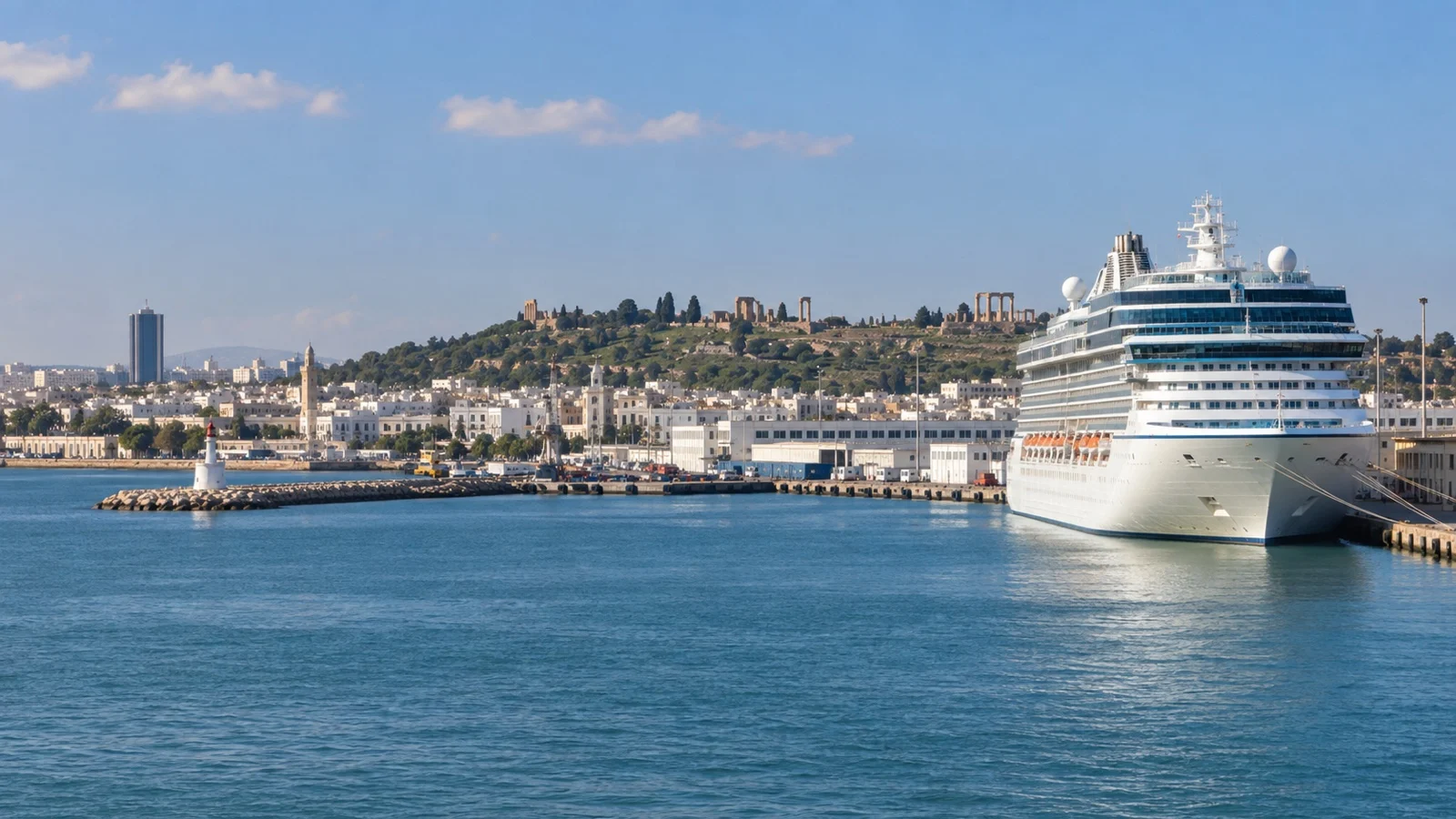
Almost every cruise call in Tunisia lands at La Goulette, the port at the seaward end of the channel out of the Lake of Tunis. It handles ferries to Italy and France as well as cruise ships, so the harbor is busy and unmistakably a working one.
Ships berth alongside rather than anchoring, so you walk off down a gangway and into a terminal area with taxis, tour operators and a security perimeter. Our full Tunis cruise port guide covers the berth layout and the walk out in more detail than a roundup can.
Bizerte on the north coast and Sousse down the eastern shore both have ports, and neither is a regular mainstream cruise stop. If one shows up on your itinerary it will almost certainly be a small ship, and you should treat it as a rare call.
Why Tunisia keeps vanishing from itineraries
This is the part most port guides skip. Tunisia was an ordinary Mediterranean call for decades, and then two attacks in 2015, one at a museum in the capital and one at a beach resort, emptied the country’s cruise calendar almost overnight.
Lines pulled the port entirely, and it stayed off most schedules for several years. Calls came back gradually toward the end of that decade, stopped again with everything else during the pandemic, and have since returned to mainstream western Mediterranean itineraries.
What that history means for you is practical. Lines add and drop this port on shorter notice than they do Barcelona or Naples, so if the itinerary you bought is the one you want, check it again a few months out.
Separately, a percent or two of scheduled calls get missed on the day, mostly to winter weather in the gulf. That is a normal rate, and our list of the ports most likely to be missed or canceled puts it in context.
Carthage is the reason you came
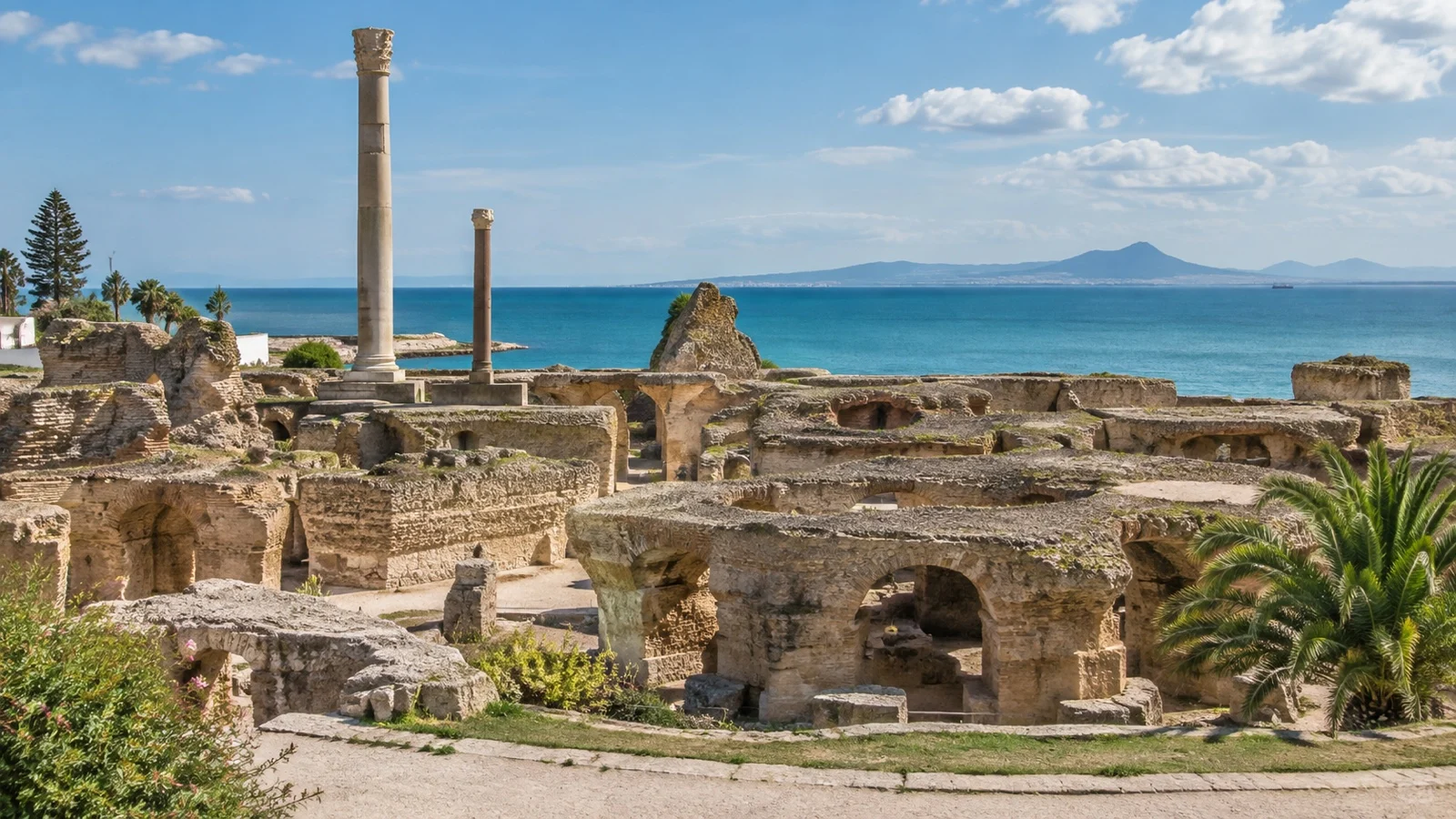
Carthage sits on a hillside suburb between La Goulette and La Marsa, and it is not one site. It is a scatter of separate enclosures spread over a couple of miles, and the World Heritage listing covers the whole spread: the Byrsa hill, the Punic ports, the tophet, the theater, the amphitheater and the Antonine Baths.
You cannot walk between all of them comfortably in a port day, which is exactly why a car or a tour matters here. Most visitors do two or three, and the Antonine Baths plus Byrsa hill is the pair that gives you the sea, the scale and the view in one loop.
Set your expectations honestly. Rome flattened the Punic city in 146 BC and rebuilt on top of it, so you get foundations, columns and a magnificent setting rather than a standing ancient city.
Sidi Bou Said, and why it always ends up in the afternoon
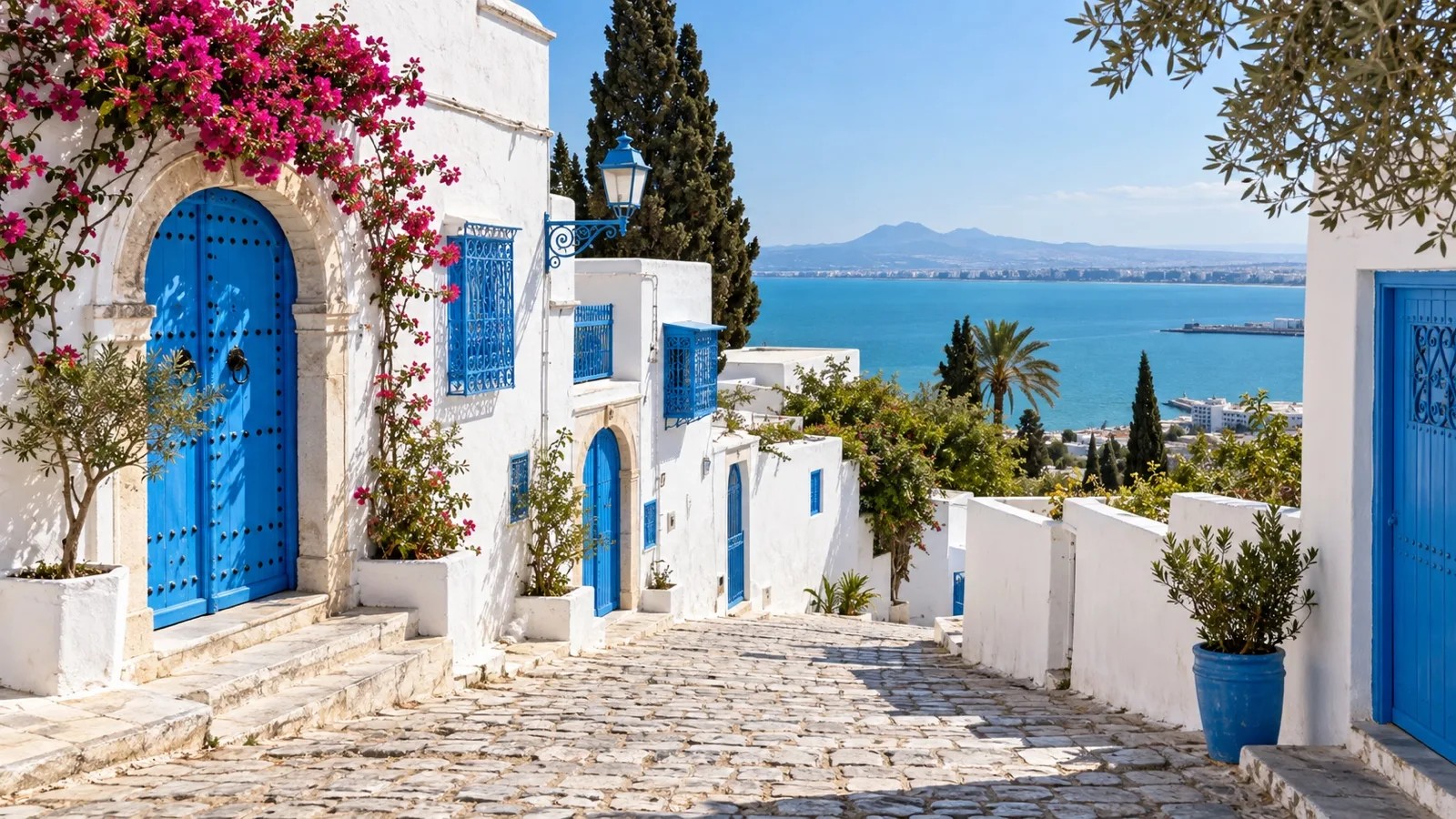
Sidi Bou Said is the whitewashed village on the cliff just past Carthage, with blue doors, bougainvillea and a view down the gulf. It is also the most photographed place in Tunisia, which means it fills up when the ship tours arrive.
The village is small and steep, and one lane of shops climbs to a viewpoint at the top. Ninety minutes covers it, and the mint tea with pine nuts on a terrace is worth the stop even if you are not shopping.
A light rail line runs from La Goulette through Carthage and Sidi Bou Said up to La Marsa, and in the other direction into central Tunis. It is cheap, it is genuinely useful for this exact corridor, and it is the independent option worth knowing about.
The medina of Tunis is the stop people underrate
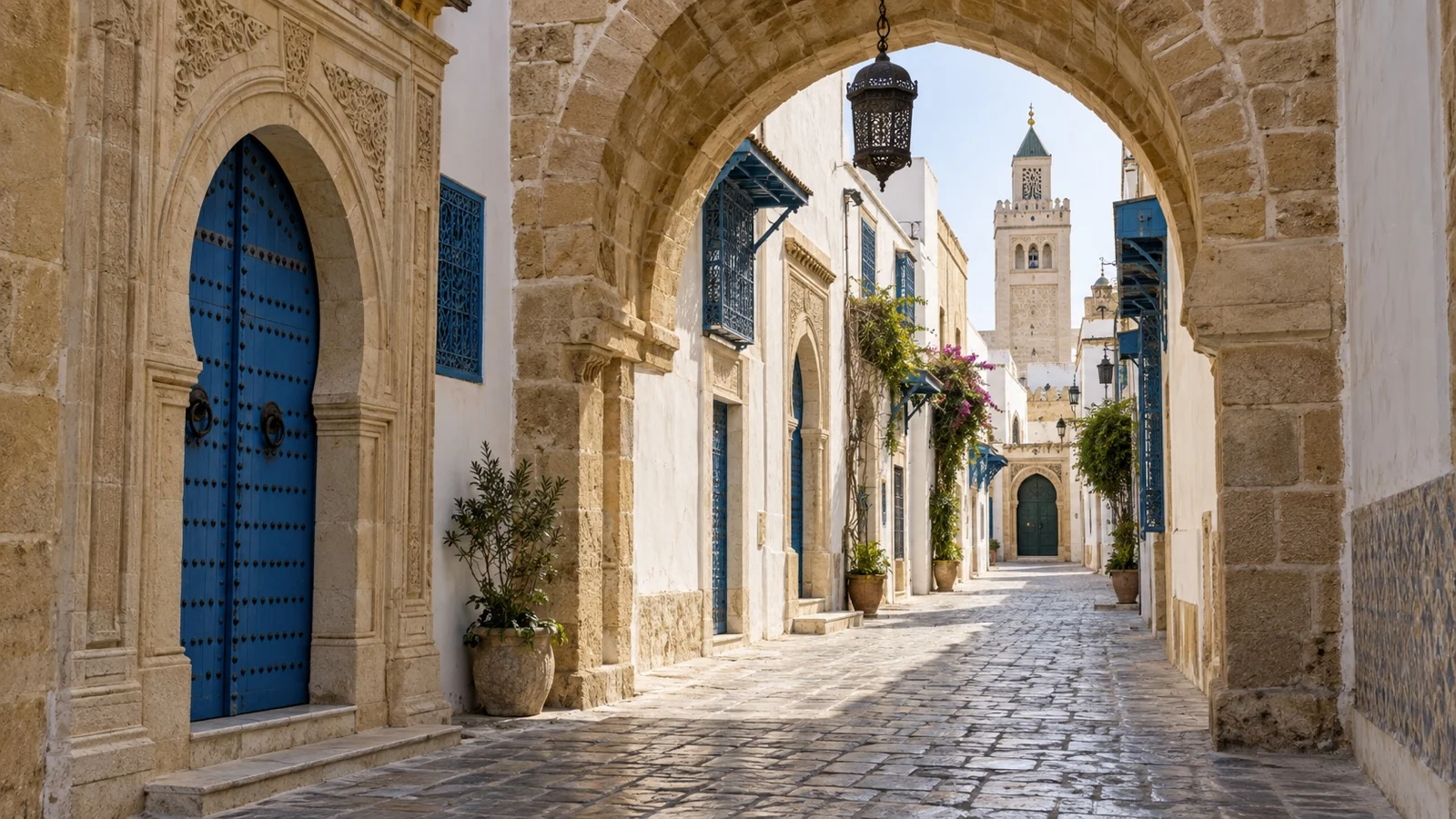
Central Tunis is a proper North African capital, and the walled medina behind Place de la Victoire is one of the oldest Arab Muslim towns in the Maghreb, founded at the end of the seventh century. Inside it are hundreds of historic monuments, including the Zitouna Mosque at its heart.
The honest warning is that this is a working souk, not a tourist arcade. Expect persistent selling, expect to be walked toward a carpet shop, and expect that a firm no thank you and steady walking is all you need.
Avenue Habib Bourguiba runs from the medina gate through the French colonial quarter, which becomes a completely different city in about three blocks. With only two hours in Tunis, walk that avenue and dip into the first streets of the medina rather than crossing it.
The Bardo, and one thing to check first
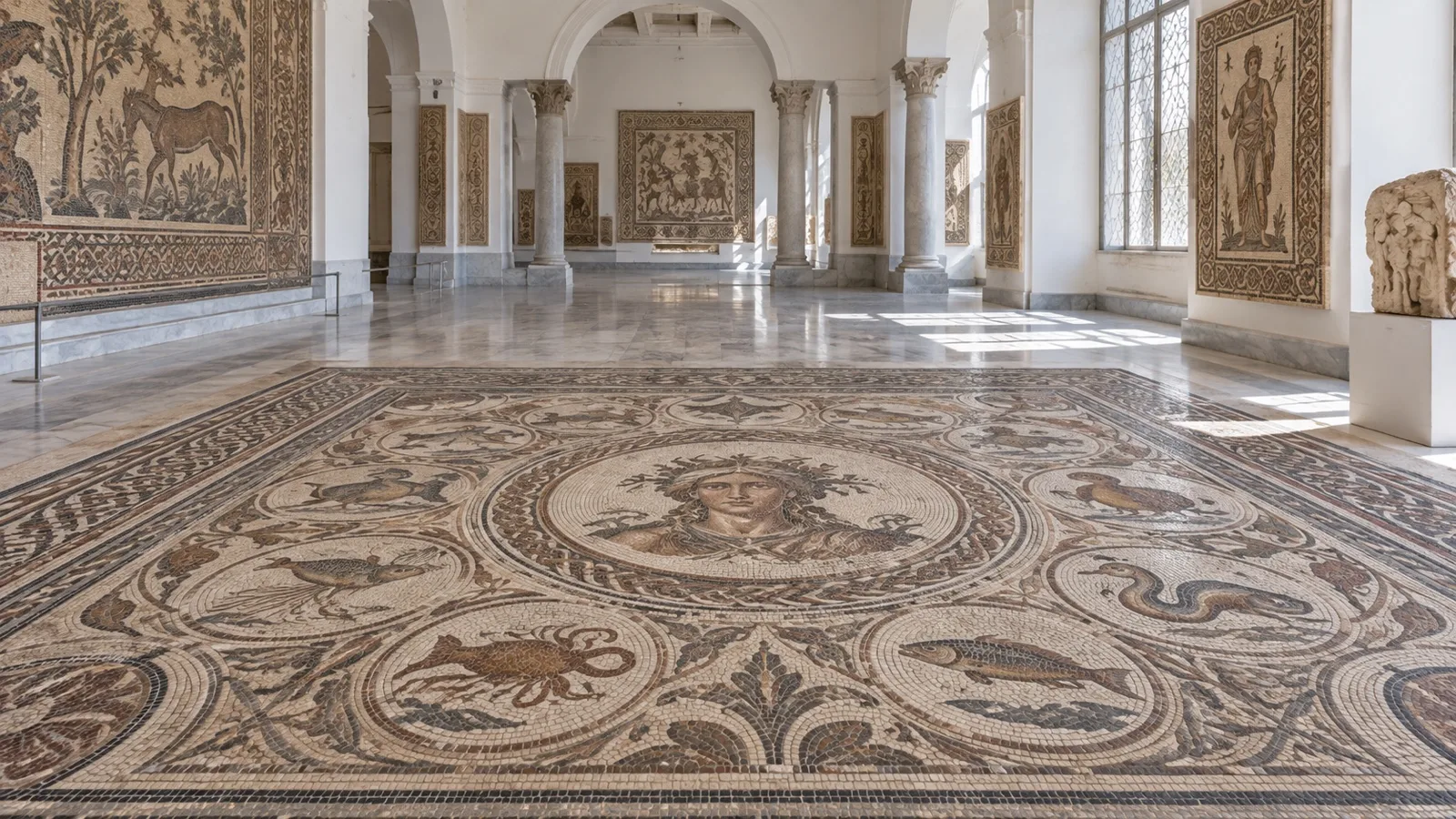
The Bardo holds one of the great Roman mosaic collections anywhere, and nothing else in the Mediterranean really touches it for sheer volume. It sits in a former palace on the edge of the city, not in the medina, so it is its own trip.
It has also had extended closures in recent years, which is the sort of thing that ruins a port day if you find out on arrival. Confirm it is open for your date before you build a plan around it, and have a second option ready.
Sousse and El Jem are farther than the brochure suggests
Sousse has a walled medina of its own, with a ribat and a kasbah that make it a textbook early Islamic town. It is also roughly 90 miles (145 km) south of Tunis, which is about two hours of driving each way in ordinary traffic.
El Jem is farther still, another 40 miles (65 km) beyond Sousse, and the reward is a third century amphitheater built to hold about 35,000 people. It is genuinely extraordinary and it is a very long day from a ship.
My rule on both is simple. Under nine hours in port, do not attempt either; longer than that and with Carthage already behind you, El Jem on a ship excursion is the version I would trust, because the return leg is what you are really betting on.
Money is the thing that actually catches people out
The Tunisian dinar is a closed currency. You generally cannot buy it before you travel, you are not supposed to carry it out, and the exchange desks at the port and the ATMs in town are how most cruise passengers get it.
Change a modest amount and keep the receipt, because converting back usually requires proof of the original exchange. Do not change three hundred dollars for a six hour port day.
Cards work in hotels, larger restaurants and some shops, and they do not work in a medina stall or a shared taxi. This is a port where small bills matter, which is the argument our guide to carrying cash and cards in port makes for exactly these places.
Taxis, language and the negotiation you should expect
Taxis are everywhere and cheap by European standards, and the meter is the thing to insist on. Ask for the meter or agree the fare out loud before the door closes, both of which are normal requests rather than rude ones.
Arabic and French are the working languages, and French will get you further than English almost everywhere outside the tour trade. A dozen words of French is a real advantage here in a way it is not in Spain or Italy.
- Agree the price first: For a taxi, a guide, or a half day driver, settle the number before you start.
- Carry small notes: Change is genuinely scarce and a large bill slows everything down.
- Dress on the modest side: Covered shoulders and knees make the medina and any mosque courtyard easier.
- Photograph people, not police: Ask before photographing anyone, and skip anything official or military.
Safety, briefly and honestly
Tunisia currently sits at the second of four advisory levels for US travelers, the exercise increased caution tier, which is the same level assigned to a number of ordinary European destinations. The strict do not travel warnings apply to border zones and specific mountain areas hundreds of miles from where your ship docks.
None of that describes Tunis, Carthage or Sidi Bou Said, which are normal, policed, visited places. Check the current wording before you sail anyway, because advisory text changes and the version you read a year ago is not the version that applies.
The everyday risk here is pickpocketing in a crowded souk and being overcharged, not anything more dramatic. Behave the way you would in any large unfamiliar city.
Excursion or on your own?
You can do this port independently, and the light rail plus a taxi will reach Carthage and Sidi Bou Said without much difficulty. Tunisia belongs on the harder half of the list of Mediterranean ports you can explore on your own, not the impossible half.
What tips me toward booking here is the shape of the day rather than any single obstacle. Three spread out stops, a currency you acquire on arrival, and a language you probably do not speak add up to a lot of small friction.
The middle option is the one I like best: hire a driver at the port for the whole day, agree the price and the stops up front, and keep the freedom without the logistics. If you would rather understand where that trade sits generally, our piece on which ports actually require an excursion lays out the test.
What I would actually do with the day
With a standard seven or eight hour call, take Carthage first thing while it is cool and empty, then Sidi Bou Said for lunch, then decide about Tunis on the clock. That order puts the slow stops early and the flexible one last.
If it is your second call at La Goulette, skip Carthage and give the whole day to the medina and the Bardo. If you have small children or limited mobility, Sidi Bou Said alone is a perfectly good day and nobody needs to feel bad about that.
If Tunisia is your first North African port, it pairs naturally with the ones farther west. Our roundups of Morocco cruise ports and the wider Mediterranean by region are the places to look next.
Quick answers
Is Tunis safe for cruise passengers?
The main tourist corridor from La Goulette through Carthage and Sidi Bou Said into central Tunis is normal and well policed. Read the current advisory before you sail, and treat the crowded souk the way you would treat any crowded market.
How far is Carthage from the La Goulette cruise port?
It is a short hop, a few miles up the coast and reachable by taxi or the local light rail in well under half an hour. The catch is that Carthage is several separate sites, so getting there is easier than getting around it.
Can you use euros or dollars in Tunisia?
Not reliably. The dinar is a closed currency you acquire on arrival, so change a modest amount at the port or an ATM and keep the receipt.
Do you need a visa for a Tunisia cruise stop?
Cruise passengers are normally cleared as a group by the ship, and requirements differ if you arrive or leave independently. Our guide to cruise visa requirements covers how to check your own case.
Is a Tunisia shore excursion worth it?
More often than in most Mediterranean ports, yes, because the sights are spread out and the day has real friction in it. A private driver hired at the port is the best value version if you would rather not be on a bus.
Final word
Tunisia is the stop people are quietly nervous about and then talk about for the rest of the cruise. It gives you a layer of Mediterranean history that Italy and Spain do not have, forty minutes from your gangway.
Go with a plan, small bills and a fare agreed in advance, and it is one of the best value port days in the western Mediterranean. Go without any of those and you will spend the first hour of it standing in a parking lot doing math.
How this guide was researched: Berth and transfer details at La Goulette, the layout of the Carthage sites, driving distances to Sousse and El Jem, currency rules and the current travel advisory wording were checked in November 2026. Advisory levels, museum opening hours and whether Tunisia appears on a given season’s itineraries all change, so confirm the details for your own sailing before you plan around them. See our Editorial Policy.