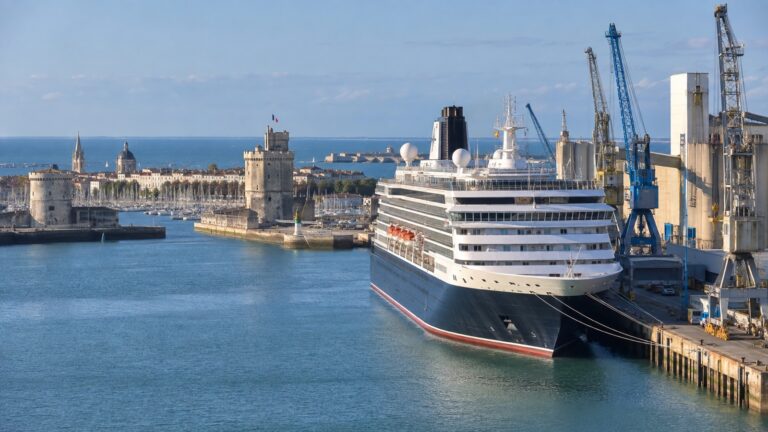
Channel Islands Cruise Ports: Guernsey, Jersey and the Tender Problem
Nobody tells you the truth about the Channel Islands until you are on deck watching whitecaps in the anchorage. Both main ports are tender ports, a meaningful share of calls never happen at all, and planning for that is most of the work.
My quick take
St. Peter Port is one of the loveliest ports in northern Europe and one of the least reliable. I would never book anything expensive and non refundable around a Guernsey call, and I would not let it be the reason I picked one itinerary over another.
What I would do is treat both islands as a bonus and have a real plan for the version where the tenders never launch. That is not pessimism, it is just how you avoid spending a nice sea day sulking about a town you could see through binoculars.
The quick facts
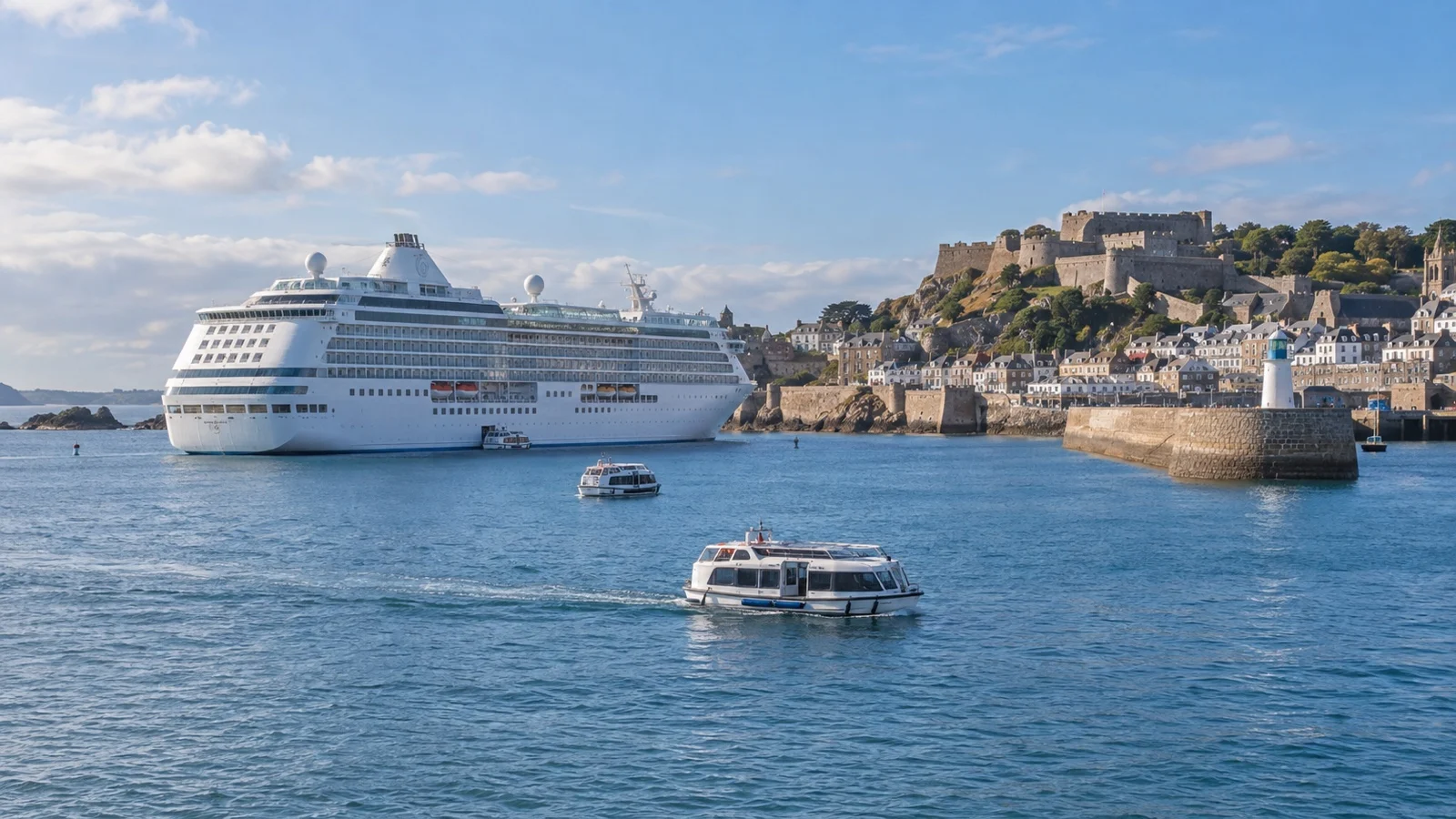
- Guernsey: Ships anchor off St. Peter Port and tender to a pontoon at the end of Albert Pier, minutes from town.
- Jersey: Only small ships go alongside in St. Helier, so most cruise passengers tender to the Albert Pier pontoon there too.
- Cancellation odds: Roughly eight to fifteen percent of scheduled Guernsey calls get scrubbed for wind or swell.
- Season: April through early October, with the smaller islands seeing only occasional small ship calls.
- Money: Local pounds circulate alongside sterling at parity, and cards work everywhere that matters.
What a Channel Islands call actually is
These calls show up on short round trips out of Southampton and on longer loops that run down to France, Spain or Ireland. They are convenient for the lines because the islands sit almost exactly where a ship wants to be on day two.
The islands are British Crown Dependencies, which means English, driving on the left, and their own governments, courts and money. They are not part of the United Kingdom and never were part of the European Union, so customs and duty rules are their own thing.
What matters to you is the harbor geometry. Both main towns grew around small tidal harbors built for boats, not for ships carrying three thousand people, and that constraint is the source of every problem in this guide.
Our comparison of UK homeports and ports of call puts the islands in context with the rest of a British Isles run, and our explainer on what a tender port actually is covers the mechanics if this is your first one.
St. Peter Port: the anchorage is the whole story
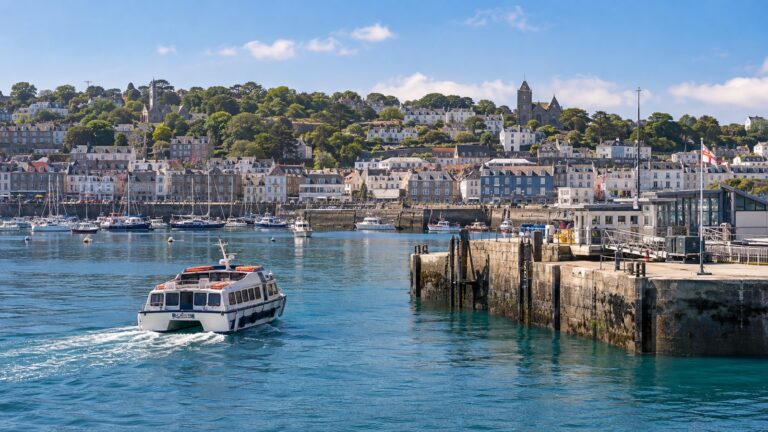
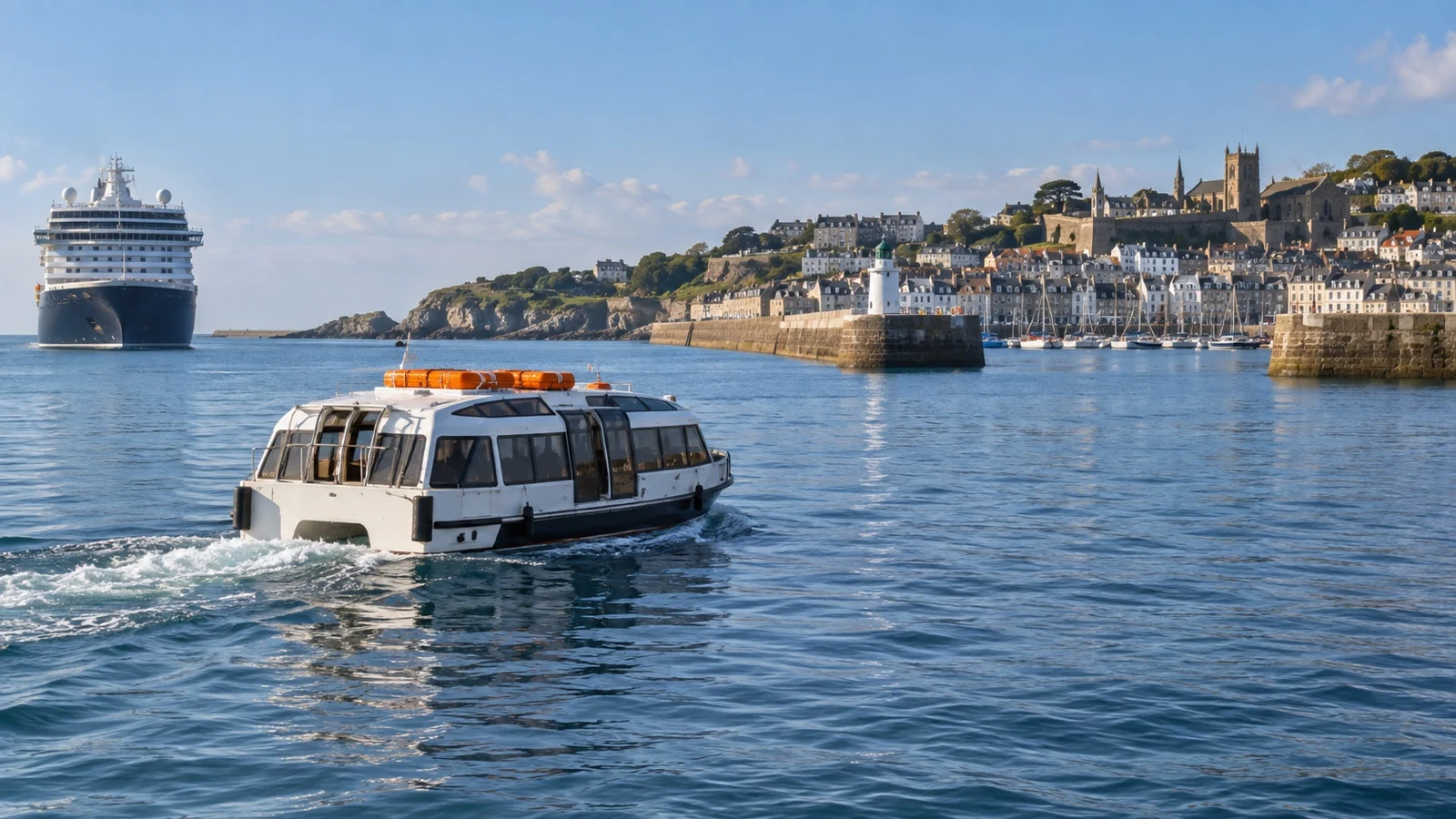
Guernsey has no cruise berth. Your ship anchors in the roadstead off the town, drops its tenders, and runs them into a floating pontoon at the end of Albert Pier that rises and falls with the tide.
The ride itself is short, usually ten to fifteen minutes once you are loaded and moving. The loading is the part that eats your morning, especially when two ships are anchored and both are running boats into the same pontoon.
The good news is that the landing is excellent. You step off the pontoon a few minutes from the waterfront, which makes this one of the few tender ports where you are genuinely in the middle of town the moment your feet hit stone.
Our full St. Peter Port guide covers the pontoon, the tiers of the town and the climb up to Candie Gardens.
The cancellation odds, stated plainly
St. Peter Port is one of the most weather canceled tender ports in Europe. Somewhere between eight and fifteen percent of scheduled calls do not happen, which means that across a season the island loses a serious number of ships.
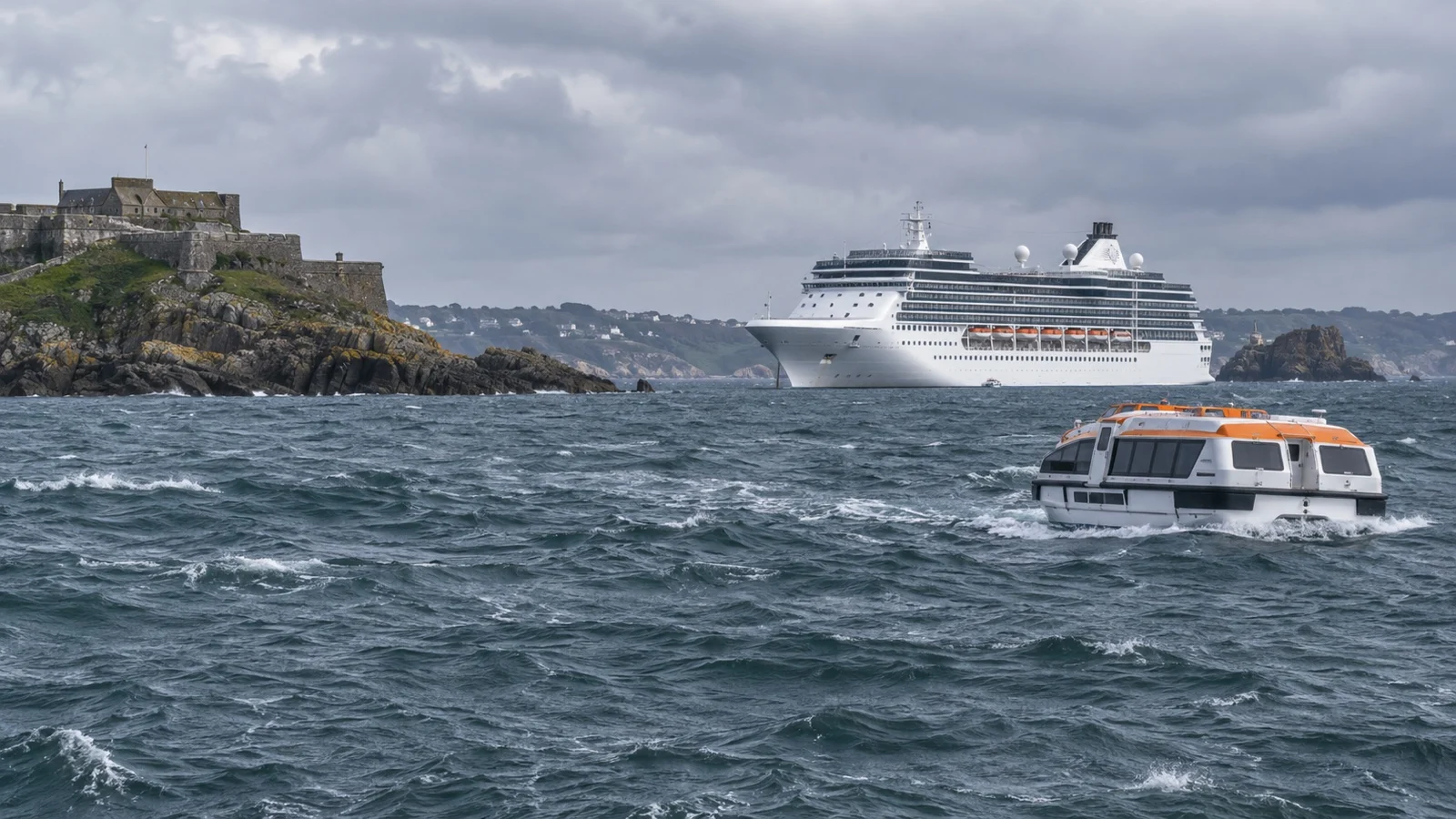
The mechanism is simple. An open anchorage has nothing blocking wind and swell from the wrong direction, and a tender that cannot come alongside the pontoon safely does not sail, no matter how nice the sky looks from your balcony.
Cancellations come in three flavors, and it is worth knowing all three. The call gets dropped before you wake up, the call gets dropped after the ship anchors and tries, or the call gets cut short in the afternoon when conditions build and the captain pulls the last tender forward.
That third one is the sneaky one. Our explainer on what happens when rough seas delay or cancel tendering walks through how those calls get made and why the announcement often comes later than you would like.
What St. Peter Port gives you once you land
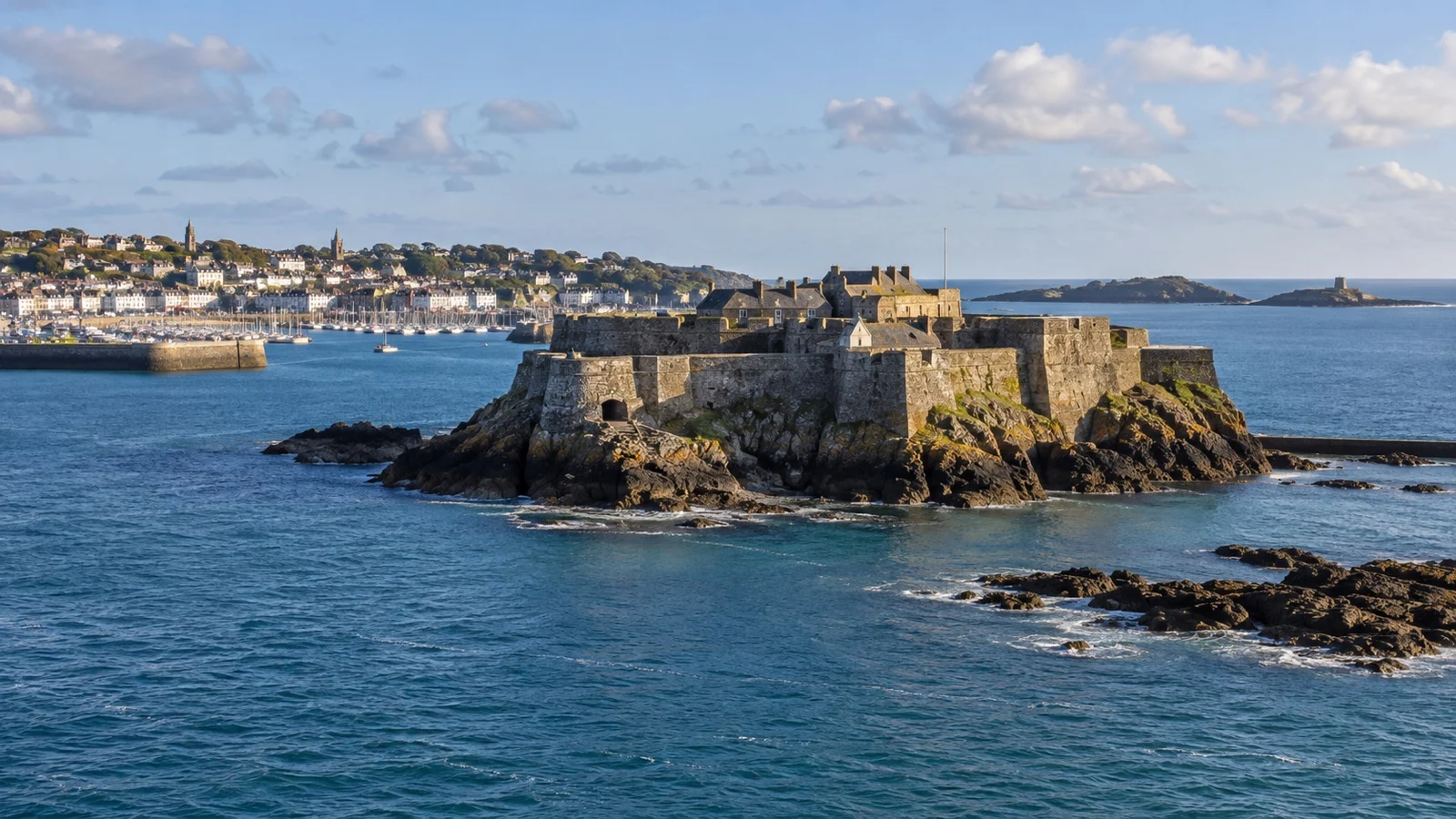
Castle Cornet guards the harbor and has done for eight hundred years, and the interiors and small museums inside will fill two hours comfortably. It is a short walk from the pontoon, which makes it the right anchor for a shortened day.
The town climbs in tiers. The waterfront is flat and easy, the High Street and Pollet are cobbled with steps, and anything above that involves a real hill, so pace it accordingly.
Beyond that, Guernsey does German occupation history better than anywhere else you are likely to call. Victor Hugo’s house is here too, though it books in advance and does not take walk ups on a whim.
St. Helier: alongside for the small ships only
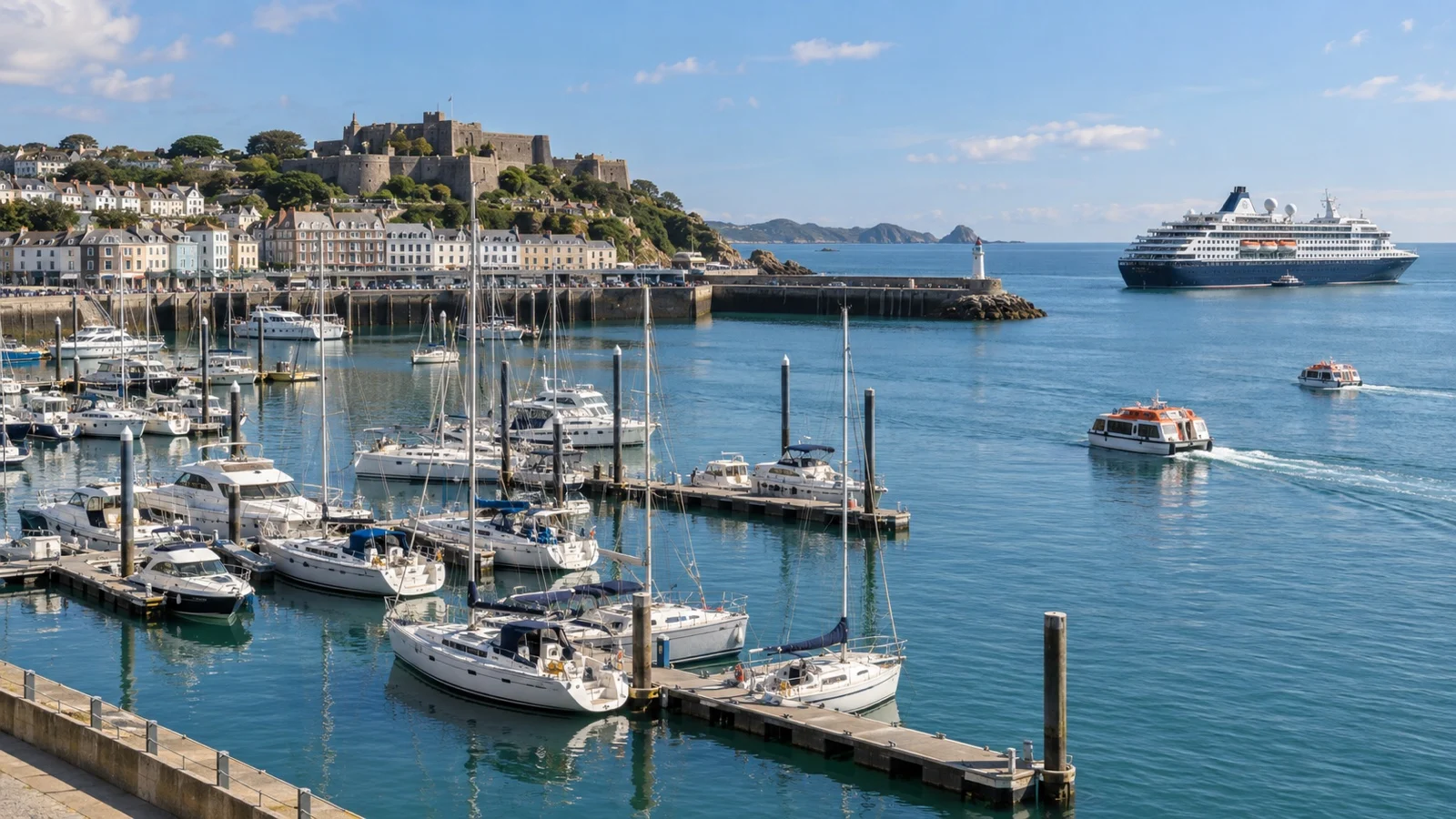
Jersey is the island people assume is the easy one, and it mostly is not. Albert Pier in St. Helier takes vessels alongside only up to about 330 feet (100 m), roughly the size of a small expedition ship, so anything resembling a mainstream cruise ship anchors offshore.
Larger ships anchor in St. Aubin’s Bay or further out in deeper water and tender to the pontoon at Albert Pier. Which anchorage you get depends on your draft and the weather, and the further out you are the longer the ride.
The landing itself is good. It is a pleasant ten minute walk from the pontoon into the middle of St. Helier, and the official berthing and anchorage information for the island spells out the size limits if you want to know before you sail which version you are getting.
What to do in Jersey on a tender day
Elizabeth Castle sits on a rock offshore and is reached across a causeway when the tide is out and by an amphibious ferry when it is not. It is a good half day and it is entirely tide dependent, so check the crossing times before you commit.
Mont Orgueil at Gorey is the better castle and it is on the other side of the island, about a half hour by bus. That is fine on a long call and a bad idea on a short one, especially if the tender operation has already run late.
If you stay in town, the war tunnels, the market and the museum will fill a day without stress. Opening times across the island’s main heritage sites vary by season, and a couple of them close entirely outside the summer months.
Sark, Herm and Alderney, the calls almost nobody gets
Small ships do call at the other islands, and if yours does, take it seriously as the rare thing it is. Sark has no cars at all, Herm has no cars either, and Alderney is a windswept outpost ringed with Victorian forts and very few visitors.
You are far more likely to reach them as a day trip from a Guernsey call, and this is where I get cautious. Herm is a 20 minute boat ride from St. Peter Port and Sark is about 45 minutes, both from the inter island quay in the same harbor.
The math on Sark rarely works. You would be adding an hour and a half of boat time and a fixed return schedule on top of a tender operation that is already the weak link.
One late ferry ruins the whole thing. The published sailing information for the island shows how few crossings there are on a given day.
Herm is the one I would actually consider on a long, calm call, since the crossing is short and the island is barely 3 miles (5 km) offshore. Even then I would want to be back in St. Peter Port two hours before the last tender.
The backup plan you should have before you sail
This is the part of the post that matters most, and it takes about five minutes to sort out at home. Decide now what a missed Guernsey call costs you, and then remove that cost.
- Book refundable: Any independent tour or ticket should cancel free, ideally on the day.
- Know the refund rule: Ship excursions are refunded when the call is missed, and independent bookings usually are not.
- Skip timed tickets: A fixed entry slot on a tender day is a bet you do not need to take.
- Have a sea day plan: Book the spa, the specialty lunch or nothing at all, but decide in advance.
- Do not chase it: If Guernsey is the whole reason for the trip, pick an itinerary that calls twice or accept the odds.
Our list of the cruise ports most likely to be missed or canceled puts Guernsey in company with the other usual suspects, and the pattern is always the same. Exposed anchorage plus small boats plus wind equals a sea day.
How to actually work the tender operation
Ship excursions go ashore first, always. Everyone else gets a ticket with a group number and waits in a lounge until that number is called, which on a busy morning can be an hour or more after the first boat leaves.
If you want the early boats without buying an excursion, be at the ticket desk when it opens rather than when the announcement is made. If you do not care, eat a proper breakfast and go down at ten, when the line has evaporated.
Coming back is where people get hurt. I plan to be at the pontoon 60 to 90 minutes before the last tender in any port like this, and our guide to how tendering changes the time you actually have ashore explains why the advertised eight hours is really more like six.
Guernsey or Jersey, if the itinerary lets you choose
Guernsey is the better port day and the worse bet. St. Peter Port is prettier, more compact and better suited to a few hours ashore, and the landing puts you right in the middle of it.
Jersey is bigger, flatter in the middle, and gives you more to do if you have a full day and are willing to get on a bus. It also has more anchorage options, which does not make it immune to a scrubbed call but does give the crew more to work with.
My pick is Guernsey, with the caveat that I would not pay a premium for it. If I wanted the same corner of the map with a dock under the ship, I would look at Cherbourg across the water instead and accept that it is a less charming town.
Money, tides and the things that are different here
Both islands issue their own pounds, which trade at parity with sterling and are accepted alongside it locally. Take British notes home rather than island ones, because island notes are awkward to spend anywhere else.
Cards work everywhere you would expect and contactless is normal. Tipping is light, and nobody is waiting for twenty percent.
The tides are the genuinely unusual part. This corner of the Channel has one of the biggest tidal ranges in Europe, big enough that harbors dry out and coastal causeways appear and disappear on a schedule, which is why so much of what you can do here depends on the hour you land.
What I would do with a perfect Guernsey day
Early tender, Castle Cornet first while it is quiet, then coffee on the waterfront and a slow walk up through the town. That is a genuinely good four hours and it never once depends on a bus.
If the sea is flat and the call is long, add the occupation museum out of town by taxi or the island bus. If it is not, stay within ten minutes of the pontoon and enjoy being somewhere that most of your ship never reached.
Quick answers
Do cruise ships dock in Guernsey?
No. Ships anchor off St. Peter Port and run tenders to a pontoon at Albert Pier, which is why weather cancels so many calls.
How often is a Guernsey cruise call canceled?
Roughly eight to fifteen percent of scheduled calls are lost to wind or swell. Treat it as a real possibility rather than bad luck.
Does Jersey tender or dock?
Only small ships go alongside at Albert Pier in St. Helier. Everything larger anchors and tenders, landing about ten minutes from town.
Can you visit Sark from a cruise ship?
Only if your ship calls there directly or your Guernsey call is long and calm. The 45 minute ferry each way plus a fixed schedule makes it a risky day trip.
What money do you need in the Channel Islands?
Pounds, in either the British or local version, at the same value. A card covers nearly everything, so carry a small amount of cash and no more.
Final word
The Channel Islands are worth the effort and they are not worth the anxiety. Guernsey in particular gives you a compact, charming, walkable port day that starts the moment you step off the boat, and that is rare.
Just go in knowing that the tender is the whole game here. Book nothing you cannot cancel, be back early, and let a scrubbed call be a quiet day at sea rather than the thing that ruins the week.
How this guide was researched: Anchorage and tender arrangements for St. Peter Port and St. Helier, inter island sailing times and seasonal opening patterns were checked in October 2026. Tender procedures, ferry timetables, attraction hours and the size limits for berthing alongside all change from season to season, so confirm the details that matter for your own sailing. See our Editorial Policy.