Malta Cruise Ports: Valletta, Gozo and the Grand Harbour Approach
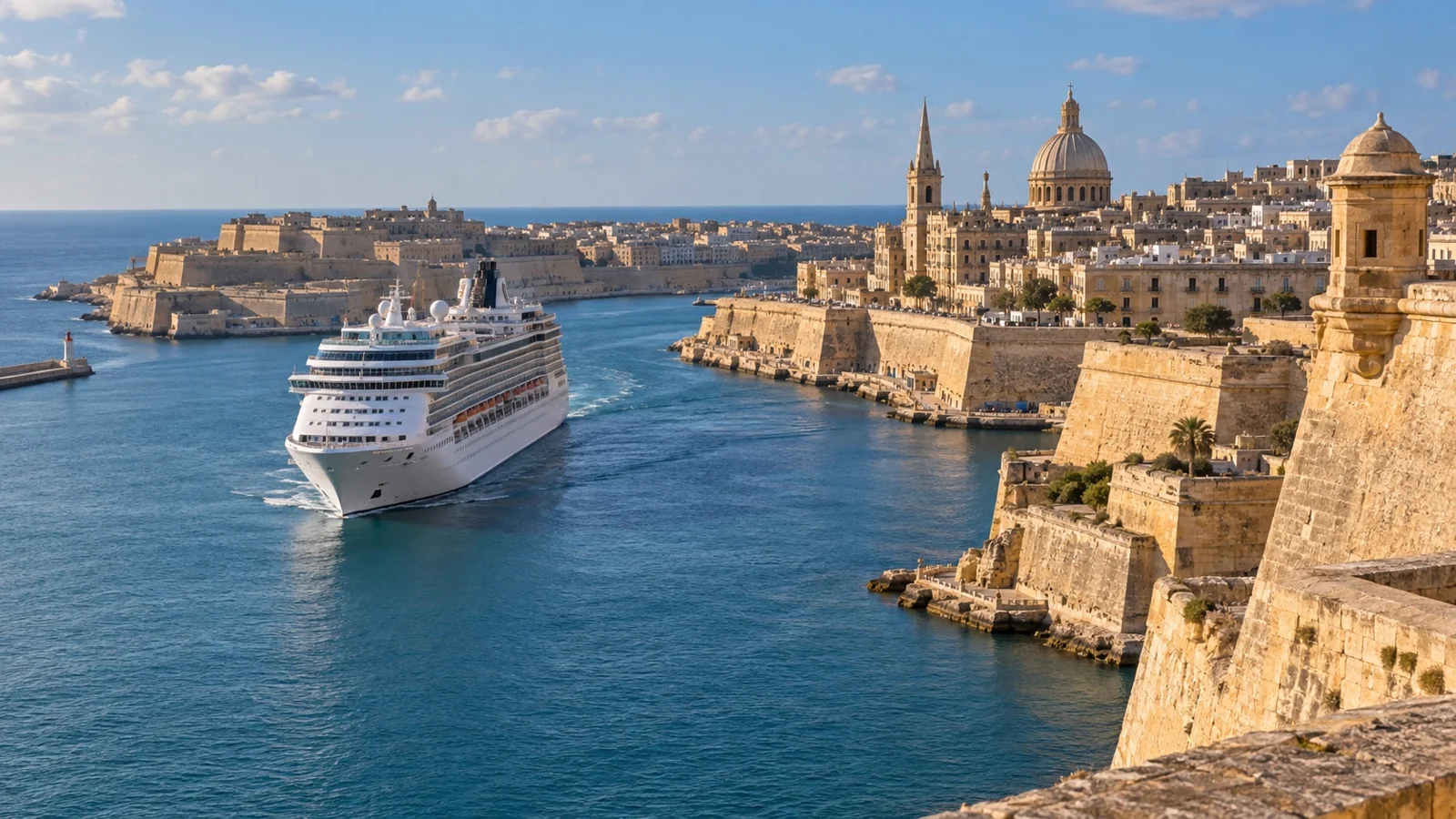
The Grand Harbour does something very few ports manage. Your ship slides in between honey colored bastions built to stop a fleet, half of Valletta stands above you, and then you walk off into it.
My quick take
Malta is one of the few Mediterranean stops where the arrival is genuinely part of the day. Set an alarm, get coffee, and be outside on a high deck before the ship lines up for the harbor entrance.
The rest of the day is easier than people expect, because you dock in the middle of everything and English is an official language. My honest advice is to pick two things and stop there, since Malta is small enough to tempt you into four and short enough to punish you for it.
The quick facts
- Where you dock: Alongside the Valletta Waterfront in the Grand Harbour, with the old city on the ridge above you.
- Getting up to town: A public elevator or a stepped climb of roughly 10 to 15 minutes, both on foot from the berth.
- Money and language: Euros, cards accepted almost everywhere, and English alongside Maltese.
- Best for: Fortifications, a walkable capital, and a harbor ferry hop to the Three Cities.
- Excursion needed: No for Valletta and the Three Cities, arguable for Mdina, and yes if you insist on Gozo.
Who actually calls at Malta, and when
Malta sits almost dead center in the Mediterranean, which is why it shows up on itineraries that otherwise have nothing in common. Western loops out of Barcelona or Civitavecchia use it, eastern loops toward Greece use it, and so do repositioning runs in spring and fall.
The heavy season runs from about April into November, and Malta also picks up winter calls that other Mediterranean ports lose, because the city works fine in January. If you are still choosing a sailing, our overview of Mediterranean cruise ports by region is a better starting point than picking a ship first.
Where your ship actually ties up in the Grand Harbour
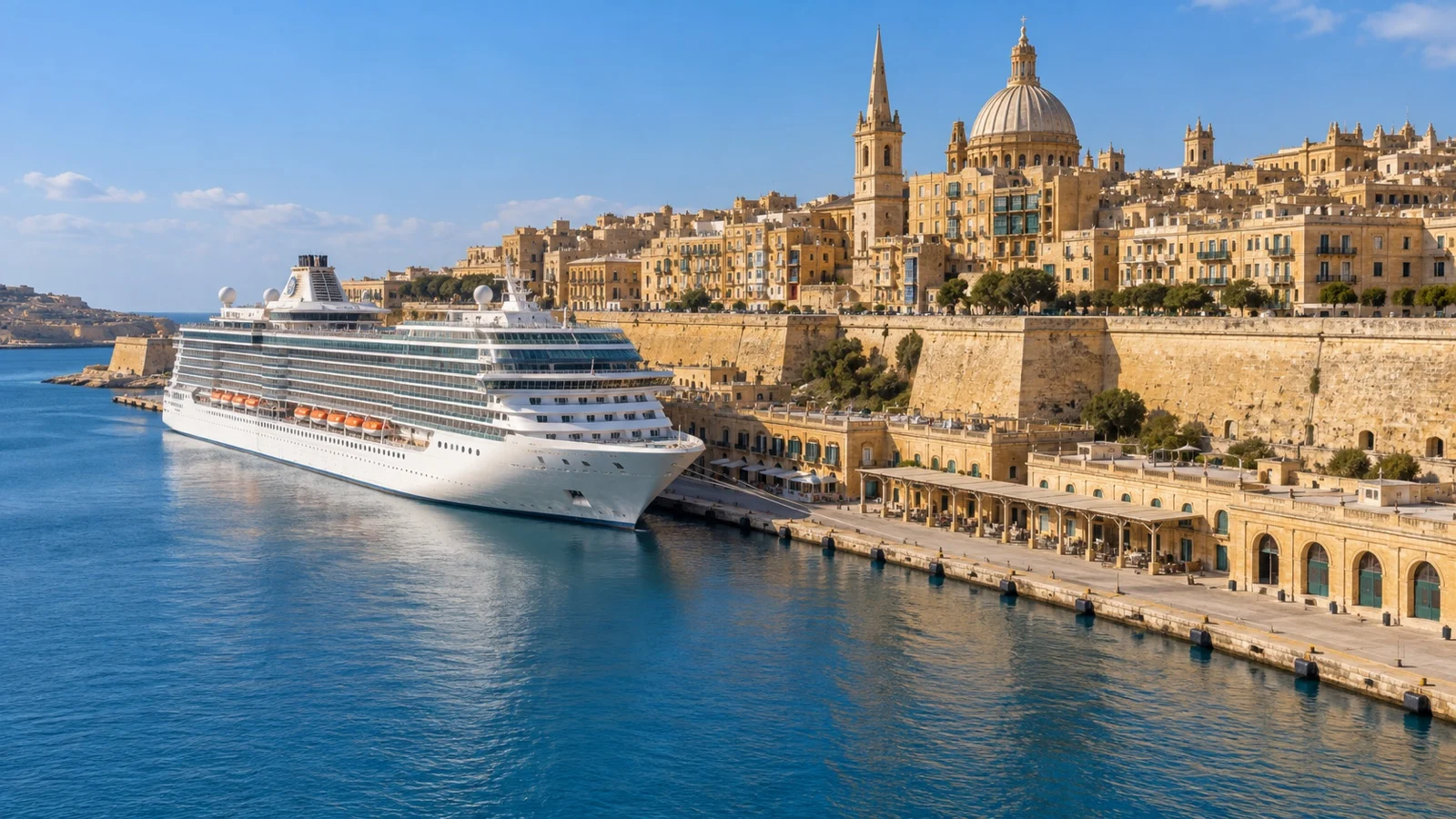
Cruise ships berth alongside the Valletta Waterfront in Floriana, on the southwest side of the Grand Harbour. There is no tendering here in normal conditions, so you step off onto a paved quay lined with restored eighteenth century warehouses.
The waterfront strip is the terminal area and holds the practical stuff: information desk, cafes, restrooms, taxis and tour desks. It is pleasant enough for twenty minutes and it is not why you came.
On a busy day more than one ship is alongside, and where you land on the quay changes how far you walk before anything happens. The port operator publishes its terminal and berth information in advance, and our piece on how berth assignment decides your whole port day explains why that matters.
The sail-in is the excursion you already paid for
Ships enter between two headlands, pass beneath the bastions, and swing into a harbor that has been fortified for centuries. You get Fort St. Elmo on one side, Fort Ricasoli on the other, and then the full length of Valletta’s walls opening up as you turn.
It takes maybe thirty minutes and it is the best free thing Malta gives you. I would rather lose the sleep than watch it from a stateroom window on the wrong side.
Getting from the waterfront up into Valletta
Valletta sits on top of a ridge and you are at sea level, so every route in involves gaining height. There are three sensible ways to do it.
- The public elevator: The Upper Barrakka Lift rises about 190 feet (58 m) from Lascaris Wharf straight into the Upper Barrakka Gardens, and the wharf is roughly a third of a mile (0.5 km) along the waterfront from the ships.
- The stepped lanes: A set of old stairways climbs from the waterfront into the city in about 10 to 15 minutes, which is fine if your knees are fine.
- Taxi: Cabs wait at the terminal and run on set harbor rates, which is the answer if anyone in your group cannot manage stairs or the walk to the elevator.
The elevator charges a small fare, usually with a same day return included, and it is the one I would use in both directions. It is also the accessible route, which matters here because Valletta is built on a slope and paved in polished stone.
Valletta on foot is a half day, and a very good one
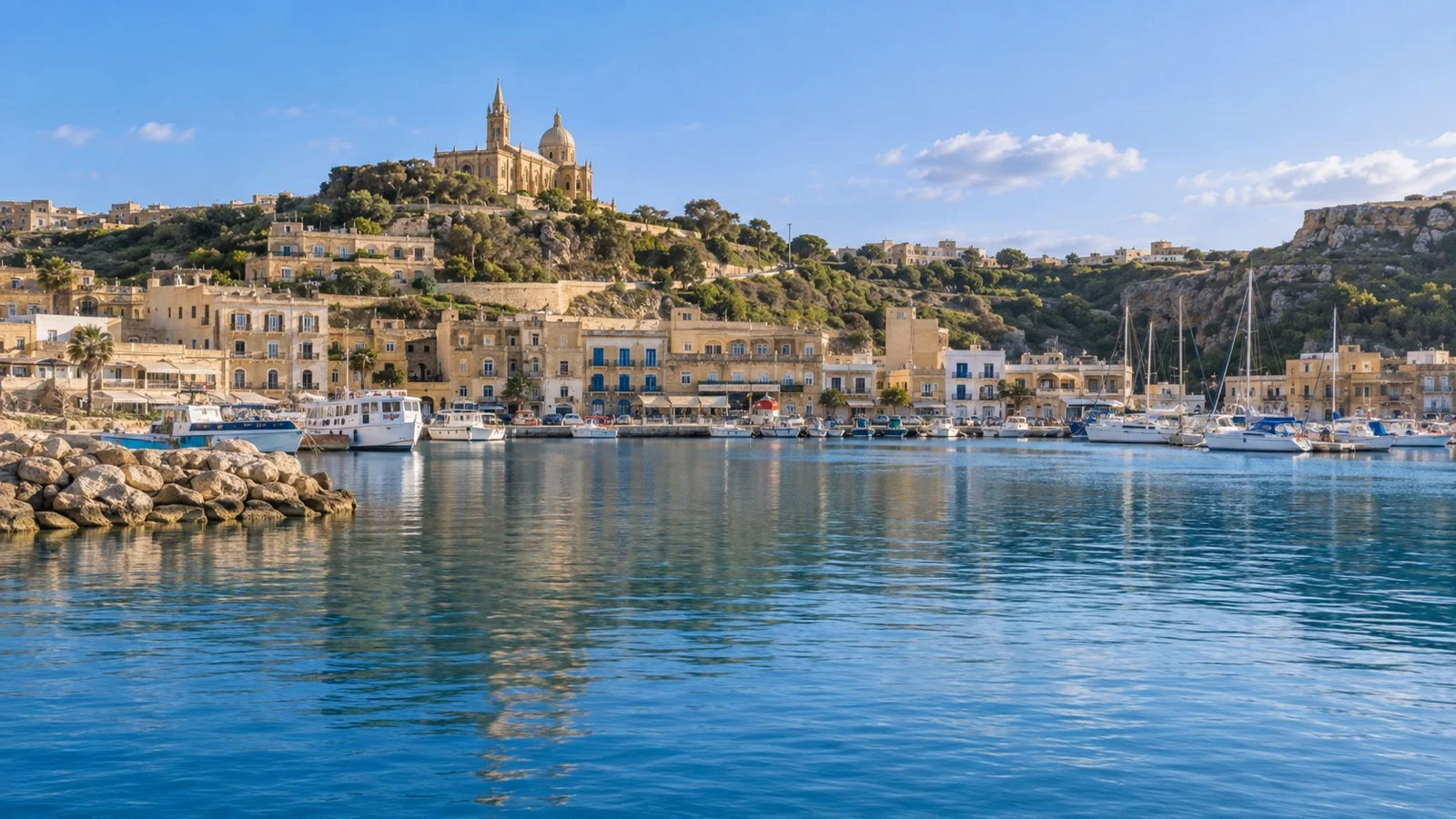
The old city is a grid roughly half a mile (0.8 km) long, so you can cross it end to end in about twenty minutes. Republic Street runs the spine, the side streets fall away in stairs toward both harbors, and the whole place has been on the World Heritage list since 1980.
The two indoor stops worth booking time for are St. John’s Co-Cathedral and the Grand Master’s Palace. The cathedral looks plain outside and then hits you with a floor of inlaid marble tombs and a Caravaggio in the oratory.
If you only have five or six hours ashore, this plus one harbor ferry is a complete, unhurried day. Malta is one of the ports I would put near the top of the list of Mediterranean stops you can do independently.
The Three Cities are the easy second half of the day
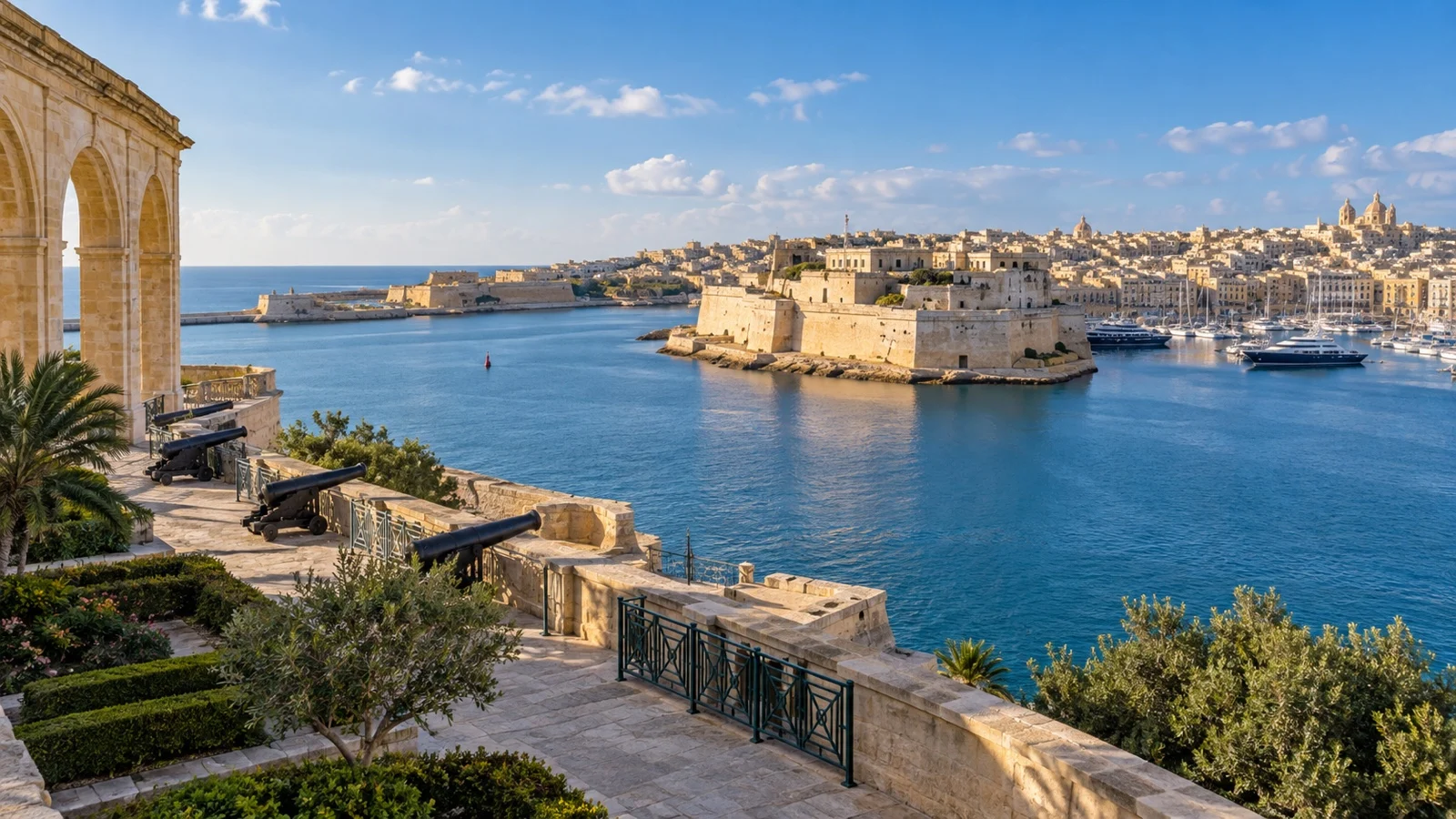
Directly across the water from Valletta sit Birgu, Senglea and Cospicua, three fortified peninsulas that are older than the capital. A small passenger ferry crosses the Grand Harbour in a few minutes, and it is one of the best value boat rides in the Mediterranean.
What you get on the other side is the quiet version of Malta: narrow lanes, laundry lines, a marina full of yachts, and almost none of the cruise crowd. Fort St. Angelo sits at the tip of Birgu and is one of the sites run by the national heritage agency, so opening hours are published and reliable.
Budget about two and a half hours for the crossing, a wander and a drink. This is the part people skip and then regret.
Mdina and Rabat, and whether the drive is worth it
Mdina is the walled medieval hill town in the middle of the island, and it is genuinely striking: no cars inside, honey stone lanes, and a view across most of Malta from the bastion wall. The drive from the harbor is short by any normal standard, usually around half an hour each way depending on traffic.
The catch is that Mdina is small, and ninety minutes covers it properly. That math works if you have eight hours or more in port and it does not if you have six.
Rabat sits right outside the walls with catacombs and a quieter cafe scene. Adding it is what turns the trip from thin to worthwhile.
You can do this independently by bus or taxi, and the island bus network reaches it from the Valletta terminus. I would take a taxi out and the bus back, because the outbound leg is the one where being late costs you.
Does Gozo fit inside an all aboard window?
This is the question I get asked about Malta more than any other, and the honest answer is sometimes. Gozo is a separate island off the northwest end of Malta, and getting there means a boat and usually a road transfer too.
The traditional route drives to Cirkewwa at the far tip of Malta, then takes the vehicle and passenger ferry across to Mgarr on a frequent schedule. The road leg is the slow part and can eat most of an hour each way.
A fast passenger ferry also runs from Valletta’s harbor area straight to Gozo and skips the drive, crossing in well under an hour. That is the reason Gozo has become realistic for cruise passengers at all.
Here is my rule. With ten hours or more in port and an early arrival, Gozo works and you get Victoria’s citadel, the Ggantija temples and a slower island; with under eight hours I would not attempt it independently, and I would let the ship carry the risk if I wanted it badly.
One expectation to reset: the Azure Window, the sea arch on every older Gozo postcard, collapsed into the sea in 2017. Dwejra is still a lovely spot and the arch is not coming back.
Marsaxlokk, the Blue Grotto and the southern coast
Marsaxlokk is the fishing village on the southeast coast where the painted luzzu boats sit in the harbor, and it photographs as well as you hope. The Sunday market is the busiest and best version, though the village works any day.
The Blue Grotto is a sea cave system on the south coast reached by small boat, and it is entirely weather dependent. When the swell is up the boats do not run, and no operator can promise otherwise.
Both usually get bundled into one half day tour, which is the sensible way to take them, and I would only build a port day around the pair if I had already seen Valletta.
Malta as a homeport, not just a stop
Valletta is also a turnaround port, and some lines start and end Mediterranean itineraries here rather than in Italy or Spain. That changes everything, because instead of six hours you get as many nights as you are willing to add.
The airport is close to the harbor, usually a twenty to thirty minute drive, which makes a pre cruise night easy. Our roundup of hotels near the Valletta cruise port covers both the waterfront and the city above it.
Malta is in the Schengen area, so treat it the way you would any Schengen entry. The details, including day counting and the newer travel authorization, are in our guide to Schengen days and visas for cruisers.
Which one I would actually pick
On a first call with a normal six to eight hour day, take Valletta on foot in the morning and the Three Cities ferry in the afternoon. It costs almost nothing, needs no booking, and gives you both sides of the harbor.
On a second call, go to Mdina and Rabat and give them the whole middle of the day. On a third, or on a long call with an early arrival, take the fast ferry to Gozo and accept the transit time.
What I would not choose on a short day is the wide island tour promising Mdina, Marsaxlokk and a grotto in five hours. You will see a lot of bus and very little Malta.
Money, language and the small stuff that trips people up
Malta uses the euro, and card payment is close to universal in Valletta, the Three Cities and Mdina. You still want a few small bills for a ferry ticket, a market stall or a bathroom, which is the same habit our guide to carrying cash and cards in port argues for everywhere.
English is an official language, so signage, menus and directions are all easy. Ask questions in English without apology and you will get a straight answer.
Traffic drives on the left, which surprises Americans who have just come from Italy. That matters if you were thinking about a rental car, and it matters when you step off a curb.
Summer heat is real and the stone holds it, so the middle of a July afternoon on an exposed bastion is punishing. Our notes on planning Mediterranean port days around extreme heat apply here as much as anywhere in the region.
Quick answers
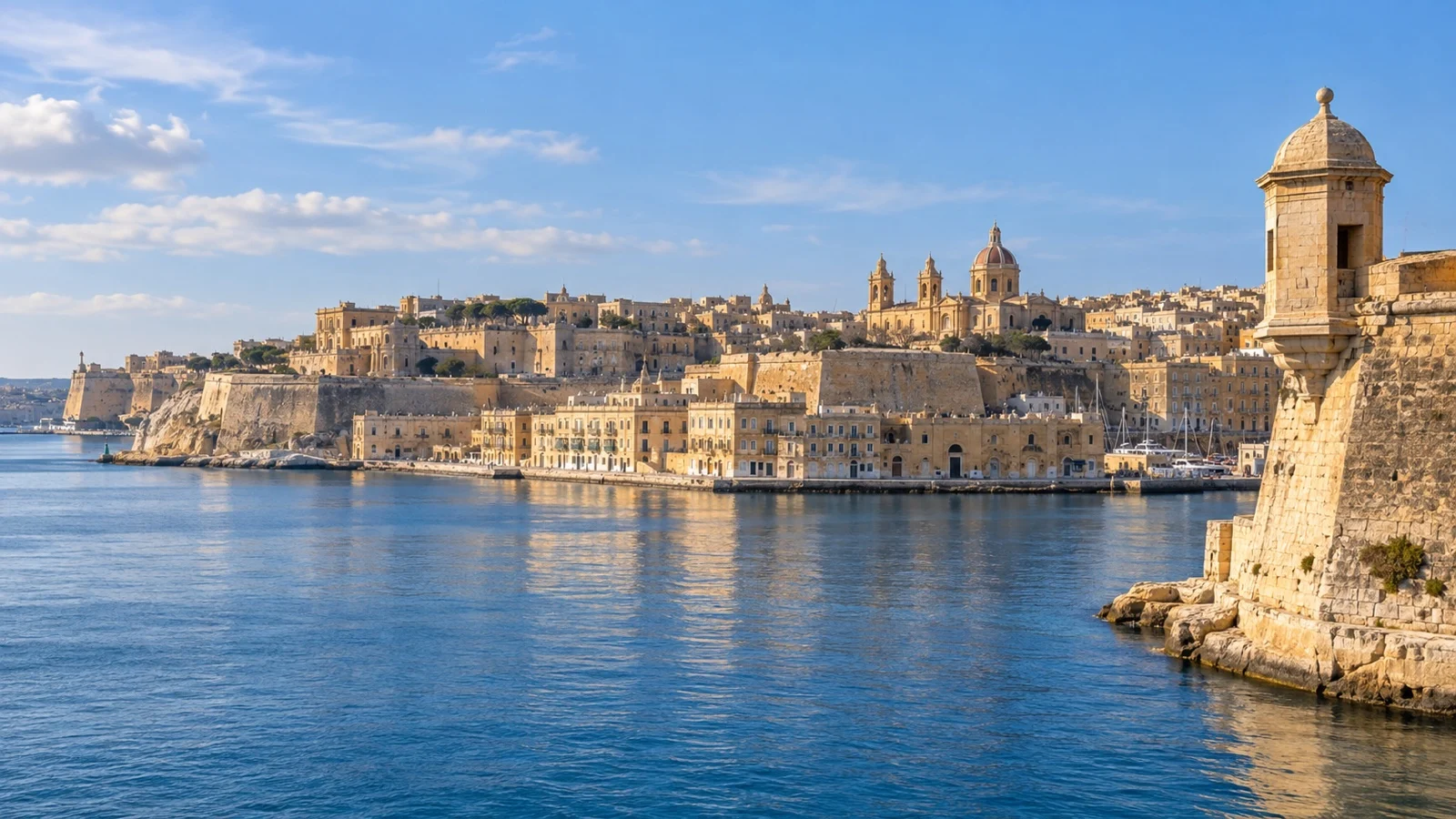
Can you walk from the Valletta cruise port into the city?
Yes. It is a climb of roughly 10 to 15 minutes up stepped lanes, or a short walk along the waterfront to a public elevator that takes you up in seconds.
Do you need an excursion in Malta?
Not for Valletta or the Three Cities, which are both easy on foot and by public ferry. Consider one for Gozo or a multi stop island tour, where the timing risk is the thing you are really buying protection against.
Is Gozo doable on a cruise day in Malta?
It is doable with ten hours or more in port, especially using the fast passenger ferry from Valletta rather than driving to the northern ferry terminal. On a six or seven hour call I would skip it.
What currency do you use in Malta?
The euro, with cards accepted almost everywhere you will go. Carry a small amount of cash anyway for ferries and market stalls.
Is Valletta wheelchair accessible from the ship?
The public elevator solves the climb, and the waterfront and main streets up top are manageable. The side streets are another matter, since many of them are literally staircases.
Final word
Malta rewards restraint. The best parts of it are within a mile of the gangway, which is not something you can say about most Mediterranean stops.
Take the elevator up, walk the grid, ride the ferry across, and eat something with a view of your own ship. If you want the fuller version of the day, with berth detail and timings, our Valletta cruise port guide goes deeper than a roundup can.
How this guide was researched: Berth locations in the Grand Harbour, the routes up into Valletta, ferry connections to the Three Cities and Gozo, and island transport options were checked in October 2026. Ferry timetables, opening hours and port day lengths change with the season and the ship, so confirm the details against your own sailing before you plan around them. See our Editorial Policy.