Bari Cruise Port: Bari Vecchia, San Nicola & Trulli
Bari is the Adriatic port people book as filler and then spend the whole cruise talking about. You step off into a working southern Italian city with a tangled old quarter, a saint with a serious backstory, and women making orecchiette on the street.
It is also the launch pad for Alberobello and its cone roofed trulli. The only real question is whether you want the city or the countryside, because both in one day is a stretch.
My quick take
Bari is a proper working city that happens to have cruise berths, not a stage set built for shore excursions. That is exactly part of the appeal.
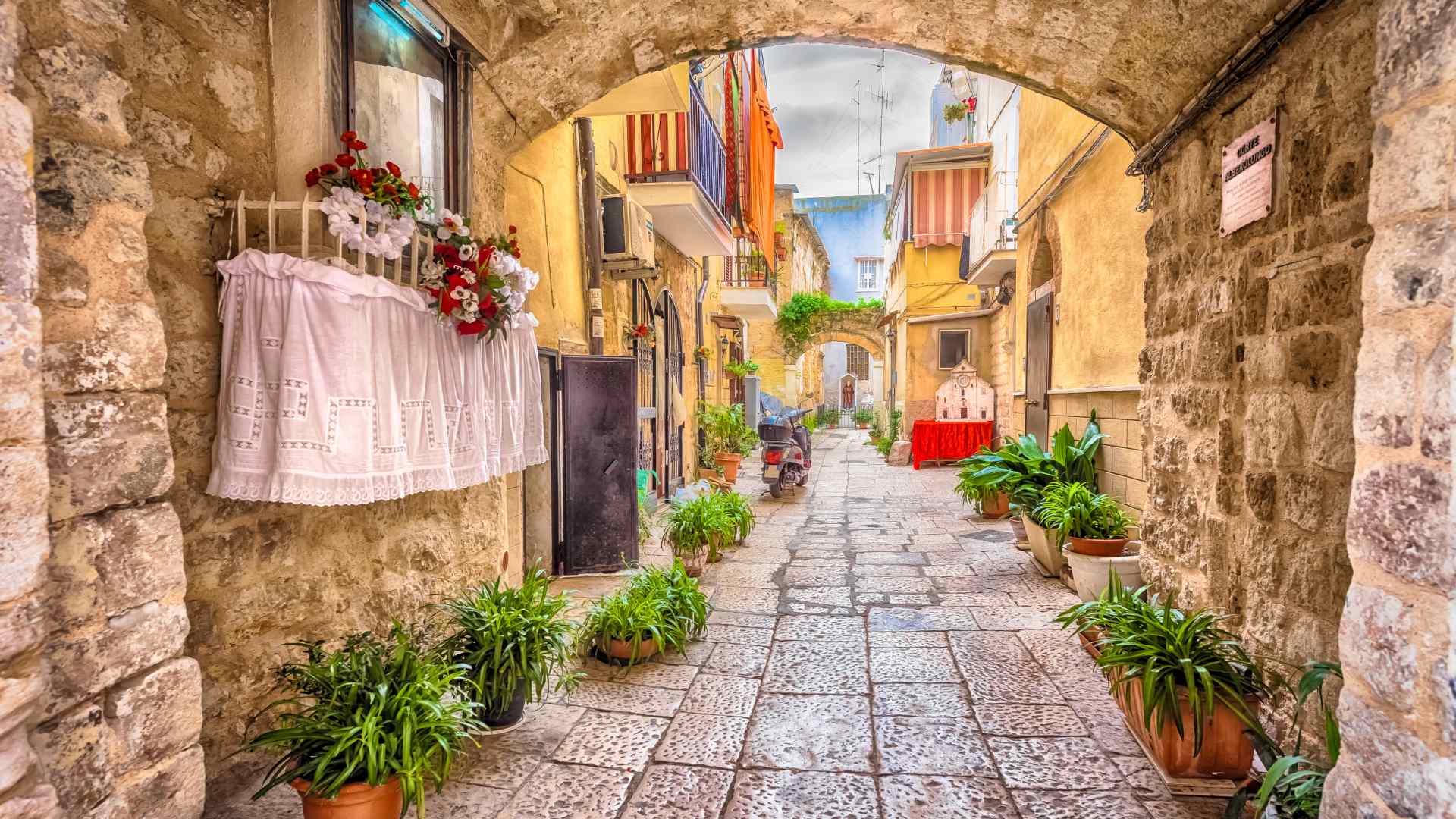
Bari Vecchia, the old quarter, is a knot of pale stone lanes with laundry strung overhead and a basilica holding the relics of the man who eventually became Santa Claus. You can see the best of it in three unhurried hours without booking a thing.
The competing pull is Alberobello inland, where more than a thousand conical stone houses look like a village designed by somebody who really liked hats. It is worth the trip, but it will eat the entire day.
My advice is to pick one and commit. If you are stacking Italian calls, my roundup of Mediterranean cruise ports helps you work out where Bari earns its slot.
If you would rather arrive a day early, our Bari cruise port hotels guide has the shortlist.
Quick Facts
- Where you land: the passenger and cruise quays on the western side of Bari’s harbor, immediately alongside the old town. Berths are assigned around ferry and commercial traffic by the Southern Adriatic Port System Authority, so the exact quay varies by day.
- Dock or tender: Ships normally berth in this large commercial and ferry port, while tendering is not the usual operation.
- Into town: The edge of Bari Vecchia is roughly a 10 to 20 minute walk depending on which quay you get.
- Currency and language: The euro (EUR) and Italian, and cards work almost everywhere.
- Time zone: Central European Summer Time (CEST, UTC+2) during the cruise season, Central European Time (CET, UTC+1) in winter.
- Operational caution: Berths and walking routes can change around ferry and commercial traffic, so follow the ship’s current instructions.
Berths, shuttles, and the walk into Bari Vecchia
Bari is a busy multipurpose port, so cruise ships share the water with Greek and Albanian ferries, containers, and the occasional naval visitor. That means your berth is assigned around the rest of the traffic rather than handed to you by tradition.
The good news is that the passenger side of the harbor sits directly against the old town, which is why the walk is so short. From the nearest quays you are at the castle and the cathedral in about a quarter of an hour.
Cruise facilities and berth assignments continue to change around Bari’s busy ferry and commercial operation. Use the port authority and your ship’s daily instructions for the current gate, shuttle, and pedestrian route rather than relying on a terminal rendering or an older review.
Port security means you cannot simply stroll across the docks in whatever direction you fancy. Follow the marked pedestrian route or take the shuttle to the gate, then walk from there.
Check your daily program for the approved walking route and whether a berth shuttle is compulsory, optional, free, or paid. Even a close quay can involve a security-controlled path that is longer than the straight-line distance.
Getting around
Central Bari is compact and flat, and transport inside the city is rarely necessary. Old town, cathedral, castle, and the seafront promenade all connect on foot.
Bari Centrale station is the key to everything beyond the city, and it is a walk of roughly 20 to 25 minutes from the port through the shopping streets. A taxi covers it in a few minutes if the clock is tight.
Trenitalia regional trains can reach Polignano a Mare in about 25 to 35 minutes, depending on the service. Check both directions, allow time to reach Bari Centrale, and validate or activate the ticket exactly as the product requires.
Alberobello services use Ferrovie del Sud Est, part of the Trenitalia group, and may involve a direct train, connection, or replacement bus. The schedule varies by day and season, so an independent visit needs both returns saved before leaving Bari.
Taxis wait at the port on cruise days and should run on the meter. Agree a price in advance for any longer inland run, and get it in writing if you can.
The stops I would actually spend time on
Bari rewards wandering more than ticking off sights, but a few places genuinely deserve a stop. These are the ones I would build a day around.
Basilica di San Nicola: This powerful Romanesque church has a crypt holding the relics of Saint Nicholas. Confirm current hours around services before relying on interior access.
Bari Vecchia: The old quarter is the central attraction, with pale lanes, shrines, courtyards, and daily neighborhood life. Give it an hour without forcing a rigid route.
Strada delle Orecchiette: On Arco Basso, residents make the small ear-shaped pasta on tables outside their doors. Watch respectfully because this is a lived neighborhood as well as a visitor stop.
Cattedrale di San Sabino: Bari’s other great Romanesque church provides a useful contrast with San Nicola. Check current access around worship and events.
Castello Svevo: The Norman and Swabian castle stands on the old town’s landward edge with thick walls and a moat. It is worth circling even if you skip the interior.
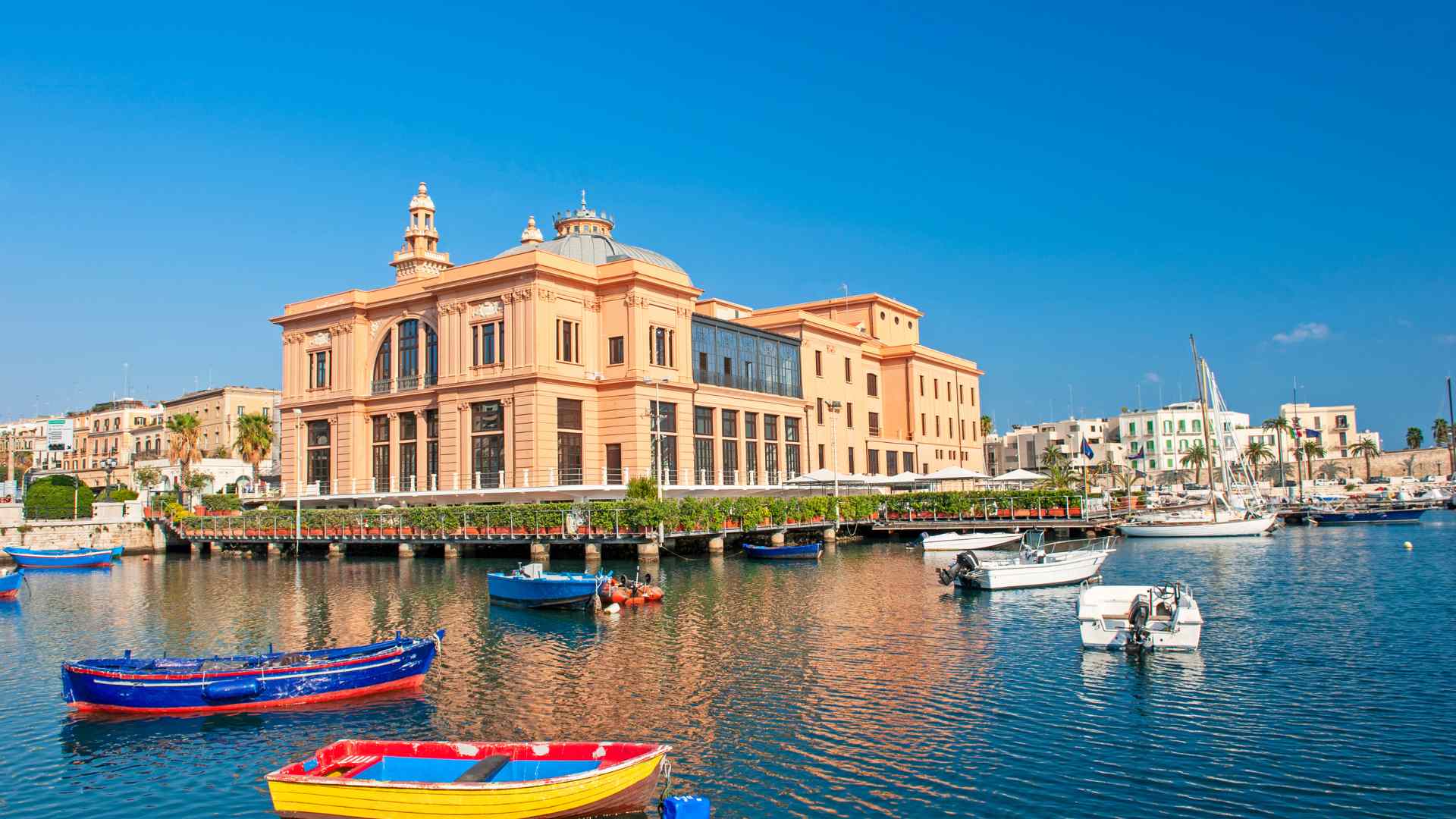
Lungomare and Piazza del Ferrarese: The seafront promenade and the piazza at its old-town end form a natural coffee stop. Sit outside and watch the city move around you.
Via Sparano: The pedestrian shopping spine of the modern Murat district is useful for Italian shops rather than port souvenirs. It also points toward the train station.
Alberobello: The inland trulli town is the reason many travelers book an excursion from Bari. Budget most of the day and accept that you will see little of Bari itself.
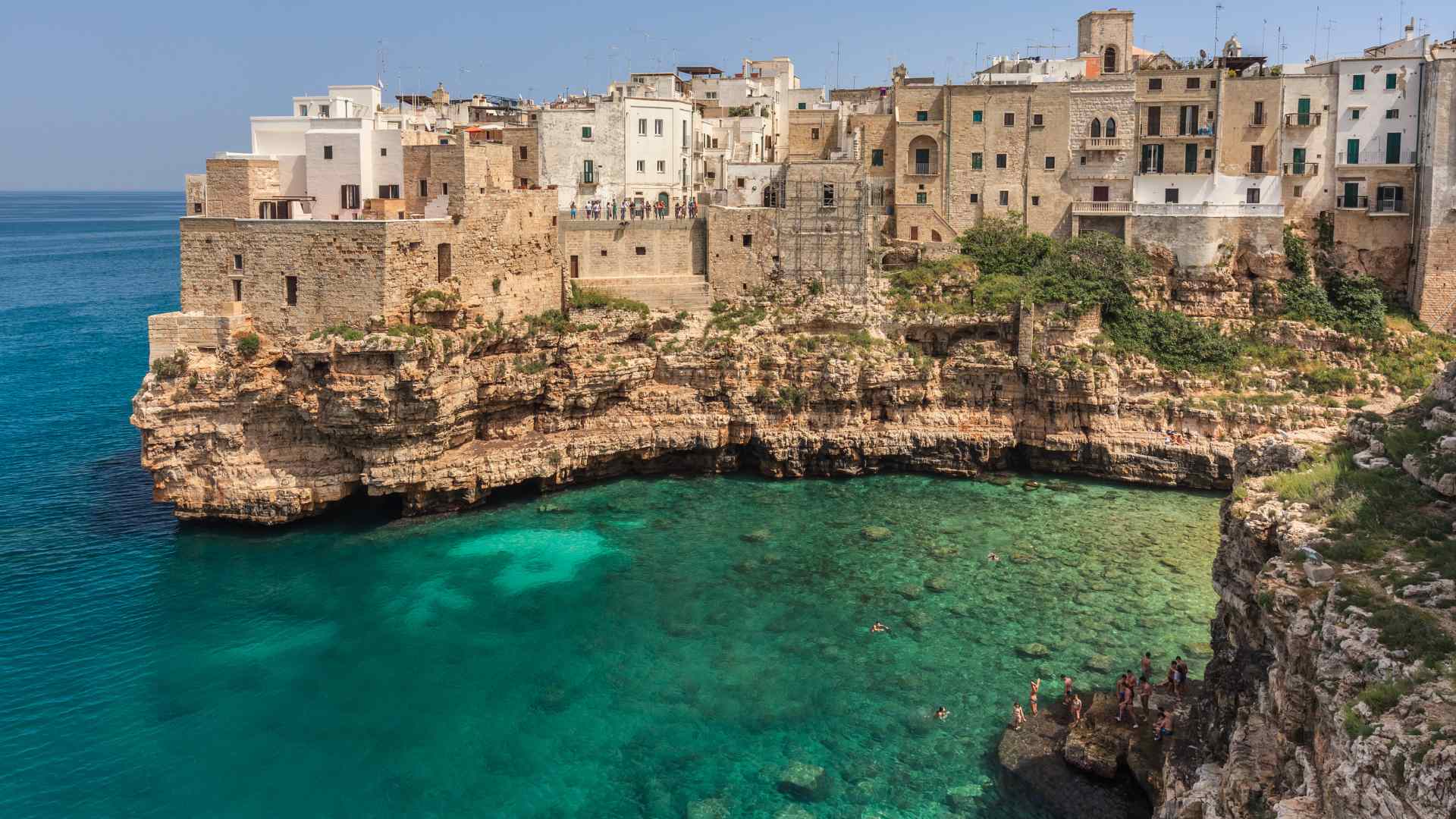
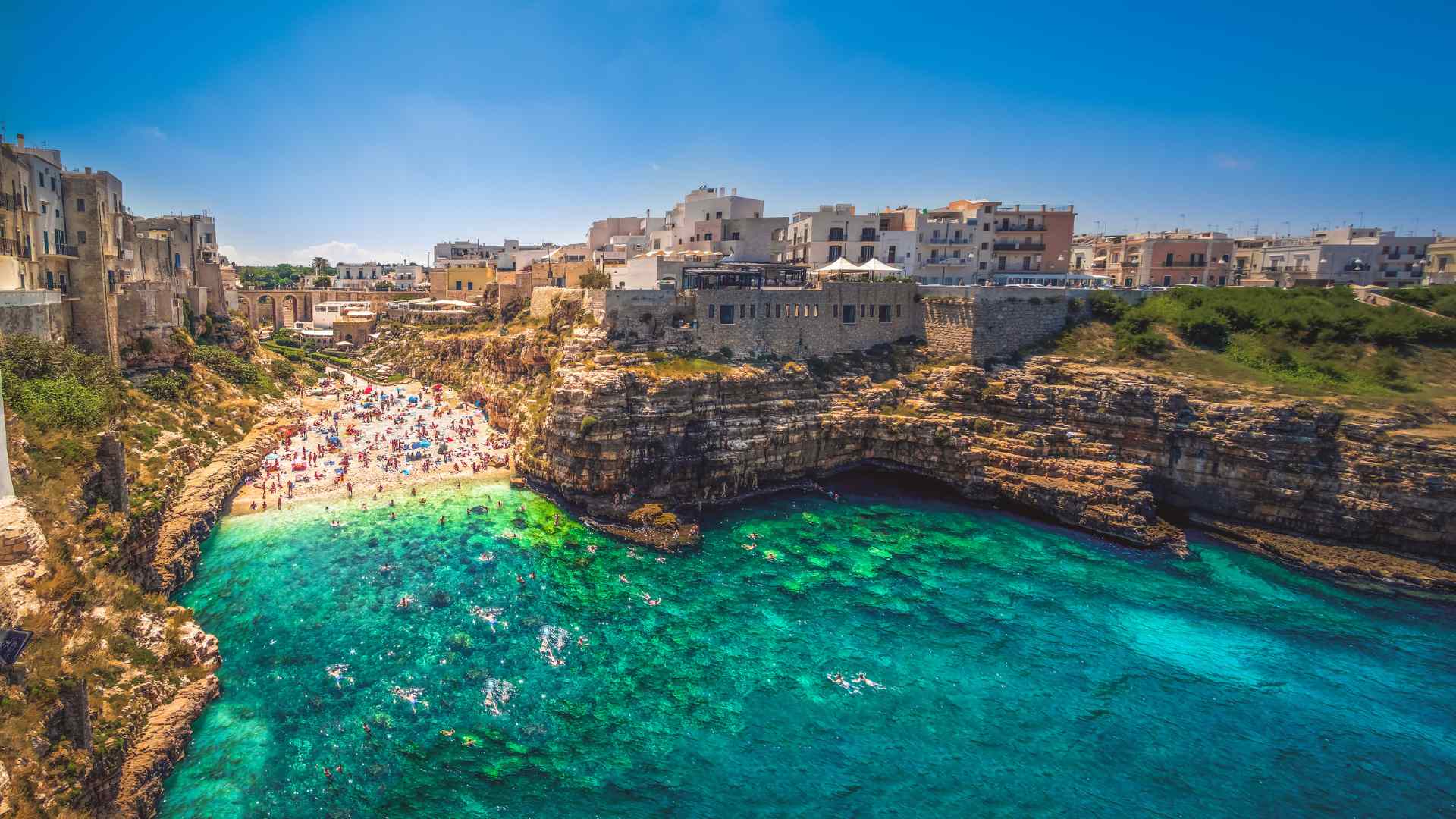
Polignano a Mare: This cliff-top town sits above a small cove beach down the coast. It can be a satisfying half-day escape when current regional transport fits the call.
Fun fact: The trulli of Alberobello are dry stone houses built without mortar, a prehistoric technique still standing in a town of more than 1,500 of them. UNESCO inscribed the site in 1996, and the World Heritage listing counts 1,030 trulli in the Rione Monti quarter alone.
How I would plan the day
On a standard call, walk straight into Bari Vecchia before the ship’s tours have finished loading. The old town is at its best early, when residents are still setting the pace.
San Nicola first, then the cathedral, then no plan at all until lunch. Focaccia barese and a panzerotto from a hole in the wall will cost you less than a ship coffee.
If Alberobello is the reason you chose Bari, use a ship excursion, a prebooked road transfer, or the first practical public connection. Independent rail can work, but an infrequent return or bus substitution can consume the safety margin.
Matera is spectacular but farther inland and belongs to a protected full-day excursion or carefully timed private vehicle. Combining it with Alberobello or a meaningful Bari visit creates too much road time for most calls.
If the weather turns, Bari holds up better than most because so much of the good stuff is indoors or arcaded. Two churches, a castle, and a long lunch is a perfectly respectable rainy day.
A realistic word on accessibility
The docking arrangement is the easy part, since you walk off onto a flat quay with no tender to negotiate. The seafront promenade and the modern Murat grid are smooth, wide, and genuinely pleasant on wheels.
Bari Vecchia is the honest problem. The lanes are worn stone, frequently cambered, and studded with small steps that nobody is going to remove.
Church access can change around services, and crypts, roof areas, or older entrances may still use stairs even when the main nave is reachable. Ask each site about the exact route and keep a step-free waterfront alternative.
When to go, and the weather
Bari sits on the Adriatic with a classic Mediterranean climate, and the cruise season runs broadly from spring into late autumn. May, June, September, and October are the sweet spots.
High summer typically pushes daytime highs into the mid 80s Fahrenheit, with strong sun and very little shade in the piazzas. The old town’s narrow lanes are your friend at that time of year.
Winter calls are mild rather than warm, with daytime highs commonly in the mid 50s Fahrenheit. Rain is more likely between November and March, and the wind off the Adriatic sharpens it.
Pack shoes with grip, because polished old town stone plus a light shower is a comedy waiting to happen. Shoulders and knees covered gets you into the churches without a discussion.
Plans for four, seven, or nine hours
About four hours: stay in Bari for San Nicola, the cathedral, Bari Vecchia, and lunch, then start through port security at least 60 minutes before all-aboard. This gives the best experience with the least transportation risk.
About seven hours: choose Polignano a Mare by a confirmed train or Alberobello by protected road transfer, then add only a short Bari stop if time remains. Return to the port area 75 to 90 minutes before all-aboard.
Nine hours or more: Alberobello works comfortably with reserved transportation, while Matera becomes possible as the one main excursion. Do not combine the inland headline towns unless the cruise line sells and protects that exact itinerary.
Non-Schengen visitors may encounter Entry/Exit System processing at their first external Schengen crossing. ETIAS is not operating as of September 10, 2026, and travelers should use the European Union’s official site for the future launch rather than a commercial form.
Quick answers
Can you walk from the Bari cruise berth into town? Often yes in roughly 10 to 20 minutes after the approved gate, but the exact berth and security route control the real distance.
Is Alberobello doable on your own? Yes on a long call with confirmed Ferrovie del Sud Est trips both ways, although a road transfer is safer when service involves connections or replacement buses.
Do you tender at Bari? Normal calls berth in the large commercial and ferry port, with passengers following the assigned shuttle or pedestrian route to the gate.
What should I eat here? Try orecchiette with turnip tops, focaccia barese, or a fried panzerotto, while checking ingredients carefully for allergies or dietary restrictions.
The last word
Bari is not polished and it is not trying to be, which is precisely its charm. It is a real city that lets you walk in off the ship and eat well for the price of a ship cocktail.
If short walks off the gangway are what you look for, my list of walkable cruise ports puts Bari in good company. Very few Italian calls make it this simple.
For the rest of the Adriatic, my Trieste and Ravenna guides cover the northern end of the same sea. Together they show how differently Italy handles a cruise ship depending on the postal code.
How this guide was researched: This guide uses the Southern Adriatic Port System Authority, Trenitalia and Ferrovie del Sud Est, official Puglia tourism and attraction sources, UNESCO, and European Union entry guidance. Berths, shuttles, rail, access, attraction status, and return margins were reviewed on September 10, 2026; see our Editorial Policy.