Volos Cruise Port: City, Pelion & Meteora
Volos gives you a rare Greek port choice: stay close for a low stress city day, climb into the stone villages of Pelion, or commit to the long road toward Meteora. The right answer depends less on ambition than on your actual berth, port hours, mobility, and tolerance for spending several hours in a vehicle.
I would begin by confirming where the ship has been placed and whether a shuttle is operating, then choose one geographic direction. Volos and its waterfront can fill a pleasant day, Pelion delivers mountain scenery with manageable road time, and Meteora is a major expedition that needs disciplined return planning.
Volos Cruise Port Quick Facts
- Arrival: Cruise ships commonly berth at Volos, but the assigned quay, walking route, or shuttle arrangement depends on port operations and ship size.
- Location: The commercial port meets the city waterfront, making central Volos much easier to reach than many industrial cruise ports.
- Best first step: Confirm the gangway, port gate, shuttle stop, and all aboard time before leaving the secure area.
- City day: The promenade, Argonauts waterfront, Saint Nicholas area, cafés, and shopping streets suit an easy independent visit.
- Museum: The Athanasakeio Archaeological Museum presents finds from Thessaly, including material from Sesklo and Dimini.
- Pelion: Portaria and Makrinitsa are popular mountain village choices, usually reached by taxi, tour, rental vehicle, or limited public bus.
- Meteora: The monasteries require a long road journey each way and are safest with a ship excursion or carefully timed private tour.
- Currency: Greece uses the euro, and cards are common, though some cash is useful for small purchases.
- Accessibility: The berth may be straightforward, but gangway slope, port transport, village paving, and monastery stairs vary.
- Return rule: Work backward from all aboard time and add margin for port traffic, mountain roads, and security at the gate.
Expect a Berth, but Read the Ship’s Instructions
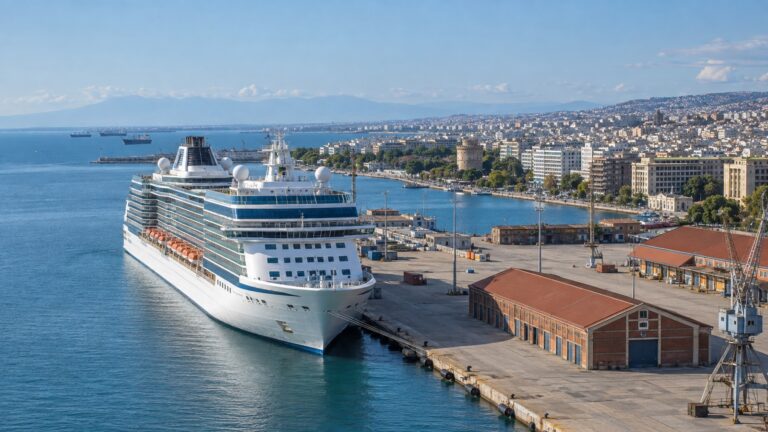
Volos is a working port with a central pier and passenger facilities close to the urban waterfront. Many cruise ships berth rather than tender, although the specific quay, pedestrian permissions, shuttle plan, and gangway conditions can change with vessel dimensions and daily operations.
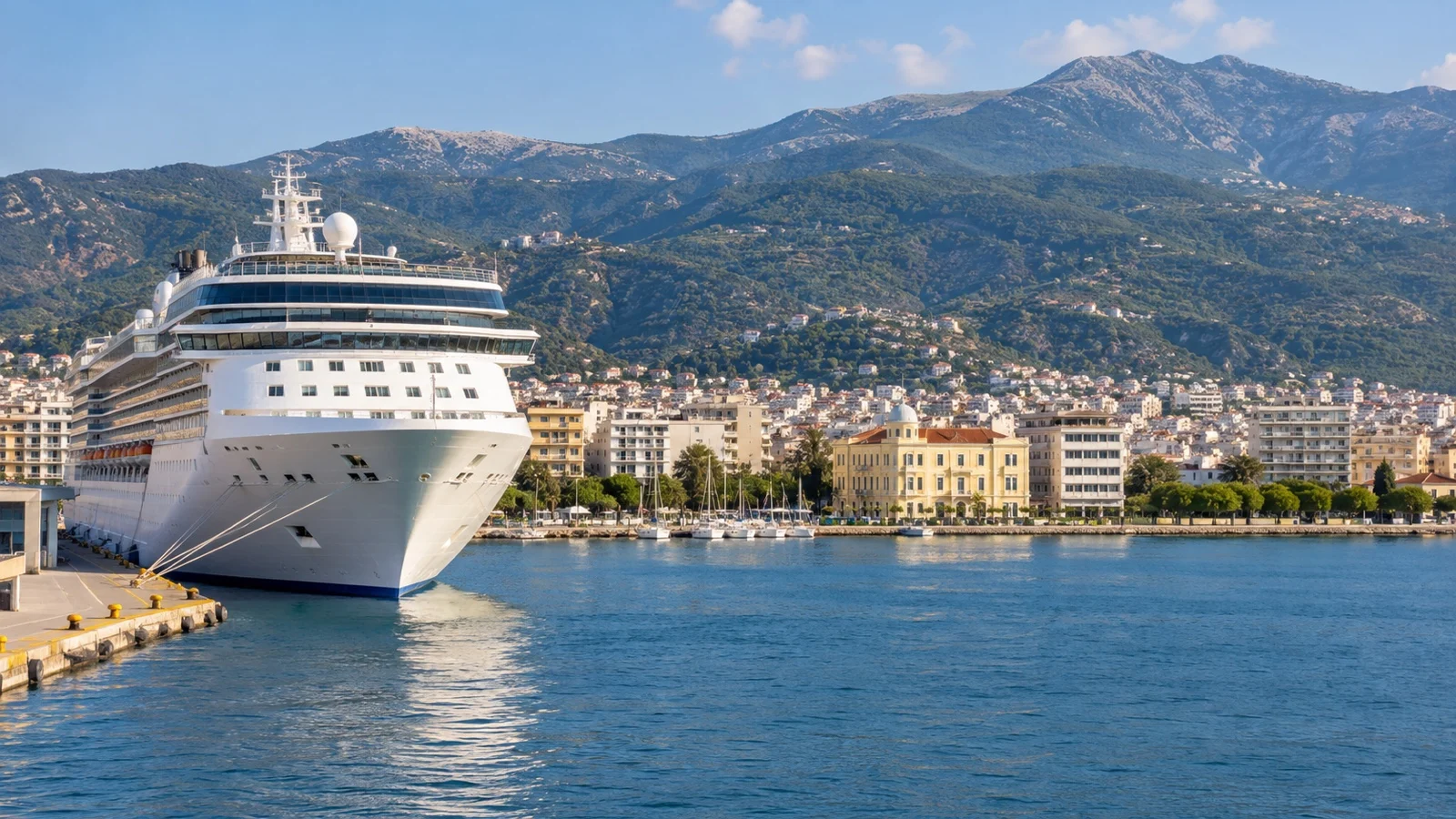
Use the cruise line’s daily program as the final authority, not a generic map. If the port supplies or requires a shuttle, note its last run and drop off point, because reaching the port boundary is not always the same as reaching your gangway.
From the Port Into Central Volos
The center is generally close enough for an independent outing, but the practical walk begins at the authorized port gate rather than at the ship’s position on a satellite image. Follow marked routes and staff directions through working areas, where trucks, service vehicles, barriers, and restricted zones can make shortcuts unsafe.
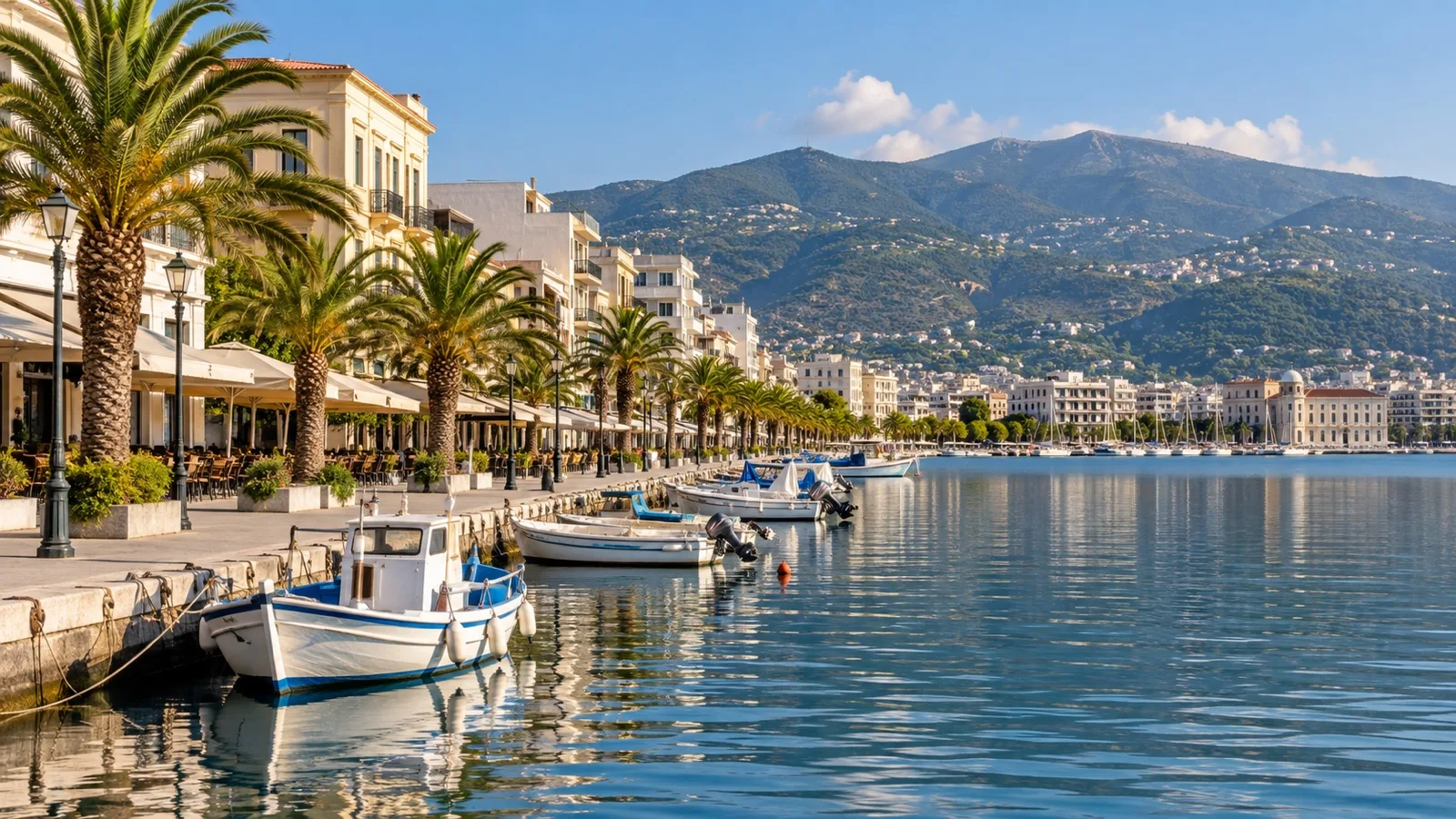
Once on the waterfront, Volos feels open and easy to understand, with the Pagasetic Gulf on one side and a gridded city behind it. The long promenade is useful for orientation, while Mount Pelion forms the green backdrop that explains why city and mountain can fit into the same port call.
A Relaxed Volos Waterfront Day
Begin with the seafront and the sculpture associated with the Argo, the legendary ship whose story is tied to ancient Iolcos and Jason’s voyage. This is a modern city rather than a preserved island village, and its appeal lies in the rhythm of the water, bicycles, fishing boats, cafés, and broad views across the gulf.
Turn inland toward the Saint Nicholas district for pedestrian streets, shops, and everyday city life. Volos was heavily shaped by twentieth century earthquakes and rebuilding, so look for its mix of neoclassical fragments, modern blocks, industrial heritage, and public spaces rather than expecting one continuous ancient center.
The pace is forgiving because food, shade, restrooms, and taxis are easier to find here than in the mountain villages. A city day is particularly sensible during extreme heat, uncertain weather, a short call, or any arrival when the ship’s berth procedure takes longer than expected.
The Archaeological Museum Adds Real Depth
The Athanasakeio Archaeological Museum of Volos stands east of the central waterfront in a neoclassical building. Its official museum listing highlights finds from across Thessaly, including important Neolithic material from Sesklo and Dimini, so it gives context to a region whose history reaches far beyond the Argonaut legend.
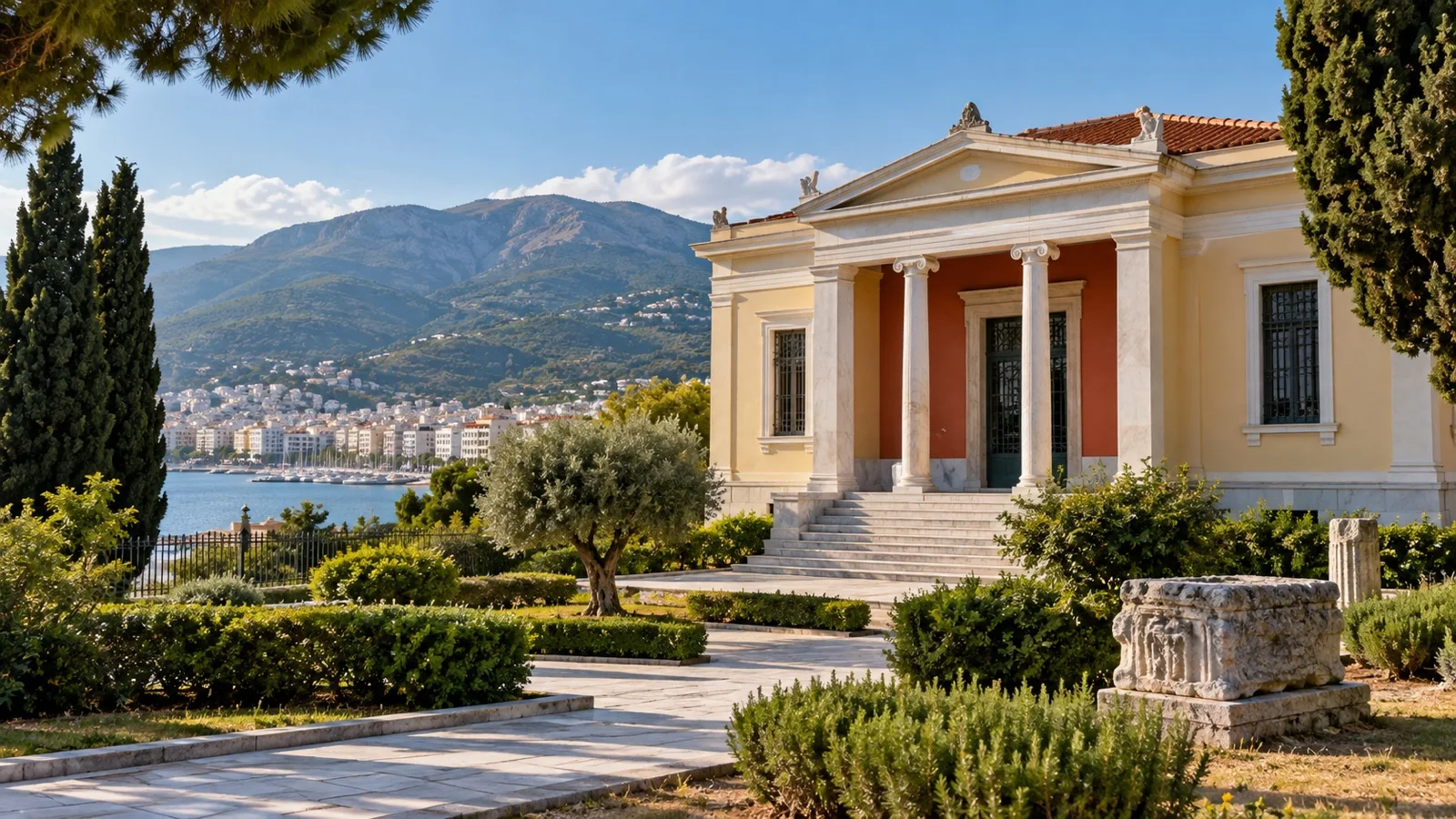
It is not directly beside the cruise gate, so plan a taxi, local bus, or a longer waterfront walk according to your time and comfort. Official information currently notes a ramp, lift, and accessible restroom, but travelers should confirm the route through the galleries and any temporary access changes before visiting.
Museum days, hours, admission, and holiday arrangements can change, and Greek state museums may use seasonal schedules. Check the official museum page on the morning of your visit and avoid promising yourself a rushed final admission near closing time.
Industrial Heritage in Palia
The former Tsalapatas Rooftile and Brickworks gives another view of Volos, this time through its industrial past. The complex sits in the Palia district and can pair with a neighborhood lunch or a look at the older urban fabric, but current opening arrangements should be checked before crossing town.
Palia also makes sense for travelers who enjoy cities as working places rather than collections of postcard monuments. Give yourself time to navigate crossings and active streets, and use a taxi if summer heat or limited walking endurance would turn the distance into the main event.
Pelion Begins Above the City
Mount Pelion rises immediately east of Volos, and its villages exchange the port’s straight streets for plane trees, stone houses, tiled roofs, fountains, and steep lanes. The official Visit Greece description counts dozens of villages across the mountain, so Pelion is not one stop but a broad region with very different road commitments.
For a cruise day, Portaria and Makrinitsa are the usual practical pair because they sit relatively close to Volos and can be combined by an organized tour or private vehicle. Even then, narrow roads, tour buses, local traffic, and limited parking can stretch the schedule beyond what a distance estimate suggests.
Portaria and Makrinitsa
Portaria offers shaded squares, traditional architecture, cafés, and a gentler base for experiencing Pelion. Makrinitsa climbs more dramatically and is known for broad views toward Volos and the Pagasetic Gulf, but its cobbled lanes and steps demand more balance and energy.

Choose a drop off and collection point before the driver leaves, since vehicles cannot deliver you to every lane or square. If you have limited mobility, ask specifically how far the walk is from the legal stopping place and whether steep cobbles can be avoided.
A private taxi can work well when the fare, waiting time, route, and port return are agreed in advance. Write down the ship name and exact gate, keep the driver’s number, and pay attention to whether the quotation is one way or includes the full excursion.
Public Buses Require a Current Timetable
KTEL Magnesia operates intercity and regional buses from Volos, including seasonal routes into Pelion. The official site publishes separate summer and winter schedules, which means an old screenshot can become wrong at the precise point the season changes.
Check the outbound and return service on the official KTEL Volos site, then identify the correct station and an earlier backup bus. A route that works for an overnight guest may be too fragile for a cruise passenger if one missed departure eliminates the return cushion.
Meteora Is Magnificent and Far Away
Meteora’s monasteries stand on extraordinary sandstone pillars near Kalambaka, and UNESCO recognizes the property for both cultural and natural significance. It is one of mainland Greece’s great sights, but from Volos it involves a long drive in each direction before you count parking, monastery access, and traffic.

This is the day to favor a ship excursion or a reputable private operator who regularly serves cruise calls. Tell a private guide the all aboard time before booking, ask what happens if the ship arrives late, and insist on a return plan with real margin rather than a schedule built around perfect roads.
Trying to combine Meteora with a meaningful Volos or Pelion visit usually produces more windshield than experience. If Meteora is your priority, let it be the entire excursion and accept that the city waterfront may be limited to what you see from the vehicle.
Monastery Access and Dress at Meteora
The monasteries are active religious sites, and individual opening days can differ, sometimes leaving only a selection available on a particular date. Official or locally confirmed schedules matter because a tour marketed generally as Meteora does not guarantee entry to every monastery.
Access commonly includes steps, uneven stone, and exposed paths, while some viewpoints can be enjoyed with less walking. Ask which monastery is planned, how many steps are involved, where the vehicle can stop, and whether the itinerary can be adjusted for your mobility.
Dress modestly and follow the instructions posted at each monastery regarding shoulders, legs, photography, and quiet behavior. Carry water for the journey, but treat worship spaces with the restraint you would expect in any living sacred community.
Ancient Sesklo and Dimini
The archaeological sites of Sesklo and Dimini connect the museum’s objects with the landscapes where Neolithic communities lived. They can suit travelers with a strong interest in early history, but opening status, shade, pathways, and transportation should be verified through Greece’s Ministry of Culture before departure.
An archaeological itinerary is easier to control than Meteora because the sites are much closer to Volos, yet it still benefits from a taxi or guide who understands the entrances. Do not assume a driver will wait unless that has been included in the agreement.
Beach Time Around the Pagasetic Gulf
The gulf has beaches and swimming areas, but the best choice for a cruise call depends on transport, current water conditions, and how much infrastructure you want. A local recommendation from the visitor office or a trusted operator is more useful than a static ranking compiled for vacationers with a car.
Bring water shoes if the shore is pebbly, watch for slippery entries, and never dive into unfamiliar water. Confirm the pickup or bus before settling in, because a beautiful beach can become an awkward final stop when taxis are scarce.
Accessibility in Port and Beyond
A berth removes the tender transfer for many calls, but it does not guarantee a level journey. Gangway angle changes with the ship and tide, walking distances vary by quay, and the port may require a shuttle or accessible vehicle between the vessel and gate.
Ask the cruise line about gangway assistance and the port route, then question tour providers about vehicle steps, securement, storage for mobility equipment, accessible restrooms, and the actual walking surface. Broad claims such as easy access are less useful than measurements and a clear description of each transfer.
Central Volos offers the strongest chance for a flexible day because you can shorten the route and use taxis as needed. Makrinitsa’s slopes and Meteora’s monastery access are more demanding, though a customized scenic drive can still provide excellent views without forcing every interior visit.
Heat, Rain, and Mountain Weather
Summer heat can be intense along the port and waterfront, while reflected sun on paving adds to fatigue. Start outdoor walks early, carry water, use sun protection, and save an air conditioned museum or long lunch for the hottest part of the call.
Pelion can be cooler, cloudier, or wetter than Volos, and mountain roads deserve caution in poor visibility. Bring a light layer even when the port feels warm, and let a professional driver alter the route when weather makes a viewpoint or narrow road unwise.
Spring and fall calls can change character quickly, while winter schedules and attraction hours may be limited. Use the Hellenic National Meteorological Service for the regional forecast, then follow the ship and local authorities for operational decisions.
Eat Like Volos Without Losing the Clock
Volos is famous for tsipouradika, informal establishments where small plates traditionally accompany tsipouro. The ritual is social and unhurried, so cruise passengers should order with a clear sense of time and remember that alcohol, heat, and a moving gangway are a poor combination.
Seafood, vegetable dishes, grilled meats, cheese, and small shared plates make it easy to sample widely. Ask about allergens and preparation, especially with mixed seafood and shared fryers, and choose a restaurant that can serve you within the margin you actually have.
Money, Language, and Practical Safety
Greece uses the euro, and cards are accepted in many city businesses, though some cash is useful for small cafés, buses, or remote stops. Confirm taxi terms before setting out, keep receipts when appropriate, and decline optional card conversion if your own bank offers a better exchange rate.
English is common in tourism, but a written destination in Greek can help with a taxi or bus. Keep valuables controlled in crowded areas, cross busy roads carefully, and stay outside fenced port and railway areas even when a shortcut looks obvious.
Return Math for Volos
Work backward from all aboard time, not from the published sailing time. Your private deadline should include security at the port, the distance from the gate to the ship, any shuttle wait, and enough margin to absorb traffic or a delayed mountain descent.
For Pelion, leave the village while there is still a realistic backup route or taxi option. For Meteora, use the operator’s conservative return recommendation and resist adding a final stop when road conditions have already consumed the cushion.
A central Volos day is forgiving because you can remain close to the port, but it still deserves discipline. Note the correct gate, keep the ship’s contact information, and be aboard before the final flow of passengers turns a simple gangway into a queue.
Volos Cruise Port Questions
Do cruise ships dock in Volos?
Many cruise ships berth at Volos, often at a quay close to the city, but daily assignments and pedestrian arrangements vary. Check your ship’s instructions for the actual gangway, shuttle, and authorized gate.
Can I walk from the port into town?
Central Volos is close to the port, and walking may be practical once you leave through the designated gate. The distance from the ship itself depends on the assigned berth, so follow the marked route rather than estimating from the waterfront.
Is Pelion possible during a cruise call?
Yes, nearby villages such as Portaria and Makrinitsa can fit many calls with a tour, taxi, or carefully checked bus plan. Choose one compact route and keep a substantial return margin for mountain traffic.
Can I visit Meteora from Volos?
Meteora can be reached on a long excursion, but it requires significant road time each way. A ship excursion or cruise experienced private operator is usually the most robust choice, especially on anything shorter than a full day call.
What is the easiest independent plan?
Stay in Volos for the waterfront, central streets, a museum visit, and a relaxed meal. This keeps transport simple and allows the day to expand or contract around the actual berth and weather.
Let One Landscape Define the Day
Volos rewards a clear choice more than an overfilled route. Give the city, Pelion, or Meteora enough time to reveal its character, then protect the return margin that lets you enjoy the final view instead of calculating every traffic light.
For current planning, consult the Volos Port Authority, Visit Greece, the official archaeological museum listing, KTEL Magnesia, and the UNESCO Meteora listing. Always follow your cruise line’s live berth, shuttle, and all aboard instructions, because those operational details take priority over any general guide.