Car Seats on a Cruise: How Families Actually Get Around in Port
The excursion bus at the pier has forty-something seats, no belts on most of them, and nowhere to put the car seat you did not bring. Your four year old is already climbing the steps.
My quick take
This is the one family cruise question with no clean answer, and I would rather say that up front than pretend otherwise. You are choosing between a bulky object you drag through three airports and a vehicle that has no proper restraint for your kid, and neither option is the one you want.
What I would actually do is decide port by port rather than trip by trip. If most of your days are walkable and only one or two need a vehicle, bring one small restraint and book those two days with an operator who will confirm a seat in writing.

The quick facts
- Ships do not carry them: Cruise lines do not supply car seats for shore excursions, and most do not lend strollers either.
- Port taxis rarely have one: Assume no car seat, and in a lot of destinations assume no rear seat belt either.
- Legal is not the same as safe: Many places exempt taxis and hired vehicles from child restraint rules entirely.
- Boosters need two belts: A booster only works with a lap and shoulder belt, which many port vehicles do not have.
- Airlines are the easy part: US carriers generally check a car seat free, outside your normal baggage allowance.
What is actually on the excursion bus
Shore excursion transport is usually a full size motorcoach or a minibus, and the seats are bench style with no restraint fitted. On a lot of the older coaches working Caribbean and Mediterranean routes there is no belt at all in the passenger rows.
US rules now require lap and shoulder belts on new over-the-road buses, but that rule was written for buses built after it took effect and existing vehicles were never made to retrofit. A coach built fifteen years ago is still perfectly legal to run with bare bench seats.
The taxi with no belts, which is the part nobody warns you about
Port taxis in the Caribbean, Mexico and much of Latin America are frequently open sided vans or converted trucks with bench seating down the sides. There is often no belt anywhere in the back, so the question of a car seat never even gets started.
In Europe and Asia the vehicles are usually sedans with working belts, which is a different problem. The belts are there, the car seat is not, and the driver is genuinely surprised you asked.
I sort ports into two buckets before I sail: places where a belt will exist, and places where it will not. That one distinction tells you whether a packable booster is worth carrying at all.
What the excursion desk will tell you, and what it means
Ask at the excursion desk and you will get a version of the same answer everywhere: no, we do not provide car seats, you are welcome to bring your own. The published guidance on what a line carries for babies and toddlers lists cribs and high chairs and stops well short of car seats.
What that answer does not tell you is whether the vehicle can even accept a seat you bring. The desk sells the tour and the operator owns the bus.
If you want a real answer, ask a narrower question. Ask whether the vehicle for that specific tour has lap and shoulder belts in the passenger rows, and ask it in writing before you sail.
The law says one thing and the curb says another
Child restraint law almost everywhere applies to private vehicles first, and hired vehicles get carved out. Florida, which handles an enormous share of US cruise traffic, exempts chauffeur driven taxis, limousines, vans, buses and motorcoaches from its child restraint requirement outright.
The pattern repeats overseas. In a lot of countries a licensed taxi is allowed to carry a child without the seat the law would demand in a family car, with the child moved to the rear as the substitute.
Being exempt from a law is not the same as being safe, and I want to be blunt about that. A crash does not check the statute, and an unrestrained child in a moving vehicle is at real risk regardless of what the local rule permits.
Nowhere in this is a suggestion that a lap is an acceptable place for a child in a moving car. It is not, at any speed, in any country, and no exemption changes the physics.
What families actually bring
In practice families land on one of four approaches, and which one fits depends almost entirely on the age of the kid. None of them is free of hassle.
- A lightweight travel seat: A stripped down forward facing or convertible seat, usually the lightest model the brand makes, carried for the whole trip.
- A packable booster: An inflatable or foam backless booster for older kids that flattens into a day bag.
- A vest style restraint: A harness worn by the child that routes the vehicle belt, sold as a certified child restraint in some markets and not in others.
- Choosing walkable ports: Booking an itinerary where the vehicle question mostly does not come up.
Under two the answer is simple, because a real seat is the only thing that restrains a child that size. Over four the packable booster does most of the work, and the two to four band is where you actually have to think.
The booster that fits in a day bag
For a kid who has outgrown a harness seat, a packable backless booster is the single most useful thing you can carry. Inflatable and foam versions weigh a pound or two and go flat enough to live under a beach towel.
Most backless boosters start somewhere around 40 pounds (18 kg), and the label on the seat is the number that matters, not a general rule you read online. Kids typically need a booster of some kind until the adult belt fits properly on its own, which is often around ten to twelve years old.
The fit test is the same one you use at home. The lap belt should sit low across the upper thighs and the shoulder belt should cross the chest and shoulder, and the official fit guidance is worth reading once before you pack.
A booster only works if the belt exists
The packable booster has one honest limit, and it is a big one. A backless booster does nothing on its own, because its entire job is to raise the child so an adult lap and shoulder belt lands in the right place.
Put that booster in a vehicle with a lap belt only and you have made things worse, not better. Put it in a vehicle with no belt at all and you are carrying a foam block around the Caribbean for nothing.
So the booster is a great answer for European sedans, US and Canadian ports, Australia and New Zealand, and Japan. It is a poor answer for open sided island taxis, and I would not pretend otherwise to make the packing list feel tidier.
Getting the seat there, which means flying with it
The seat has to reach the ship, and for most people that means a flight. US airlines generally let you check a car seat and a stroller free and outside your normal baggage allowance, which removes the cost argument entirely.
You can check it at the counter, check it at the gate, or use it onboard if you bought the child a seat. A restraint approved for aircraft carries a label saying it is certified for use in motor vehicles and aircraft, and the rules about which cabin seat it can go in are worth knowing before you board.
Damage is the real risk. Checked car seats get thrown, dropped and stacked, and a seat that has taken a hard impact should not be trusted, so a padded travel bag and a photo of the seat at drop off are both cheap insurance.
Asking a private driver in advance, and how far ahead
This is the option that actually solves the problem, and it is underused. Private drivers and small tour operators in most cruise destinations will source a car seat if you ask when you book, because it is a normal request from families and they would rather keep the fare.
Ask at booking, not the week before, and give the child’s age and approximate weight in the same message. A month of notice is comfortable, two weeks is usually workable, and two days is a coin flip.
Get the confirmation in writing and bring it with you. I would also ask what kind of seat it is, because a borrowed seat with no history is a different thing from a rental company seat.
The ports where you never get in a car
The cleanest fix is an itinerary where the vehicle question mostly disappears. Plenty of ports put you on a pier within a few hundred yards of everything you came to see, and my list of the most walkable cruise ports is the place I would start if you are choosing a sailing around this.
Whittier is the extreme version, a town so small you can cross it in a few minutes on foot. At Icy Strait Point I walked the shore path rather than taking anything with wheels, and in Santa Marta the waterfront starts more or less where the pier ends.
Surface quality matters as much as distance when you have small kids, which is why the stroller friendly port list and the roundup of which ports are easiest with a toddler are the two I would read alongside it. A flat half mile beats a bumpy quarter mile every time.
Embarkation and debarkation day, the leg everyone forgets
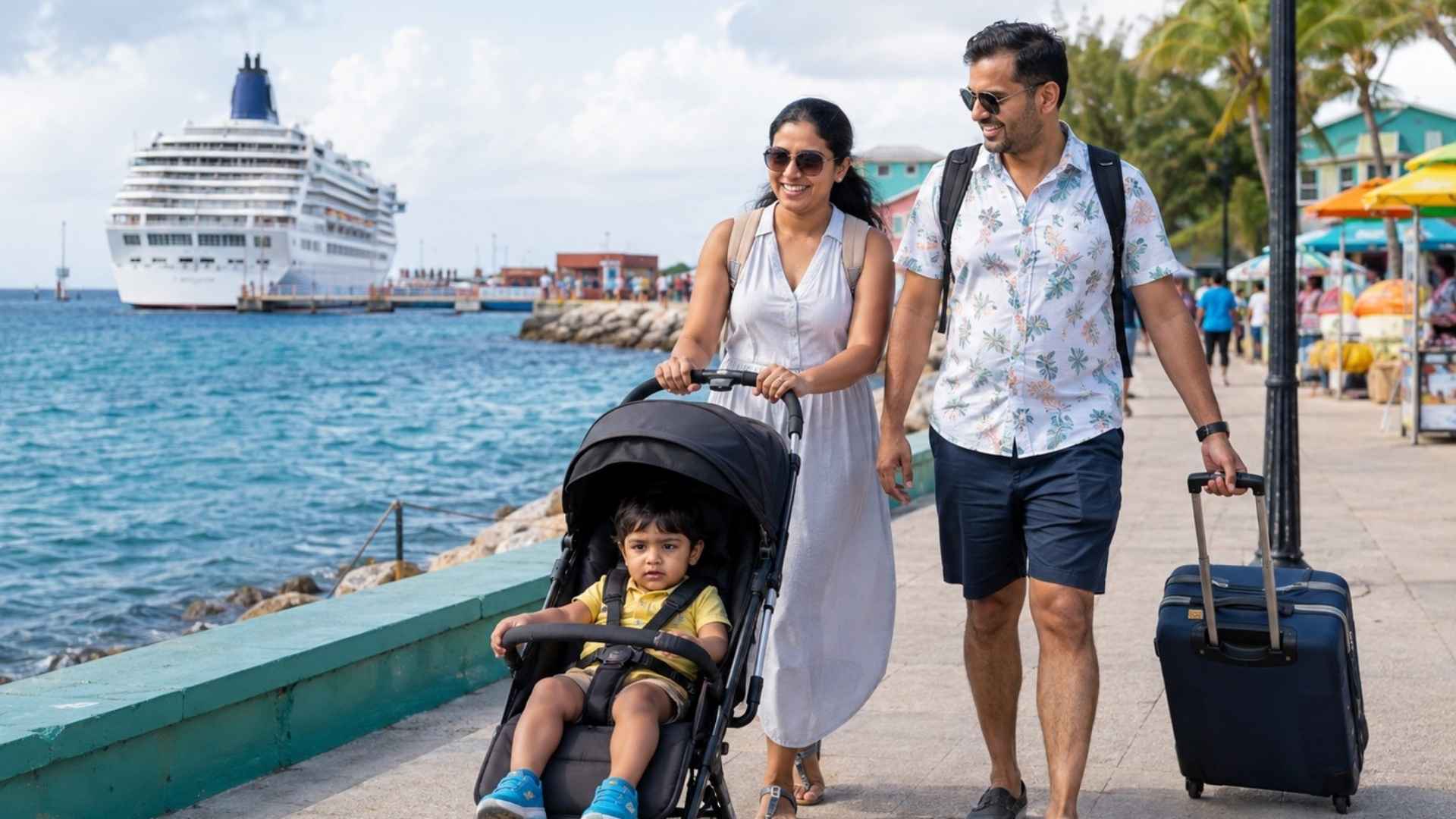
Families spend weeks agonizing over port day taxis and then book a cruise line airport transfer without a second thought. That transfer is a coach, and it has the same restraint situation as every other coach.
The embarkation and debarkation legs are also the longest vehicle rides of the whole trip, often 30 to 60 minutes on a highway. If you are going to carry one restraint for the entire vacation, these are the two rides that justify it.
A prebooked private car with a seat, or a rental car for the airport hop, both solve this cleanly. Book it before you fly, because the desk at 7am on debarkation morning is not where you want to negotiate.
Where the seat lives in the cabin
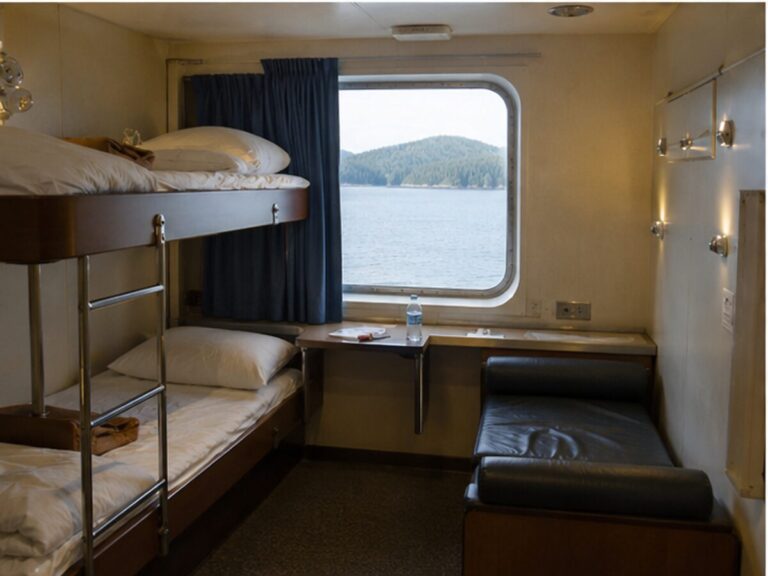
A standard inside cabin is small, and a convertible car seat is a large rigid object with an unhelpful shape. It does not slide under the bed the way a suitcase does, and it does not stack.
The spots that usually work are the top of the wardrobe, the floor of the wardrobe with shoes packed around it, or the sofa in a balcony cabin. Your cabin steward can often take it away and store it, and it is worth asking on day one rather than day four.
Timing the vehicle days around the kid
I would front load the driving ports and leave the walkable ones for later in the week when everyone is tired. My notes on building a port day around toddler naps apply directly here, because a car ride and a nap window are competing for the same hours.
If you are the only adult, weight this even harder toward walking. Handling a restraint, a bag and a child at a taxi rank alone is a lot, and my guide to solo parent cruising with kids covers the rest of that math.
Quick answers
Do cruise ships provide car seats for excursions?
No. Cruise lines do not supply car seats for shore excursions or transfers, and the published family equipment lists stop at cribs, high chairs and dining boosters.
Do taxis in cruise ports have car seats?
Almost never, and in many destinations the rear seat has no belt to attach one to. A prebooked private driver is the only reliable way to get a seat in a vehicle at a cruise port.
Is it legal to ride in a taxi without a car seat?
In many places yes, because taxis and other hired vehicles are commonly written out of child restraint law. Legal and safe are different questions, and the exemption does not make an unrestrained ride a good idea.
Can you check a car seat for free on a flight?
On US carriers, generally yes, and it usually does not count toward your baggage allowance. You can check it at the counter or at the gate, and gate checking means it gets handled less.
Is an inflatable booster good enough for a cruise?
It is a reasonable option for an older child in a vehicle with a lap and shoulder belt. It does nothing in a vehicle with a lap belt only or no belt, which describes a lot of island taxis.
Final word
There is no version of this where you get a car seat in every vehicle you ride in on a cruise. What you get is a set of tradeoffs, and the useful move is deciding which two or three rides genuinely matter and solving those properly.
For most families that means an airport transfer with a prebooked seat, one excursion day arranged with a private driver, and the rest of the week spent walking. That is a plan you can actually carry through an airport, which is more than most of the advice out there manages.
How this guide was researched: Child restraint and booster fit guidance, aircraft restraint rules, airline checked baggage policy for car seats, bus seat belt requirements and published cruise line family equipment lists were all checked in September 2026. Airline baggage terms, local taxi exemptions and what any individual tour operator can supply change often, so confirm the details that matter for your own sailing before you book. See our Editorial Policy.
More on this topic: browse every guide on accessible and family cruise planning.