Toddler Naps on a Cruise Port Day: Schedules, Strollers, and Backup Plans
A toddler nap does not care that the ship sails at 5 p.m. Your plan has to respect the nap, the route back, and the actual all-aboard time without turning the day into a stopwatch competition.
My quick take
For an early-arrival, directly docked port, start with a short morning outing and return to the cabin for lunch and the usual nap. Treat a second trip ashore as a bonus, not a promise.
For a tender port, a distant berth, or a short call, choose one outing and bring the nap setup your child already tolerates. A half day that ends happily beats a full day that ends in a sprint to the pier.
The quick facts
- Use your line’s all-aboard time: It may be well before the published departure time.
- Ship time can differ from local time: Follow the clock and instructions your ship publishes.
- A cabin nap works best at a direct dock: Tender boats and long terminal routes make two outings less practical.
- Kids’ club care is never a safe assumption: Age limits and port-day hours vary by line, ship, and sailing.
- Pack one easy fallback: A waterfront walk, playground, or quiet hour onboard can rescue the day.
Start with four times, not one
- Arrival time: When guests may actually go ashore, not simply the scheduled docking time.
- Nap window: The time your child usually falls asleep, plus a realistic range for the nap.
- Travel time: Gangway to destination and back, including shuttle, taxi, tender, and waiting time.
- All-aboard time: The deadline announced by your ship for that port.
Read the daily program and photograph the gangway sign before leaving. My guide to reading a cruise itinerary explains why scheduled arrival and departure are only the outer edges of your usable day.
Norwegian Cruise Line currently tells its guests to be onboard no later than one hour before scheduled departure and warns that shipboard time may differ from local time. That is Norwegian’s published rule, not a universal deadline for every cruise line.
Use the all-aboard time your own ship gives you, then add a family buffer for a diaper change, a slow shuttle, or a stroller problem. If the afternoon only works by taking the final practical ride back, it does not work.
Choose the morning-out plan when the port makes it easy
A morning outing is usually the cleanest fit when the ship docks early, the berth is close to town, and the nap normally starts around midday. Pick one main activity, one snack stop, and a firm turn-back time.
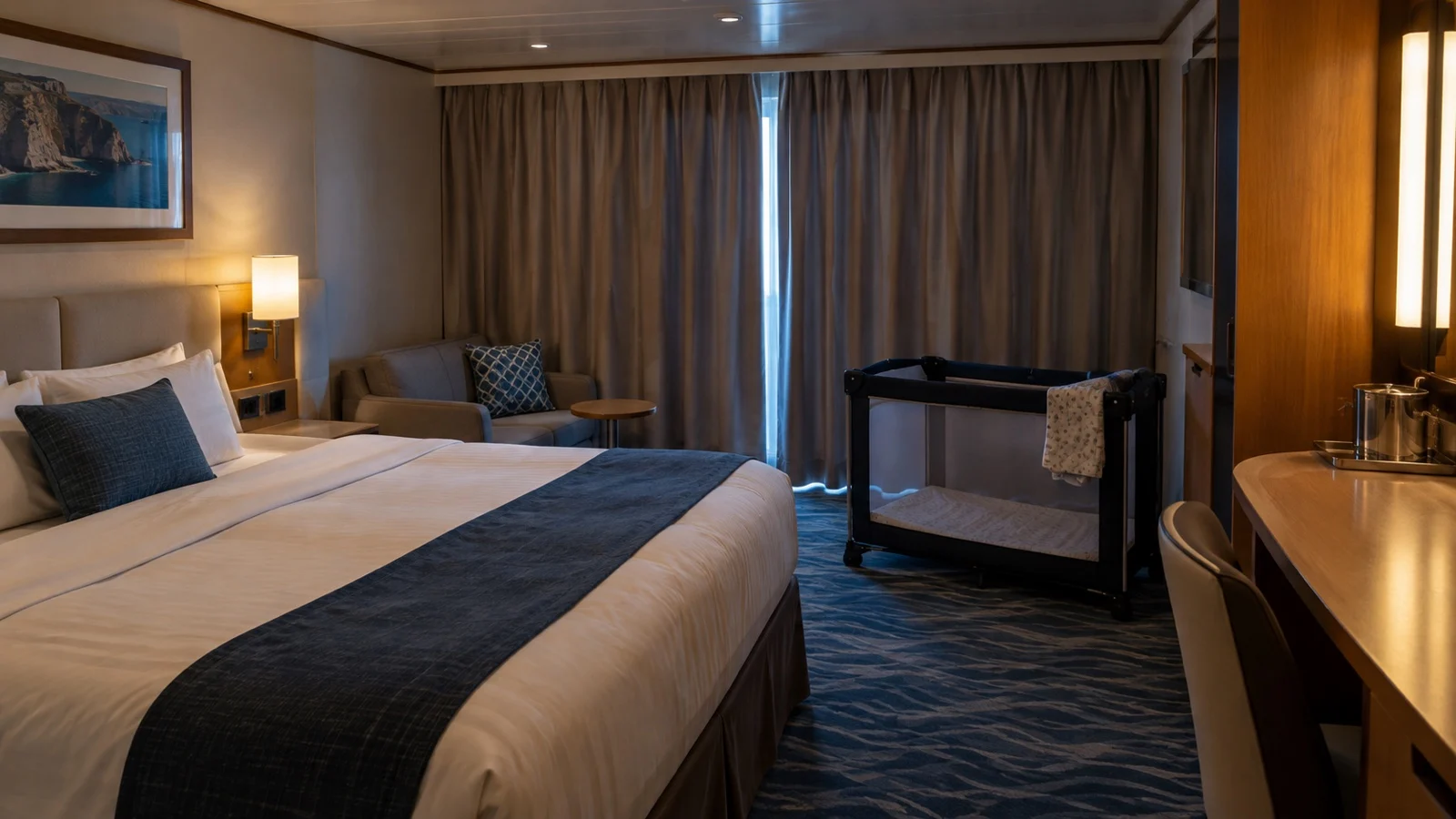
This plan protects the familiar cabin sleep space and leaves the afternoon optional. It also makes an onboard lunch pleasantly simple when everyone is tired and sticky.
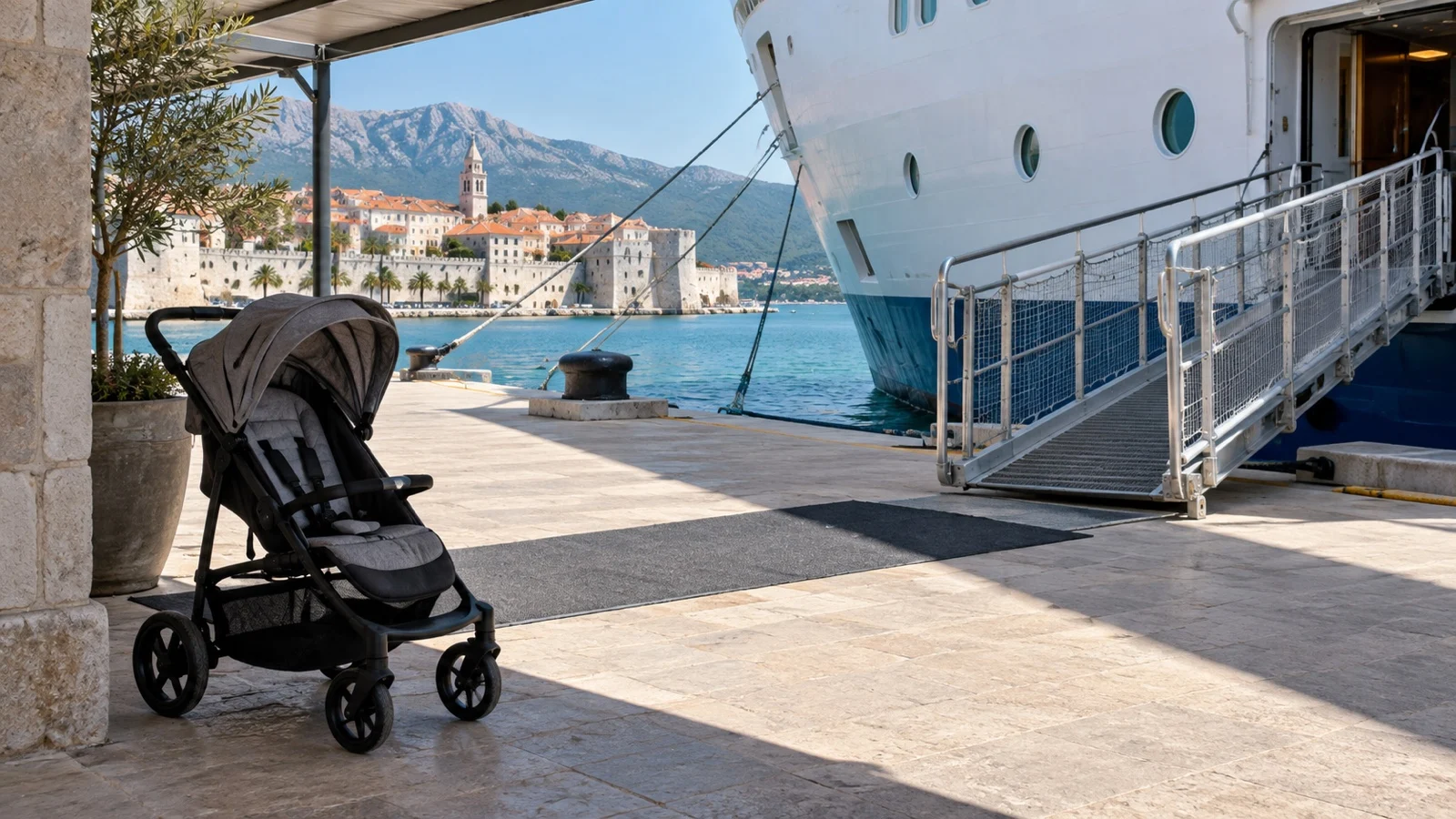
Do not assume you can step off and back on without delay. Some ports use long piers, terminal buildings, buses, security checks, or controlled gangway hours, so confirm the route and reboarding process onboard.
Choose one outing when the logistics are messy
A late arrival, short call, tender, or remote berth can make a cabin nap consume most of the day. In that case, decide whether the outing belongs before or after the usual nap and keep it compact.
If you stay onboard through the nap, eat first and leave with everything packed. If you go out first, choose a route that lets you turn around early without losing a large prepaid booking.
Skipping a second outing is not wasting the port. My guide to enjoying a quiet ship on a port day has ideas for making the onboard half feel intentional.
A stroller nap is a tool, not a guarantee
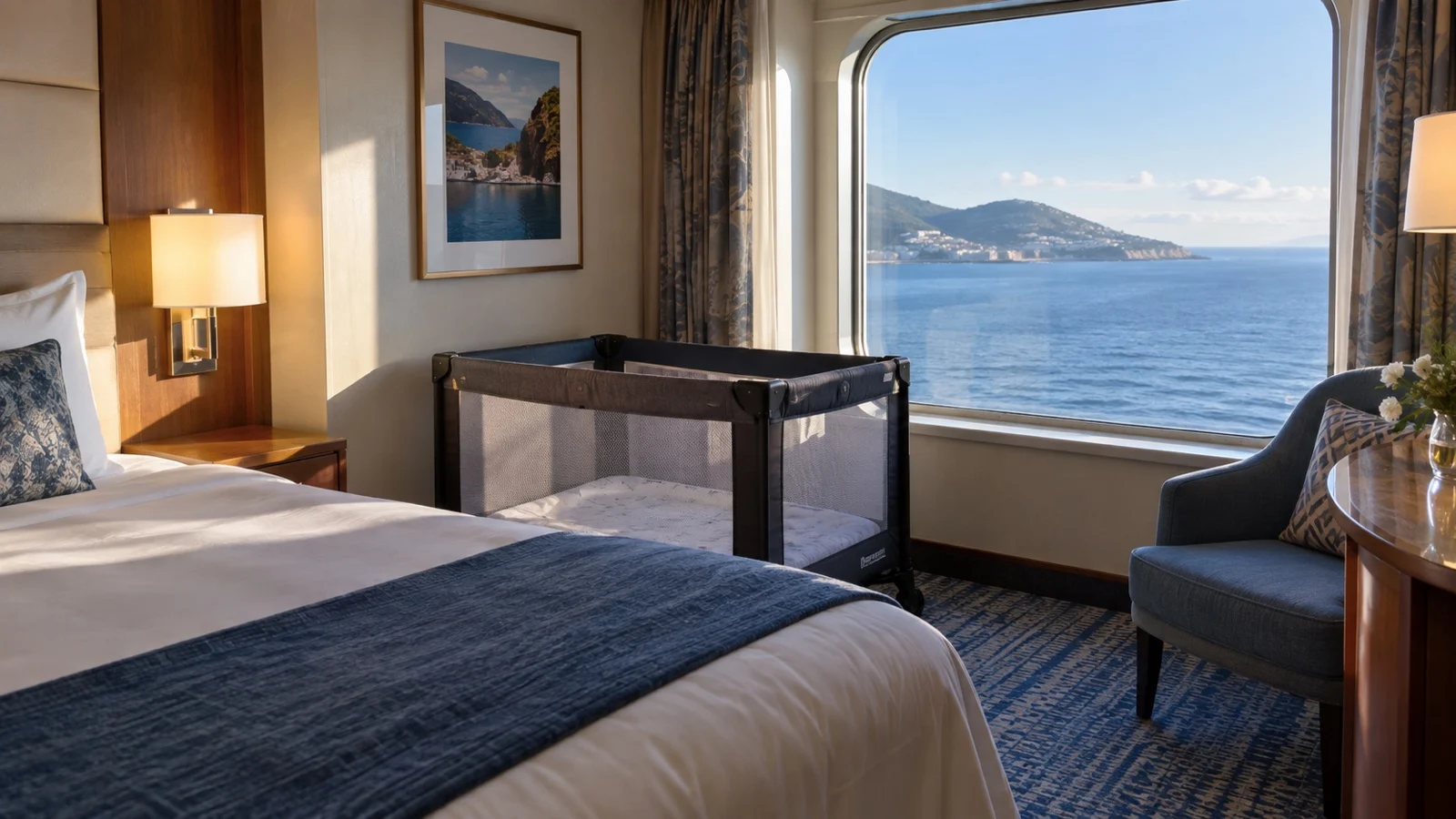
Some toddlers sleep well in a stroller and others stage a tiny rebellion the moment the wheels stop. Plan around what your child has already done at home, not what you hope will happen in a hot, noisy old town.
Use the stroller’s harness and recline only as its manufacturer directs, keep airflow open, and check your child often. Never drape the stroller in a way that blocks ventilation, and move into shade or air conditioning when the heat is building.
CDC heat guidance recommends shade, breaks, hydration, and outdoor activity during cooler parts of the day. Put the coolest outing window ahead of a rigid sightseeing wish list.
Bring your own stroller unless your cruise line or destination specifically confirms one. Royal Caribbean, for example, says it does not provide strollers onboard and requires guests to store their own in the stateroom.
Measure the folded stroller before sailing and keep cabin storage in mind. A light model that one adult can fold while the other holds the child is much friendlier on shuttles, steps, and tender boats.
Terrain matters as much as distance. Use my list of stroller-friendly cruise ports to favor flat routes, curb cuts, shade, and smooth pavement.
An important safe-sleep note for babies under 1
Some families traveling with a toddler also have a younger baby, so this distinction matters. NIH Safe to Sleep guidance says car seats, strollers, and sitting devices are not recommended as a baby’s regular sleep or nap space.
If a baby falls asleep in one, the guidance says to move the baby to a regular firm, flat, level sleep space as soon as possible. The American Academy of Pediatrics gives the same advice and notes that its safe-sleep recommendations apply through the first birthday.
Ask your pediatrician about your child’s specific needs. This article can organize a port day, but it cannot turn travel gear into an approved sleep surface.

Kids’ clubs are not a port-day nap plan
Age minimums, toilet-assistance rules, capacity, and port-day hours differ by line and sometimes by sailing. Check the current policy before booking, then confirm the actual schedule onboard.
Norwegian’s current youth-program FAQ says Splash Academy drop-off is for ages 3 through 12 while the ship is sailing and is unavailable when the ship is docked or anchored. Its Guppies Open Play for ages 6 months through 3 years requires a parent and follows a ship-specific schedule.
Norwegian also says staff will contact a parent if a child falls asleep during a complimentary session. The practical lesson is simple: do not build an independent shore visit or protected nap around childcare until your own ship confirms eligibility and hours.
Tender ports favor one simple outing
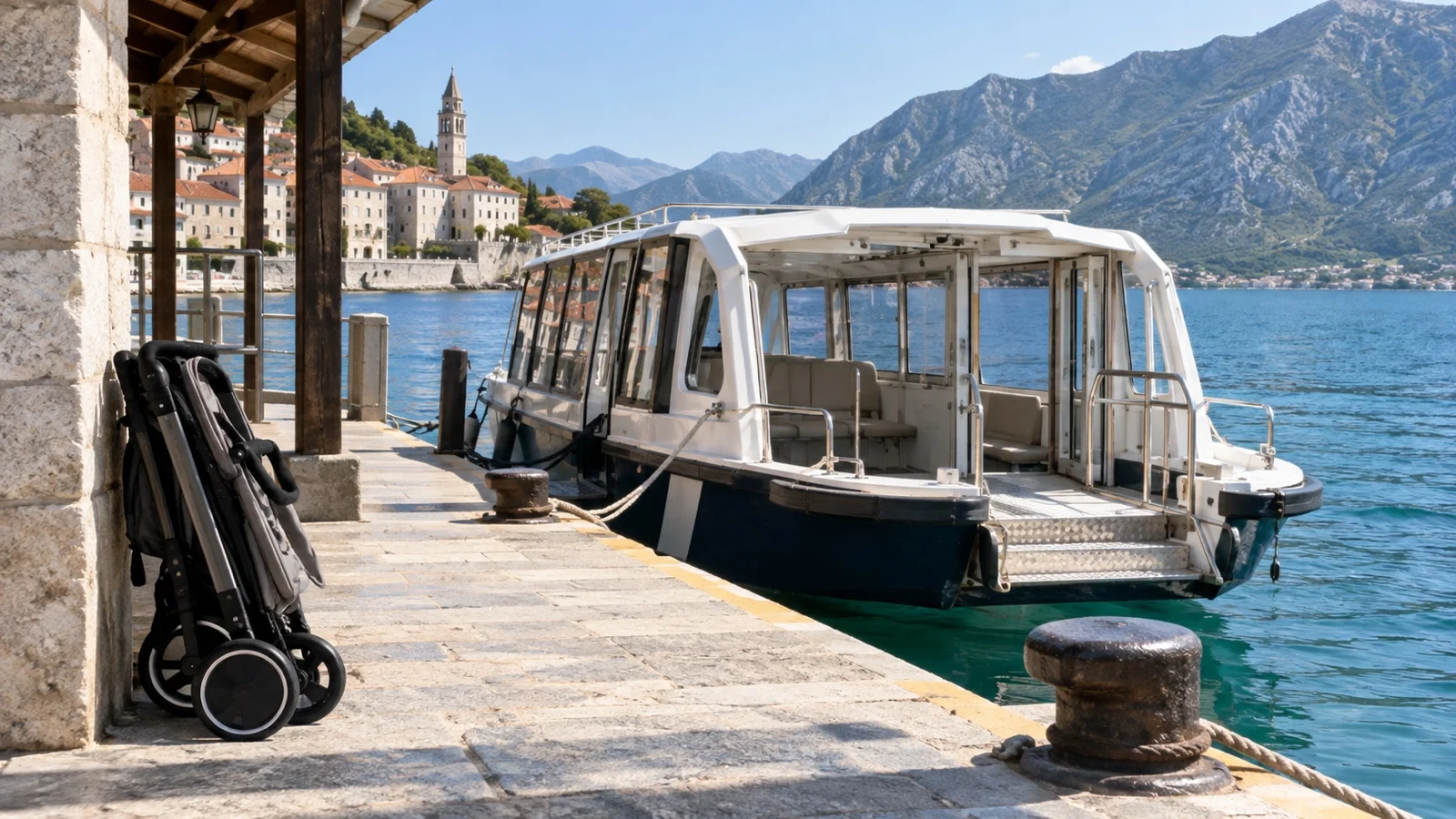
At a tender port, small boats move guests between the ship and shore. Waiting, boarding, weather, mobility needs, and the final tender schedule can add uncertainty that a map does not show.
Treat the day as one outing unless the crew tells you the transfers are frequent and your timing still has plenty of slack. Ask whether strollers must be folded, where they are handed to crew, and whether steps or lifting are involved.
A soft carrier can be useful if your child fits within its stated limits and the adult is comfortable using it. It does not remove the need to follow crew instructions or your child’s safe-sleep guidance.
Match the plan to the port day
Early arrival and a walkable dock
Go ashore early for one nearby activity, return before the usual nap window, and decide about the afternoon after everyone wakes. This is the easiest two-outing setup.
Tender port or long shuttle
Choose one outing and protect a large return buffer. Favor flexible plans near the landing point over a distant, nonrefundable excursion.
Late arrival
Keep the normal nap onboard if the timing allows, feed everyone, and take a short afternoon outing. Confirm last admission and closing time before you promise a specific attraction.
Long, hot day
Use the coolest hours for the outdoor piece and retreat for the hottest part of the day. Shade, water, and an air-conditioned backup are part of the itinerary, not optional accessories.
For a specific Caribbean example, see my guide to Cozumel with a toddler. The same decision tree works elsewhere once you replace the distances and transportation with local facts.
Pack the tiny nap kit
- Sleep cue: The usual pacifier, wearable item, or small comfort item that is safe for your child’s age and sleep setting.
- Weather layer: Light clothing, sun protection, and a layer for aggressive air conditioning.
- Food and water: Familiar snacks, a refillable bottle, and whatever feeding gear your child reliably uses.
- Change kit: More diapers or training supplies than the math says, plus a full clothing change.
- Mobility backup: A carrier if appropriate, even when the stroller is Plan A.
- Offline details: Ship contact information, berth or tender point, map, tickets, and the photographed all-aboard sign.
Keep the kit small enough that one adult can manage it with the folded stroller. A perfect packing list that needs three free hands is not a practical list.
Where toddler port days usually unravel
- The full-day excursion: Long transportation, fixed meals, and no graceful exit leave little room for a changing nap.
- The untested stroller nap: A child who never naps on the move is unlikely to debut that skill on cobblestones.
- The second-trip promise: Announcing an afternoon plan before the nap creates pressure nobody needs.
- The final return option: One missed bus, ferry, or taxi can erase the entire buffer.
- The childcare assumption: The program may not accept your child or operate while the ship is in port.
- The heat trap: A shaded-looking route can still be hot, exposed, and short on indoor breaks.
If anyone in the group has limited mobility, plan around the tightest constraint rather than the most ambitious traveler. My guide to port days for someone who cannot walk far is also useful for stroller routes.
Quick answers
Should we return to the ship for the nap?
Yes when the ship is directly docked, the round trip is short, and the schedule leaves a generous buffer. At a tender port or remote berth, one outing is usually more realistic.
Can we go ashore twice?
Often at a directly docked port, but reboarding procedures and gangway access vary. Confirm onboard and let the second trip depend on the nap rather than the original plan.
Is a stroller or carrier better?
A stroller usually wins on flat, shaded pavement, while a carrier can simplify steps, shuttles, and tender transfers. Use either only within the manufacturer’s limits and according to crew instructions.
Will the kids’ club watch a toddler in port?
Do not count on it. Check your line’s age rules before sailing and the ship-specific port-day schedule once onboard.
Should we take a toddler off at every port?
No. A tender, very short call, long transfer, or punishing heat can make an intentional onboard day the kinder choice.
Final word
Build the day around one worthwhile outing, one protected nap window, and one return plan with breathing room. If the afternoon happens, lovely, and if it does not, the morning still counts.
If you are still choosing the itinerary, compare the port logistics with the easiest cruise ports with a toddler and sea-day versus port-intensive itineraries. Short, flat routes are doing more for your family than another famous stop on the map.
How this guide was researched: This guide was checked in September 2026 against Norwegian Cruise Line’s boarding-time and youth-program guidance, Royal Caribbean’s stroller policy, CDC heat guidance, NIH Safe to Sleep guidance, and American Academy of Pediatrics safe-sleep guidance. Cruise policies and daily schedules change, so confirm the details for your line, ship, and sailing and see our Editorial Policy.
More on this topic: browse every guide on accessible and family cruise planning.