The Port Day Bag: What to Actually Carry Ashore
The ship is a mile away, the shops close at one, and the thing you need is sitting on your cabin bed. Nothing ruins a port day faster than a bag packed by somebody who was still half asleep.
My quick take
I carry one small bag with water, cash, sun protection, a battery, and my ship card, and that covers about nine port days in ten. Everything else is either a nice-to-have or a mistake I have already made once.
The habit that matters most is not the gear at all. It is packing the bag the night before, while the shops are open and you are not trying to find sunscreen at 7:40 in the morning.
The quick facts
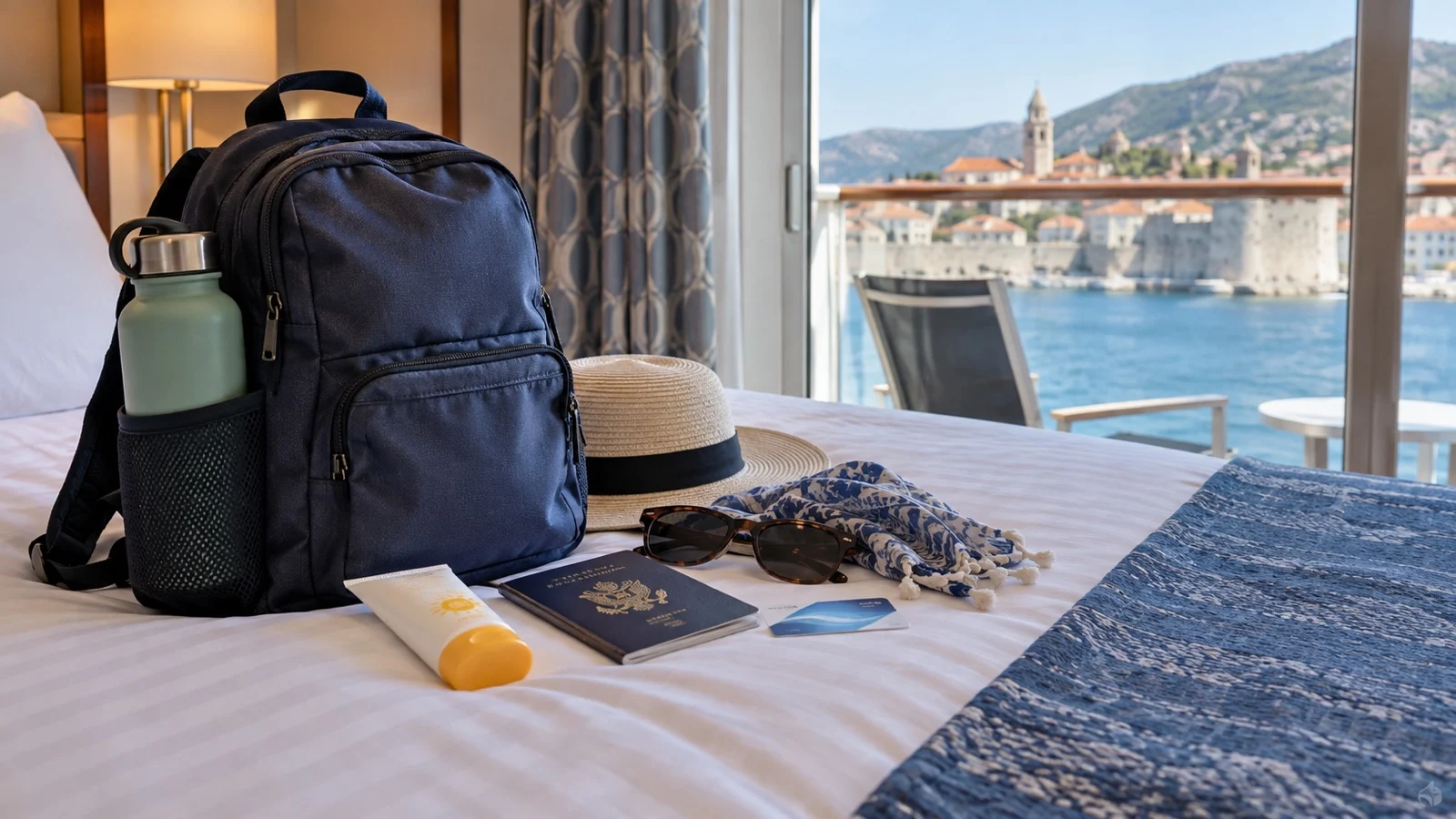
- Bag size: Around 15 liters, or a crossbody sling for city days.
- Target weight: Under 5 pounds (2.3 kg) packed, including water.
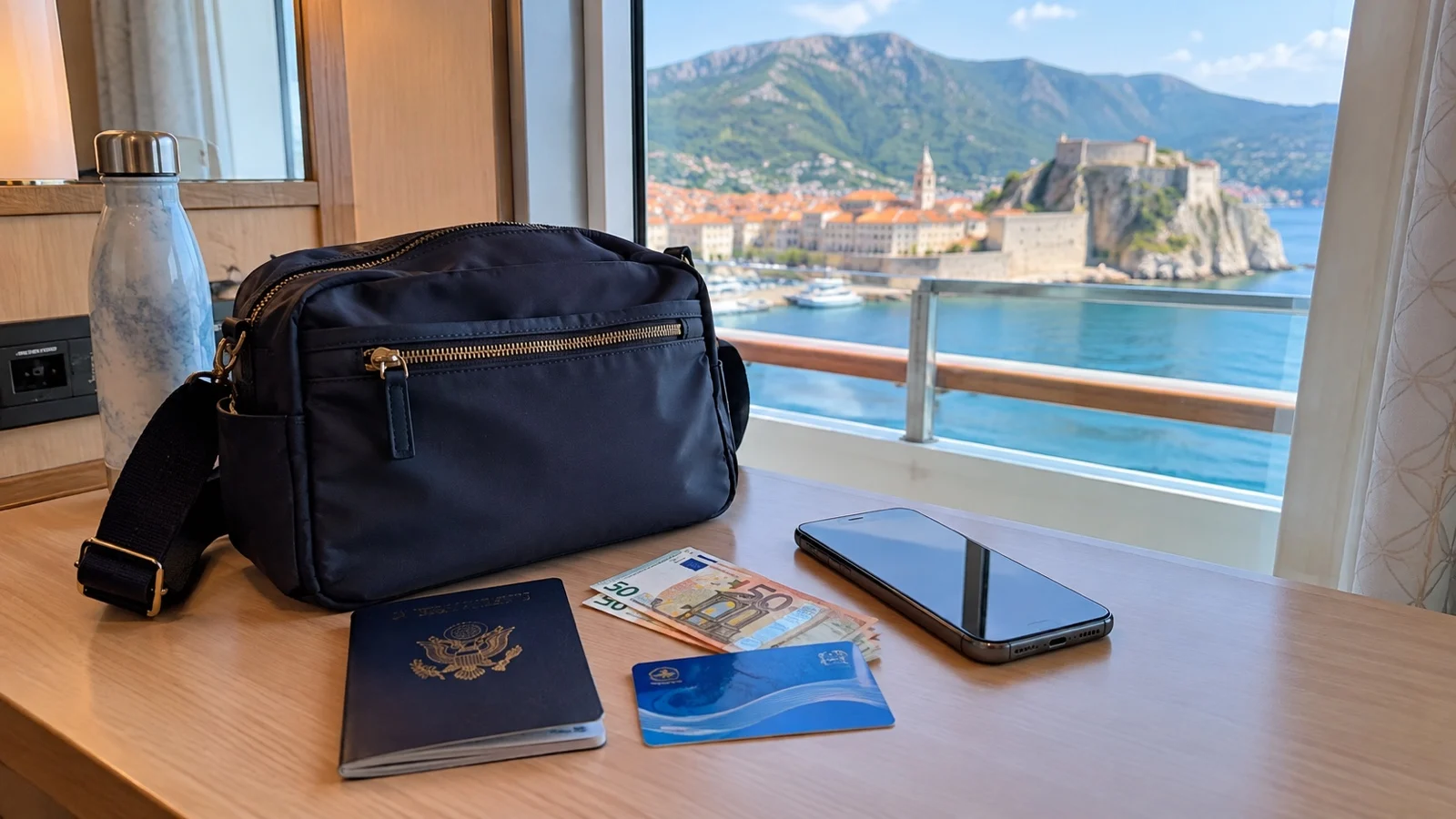
- Never leave without: Ship card, ID, cash, water, charged phone.
- The number to save: The port agent number on your daily program.
- Leave in the safe: Passport where allowed, backup card, jewelry, laptop.
- Pack it: The night before, not the morning of.
Heads up: some links below are affiliate links. If you book through one, I may earn a commission at no extra cost to you. It never changes which hotels or tours I recommend. Full disclosure.
The bag matters more than what goes in it
My first real shore day was Santa Marta, and I walked the historic center for six hours with a full hiking pack on my back. The heat there is not ambient, it is structural, and I saw that whole city through a haze of my own sweat.
You want small, plain, and comfortable in heat. The Osprey Daylite Plus is the one most gear testers land on, at 20 liters with enough structure to carry a towel, a bottle, and a jacket without feeling like luggage.
If you would rather it disappear when empty, the Sea to Summit Ultra-Sil Day Pack stuffs into a sack about the size of an apple. It is less comfortable under load, so it is the better pick as a backup bag than a daily one.
For city days, a crossbody sling beats a backpack every time. You can swing it around to your front in a crowded market, and you are not taking it off and putting it back on at every cafe table.
The Pacsafe Metrosafe X Urban Sling is the one that keeps winning anti-theft roundups, with lockable zippers and a slash-resistant strap. The lighter Pacsafe Vibe 150 does the same job in a smaller package, and the Travelon Classic covers the basics for less.
Skip the giant logos and the bright resort branding. Looking like a local errand runner rather than a cruise passenger is free, and it works better than any lock.
The five things I never leave the ship without
If you skim the rest of this post, keep these. Everything after them is optional.
Your ship card and a photo ID. Most lines want the card plus a passport copy or a driver’s license, and the exact requirement is printed on the daily program the night before.
A charged phone and a battery. A dead phone in a port with no taxi rank is how a good afternoon turns into a genuinely stressful one.
The Anker Nano 10,000 mAh power bank has a built-in USB-C cable, which means one less thing to forget, and it gives most phones two full recharges for about half a pound (225 g). Keep it in your carry-on when you fly, because the FAA does not allow spare lithium batteries in checked bags.
Cash in small bills. Restrooms, taxis, and market stalls do not care about your credit card, and I go region by region in my guide to cash or card in cruise ports.
Water. Fill a bottle at the buffet on your way out, because buying it ashore costs four times as much and wastes ten minutes you would rather spend somewhere nice.
The port agent number. It is on your daily program, and it is who you call if the traffic goes wrong, as I explain in the port agent playbook.
Photograph the daily program every single morning. That one image gives you the all-aboard time, the agent number, and the berth name even when you have no signal at all.
Water and sun, which is where most port days go wrong
Heat does not announce itself. It shows up around hour four as a headache and a sudden willingness to argue with the people you love.
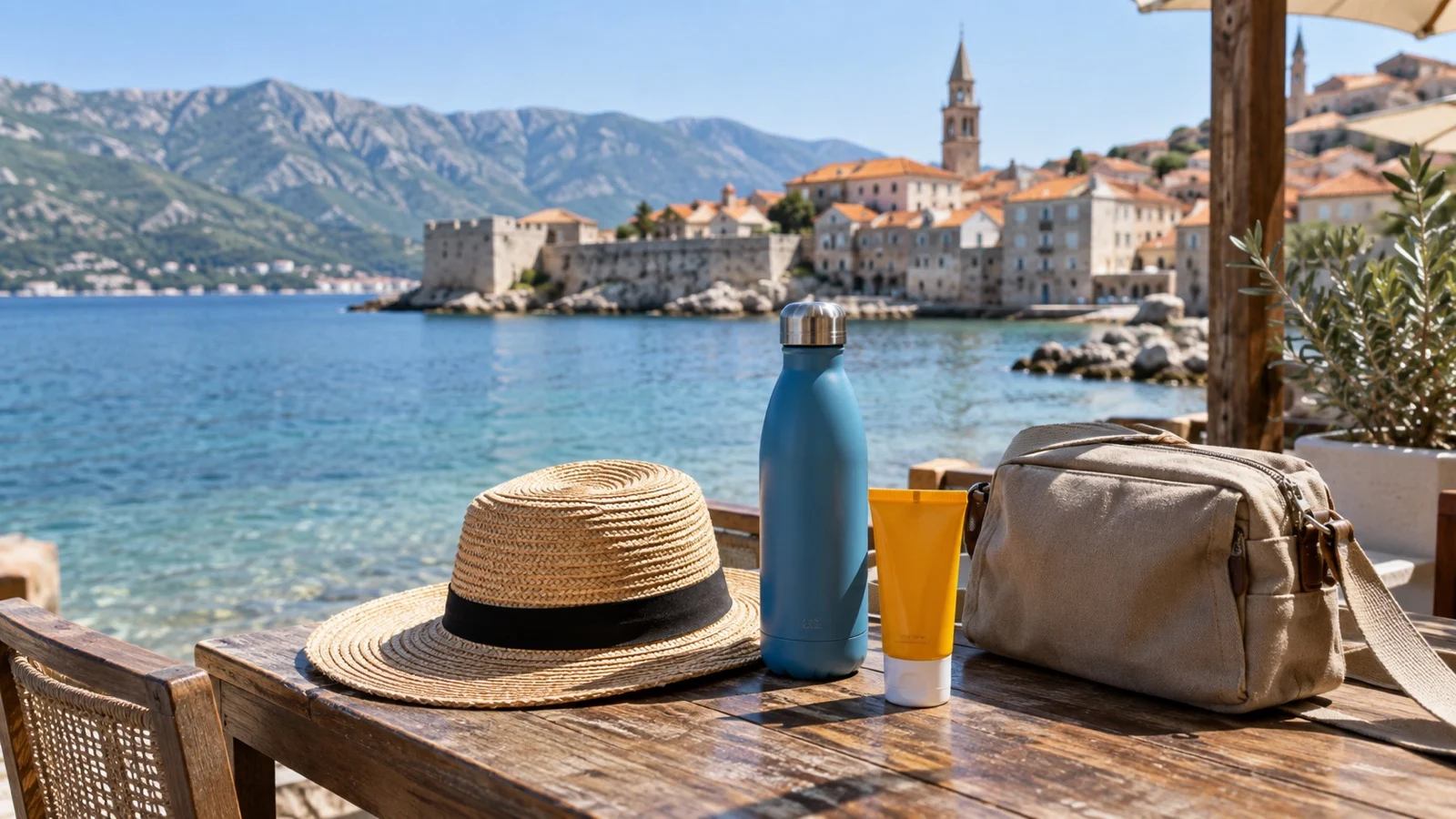
The Nomader collapsible bottle is the one that holds its shape while you drink from it, which is where most soft bottles fall apart. It rolls down to about half its size once empty, so it stops taking up space exactly when your bag is filling with things you bought.
In genuinely hot ports I switch to insulated instead. A 21-ounce (620 ml) Hydro Flask is heavier and I carry it anyway, because cold water in the middle of Chan Chan, where nine square miles of adobe offer roughly no shade, is not a luxury item.
If you are sweating hard, plain water stops keeping up. Nuun Sport electrolyte tablets weigh nothing, and the National Weather Service heat safety guidance is worth two minutes before a summer Mediterranean itinerary.
Sunscreen belongs in the bag, not just on your face at breakfast. The Thinksport mineral stick will not leak in a hot bag, and non-nano zinc formulas like it are what Hawaii, Palau, Bonaire, and several Mexican marine parks actually permit.
Reapplication is the part everybody skips, and the FDA’s sunscreen guidance says every two hours, sooner if you swim. A packable UPF 50 sun hat that survives being crushed in a bag beats a nice one you leave in the cabin.
Money, documents, and the things you cannot replace
Split your money across the day. Some in the bag, some in a front pocket, and the card you are not using stays in the cabin safe.
A slim RFID travel wallet keeps the day’s spending money separate from everything else you own. The point is not the RFID lining, it is that you are not opening your whole life to buy a bottle of water.
Carry a photo or paper copy of your passport page. Some ports run face-to-face immigration and want the physical passport, so read the daily program rather than guessing.
Check what you can take home before you fall in love with something at a market. US Customs and Border Protection publishes the allowances, and they are far stricter about food and plant material than most cruisers expect.
Throw in a Baggu standard tote if you plan to buy anything at all. European markets often charge for bags, and a folded tote weighs about as much as a candy bar.
The tech that earns its space
Download offline maps for the port the night before. Terminal Wi-Fi is a rumor, and the moment you need directions is usually the moment you have no bars.
An eSIM is almost always cheaper than roaming, and I compare the options in my guide to cruise Wi-Fi, eSIMs, and port-day data. Activate it in your cabin, not while standing in a taxi line with a driver waiting.
The Hiearcool waterproof phone pouch is the one that shows up at the top of every list I checked, and it costs about as much as two coffees. Test it with a folded paper towel inside before you trust it with anything.
An Apple AirTag in the bag, or a Tile Mate if you are on Android, will not stop a theft. It does tell you whether you left the bag at the restaurant or on the bus, which is the more likely disaster.
For fjords and wildlife ports, the Nikon Travelite EX 8×25 beats any phone zoom by a mile and still fits in a jacket pocket. They earned their space off Icy Strait Point, watching humpbacks bubble net feed toward Point Adolphus, which is not something you want to experience through a phone screen.
Tender days change the list
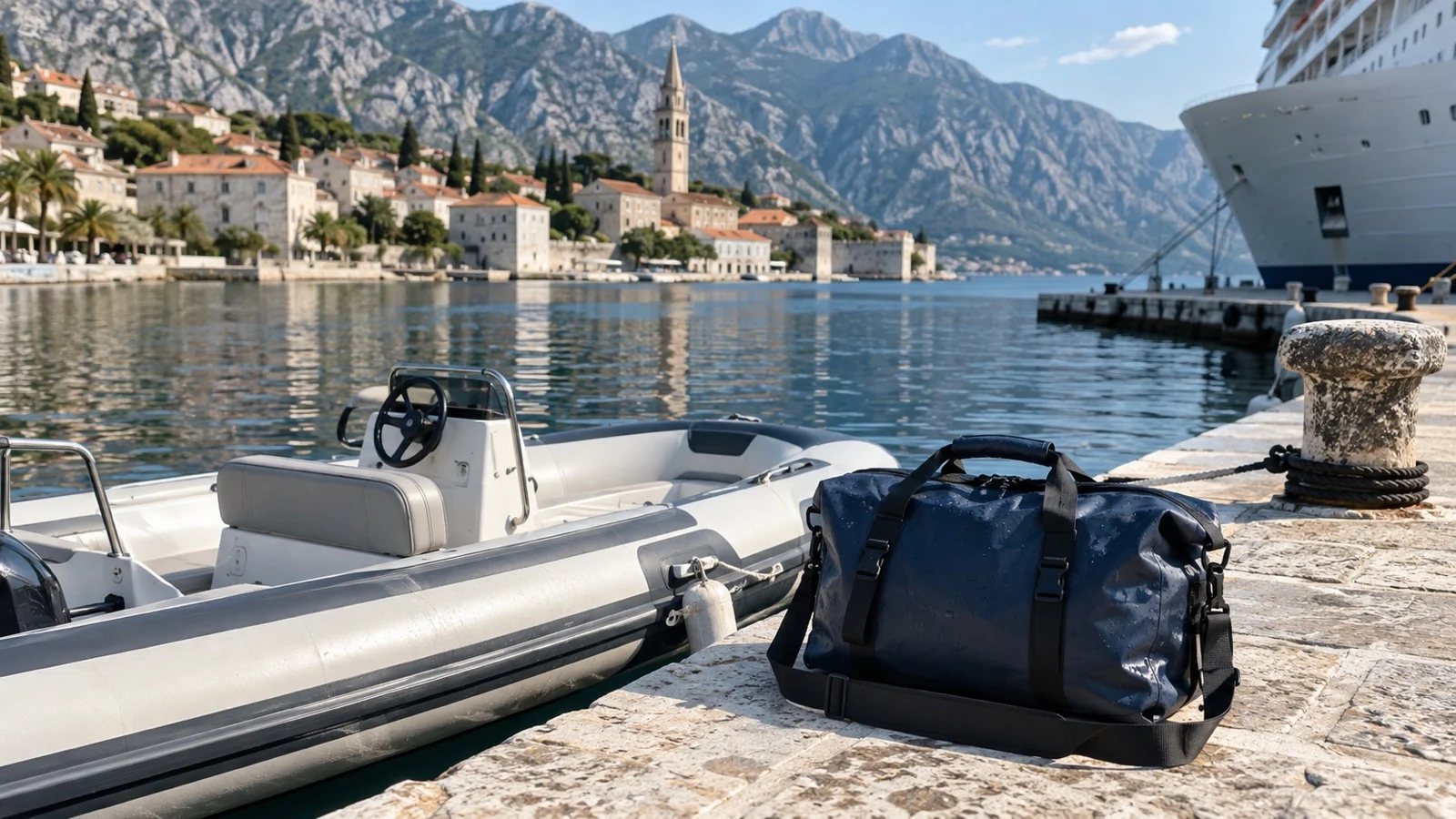
Tender ports punish big bags. You are stepping between two boats that are moving independently of each other, usually while a crew member holds your forearm.
Everything goes on your back or across your chest, and both hands stay free. No shopping bags, no coffee, no water bottle swinging from a finger.
Spray comes over the bow more often than the brochure suggests. A 5-liter Sea to Summit dry bag inside your daypack protects the phone and the cash without buying a whole waterproof pack.
Leave more time for the ride back than you think you need. The queue is the real cost, and I put numbers on it in my post on how tendering changes your time ashore.
The small stuff that saves the day
None of these will excite you in a store. All of them have rescued a port day of mine at some point.
- Compeed blister cushions, because cobblestones are undefeated
- Pocket tissue packs, since plenty of restrooms supply nothing at all
- Travel-size hand sanitizer and a few wipes
- An Adventure Medical ultralight kit, plus any medication you take daily
- The Repel windproof travel umbrella, which folds to 11 inches and survives real wind
- A PackTowl Personal in the smallest size they make
- Two snack bars, because lunch never happens when you planned it
Bring your own medication rather than assuming a pharmacy will be open. Sunday closures and long afternoon breaks catch people out constantly, and I cover the fallbacks in my guide to getting sick in port.
The CDC’s Pack Smart list is a decent sanity check for anything health related. Ignore the sections written for long stays and lift the rest.
What stays in the cabin
Your passport goes in the safe unless the port specifically requires it. So does your backup card, your laptop, and anything you would be genuinely upset to lose.
The big camera bag stays too, unless photography is the actual reason you picked this port. Hauling gear you barely use will color your memory of the whole day.
And leave behind the plan you cannot keep. Cutting it fine is how people end up watching their ship pull away without them.
Your shoes are part of the bag
No amount of gear saves you from the wrong shoes. A normal port day runs 6 to 8 miles (10 to 13 km) on surfaces laid centuries before anyone thought about ankles.
Wear something already broken in at home. A brand new pair of travel walking shoes is a bet you will lose on the steep streets above Coquimbo, so buy them a month out and wear them around town first.
Merino socks matter more than most people expect, since they handle sweat and do not need washing every night. Closed toes also beat sandals on tender docks and wet steps.
Two versions of the same bag
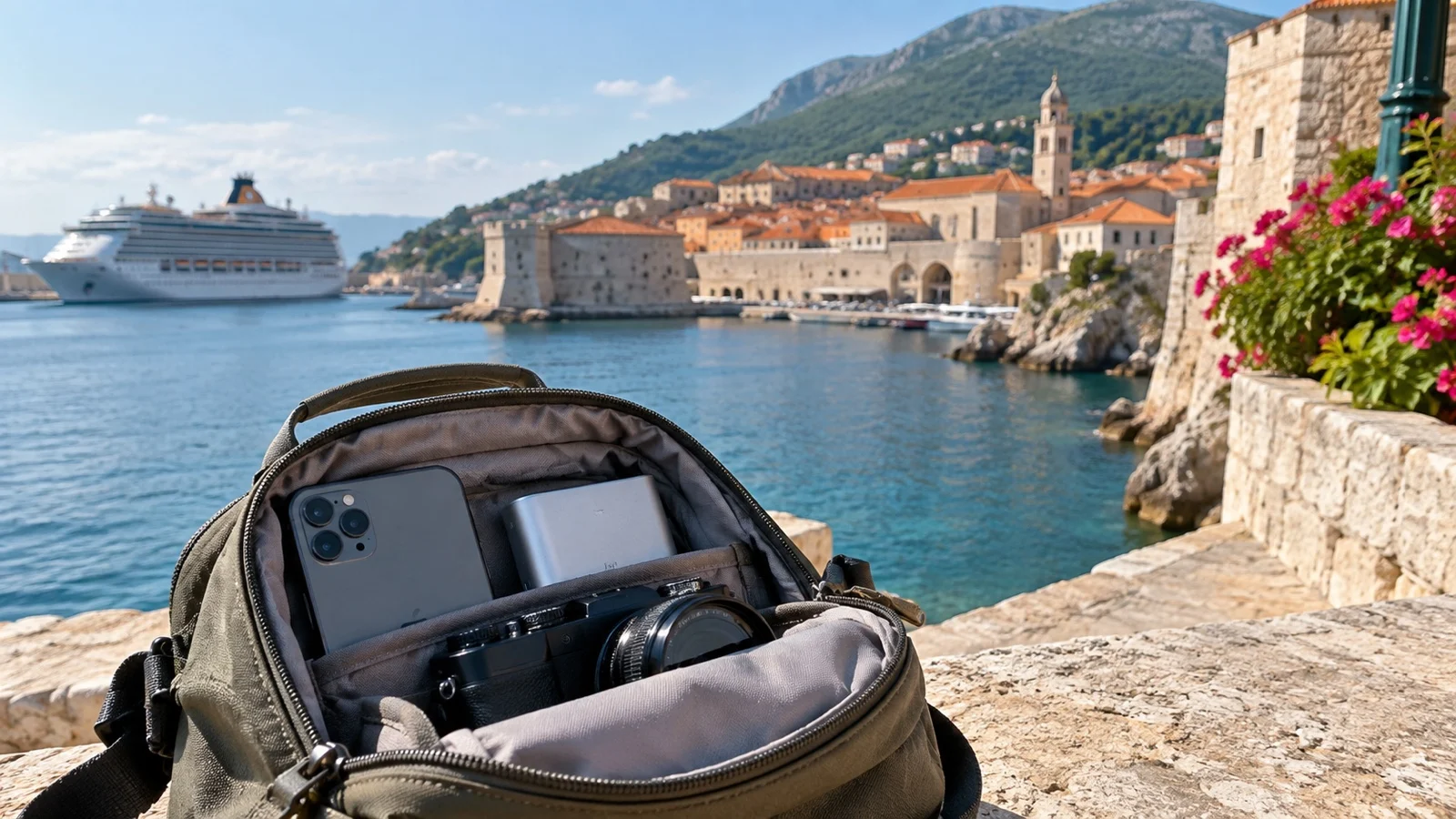
City day: sling bag, water, cash, sunscreen, tissues, a folded tote, and an umbrella if the forecast wobbles. Comfortable shoes do more for this day than anything you can buy.
Beach or tender day: daypack, dry bag, phone pouch, microfiber towel, extra sunscreen, and flip-flops packed rather than worn for the walk down.
Both versions come in under 5 pounds (2.3 kg) with water in them. If yours is heavier, something in there is freeloading.
Quick answers
Do I need to take my passport ashore?
Usually no, and a photo of the picture page plus your ship card is enough. Some ports run face-to-face immigration and require the physical passport, and your daily program will say so the night before.
How big should a cruise port day bag be?
Around 15 to 20 liters is plenty for a full day ashore, including water and a towel. Anything larger tends to fill up with things you carry all day and never touch.
Can I bring a backpack on a shore excursion?
Yes on nearly every excursion, though some museums and religious sites make you check larger bags. A small daypack or sling avoids the problem entirely.
Can I take water off the ship?
Yes, filling your own bottle at the buffet before you go is normal and encouraged. Bringing unopened bottles back onboard is where lines get strict, and rules vary by ship.
What is the one thing people most often forget?
Small bills. Cards fail at restroom turnstiles, market stalls, and short taxi rides, and that is exactly when you need the money to work.
Final word
A good port day bag is mostly about removing decisions from your morning. Pack it the night before, fill the bottle on the way out, photograph the daily program, and go.
You will notice the difference on the walk back, when you still have water, dry feet, and a phone with battery left. That is the whole trick.
More on this topic: browse every guide on port logistics and timing.