Venice Cruise Port: Where Your Ship Actually Docks
A booking labeled “Venice” may use Marittima, Marghera, Fusina, San Basilio, or Chioggia, and some itineraries actually start in Ravenna or Trieste. Your cruise documents matter more than the city name because check-in and the ship’s berth may be in different places.
My quick take
Venice rewards a walker who plans one loop and lets the alleys do the rest. It sits near the top of my European cruise ports shortlist, and my wider Mediterranean ports guide puts it among the most atmospheric calls in the region.
Nail down both the passenger check-in terminal and the ship’s berth before booking transport. Marghera homeport guests are often processed at an assigned Marittima terminal and taken by a dedicated shuttle into the industrial port.
The quick facts
- Where you land: the assignment can be Marittima, Marghera, Fusina, San Basilio, or Chioggia, while some “Venice” sailings use Ravenna or Trieste. Check both the passenger check-in location and berth in your cruise documents; Venezia Terminal Passeggeri publishes current Venice-area terminal information.
- Dock or tender: Venice-area cruise facilities generally use alongside berths, but follow your cruise line’s instructions for the actual call and any controlled transfer between check-in and ship.
- Into town: Marittima connects with Piazzale Roma by People Mover, but mainland and outlying berths need a cruise-line, terminal, bus, boat, taxi, or private transfer. Do not assume a Marghera berth means you should travel directly to the industrial gate.
- Currency and language: The euro (EUR) and Italian.
- Time zone: Central European Summer Time (CEST, UTC+2) during the cruise season, and Central European Time (CET, UTC+1) in winter.
- How often the call is missed: Low (roughly 1 to 2%): the sheltered berth is rarely limited by local weather.
Where your ship actually docks now
The berth name alone does not always tell you where to present your passport and luggage. Read the embarkation instructions line by line, then confirm any mismatch with the cruise line.
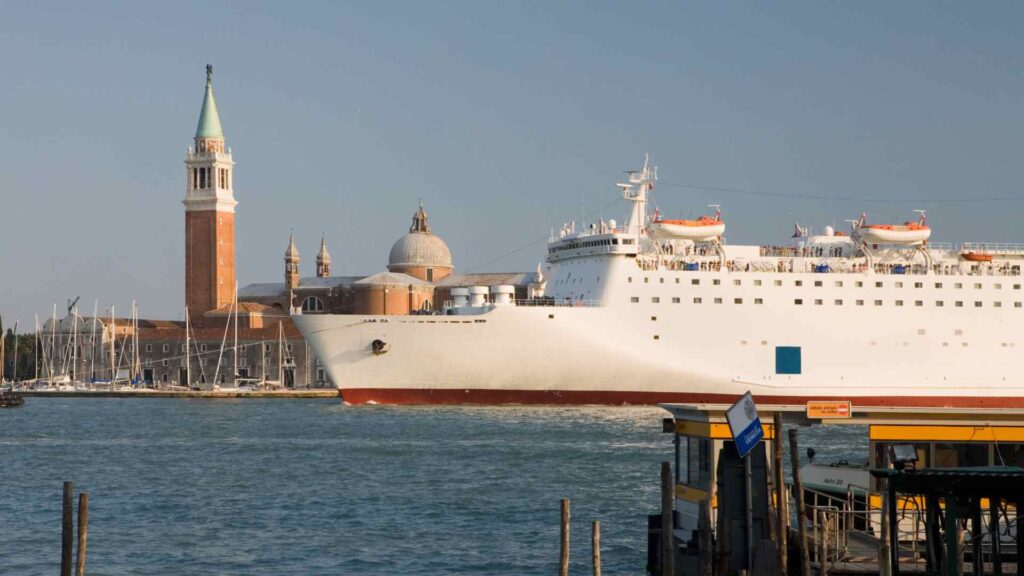
Large cruise ships no longer use the route past St. Mark’s Basin and the Giudecca Canal. The operational result is more complicated than a simple ship-size rule, so use the current terminal assignment rather than trying to predict the berth from tonnage.
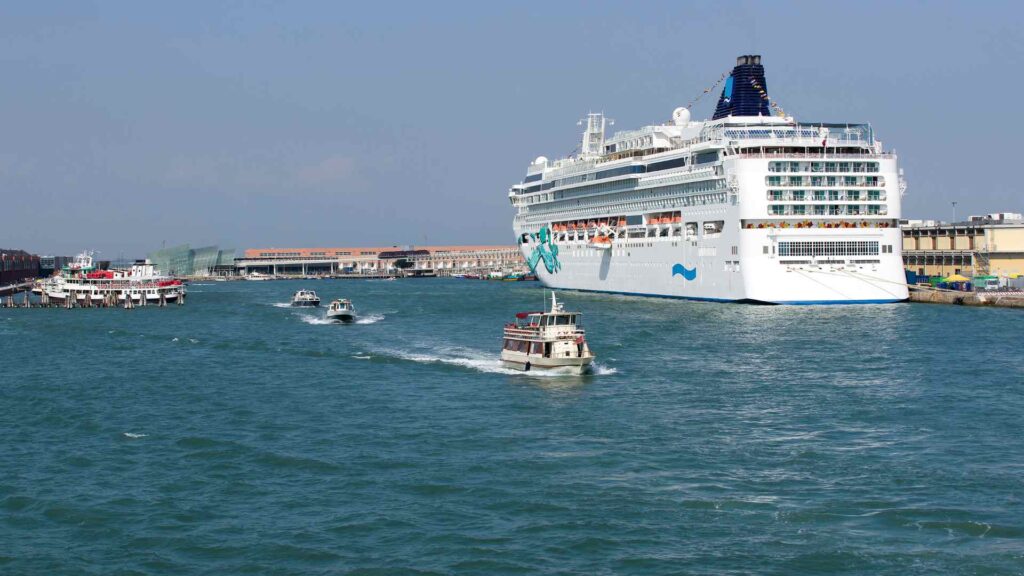
Marittima is the passenger-terminal complex near Piazzale Roma. Some ships berth here, and some Marghera embarkations use an assigned Marittima terminal for check-in, baggage, and security before a dedicated free shuttle carries ticketed passengers to the ship.
Marghera is a controlled industrial port on the mainland, not a sightseeing destination. Homeport passengers should not ask a driver to find the berth unless their cruise line explicitly directs them there.
Fusina is a separate mainland terminal southwest of central Venice, and San Basilio serves smaller vessels closer to the historic center. Chioggia is a separate town at the southern end of the lagoon, while Ravenna and Trieste are entirely different homeports that need their own intercity transfer plan.
Getting into central Venice
From Marittima
Marittima connects to Piazzale Roma by the People Mover, an automated elevated shuttle. Check its current hours and buy the separate People Mover fare, since it is not an ACTV vaporetto.
From Piazzale Roma you are already inside the pedestrian city. Cross the Calatrava bridge toward the train station, or pick up a vaporetto down the Grand Canal.
From Marghera
Marghera is a working mainland port, so you cannot walk through the gate into Venice. For a homeport sailing, follow the assigned check-in location, which may be at Marittima with a dedicated free transfer to the berth.
For a port call, the transfer arrangement can differ and is not automatically the same as an embarkation shuttle. Confirm where the bus or boat drops you, the last return, accessibility, and whether the transfer is included.
From Fusina, San Basilio, or Chioggia
Fusina requires its own mainland road or lagoon-boat connection, while San Basilio is much closer to the historic center. Chioggia is far enough south that an organized transfer or carefully timed public-transport plan is usually safer than improvising.
If your documents say Ravenna or Trieste, you are not embarking in Venice. Book the correct intercity train, coach, or private transfer and allow for delays, luggage, and the ship’s final check-in time.
Getting around once you are in
Venice is genuinely car-free, so you move on foot or by water. The workhorse is the vaporetto (public water bus) run by ACTV.
A standard ACTV water-service ticket is valid for 75 minutes from validation and permits changes within the included network, but airport and other special services are excluded. Validate before boarding, keep the ticket through inspection, and compare a time pass only if you will make several paid rides.
If you fly into Marco Polo Airport, Alilaguna airport boats, land buses to Piazzale Roma, private water taxis, and ACTV vaporetti are different services with different fares and stops. Match the route to your hotel and check-in terminal instead of buying the first “water bus” ticket you see.
The 2026 Venice Access Fee trial ended on July 26, so no payment or exemption request is required from July 27, 2026. Check the city’s official Access Fee site before a future visit because later-year rules may change, and overnight guests can have different documentation requirements when a fee is active.
The stops I’d actually spend time on
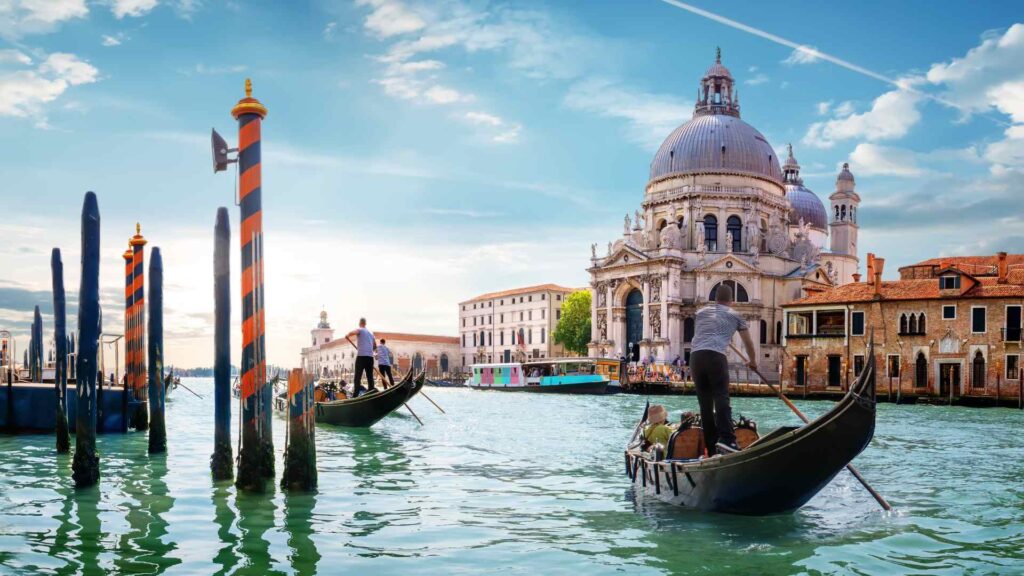
Venice is a place to choose a few things and savor them, not to sprint a checklist. These are the named sights I would build a day around.
- Piazza San Marco: the grand central square and the natural first stop, ringed by arcades, cafes, and the Campanile bell tower.
- St Mark’s Basilica: the Byzantine cathedral famous for its golden mosaics, which earned it the nickname the Church of Gold. Timed entry and dress rules apply, so check the official ticket page.
- Doge’s Palace: the Gothic seat of Venetian power on Piazzetta San Marco, with grand halls and the Bridge of Sighs to the old prisons.
- Bridge of Sighs: the enclosed stone bridge linking the palace to the prison, best seen from the waterfront Ponte della Paglia.
- Rialto Bridge: the oldest and most famous crossing of the Grand Canal, lined with shops and a superb photo point over the water.
- Rialto Market: the centuries-old produce and fish market beside the bridge, liveliest in the morning.
- Grand Canal by vaporetto: ride Line 1 end to end for a slow, front-row look at the palazzi. It is the best-value sightseeing in the city.
- Gallerie dell’Accademia: Venice’s great collection of Venetian painting in Dorsoduro, with masterpieces by Bellini, Titian, and Veronese.
- Peggy Guggenheim Collection: a compact modern-art museum on the Grand Canal, a fine counterpoint if the old masters are not your thing.
- Murano and Burano: the lagoon islands known for glassmaking and brightly painted houses, reachable by vaporetto if you have a long day in port.
A small delight worth the detour: Caffe Florian on Piazza San Marco opened in 1720 and is one of the oldest continuously running cafes in Italy. You pay for the setting, but it is history in a cup.
Heads up: some links below are affiliate links. If you book through one, I may earn a commission at no extra cost to you. It never changes which hotels or tours I recommend. Full disclosure.
How I’d plan the day
Use only the time left after the terminal or transfer reaches central Venice, and reserve the return method before sightseeing. A Marghera, Fusina, or Chioggia day needs more buffer than a San Basilio or Marittima day.
- Three usable hours: choose either San Marco and the waterfront or Rialto and nearby lanes, then return by the route you planned. Crossing the city between both areas can consume the visit when bridges and crowds are slow.
- Five usable hours: book either St. Mark’s Basilica or the Doge’s Palace, then add one Grand Canal vaporetto ride and a meal nearby. One timed interior is enough for a port day.
- Eight usable hours: choose a historic-center day with two booked sights, or make Murano and Burano the main outing. Doing the core city and both islands independently leaves too much of the day on boats and waiting at stops.
A realistic word on accessibility
Venice is beautiful and, honestly, hard on wheels. The historic center is stitched together by hundreds of stepped bridges, many without ramps.
A workable lower-step route is to use an accessible vaporetto stop for the San Marco waterfront and stay on the same side of bridges whenever possible. Elevators, ramps, and boat boarding can change with tides or maintenance, so check AVM’s accessible-route updates and ask the cruise line about every transfer vehicle.
Gangway steepness and tides can also affect boarding, so confirm specifics with your cruise line. Venetian bridges are a fixed fact of the city that no operator can smooth over.
When to go, and the weather
Late spring and early fall often bring milder walking weather than high summer, although crowds remain heavy. July and August are hot, humid, and busy.
Autumn and winter can bring acqua alta, the seasonal high water that briefly floods low areas like Piazza San Marco. It usually passes within hours, and raised walkways are set out when it does.
For a pre-cruise night, see our guide to hotels near Venice cruise port.
Quick answers
Do cruise ships still go into Venice?
Some ships berth at Marittima or San Basilio, while others use Marghera, Fusina, or Chioggia. A sailing marketed as Venice may even embark in Ravenna or Trieste, so the cruise documents control.
How do I get from the port to St Mark’s?
From Marittima, use the People Mover to Piazzale Roma, then walk or ride an ACTV vaporetto toward San Marco. From any other berth, follow the cruise line’s stated drop-off and return instructions because not every transfer ends at Piazzale Roma.
Should I pre-book the main sights?
Yes, for St Mark’s Basilica and the Doge’s Palace especially, since timed entry keeps lines down. Book through the official sites linked above so you are not caught out on a short port day.
Sources
- Venezia Terminal Passeggeri: terminal and embarkation information
- AVM: People Mover
- ACTV: fares and ticket validity
- City of Venice: official Access Fee status
How this guide was researched: This guide uses official port, transit, government, tourism, and attraction information reviewed in September 2026. See our Editorial Policy and reconfirm time-sensitive details before travel.