Choosing a Cruise With Mobility Needs: Ship, Cabin and Ports
The itinerary matters more than the ship. That is the part nobody tells you when you start shopping for a cruise with a wheelchair, a walker, a rollator or a scooter in the picture.
A perfect accessible cabin cannot rescue a week of tender ports.
The short answer
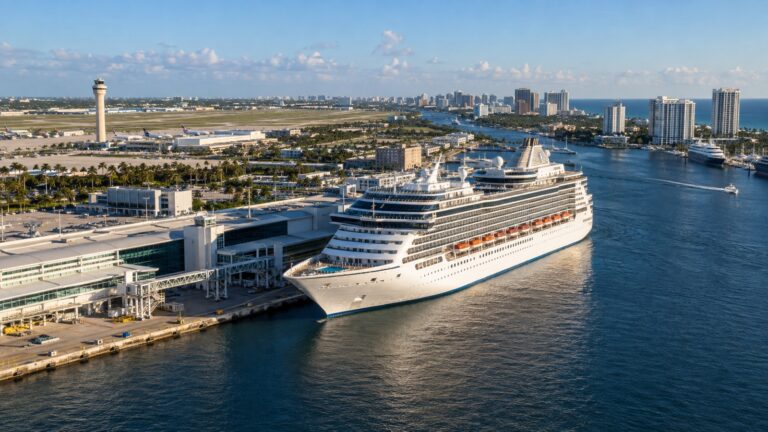
Choose the port list first, the cabin second and the ship third. A mainstream ship with a good accessible cabin and five docked ports will beat a fancier ship with four tender calls every single time.
Then book the accessible cabin the week the sailing opens, because there are very few of them and they are the first category to sell out. Waiting for a price drop on an accessible cabin is not a strategy, it is a gamble you usually lose.
Finally, get the answers in writing before your deposit turns non-refundable. A phone agent saying “that should be fine” is worth nothing.
How it actually works
Two separate systems decide your trip, and only one of them answers to the cruise line. The first is the line’s own accessibility desk, and the second is whatever the port, the tide and the local tour operator happen to be doing that morning.
Start with the cruise line’s access team and its current form, but do not assume every request shares one deadline. Submit your device details and cabin needs as soon as you book, then ask the line to confirm the ship, cabin and request in writing.
For ships serving U.S. ports, the legal picture is more specific than a general ADA business rule. The Supreme Court’s Spector v; Norwegian Cruise Line decision says Title III can apply to foreign-flag cruise ships in U.S. waters, subject to important limits involving a vessel’s internal affairs and international obligations.
What the ADA does not do is follow you down the gangway in Santorini. Ashore you are in whatever country you are visiting, with whatever sidewalks it has.
Accessible cabins, and how few there really are
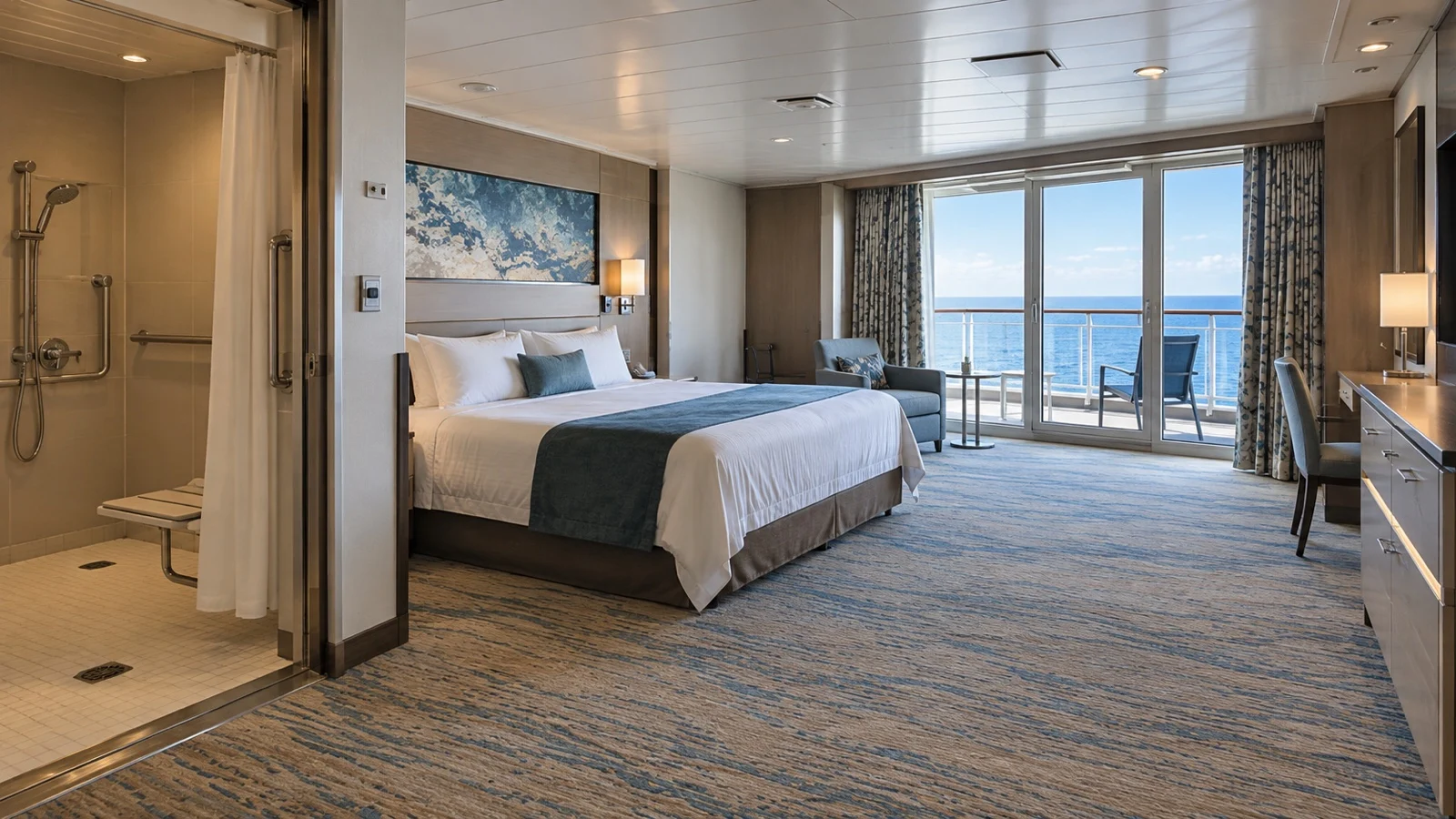
Accessible cabins are a real product with real specifications, not a marketing label. Royal Caribbean publishes its accessible staterooms as ranging from 159 to 298 square feet, with a five-foot turning radius in the sleeping, sitting and bathroom areas and stateroom doors of 32 to 34 inches depending on the vessel.
Cabin categories vary by line and must be read literally. Carnival, for example, separates fully accessible, fully accessible single-side approach and ambulatory accessible cabins, and the last category is not designed for regular wheelchair or scooter use.
The supply is genuinely tiny. Royal Caribbean holds accessible staterooms for people with disabilities until every other non-accessible stateroom in that category is reserved, and says it investigates and acts on staterooms it believes were booked fraudulently.
What I would do is open the deck plan and count how few accessible cabins a ship really has before committing to it. Then look at where they sit, because a wide door at the far forward end of a 1,100-foot hull is still a long push to the elevators.
Tender ports are the decision, not a detail
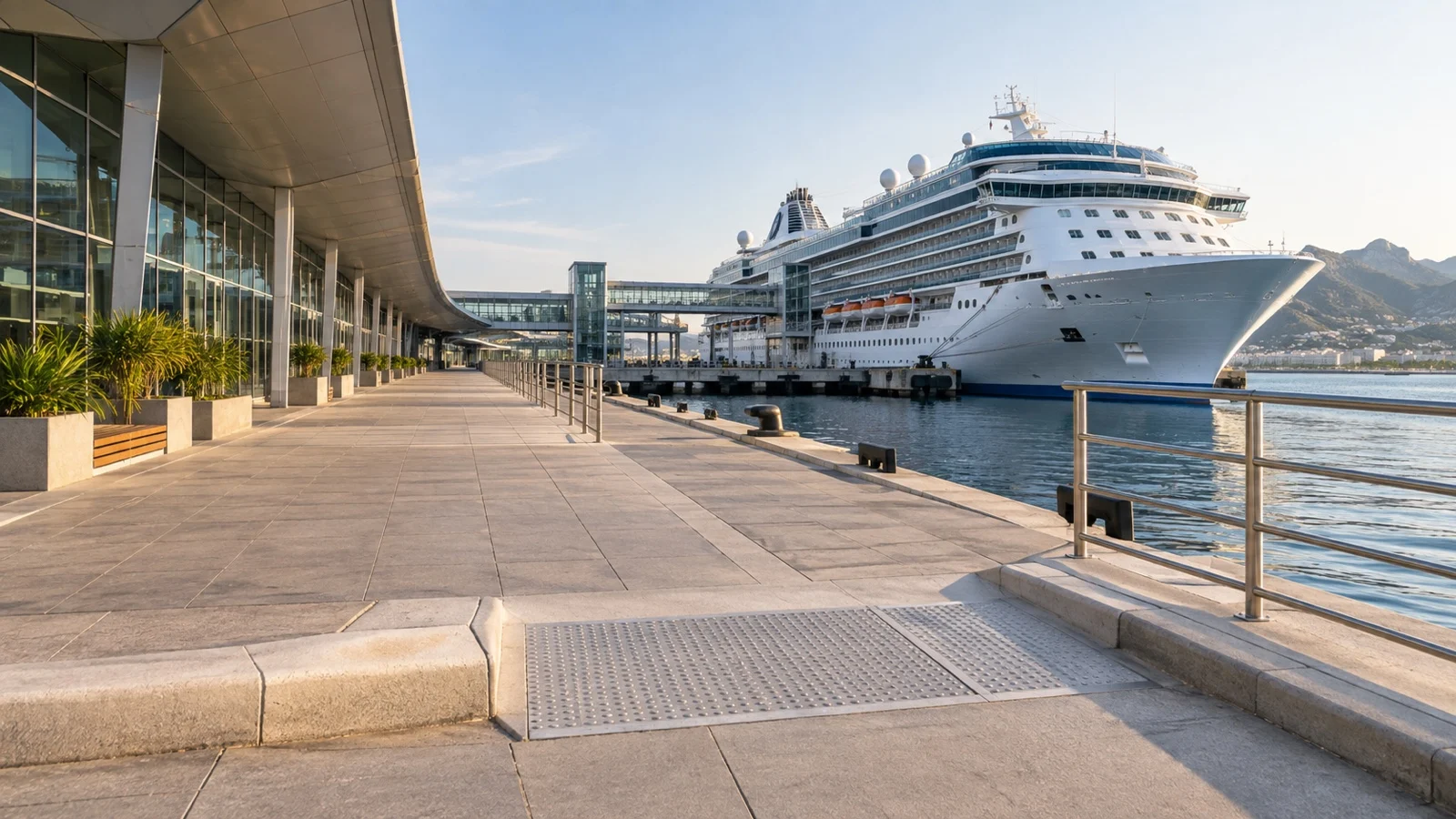
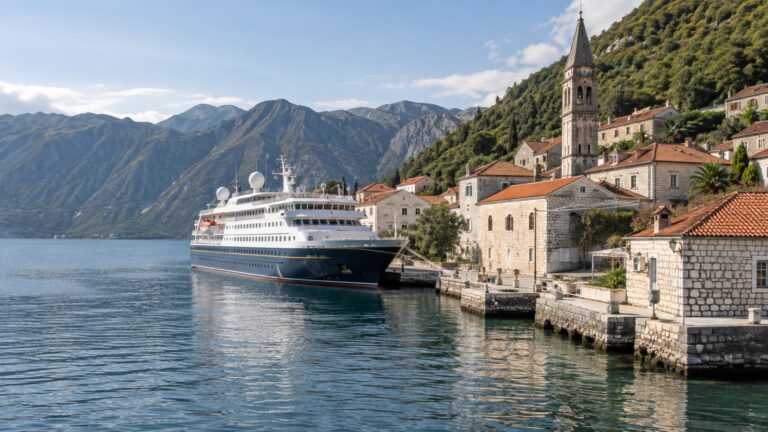
This is the section I would read twice. A tender port means a small boat that rises and falls against the ship’s shell door, and the lines are unusually direct about the limits.
Tender rules vary by line, ship, boat and port. Royal Caribbean says most tenders require steps and a collapsible manual wheelchair, while power chairs and scooters are generally possible only on roll-on tenders, and the captain makes the final decision.
Carnival likewise says weather, tides, device type, transfer ability and the water shuttle determine access, and crew cannot carry a guest on or off. A port may also switch between a berth and tendering, so treat every tender call as conditional until the day.
So check the itinerary port by port before booking, using my guide to what a tender port actually means. A few tender calls are manageable if the rest of the week is alongside, and my roundup of tender ports that still feel easy covers the calmer end of the list.
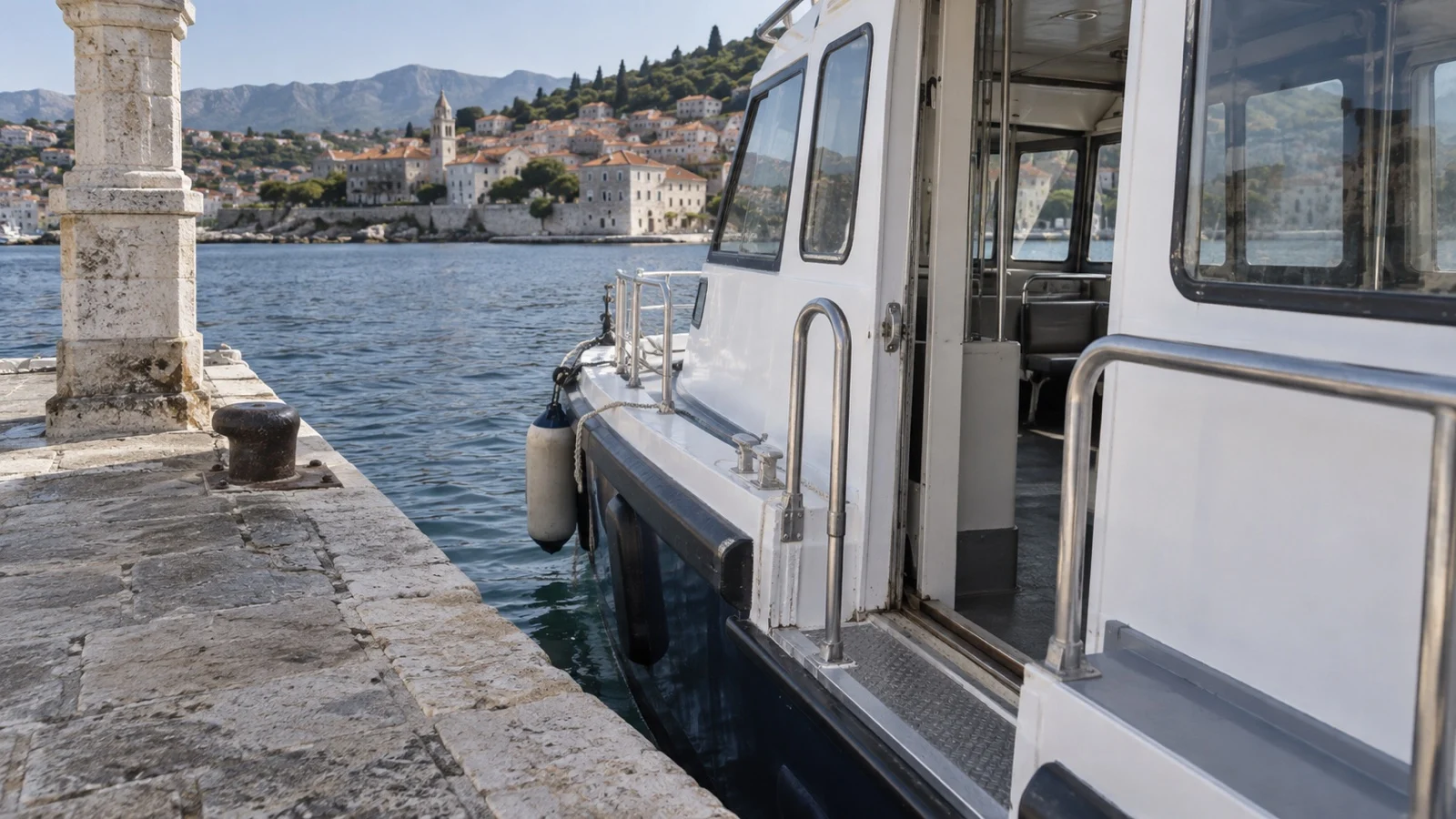
Gangways, tides and the angle nobody photographs
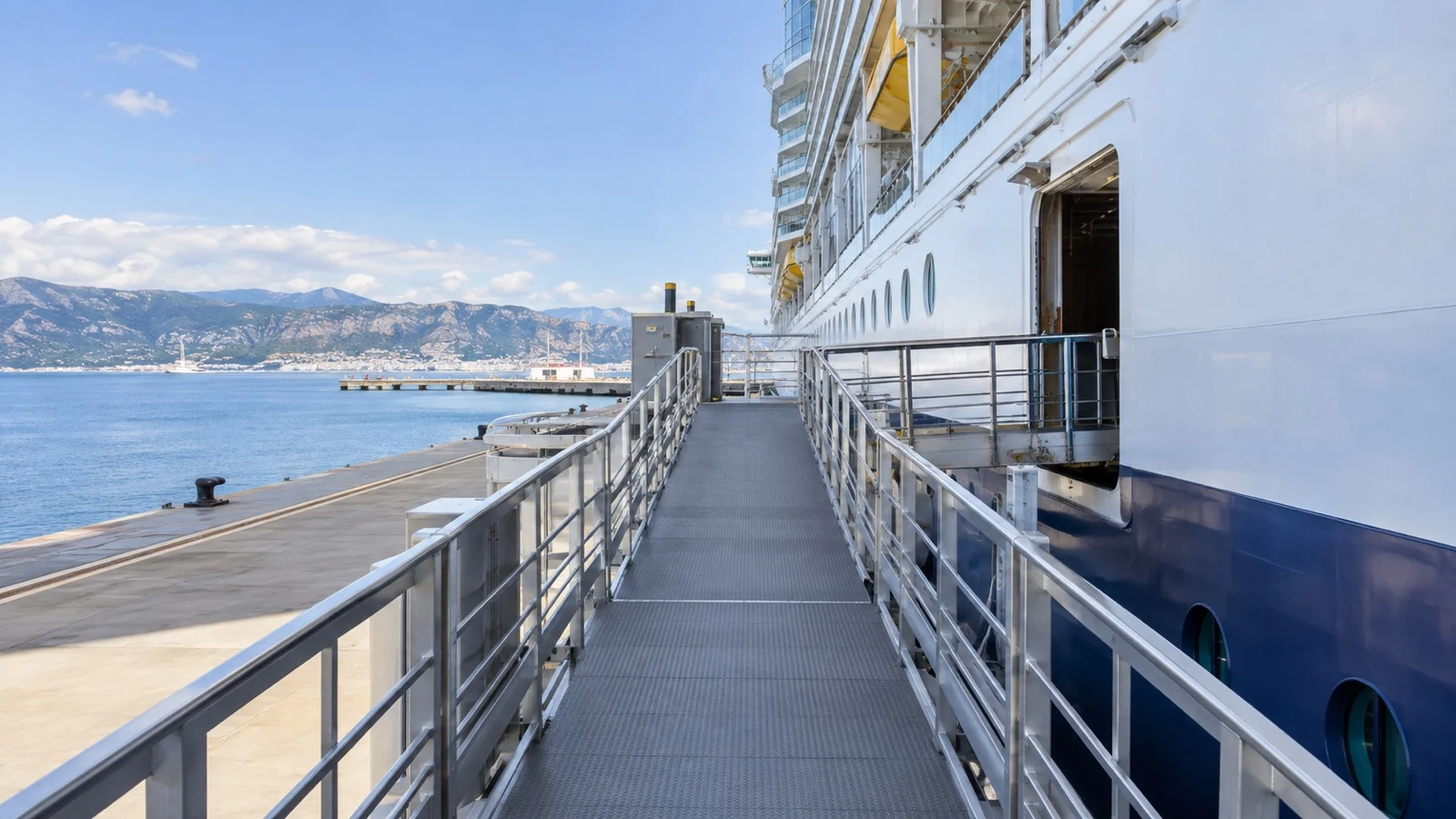
Even a docked port is not automatically flat. Carnival tells guests who want to leave the ship on a mobility device that they must be able to safely navigate the angle of the gangway while the ship is in port, which is a polite way of saying the ramp is sometimes steep.
The angle changes through the day because the ship rises and falls with the tide while the pier does not. A gangway that was gentle at 8am can be a real climb at 4pm in a port with a big tidal range, and the crew rerig it as the water moves.
This is exactly why I plan these trips port first. My list of the most wheelchair-friendly cruise ports and the companion piece on the most walkable cruise ports are the two documents I would open before any deposit.
Scooters, wheelchairs and the size limits that apply
Doorway width is the number that ends most plans, and it is small. Carnival says guests bringing scooters wider than 21 inches, or more than one scooter in a cabin, must book a fully accessible stateroom with a 32-inch doorway, because a standard cabin door is only about 22 inches.
Royal Caribbean puts the same idea slightly differently, telling guests that assistive devices should fit through a standard stateroom doorway of at least 23 inches, with accessible staterooms offering at least 32 inches. Measure your device at its widest point, including the seat and any bumpers, before you assume it fits.
Storage is the other hard rule and it is a fire safety one. Carnival states that mobility devices cannot be stored in corridors or public areas, and Royal Caribbean requires that scooters be stored and recharged in the stateroom so fire doors, corridors and elevator lobbies stay clear.
If your own scooter is too wide, renting a narrower model may solve the cabin-door problem. Approved vendors can arrange ship deliveries, but confirm the handoff point, timing and plan for a terminal or ship change.
Fun fact: whether US disability law reaches a foreign-flagged cruise ship went all the way to the Supreme Court. In the 2005 Spector decision involving Norwegian Cruise Line, the Court held that Title III of the Americans with Disabilities Act generally does apply to foreign-flag ships operating in United States waters.
Shore excursion labels and what they really promise
Every line puts an activity level or an accessibility symbol on its tours, and those symbols are advisory rather than contractual. They also mean different things on different lines.
Princess gives the clearest version I have seen in writing: guests who can manage three to five steps onto and off a tour bus and who have a collapsible mobility device should generally be able to book standard tours. That is a useful benchmark precisely because it is specific.
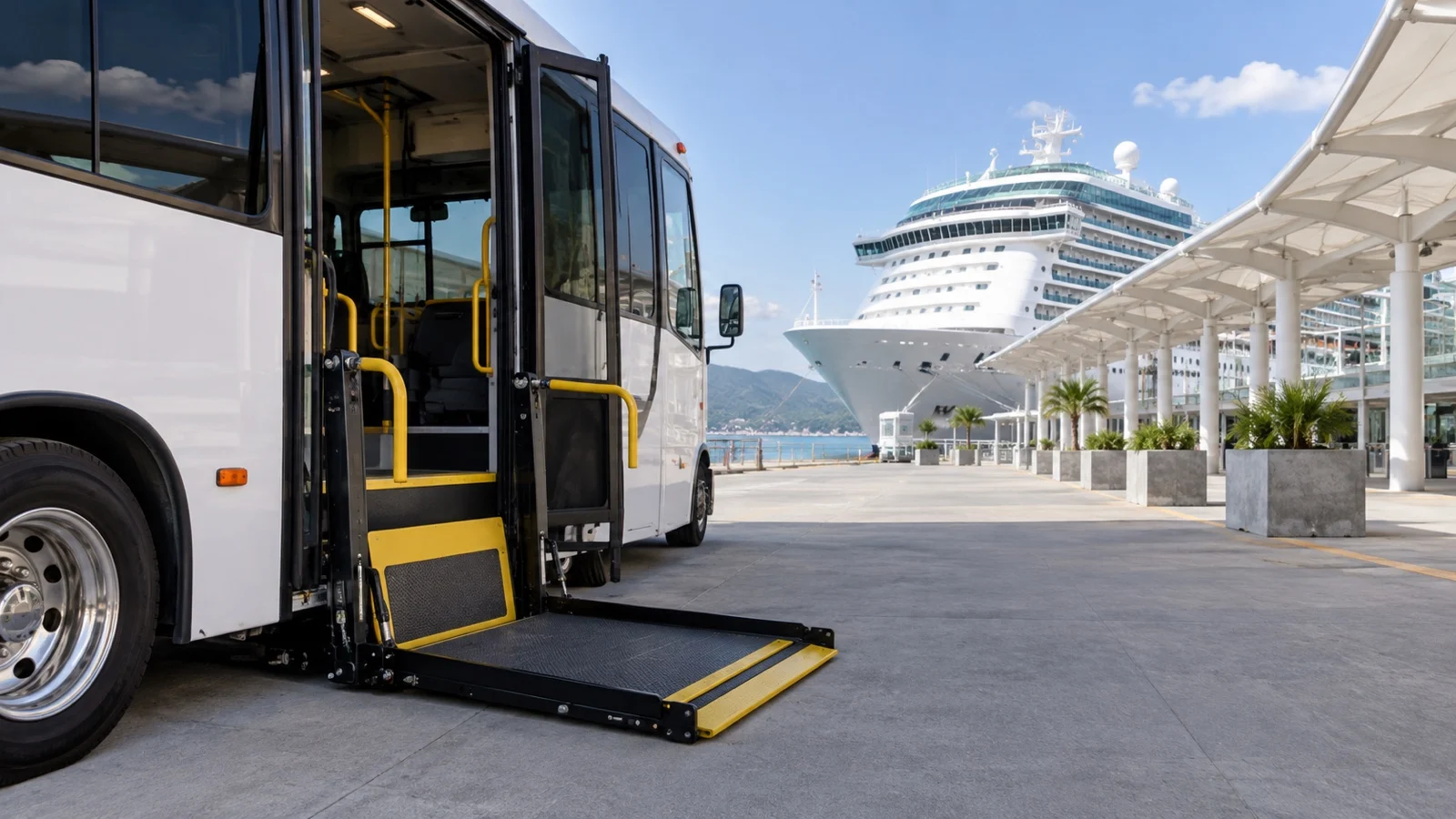
When a tour is described as accessible, ask four questions before you book it. Is the vehicle lift equipped or ramp equipped, how far is the walk from the parking spot to the site, what is the surface underfoot, and is there an accessible restroom on the route.
An independent operator may offer better pacing or a suitable ramped van, but “private” does not mean accessible. Compare the actual vehicle, route, assistance policy, cancellation terms and return-to-ship plan in writing.
Four situations, and what I would do in each
- You walk fine but slowly, and stairs are the problem: book a standard midship cabin near an elevator bank rather than an accessible one, and leave the wide door for someone who needs it. Choose docked ports and pick a ship with a full promenade deck so you can pace yourself.
- Manual wheelchair, with a companion who can push: this is the most flexible position to be in, and a fully accessible cabin plus a mostly docked itinerary is usually enough. Ask in writing whether tender assistance is possible for a folding chair at each specific call.
- Full-time power chair or non-folding scooter user: treat every tender port as a sea day and build the itinerary around that. Alaska’s main stops, the Baltic and the big Caribbean piers give you far more alongside berths than the Greek islands or French Polynesia.
- Rollator or cane, and stamina is the real limit: the enemy is distance rather than steps, so check how far the berth sits from the town gate first. Book low and near the elevators, and plan half days ashore with a coffee stop built in.
Where people get burned
The most common problem is a tender call that was not checked before booking. Cruise lines usually identify expected tender ports in itinerary notes, but berth assignments and operating conditions can still change.
The second is the accessible cabin that quietly turns into a standard one. This happens most often on group bookings and on third-party rebookings, so verify the cabin number and the accessible designation on the line’s own booking page, not on an agent’s confirmation email.
The third is a verbal promise. Every reassurance you were given on the phone should be repeated back in an email to the accessibility department, because that department is the one that actually loads the note onto your booking.
A realistic word on accessibility
I am writing about logistics here, not about you. Only you and the people who look after your health can judge what you can manage, and nothing on this page is medical advice or a promise about any particular sailing.
Policies also move, and they vary by ship within the same line. The figures quoted above were on the lines’ own accessibility pages when I checked them in September 10, 2026, and the only version that binds anyone is the one on the line’s site on the day you book.
Mobility is also only one kind of access need. Hearing, vision, sensory and cognitive needs run through the same desk and the same forms, and asking early works the same way for all of them.
One last practical note: getting off a ship in an emergency is far harder from a small island than from a big port. That belongs in your choice of region as much as your choice of ship.
Quick answers
Can I take a mobility scooter on a cruise? Most major ocean lines accept many scooters subject to battery, dimensions, storage and cabin rules, but policies vary; Carnival requires a fully accessible cabin when a scooter is wider than 21 inches or more than one scooter shares a room.
Can a wheelchair user get ashore at a tender port? Sometimes, but plan an enjoyable onboard alternative; The answer depends on the boat, transfer, device, gangway, weather, tides and captain’s safety decision, and major lines say crew cannot lift or carry guests or heavy equipment.
How far ahead should I book an accessible cabin?
As early as you can, ideally the week the sailing opens; There are very few per ship, and Royal Caribbean only releases them to other guests once the rest of that category has sold.
Do I need to prove my disability to book one?
You do not have to disclose a diagnosis, but you do have to acknowledge the need; Lines use a special needs or mobility form for this, and they do reclaim cabins they believe were booked without a genuine need.
Does the ADA apply on a cruise ship?
Title III generally applies to foreign-flag ships in United States waters, following the Supreme Court’s 2005 Spector decision; It does not apply ashore in a foreign port, which is where most access problems actually happen.
The last word
Cruising is one of the better ways to travel with a mobility need, because the hotel comes with you and you unpack once. The catch is that the good version and the frustrating version cost the same money.
Pick the itinerary with the fewest tender calls, book the cabin the day it goes on sale, measure the device, and put every question in an email. That is the whole method, and it works on every line.
If you take one thing from this, make it the port list. A ship cannot fix a berth two miles from town at the bottom of a hill, and no brochure will ever tell you that is what you booked.
How this guide was researched: Cabin, device, tender and excursion rules were checked against current official information from Carnival, Royal Caribbean, Princess and Norwegian, with the legal context from the U.S. Supreme Court’s Spector decision. Details were rechecked on September 10, 2026, but ship and port conditions vary, so confirm the specific sailing in writing.
More on this topic: browse every guide on choosing a cruise.