Harstad Cruise Port: Trondenes, the Adolf Gun and the Midnight Sun
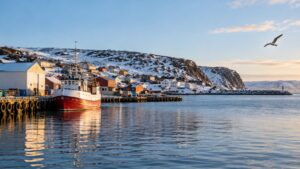
Harstad sits on Hinnøya, Norway’s largest island, though most passengers only register that fact once they’ve stepped off the ship. It is a working fishing and shipping town first and a cruise stop second, and that order is exactly what makes it worth a look.
Two quays, and only one puts you in town
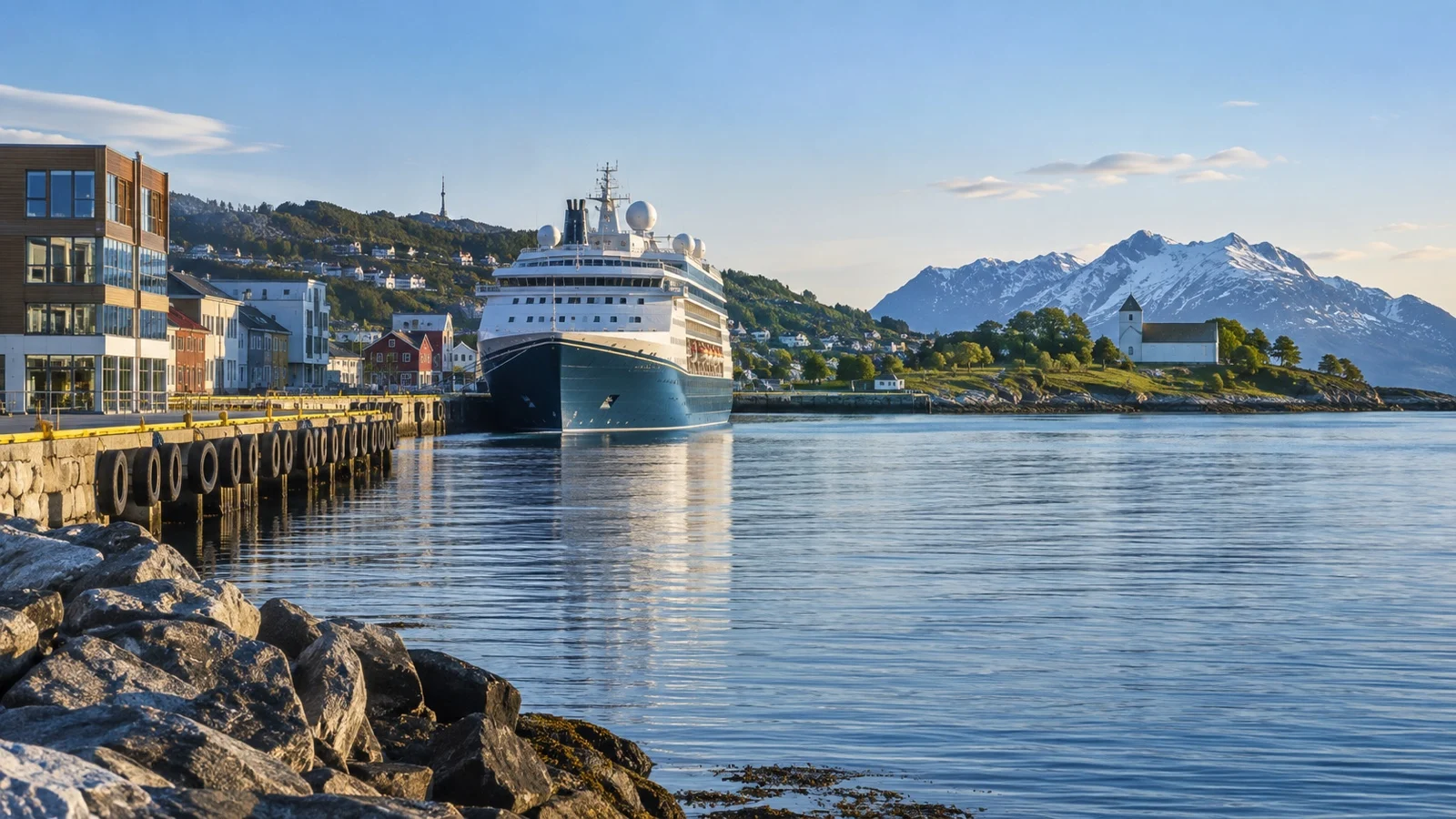
Cruise ships calling at Harstad use one of two berths, and which one you get changes your whole morning. Larsneset, the town quay, sits close enough to downtown that no shuttle is needed at all.
Stangnes, used for larger ships or on busy call days, sits about 2.5 to 3 miles south on an industrial stretch of shoreline. It has none of Larsneset’s charm, but a shuttle bus into the center is arranged for ships that use it.
Check your ship’s daily program rather than an old blog post to see which quay you’ve drawn. Assignments shift with ship size and the day’s other traffic, and Harstad’s port authority makes that call, not the cruise line.
Quick Facts
- Docking: Cruise ships commonly use Larsneset, the town quay, or Stangnes, an industrial quay about 2.5 to 3 miles south
- Into town: A short walk from Larsneset or a cruise shuttle from Stangnes into central Harstad
- Currency and language: Norwegian krone (NOK); Norwegian is official, though English is widely spoken in shops and cafes
- Time zone: Central European Time, CEST (UTC+2) in summer
Use the harbor as your map
Harstad’s center runs along Sjøgata, a short block up from the water, and the harbor itself functions as the town’s main public space. From Larsneset you can see most of what matters without opening a map.
Harstad kulturhus, a glass-fronted concert and cinema house, anchors one end of downtown and is worth a glance even if you skip what’s inside. Locals treat it as proof that a town of around 25,000 people can still support real culture.
Walk the waterfront path past the guest harbor and you’ll pass fishing boats, pleasure craft, and the small ferries that still connect Harstad to nearby island communities. This is a working harbor first, and it shows in the best way.
If your call is short, stay inside this loop rather than chasing a taxi to the edge of town. Harstad rewards an unhurried walk more than it rewards a rushed excursion.
Trondenes, two thousand years in one short taxi ride
Trondenes peninsula, on the northern edge of Harstad, holds far more history than a place this size should. Figure on roughly 5 to 10 minutes by taxi or bus from the town quay, longer if you decide to walk it.
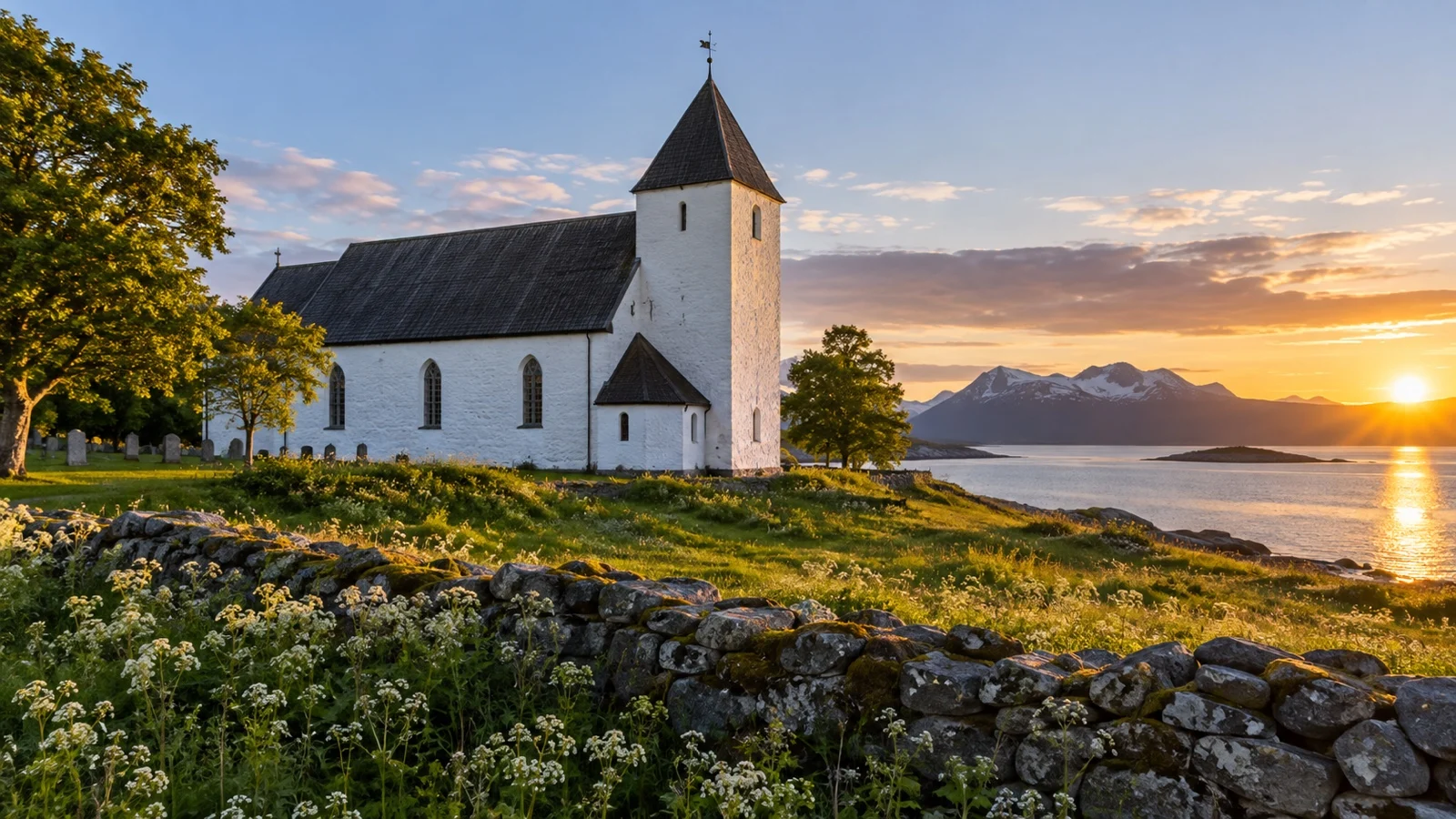
The centerpiece is Trondenes Church, built in the 1430s and often described as the northernmost surviving medieval stone building in the world. It is still an active parish church, not a roped-off museum piece, and it seats around 300 people.
Next door, Trondenes Historical Centre traces more than 1,000 years of history, with exhibits spanning the Stone Age through the postwar period. Trondenes is among the handful of sights worth a dedicated taxi run from either quay.
Independent access to some of the wartime installations is restricted, so treat the museum and church as your Trondenes stop unless you’ve booked a guided tour in advance. Half a day covers all of it comfortably, taxi both ways included.
A walking loop around downtown Harstad
Start at Larsneset and walk the short stretch into Sjøgata, where most shops, cafes, and a supermarket sit within a few minutes of each other. Loop back along the waterfront rather than retracing your steps, and you’ll see both of the town’s faces, commercial street and working harbor.
Harstad kulturhus sits a few minutes further along and is easy to combine with a coffee stop. Its glass facade and harbor-front setting make it one of the more photogenic modern buildings in this part of Norway.
The guest harbor itself is worth ten unhurried minutes, especially if a Hurtigruten or Havila coastal express ship happens to be in for its own call. Do not confuse the coastal ferry with your cruise ship, since it runs on an entirely separate schedule.
A full loop, quay to Sjøgata to waterfront and back, takes under an hour at an easy pace. That leaves plenty of time for Trondenes or a longer excursion before you need to be back aboard.
The Adolf Gun: Trondenes Fort’s giant
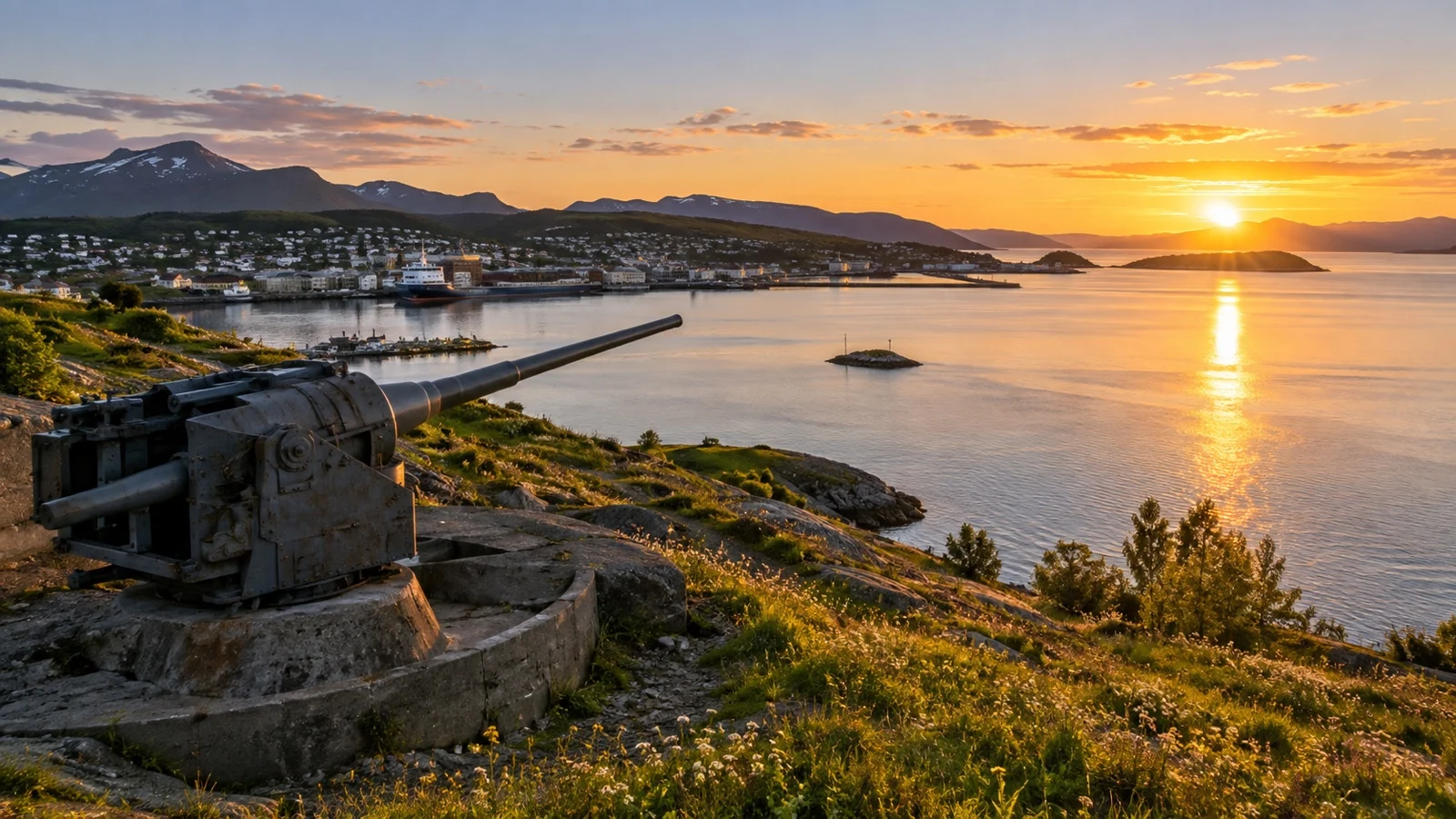
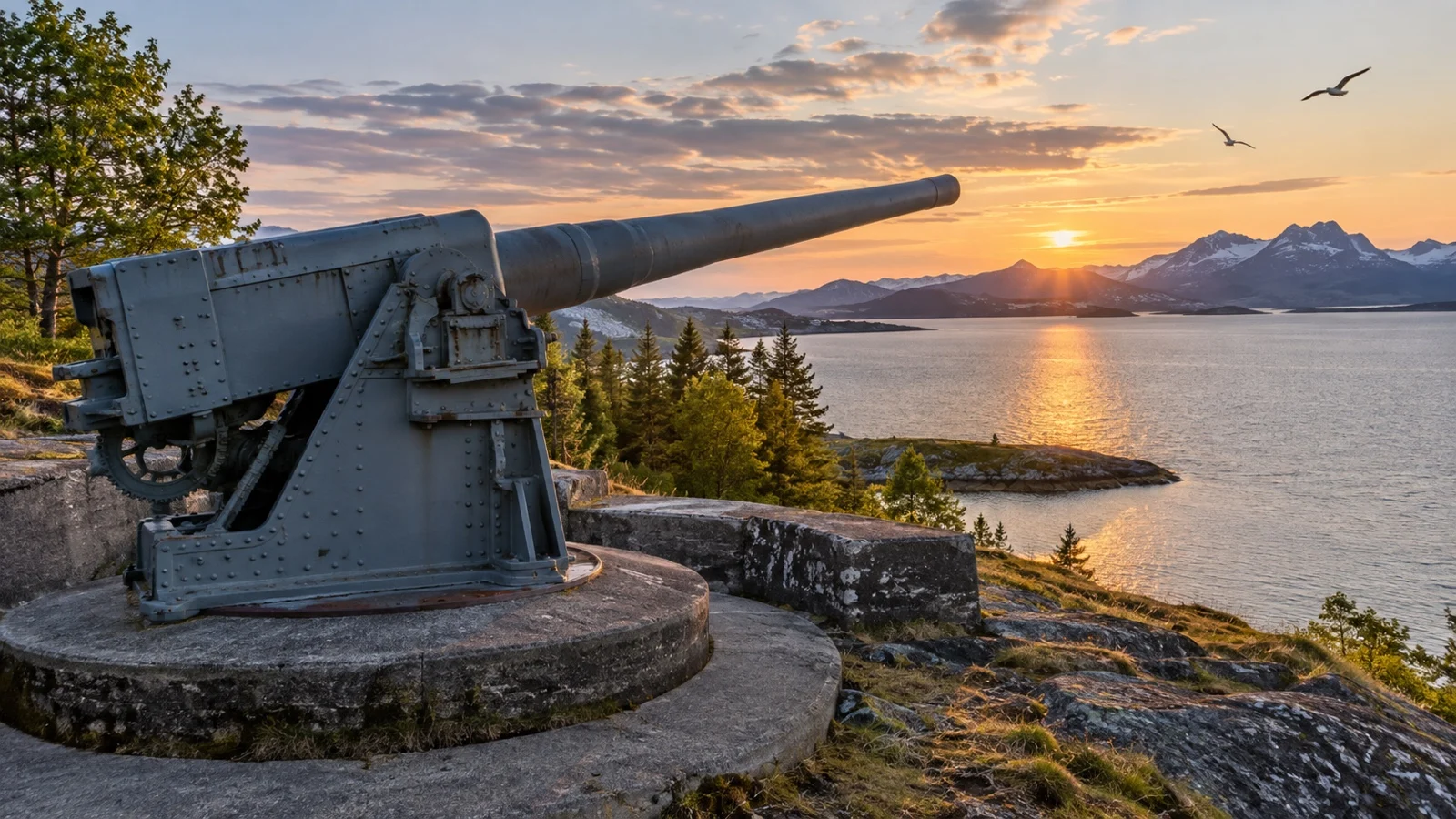
The single most talked-about sight at Trondenes is the Adolf Gun, one of four enormous coastal artillery pieces installed here by German occupying forces during World War II. All four remain intact, and one is maintained as an open-air museum.
The gun and its bunker, now a small cannon museum, sit within the fortified area of Trondenes Fort. Access is by guided tour only, arranged through Explore Harstad or a similar local operator, and valid photo ID is required to get in.
Norwegian coastal artillery crews trained on these guns after the war, right up until the site was decommissioned in 1961 and turned into a memorial. That is a longer working life than most WWII coastal defenses in Norway ever got.
Book the tour before you leave the ship if you can, since slots are limited and this is not a sight you can improvise your way into. Check current access rules for the gun before you book, since they can change from season to season.
Hinnøya by boat: Vesterålen and Lofoten within reach
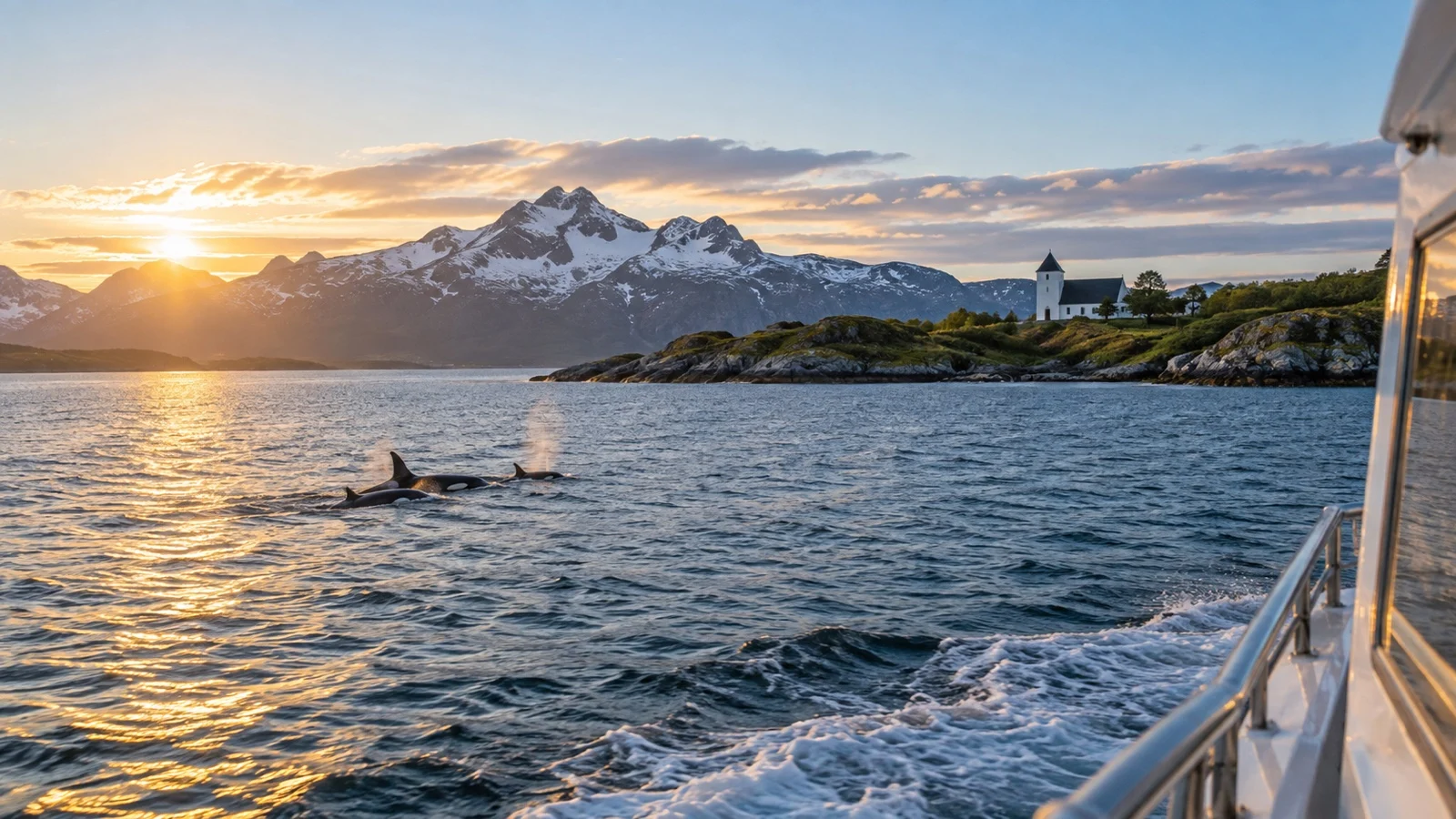
Harstad’s real advantage is geography, not size. It sits on Hinnøya, Norway’s largest island, at a crossing point between the Vesterålen archipelago and the Lofoten islands most travelers already have on a bucket list.
Local ferries and express boats connect Harstad to smaller communities across Hinnøya and neighboring islands, the same way they have for generations. These are working routes, not sightseeing cruises, but they are a legitimate way to see fjord country if your call is long enough.
A cruise call rarely leaves time for a full Lofoten day trip, and I wouldn’t try to force one onto a Harstad stop. Our Lofoten cruise port guide covers Svolvær and the villages if that’s the real draw on your itinerary.
What Harstad does give you is a taste of the same island landscape, minus the crowds that build up in Svolvær during peak season. Sometimes the less famous port is the more relaxed one.
Choose land, harbor, or ocean
Harstad calls are short, so pick one lane rather than trying to do all three in one afternoon.
Land: Trondenes, the church, the historical center, and the Adolf Gun if you’ve booked ahead. This is the highest-value half day the port offers.
Harbor: Stay inside the Larsneset-to-Sjøgata loop, shop, eat, and watch the working harbor go about its day. This is the right call on a short call or a rough-weather one.
Ocean: Treat Harstad as a scenic sail-in through Hinnøya’s fjords and skip going ashore at all. The island scenery does a lot of the work before you even reach the quay.
Accessibility from quay to island
Larsneset’s approach is flat and paved, and it is one of the easier Norwegian coastal calls for anyone using a wheelchair or with limited mobility. Stangnes is functional but industrial, and the shuttle bus is the practical way to bridge the distance regardless of mobility.
Trondenes itself is a mixed picture. The church and historical center grounds are manageable, but the Adolf Gun’s access shaft is not wheelchair friendly, and the museum’s wartime exhibits are not fully adapted for visual or hearing impairments.
Ask reception or the shore excursions desk about accessible transport before booking anything at Trondenes independently. A private accessible taxi is usually easy to arrange in Harstad, simply because the town is small enough that drivers know the routes.
None of this is unusual for a small Arctic Norwegian call. Ask before you book, and you’ll almost certainly find a workable option.
Weather, midnight sun, and safety
Harstad sits north of the Arctic Circle, so the summer sailing season brings genuine midnight sun, roughly from late May into late July, when the sun does not fully set. Exact dates shift slightly year to year, so treat this as a seasonal window rather than a fixed calendar.
Weather changes quickly here even in summer, and layers matter more than they do further south in Norway. Rain gear is worth packing regardless of the forecast, since both Trondenes and the waterfront walk leave you exposed.
Norway’s emergency numbers are the same everywhere in the country: 112 for police, 113 for medical emergencies, and 110 for fire. Save them before you go ashore, not after you need them.
Return timing by geography
From Larsneset, you can cut it close and still make it, since the walk back is under ten minutes at a normal pace. Give yourself 20 minutes as a buffer anyway, not because the walk is long but because Sjøgata is easy to get distracted in.
From Stangnes, budget the full shuttle ride plus a margin, roughly 30 to 40 minutes door to gangway once you account for waiting on the bus. Do not assume a taxi beats the shuttle, since Stangnes’s industrial layout works against quick pickups.
From Trondenes, add taxi time on both ends to whatever you spend at the site itself, and build in slack if you’ve booked a guided tour with a fixed start time. Guided groups wait for stragglers less often than you’d hope.
How Harstad fits a Norway cruise
Harstad rarely anchors a cruise itinerary on its own. It shows up as one call among several on longer Norwegian coastal routings, often paired with stops further north or south along the same stretch of coast.
If you want the wider picture before you sail, our Norway cruise ports guide covers the fjords and Arctic north as a whole, and our Hurtigruten ports guide explains how the working coastal express differs from a standard cruise call. Narvik, a short hop south, and Tromsø further north are the two ports most itineraries pair with a Harstad call.
The practical checks I would make before Harstad
Ask whether the ship has Larsneset or Stangnes and confirm the shuttle, because only the town quay supports an easy central walk. A larger ship at the industrial berth needs the line’s approved transport and pickup point rather than an improvised walk along port roads.
Trondenes is the best outer-city plan, while the Adolf Gun requires current guided access and should not be treated as an open walk-in attraction. Reserve through the official operator or ship and leave Trondenes at least 60 minutes before all-aboard time when traveling independently.
Check Norway and Schengen entry rules, museum and tour fees, security restrictions, and seasonal opening. Wind, rain, snow, historic surfaces, coach steps, shore boats, and the Stangnes transfer each affect accessibility, while Lofoten is too far for a casual port-day detour.
Harstad cruise port FAQs
Is Harstad worth a stop if I’ve already done Tromsø or Bergen?
Yes, though for a different reason. Harstad’s appeal is Trondenes and the quieter island landscape rather than big-city energy, so it complements a Tromsø or Bergen call instead of repeating it.
Can I visit the Adolf Gun without a guided tour?
No. Independent access to the fortified area is not permitted, and a guided tour through Explore Harstad or a comparable local operator is required.
How far is Harstad from Lofoten?
Close by Norwegian standards, but not close enough for a cruise-call side trip. If Lofoten is your priority, look for an itinerary that calls there directly rather than trying to reach it from Harstad.
Which cruise lines call at Harstad?
Lines including Ambassador Cruise Line, Azamara, Costa, and Fred Olsen Cruise Lines have included Harstad on Norway coastal itineraries in recent seasons. The Hurtigruten and Havila coastal express services also call here on a fixed, separate schedule.
The case for Harstad
Harstad will never be the headline stop on a Norway cruise, and it does not need to be. What it offers is an easy walk, a genuinely old church, an enormous gun with a strange history, and Norway’s largest island as a backdrop.
Give it half a day, pick one lane between land, harbor, and ocean, and you’ll leave with a better sense of working northern Norway than most single-day stops manage. That’s a reasonable trade for a few hours ashore.
How this guide was researched: Unless a first-hand visit is explicitly identified above, this guide is based on independent research using official port, museum, fortress, tourism, government, and cruise sources where available. Logistics and time-sensitive details were reviewed on September 12, 2026, under our Editorial Policy.