Guadalquivir River Cruise Ports: Seville, Cádiz and the Stops Between
A Guadalquivir cruise begins with a geography quiz disguised as a vacation. Seville is an inland maritime port, Cádiz is an Atlantic port, El Puerto de Santa María sits on the Bay of Cádiz near the Guadalete River, and Isla Mínima is more estate stop than port town.
They belong in one guide because certain small ships combine river and coastal navigation into a single Andalusian itinerary. They do not belong in one mental bucket, unless that bucket has room for a lock, an ocean harbor, a sherry town and a hacienda.
My quick take
Seville and Cádiz are the independent explorer’s gifts. Both can put you close to major sights, although the Seville berth must be checked because Las Delicias and Tablada do not produce the same walk.
El Puerto de Santa María is a smaller, more variable call with easy appeal for Jerez, bodegas and the old town. Isla Mínima is usually a structured ship program at a riverside estate, not a place to wander off with a list of museum hours.
The big distinction is simple: an ocean cruise calling at Cádiz has not sailed upriver to Seville. A Guadalquivir itinerary can include both because its vessel is small enough, and sometimes specially designed, to handle river and coastal legs.
Guadalquivir ports compared
- Seville: This is an inland maritime port on the navigable Guadalquivir. Plaza de España, the Alcázar, the cathedral, and Santa Cruz suit an independent day, but confirm your berth before mapping the walk.
- Cádiz: This is an ocean port in the Bay of Cádiz, not an inland Guadalquivir berth. The Old Town, cathedral, market, and waterfront are easy priorities, though wind, sea conditions, or itinerary changes can still affect a call.
- El Puerto de Santa María: This bay port sits near the mouth of the Guadalete. Choose the old town, a bodega, or a reserved Jerez trip; CroisiEurope explicitly says this stop may be replaced by Cádiz.
- Isla Mínima: This is a rural Guadalquivir hacienda experience, not a normal town terminal. Use the ship’s organized estate program; CroisiEurope says it will arrange an alternative if the advertised program is unavailable.
No authority publishes reliable missed-call percentages for this route. Current operator notes confirm that substitutions or program changes can happen, while all walking and driving times below are clearly labeled estimates.
First, understand the route
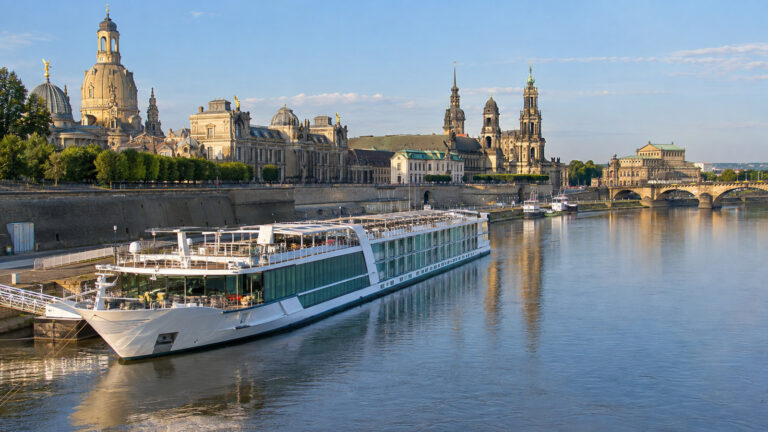
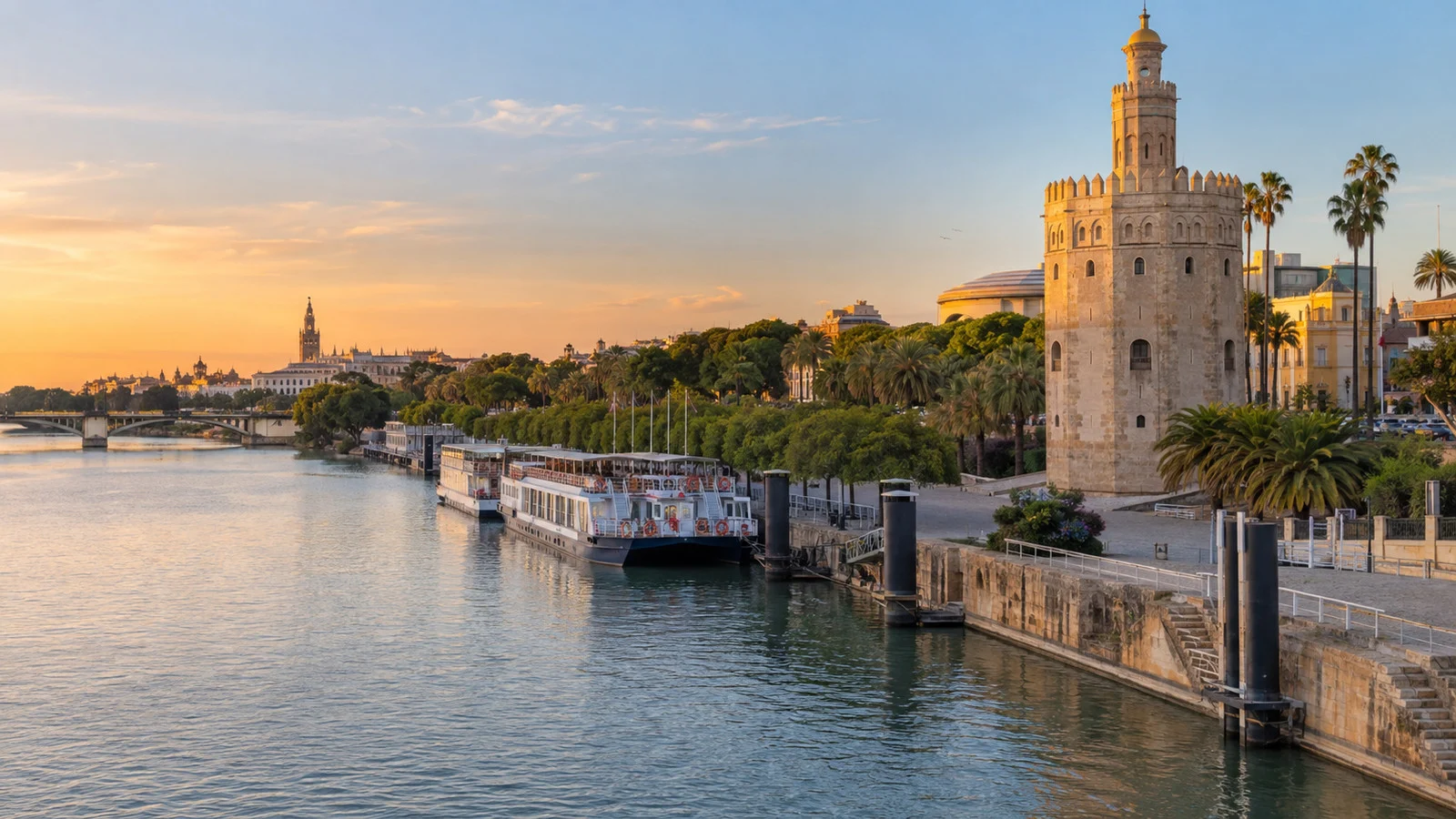
The Port of Seville calls itself Spain’s only inland maritime port. Ships enter the Guadalquivir from the Atlantic near Sanlúcar de Barrameda, navigate the lower river and pass through the Puerta del Mar lock into Seville’s protected port basin.
The port’s vessel checker lists general maximums of about 623 feet in length, 98 feet in beam and 138 feet of air draft, with extra tug requirements above certain dimensions. Those numbers are navigation limits, not a promise that every ship fitting inside the box will receive permission.
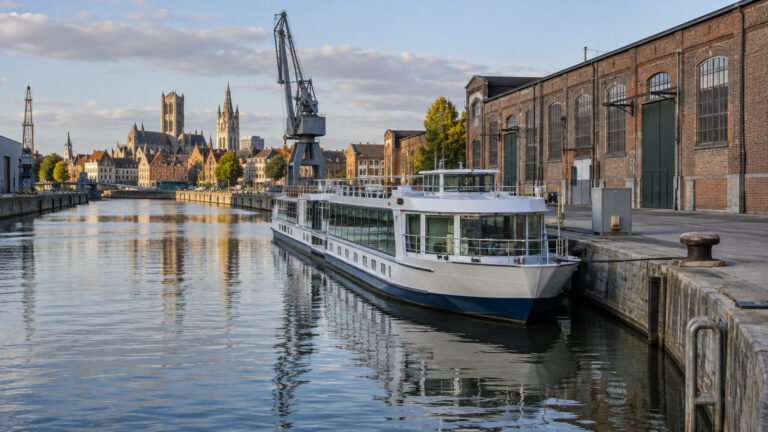
Cádiz comes after the river meets the Gulf of Cádiz and is a true ocean call. CroisiEurope says its MS La Belle de Cadix uses technology suited to both river and coastal cruising, which explains an itinerary that otherwise looks like somebody connected blue lines with enthusiasm.
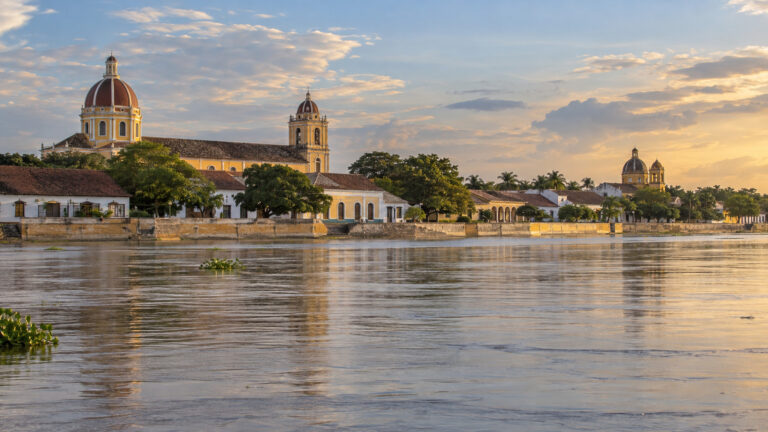
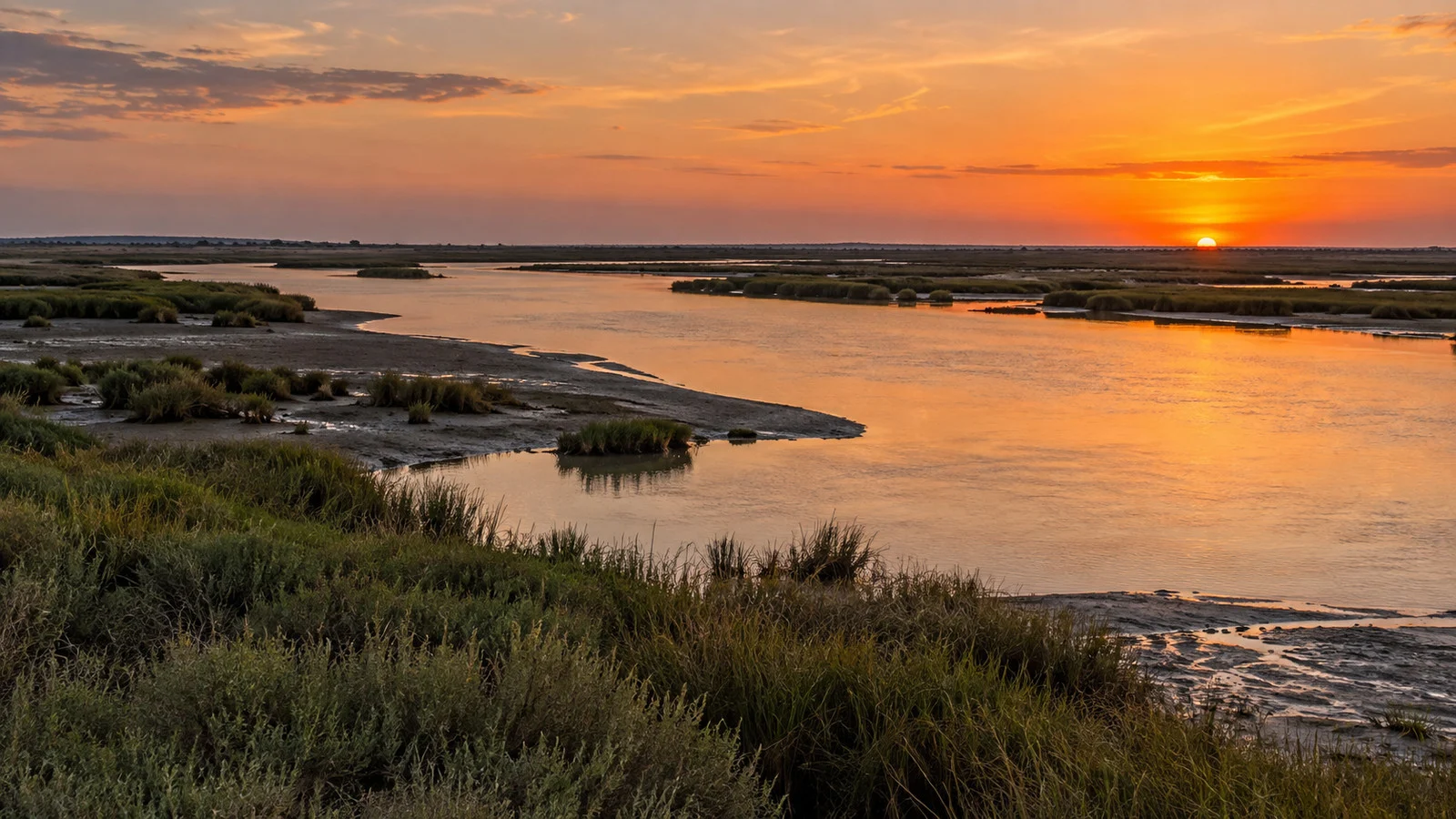
El Puerto de Santa María lies across the bay, beside the Guadalete rather than on the Guadalquivir. Isla Mínima is back on the lower Guadalquivir among the marsh and rice-growing landscapes downstream of Seville.
Seville: check whether the berth says Delicias or Tablada
Seville’s showcase cruise berth is Muelle de las Delicias, directly beside the urban riverfront. The Sevilla Cruise Port lists roughly 1,700 feet of total berthing line, a draft of about 23 feet and a terminal of about 11,750 square feet.
The 2026 schedule also assigns some ships to Tablada, so “Seville port” is not one universal gangway. Ask onboard before mapping the walk, particularly if your vessel is not the route’s regular river ship.
From Las Delicias, María Luisa Park is across the road and Plaza de España is an estimated 15 to 20 minutes away. The cathedral and Real Alcázar are roughly 25 to 35 minutes on foot, depending on the gate, heat and how long the park persuades you to stop.
Book the Alcázar through its official site if it anchors your day, and use a timed cathedral ticket when available. These are headline attractions with airport-level popularity and considerably better ceilings.
A practical walking loop runs from Las Delicias through María Luisa Park and Plaza de España, then north toward the Alcázar, cathedral and Santa Cruz. Return along the river with at least 30 minutes of margin inside the ship’s all-aboard time.
For a shorter call, choose Plaza de España plus the park or one ticketed monument plus Santa Cruz. Córdoba and Granada are land excursions from the itinerary, not Guadalquivir river berths, and neither belongs in a casual half-day gamble.
What can change in Seville?
River conditions, visibility, lock operations, pilotage, berth availability, or a vessel-specific restriction can change the arrival time or berth even when Seville remains on the program. No trustworthy public change rate is available.
Cádiz: the ocean port hiding in a river-cruise itinerary
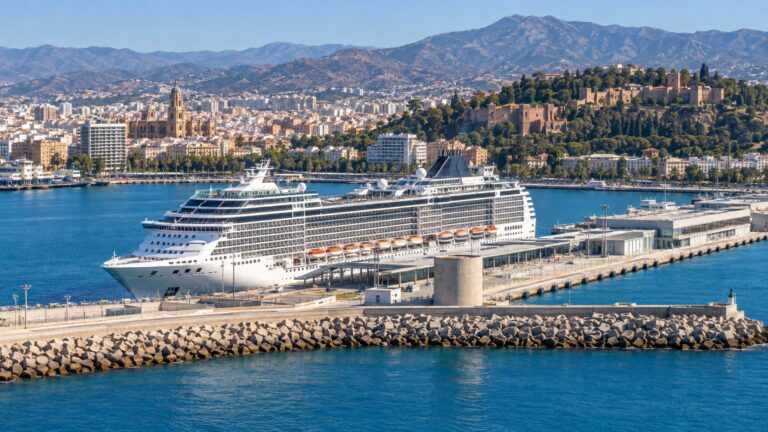
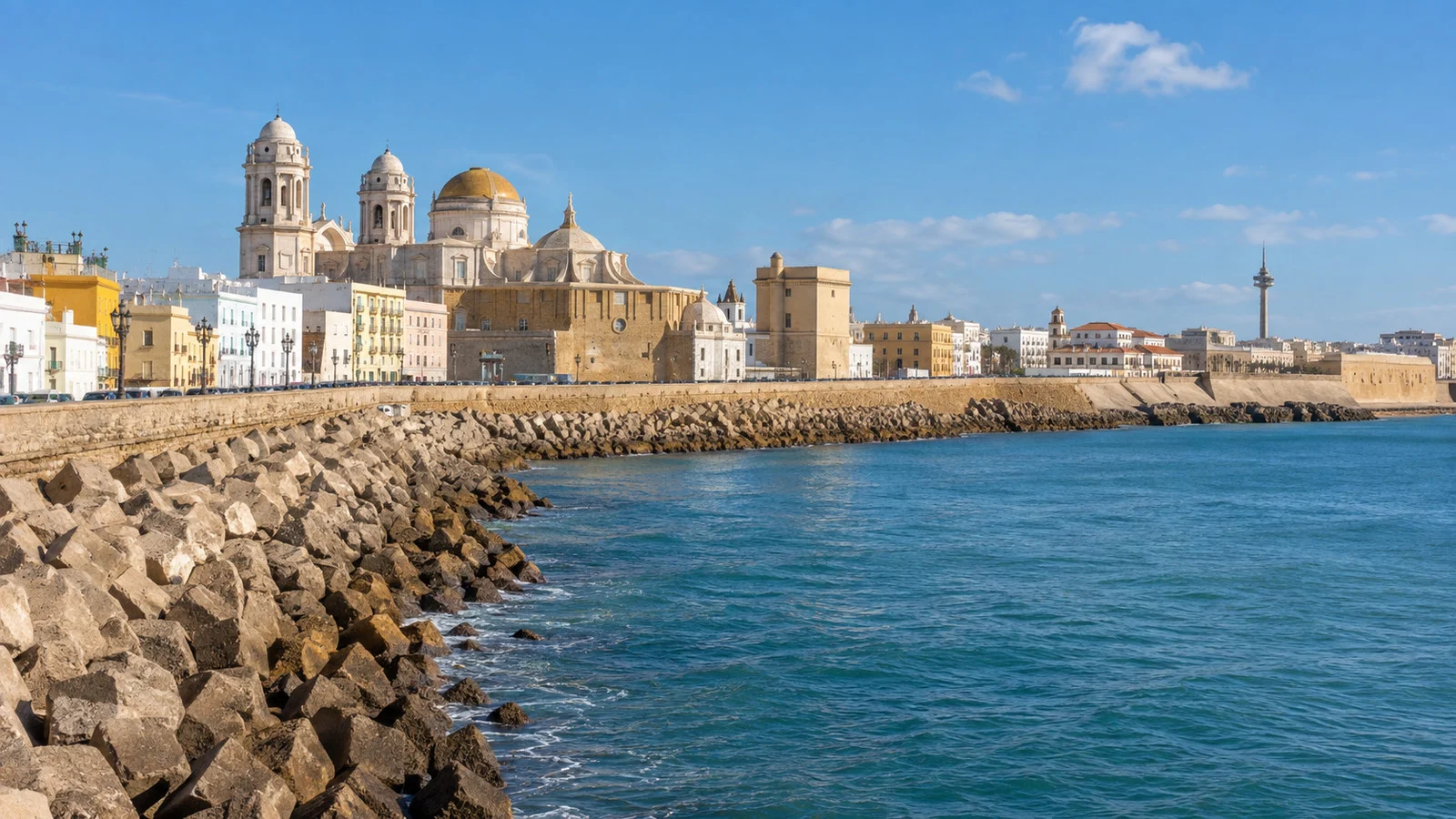
Cádiz is not on the navigable Guadalquivir. It is a major Atlantic-facing cruise port in the Bay of Cádiz, and its port authority publishes a busy 2026 schedule of conventional ocean cruise calls.
The Port of the Bay of Cádiz operates its principal cruise terminal at Muelle Alfonso XIII. Other central quays can be assigned, so confirm the ship’s exact berth rather than treating the terminal name as destiny.
The old town begins within an estimated 5 to 10-minute walk of the central cruise area. Cádiz Cathedral, the market, Torre Tavira and the waterfront forts fit into a mostly flat loop, which is why the site ranks Cádiz among its more wheelchair-friendly cruise ports.
For a route with maps, transit choices and the Seville-by-train question, use the full Cádiz cruise port guide. On a Guadalquivir sailing, staying in Cádiz usually beats turning a beautifully walkable port into a long coach ride back toward somewhere the ship already visited.
A satisfying half-day starts at the cathedral, threads through the market and La Viña, then follows the oceanfront toward Santa Catalina Castle. Cádiz is compact, but Atlantic wind and bright sun can make a hat more valuable than another monument ticket.
What can change in Cádiz?
Strong wind, sea conditions, port traffic, or broader itinerary changes can still disrupt the call, though Cádiz handles cruise traffic regularly. No trustworthy public missed-call rate is available.
El Puerto de Santa María: attractive, useful and substitutable
El Puerto de Santa María sits within the Bay of Cádiz at the Guadalete River, not on the Guadalquivir. Certain Andalusian cruise itineraries berth here before excursions to Jerez or a later move to Cádiz.
The central area offers Castillo de San Marcos, seafood, historic houses and sherry-country bodegas. Exact small-ship landing details are not consistently published, so the estimated walk into the center ranges from about 5 to 20 minutes depending on assignment.
Jerez is the obvious excursion, with an estimated road time of 25 to 40 minutes each way. Reserve a bodega or use the ship’s tour rather than arriving during the long midday pause with a powerful interest in locked doors.
El Puerto’s municipal transport page confirms the B-042 catamaran connection with Cádiz. Schedules vary, so treat the boat as an enjoyable independent option only after checking the current official transport information and leaving a backup route.
Most important, CroisiEurope’s current itinerary states that the El Puerto stopover may be replaced by Cádiz. The operator does not publish a percentage, so treat the note as a reason to keep plans flexible rather than a prediction for your sailing.
Isla Mínima: an experience stop, not a miniature city
Isla Mínima appears on itineraries as a stop at an Andalusian hacienda on the banks of the Guadalquivir. The standard program includes an estate visit and dance presentation before passengers return to the ship.
This is not a conventional municipal cruise terminal with taxis, an old town and a row of competing attractions. Independent access, the precise landing and the walking route depend on the ship’s arrangements, so follow crew instructions rather than building a DIY afternoon around a map label.
CroisiEurope’s 2026 itinerary says an alternative will be arranged if the Isla Mínima program is unavailable. The operator does not publish a modification rate, so keep expectations flexible without assigning a number to the risk.
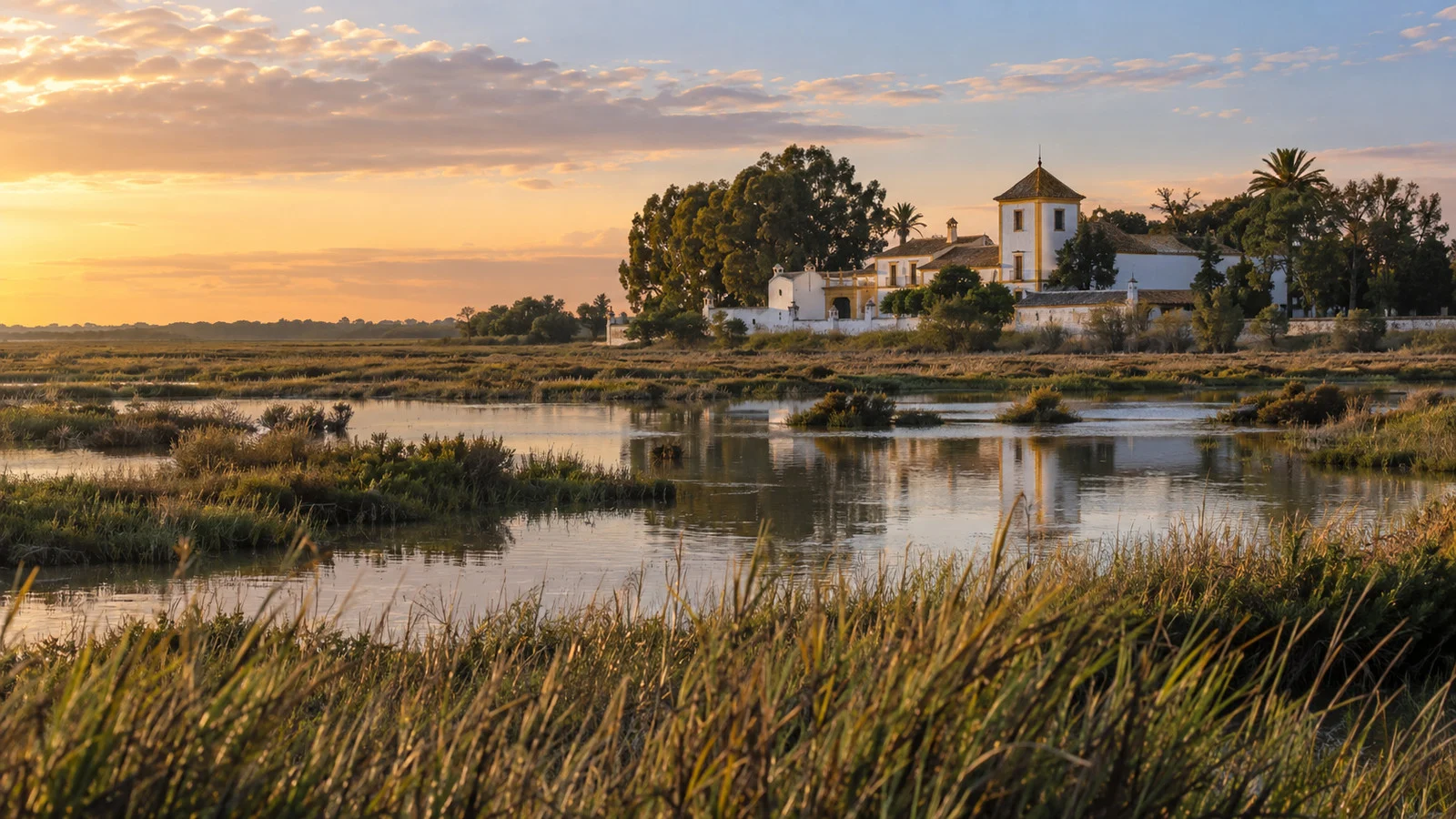
The point of the call is cultural landscape: rice fields, ranching traditions, marsh country and the working lower river. It is the day to let the organized program do its job, an uncommon sentence on a website deeply fond of walking away independently.
What navigation changes look like
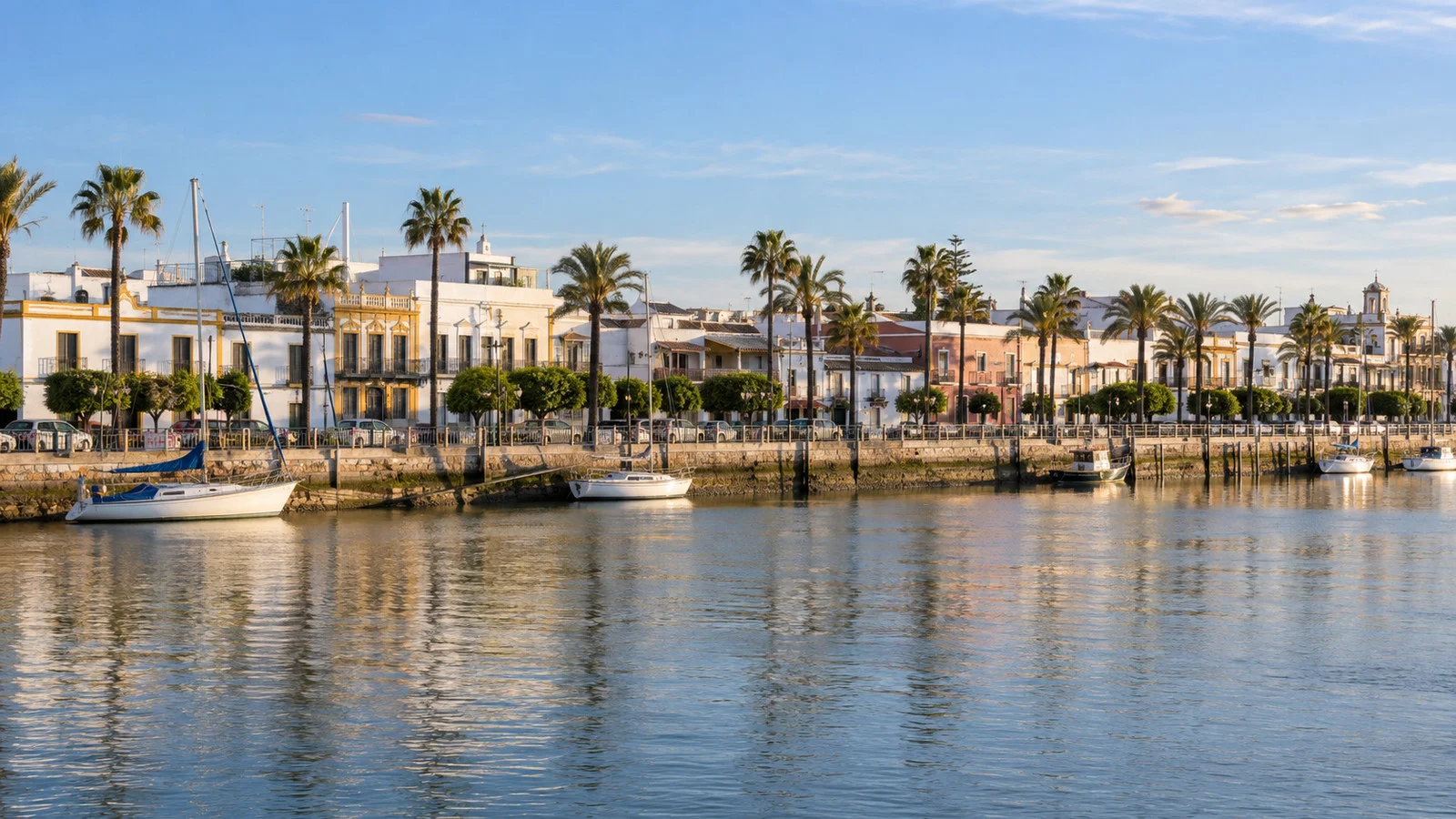
A change may mean different timing, a different Seville berth, Cádiz replacing El Puerto or an alternative to the Isla Mínima estate program. It does not always mean losing an entire day.
River level, tidal windows, wind, visibility, pilotage, lock operations and coastal sea conditions interact on this hybrid route. The captain may modify navigation for safety, and the operator explicitly reserves that authority.
Alongside docking can also move the effective gangway. The site’s guide to river-cruise rafting and double docking explains the steps, lobby crossings and accessibility questions to ask.
Accessibility varies more than the map suggests
Las Delicias and central Cádiz lead into relatively level urban areas, but gangway slope changes with water level and berth. Historic paving, summer heat and crowded monument entrances still affect a supposedly easy route.
El Puerto’s precise landing matters, while Isla Mínima may involve coach transfers, gangway transitions and outdoor estate surfaces. Ask the cruise line for the actual sequence, not simply whether an excursion is marked “easy.”
At the Alcázar, cathedral, bodegas and hacienda, request current step-free routes directly. A building may be broadly accessible without every tower, cellar or historic room being reachable.
When should you explore independently?
Go independent in Seville when the berth is Las Delicias, timed tickets are secured and the ship stays long enough for a relaxed return. Use an excursion for Córdoba or Granada, where distance creates more ways for the clock to become interesting.
Explore Cádiz independently unless a specialized excursion has real value. The old town is too close and coherent to require a bus tour whose most memorable feature is locating the same bus afterward.
In El Puerto, independent plans work for the old town or a confirmed bodega, while Jerez needs transportation discipline. At Isla Mínima, the organized program is the port call.
Quick answers
Do river cruises dock in central Seville?
Yes, many use Muelle de las Delicias beside the city. Some calls use Tablada, so confirm the berth before calculating walking times.
Is Cádiz on the Guadalquivir River?
No. Cádiz is an ocean port in the Bay of Cádiz, included because hybrid itineraries combine the Guadalquivir with coastal navigation.
Can El Puerto de Santa María be replaced?
Yes. A current operator itinerary explicitly says its El Puerto stop may be replaced by Cádiz.
Can I explore Isla Mínima independently?
Do not count on it. The call is generally an organized hacienda experience, and public terminal or independent-access information is not consistently published.
Which port is easiest on foot?
Cádiz is the easiest overall, followed by Seville from Las Delicias. El Puerto depends on the landing, while Isla Mínima is program-led.
The last word
The Guadalquivir route is not a smaller Rhine with more oranges. It is a specialized mix of inland maritime navigation, Atlantic water, city ports and a rural estate call.
Check the berth, read the substitution notes and give each stop the kind of day it actually supports. The broader Spain cruise ports guide can help with the ocean-port context before or after this unusual little voyage.
How this guide was researched: No firsthand visit is claimed; port geography, berth specifications, 2026 schedules, terminal locations, transport links, and substitution language were checked against the Seville and Cádiz port authorities, municipal tourism or transport pages, and the operating cruise line. Facts were reviewed September 12, 2026; walking and driving times are labeled estimates, and no numerical missed-call rates are claimed. See the CruisePorts.co Editorial Policy.