Richland River Cruise Port: Lee Boulevard Dock, Hanford and Downtown Guide
Richland is the Columbia River call where your ship parks beside a leafy city park and the day’s conversation can leap from Ice Age floods to wine grapes to plutonium before lunch. Few ports cover 15,000 years with quite this much confidence.
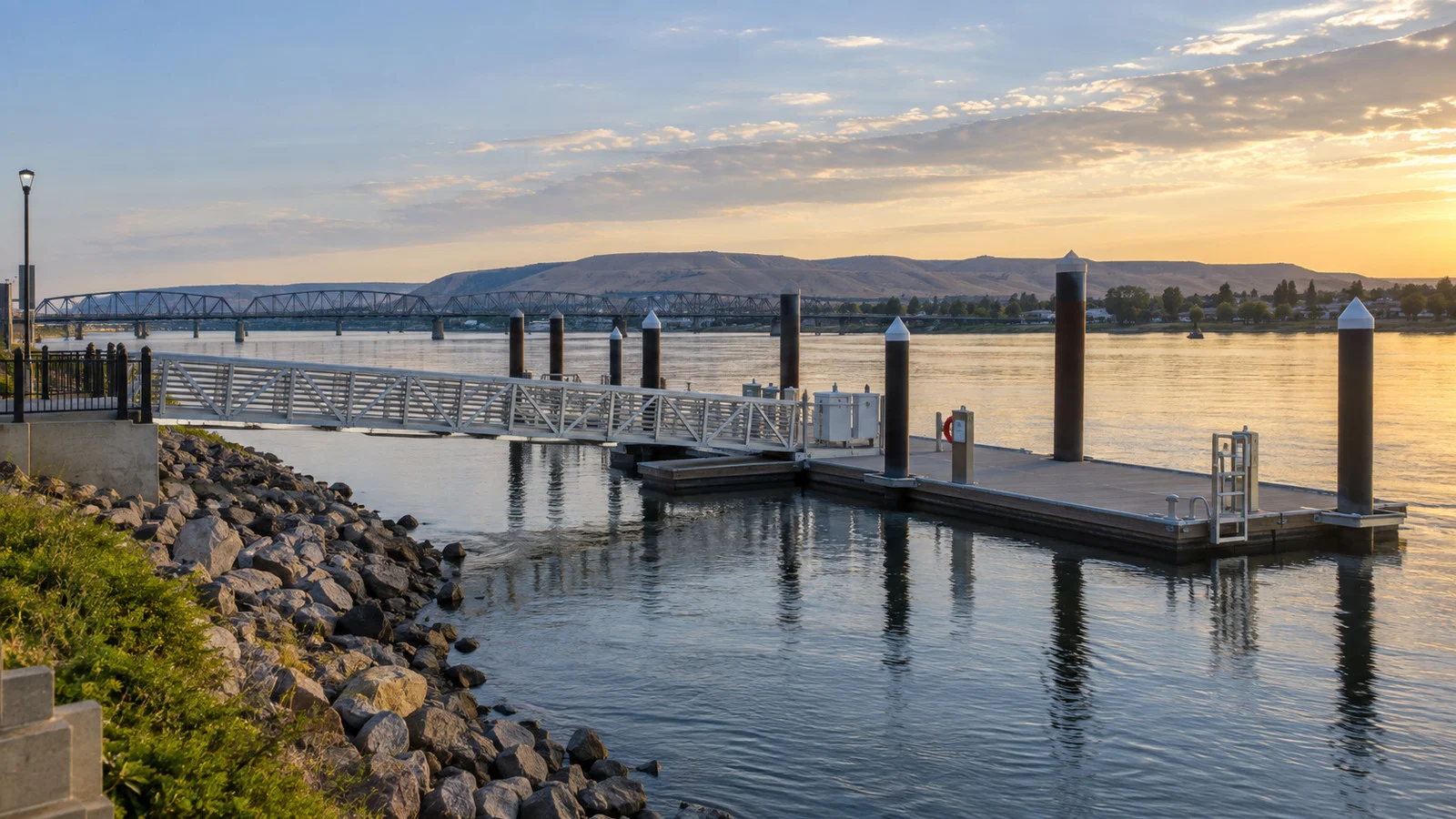
The practical news is equally good. American Cruise Lines is scheduled to use the Lee Boulevard dock in Howard Amon Park throughout 2026, placing passengers close to central Richland rather than at a remote industrial terminal.
My quick take
Richland is an active and remarkably busy 2026 Columbia River port. The City of Richland expects 150 American Cruise Lines ship visits between April 2 and November 16, involving six vessels.
The usual Lee Boulevard landing is beside Howard Amon Park, with the city’s Parkway shops and restaurants just inland. The REACH Museum, Hanford visitor programs, wineries, Sacajawea State Park, and Pendleton all require transportation.
Take the included Richland history excursion if you want context, then use any free time for the riverfront. This is not a port where “atomic history” should become cheerful retro wallpaper, and a good guide will connect the engineering achievement with displacement, war, environmental damage, cleanup, and lasting debate.
Quick facts
- Into Town: Ships are scheduled at the Lee Boulevard dock beside Howard Amon Park; central Richland begins just inland, with shuttles for farther sights.
- Currency and Language: US dollar and English. Cards are widely accepted, but small cash helps for tips, markets, and small purchases.
- Time Zone: Pacific Time, UTC-8 standard and UTC-7 daylight time, observed from March to November.
- Operational Note: Wind, wildfire smoke, lock delays, dock conflicts, river operations, or itinerary changes can move or shorten the call. Confirm the day’s landing and schedule before leaving the ship.
Is Richland an active river cruise port in 2026?
Decisively yes. The City of Richland’s 2026 cruise-season notice says American Cruise Lines will return to the Lee Boulevard dock from April 2 through November 16.
The city projects 150 visits by six ships, including the new American Encore, with multiple vessels on some days. That is primary evidence of regular current operations, not a recycled itinerary map.
American Cruise Lines’ current Columbia and Snake Rivers itinerary pairs Pendleton, Oregon, with Richland and offers a Richland shuttle, REACH Museum excursion, wineries, Sacajawea State Park, and other regional choices. The operator says the exact itinerary and excursions vary by date.
Most current programs run between Portland and Clarkston in either direction, passing locks on the Columbia and Snake. Richland commonly follows a sailing day and precedes the final push toward Clarkston, or reverses that sequence westbound.
Where do river cruise ships dock in Richland?
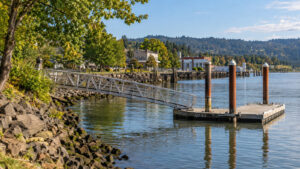
The documented 2026 passenger landing is the Lee Boulevard dock at Howard Amon Park. Richland’s adopted planning material identifies a dock for large watercraft at the end of Lee Boulevard, and the city’s current cruise notice names that dock explicitly.
This is a public riverfront park setting rather than a conventional cruise terminal. Expect an operator-controlled gangway, crew security, and motorcoaches or shuttles staged according to the day’s ship schedule.
Older records also describe American Cruise Lines docking at Howard Amon Park, reinforcing continuity. Still, one well-documented season does not guarantee the identical position forever.
Wind, river operations, maintenance, simultaneous calls, vessel size, or city instructions could move a ship. Always follow the daily program and crew signs instead of walking toward whichever white vessel looks most photogenic.
Do ships use the Port of Benton high dock?
Do not confuse the Lee Boulevard cruise landing with the Port of Benton barge complex in north Richland. The latter is an industrial facility at Columbia River mile 343, associated with barge cargo, Navy activity, and the USS Triton sail display.
The Port is planning shore power, a gangway, piles, and a floating platform that could serve large Columbia River cruise ships in the future. Its project page should be checked for the latest design, permitting, and construction status.
That future capability does not relocate today’s scheduled passenger calls. The City of Richland names Lee Boulevard for the 2026 season, while the industrial high-dock project should be treated as a developing alternate or expansion option.
Can you walk into Richland?
Yes, from the Lee Boulevard dock. Howard Amon Park has lawns, mature shade, a riverside trail, playgrounds, swimming access, picnic areas, and the Richland Community Center.
The Parkway commercial area begins a few blocks inland, with local shops, cafes, restaurants, and seasonal activity. Allow an estimated 5 to 15 minutes from the gangway to the nearest central businesses, depending on ship position and the approved route.
That is an editorial walking estimate, not a city or cruise-line guarantee. Multiple ships, an event, construction, or a longer gangway route can add distance.
Central Richland is mostly level by bluff-city standards, but summer heat is serious. Carry water, use the park’s shade, and remember that eastern Washington sunshine has never heard of your ship’s air-conditioning setting.
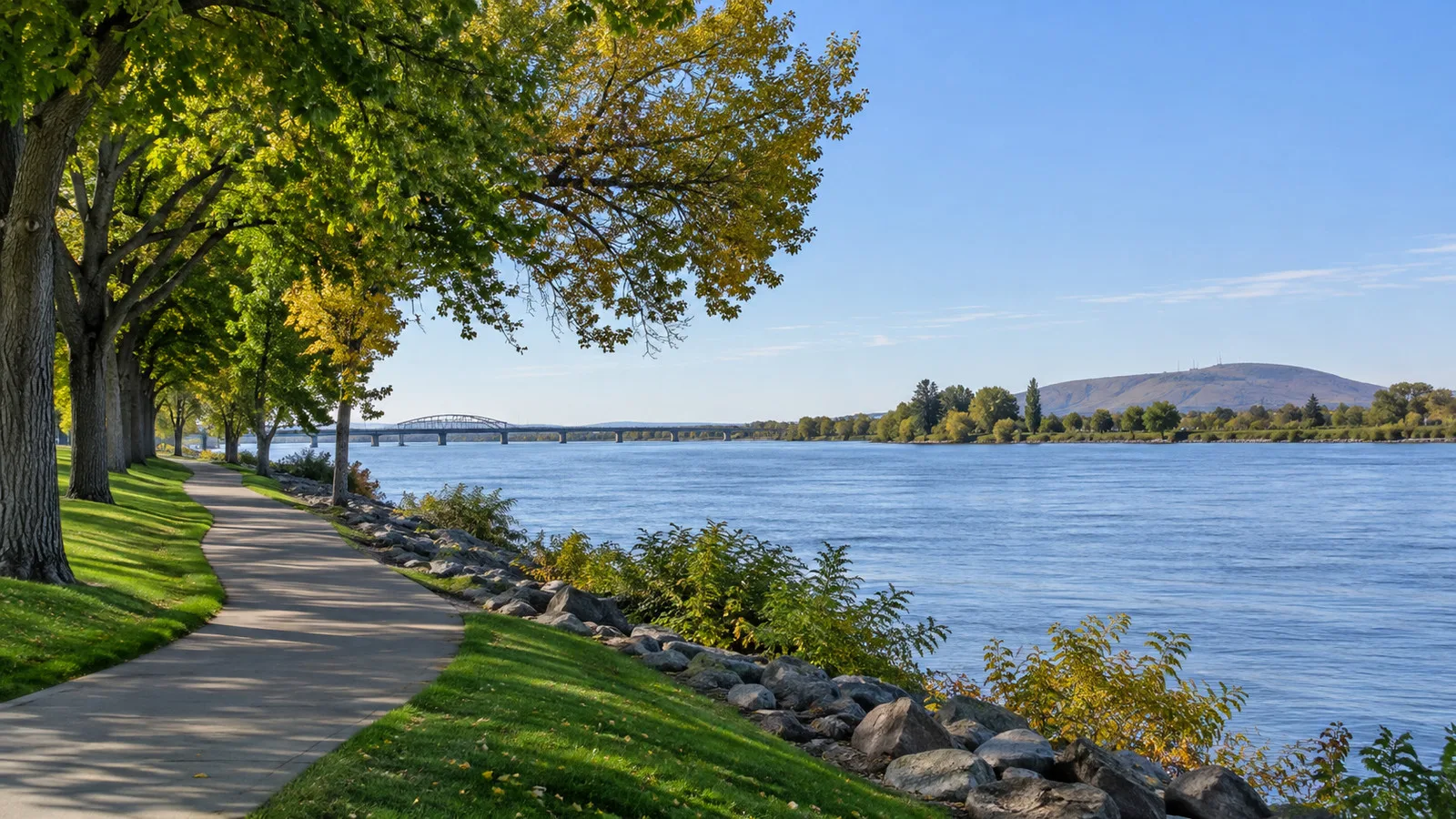
Howard Amon Park and the riverfront
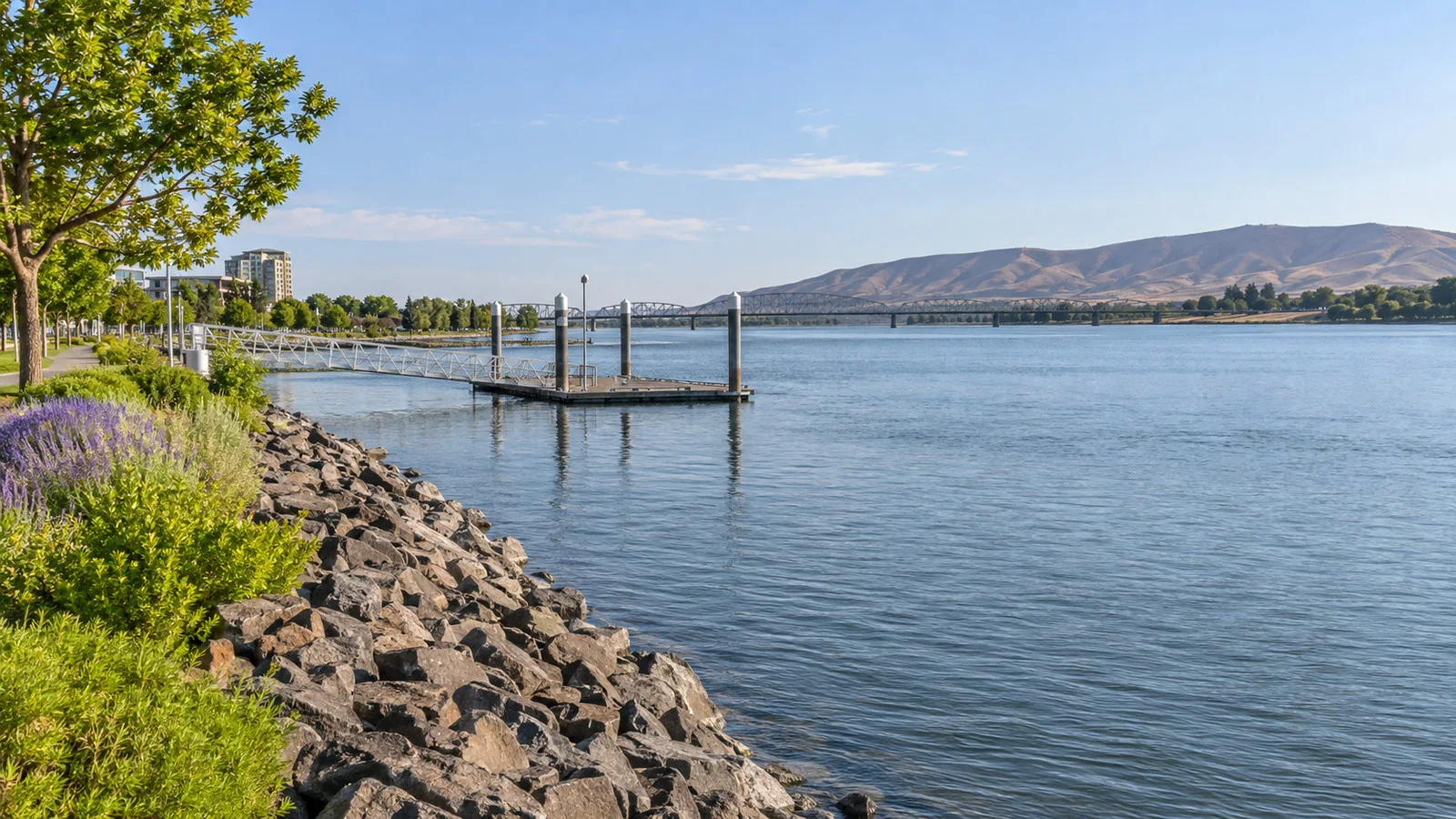
If you skip a motorcoach tour, the park is not a consolation prize. Its Sacagawea Heritage Trail follows the Columbia and connects Richland with a much larger Tri-Cities riverfront network.
Walk north or south only as far as your return time permits. Cyclists, runners, families, boaters, and cruise passengers share the waterfront, so stay aware at path crossings and keep clear of crew work around the ship.
The river here forms part of Lake Wallula, the reservoir behind McNary Dam. Water levels are managed rather than tidal, but wind and system operations still change conditions at the dock.
Swimming areas in the park do not make the water risk-free. Current, cold water, boat traffic, and sudden wind deserve respect, and a cruise call is not the moment to improvise a Columbia River swim.
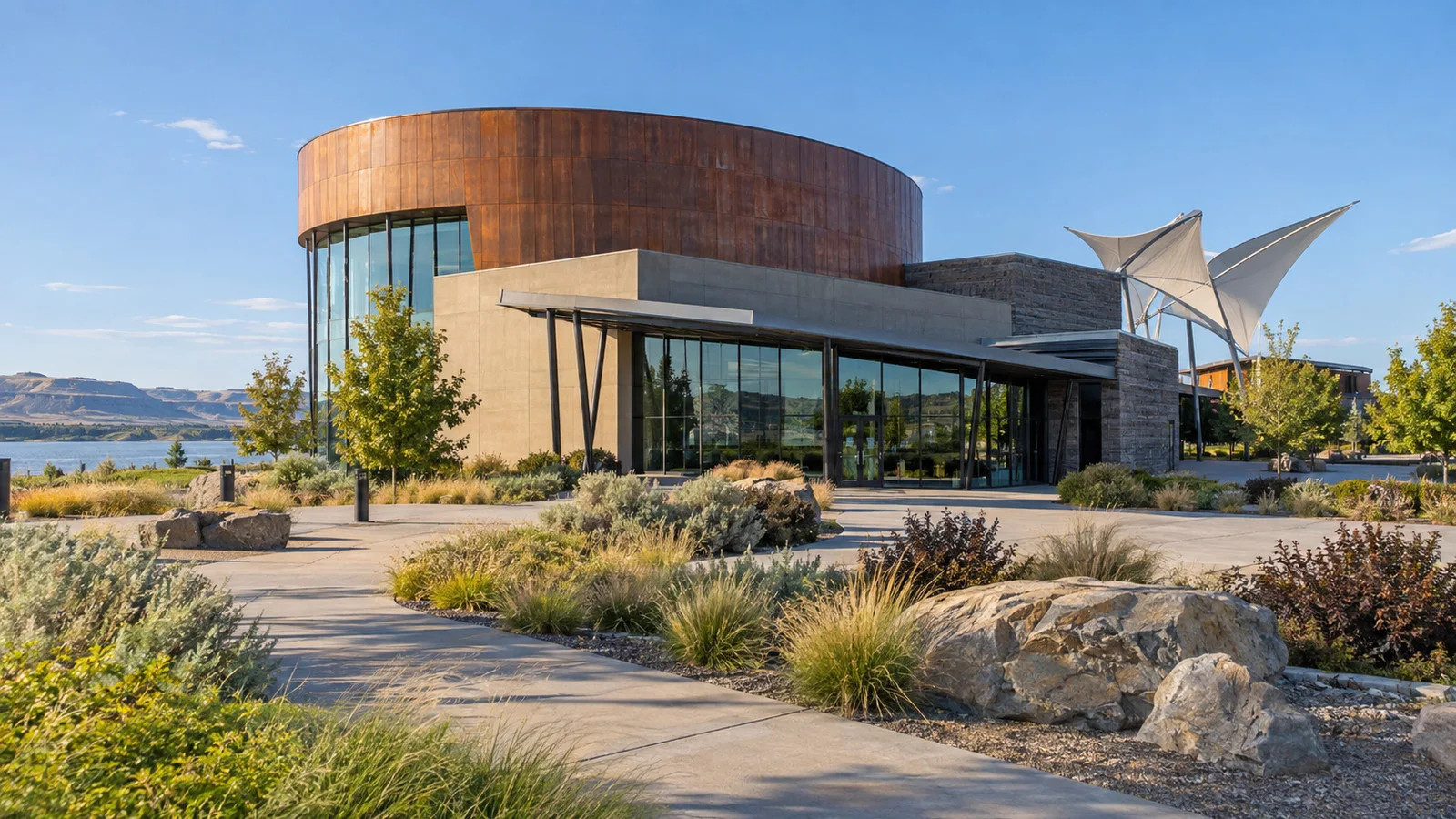
The REACH Museum
The REACH Museum is the best single introduction to the Mid-Columbia. Its galleries connect basalt and Ice Age floods, Indigenous history, river ecology, agriculture, the Manhattan Project, and the continuing Hanford legacy.
The museum is at 1943 Columbia Park Trail, several miles from the Lee Boulevard dock. Use the included excursion, shuttle, taxi, or arranged vehicle rather than attempting a long exposed walk beside major roads.
The official 2026 visitor page lists opening Tuesday through Saturday from 10:00 a.m. to 4:30 p.m., with final admission at 4:00 p.m. It is closed Sunday, Monday, and several holidays.
A typical visit takes 45 to 60 minutes according to the museum, although a history-minded guest can use 90 minutes easily. Cruise excursions may add outdoor interpretation or a guide.
The REACH provides wheelchair access to indoor exhibits and outdoor paths, accessible parking, loaner wheelchairs, noise-reducing headphones, and service-animal access. Confirm that the excursion motorcoach and every outdoor stop meet your needs, since the museum’s accessibility begins at its own campus.
Hanford history without the victory-lap version
Richland expanded rapidly as a government-planned community for workers at the Hanford Engineer Works during World War II. Hanford’s B Reactor produced plutonium used in the Trinity test and the atomic bomb dropped on Nagasaki on August 9, 1945.
That engineering history cannot be separated from human consequences. The federal project displaced Indigenous people from lands and fishing places, removed farming communities including Hanford and White Bluffs, helped create a weapon that killed tens of thousands of people, and left a vast radioactive cleanup challenge.
The Columbia River was essential to plutonium production because reactors required enormous cooling-water systems. It was also, and remains, culturally and spiritually central to Tribal nations whose connections to this landscape predate the Manhattan Project by millennia.
A responsible tour should make room for workers’ experiences, secrecy, scientific achievement, wartime decisions, Japanese civilian suffering, Tribal rights, environmental contamination, and cleanup. If the story produces only shiny optimism, it has misplaced several chapters.
Can you tour B Reactor in 2026?
No public interior B Reactor tours are operating in 2026. The National Park Service says access remains suspended during major construction, so check the official site for a future reopening date.
The National Park Service’s 2026 Hanford programs include scheduled fall activities such as Ride with a Ranger and Hike Through Time. The recurring visitor-center programs, including virtual B Reactor interpretation, ran from May 25 through September 5, 2026.
Reservation-based Pre-World War II historic-site tours continue on selected dates and focus on Indigenous and farming communities displaced by the Manhattan Project. They are long, secure-site programs and unlikely to fit an ordinary cruise call unless explicitly arranged by the operator.
Do not book an independent B Reactor interior tour for 2026 based on a stale search result. Several official pages describe the normal tour experience, but the more current closure notice controls.
USS Triton Sail Park
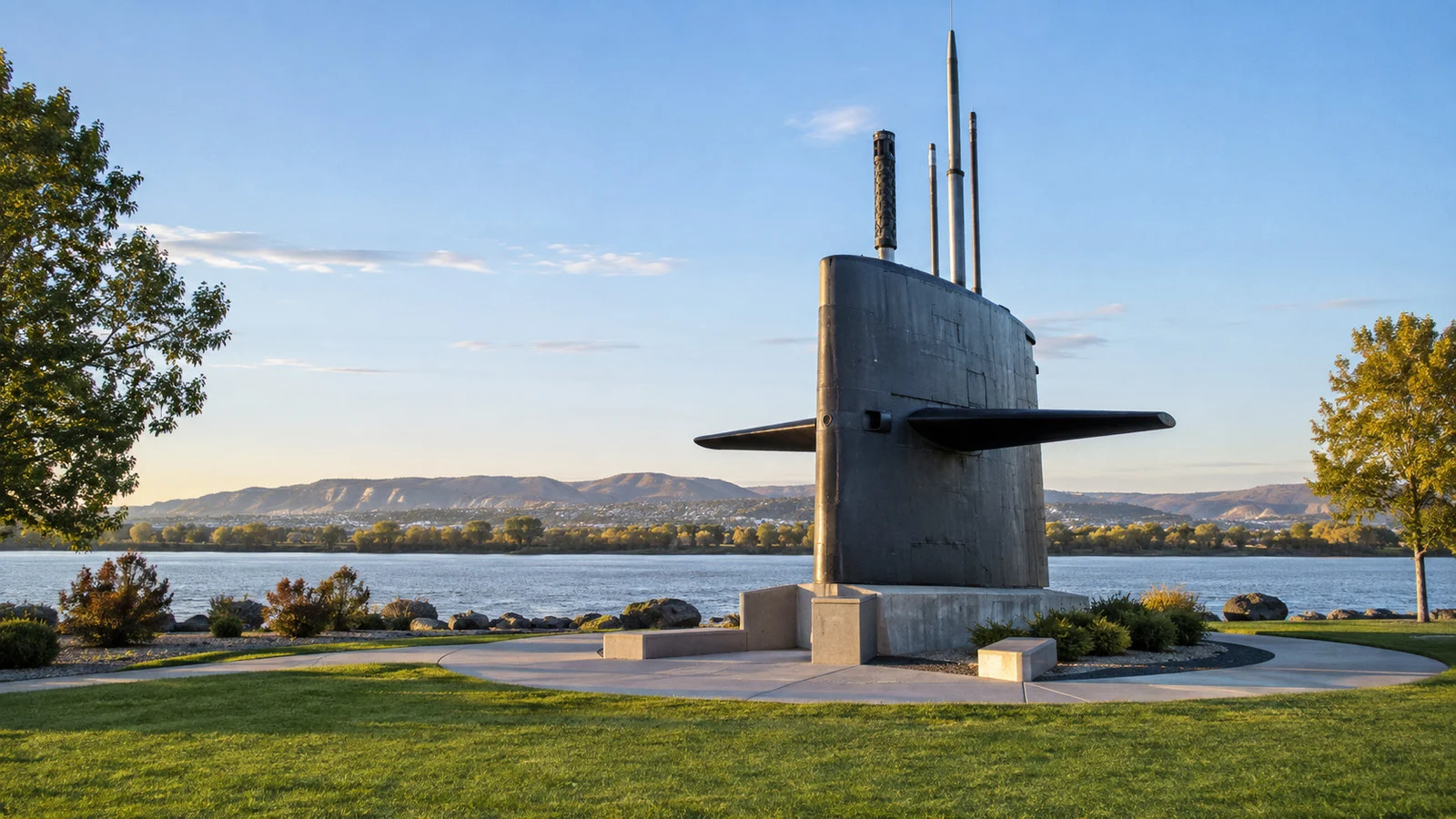
The preserved sail and conning tower of USS Triton overlook the Port of Benton barge slip in north Richland. The location is symbolic because naval reactor compartments from decommissioned submarines have been transferred through this waterfront for disposal at Hanford.
American Cruise Lines’ current Richland Legacy excursion names Triton Park before the REACH Museum. Interior access to the conning tower should not be assumed, since Port tours require arrangements and the surrounding dock has industrial controls.
The submarine connection extends the atomic story into the Cold War and modern cleanup era. It is most useful when interpreted as part of a continuing nuclear system, not merely as an unusually large lawn ornament.
Wine country, Pendleton, and Sacajawea State Park
Richland sits beside the Yakima Valley and Red Mountain wine regions, making winery excursions a natural fit. Tasting rooms and estates require a vehicle, and anyone sampling wine should let the operator handle the driving with enthusiasm.
Pendleton is in Oregon, well over an hour away by motorcoach in ordinary conditions. Its Western heritage and underground tours can make a full excursion, but participants will see little of Richland itself.
Sacajawea State Park is at the confluence of the Snake and Columbia Rivers in Pasco, not at the Yakima-Columbia meeting in Richland. The park adds Lewis and Clark interpretation and a vital confluence landscape, again requiring organized transport.
Choose one regional direction. A port day cannot responsibly contain a nuclear reservation, two wine regions, Pendleton, and a second river confluence unless somebody has quietly issued your motorcoach a helicopter rotor.
Accessibility at the Lee Boulevard dock
Howard Amon Park has paved paths and level parkland, but the ship-to-shore connection changes with vessel and water position. No public city page guarantees one gangway angle, width, handrail, or distance for every call.
Ask the cruise line about gangway slope, crew assistance, surface transitions, motorcoach lifts, and whether a mobility device stays with you during excursions. Also confirm how multiple-ship days affect the path to transportation.
The Richland Legacy excursion is currently labeled accessible by American Cruise Lines, while its independent Richland shuttle is labeled high activity and not accessible. Those ratings can change by date, so read the exact listing for your sailing.
The river cruise accessibility guide offers a prebooking checklist that is more useful than a vague “ADA” icon. Access is a chain, and the weakest link may be the gangway or motorcoach rather than the museum.
Weather, smoke, locks, and itinerary changes
Richland summers are hot, dry, sunny, and often windy. Spring and fall are milder, but temperature swings can be substantial between a shaded morning and an exposed afternoon.
Wildfire smoke can reduce visibility and make outdoor activity unhealthy even when no fire is close to town. Follow air-quality advice, carry prescribed medication, and choose an indoor plan if officials or the cruise line recommend it.
Ships reach Richland through a system of Columbia River locks and then continue toward Snake River locks for Clarkston. Maintenance, tow lines, wind restrictions, mechanical issues, and waterway operations can shift arrival by hours.
Managed reservoir levels reduce some classic free-flowing river uncertainty, but they do not eliminate it. The river cruise low-water guide explains how operators adjust sailing, landings, and excursions when conditions change.
Three realistic plans
First visit: Richland Legacy excursion
Take the operator tour to Triton Park and the REACH Museum, then use remaining time in Howard Amon Park. This gives you the broadest historical context without independent transportation puzzles.
Independent day: park and Parkway
Walk the riverfront trail, explore central shops and cafes, and return to the ship for lunch or a cool break. This plan is simple, flexible, and genuinely local.
Wine focus
Book one operator or vetted private wine excursion with a firm return buffer. Do not combine distant tastings with a speculative rideshare back to a ship that must reach the next lock.
Quick answers
Where do cruise ships dock in Richland?
The City of Richland schedules 2026 American Cruise Lines calls at the Lee Boulevard dock in Howard Amon Park. The exact position can still change for operational reasons.
Can I walk downtown?
Yes. The Parkway and central businesses begin just inland from Howard Amon Park, roughly 5 to 15 minutes from the gangway by editorial estimate.
Is the REACH Museum walkable?
It is several miles away and not a practical cruise-day walk. Use the included excursion, shuttle, taxi, or an arranged accessible vehicle.
Can I tour B Reactor in 2026?
No. The National Park Service says access remains suspended during major construction, and its recurring 2026 virtual B Reactor programs ended September 5.
Will low water cancel Richland?
Not automatically. Managed river levels help, while wind, smoke, locks, dock conflicts, and broader itinerary changes may alter timing or replace the call.
The last word
Richland is a wonderfully convenient berth attached to an unusually complicated story. Step ashore for the park, but give your attention to the rivers, communities, science, warfare, agriculture, and cleanup work that created the modern city.
The Lee Boulevard dock makes independent wandering easy, while a good excursion supplies the context. Bring water, skepticism, and enough curiosity to let “Atomic Age” become a question rather than a slogan.
How this guide was researched: Unless a first-hand visit is explicitly identified above, this guide is based on independent research using official city, cruise-line, museum, port, park-service, and waterway sources where available. Logistics and time-sensitive details were reviewed on September 12, 2026, under our Editorial Policy.