Cologne River Cruise Port: How Far the Cathedral Really Is
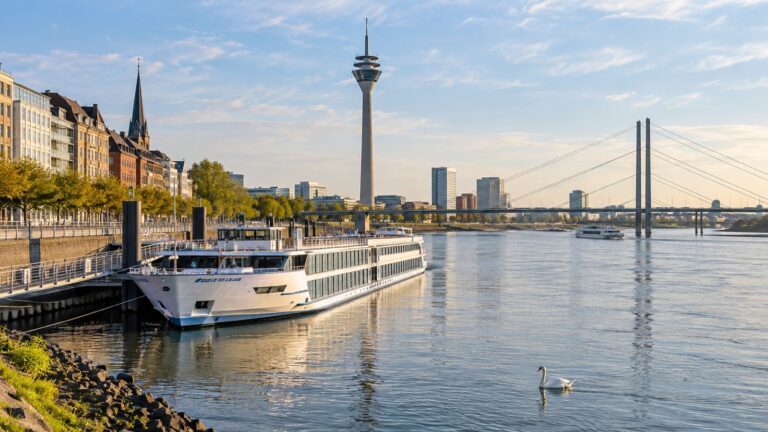
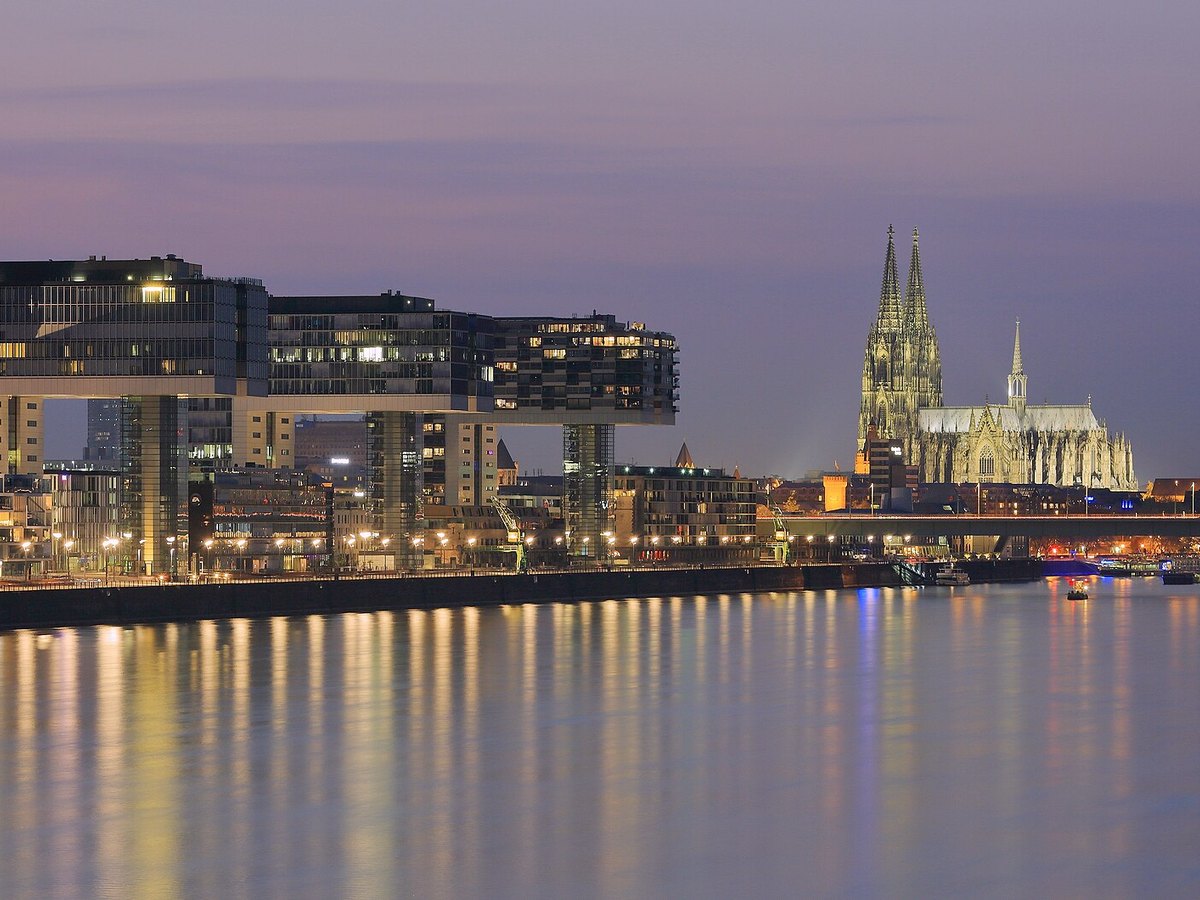
Cologne is the rare stop where the postcard is genuinely within walking distance of your gangway. The Cologne river cruise port is a long stretch of quay wall on the Konrad-Adenauer-Ufer, and on most berths the cathedral towers are visible from the sun deck before breakfast.
The catch is that the mooring line is long, and where in it you land decides whether the Dom is a five minute stroll or closer to twenty. Nobody tells you which end you got until the evening before.
My quick take
This is a walk-off port and you should treat it as one. The included panoramic motorcoach tour in Cologne is close to pointless, because everything worth seeing sits inside a compact loop you can cover on foot.
The single most important thing I would do before the ship arrives is buy a cathedral ticket online. Since 1 July 2026 the Kolner Dom requires a ticket for tourist visits, which caught a lot of people out in the first weeks.
My default day here is the cathedral first, one museum second, and a brewhouse third, in that order and nothing else. Cologne rewards depth over sweep, and the museums here are serious enough to eat two hours each without noticing.
The quick facts
- Where you land: the Konrad-Adenauer-Ufer on the left bank, downstream of the Hohenzollern bridge and directly below the cathedral hill. KD Koln-Dusseldorfer gives its own Cologne mooring as Konrad-Adenauer-Ufer, Trankgassenwerft, Landebrucke 8, with docking points listed as KD 1 at the Deutzer Brucke, KD 3 at the Fischmarkt and KD 7 below the Hohenzollernbrucke.
- How you get ashore: a gangway onto the quay wall, because river ships do not normally tender. On a busy day ships may raft side by side, so allow extra time for walking through neighboring vessels.
- Into town: You are already in it.
- The cathedral ticket: since 1 July 2026 a ticket is required for tourist visits to the Kolner Dom. The north transept stays free for prayer and quiet reflection outside service times.
- Currency and language: The euro, and German, with reliable English at the museums and the bigger brewhouses.
- Getting around cost: you will probably not need public transport at all. KVB trams and U-Bahn lines run under the VRS fare structure if you do, but check the current fare table rather than trusting a number in an old guidebook.
- Time zone: Central European Time, UTC+1, moving to UTC+2 for summer time across most of the Rhine season.
- How often the call is missed: no reliable public percentage is published. High or low Rhine levels and berth restrictions can change the landing or prevent a call.
The Cologne river cruise port is a quay wall, not a terminal
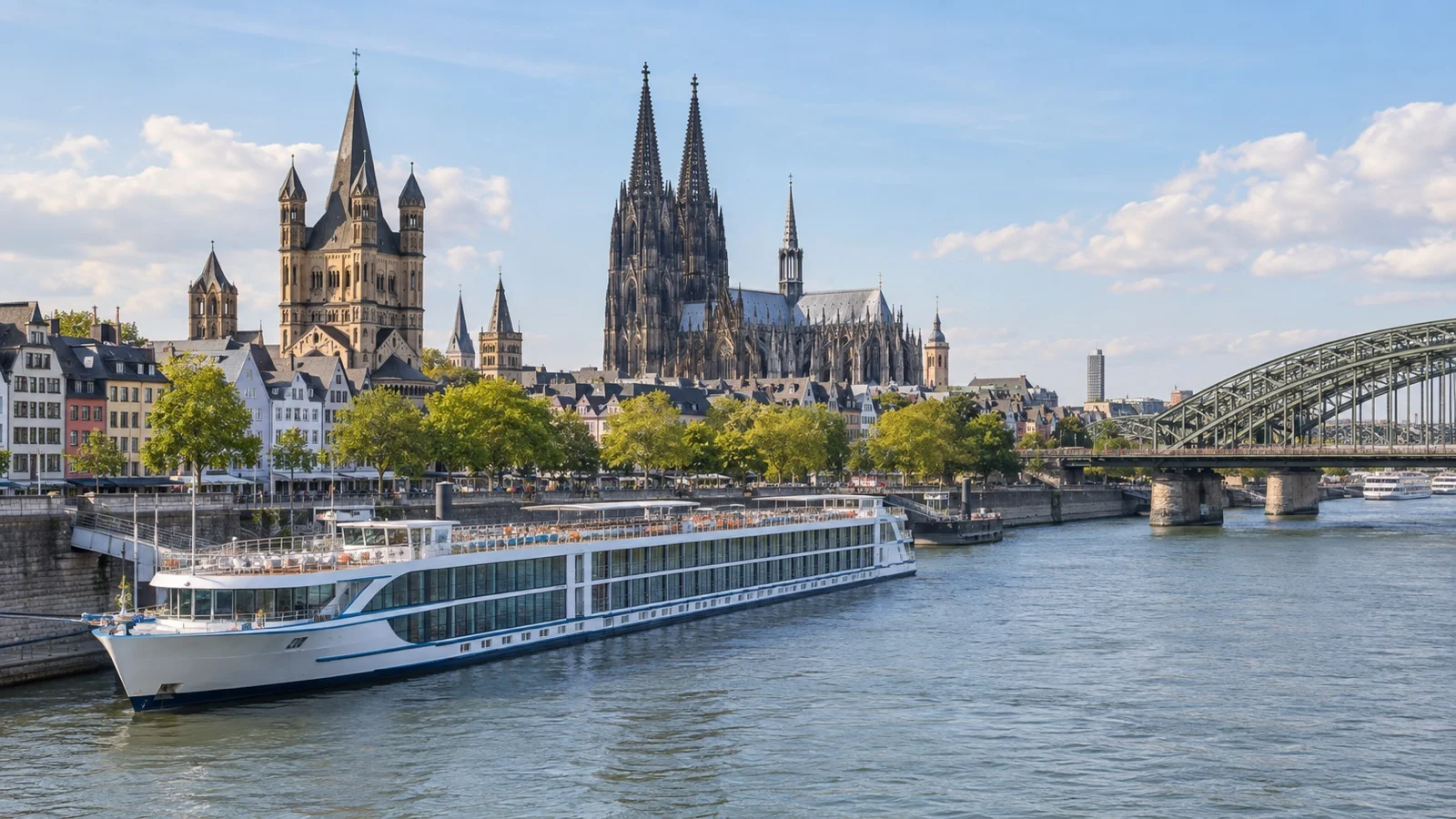
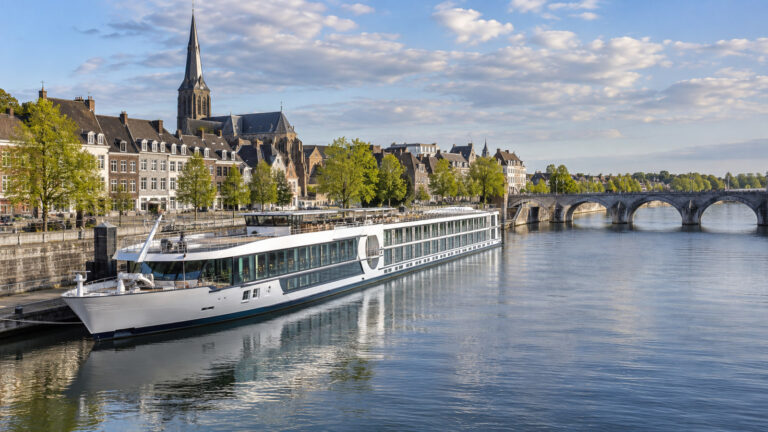
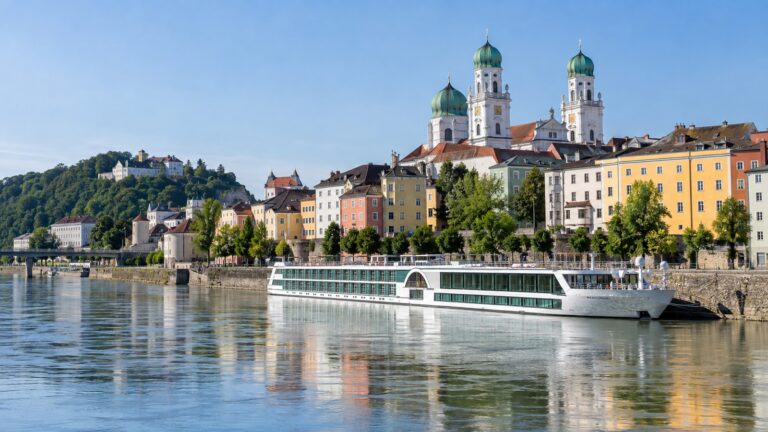
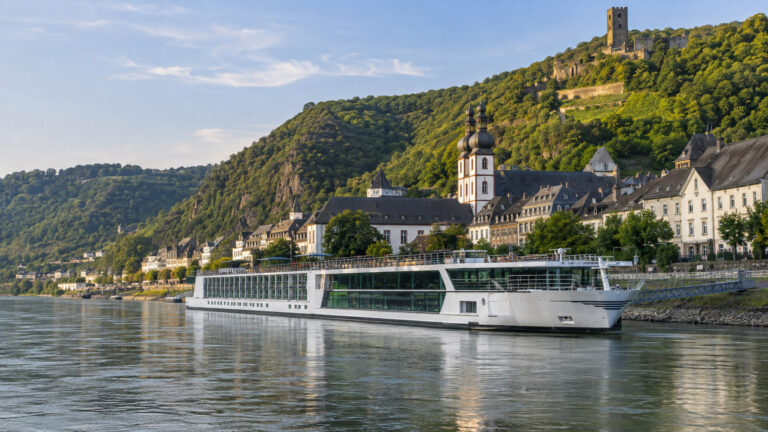
There is no terminal building here, no security hall, and no shuttle bus depot. You walk down a gangway onto a sloping stone embankment, up a short flight of steps, and you are on a public riverside promenade.
Your line does not choose the berth. It is allocated locally, often within days of arrival, and the difference between the first and last position in the line is the entire walking distance of your day.
The practical instruction is the same one I give everywhere. Ask reception the night before for the actual mooring name, then look at a map yourself rather than trusting a daily program printed in spring.
Rafting is normal in Cologne, and on a summer weekend you can easily be the outside ship of three. That means crossing two lobbies, or going up and over an open sun deck when the deck levels do not line up.
It is arithmetic, not a scandal, and I have written about how rafting works on a river ship at length. It costs you time, so leave earlier than feels necessary.
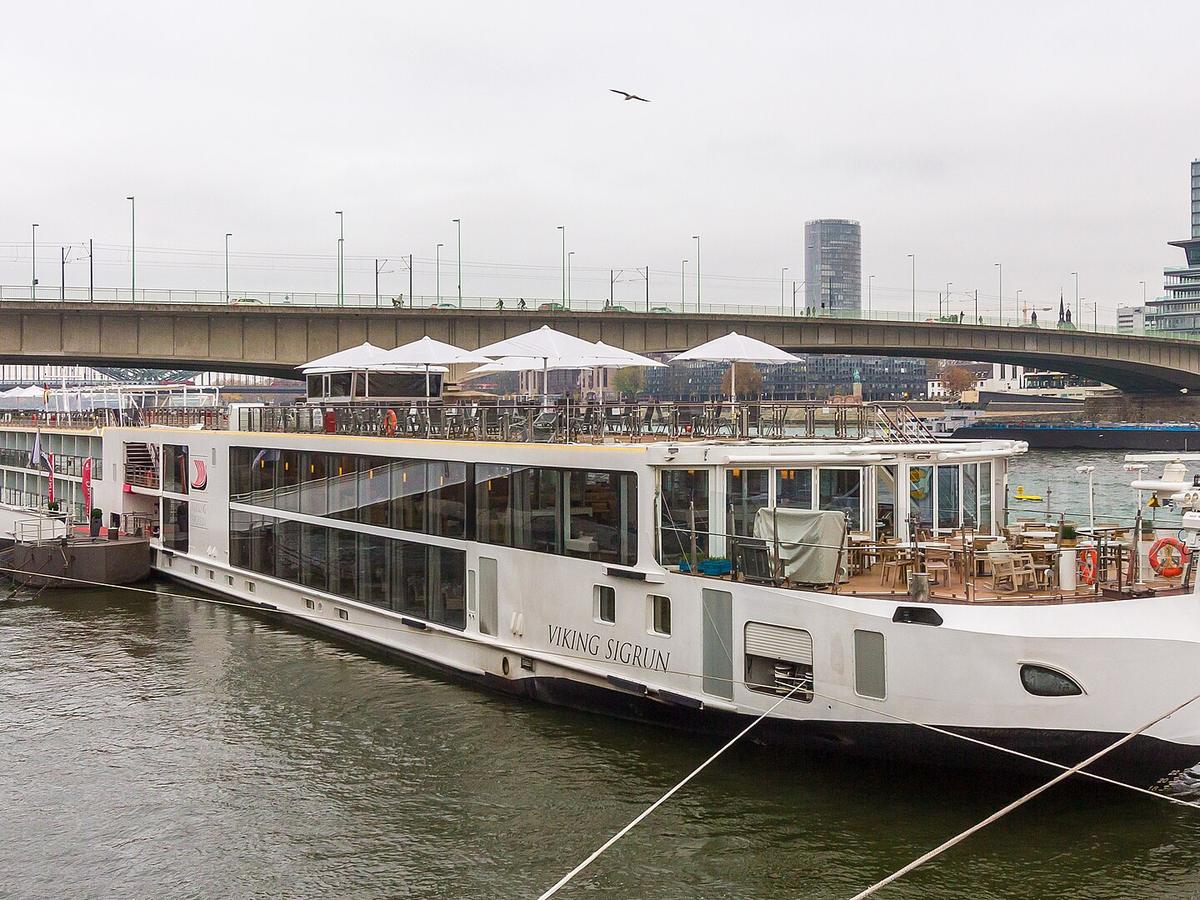
The cathedral, and the ticket rule that changed the day
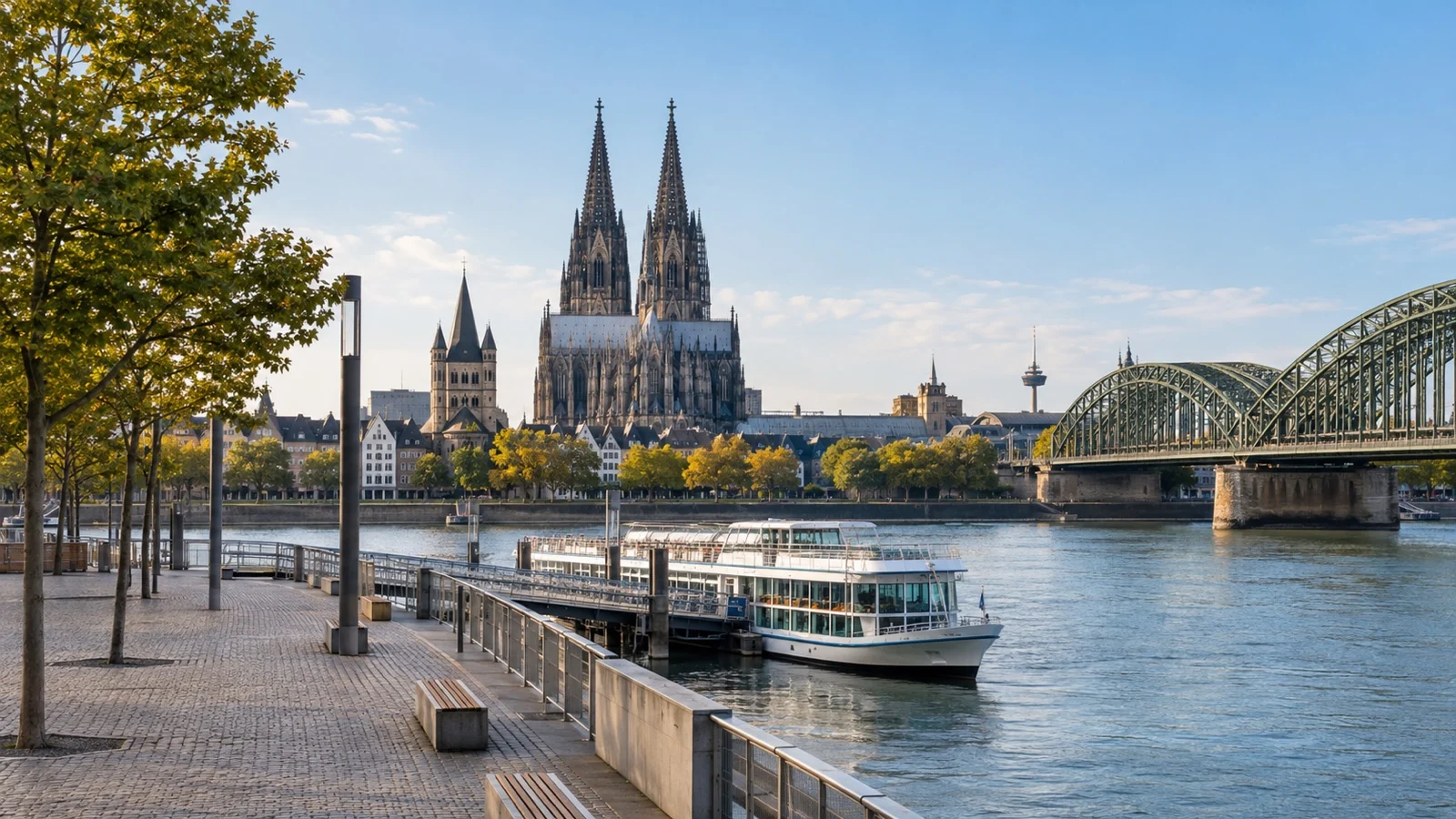
The Dom is the reason the itinerary stops here, and it earns it. UNESCO inscribed it in 1996 and records the western tower facade at roughly 516 feet on a building that took from 1248 to 1880 to finish.
The change that matters to cruise passengers is the ticketing. The cathedral’s own site states that from 1 July 2026 tourist visits require a ticket, which is a durable rule rather than a seasonal experiment.
Tourist visiting hours are 10:00 to 17:45 Monday to Saturday, with last admission at 17:30, and 13:30 to 16:30 on Sundays and holidays with last admission at 16:15. If your ship gives you a Sunday morning in Cologne, the interior is simply not available to you until half past one.
The tower is a separate ticket and a separate decision. Kolner Dom lists 533 steps to a platform at roughly 330 feet, at 8 euros full and 4 euros reduced, or 12 and 6 euros combined with the treasury.
There is no elevator for structural reasons, the first stretch is a tight spiral staircase to around 245 feet, and bags are capped at about 16 by 14 by 4 inches. Allow 30 to 45 minutes and be honest with yourself about knees and claustrophobia.
Kolsch, the 7-fluid-ounce glass, and how the ordering works
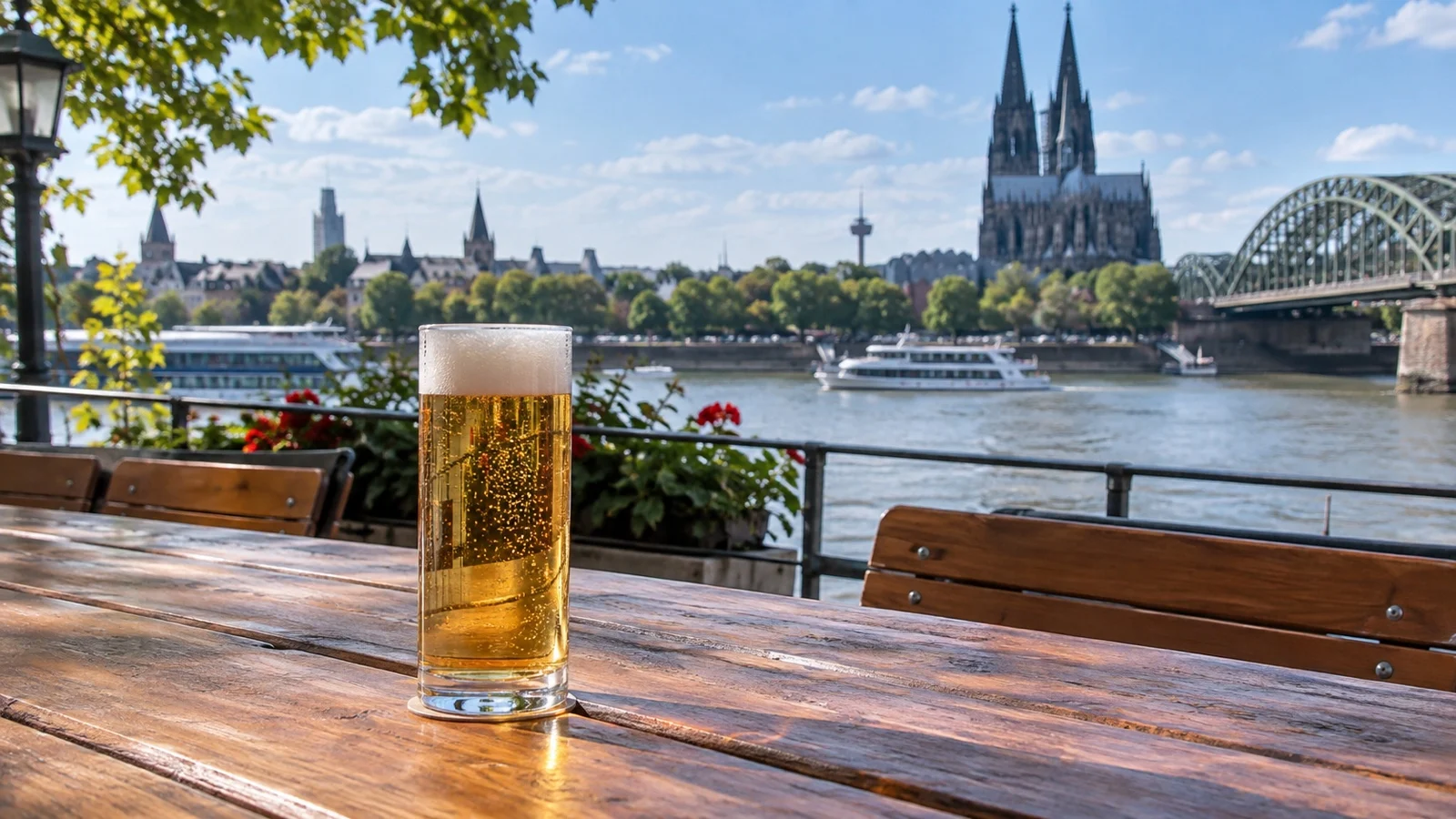
Cologne serves its beer in a Stange, a straight glass holding about 7 US fluid ounces. Visitors consistently read this as stinginess and it is not; it is a freshness rule dressed up as a serving size.
The Kolner Brauerei-Verband traces the definition to the Kolsch-Konvention of 1986, which fixes Kolsch as a pale, top-fermented, hop-forward clear full beer served in the traditional small Stange. It is also an EU protected geographical indication, so genuine Kolsch comes only from Cologne, Bruhl and Wiehl, plus a handful of grandfathered brewers.
In an old town brewhouse you do not really order. A waiter, called a Kobes, works a circular tray of Stangen and replaces your empty glass without being asked, marking each one in pencil on your beer mat.
The signal for stopping is to put the beer mat flat on top of your glass. Say nothing and do nothing and the beer keeps arriving, which is either charming or alarming depending on your sailing time.
A 0.2-liter Stange holds about 6.8 US fluid ounces, so two total about 13.5 ounces, short of a 16-ounce US pint. The pencil marks still add up quickly if you have a 533-step tower climb on the list.
The stops I would actually spend time on
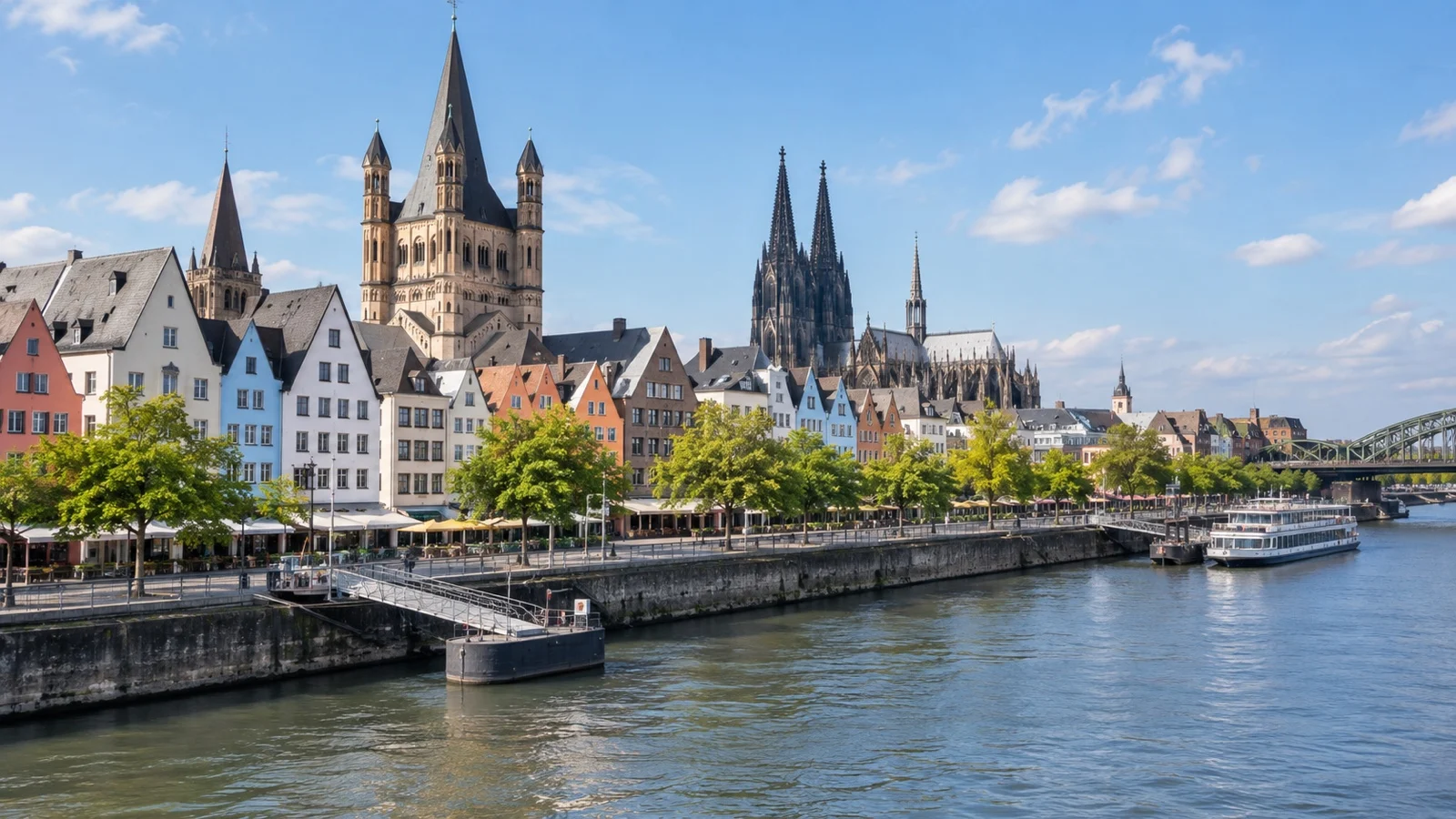
This list is ordered by how close each thing sits to your gangway. Almost all of it is walkable.
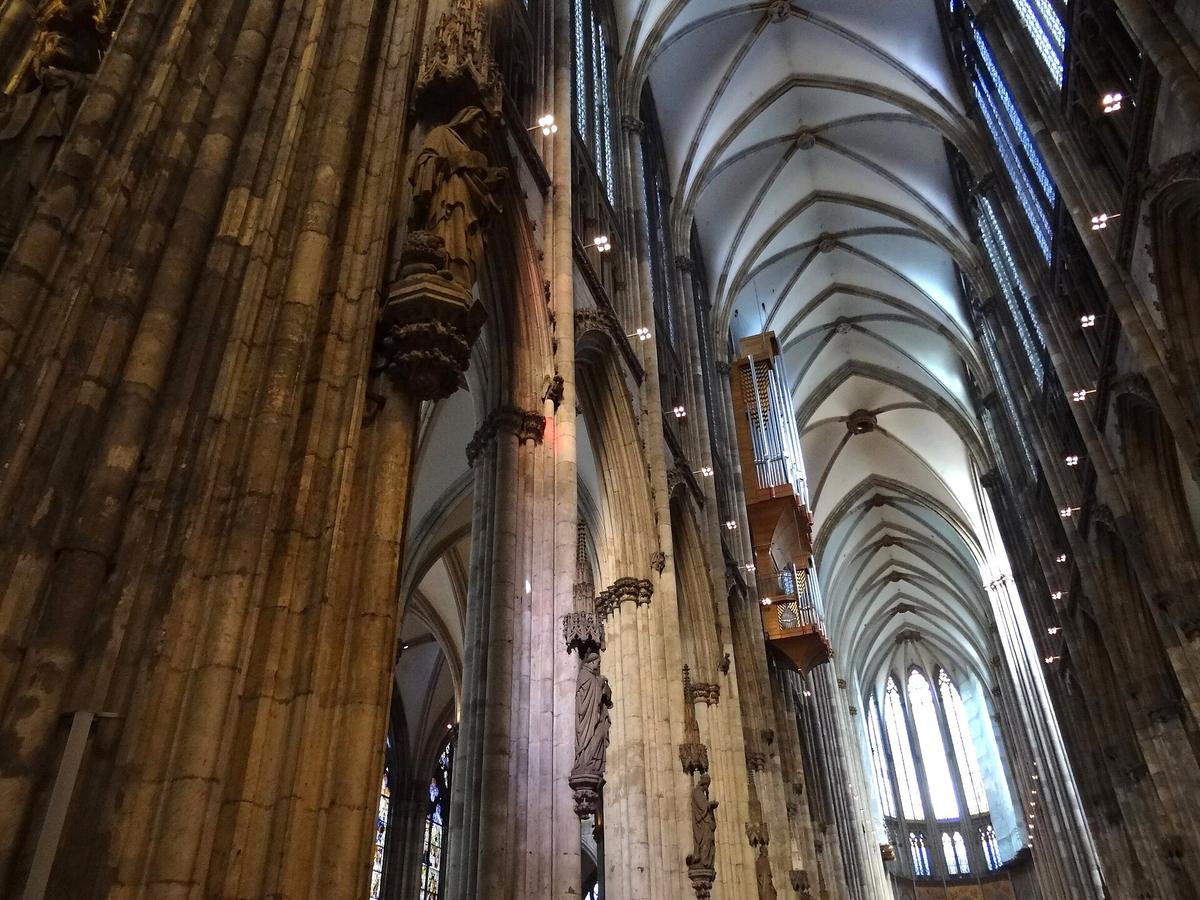
- Kolner Dom: the Gothic cathedral above the quay, with the Shrine of the Magi and the largest surviving cycle of early fourteenth century windows in Europe. Book the timed ticket online before you leave the ship.
- The tower climb: 533 steps for a view over the river, the bridges and the roofs. Genuinely worth it if you have the legs, and genuinely miserable if you do not.
- The Domschatzkammer: the cathedral treasury, open daily from 10:00 to 18:00 with last admission at 17:30. Quieter than the nave, cool in summer, and the combined ticket with the tower saves you a few euros.
- Museum Ludwig: modern and contemporary art immediately behind the cathedral, holding Picasso’s Harlequin, Lichtenstein’s M-Maybe and Richter’s Ema, plus one of Europe’s largest photography collections. The closest world-class museum to any river berth in Germany.
- Romisch-Germanisches Museum: the Roman collection, including what the museum calls the world’s largest collection of Roman glass. Note that the museum confirms its Roncalliplatz building is closed for renovation and the collection is showing at the Belgisches Haus on Cacilienstrasse, near Neumarkt.
- The Hohenzollern bridge walkway: a rail and pedestrian bridge with no road traffic, its fence solid with padlocks. Five minutes gets you the classic view back at the cathedral, free.
- Schokoladenmuseum: the chocolate museum on its own spit of land in the Rheinauhafen, open daily 10:00 to 18:00, with a glass factory, a tropical house and the fountain everyone photographs. It is about 1.2 miles upstream along the river.
- Gross St Martin and the old town lanes: the Romanesque church behind the Fischmarkt, and the painted houses around it. Fifteen minutes of wandering, then a beer.
Fun fact: the Cologne gauge sits at Rhine kilometer 688 and, according to PEGELONLINE, run by Germany’s federal waterways administration, its highest recorded level is about 35 feet on 1 January 1926 against a mean of about 9.7 feet. Your ship’s captain watches that number more closely than any weather forecast.
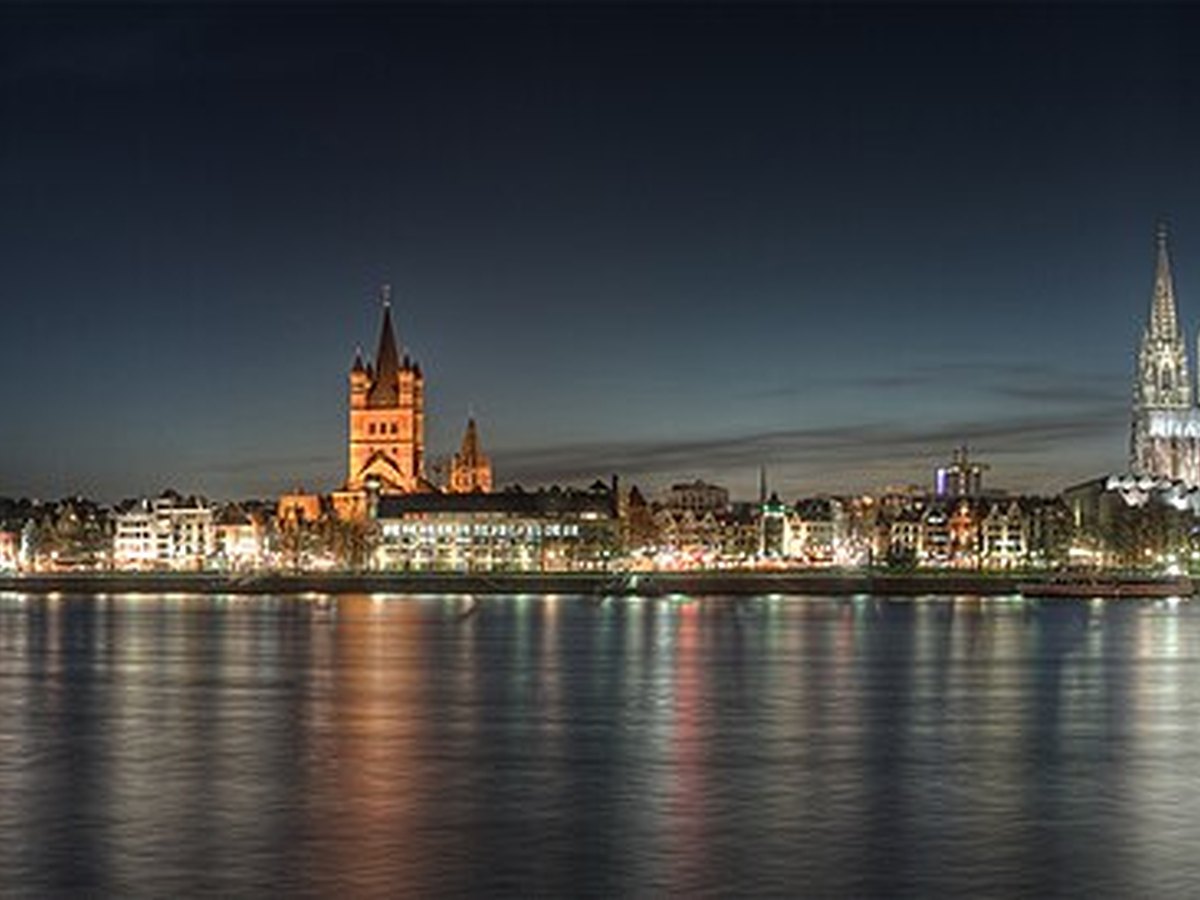
How I would plan the day
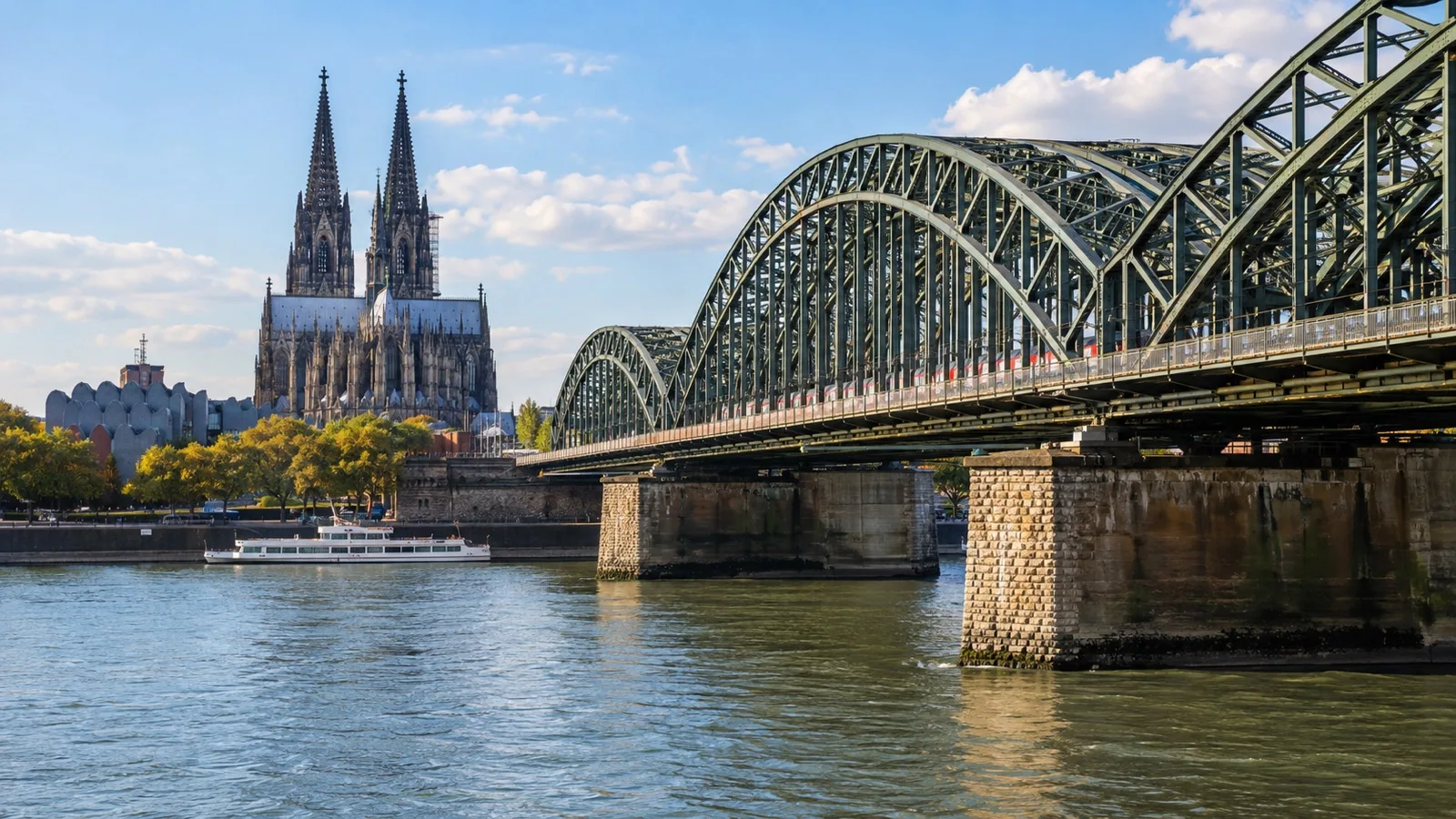
Most Rhine itineraries give Cologne a half day or a long afternoon, and a few overnight. The short call is the common case, so plan for four or five usable hours rather than eight.
On a morning call I would walk straight up to the cathedral square, use the pre-booked ticket, and be inside before the motorcoach groups land. Forty minutes in the nave, then Museum Ludwig next door.
The chocolate museum is the one stop I would only attempt on a long call. It is a good museum, but the round trip alone eats an hour.
A realistic word on accessibility
The city side of this port is better than most. The cathedral square, Museum Ludwig and the main shopping street are flat, paved and step-free, and the walk from the quay to the Dom involves ramps as well as stairs.
The quay itself is the harder half. Cologne moors against a sloping stone embankment, so the gangway angle changes with the river level, and a high or low Rhine can make it steep enough to need help.
Rafting is the real obstacle. If you are the outside ship of three, the crossing may involve steps that nobody can remove, and no line will guarantee you an inside berth.
The tower is flatly out with 533 steps and no elevator, and the old town lanes have proper cobbles. For the wider comparison across ports, my guide to wheelchair-friendly cruise ports covers what to ask before you book.
When to go, and the weather
The Rhine season runs from roughly late March to late December, with Christmas market sailings at the tail. Cologne is one of the better Christmas market cities and one of the busier summer ones.
High summer usually brings daytime highs in the mid 70s Fahrenheit, with occasional stretches well above that. The cathedral interior stays cool, which makes it a sensible middle-of-the-day stop rather than a morning one.
May, June and September are the sweet spot for temperature and for crowds at the cathedral door. Late November and December sit near freezing, in the thirties and low forties Fahrenheit, and the markets are outdoors and standing.
Rain is spread through the year rather than concentrated, so a waterproof jacket is a permanent packing item. The bigger risk is the river itself, and ELWIS, the federal waterways information service, publishes the Rhine gauge forecasts your captain is reading.
The practical checks I would make before a Cologne call
Ask for the exact landing, street access, and rafting position the night before because the Konrad-Adenauer-Ufer is long. An outside berth may require stairs and crossings through other vessels, so passengers needing step-free access should not rely on the word Cologne alone.
Tourist entry to Cologne Cathedral requires the current visitor ticket, while worship access, the tower, and the treasury follow separate rules. Check the cathedral’s official page for service closures, security restrictions, and timed availability before leaving the ship.
Keep at least 30 minutes between an independent museum or brewhouse return and all aboard, with more time during Christmas markets, heat, or high-water diversions. High water can change the landing even when the city remains open, so save the ship’s live contact and updated mooring rather than returning to the morning gangway by memory.
Quick answers
How far is Cologne Cathedral from the river cruise dock:
Between about a quarter mile and three quarters of a mile, depending where in the mooring line your ship sits. Call it five to twenty minutes on foot.
Do I need a ticket for Cologne Cathedral now:
Yes, for tourist visits, since 1 July 2026. The north transept remains free for prayer and quiet reflection outside service times.
Can I climb the cathedral tower on a short port call:
Only if you have at least ninety minutes spare. It is 533 steps with no elevator, the cathedral allows 30 to 45 minutes for the climb, and lines form on top of that.
Why is Kolsch served in such small glasses:
The Kolsch-Konvention calls for the traditional 0.2-liter Stange. One is about 6.8 US fluid ounces, so two are about 13.5 ounces rather than a full 16-ounce US pint.
Is the Roman-Germanic Museum open at Roncalliplatz:
No, that building is closed for renovation and the collection is displayed at the Belgisches Haus near Neumarkt. Check the museum’s own site for current hours before you set out.
The last word
Cologne is the port that makes the case for river cruising better than any brochure. You step off a gangway and a UNESCO cathedral is about a quarter mile away, which almost no ocean itinerary can offer.
It comfortably belongs on any list of the most walkable cruise ports, with the honest caveat that the walk varies by berth. That is the one number to establish the night before, and reception will tell you if you ask.
If you are building a wider itinerary, the Germany cruise ports overview puts Cologne in context against Hamburg, Kiel and the Rhine ports upstream. The stretch that follows, through the Middle Rhine gorge, is the scenic payoff most people booked the cruise for.
Book the cathedral ticket before you sail if the interior matters to you. Online booking can save time at the Roncalliplatz ticket office, while prayer access through the north transept remains free outside service times.
How this guide was researched: This guide was independently checked on September 12, 2026, against official source 1, official source 2, official source 3, the official sites linked in the article, and current operator instructions. Reconfirm the berth, ship, transfer, attraction access, weather, waterway status, entry rules, accessibility, and all-aboard time because live operations can change.