Recife Brazil Cruise Port: Old Town, Olinda, and Beaches
Recife rewards a mostly walkable old-town day, but the ship berths inside a controlled working port. Follow the authorized exit or shuttle into Recife Antigo, then choose between the city center and UNESCO-listed Olinda rather than trying to rush both.
Last Visited: December 2024 aboard Norwegian Star. This stop in Brazil was part of my 17-day transatlantic sailing from Lisbon to Buenos Aires.
My quick take on Recife
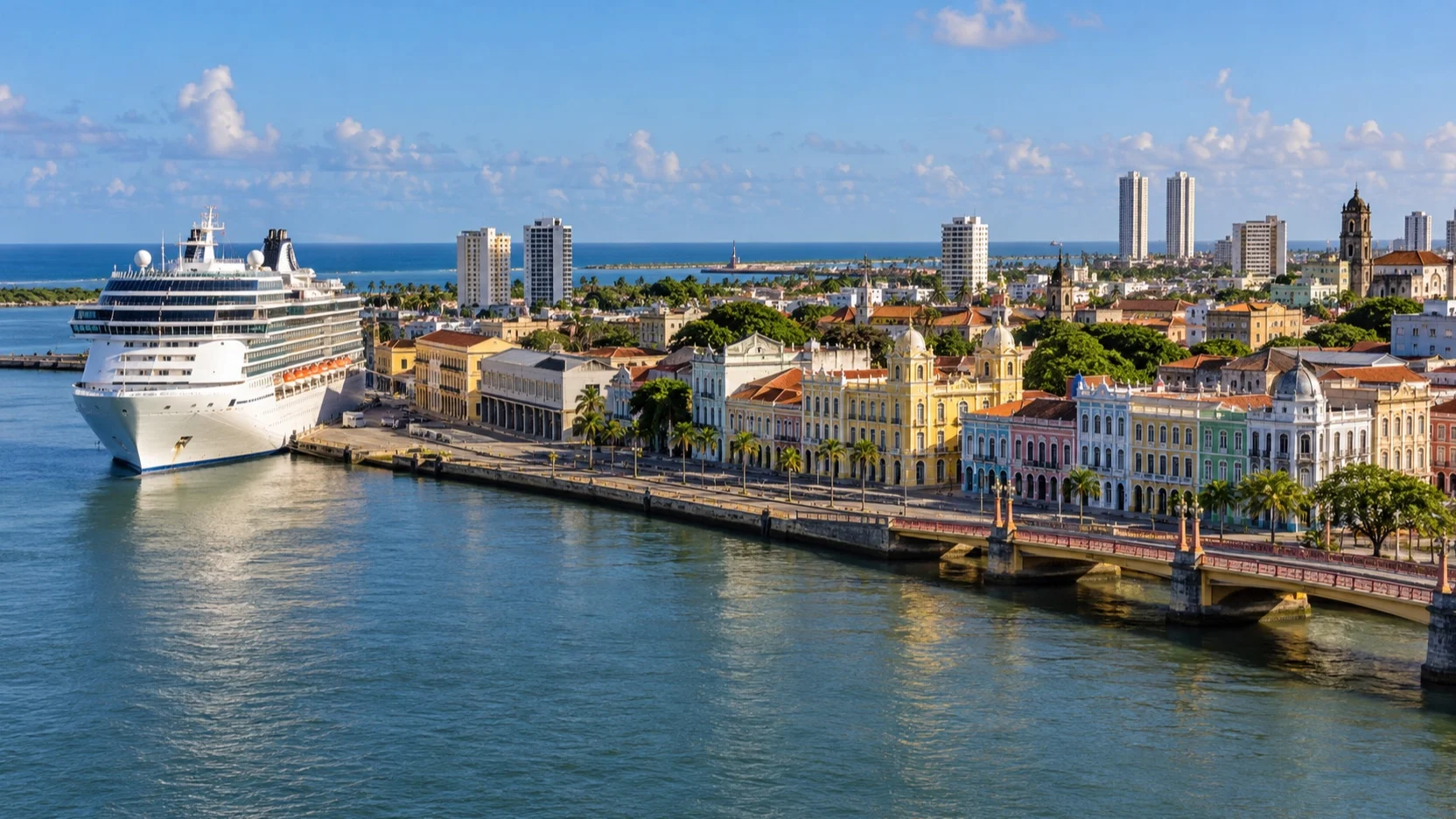
This is one of the most walkable stops on a South America cruise itinerary. You land inside a historic quarter, not an industrial suburb miles from anything.
If it is your first independent port day, Recife is a gentle place to try it. My wider notes on beginner-friendly cruise ports pair well with this guide.
The quick facts
- Where you land: the passenger terminal sits on the island of Bairro do Recife (Recife Antigo), the old town where the city was founded, per the official Port of Recife.
- Dock or tender: Ships berth alongside inside the reef-protected harbor, so you walk straight off onto the quay.
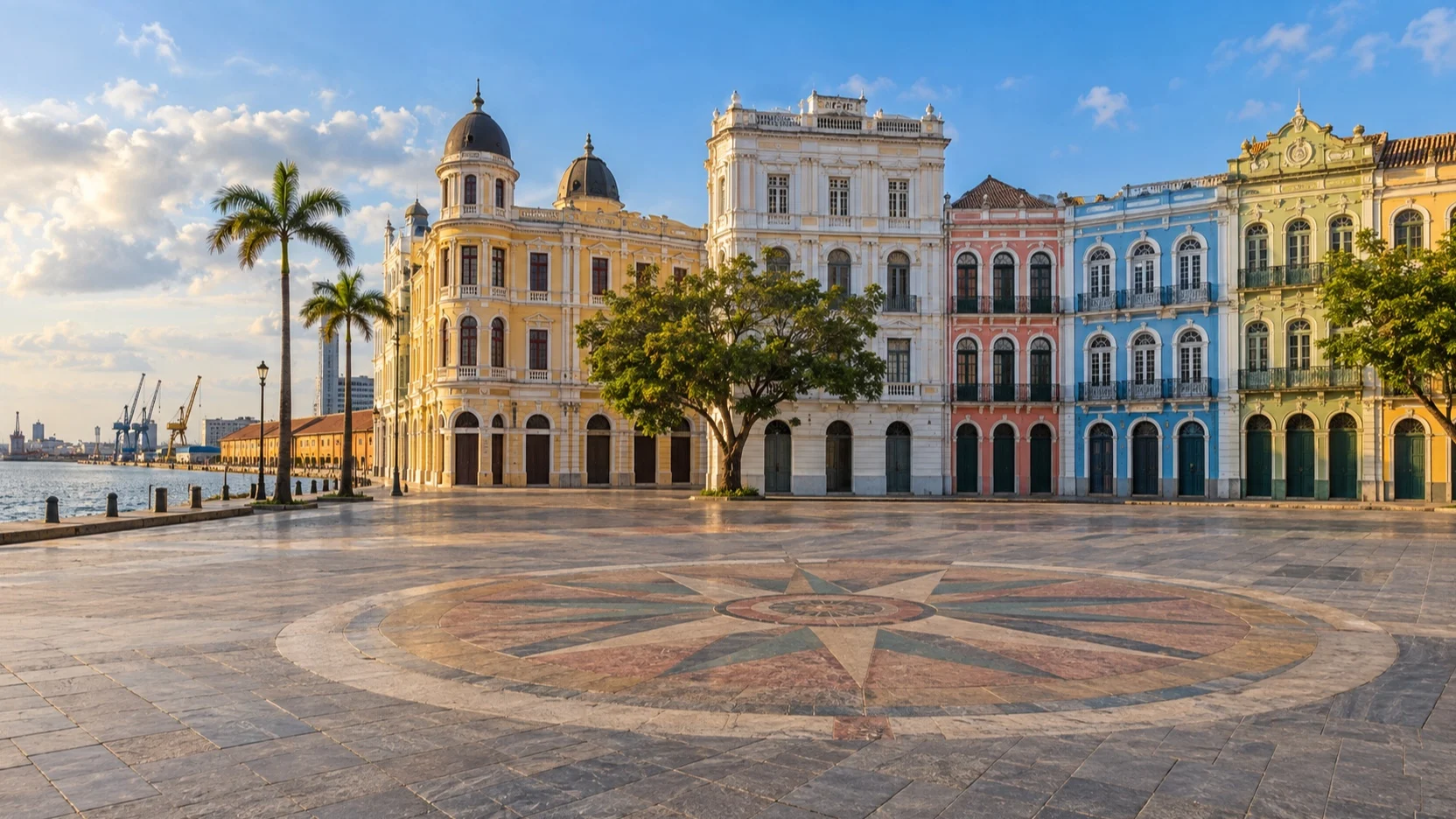
- Into town: Marco Zero and Rua do Bom Jesus are about a 10 minute flat walk from the terminal.
- Currency and language: The Brazilian real (BRL) and Portuguese.
- Time zone: Brasília Time (BRT, UTC−3) all year.
- How often the call is missed: Low (under 1%): the sheltered berth is rarely limited by local weather.
Heads up: some links below are affiliate links. If you book through one, I may earn a commission at no extra cost to you. It never changes which hotels or tours I recommend. Full disclosure.
Getting around
For the old town, your own two feet are the best tool. Bairro do Recife is compact, and the main sights cluster within a few blocks of Marco Zero.
For the Brennand museums or Olinda, I use a taxi or a ride-hailing app rather than guessing at bus routes. Agree the fare or use the app estimate before you set off.
Ship shore excursions are the simplest way to reach sights outside the center if you would rather not arrange transport. Book early for the popular Olinda and Brennand tours. (paid link; I may earn a commission)
The port exit and the trips worth preplanning
The passenger terminal is close to Recife Antigo, but the legal walking route depends on port operations. Follow the shuttle or marked pedestrian route to the public side, and ask where return screening begins so you do not lose time at the wrong gate.
Olinda is close enough for a half-day but traffic and steep streets make a round-trip taxi, licensed guide, or ship excursion the sensible choice. Agree on pickup details before exploring, then keep the final part of the day in Recife Antigo.
Instituto Ricardo Brennand and Oficina Francisco Brennand are separate attractions in different parts of the city. Pick one unless you have a private vehicle and a long call, because visiting both plus the historic center creates more driving than sightseeing.
The stops I’d actually spend time on
I skip the generic “40 things” lists and focus on named places worth your limited hours ashore. Here is where I would go.
- Marco Zero: The official Visit Brasil tourism board calls this the exact point where the city was born. It is the heart of Recife Antigo and my first stop off the ship.
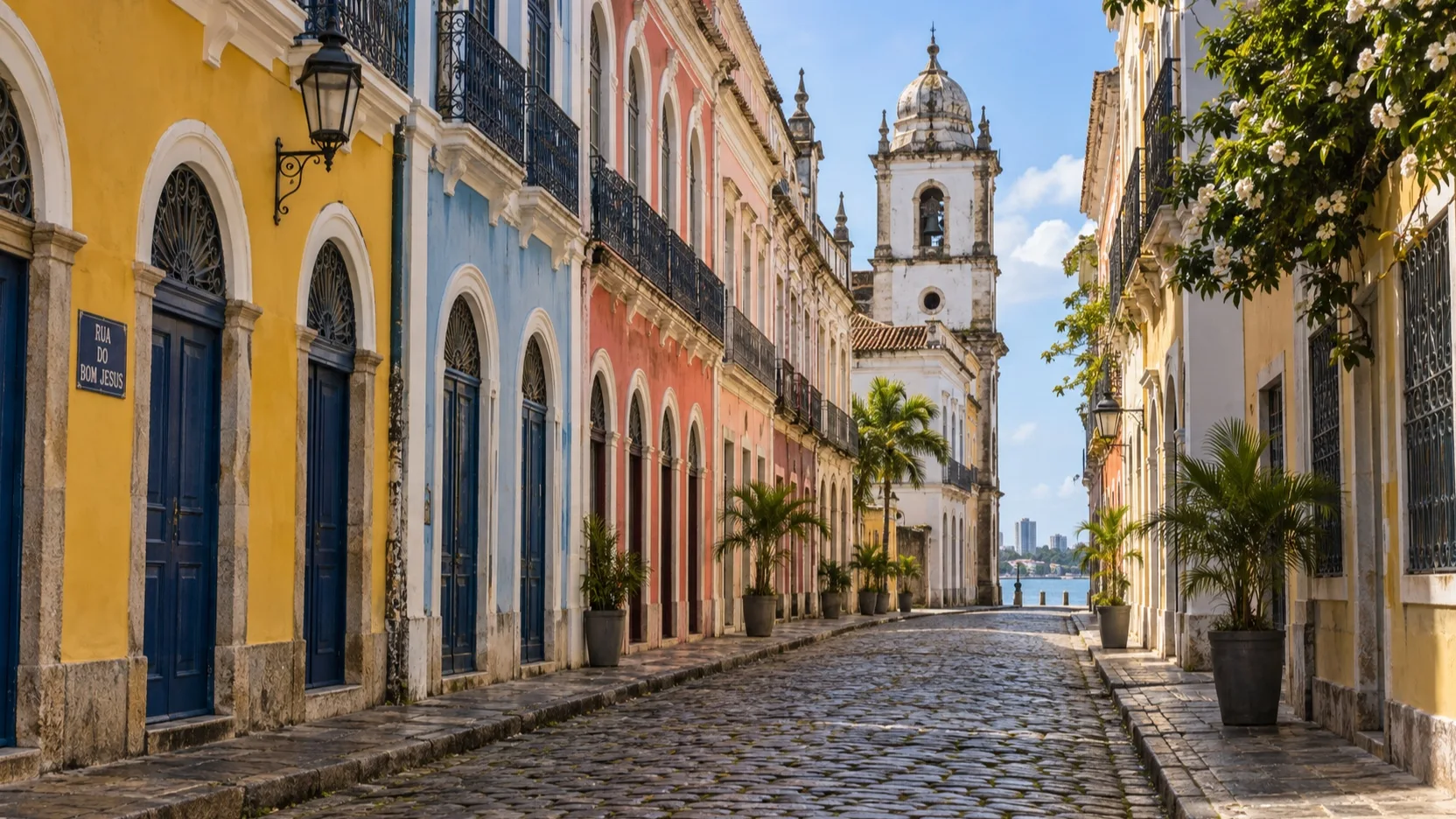
- Rua do Bom Jesus: A colorful cobbled street of restored colonial facades. Its colorful facades and connection to Kahal Zur Israel make it worth more than a quick photo stop.
- Kahal Zur Israel Synagogue: On Rua do Bom Jesus stands the first synagogue in the Americas, founded in the 17th century and now a museum of the region’s Jewish history. It is a genuinely rare piece of New World heritage.
- Instituto Ricardo Brennand: A castle-like complex holding a vast collection of arms, armor, and Brazilian art in landscaped gardens. Allow a couple of hours if you go.
- Oficina Ceramica Francisco Brennand: The former tile factory turned surreal sculpture workshop of one of Brazil’s best-known ceramic artists. It pairs naturally with the institute above.
- Mercado de Sao Jose: One of Brazil’s oldest iron-framed public markets, good for crafts, spices, and local color. It is an easy add-on to an old-town morning.
- Casa da Cultura: A 19th-century prison converted into a warren of craft stalls. The building itself is worth the look even if you buy nothing.
The Olinda day trip I’d make room for
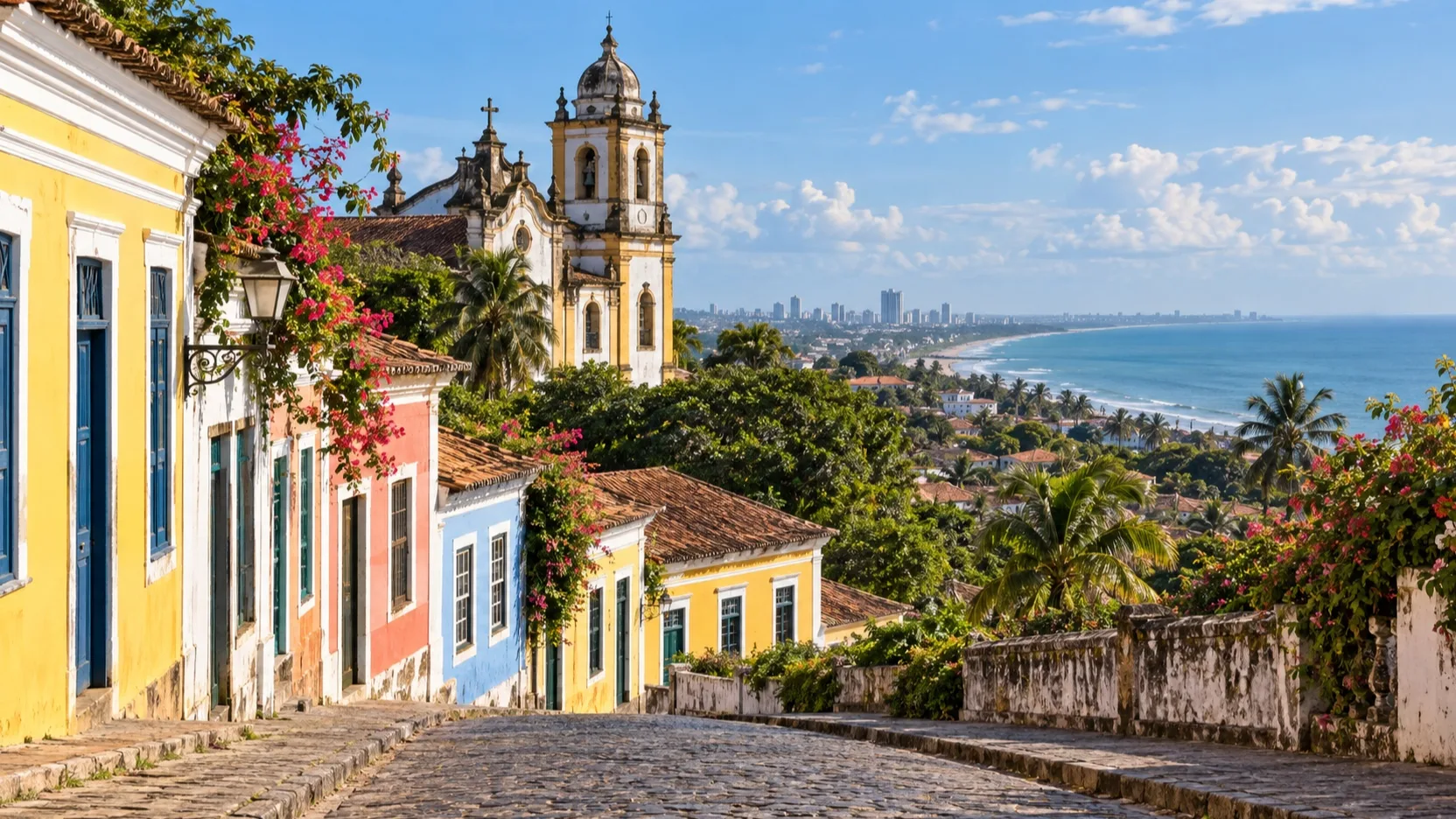
If I only had one excursion, it would be Olinda, a short drive north of Recife. The hilltop old town is a UNESCO World Heritage Site. (paid link; I may earn a commission)
UNESCO records that Olinda was founded in 1535 and holds around twenty Baroque churches among its painted houses. Cobbled lanes climb to viewpoints over the coast.
It is walkable but hilly, so wear real shoes and pace yourself in the heat. Budget travel time both ways when you plan your return to the ship.
A straight word on Boa Viagem beach
Boa Viagem is Recife’s long urban beach, roughly 5 miles of sand with warm reef pools, as Visit Brasil describes. It looks idyllic, and there is an important caveat.
Pernambuco’s state shark-monitoring committee, CEMIT, has documented dozens of shark attacks along this coast since 1992. Boa Viagem accounts for the largest share, and a high proportion have been fatal.
For that reason official warning signs advise against entering the water here. I treat Boa Viagem as a place to stroll the promenade, not to swim.
How I’d plan the day
Three hours: Walk Recife Antigo only. Marco Zero, Rua do Bom Jesus, and the Kahal Zur Israel synagogue, then back to the ship.
Five hours: Add either Olinda or the two Brennand museums by taxi. Keep a firm eye on the clock and leave a return buffer.
Eight hours: Combine the old town with a guided Olinda trip, plus Mercado de Sao Jose for crafts. This is a full, satisfying day ashore.
A realistic word on accessibility
Landing beside the old town helps, but ask your cruise line about assistance through the working-port area because the berth-to-gate route can vary. Marco Zero itself is broad and fairly level, while historic streets can be uneven.
Recife Antigo has some uneven cobbles, and Olinda is genuinely steep and cobbled. If steps and slopes are hard for you, focus on Marco Zero and the riverside and confirm gangway details with your cruise line.
When to go, and the weather
Recife is warm and humid year round. The drier, sunnier months run roughly from September to March, while April to August is wetter.
Whenever you visit, bring sun protection and water. If your call happens to land near Carnival, expect frevo and maracatu in the streets and much bigger crowds.
Quick answers
Can I walk into town from the ship? The passenger terminal is close to Recife Antigo, but use the port’s authorized shuttle or pedestrian route through the working-port area; from the public exit, Marco Zero and Rua do Bom Jesus are nearby.
Is it worth leaving the port area? For Olinda absolutely, though on Boa Viagem I would stroll rather than swim given the official shark warnings.
How does Recife compare with other Brazil stops? It is far more walkable than most, as my guides to Salvador de Bahia and Maceio show.


How this guide was researched: Unless a first-hand visit is explicitly identified above, this guide is based on independent research using official port, tourism, transit, government, and attraction sources where available. Logistics and time-sensitive details were reviewed in August 2026. See our Editorial Policy.