Juneau or Icy Strait Point: Which Port Is Better for Whale Watching?
Both Juneau and Icy Strait Point are excellent Alaska whale-watching ports, so this is a choice between two strong options rather than a good port and a bad one. If whales are your highest priority, I give Icy Strait Point a slight edge for its direct access to productive waters and the simplicity of building the day around one wildlife trip.
Juneau is the better choice when you want more operator variety or hope to pair whale watching with Mendenhall Glacier, downtown, or another activity. Your best port depends on ship times, the tours actually offered on your date, preferred boat size, mobility needs, and what else you want to see.
Juneau vs. Icy Strait Point Whale Watching Quick Facts
- Best for a whale-focused day: Icy Strait Point, by a narrow margin.
- Best for tour choice: Juneau generally has a larger selection of operators, schedules, and boat styles.
- Best for combining activities: Juneau, especially for visitors also interested in Mendenhall Glacier or downtown.
- Main target species: Humpback whales, with other marine wildlife possible but never guaranteed.
- Juneau departure pattern: Many tours include a road transfer between the cruise area and Auke Bay.
- Icy Strait Point advantage: Wildlife trips begin from a smaller destination beside Icy Strait and near the Hoonah area.
- Wildlife ethics: NOAA regulations prohibit approaching within 100 yards of a humpback whale in Alaska, with limited exceptions.
- What to bring: Warm waterproof layers, binoculars, a secure camera strap, and motion-sickness protection if needed.
Why Icy Strait Point Has the Slight Edge
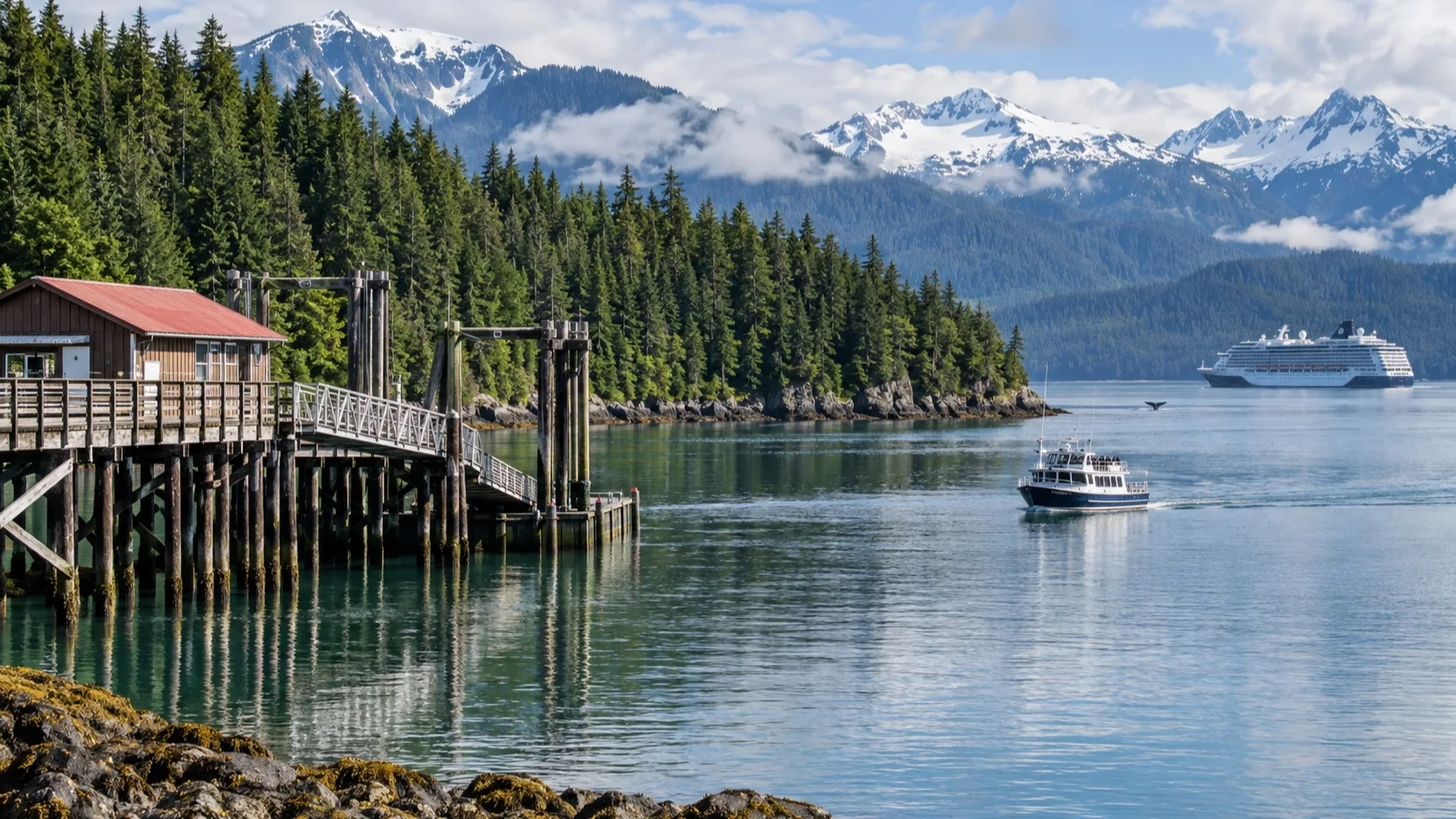
Icy Strait Point sits on Chichagof Island near Hoonah, with tours heading into Icy Strait and surrounding feeding waters. The official destination currently features a whale and marine mammals cruise with an onboard naturalist, which reflects how central wildlife is to the port experience.
The main advantage is focus. You can step into a purpose-built cruise destination, join a marine trip, and return without first crossing a city or balancing several major attractions.
That simplicity matters on a short call or when whale watching is the one experience you would regret missing. It does not mean every tour sees dramatic behavior, only that the port is well positioned for a day centered on the search.
Why Juneau May Be Better for You
Juneau is a larger and busier destination with an established whale-watching industry. Travel Juneau highlights whale watching and wildlife viewing among the capital’s signature activities, and visitors can compare a wider range of vessels, tour lengths, and combination products.
Many whale trips use Auke Bay, which is away from the downtown cruise berths. Your advertised tour duration may include the vehicle transfer, so compare actual time on the water rather than choosing only by the total number of hours.
Juneau shines when you want two substantial experiences in one call. A well-timed combination can pair whale watching with Mendenhall Glacier, although traffic, visitor access rules, and the ship’s schedule must all fit comfortably.
What You May See on Either Tour
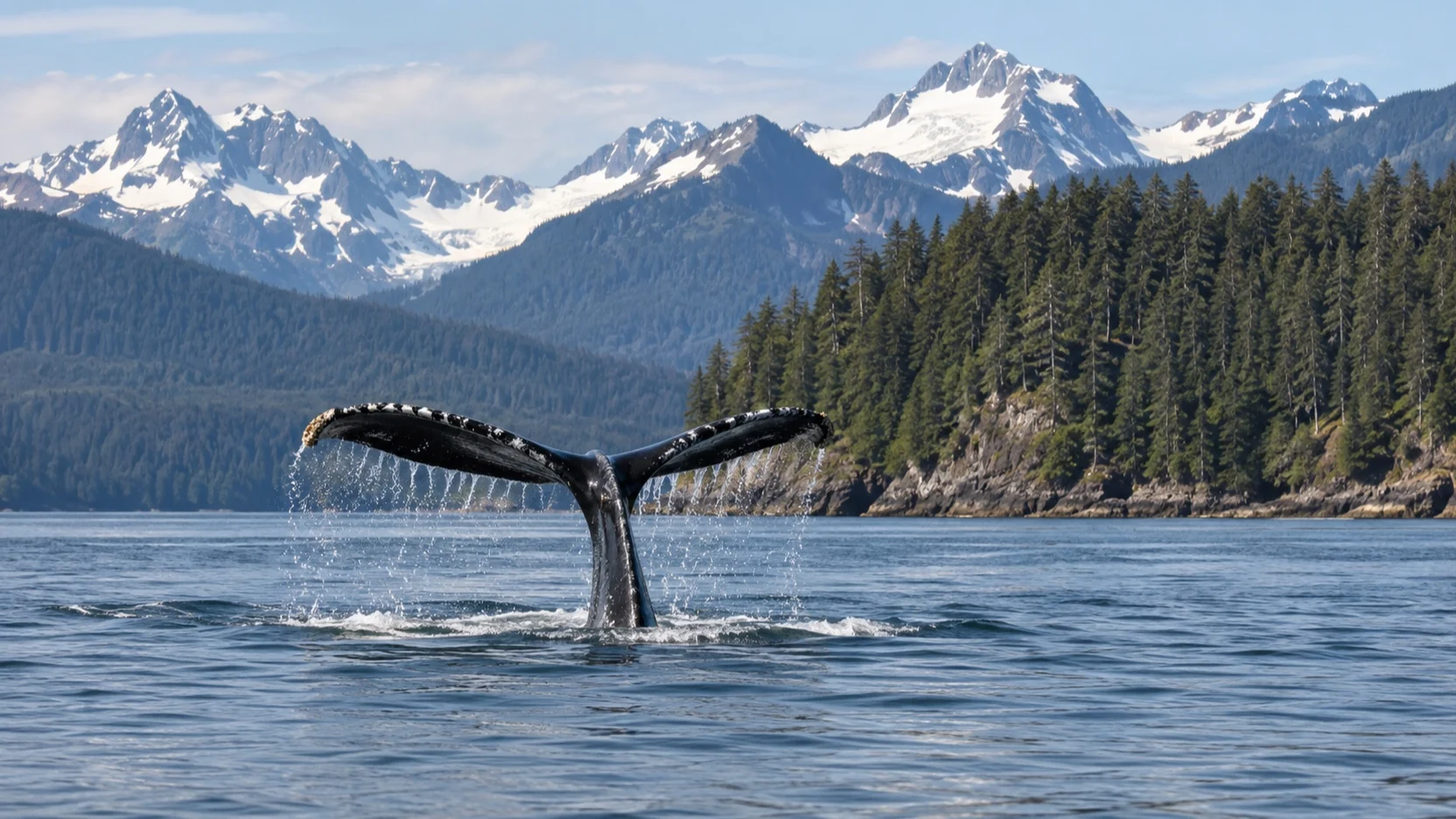
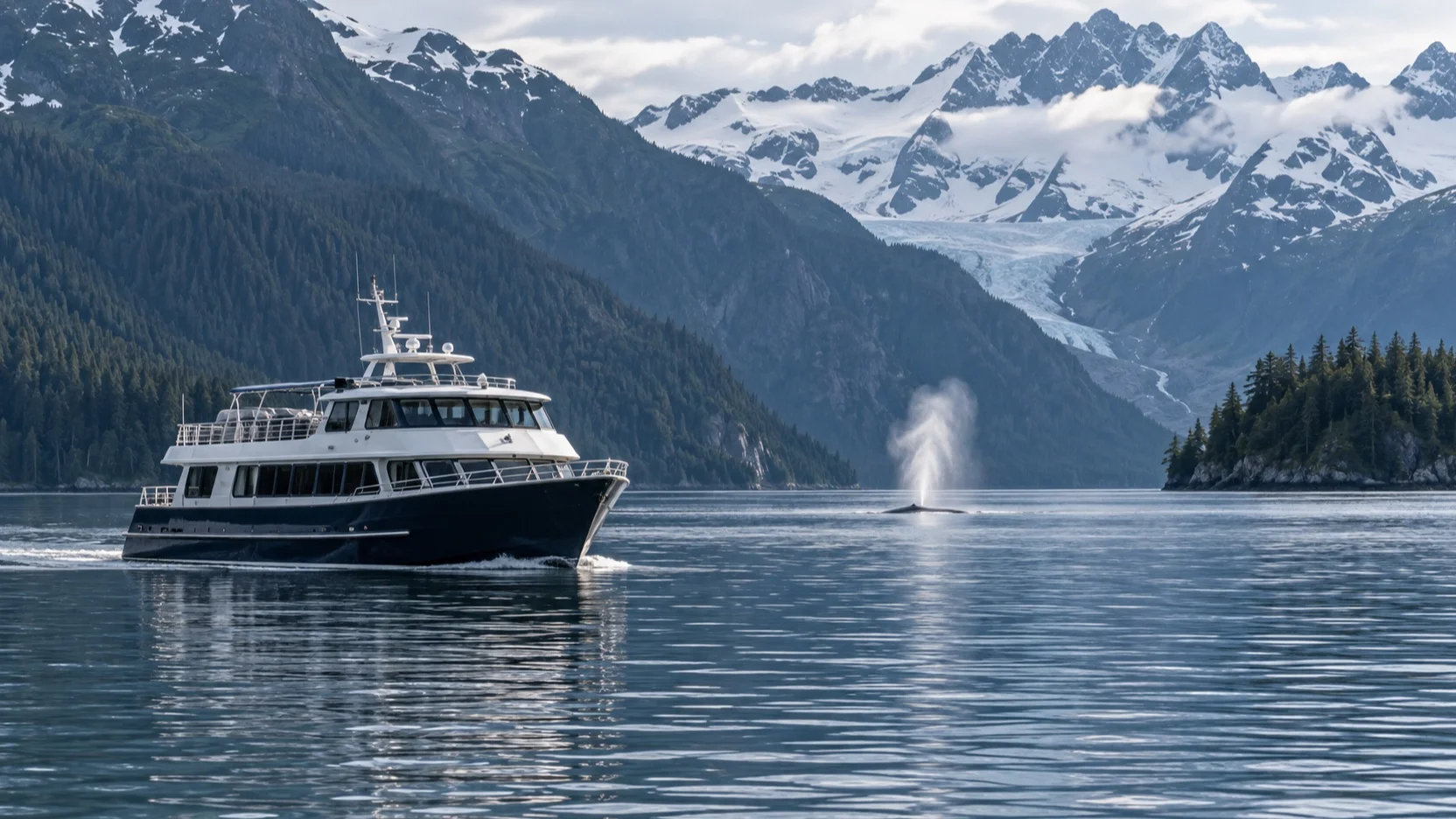
Humpback whales are the primary focus for most Southeast Alaska excursions. A typical sighting may involve a distant blow, a rounded back, or a tail fluke rather than the full breach shown in dramatic advertising.
Bubble-net feeding is possible in the region but should never be treated as a promised performance. The whales are wild, their behavior changes with prey and conditions, and even experienced captains cannot schedule a breach.
You may also encounter sea lions, seals, porpoises, bald eagles, or other seabirds. Orcas travel through Southeast Alaska too, but they are an exciting possibility rather than the reason to select a standard humpback tour.
Whale Sightings and Guarantees
Read guarantee language carefully because operators define it differently. A whale-sighting guarantee may promise a refund, credit, or future trip if no qualifying whale is seen, but it does not promise close views or a particular behavior.
Ask which species count, what remedy applies, and whether the guarantee covers the entire season. A future-tour credit has limited value to a cruise passenger who may not return soon.
Choose the trip for its timing, naturalist quality, deck design, and ethical practices rather than a bold percentage alone. Wildlife viewing is more satisfying when the expectation is patient observation rather than a staged show.
Boat Size Changes the Experience
Large boats can offer indoor seating, more stable movement, restrooms, and multiple viewing areas. They may suit families, cautious walkers, and travelers who value shelter from rain and cold.
Smaller boats can feel more intimate and may provide lower sight lines or fewer passengers competing for rail space. They can also move more sharply in chop, offer less weather protection, and require a more demanding step aboard.
Ask for the vessel type scheduled for your departure rather than relying on a gallery showing several boats. Also confirm indoor capacity, restroom access, maximum passenger count, and whether everyone can view from an outside deck at once.
Wildlife Rules and Responsible Viewing
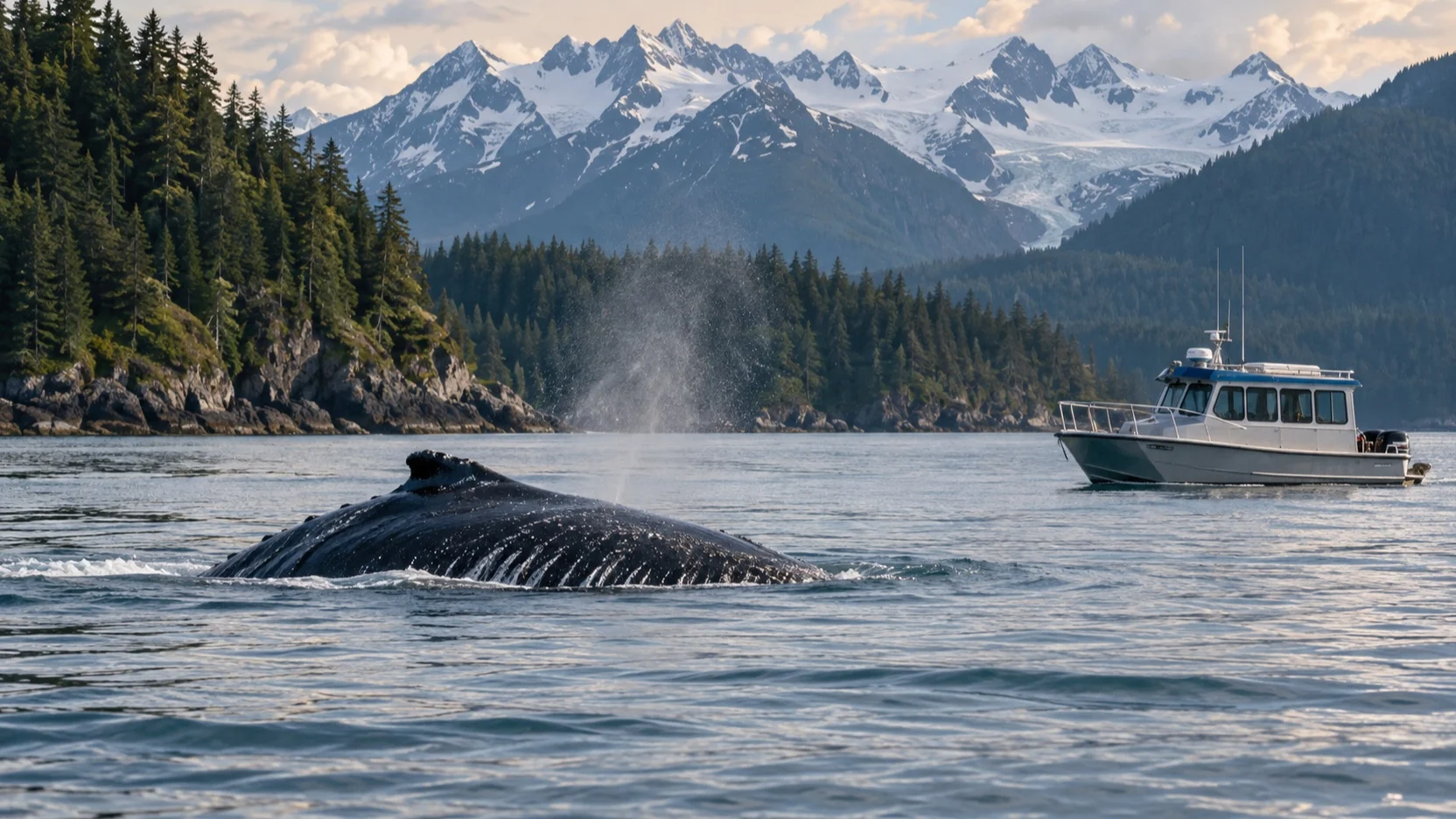
NOAA Fisheries states that approaching within 100 yards of a humpback whale is unlawful in Alaska, apart from limited exceptions in the regulation. Responsible captains also avoid cutting across a whale’s path, surrounding animals, or repeatedly repositioning in ways that disturb natural behavior.
A whale may surface closer after the boat has stopped, which is different from the captain deliberately driving into the restricted distance. Follow crew directions, keep noise under control, and never pressure an operator to chase an animal for a photograph.
Look for a naturalist who explains what you are seeing and why the vessel behaves a certain way. Good interpretation turns a distant blow or feeding pattern into a meaningful wildlife encounter.
Comparing Time and Port Logistics
In Juneau, identify your exact cruise berth and tour meeting point. Some ships use downtown docks, some calls involve a different docking position or shuttle, and independent tours may meet at a public location rather than beside the gangway.
The transfer to Auke Bay can make a short tour less efficient than its description first appears. Traffic and the number of ships in port also affect how quickly vehicles move between downtown and the harbor.
At Icy Strait Point, confirm whether your ship uses the Wilderness Landing or Adventure Landing side and where the excursion gathers. The destination has developed multiple arrival areas, so a meeting point that sounds obvious may still require walking or local transport.
Use the ship’s all aboard time rather than the scheduled sailing time when calculating your return. For an independent booking, leave a generous margin and make sure the operator has your ship name, docking schedule, and a reliable contact number.
Combining Whale Watching With Mendenhall Glacier
Juneau is the clear winner if your second priority is Mendenhall Glacier. Combination tours can simplify transfers, but you should check how much time is actually allocated to each stop and whether visitor-access arrangements are included.
A brief viewpoint stop is not the same as time for trails or the visitor center. If the glacier matters as much as whales, choose a product whose written itinerary gives both experiences enough room.
Trying to book two unrelated independent tours back to back creates more risk. A late boat, road delay, or slow disembarkation can cause you to miss the second meeting time even when the original schedule looked possible.
What Else to Do at Icy Strait Point
Icy Strait Point works well for a relaxed remainder of the day. The restored cannery setting, shoreline, cultural programming, food, and forest scenery provide flexible options that do not require another long transfer.
Hoonah offers a different community experience beyond the cruise destination, but include transport and walking time. Treat any bear search as a separate wildlife experience with no guaranteed sighting, just as you would with whales.
Accessibility Questions to Ask
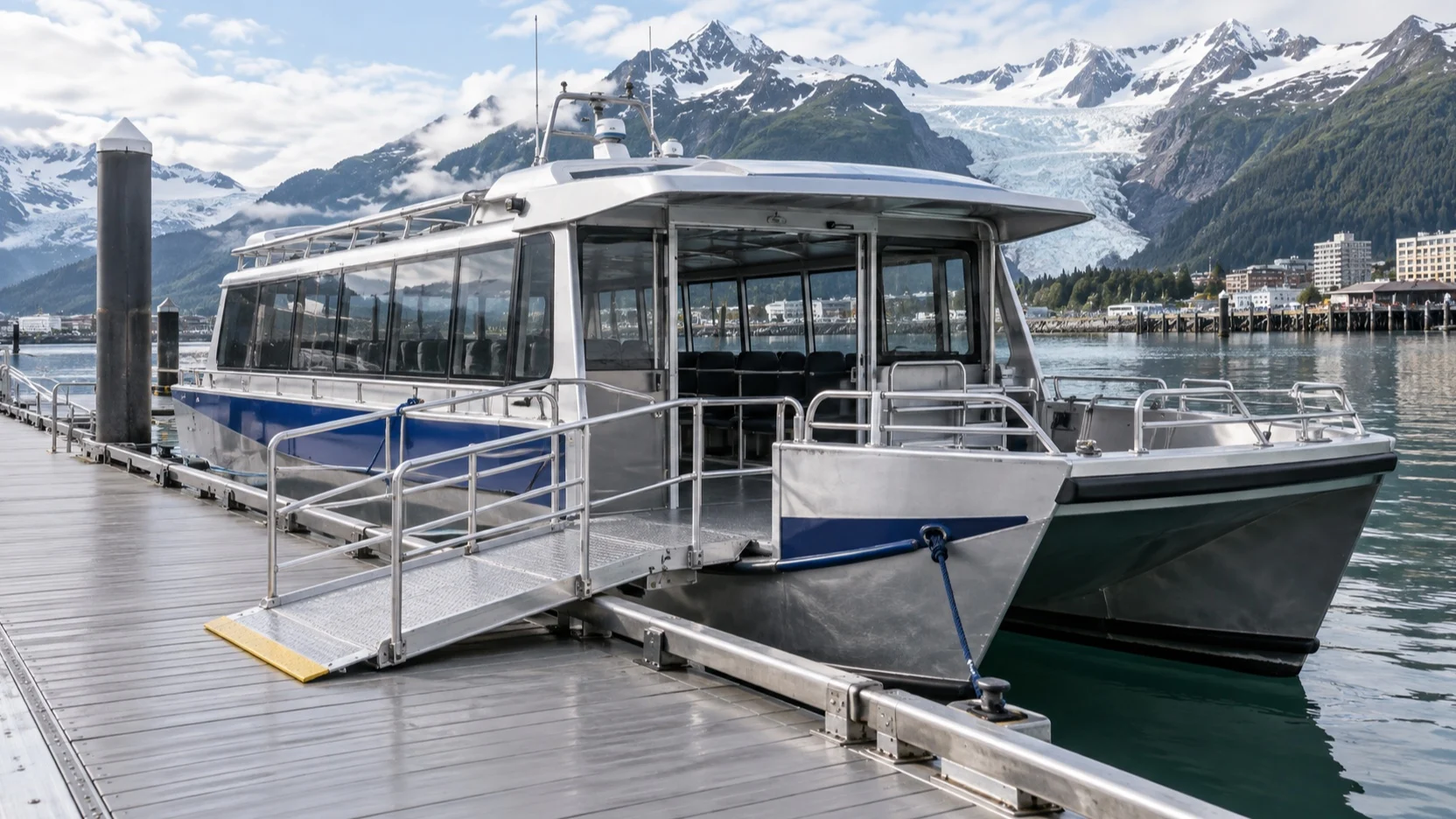
Ask about every stage from the ship to the boat, not just whether the vessel is described as accessible. The critical details include bus steps, distance to the dock, ramp slope, boarding thresholds, wheelchair securement, restroom layout, and whether open-deck viewing is possible.
Tide can change the angle of a gangway during the day. Travelers who cannot manage steps should request a specific explanation from the operator and confirm that the scheduled vessel, not merely one boat in the fleet, can meet their needs.
For limited stamina, Juneau’s transfer may add effort even when the boat itself is comfortable. Icy Strait Point may reduce road time, but the distance between your ship, meeting point, and excursion dock still needs verification.
Weather, Clothing, and Motion Sickness
Southeast Alaska can feel cold on the water even when the port is mild. Wear layers under a waterproof outer shell, bring gloves and a warm hat, and choose shoes with grip for wet decks.
Rain does not automatically ruin whale watching, and cloudy light can be excellent for photography. Wind and sea state matter more because they affect comfort, visibility, vessel movement, and occasionally whether the trip operates.
If you are prone to motion sickness, discuss medication with a qualified health professional before travel and follow the product’s directions. Looking toward the horizon, staying in fresh air, and avoiding a heavy meal immediately before departure may also help some passengers.
Photography Without Missing the Experience
A zoom lens helps, but binoculars can deliver the most satisfying view when whales remain at a responsible distance. Secure every device with a strap and protect it from spray and rain.
Use a fast shutter speed if your camera allows it, then lower the camera occasionally. Watching for blows, birds, and the direction of travel is often more useful than staring continuously at a small screen.
How to Choose the Better Port for Your Itinerary
Choose Icy Strait Point if whale watching is your top Alaska priority, you prefer a quieter destination, or your Juneau day is already committed to a glacier or another major excursion. Choose Juneau if you want maximum operator choice, a specific small-boat style, or a coordinated whales-and-glacier day.
If both ports have good call times, compare time on the water, total passenger count, naturalist credentials, cancellation terms, and the complete transfer plan. Price matters, but the cheapest tour is not automatically the best value if much of its duration is spent on a bus.
Booking whales in Icy Strait Point can also free Juneau for Mendenhall Glacier, Mount Roberts, or downtown. That division often creates a more varied itinerary than repeating similar boat tours in both ports.
Official Planning Resources
Review NOAA Fisheries’ Alaska humpback approach regulations before choosing an operator. Use Travel Juneau for current local visitor information and the official Icy Strait Point website for the destination’s excursions, ship calendar, and practical details.
Reconfirm the exact tour, vessel, meeting point, and cancellation policy with the seller close to sailing. Your cruise line’s daily program remains authoritative for the berth, local time, and all aboard deadline.
Final Thoughts
Icy Strait Point is my narrow winner for a port day devoted almost entirely to whales, while Juneau offers the stronger mix of choice and easy combination planning. Pick the port that fits the rest of your itinerary, choose an ethical operator, and let wild Alaska set the pace once you are on the water.
More on this topic: browse every guide on shore excursions and DIY port days.