Fort-de-France Cruise Port: Terminals, Ferries and Island Days
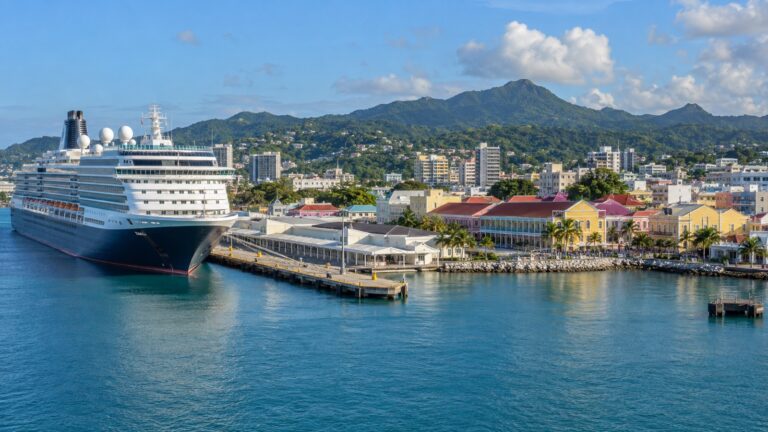
Fort-de-France gives cruise passengers two very different versions of the same capital. From Pointe Simon, the city begins at the gangway; from the Tourelles terminal, the historic center and ferry quay require a transfer or a longer walk through a working-port environment.
Once you identify the terminal, Martinique opens neatly into three choices: an urban day, a bay ferry, or a guided island circuit. The best plan respects tropical traffic, changing weather, and the fact that mountain, beach, and rum-country attractions sit in different directions.
Pointe Simon and Tourelles are not interchangeable
Pointe Simon sits beside downtown Fort-de-France and offers the easiest independent arrival. La Savane, the waterfront, shops, the cathedral, the market, and the ferry quay are all part of a compact city walk.
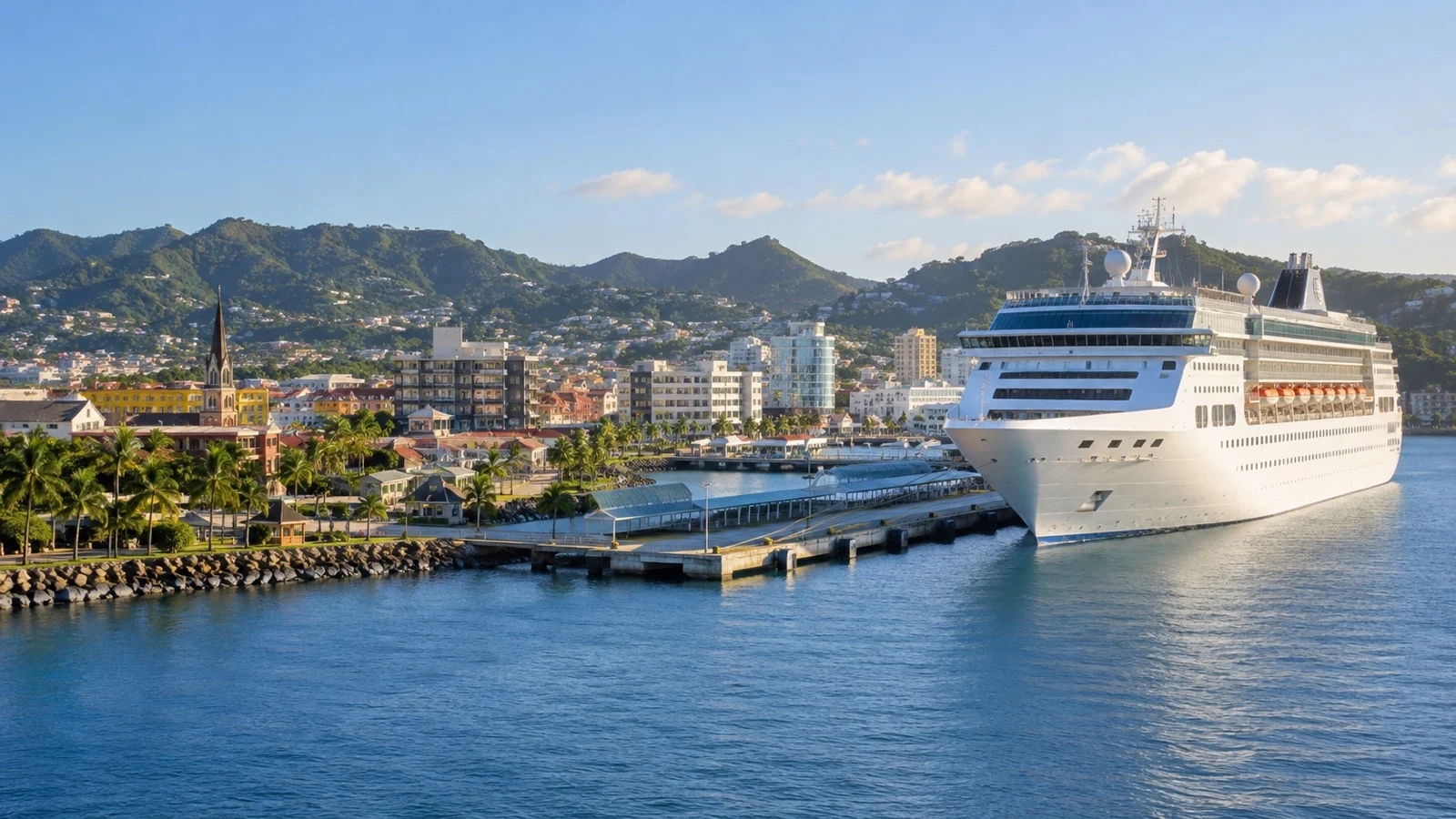
The Tourelles cruise terminal is in the larger commercial-port area north of the center. The Grand Port Maritime de la Martinique promotes it as a dedicated cruise welcome site, but passengers still need to follow marked exits, shuttles, and authorized pickup arrangements.
Cruise ships normally berth alongside at one of the assigned facilities. Tendering is not the standard Fort-de-France arrival, so any unusual boat transfer would be announced for that specific call.
Ask the ship for the exact terminal name before booking a driver or ferry. A tour operator waiting at Pointe Simon cannot solve a pickup arranged at Tourelles without losing time.
Quick Facts
- Primary cruise locations: downtown Pointe Simon and the separate Tourelles terminal
- Normal arrival: alongside at the assigned berth
- Best independent berth: Pointe Simon for immediate city access
- Tourelles reality: use the announced shuttle, walking route, or approved pickup
- Bay option: public ferries connect Fort-de-France with Trois-Îlets destinations
- Classic island outings: Jardin de Balata, Saint-Pierre, Mount Pelée country, beaches, and rum estates
- Currency: euro, with cards widely accepted in established businesses
- Language: French and Martinican Creole, with English varying by setting
- Weather: tropical heat, strong sun, and sudden rain
- Return rule: protect extra time for ferries, island traffic, and secure-port access
A walkable Fort-de-France route
Begin with La Savane, the broad green space near the waterfront, then continue toward Bibliothèque Schœlcher and the Cathédrale Saint-Louis. The city reveals itself in details, from ironwork and arcades to market color and the rhythm of an active Caribbean capital.
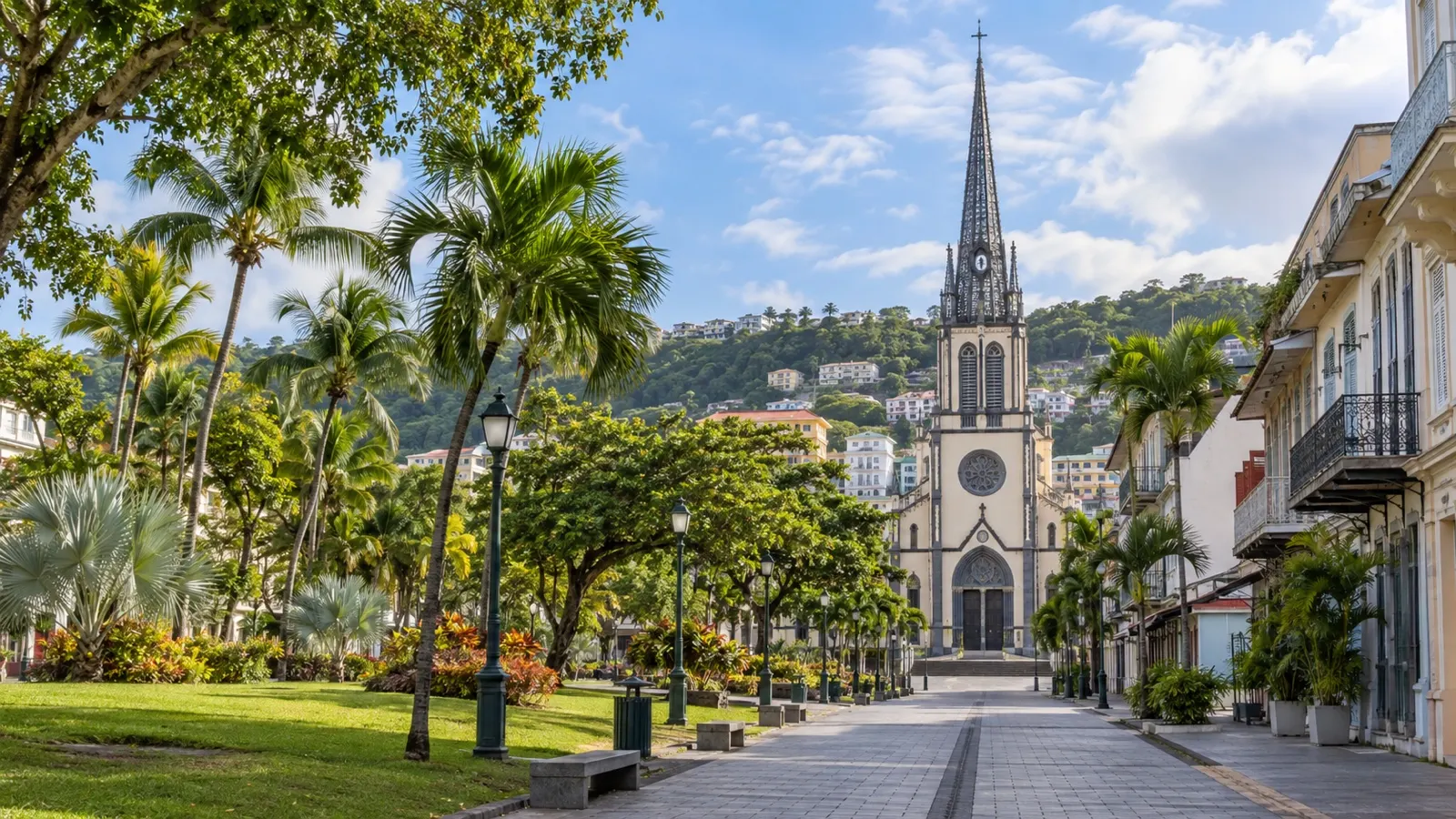
The covered market is a natural stop for spices, fruit, crafts, and local flavors, but opening patterns can shift around Sundays, holidays, and events. Visit earlier rather than saving it for the final minutes.
Sidewalks can be uneven and the heat builds quickly away from the waterfront breeze. Pause in shade, cross carefully, and make the route shorter before fatigue turns the return into work.
From Tourelles, confirm whether the port provides a shuttle to the center and where it ends. If walking is permitted, follow the official route rather than cutting through operational areas.
The ferry makes the bay useful
Passenger ferries cross the bay from Fort-de-France toward Trois-Îlets, including visitor areas around Pointe du Bout and Anse Mitan. They can create a beach or village day without committing to a long road transfer.
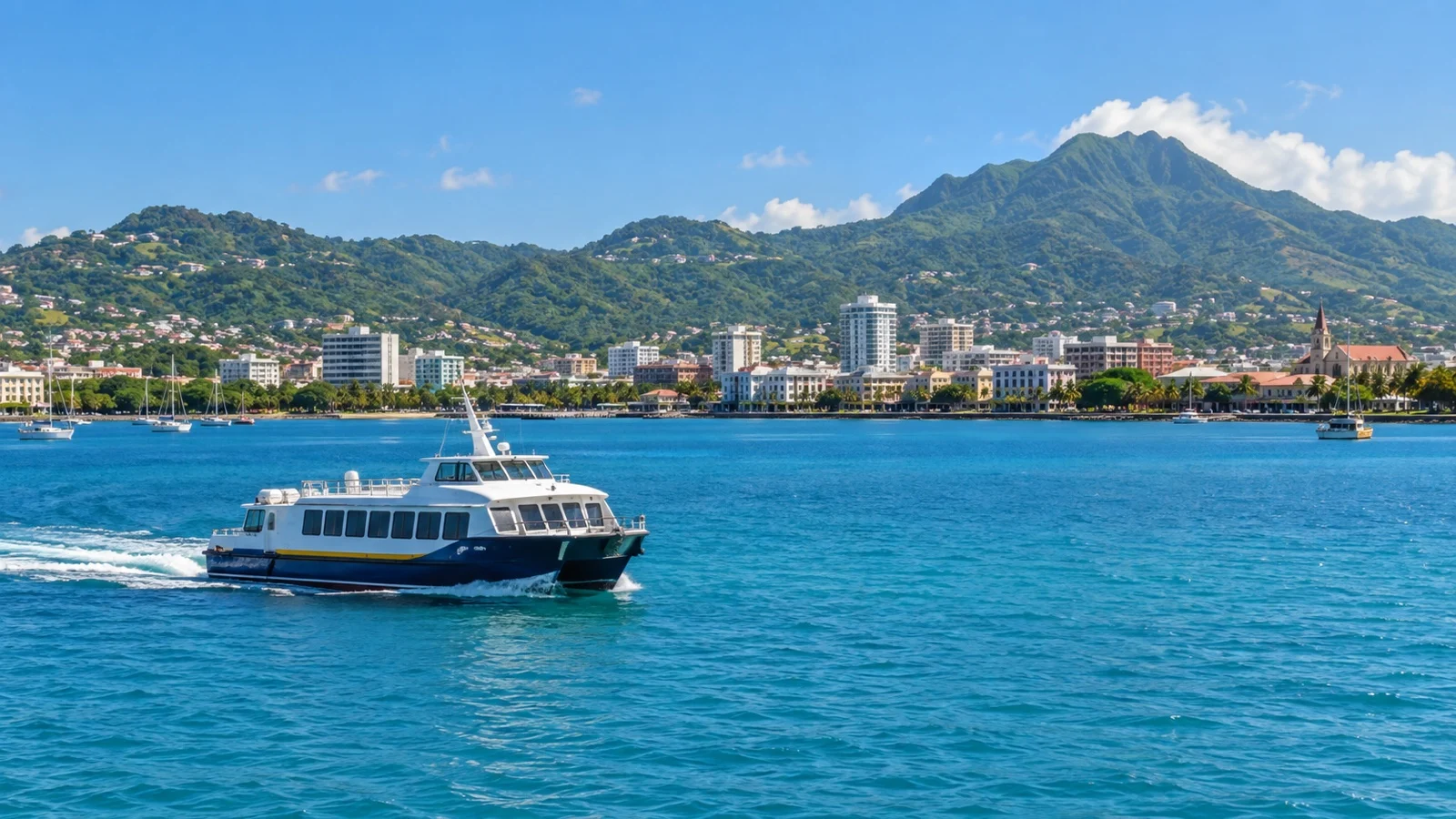
Use the current operator schedule and identify the exact return boat before boarding. Weekday, weekend, holiday, and seasonal timetables may differ, while queues can build when ships are in port.
The destination ferry landing may not place you directly on the beach or at the attraction you imagined. Map the walk or onward transport and preserve time for the return crossing plus the correct cruise terminal.
Wind, rain, marine operations, or crowding can affect comfort and timing. Choose an earlier ferry back than the last theoretical connection and keep a taxi fallback where practical.
Jardin de Balata is the close green escape
Jardin de Balata climbs into the lush hills above Fort-de-France with tropical plants, palms, flowers, and elevated views. It offers a strong half-day alternative when you want nature without traveling to the island’s far north or south.
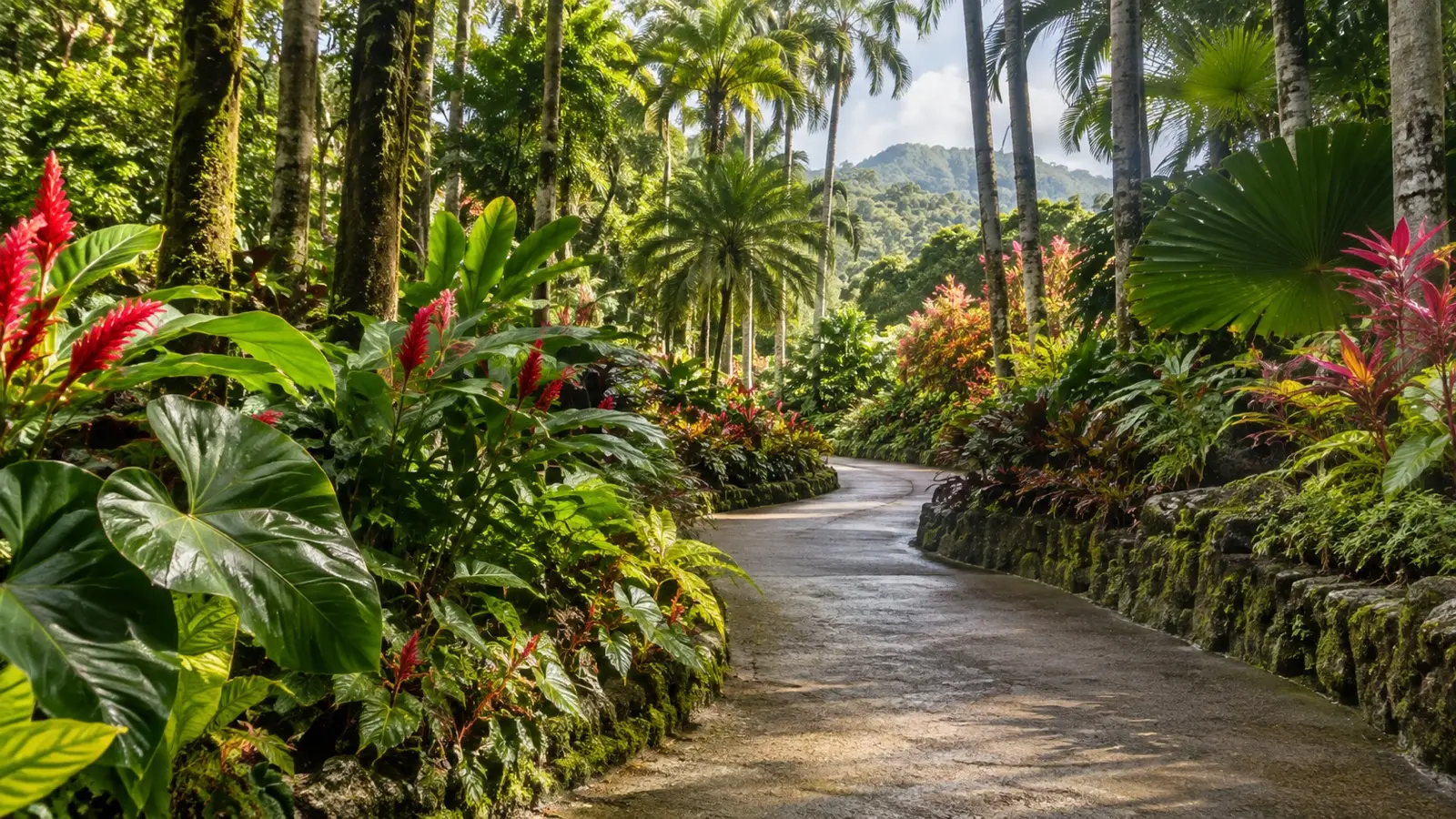
Road traffic and mountain showers still matter, and the garden includes slopes, steps, bridges, and potentially slick paths. Check the Martinique Tourism Authority and the garden’s official site for current opening and accessibility details.
A taxi with agreed waiting time or an organized tour is simpler than expecting a car to be available for the return. Pair the garden with Fort-de-France rather than adding a distant beach unless the call is generous.
Saint-Pierre and Mount Pelée country
Saint-Pierre tells one of the island’s most powerful stories through the remains and memory of the 1902 eruption. The northern road also reveals a greener, steeper Martinique than the urban bay.
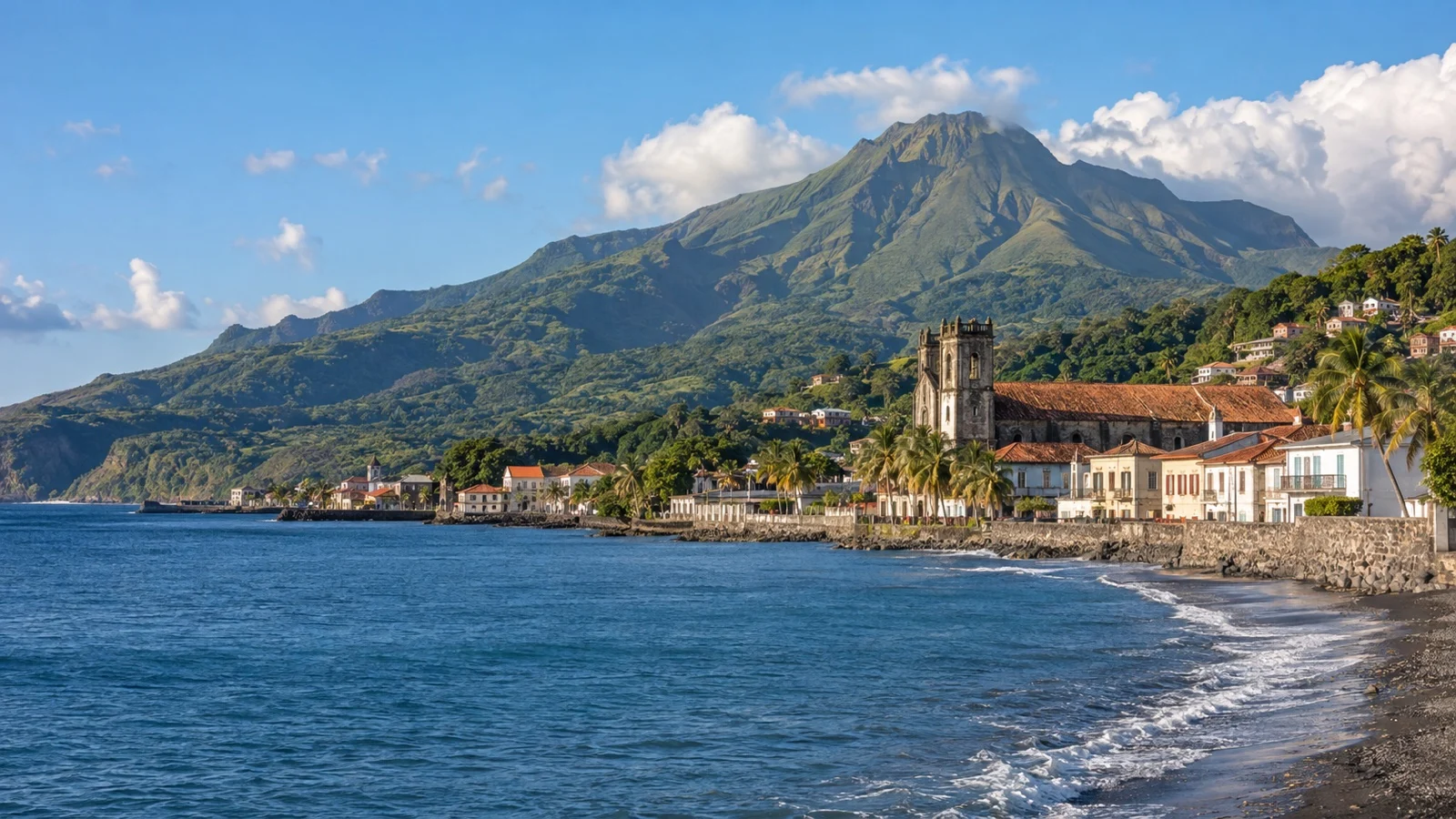
Mount Pelée and the Pitons of northern Martinique form a UNESCO World Heritage property recognized for volcanic processes, forest types, and endemic biodiversity. The landscape deserves interpretation, not merely a distant photograph from a coach.
A true volcano hike is not a casual add-on to a cruise excursion. Weather, mud, steep terrain, route condition, and required time demand local guidance and a much larger safety plan.
For most passengers, a Saint-Pierre history and landscape tour creates the better port day. It offers context and views while keeping the return more predictable than a summit attempt.
Beaches and rum estates
Martinique’s beaches are spread around the coast and differ in sand, exposure, facilities, and transport. Choose one with a clear round-trip plan rather than simply asking a driver for the best beach.
Rum distilleries and historic estates can add agricultural and cultural context, but tasting hours and production activity vary. Confirm reservations, accessibility, food, and whether the driver remains with you.
Do not combine a northern distillery, southern beach, and city tour in one standard call. Island roads funnel through busy areas, and a map cannot predict the traffic that develops after lunch.
Three realistic port-day plans
The capital day
Explore La Savane, the cathedral, market, and waterfront, with a museum or long lunch as the flexible center. This plan is especially easy from Pointe Simon and remains practical from Tourelles once the shuttle is understood.
The ferry day
Cross to Pointe du Bout or Anse Mitan on an early sailing, enjoy one defined area, and return before the final comfortable connection. Keep Fort-de-France as the optional second half rather than adding another island transfer.
The guided island day
Choose Jardin de Balata, Saint-Pierre, or a focused rum and beach route as the headline. Require the operator to name the turnaround time and adjust for weather and traffic.
Transport beyond the city
Taxis, prearranged drivers, ship excursions, public ferries, and limited bus services can all play a role. The correct tool depends on the terminal, destination, and how much return risk you are willing to hold.
Agree on fare, currency, waiting time, and final drop-off before leaving in a taxi. At Tourelles, confirm whether an independent driver may enter the terminal or must meet outside the secure zone.
Rental cars add pickup, navigation, parking, and return pressure to a short call. A driver who knows cruise operations is usually the calmer choice for the north or a multi-stop circuit.
Accessibility and comfort
An alongside arrival avoids tender transfer, but gangway slope still changes with tide and ship position. Ask the cruise line about wheelchair assistance and the distance to shuttle or taxi staging.
Pointe Simon offers the easiest city start, while Tourelles may add a vehicle transfer. Historic sidewalks, market aisles, older thresholds, and tropical heat can affect an otherwise short route.
Public-ferry accessibility varies by vessel, dock, tide, and mobility device. Contact the operator for the exact sailing and confirm whether a wheelchair can remain occupied and secured.
Garden paths, plantation surfaces, and volcanic sites may include grades, gravel, wet steps, or limited accessible restrooms. Require attraction-specific details rather than accepting a broad accessible label.
Weather can rearrange the island
Fort-de-France is hot and humid, with sudden tropical showers possible in any season. Carry water, sunscreen, a breathable rain layer, and footwear that grips wet pavement.
The north can be wetter and cloudier than the bay, while southern beaches may remain bright. A flexible operator should reverse stops or shorten the route when rain makes roads and paths slower.
Storm systems and heavy rain can disrupt ferries and port operations. Follow local authorities and the ship rather than trying to preserve a prepaid itinerary at the expense of safety.
Safety and timing
Use ordinary city awareness around markets, terminals, and ferry queues. Keep valuables discreet, use authorized transport, and do not follow an unsolicited guide away from the public area.
Martinique drives on the right, but unfamiliar roads, scooters, congestion, and mountain curves make self-driving more demanding than it appears. The return through Fort-de-France traffic deserves a wide margin.
Carry essential medication and your ship card, and save the port agent details offline. Write down Pointe Simon or Tourelles so a driver returns you to the correct place.
Return planning by itinerary
A city walk needs time for the final blocks and terminal security. A ferry day adds docking, disembarkation, and the walk or transfer from the ferry quay to your ship.
A northern or southern island tour needs the widest road buffer because traffic and tropical rain compound. Set the last departure from the farthest stop before the tour begins.
Tell every independent operator your all aboard time rather than only sailing time. Aim to reach the secure terminal early enough that one traffic queue or full shuttle changes nothing.
Money, documents, and local expectations
Martinique uses the euro as a French overseas region, and cards are common in established businesses. A little cash helps at markets or small vendors, while United States dollars should not be assumed.
Entry rules depend on nationality, itinerary, and ship clearance, including any Schengen implications for your passport. Follow the cruise line and official French guidance for the current sailing.
French is the main official language, with Martinican Creole central to local life. A few polite French phrases and the written destination name make independent travel easier.
Choose the terminal-specific day
Circle Pointe Simon or Tourelles on the daily program before selecting a city walk, ferry, garden, or island circuit. Then compare physical demands, current weather, and the full return chain with the hours actually ashore.
Use the Grand Port Maritime for port context, official Martinique tourism for island planning, and the ferry operator for same-day sailings. Your ship remains the final authority for berth, shuttle, and all aboard time.
Fort-de-France works best when the day has one direction. Stay in the capital, cross the bay, or explore one side of the island, and let Martinique feel generous rather than rushed.
Confirm the terminal, choose one route, and protect the return before adding another stop. That simple rhythm leaves room for color, rain, history, and a proper taste of the island.