San Francisco Cruise Port: Pier 27, Transit and Things to Do
San Francisco gives cruisers an unusually good first impression: the main terminal sits on the Embarcadero, with Alcatraz in the bay and the city rising behind it. The only real trick is confirming your pier before you start planning.
My quick take on San Francisco
This is a port where you can build a genuinely memorable day without a tour bus. Pier 27 puts the waterfront, North Beach, Fisherman’s Wharf, and ferries within easy reach, while Muni handles the hills when your legs file a complaint.
San Francisco is both a homeport and a port of call on California, Alaska, Hawaii, and Pacific Coast sailings. My West Coast cruise ports guide helps compare it with other regional gateways, while the Alaska cruise ports overview is useful if this is the start of a northbound adventure.
The quick facts
- Where you land: the James R. Herman Cruise Terminal at Pier 27, on the Embarcadero below Telegraph Hill, is the main facility. The Port of San Francisco also lists Pier 35 and Piers 30/32 for passenger calls, so read the berth on your cruise documents.
- Dock or tender: Ships berth alongside a pier and guests leave by gangway rather than tender boat.
- Into town: You walk.
- Currency and language: US dollars and English.
- Time zone: Pacific Daylight Time (PDT, UTC−7) through the March to early November cruise season, Pacific Standard Time (PST, UTC−8) in winter.
- How often the call is missed: Low (under 1%): the sheltered berth is rarely limited by local weather.
The best source for a last check is the Port of San Francisco cruise page, which links the 2026 schedule and explains each passenger location. It also confirms that Princess Cruises and Carnival Cruises use San Francisco as a homeport, while several other lines make calls.
Confirm the pier before you map the day
Pier 27 is the easy default, but the pier number changes your first and last few minutes ashore. The James R. Herman terminal stands on the Embarcadero near Telegraph Hill, and vehicles can drop passengers at the terminal hall entrance.
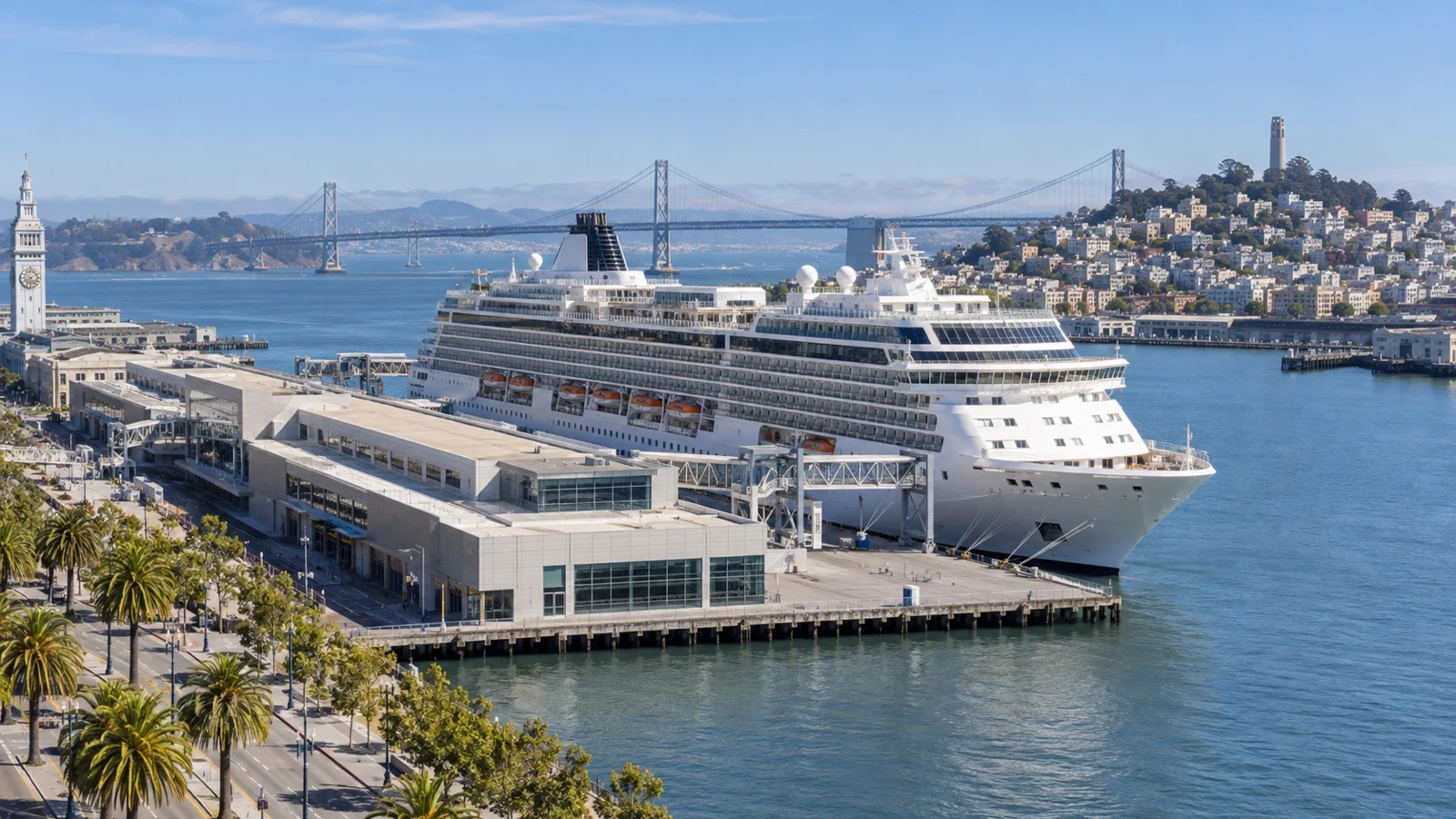
Pier 35 is about a six to eight minute walk north of Pier 27 according to the Port, closer to Fisherman’s Wharf. Its nearest F streetcar stop is at The Embarcadero and Bay Street, so a sightseeing plan centered on the northern waterfront becomes even simpler.
Piers 30/32 sit south of the Ferry Building between Bryant and Brannan streets. The Port estimates a walk of about 20 minutes from the Ferry Building, which means a Pier 27 route copied into your phone would point you in exactly the wrong direction.
Check the cruise line app, boarding pass, daily program, and the Port schedule before leaving your hotel or ship. If two sources disagree, use the terminal named by your cruise line and ask the line to confirm it.
For a pre-cruise night, see our guide to hotels near San Francisco cruise port.
Our guide to the California home ports covers how Pier 27 compares with the southern California terminals.
Getting between the airport and Pier 27
BART connects SFO with downtown San Francisco, and the agency says the ride to downtown takes about 30 minutes. The airport station is in the International Terminal, with the free AirTrain linking all terminals to it, as explained in the official BART airport guide.
Exit at Embarcadero Station, then continue to Pier 27 by taxi, rideshare, the F streetcar, or a waterfront walk. The Port describes Pier 27 as about a 20 minute walk from the Embarcadero BART and Muni station, which is pleasant with a day bag but less charming while dragging cruise luggage.
With suitcases, I would choose a taxi or rideshare for the final stretch and avoid turning embarkation into an accidental workout. Allow extra time during commuter hours, major events, and any road closure along the waterfront.
Oakland International Airport also connects to BART through the airport rail link and a transfer. It can work when the flight is better, but San Francisco International usually creates the simpler public-transit route to the cruise waterfront.
Getting around from the ship
The Embarcadero is the city’s simplest sightseeing spine, and walking is often faster than waiting for a vehicle. The Ferry Building lies south of Pier 27, while Pier 33, Pier 39, and Fisherman’s Wharf sit to the north.
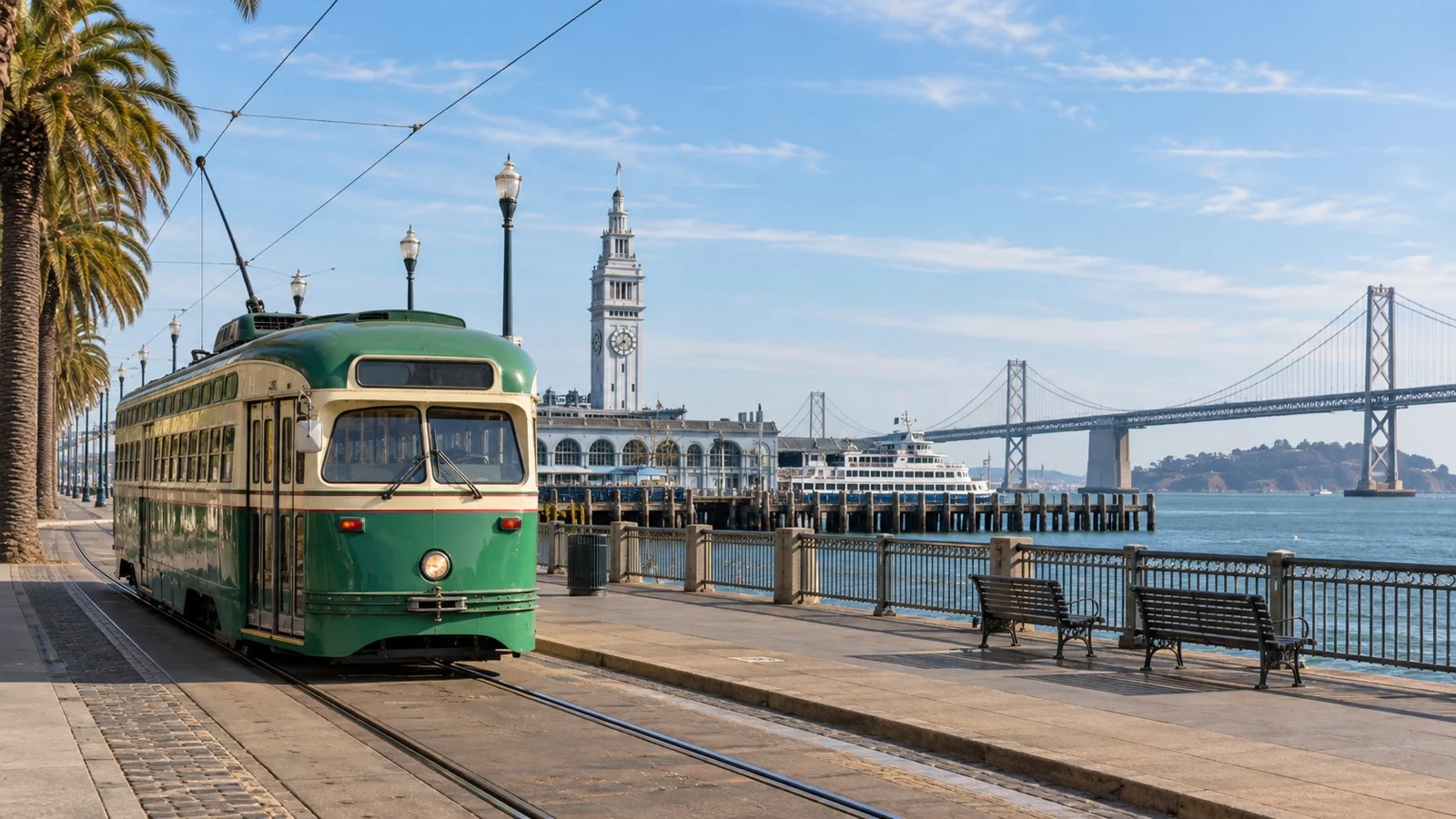
The historic F Market and Wharves line follows the waterfront and continues along Market Street. Check the current SFMTA route page before the day, since special events can replace streetcars with buses or change service.
San Francisco’s hills are not decorative, and a route that looks short on a map can involve a sharp climb. Use Muni, a taxi, or a rideshare for the Golden Gate Bridge, the Presidio, or a cross-city move, then save your walking for a compact neighborhood.
If this cruise is part of a larger Pacific itinerary, the logistics feel different from the compact downtown berths in my Seattle cruise port guide. They are still far easier than the airport and terminal sprawl covered in my Los Angeles cruise ports comparison.
The waterfront stops worth your port time
Alcatraz Island
Alcatraz is the obvious blockbuster because its ferry leaves from Pier 33, just north of the main cruise terminal. The National Park Service says ferry tickets are required and strongly recommends advance reservations, especially when summer and holiday sailings sell out.
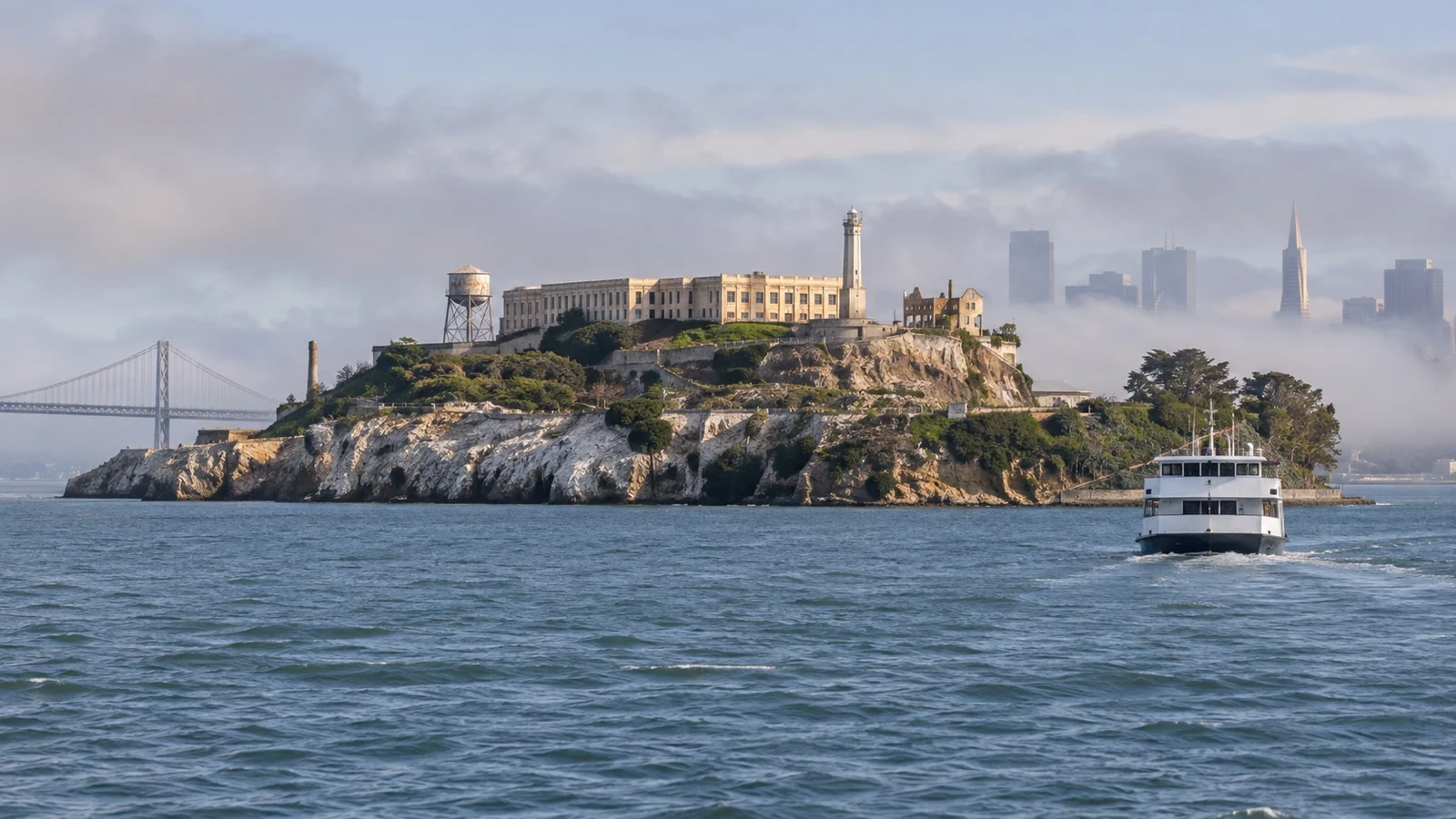
Start with the National Park Service Alcatraz guidance, then buy only through the authorized ferry operator it names. Treat the printed return-ferry options and your ship’s all-aboard time as hard boundaries, not creative suggestions.
Fisherman’s Wharf and Pier 39
Continue north for sea lions, bay views, seafood counters, and the lively waterfront around Pier 39. It is unapologetically touristy, but it is also convenient, cheerful, and almost impossible to misunderstand on a short call.
Nearby options include the historic ships at Hyde Street Pier, Ghirardelli Square, and views toward the Golden Gate Bridge. Choose two or three stops rather than trying to inspect every souvenir shop with scientific rigor.
The Ferry Building and Embarcadero
Walk south for bay views and the Ferry Building’s food hall, shops, and restaurants. This route is mostly level, easy to shorten, and ideal when fog has hidden the skyline but not your appetite.
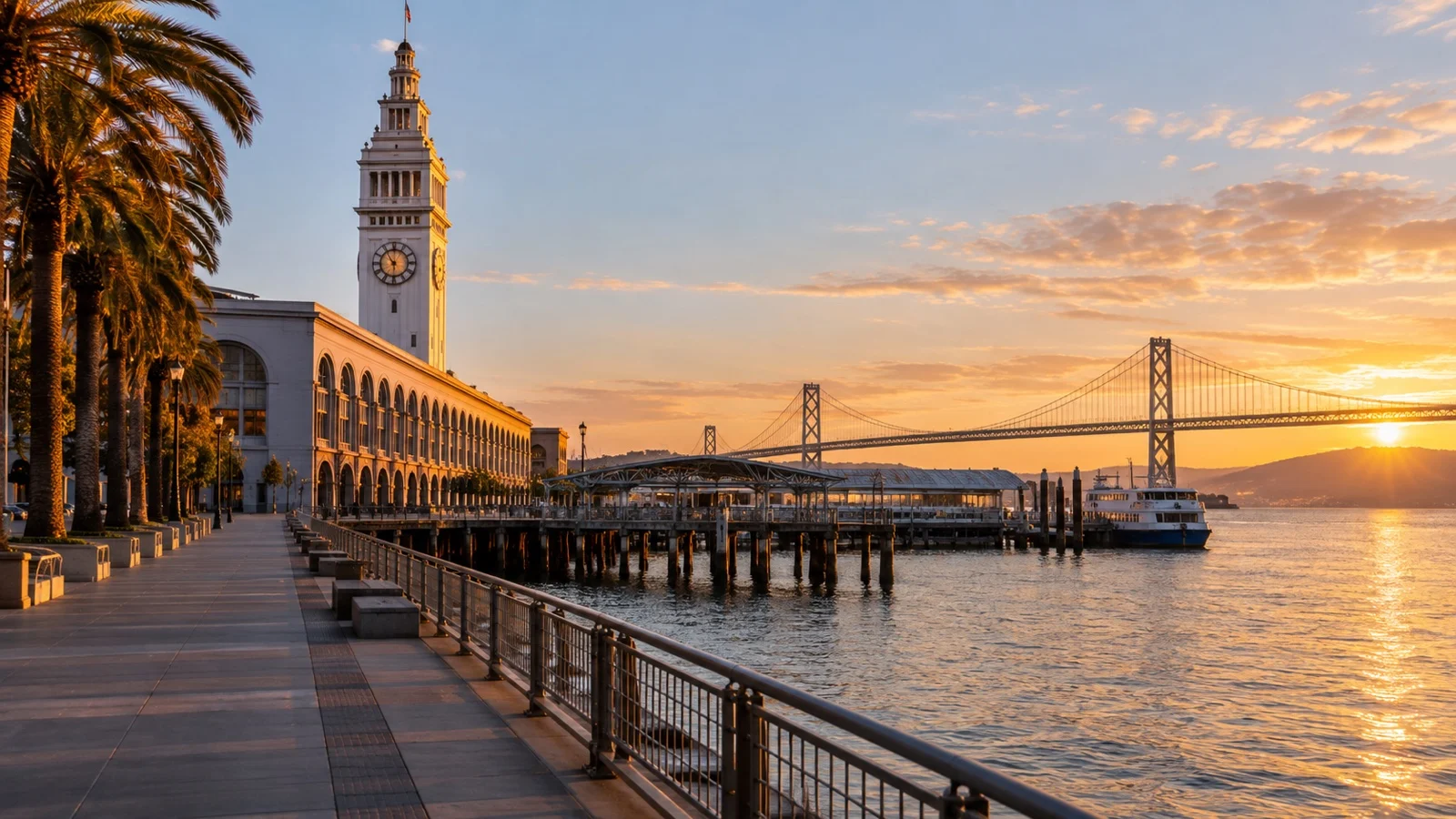
The Ferry Building also makes a useful pivot point for Market Street, downtown BART, and ferries across the bay. It is a smart final stop because the route back to Pier 27 stays simple and visible along the water.
North Beach, Chinatown, and Telegraph Hill
North Beach begins inland from the piers with Italian cafes, bookstores, and Washington Square. Chinatown sits just beyond it, creating a compact food-and-neighborhood day if you would rather skip formal attractions.
Coit Tower rises above the waterfront on Telegraph Hill, but the climb is substantial. Ride partway or take your time, and remember that reaching the base is not the same thing as reaching the top.
Golden Gate Bridge and the Presidio
The Golden Gate Bridge is not beside the cruise terminal despite appearing in nearly every cruise photo. A taxi, rideshare, or organized tour is the practical answer when limited hours make multiple transfers a poor bargain.
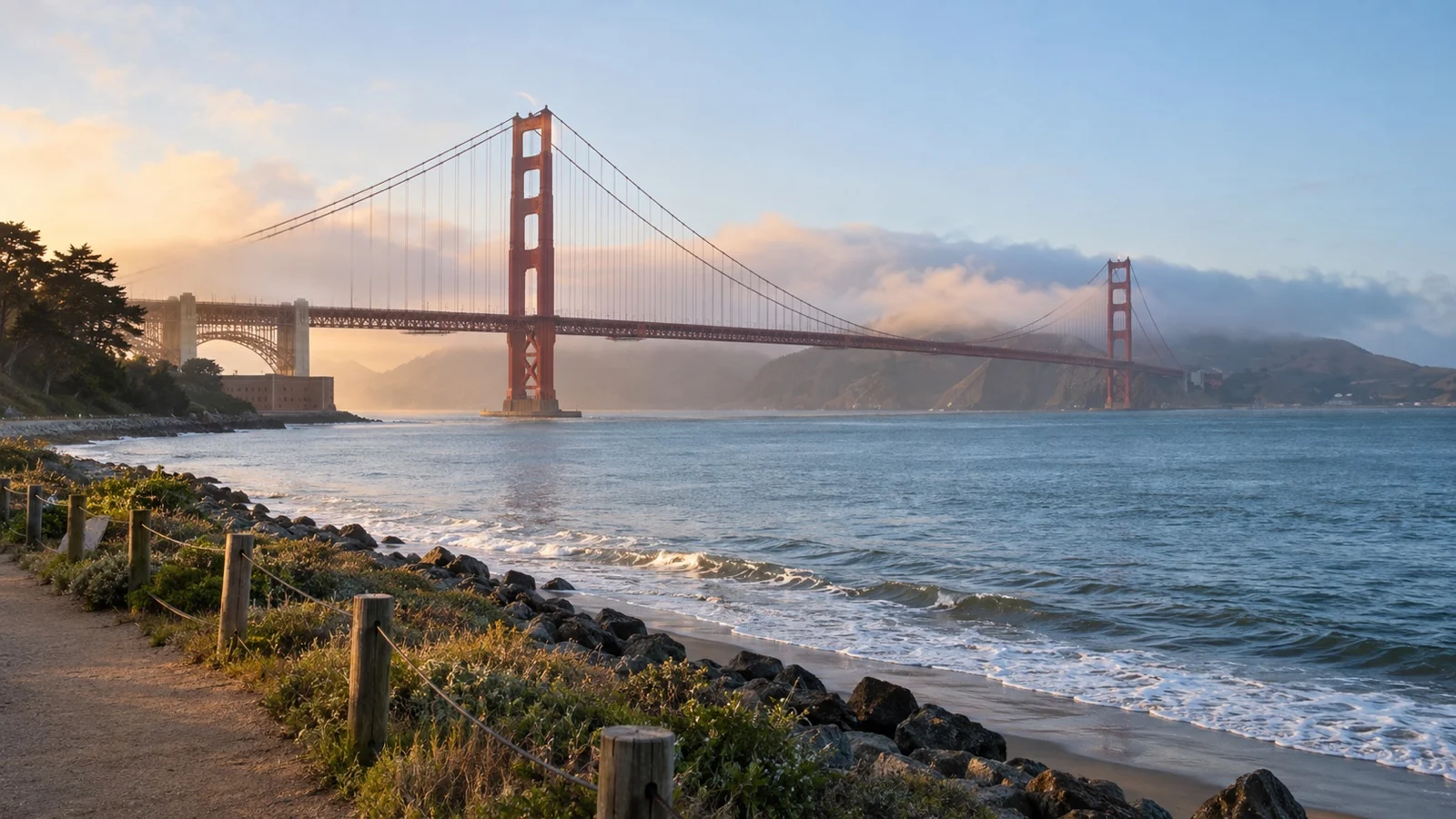
Pair a bridge viewpoint with the Presidio or waterfront at Crissy Field rather than bouncing back downtown between stops. San Francisco Travel’s official city highlights can help you choose one icon instead of collecting a frantic list.
Three realistic ways to use the day
About four hours: Walk north to Pier 39 and Fisherman’s Wharf, then return along the Embarcadero. This keeps transport simple and leaves a generous buffer for a short call.
About six hours: Reserve a morning Alcatraz departure, return to Pier 33, then add North Beach or the Ferry Building. Do not schedule the final island ferry option when your ship controls the deadline.
About eight hours: Choose either Alcatraz plus the northern waterfront, or the Golden Gate Bridge plus two central neighborhoods. Trying to combine every icon usually produces more windshield time than San Francisco magic.
For embarkation day, keep the plan smaller and leave luggage with your hotel or an established storage service that you have verified. I would not drag cruise bags onto historic transit or up Telegraph Hill in the name of efficiency.
Accessibility and slower-paced planning
The terminal drop-off at Pier 27 avoids a long approach with luggage, and the Embarcadero promenade is broad and mostly level. The difficult pieces are steeper neighborhood streets, variable gangway angles, crowded heritage vehicles, and attraction-specific surfaces.
Ask the cruise line about gangway assistance and your exact berth before disembarking. Use SFMTA’s trip planner for an accessible route, and verify elevators or boarding locations on the day because service conditions can change.
Alcatraz requires more planning because the island is steep, although the National Park Service publishes accessibility information and offers mobility support on the island. Confirm the current process when booking rather than assuming every part of the standard walking route will work.
Weather, layers, and the famous summer chill
San Francisco can feel cool, windy, and foggy even during the summer cruise season. Pack a light waterproof layer and something warmer than the forecast seems to deserve, especially for an open bay ferry or sailaway.
Autumn often brings clear, mild days, while winter is the wetter season. The waterfront can feel several degrees cooler than sheltered streets, so layers beat committing your entire day to one heroic jacket choice.
A calm word on safety
The main waterfront attractions are busy visitor areas, but normal city awareness still matters. Keep your phone secure in crowds, use licensed transport, and avoid leaving bags unattended while you negotiate maps or tickets.
If you park, take every valuable with you rather than hiding it inside the vehicle. The San Francisco Police Department specifically advises leaving nothing in a car, including items placed in the trunk after arrival.
Embarkation luggage, parking, and arrival timing
The Port of San Francisco states that the cruise terminals do not provide temporary or overnight parking and do not offer luggage storage. Reserve any off-site parking or luggage service directly, verify hours and vehicle access, and keep medicine and documents with you.
Pier 27 is about a 20-minute walk from Embarcadero BART and Muni without cruise luggage, according to the Port. A taxi or rideshare for the final segment is the friendlier choice with bags, limited mobility, children, or a tight check-in window.
Traffic, security, baggage drop, and terminal lines vary with events and ship size. Use the cruise line’s assigned arrival window and do not schedule Alcatraz or a distant attraction before embarkation unless the luggage and check-in plan is fully protected.
Quick answers
Where do cruise ships dock in San Francisco?
Most use the James R. Herman Cruise Terminal at Pier 27 on the Embarcadero. Pier 35 and Piers 30/32 can also handle passenger calls, so confirm the assigned pier in your cruise documents.
Can I walk into the city from Pier 27?
Yes, because the terminal is already on the central waterfront. The Port estimates about 20 minutes on foot to Embarcadero BART and Muni, with Pier 33, North Beach, and Fisherman’s Wharf in the other direction.
Is San Francisco a tender port?
No in normal operations. Cruise ships berth alongside and passengers leave by gangway, although any itinerary can change for operational or weather reasons.
How do I reach the cruise terminal from SFO?
Take BART from the airport to Embarcadero Station, then continue by taxi, rideshare, F streetcar, or a waterfront walk. With cruise luggage, the direct road transfer is easier even though rail avoids traffic for most of the trip.
Can I visit Alcatraz during a cruise call?
Yes, if the port call is long enough and you reserve an appropriate ferry from Pier 33 well in advance. Choose a return that leaves a substantial cushion before the ship’s last boarding time.
How this guide was researched: Consequential claims were checked against current official sources on September 10, 2026, including the Port of San Francisco, BART, SFMTA, the National Park Service, San Francisco Travel, and San Francisco Police Department. Sailing-specific operations, warnings, schedules, access, and prices can change, so confirm them directly before travel; see our Editorial Policy.