Cabrits Cruise Port (Portsmouth, Dominica): Berth and Tender Guide
Cabrits is Dominica’s wonderfully compact northern cruise gateway, where a historic fort, forested national park, broad bay, and river excursion all sit around Portsmouth. The catch is that your exact arrival may be alongside the small cruise berth or by tender, so the ship’s daily notice must shape the plan.
I would let northern Dominica be the destination instead of spending the day racing toward Roseau. Fort Shirley, the Indian River, Portsmouth, and a guided north-coast outing offer plenty of character with much less return risk.
Cabrits cruise port quick facts
- Location: Cabrits sits just north of Portsmouth on Dominica’s northwest coast, separate from the cruise facilities around Roseau.
- Arrival: Smaller ships may berth at the Cabrits cruise wharf, while larger vessels can anchor in Prince Rupert Bay and tender.
- Closest headline sight: Fort Shirley and Cabrits National Park are immediately beside the port area.
- Classic excursion: Local boatmen row visitors along the Indian River through coastal wetland near Portsmouth.
- Getting around: Prearranged taxis and certified tour operators are the practical choices beyond Cabrits.
- Currency: The Eastern Caribbean dollar is official, and United States dollars are commonly accepted in visitor transactions.
- Main caution: Rain, winding roads, small-boat transfers, and tender operations can all affect timing.
Cabrits is not Roseau
This guide covers the Cabrits cruise facility beside Portsmouth in the north of the Commonwealth of Dominica. It does not cover Portsmouth in England or the United States, and it does not describe the Roseau Cruise Ship Berth or Woodbridge Bay farther south.
Check the exact port name printed on your itinerary because the geography changes the entire day. Cabrits is an excellent base for northern sights, while a Roseau arrival is better positioned for attractions in the island’s central and southern regions.
Will your ship berth or tender?
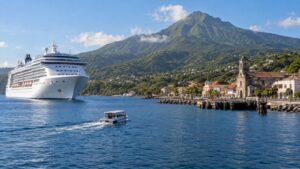
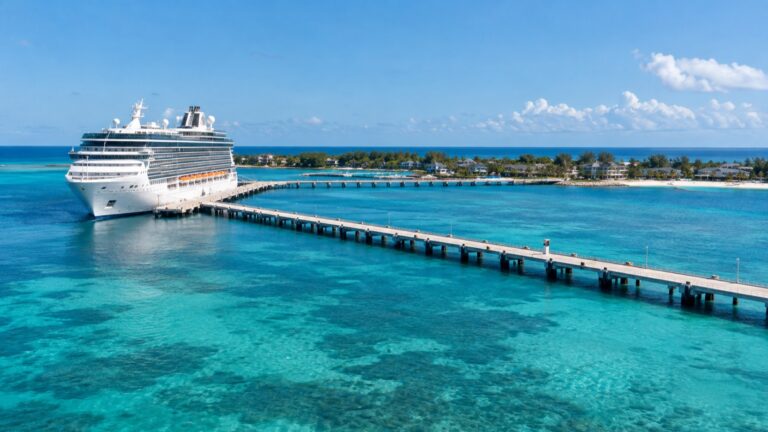
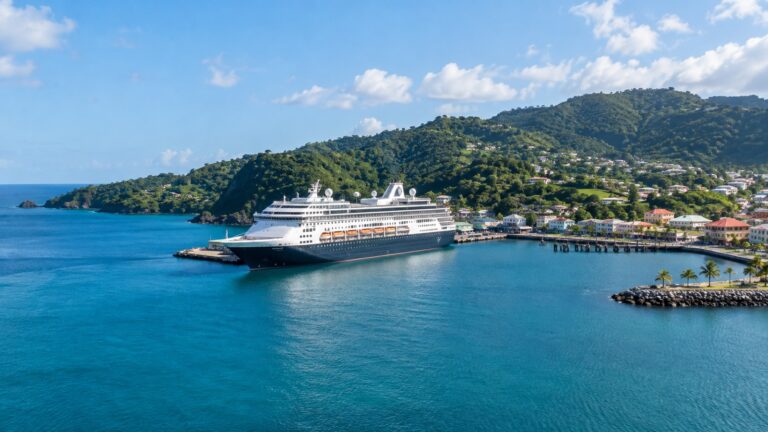
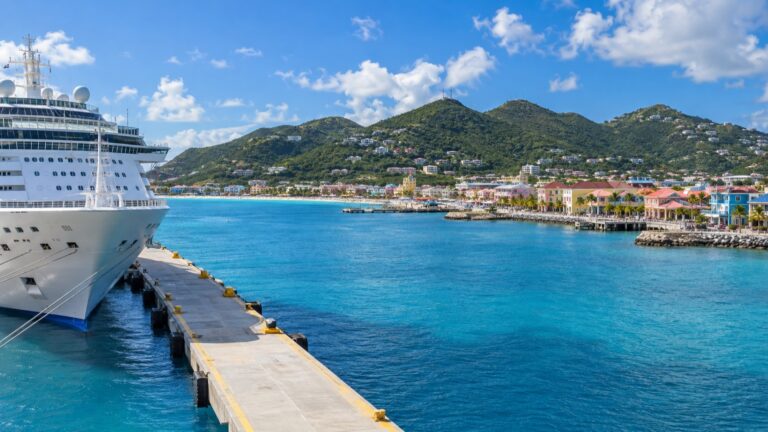
Cabrits has a dedicated cruise ship berth rather than only a beach landing. The Dominica Air and Sea Ports Authority describes a timber wharf with a T-shaped walkway inside Cabrits National Park, opened in April 1992.
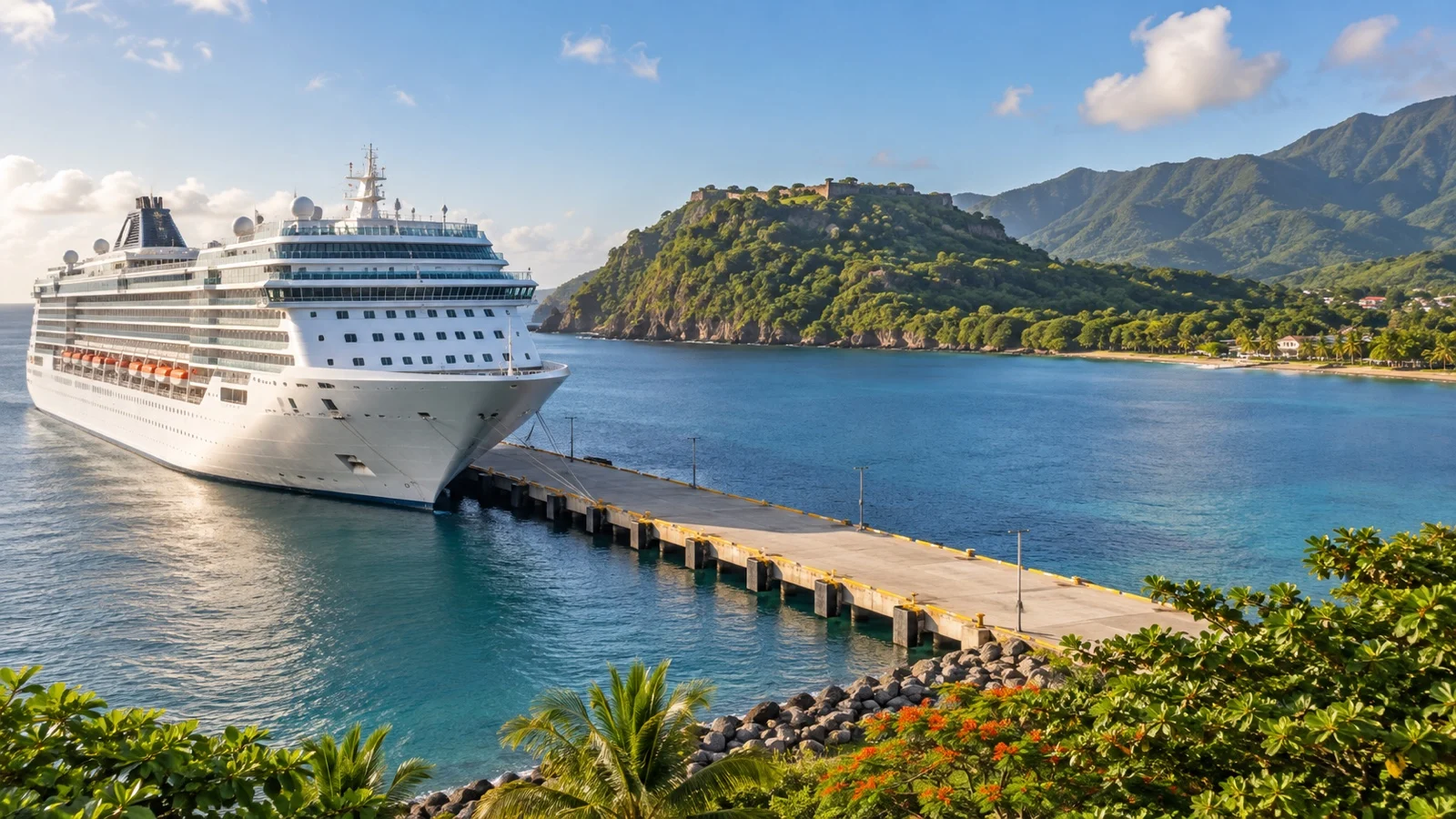
Small cruise and expedition vessels may berth alongside when size, schedule, and operating conditions allow. Larger ships can anchor in Prince Rupert Bay and tender passengers to the Cabrits landing, so Portsmouth on an itinerary does not guarantee a walk straight from gangway to park.
Your cruise line’s final notice decides the method and can override older port information. If an independent guide is meeting you, send the ship name and confirm whether pickup is at the berth, tender landing, or another controlled point.
A berth day is usually simpler, but you still need to follow security instructions and check the gangway location. A tender day requires extra time for tickets, loading, the boat ride, and the return queue.
Fort Shirley is the obvious first move
Fort Shirley rises within Cabrits National Park, making it one of the rare Caribbean headline sights that begins almost at the cruise landing. You can explore restored military buildings, scattered ruins, forest paths, and viewpoints over Prince Rupert Bay without committing to a long island drive.
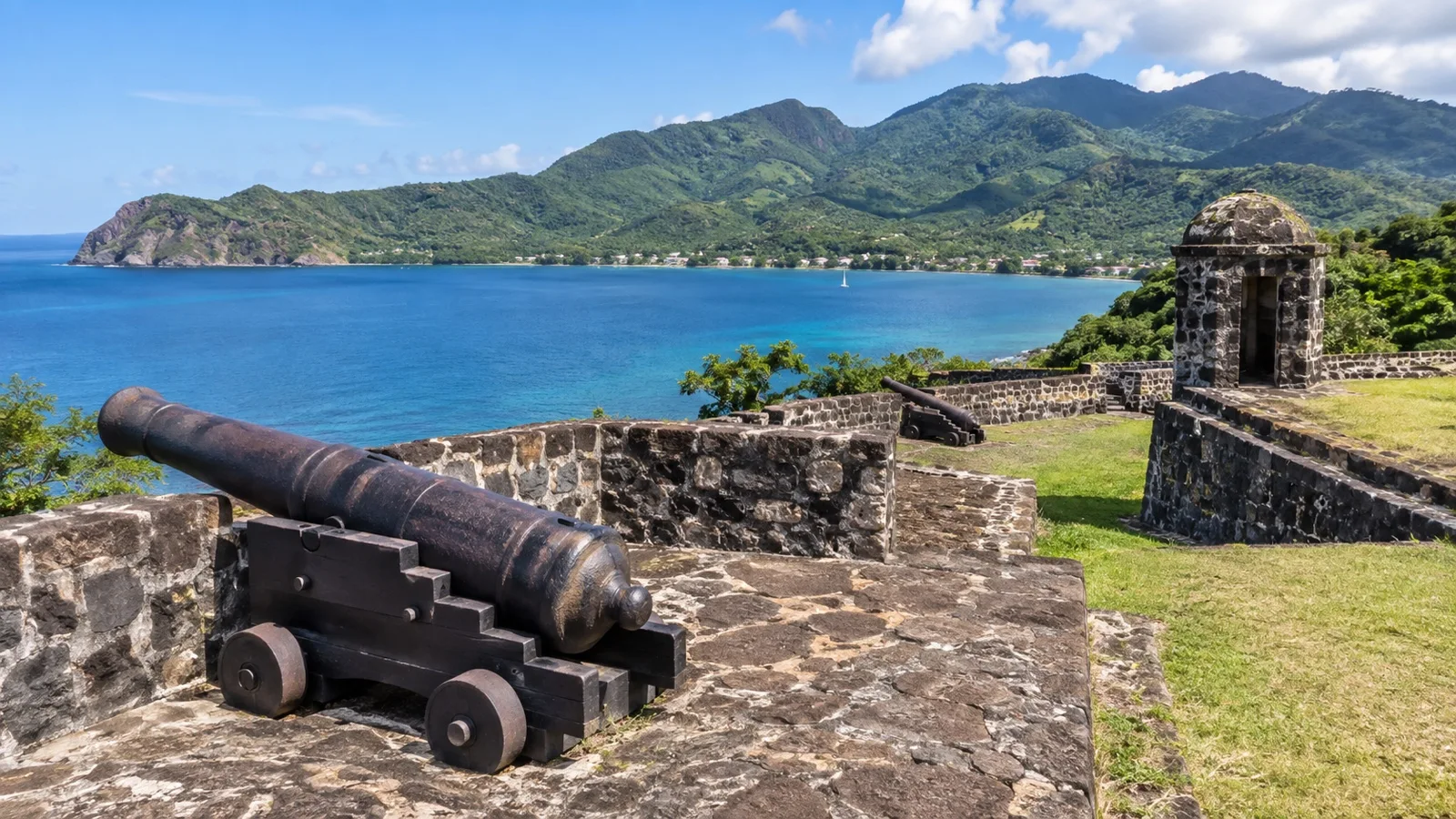
Discover Dominica describes Cabrits National Park as protecting tropical forest, wetlands, coral reefs, and the East and West Cabrit peaks. The park was established in 1986, and its land and marine environments deserve the same respect as its historic stonework.
Fort Shirley developed as a British military complex and is closely associated with an 1802 revolt by African soldiers of the West India Regiment. Read the site’s interpretation so the visit becomes a story about empire, resistance, labor, and the island rather than a collection of photogenic cannons.
How demanding is the visit?
The route can include slopes, uneven stone, roots, steps, and exposed sections. Tropical humidity and sudden rain can make a modest distance feel strenuous, especially when surfaces become slick.
Start early, carry water, wear shoes with real traction, and turn around before fatigue becomes the day’s organizing principle. Ask on arrival which areas are open and whether any path is affected by maintenance or weather.
Travelers with limited mobility should not assume that being close to the port means step-free access. Request current details about gradients, surfaces, seating, restrooms, and how far the vehicle drop-off sits from the restored areas.
The Indian River moves at a different speed
The Indian River flows through brackish coastal wetland near Portsmouth under tangled roots and a green canopy. Its signature experience is a quiet rowboat outing led by a local boatman, which protects the atmosphere from engine noise and creates space for interpretation.
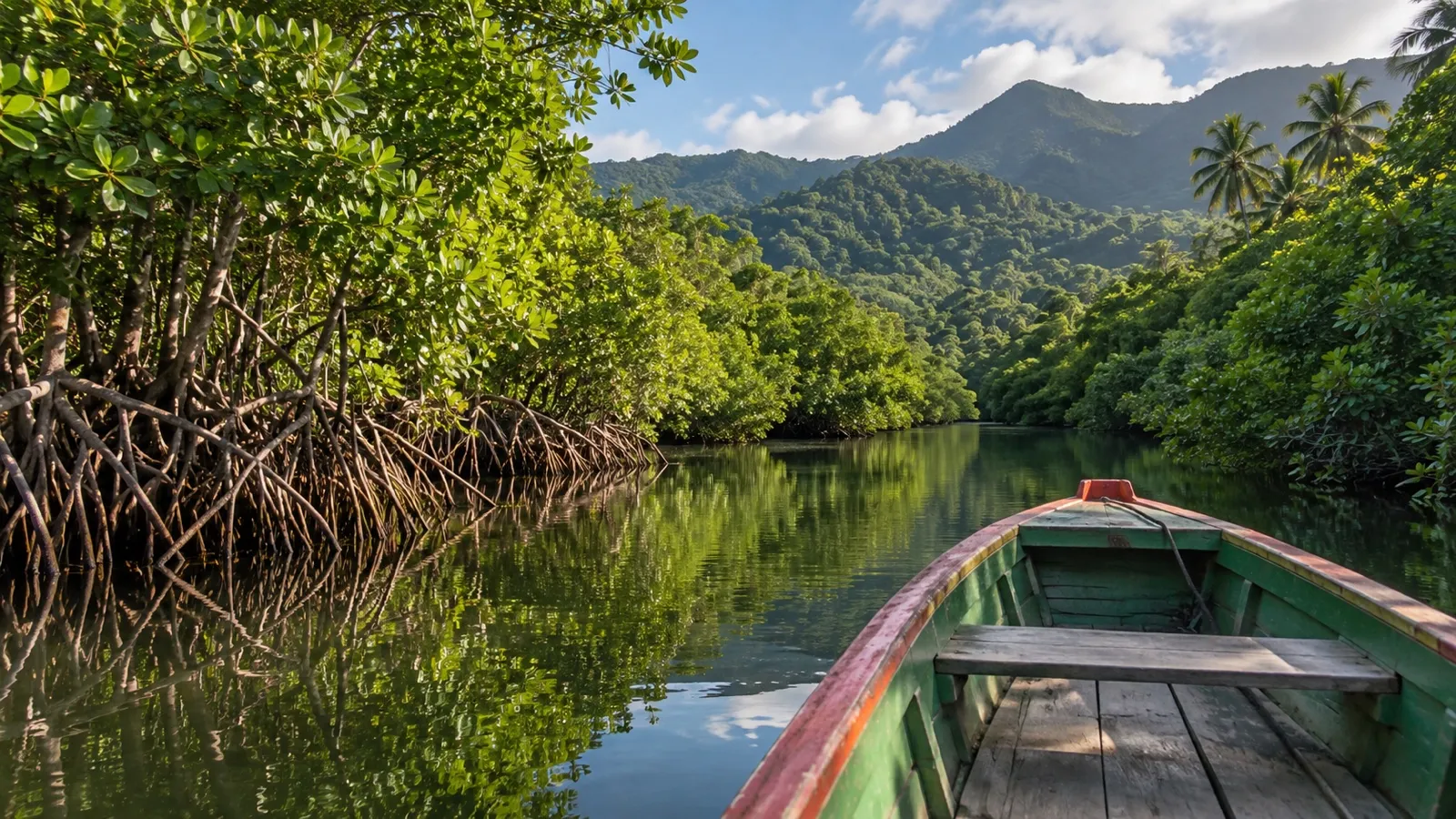
A good guide explains plants, river ecology, local history, and the relationship between the wetland and nearby communities. Wildlife sightings vary, so enjoy crabs, birds, fish, and forest details without treating any species as guaranteed.
Movie fans may recognize the area from its association with a Pirates of the Caribbean production. The real river, its working guides, and its ecology are more interesting than reenacting a film scene.
Planning the boat transfer
The outing still requires stepping down into and climbing out of a small boat. Ask about the dock, boarding height, life jackets, seating, shade, rain cover, trip length, and assistance before paying.
Reach the river with a prearranged taxi or organized excursion from Cabrits. Confirm whether transport, site access, boat fee, refreshments, and gratuity are included, then save the return contact offline.
Use a certified provider and never pressure a boatman to hurry dangerously because your schedule was unrealistic. Discover Dominica maintains a tour and taxi operator directory, while warning that certification status can change after publication, so reconfirm directly.
What to expect in Portsmouth
Portsmouth is a working Dominican town curving around Prince Rupert Bay rather than a purpose-built cruise village. Its appeal lies in local shops, small restaurants, everyday street life, the waterfront, and its role as the service center for northern Dominica.
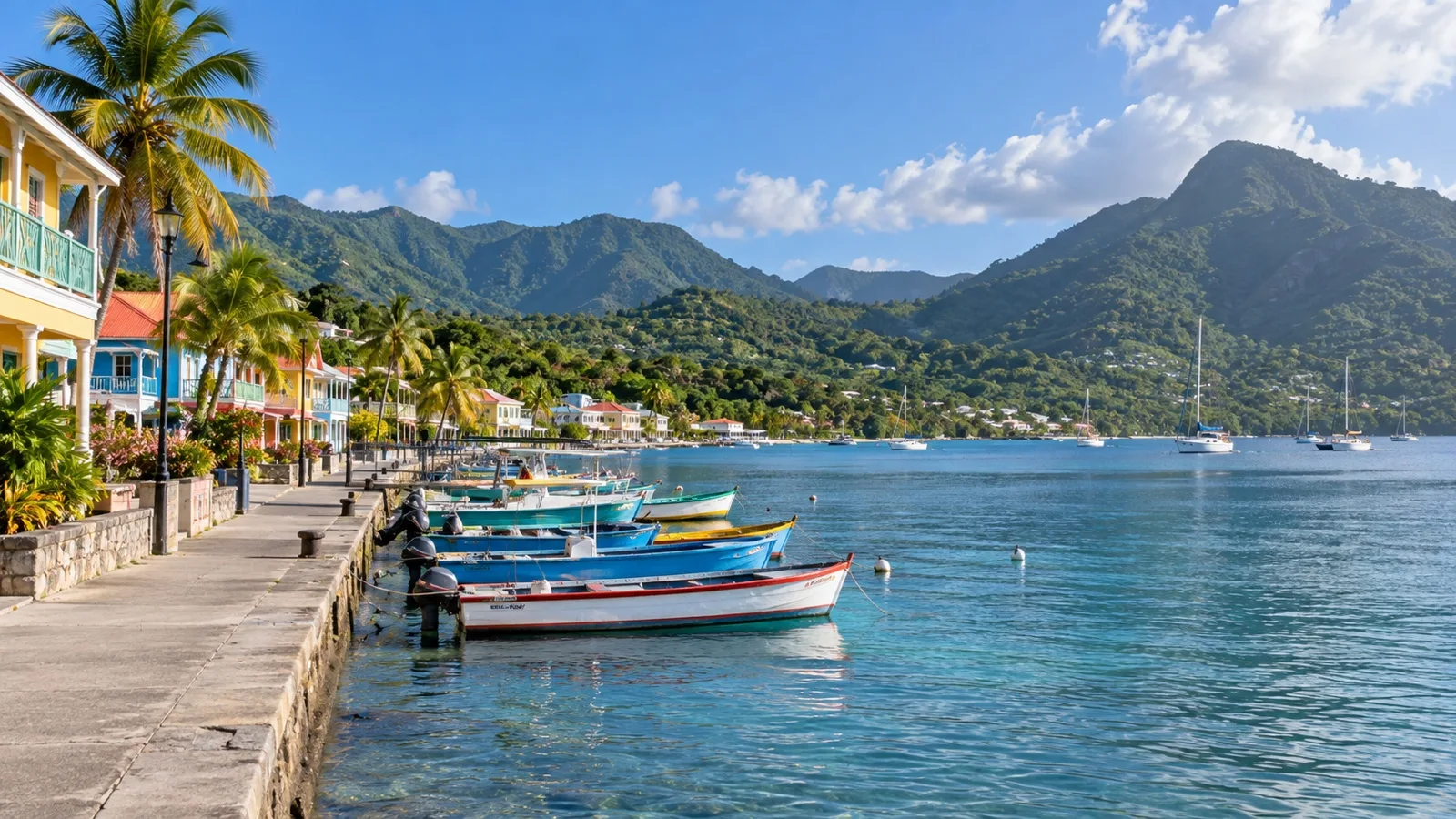
A taxi is practical for moving between Cabrits, the Indian River, town, and beach areas. Agree on the currency, fare, stops, waiting time, and exact pickup location before departure.
Walking from Cabrits toward town can look straightforward on a map, but heat, road edges, traffic, rain, and your exact destination matter. Unless you have confirmed a safe pedestrian route, save energy and use an established driver.
Food and markets
Look for local fish, stewed dishes, plantain, provisions, fresh juice, and Dominican flavors at a busy, reputable place. Ask what is available that day, since a concise menu can be a sign that the kitchen cooks what is fresh.
Carry small bills and confirm prices before ordering when no menu is posted. Leave time for relaxed service because island lunch and a nervous countdown do not improve one another.
Beaches and the bay
Prince Rupert Bay gives Portsmouth its sweeping waterfront setting, with dark volcanic sand and calm-looking water on many days. Conditions can still change with wind, rainfall, currents, runoff, and boat traffic.
Ask locally where swimming is currently recommended and obey posted guidance. Keep valuables attended, use reef-conscious sun protection, and wear water shoes when the shoreline is pebbly or the entry is uneven.
A beach stop works best after Fort Shirley or the Indian River rather than as a distant mission. Choose a known drop-off and prearrange the return because taxis may not circulate constantly on quiet stretches.
Northern nature beyond Cabrits
Dominica earns its Nature Island nickname through steep green terrain, rivers, waterfalls, marine life, and dense forest. From Cabrits, a certified guide can build a northern route that fits your ship rather than copying an itinerary designed for a Roseau departure.
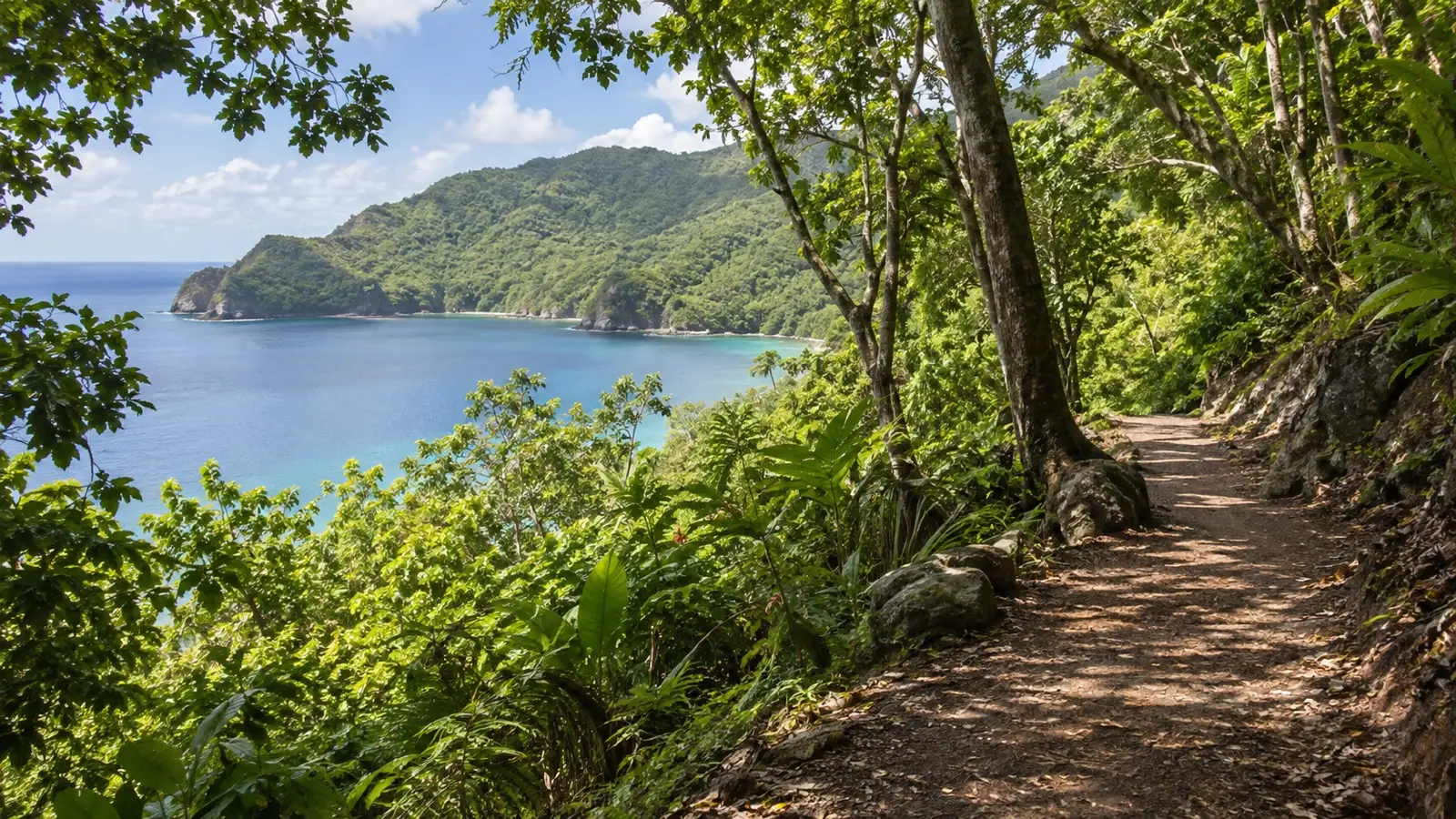
Ask for exact drive time, walking difficulty, water crossings, changing facilities, and the last safe departure from the final stop. Winding roads make mileage a poor predictor, and heavy rain can alter both road and trail conditions.
A waterfall or rainforest visit is not automatically easy because a brochure uses the word scenic. Confirm stairs, rocks, mud, current, and swimming requirements, and decline any route that exceeds your balance or fitness.
Diving and snorkeling
Cabrits National Park includes protected marine environments, and Portsmouth has established water-sports operators. Discover Dominica’s official directory lists providers in the Portsmouth area, but current certification, schedules, equipment, and medical requirements need direct confirmation.
For diving, disclose medical conditions and certification honestly and review the operator’s cancellation policy. For snorkeling, ask about boat entry, current, flotation devices, supervision, and whether conditions suit beginners.
Why Roseau is usually the wrong plan
The port authority places Cabrits roughly 32 road miles north of Roseau, and Dominica’s roads twist through mountainous terrain. A trip south can consume a large portion of the call before you begin sightseeing.
Many famous attractions promoted from Roseau sit beyond the capital, making the return even more demanding. Unless your ship offers and protects the excursion, choose northern places that match the port you actually have.
Travelers determined to go south should use a reputable operator, set a firm turnaround time, and avoid stacking several remote stops. The island is too beautiful to experience entirely through a windshield while worrying about all-aboard.
Accessibility and mobility planning
The biggest accessibility question is whether your ship berths or tenders. A wheelchair or scooter that works on the wharf may not be accepted on a tender when sea conditions, lifting rules, or vessel design make transfer unsafe.
Ask the cruise line before sailing about mobility devices, tender boarding, manual transfers, companion assistance, and what happens if conditions change. Written confirmation is more useful than a general statement that the port is accessible.
On shore, verify vehicle steps, storage for mobility equipment, securement, trail surfaces, restrooms, and seating. Indian River boats and Fort Shirley paths each create different challenges, so an honest provider should describe them separately.
Rain is part of the landscape
Dominica is lush because rain is frequent, and a blue morning does not promise a dry afternoon. Pack a breathable rain layer, protect electronics and documents, and wear quick-drying clothes with grippy shoes.
Heavy rain can raise rivers, make trails slick, reduce visibility, and affect roads. Follow closures and guide instructions immediately, even when another group appears to continue.
The wet season and Atlantic hurricane season deserve extra flexibility, but downpours can occur at any time. Check the National Hurricane Center, local authorities, and ship updates close to arrival when tropical weather is active.
Sun, heat, and insects
Cloud cover does not eliminate ultraviolet exposure, and humidity increases the effort of a climb. Carry water, use sun protection, and pace Fort Shirley or forest walks more slowly than you would in a cooler climate.
Mosquitoes and other insects are part of a tropical environment. Use repellent suitable for your health needs, cover exposed skin on forest outings, and follow current public health advice from official sources.
Money, language, and connectivity
The Eastern Caribbean dollar is Dominica’s official currency, and United States dollars are commonly accepted in visitor-facing transactions. Ask which currency a quoted price uses, carry small notes, and expect change to be given in local money.
Cards may work at established businesses, but small operators and temporary connectivity make cash useful. Keep a backup payment method without carrying more than you need.
English is the official language, and Dominican Creole is also part of daily life and culture. Courtesy matters more than fluency, so greet people before launching into a price negotiation.
Mobile coverage can weaken away from town and along forested roads. Download maps, tickets, and contact details before departure, then keep the ship name and port location on a screenshot.
Entry rules and the electronic form
Discover Dominica’s official travel site states that travelers complete an electronic immigration form in advance, but cruise-line group procedures may affect what an individual passenger must do. Follow the cruise line’s instructions for your exact sailing rather than submitting duplicate information on assumption.
The destination’s official entry page says cruise passengers staying less than 24 hours generally do not need a visa, while also warning that regulations can change. Nationality, passport status, and the full itinerary matter, so verify with the cruise line and Dominica’s immigration authorities.
Carry the identification and ship card specified in the daily program. Protect them from rain and river spray, and keep a separate copy of essential details.
Safety and responsible travel
Use drivers and guides from the ship, port, accommodation, or Discover Dominica’s certified directory, then reconfirm credentials. Do not enter an unmarked vehicle simply because someone knows the ship’s name.
Keep valuables discreet, agree on costs before leaving, and remain aware around road traffic and waterfront edges. If local authorities or port staff advise avoiding a route, change the plan without relying on an older article.
At natural sites, stay on established paths, avoid feeding wildlife, and carry out every item you bring. Reef, river, wetland, and forest ecosystems are the reason visitors come, not expendable backdrops for a photograph.
Return timing for berth and tender days
On a berth day, return early enough for the walk or drive to Cabrits, security, and any gangway line. The ship’s all-aboard time remains absolute even when the attraction appears close enough to see from the deck.
On a tender day, add time for the shore queue, small-boat loading, and the ride across Prince Rupert Bay. Wind or a passing squall can slow the entire process without changing the published last tender.
I prefer to be back in the immediate port area 60 to 90 minutes before the stated cutoff after an independent trip, with more margin for a distant nature outing. This is a planning preference, and the cruise line’s official deadline always controls.
Four realistic Cabrits cruise-day plans
Fort Shirley focus
Explore the fort and national park at an unhurried pace, then return near the landing for a drink or short bay view. This is the most resilient plan for a short call or uncertain tender morning.
Fort and Indian River
Visit Fort Shirley early, then use prearranged transport for a timed Indian River rowboat tour. Return directly to Cabrits instead of adding a remote waterfall or a long lunch.
Portsmouth and the bay
Arrange a taxi into Portsmouth, browse locally, enjoy a Dominican meal, and add a recommended beach stop if conditions are suitable. Confirm the return pickup before the driver leaves.
Guided northern nature day
Book a certified operator for one northern waterfall, forest, or coastal experience with clear difficulty and timing. Keep a weatherproof backup at Fort Shirley in case rain closes the main route.
Common planning mistakes
The first mistake is assuming every Portsmouth call arrives the same way. Verify berth or tender operations before promising an independent guide a precise meeting time.
The second is treating Roseau as a quick add-on. Road distance, winding terrain, and attractions beyond the capital can turn a northern port day into a risky transfer.
The third is underestimating rain because the ship arrived under blue sky. Carry protection and accept that natural-site closures are safety decisions.
The fourth is making wildlife sightings the measure of an Indian River or forest trip. A respectful guide offers ecology, culture, and atmosphere even when animals remain hidden.
Cabrits cruise port FAQ
Do cruise ships dock at Cabrits?
Some smaller vessels can berth at the dedicated cruise wharf. Larger ships may anchor in Prince Rupert Bay and tender, so check the cruise line’s final notice.
Can I walk to Fort Shirley?
Fort Shirley is inside Cabrits National Park beside the port area, making it the closest major attraction. The route still includes slopes and uneven surfaces, so ask about the current path and mobility demands.
How far is Portsmouth?
Portsmouth lies just south of Cabrits around Prince Rupert Bay and is reached quickly by vehicle in normal conditions. The usefulness of walking depends on heat, traffic, road edges, and your exact destination.
Is the Indian River suitable for everyone?
The rowboat experience is gentle once seated, but boarding a small craft can be difficult. Ask the operator to describe the dock, steps, boat stability, and available assistance.
Can I visit Roseau from Cabrits?
It is possible by road, but the journey is long enough to dominate a cruise call and famous southern sights lie farther still. A ship-sponsored trip is the safer choice if Roseau is essential.
How early should I return?
Follow the ship’s exact all-aboard or last-tender time and build a large buffer after independent travel. Rain, winding roads, tender queues, and vehicle availability can all slow the final hour.
My bottom line on Cabrits
Cabrits offers a rare port-day luxury: a meaningful historic site immediately beside a beautiful natural setting. Add the Indian River or one guided northern outing, and you have a full Dominica day without chasing the island’s most distant postcard.
Confirm berth or tender, hire established local professionals, carry rain protection, and return early. Those simple choices let Portsmouth and northern Dominica feel adventurous without making the schedule reckless.
Keep planning your Dominica cruise
Continue with our guides to Roseau cruise port, Dominica cruise ports, and how tendering changes your time ashore. Recheck the ship’s daily program after arrival because tender operations, landing points, and final boarding can change.