Constanța Cruise Port: Roman Ruins on Romania’s Black Sea Coast
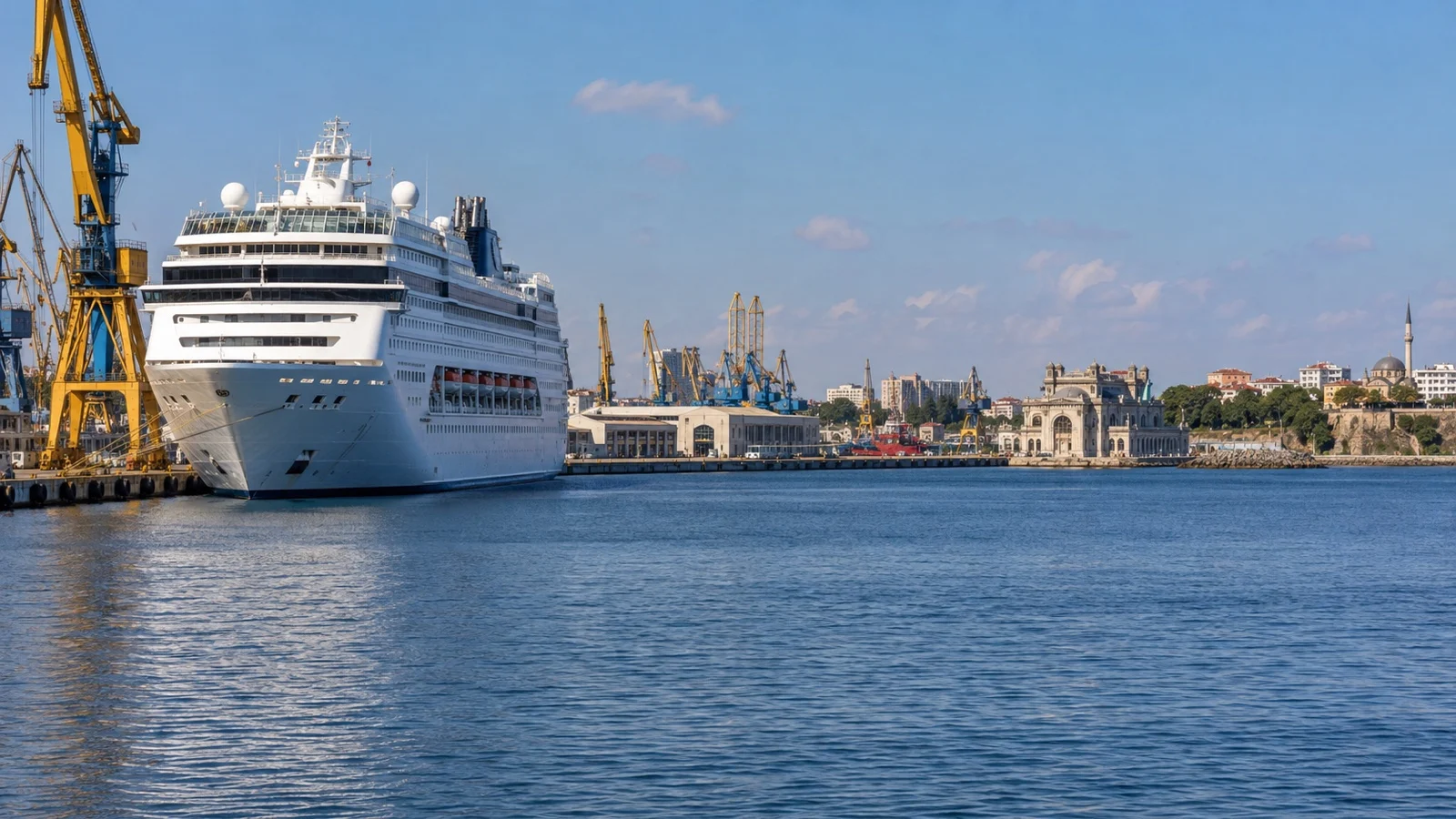
Constanța gives you something rare in a working Black Sea port: a compact historic peninsula where Roman archaeology, Ovid Square, religious landmarks, and a restored Art Nouveau casino can fit into one sensible day. The part that needs the most attention is not the sightseeing but the route from your ship through the commercial port.
Stay in the city for a normal call and you can build a satisfying day without spending hours in traffic. Mamaia, Histria, Adamclisi, and Bucharest are alternatives for longer calls, not automatic additions.
My quick take
For a first visit, I would center the day on the Roman Mosaic Edifice and the Constanța Casino. Connect them with a walk through Ovid Square and the old peninsula, then add one smaller stop if time remains.
The city rewards focus more than speed. Trying to combine Roman sites outside town, a beach session, and the old center usually turns the day into a transportation exercise.
Do not make assumptions about the berth based on another traveler’s report. The Port of Constanța is enormous, and your ship’s instructions for the passenger exit, shuttle, or taxi point matter more than a general map pin.
Constanța quick facts
- Port type: A large commercial port with passenger facilities, not a cruise-only waterfront.
- Arrival logistics: Confirm the assigned berth, approved exit, and any internal shuttle onboard.
- Best first-day plan: Roman Mosaic Edifice, Ovid Square, the old peninsula, and the restored casino.
- Currency: Romanian leu, abbreviated RON, with cards useful and some local cash sensible.
- Time zone: Eastern European Time, UTC+2 in winter and UTC+3 during daylight saving time.
- Best beach option: Mamaia in warm weather when seasonal businesses and transport are running.
- Main caution: Leave a large return buffer for any trip beyond central Constanța.
Where ships dock
The Port of Constanța handles cargo, ferries, and passenger traffic across a vast harbor complex. That scale is the reason a statement such as “the ship docks near town” is not precise enough for planning.
Cruise calls may use passenger facilities in the northern port, but the exact operational arrangement can vary. Your daily program should identify whether you walk to a controlled gate, take an internal transfer, or meet transportation at a designated point.
Carry your cruise card and any identification required by the ship. Photograph the gate name, shuttle stop, or pickup instructions before you leave because a driver needs more than the port’s general name.
If a shuttle is compulsory, ask when the final return leaves and whether it can accommodate a wheelchair or scooter. The public sightseeing plan only starts after you understand this internal port leg.
Walking into the historic center
Once you are outside the controlled port area near the old peninsula, several major sights form a practical walking cluster. Ovid Square, the Roman Mosaic Edifice, the cathedral, the Great Mosque, the seafront, and the casino are close enough to combine without a vehicle.
Short map distances do not guarantee effortless walking. Expect curbs, uneven paving, slopes, street work, and older entrances that can slow anyone with limited mobility.
A taxi can be useful from the passenger exit or for the return, but enter the exact gate or ship pickup point in the app. Confirm that the driver understands the destination before the trip starts.
Constanța’s CT BUS network serves Poarta 1, and the operator currently lists routes 44, 51, and 101 among the services connected with that port gate. Routes change, so use the live operator information rather than copying an old route number into your plan.
Roman Tomis in a modern city
Constanța grew over ancient Tomis, a Greek settlement that later became part of the Roman world. Archaeology appears among modern streets and buildings, which makes the history feel woven into the city rather than isolated in one fenced ruin field.
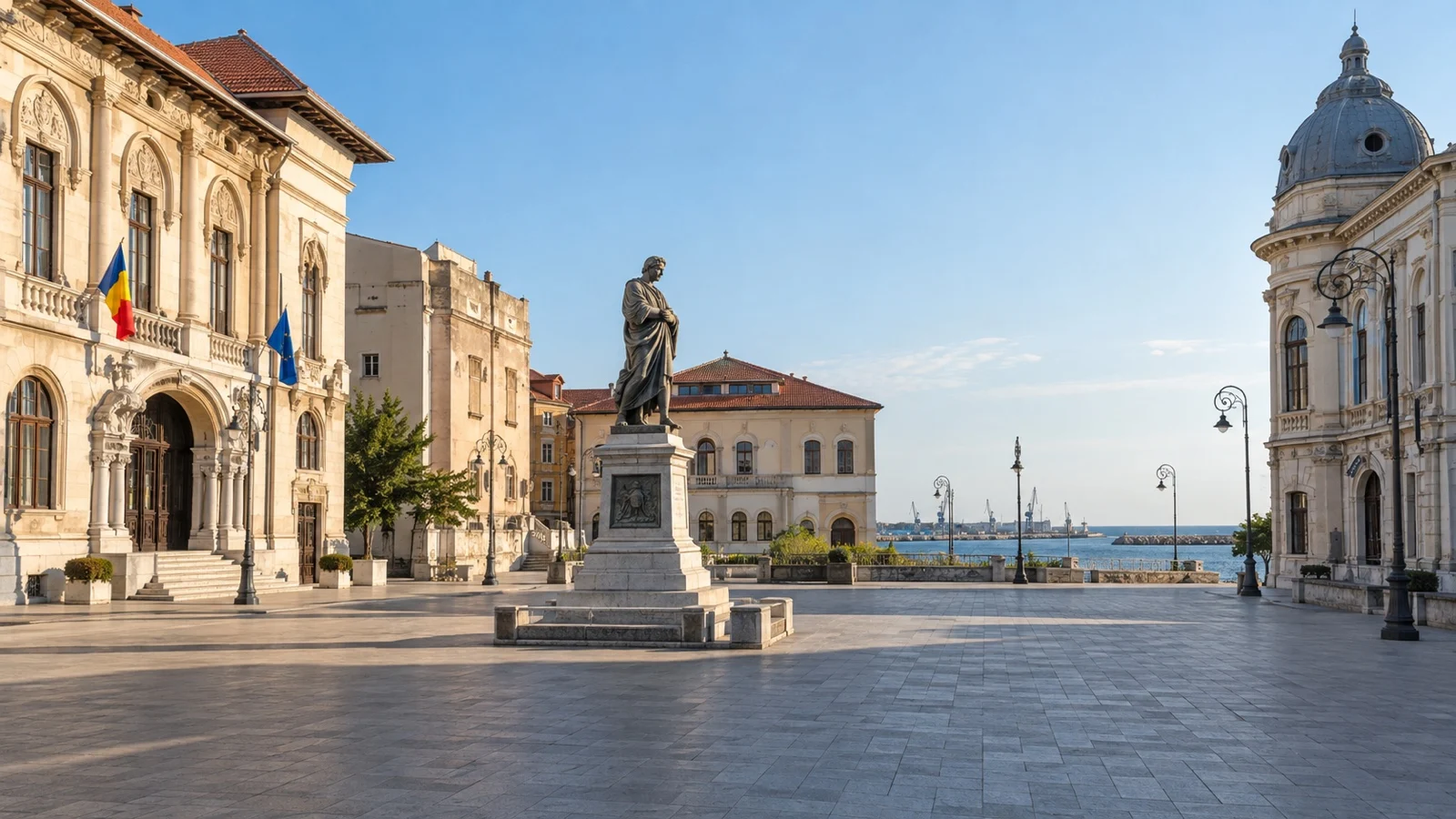
The Roman poet Ovid was exiled to Tomis, and his statue faces the square that carries his name. The square is an easy orientation point for the historic peninsula and the nearby museum sites.
Roman Mosaic Edifice
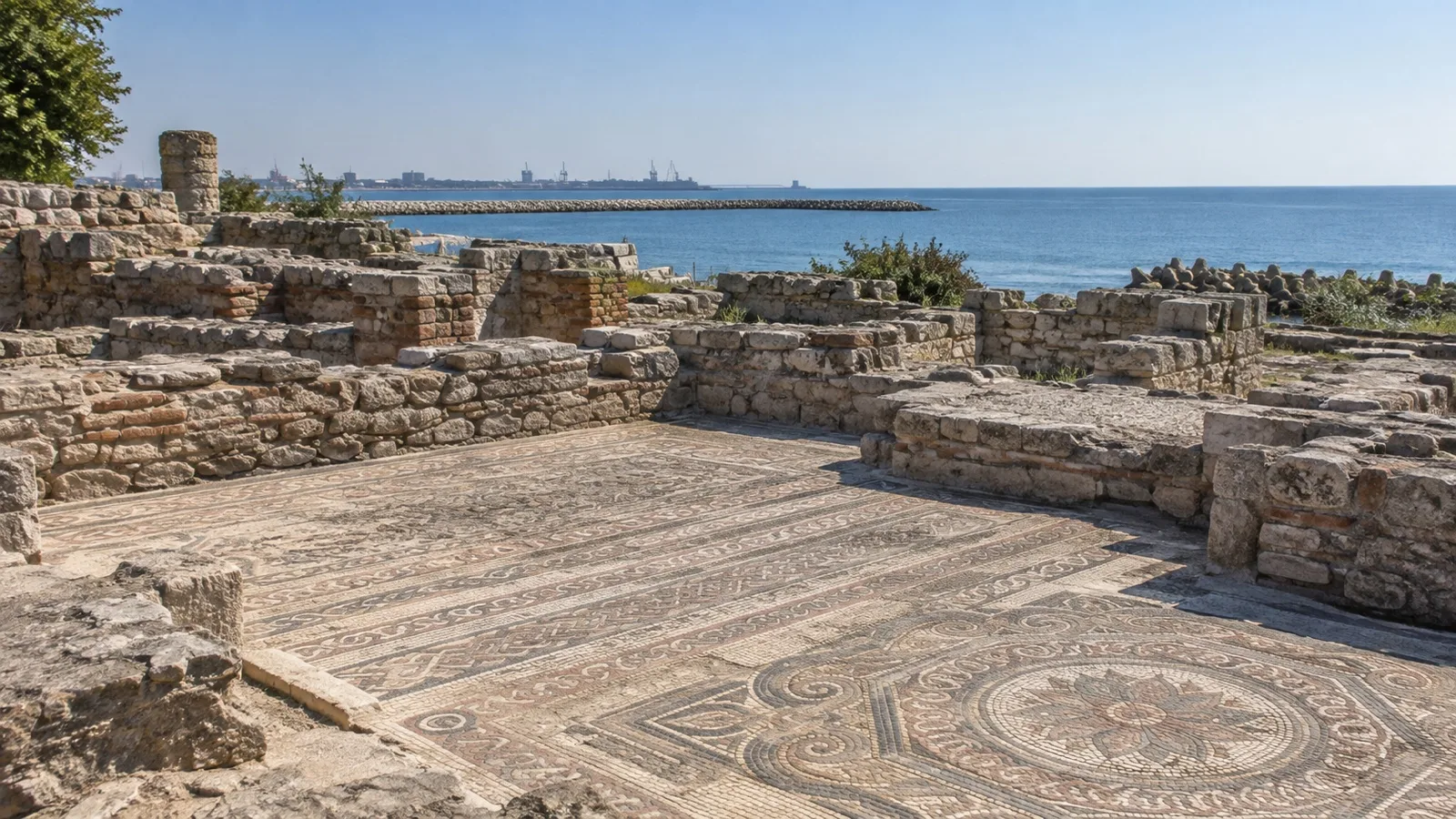
The Roman Mosaic Edifice is the archaeological anchor for a port day. Its surviving pavement belonged to a large terraced commercial complex overlooking the ancient harbor, making the connection between trade and the city’s waterfront unusually clear.
The official MINAC schedule and fare page currently lists the site open Wednesday through Sunday from 09:00 to 19:00. The published adult price is 25 lei, but hours and tickets should be checked again for your date.
If your call falls on Monday or Tuesday, do not assume you can talk your way into the building. Use the outdoor peninsula route and casino as the core of the day, then check whether the Painted Tomb is available.
National History and Archaeology Museum
Older guides often make the main archaeology museum in Ovid Square sound like a guaranteed stop. MINAC currently marks that museum building temporarily closed for rehabilitation, so it should not be the foundation of your itinerary.
The closure does not make Ovid Square skippable. It remains useful for orientation, architecture, the Ovid statue, and access to the mosaic and peninsula streets.
Painted Tomb of Tomis
The Painted Tomb is a late Roman funerary monument with rare surviving wall paintings. MINAC currently lists daily hours from 09:00 to 19:00 at its location on Mircea cel Bătrân Street.
This site is not directly beside the mosaic, so pin the official location before you start walking. Archaeology fans will value it most, while casual visitors may prefer to spend that time on the seafront.
The restored Constanța Casino
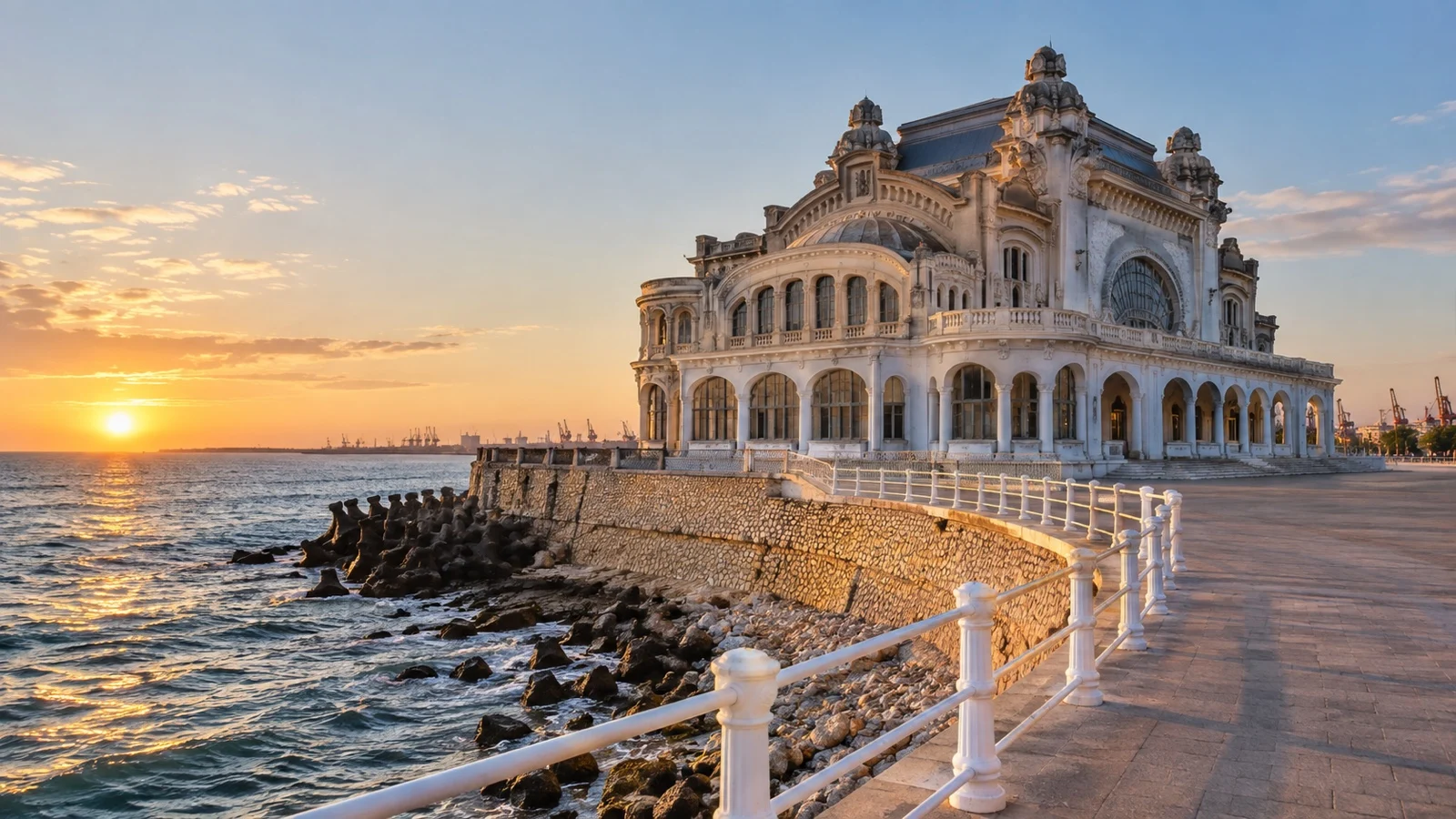
The long era of treating the casino as a scaffolded exterior photo stop is over. The restored building now operates as a cultural venue with exhibitions, events, and public visiting hours rather than as a gambling casino.
The official casino site currently lists regular hours Tuesday through Sunday from 10:00 to 20:00, with Monday closed. It also posts temporary closures for events and installation work, which is why checking the notice banner matters.
A timed ticket can make the interior visit easier to plan, but leave flexibility if the venue changes access. Even when the building is closed, its seafront setting and elaborate Art Nouveau exterior make it a strong endpoint for the peninsula walk.
The promenade can be exposed to wind and sun, so the conditions may feel different from sheltered streets near Ovid Square. Give yourself a few minutes to enjoy the sea rather than treating the casino as a quick photograph.
A practical old-town route
Begin at Ovid Square and confirm the current status of the museum complex. Walk to the Roman Mosaic Edifice first if it is open because fixed admission hours are less flexible than an outdoor stroll.
Continue through the peninsula toward the Cathedral of Saints Peter and Paul. The Great Mosque of Constanța is another worthwhile stop nearby when visitor access fits around worship.
Dress respectfully at active religious buildings and ask before entering restricted areas. Minaret access at the mosque can change, so do not promise yourself the climb until staff confirm it.
Finish along the seafront at the Genoese Lighthouse and casino, then retrace the approved route or call a taxi to the exact port pickup. This sequence keeps the most time-sensitive indoor visit near the beginning and the outdoor sights flexible.
If you have extra time, add the Painted Tomb or a relaxed meal, not both by default. A focused route leaves room for ticket lines, photography, and the internal port transfer.
Mamaia beach
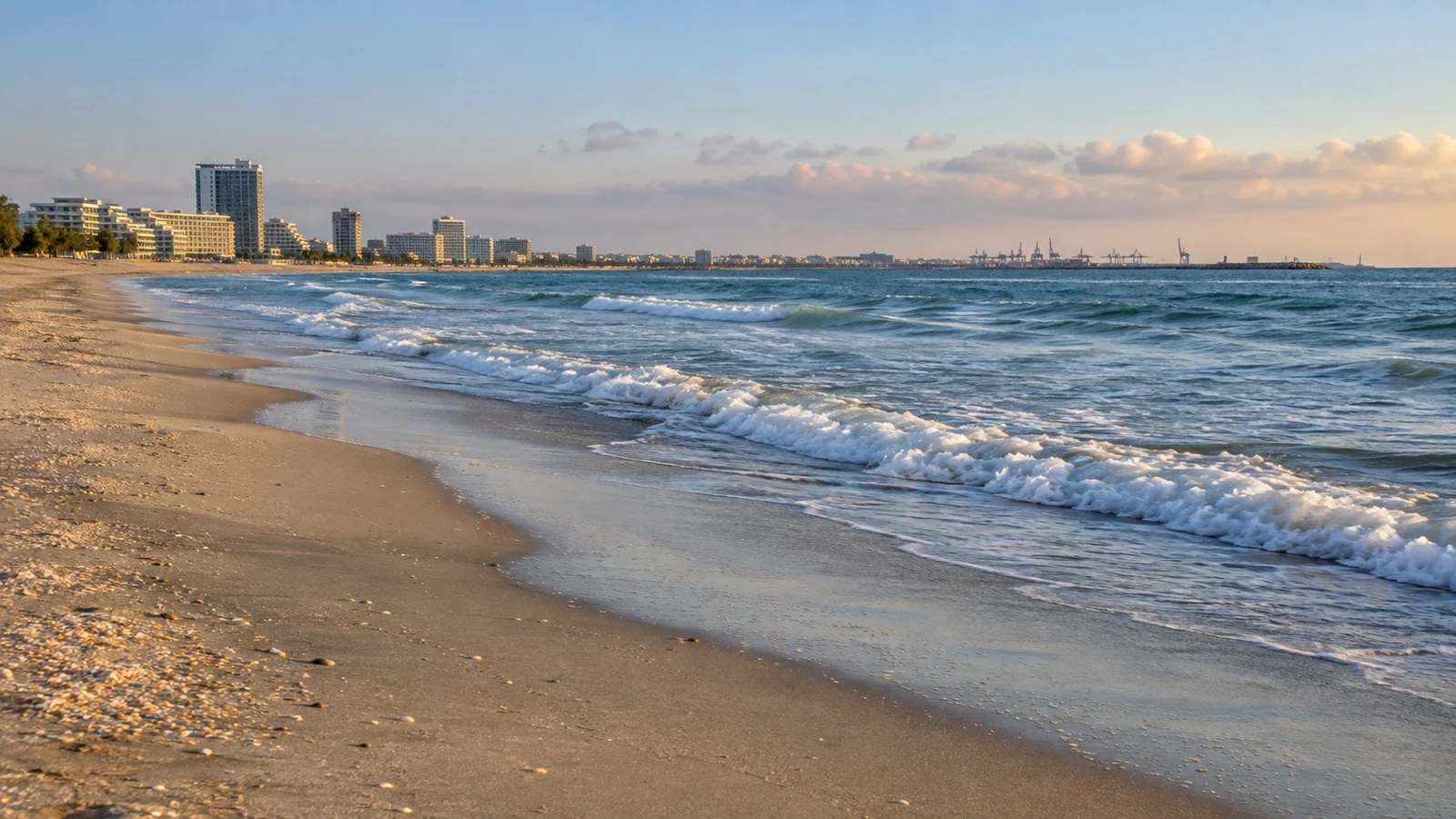
Mamaia runs along the narrow strip between the Black Sea and Lake Siutghiol north of central Constanța. It is the obvious beach alternative during warm weather, especially for passengers who care more about sand and swimming than Roman history.
Seasonal businesses, traffic, and transit patterns can change the experience dramatically. CT BUS currently shows route changes affecting older Mamaia services, so use the live planner instead of relying on a remembered sightseeing-bus number.
A taxi is often simpler for a small group, but confirm the return method before settling on the beach. Rides that are easy to find in the city center may be less predictable at the exact time you need to leave.
Do not combine a full beach session with an ambitious archaeological itinerary unless your call is long. Pick the kind of day you actually want and leave enough time to return through the port.
Roman sites outside Constanța
Tropaeum Traiani at Adamclisi
Adamclisi combines a reconstructed triumphal monument, a museum, and remains of the Roman settlement associated with Tropaeum Traiani. MINAC gives the road distance from Constanța as about 63 kilometers, so this is a tour or driver outing rather than an add-on to a casual walk.
The official schedule currently lists daily opening from 09:00 to 19:00 for the museum complex, but confirm the monument, museum, and archaeological site separately. A driver who waits is much safer than hoping to arrange the return after sightseeing.
Histria
Histria began as a Greek city and later developed through Roman and Byzantine periods near Lake Sinoe. Its archaeological site and museum reward travelers who want a deeper ancient-history day beyond modern Constanța.
Treat Histria as the main excursion rather than one stop among several. Confirm current MINAC hours and secure round-trip transportation before leaving the port.
Trying to combine Histria and Adamclisi in one ordinary call creates too much road time. Choose one direction and preserve a substantial return margin.
Is Bucharest realistic?
Bucharest is far enough from Constanța that the round trip can dominate the entire port day. Road traffic, transfers, and the distance between capital-city sights all reduce the time you expected to spend exploring.
Consider it only for a long call or overnight with a protected transportation plan. A ship excursion lowers the coordination risk, but it cannot make the travel distance disappear.
Romanian Railways publishes schedules and tickets through CFR Călători. An independent rail plan still needs reliable transport between the ship, Constanța station, Bucharest station, and every sight on your route.
For most cruise passengers, staying in Constanța produces a calmer and more distinctive day. You can see evidence of the ancient Black Sea world without watching Romania pass through a windshield.
Accessibility and a lower-walking day
Start with the berth-to-exit transfer because it is the least consistent part of the visit. Ask whether the assigned shuttle can carry your wheelchair or scooter and whether assistance is available from the gangway to the public pickup point.
CT BUS operates services from port gates, but an accessible vehicle does not guarantee an accessible stop or curb. Confirm the complete route, including sidewalks and the final approach to each attraction.
Old-town paving, slopes, and historic entrances can make a short route more demanding than it looks. A prearranged vehicle between the port exit, Ovid Square, and the casino is the most practical low-walking plan.
MINAC publishes reduced or free-admission policies for eligible visitors, but admission policy and physical access are different questions. Contact the mosaic and casino directly for current information about step-free entrances, elevators, restrooms, and mobility-device limits.
If conditions at the port are unsuitable, ask the cruise line about an accessible panoramic option. A vehicle-based city overview may be more enjoyable than forcing several difficult transfers.
Money, weather, and practical safety
Romania uses the leu rather than the euro. Choose RON if a card terminal offers currency conversion, use bank-affiliated ATMs, and keep a small cash backup for minor purchases.
Follow ship time for the return deadline even if your phone changes automatically. Romania observes Eastern European Time and daylight saving time, but the ship’s clock controls your day.
The Black Sea waterfront can be sunny, windy, cool, or suddenly wet depending on the season and weather system. Check Romania’s official weather service and carry water, sun protection, a light layer, and shoes with dependable grip.
Use normal city precautions around phones, wallets, and bags, particularly in crowds and transit areas. Keep port credentials secure and store the ship’s local contact details somewhere you can reach without internet access.
Inside the working port, follow barriers and staff directions even when a shortcut looks obvious. Cargo operations and vehicle traffic make unauthorized walking unsafe.
Getting back to the ship
Work backward from the all-aboard time through the passenger gate, required shuttle, city traffic, and any security checks. Reaching the port entrance is not the same as reaching the gangway.
For a central walking day, keep a taxi option in reserve and begin the return before you feel rushed. Use the exact ship-provided gate or pickup wording in the destination field.
For Mamaia, Histria, Adamclisi, or Bucharest, add extra time for road delays and fewer backup choices. A fixed personal departure time is more useful than an invented rule that ignores your berth and itinerary.
If the ship changes the call length, simplify immediately. The mosaic, square, and casino exterior can still make a good shorter day without sending you far from the port.
How Constanța fits a regional itinerary
Black Sea cruise routes can change quickly with security conditions and port operations. Do not assume an itinerary described in an older guide still runs through the same countries or in the same order.
If Istanbul appears on your sailing, the Istanbul cruise-port guide covers its much larger transit puzzle. More regional planning is available in the guide to Turkey’s cruise ports.
Romania’s river side is different from this Black Sea call. The Lower Danube ports guide and Giurgiu and Oltenița guide explain those inland routes.
The Danube Delta deserves a dedicated excursion or land extension rather than a rushed extra from Constanța. Save it for an itinerary that gives the wetlands and travel time proper space.
Quick answers
Can you walk from the ship into Constanța?
It depends on the assigned berth and the approved route for that call. Follow the ship’s instructions for walking, an internal shuttle, or taxi pickup.
Is the Constanța Casino open?
The restored building operates as a cultural venue with normal hours Tuesday through Sunday. Check the official site for timed tickets and temporary event closures.
Is the Roman Mosaic Edifice open?
MINAC currently lists it open Wednesday through Sunday from 09:00 to 19:00. The separate main archaeology museum remains marked temporarily closed for rehabilitation.
Do I need Romanian lei?
The leu is Romania’s official currency, so pay in RON rather than assuming euros will be accepted. Cards are useful, but a small local-cash backup is sensible.
Is Bucharest a good cruise-day trip?
Usually not for a normal call because the travel can consume most of the day. Consider it only when a long call or overnight provides a generous and protected return plan.
What is the best short-call plan?
Focus on Ovid Square, the Roman Mosaic Edifice if open, and the casino exterior. Keep the route flexible enough to absorb the port transfer in both directions.
The last word
Constanța is strongest when you let the old Black Sea city be the destination instead of treating it as a launch point for somewhere farther away. Roman history and the restored seafront casino already give the day a clear shape.
Confirm the port exit, check current opening notices, and choose only one major add-on. That simple discipline turns a complicated working-port arrival into a relaxed and memorable call.
How this guide was researched: This guide was checked in September 2026 against current information from the Port of Constanța, MINAC, Constanța Casino, CT BUS, CFR Călători, and Romania’s national weather service. Berths, transfers, hours, fares, and routes can change, so confirm the details for your sailing and date through our Editorial Policy.