Belgrade River Cruise Port: Your Danube Ship Is on the Sava
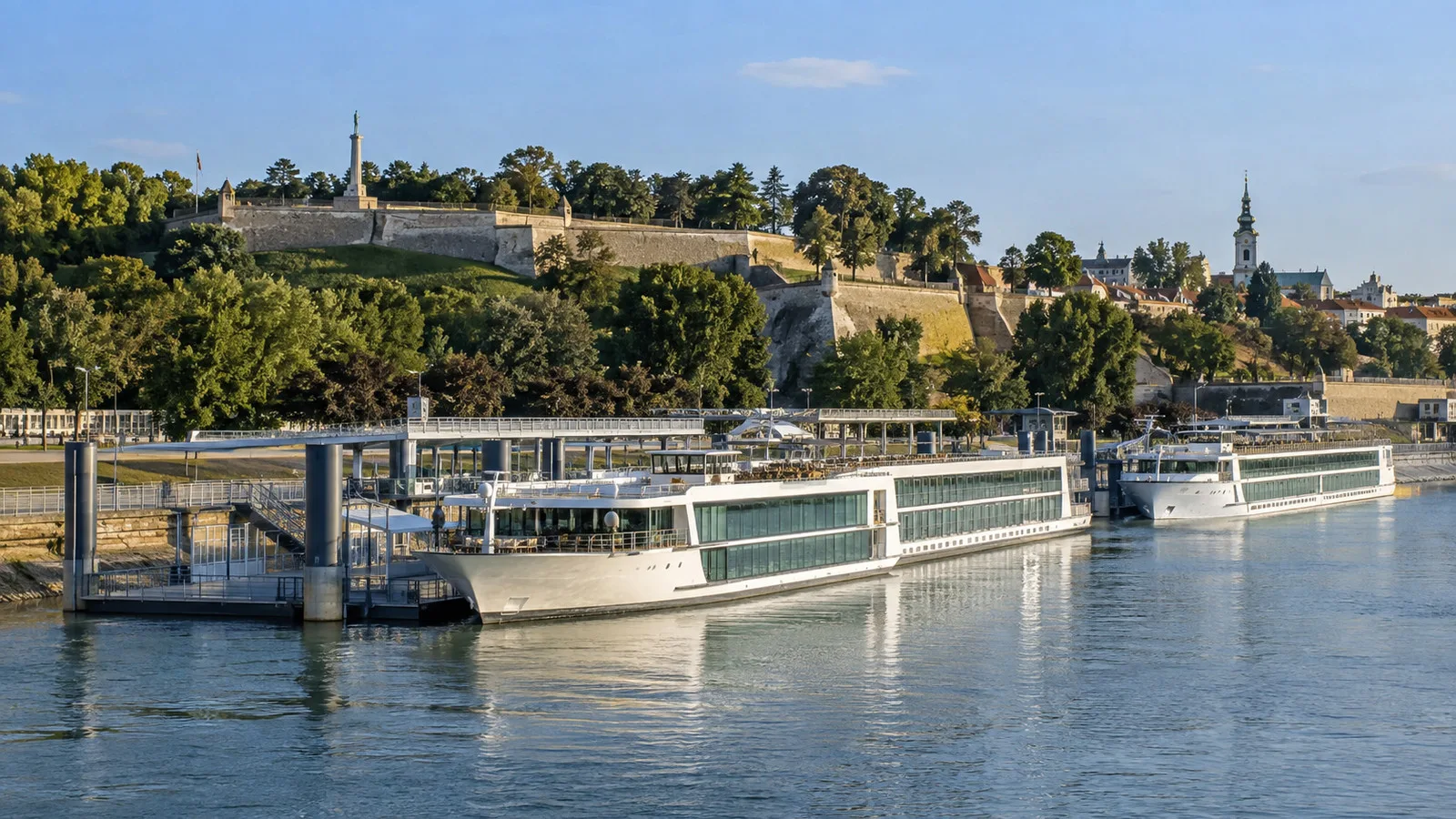
Your itinerary says Danube, but your ship may be tied to the Sava. Belgrade sits at the meeting of both rivers, and its international passenger terminal occupies the Sava waterfront below the old city.
This is not a clerical error or a bonus river. It is the first clue to planning Belgrade properly.
My quick take
Belgrade is a strong independent port day if you accept one piece of topography: the fortress is close to the ship and also above it. The central route from the waterfront through Kalemegdan Park, Knez Mihailova Street and Republic Square is walkable, lively and full of actual choices.
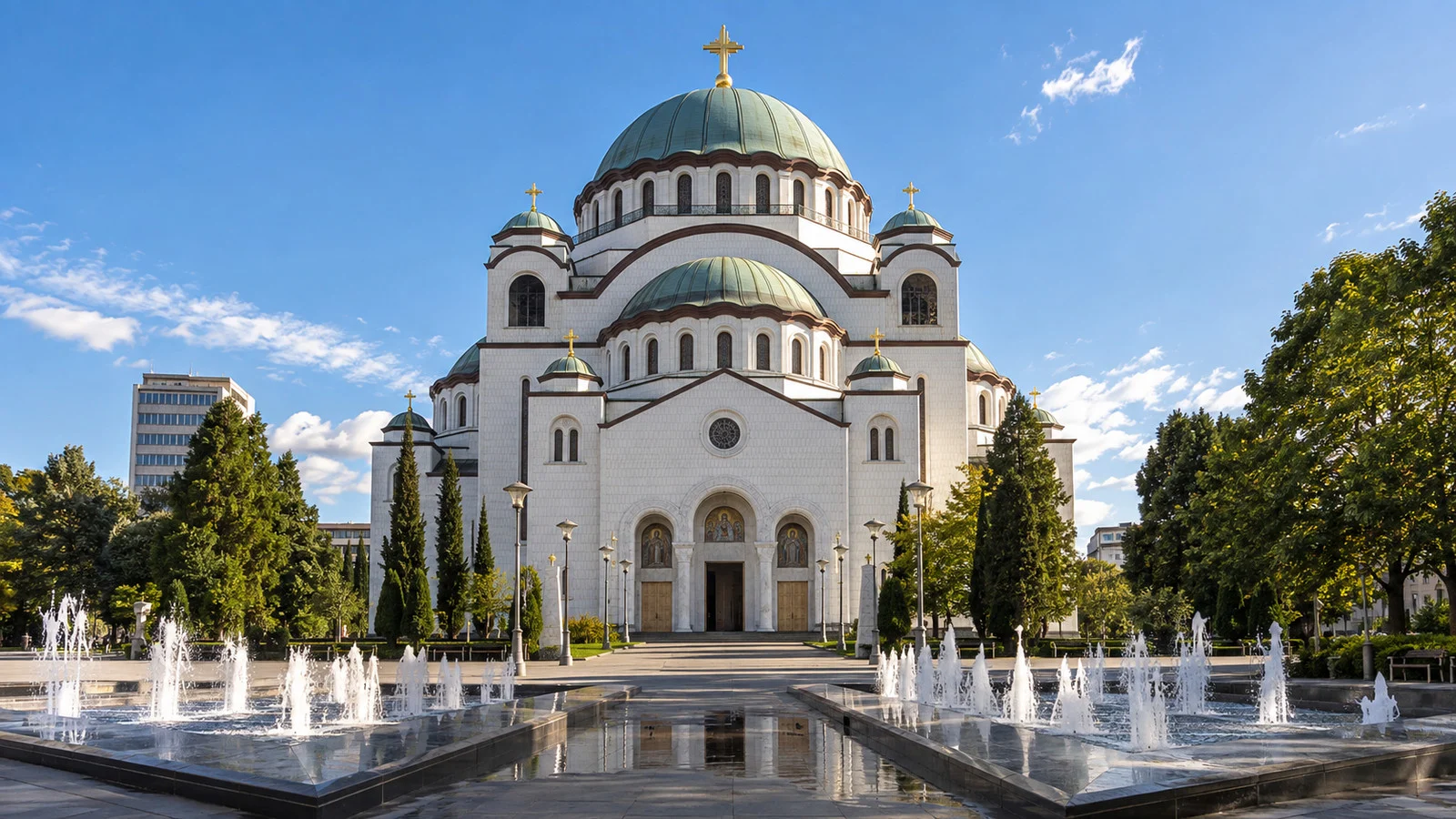
I would explore the fortress first, continue through the pedestrian center and use public transportation for one farther sight. Saint Sava Church and the Nikola Tesla Museum are worthwhile, but neither is a casual extension of the waterfront loop.
The city is too large for the charming-river-village strategy of walking until the streets run out. Belgrade has neighborhoods, hills and traffic, all three of which are very confident.
The quick facts
- Where you land: International river ships normally use the Sava passenger terminal along Karađorđeva, below Belgrade Fortress; daily berth assignments can vary.
- How you get ashore: By gangway, without a tender. Rafting alongside another river vessel can add thresholds, narrow passages and stairs.
- Into Town: Allow an estimated 10 to 20 uphill minutes to Kalemegdan or 20 to 30 minutes to Republic Square, depending on berth.
- Currency and Language: Serbian dinar and Serbian, written in Cyrillic and Latin scripts; English is common at major visitor sites.
- Getting around: Walk through the historic center; municipal buses, trams and trolleybuses are fare-free, while taxis remain useful for farther sights.
- Time Zone: Central European Time, UTC+1, moving to UTC+2 from the last Sunday in March through the last Sunday in October.
- Call reliability: Extreme river levels, navigation restrictions, or major itinerary changes can cancel, shorten, or relocate the call; no verified missed-call percentage is published.
No authority or cruise line publishes a Belgrade missed-call percentage. Walking times in this guide are map-based estimates that vary by pontoon, route and pace.
The Belgrade river cruise port is on the Sava
The City of Belgrade transport directory places the Sava passenger terminal and its border and customs facilities on Karađorđeva. The cruise pontoons line the waterfront beneath the historic center, close to Beton Hala’s restaurants and the fortress hill.
Ask the ship for the pontoon number before leaving because the waterfront stretches farther than it appears from the sun deck. If vessels are rafted, the extra crossings work as described in the site’s guide to river-cruise double docking.
Belgrade Fortress should be first
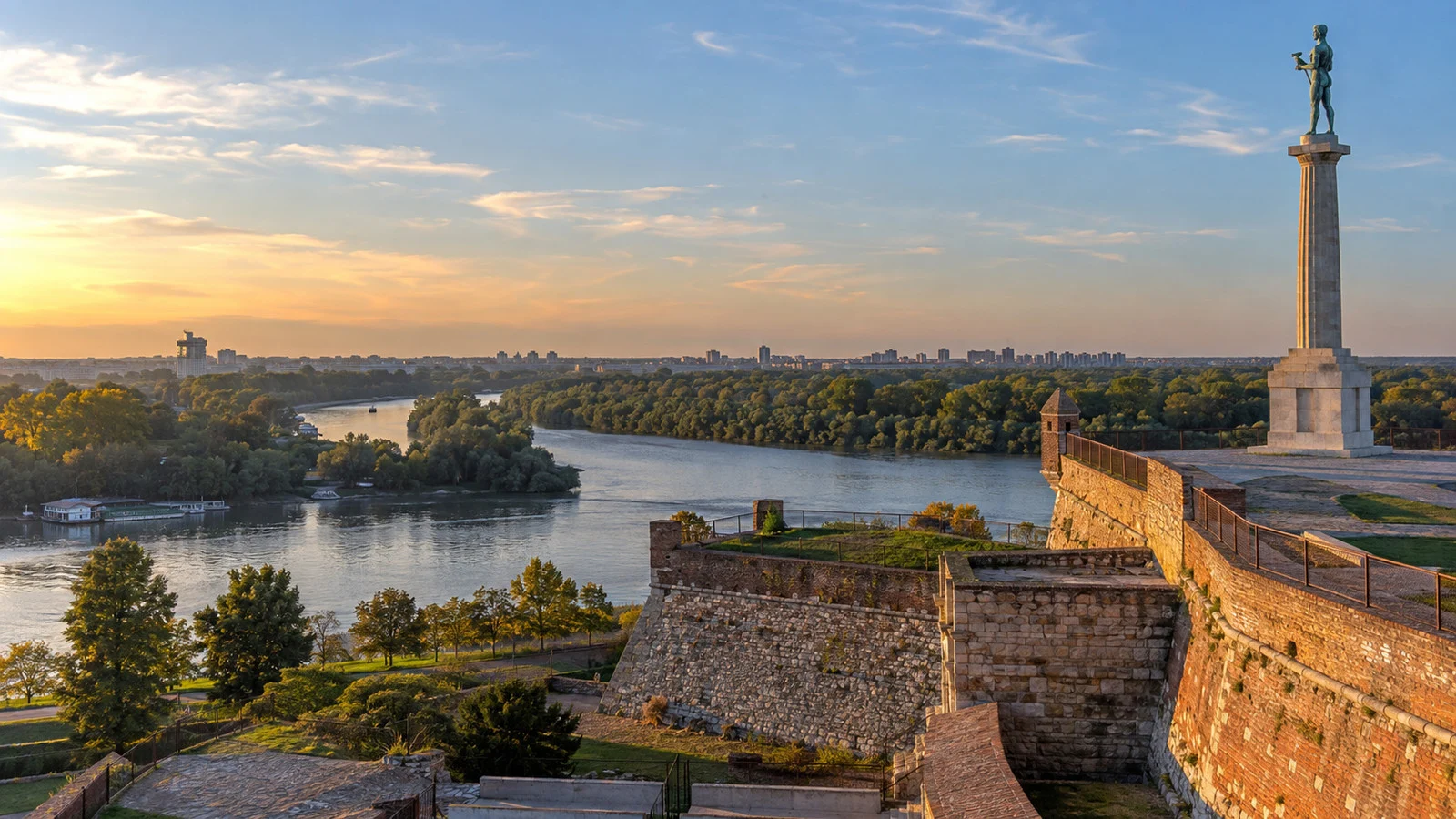
Belgrade Fortress and Kalemegdan Park occupy the ridge above the Sava and Danube confluence. Their walls record Roman Singidunum, medieval Serbian rule, Ottoman and Habsburg campaigns, and a city repeatedly rebuilt in a location armies found impossible to ignore.
The broad park and exterior fortress spaces can be explored freely, while individual attractions inside keep their own hours and prices. The payoff is not one perfect castle interior but the layered site, the Victor monument and the view down to the two differently colored rivers.
The climb from the passenger waterfront is short but real, with slopes, paving changes and possible steps depending on route. Go early in summer, then let the rest of the day trend downhill in both altitude and seriousness.
Knez Mihailova is the useful spine
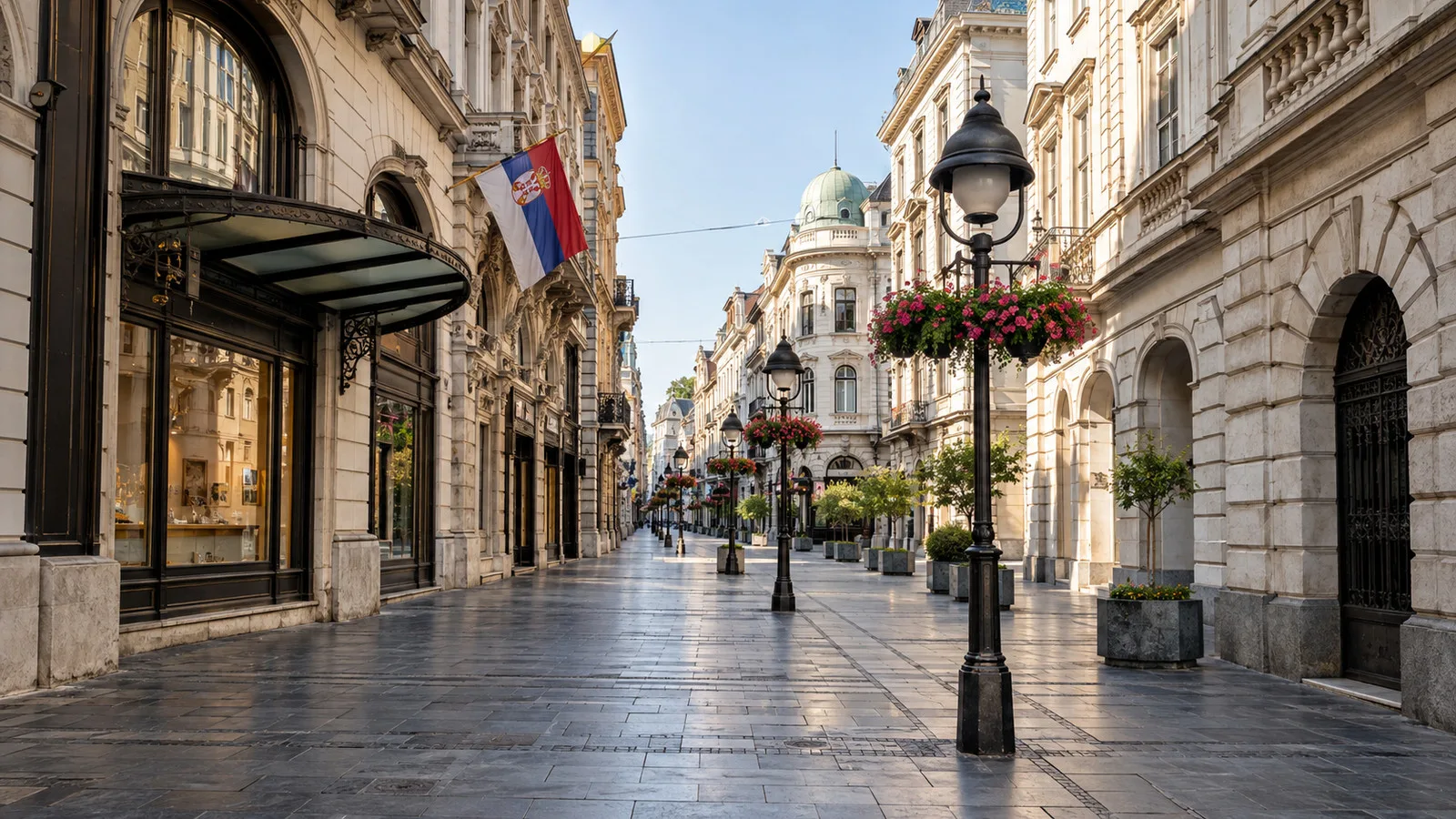
From Kalemegdan, Knez Mihailova leads through the pedestrian center toward Republic Square. The official tourism guide notes that the promenade follows the remains of Roman Singidunum and links the fortress with the central city.
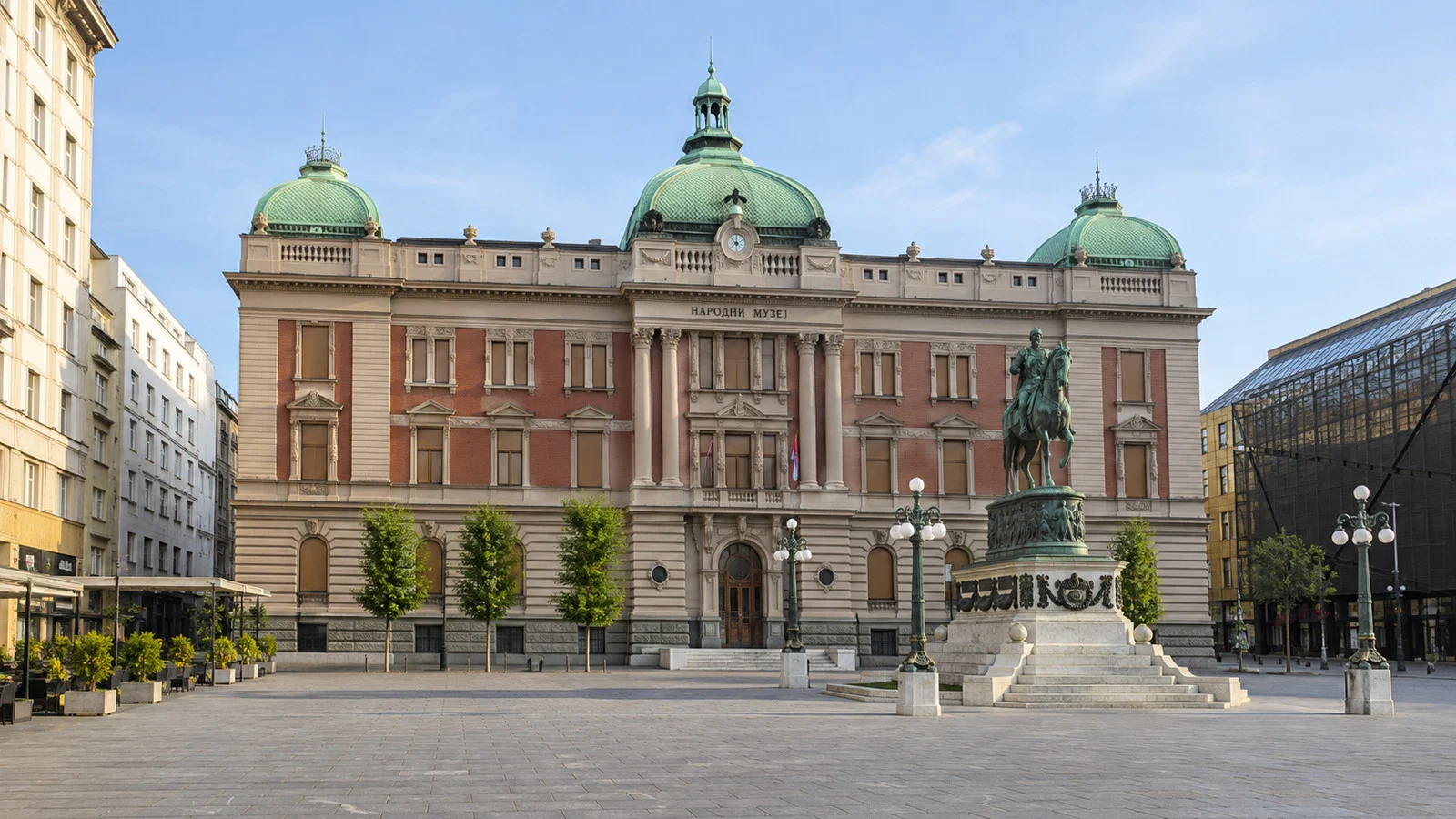
Republic Square anchors the National Museum and National Theatre. From there, cobbled Skadarlija is an estimated 8-to-12-minute walk and makes a good lunch detour, though its restaurant menus deserve the same calm inspection as menus anywhere scenic.
The National Museum is the reliable indoor choice
The National Museum of Serbia sits directly on Republic Square and covers archaeology, medieval culture, Serbian art and international art. It is the sensible answer to rain, intense heat or a traveler who has already photographed enough battlements to qualify for tenure.
The museum’s current visitor page lists hours of 10 a.m. to 6 p.m. Tuesday, Wednesday, Friday and Sunday, with noon to 8 p.m. Thursday and Saturday. It is closed Monday, and standard permanent-exhibition admission is listed at 300 dinars with free admission on Sunday.
Tesla requires planning, not just enthusiasm
The Nikola Tesla Museum is in Vračar, away from the walkable port loop, and visits revolve around timed presentations. Its working models provide the sparks people expect, while the collection also includes Tesla’s personal items, documents and urn.
The museum’s official 2026 schedule lists English guided visits at selected hourly times, usually lasting about 45 minutes. A single English tour costs 800 dinars, and the museum explicitly accepts local-currency cash only, not credit cards.
Individual visitors do not need a reservation, but the museum recommends arriving 15 minutes early. Check that day’s language schedule before crossing town, because arriving between English tours is an excellent way to study a lobby.
Saint Sava is the other farther choice
Saint Sava Church dominates the Vračar skyline with a vast dome and luminous mosaic interior. It is an active Serbian Orthodox church, so quiet clothing, respectful photography and yielding space during worship matter more than winning the widest camera angle.
Belgrade’s public transportation is actually free
The city made municipal public transportation fare-free from January 1, 2025. The official city announcement says passengers no longer need tickets on buses, trams and trolleybuses.
Free does not mean intuitive. Routes, stops and construction detours still require a live map or confirmation from the tourist office, and the policy does not make every private shuttle, airport service or regional train free.
For two people with limited time, a licensed taxi can be the better value because the scarce currency is not dinars but port hours. Use an official taxi vehicle with a TX-ending license plate, ask for the meter and avoid unsolicited rides around major sights.
How I’d plan the day
With three usable hours, climb to the fortress, cross Kalemegdan, walk Knez Mihailova and reach Republic Square. Return through Kosančićev Venac or the same pedestrian spine, leaving a generous downhill buffer for the ship.
With five or six hours, add the National Museum or the Tesla and Saint Sava pair. The museum stays compact, while Vračar adds transit and modern Belgrade.
I would not take a panoramic bus excursion simply to see the central sights through glass. An organized excursion becomes useful for Zemun, Topola or another outlying destination where return transport matters.
The Lower Danube cruise ports guide shows where Belgrade fits among the larger-city and fortress calls. If the sailing continues downstream, the Iron Gates scenic-cruising guide explains the gorge day that often follows.
If that is a concern on your sailing, Donji Milanovac and Golubac River Cruise Ports goes into it properly.
Accessibility and practical friction
Gangway slope changes with the river level, and rafting may add steps or another vessel to cross. Request assistance from the ship before disembarking rather than discovering the day’s geometry halfway down the gangway.
The waterfront is flatter than the fortress approach, which includes grades, uneven surfaces and route-dependent stairs. Kalemegdan’s broad park paths are easier, but individual gates, towers and underground spaces may not be step-free.
Knez Mihailova is pedestrianized and generally the easiest central route. Skadarlija has cobbles, while buses and newer vehicles vary in boarding design, so travelers with critical mobility needs should confirm a specific route and vehicle locally.
Money, weather and call disruptions
Serbia uses the dinar, not the euro. Cards work widely in central Belgrade, but carry a modest amount of local cash for businesses that require it, with the Tesla Museum providing the most consequential example.
Summer can be hot, with an estimated daytime planning range around 80 to 90 Fahrenheit, and the fortress offers less shade than the park. Spring and fall bring cooler, changeable conditions, so water, sun protection and a light rain layer all earn bag space.
Serbia’s Directorate for Inland Waterways monitors navigation on the Danube, Sava and Tisa. Extreme water levels, local restrictions or problems elsewhere on a long itinerary can shorten the call even when Belgrade’s own terminal remains usable.
The practical checks I would make before Belgrade
Ask for the Sava pontoon number, rafting position, border-clearance timing, and final return point before leaving. The ship can be on the same waterfront but several minutes from the map pin, and crossing another vessel can add stairs, thresholds, or a second gangway.
Do the fortress and central pedestrian streets first, then choose either Saint Sava Church or the Nikola Tesla Museum as the farther stop. Reserve Tesla directly if required and start back at least 60 minutes before all aboard, with more time when traffic, an event, or a border delay has shortened the call.
Serbia is outside the European Union and Schengen Area, so check its official visa regime for the passport used on the itinerary and follow the ship’s passport instructions. Belgrade public transit can be free while museum tickets are not, and the steep fortress approaches, cobbles, heat, and rafted gangways each need a separate accessibility check.
Quick answers
Do Danube river ships dock on the Sava in Belgrade?
Yes, normally. Belgrade’s international passenger terminal is on the Sava waterfront near its confluence with the Danube, below the fortress and historic center.
Can I walk into Belgrade from the ship?
Yes. Kalemegdan is an estimated 10 to 20 uphill minutes away, while Republic Square is roughly 20 to 30 minutes depending on the assigned pontoon and route.
Is Belgrade public transportation free for tourists?
Municipal buses, trams and trolleybuses are fare-free, and the city’s announcement says no passenger ticket is required. Private, airport and regional services can follow different rules.
Can I pay euros in Belgrade?
The legal currency is the Serbian dinar, so do not rely on euros. Use cards where accepted and obtain dinars from a bank ATM or licensed exchange office for cash purchases.
Is the Nikola Tesla Museum near the cruise port?
No. It is in Vračar and needs a taxi or public-transport ride, plus attention to English tour times and its local-cash-only ticket rule.
The last word
Belgrade is not difficult, but it refuses to be reduced to one square and a church tower. Begin at the two-river view, follow the pedestrian spine and spend your transport time on one deliberate farther sight.
For an upstream comparison, the Budapest river cruise port guide covers another capital where berth location controls the day. Belgrade’s advantage is that its fortress tells you where to begin before the gangway is down.
How this guide was researched: This guide was independently checked on September 12, 2026, against the City of Belgrade transport guide, Serbian inland-waterways authority, Serbia’s foreign ministry, the Nikola Tesla Museum, the official sites linked in the article, and current cruise-line instructions. Reconfirm the mooring, rafting order, border processing, transportation, attraction rules, entry documents, weather, accessibility, costs, and all-aboard point because live operations can change.