Casablanca Cruise Port: Mosque, Medina and Rabat Guide
Casablanca is Morocco’s biggest city, and your ship ties up about 0.6 mile from downtown. Here’s how I’d spend a day here: the Hassan II Mosque, the old medina, a plate of seafood, and maybe a train ride to Rabat if your call is long.
My quick take
Casablanca is a working port and a modern metropolis, not a postcard medina town, so I’d set expectations for grit alongside grandeur. If it’s your first Moroccan call, pair it with my Tangier and Agadir guides, and the broader Africa cruise ports hub.
The quick facts
- Where you land: the Casablanca Cruise Terminal at Jetée Moulay Youssef inside the commercial port, about 0.6 miles (1 km) from the city center; the official facility has one berth for ships up to about 1,150 feet. Mohammed V International Airport is about 19 miles south.
- Dock or tender: This is an alongside berth, so you walk off onto the pier.
- Into town: The center is close on a map, but the industrial berth-to-gate route may require a shuttle; use the marked passenger exit or an authorized taxi rather than assuming a 15-minute walk.
- Currency and language: The Moroccan dirham (MAD), with Arabic and French in everyday use and some English in tourist businesses.
- Time zone: Morocco normally uses UTC+1 but returns to UTC+0 during Ramadan, so keep the ship’s time rather than relying on a phone that may update late.
- How often the call is missed: Low (roughly 1 to 2%): the sheltered berth is rarely limited by local weather.
Berth assignments can shift with ship size and traffic. I’d confirm your exact pier and any shuttle with your cruise line’s port talk the night before.
We cover that separately in our guide to Morocco Cruise Ports.
Getting around
Walking can work only after you reach the public side of the port, and the authorized exit depends on operations. Taxis are the practical choice for the mosque, Habous, the Corniche, and a railway station, but use the official rank or a prebooked driver and agree the fare first.
Petit taxis (small red cabs) run on meters in theory. Agree the fare or insist on the meter before you get in, since drivers in the port taxi line often quote flat rates.
Casablanca also has a modern tram network for reaching landmarks farther out. For the Hassan II Mosque, a taxi is simplest for a limited port day.
The port-to-city chain
Casablanca’s new cruise terminal is close to the center but still sits inside a large cargo port. Follow the ship or port shuttle to the approved gate, photograph the return point, and meet any private guide where your cruise line says outside operators are allowed.
For a simple first visit, book a taxi or guide from the port to the Hassan II Mosque, continue to Habous, and finish near the Old Medina before returning. That route avoids backtracking and leaves the least important, least predictable stop for last.
The terminal is not a dependable public luggage-storage facility. Carry only a day bag, and if Casablanca is your embarkation city, leave larger bags with your hotel until your assigned cruise check-in opens.
The stops I’d actually spend time on
These are the named, verifiable places I’d prioritize on a single Casablanca call. Many cruisers book an organized tour to bundle them, which I’d consider if you also want Rabat or Marrakech.
Hassan II Mosque
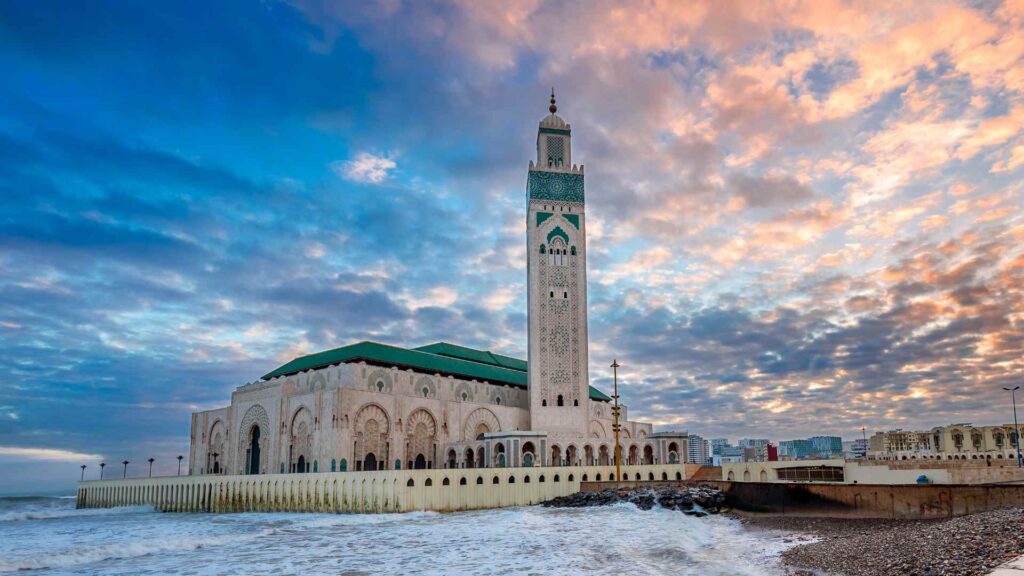
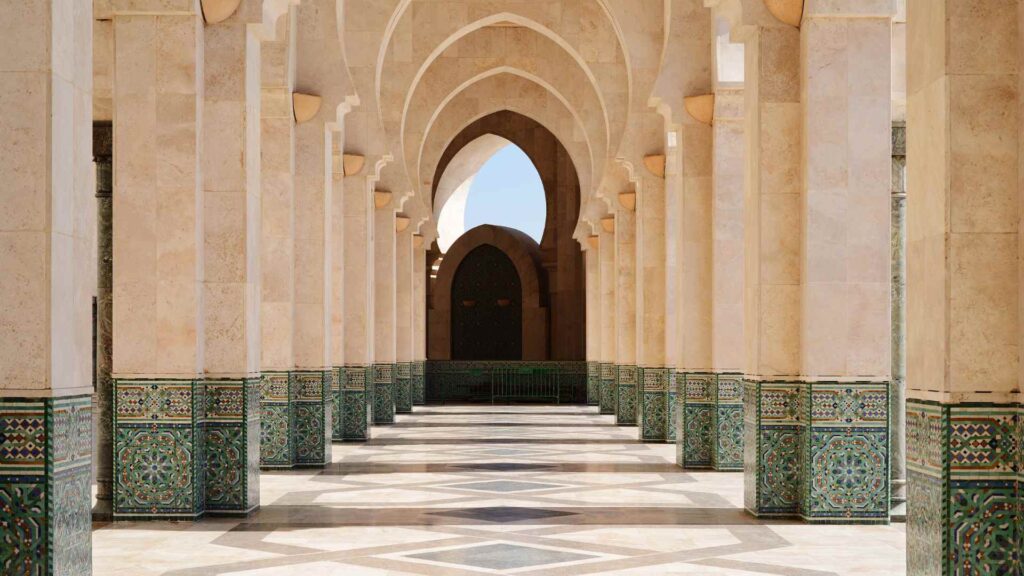
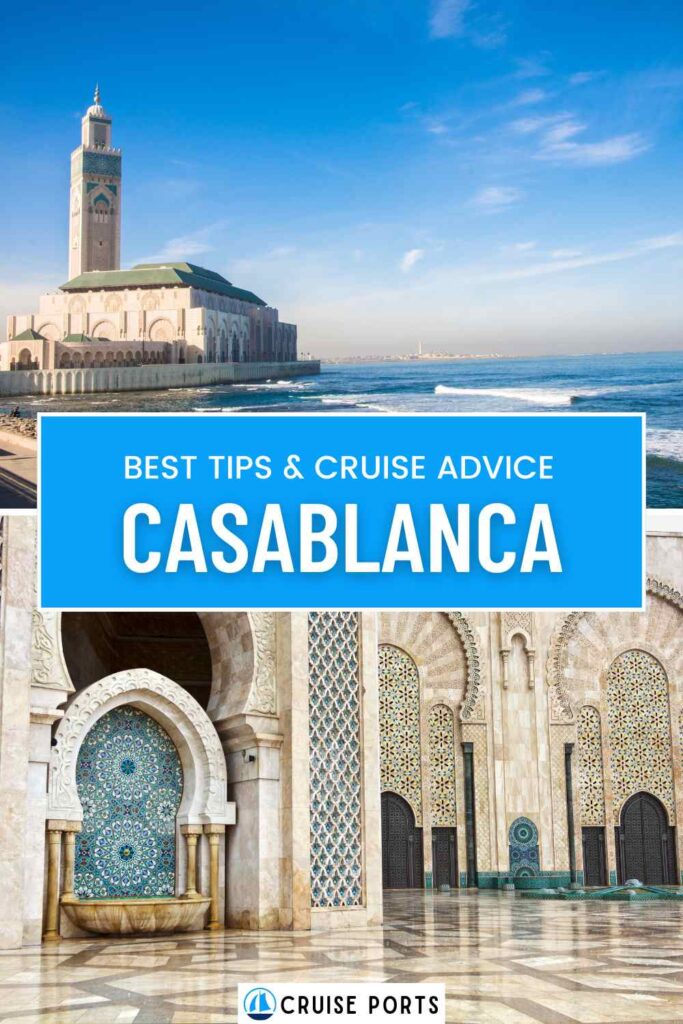
This is the headline stop, and the national tourist office lists it first for the city. It stands partly over the Atlantic, with a minaret of about 690 feet, one of the tallest in the world.
Fun fact worth the visit: it is one of the very few mosques in Morocco that non-Muslims can enter, and only on a guided tour. Dress modestly and check tour times, since it closes to visitors during prayers.
Old Medina
Casablanca’s walled old town sits close to the port and is easy to fold into a walk. Expect narrow lanes, spice and leather stalls, and everyday Moroccan life rather than a polished tourist souk.
Mahkama du Pacha
The tourist office names the Mahkama of the Pasha among the city’s essentials. It is a former courthouse and reception hall known for carved cedar, zellij tilework, and wrought iron, in the Habous quarter.
Habous Quarter (New Medina)
Built in the 1930s, the Habous district blends Moroccan arches with orderly French-era planning. It is a calmer place to shop for olives, ceramics, slippers, and argan oil.
Mohammed V Square
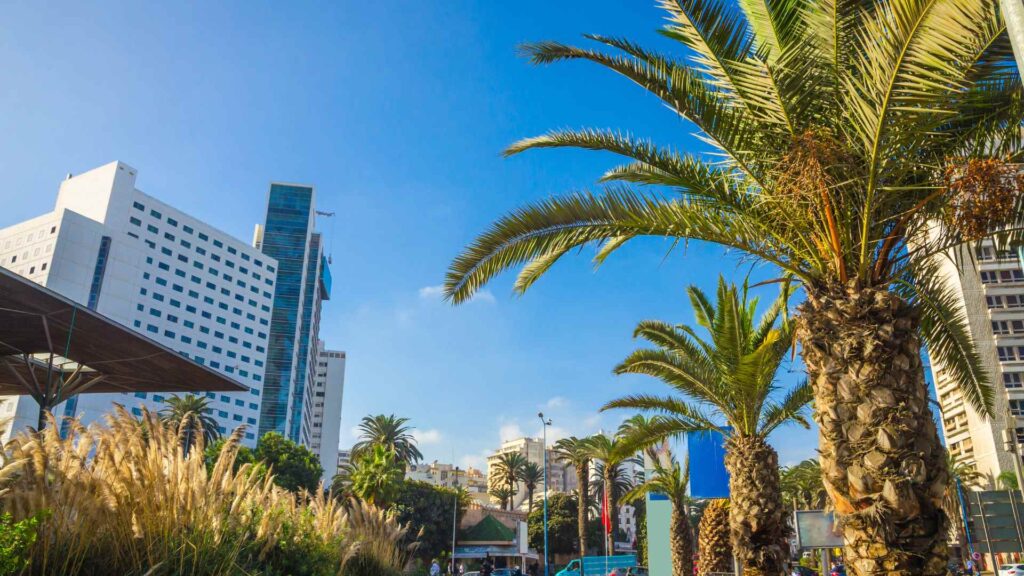
This grand civic square, near what the tourist office calls the United Nations Square area, is ringed by white Mauresque-style administrative buildings. Its central fountain and pigeon-filled plaza are a good downtown photo stop.
Corniche Ain Diab
The seafront Corniche at Ain Diab is a favorite local promenade for a stroll and a seafood lunch. It sits a short taxi ride west of downtown, past the Hassan II Mosque.
Rick’s Cafe
Movie fans will want the tie-in: Rick’s Cafe is a real restaurant, opened in 2004 to recreate the bar from the 1942 film Casablanca. The film itself was shot in Hollywood, but the atmosphere here leans into the legend, with a piano and Moroccan-international menu.
Cathedrale Sacre-Coeur
This former cathedral is a striking white Art Deco and neo-Gothic building from the French protectorate era. It no longer holds services but is a landmark near the Parc de la Ligue Arabe.
Villa des Arts
If you like a quieter cultural stop, Villa des Arts is an Art Deco mansion turned contemporary art gallery. It usually offers free entry and rotating Moroccan and international exhibitions.
Morocco Mall
Out at the end of the Corniche, Morocco Mall is one of the largest shopping centers in Africa and appears on the tourist office’s Casablanca list. It mixes international brands with a musical fountain and a large aquarium, handy for families or a rainy day.
Heads up: some links below are affiliate links. If you book through one, I may earn a commission at no extra cost to you. It never changes which hotels or tours I recommend. Full disclosure.
Day trips by train: Rabat and Marrakech
Morocco’s national rail operator, ONCF, serves both Casa-Port and Casa-Voyageurs. Check the live trip from each station because the closest station is not useful if the needed train departs from the other one.
Rabat
Rabat is roughly an hour north by train and is the better independent rail day. Compare live ONCF departures from Casa-Port and Casa-Voyageurs, allow taxi time from the cruise gate, and focus on the Hassan Tower, Mausoleum of Mohammed V, and Kasbah of the Udayas.
Marrakech
Marrakech is usually about 2.5 to 3 hours each way by train before port and station transfers. I would save it for a pre-cruise stay or take a ship excursion on an unusually long call, because one missed connection turns the return into a gamble.
How I’d plan the day
Three hours: use the port shuttle or approved exit, then take a taxi to the Hassan II Mosque before a brief Old Medina stop. Keep a generous buffer for the controlled-port return rather than assuming a quick walk to the ship.
Five hours: add a guided interior tour of the Hassan II Mosque and lunch on the Ain Diab Corniche. This is my ideal balance for one call.
Eight hours: take the train to Rabat, or do a full Casablanca sweep including the Habous quarter and Morocco Mall. For Rabat, note the last return train and pad your return by a couple of hours.
A realistic word on accessibility
The berth is a fixed pier, so you avoid tender boats and their tide-dependent steps. Gangway steepness still varies with the ship and the tide, so ask your team about assistance.
Downtown sidewalks are uneven in places, and the old medina’s lanes are narrow and crowded. The Hassan II Mosque has large flat plazas, which tend to be the easier ground to cover.
When to go, and the weather
Casablanca has a mild Atlantic climate, so spring and autumn are the most comfortable for walking. Summer is warm but tempered by sea breezes, while winter can be cool and wet.
If your call lands during Ramadan, expect some cafes and shops to keep reduced daytime hours. Mosque tour times can also shift, so confirm on the day.
A current safety note
The U.S. State Department lists Morocco at Level 2, Exercise Increased Caution, because of terrorism risk; the current advisory was issued September 4, 2026. Stay alert in crowds, move away from demonstrations, and use authorized transportation rather than accepting an unsolicited ride.
In practice, I’d use the usual city sense: watch for pickpockets in crowds, use official taxis, and keep valuables close. Always check the latest advisory before you sail, as levels can change.
Quick answers
Can I walk into town from the ship?
Sometimes, but the 0.6-mile map distance does not include every controlled port route. Follow the arrival-day instruction for your berth and use the shuttle or authorized taxi when the port requires it.
Can non-Muslims go inside the Hassan II Mosque?
Yes, it is one of the few mosques in Morocco open to non-Muslims, but only on a guided tour and outside prayer times. Dress modestly.
What currency should I bring?
The Moroccan dirham. Cards work in malls and larger restaurants, but keep cash for taxis, the medina, and small vendors.
For more planning, see my guides to walkable cruise ports and the best ports for first-timers.
How this guide was researched: Unless a first-hand visit is explicitly identified above, this guide is based on independent research using official port, tourism, transit, government, and attraction sources where available. Logistics and time-sensitive details were reviewed on September 10, 2026; see our Editorial Policy.