Visby Cruise Port: Terminal, Medieval Walls and Gotland
Visby delivers one of the loveliest first impressions in the Baltic. A modern cruise quay leads toward a living medieval town where limestone walls, ruined churches, roses, steep lanes, and old merchant houses make an ordinary walk feel wonderfully cinematic.
The city is compact, but it is not physically effortless. Distance from the ship, possible shuttle arrangements, cobblestones, hills, seasonal opening hours, and the temptation to explore wider Gotland all need to be balanced against the gangway clock.
Visby Cruise Port Quick Facts
- Main arrival: Alongside at the modern Cruise Port Visby quay, subject to the call’s berth assignment
- Alternative arrival: Tendering remains possible when operational conditions require it
- Old town access: Walk, cruise shuttle, taxi, or excursion transfer according to the ship’s current arrangements
- Best easy plan: The city wall, Stora Torget, church ruins, cathedral area, and Gotland Museum
- Best low-effort scenery: Almedalen and selected waterfront or garden routes
- Currency: Swedish krona, although cards are the normal payment method in many places
- Time zone: Central European Time with daylight saving in summer
- Planning rule: Choose either a deep Visby day or one realistic Gotland excursion, not both
The Modern Gateway to Medieval Visby
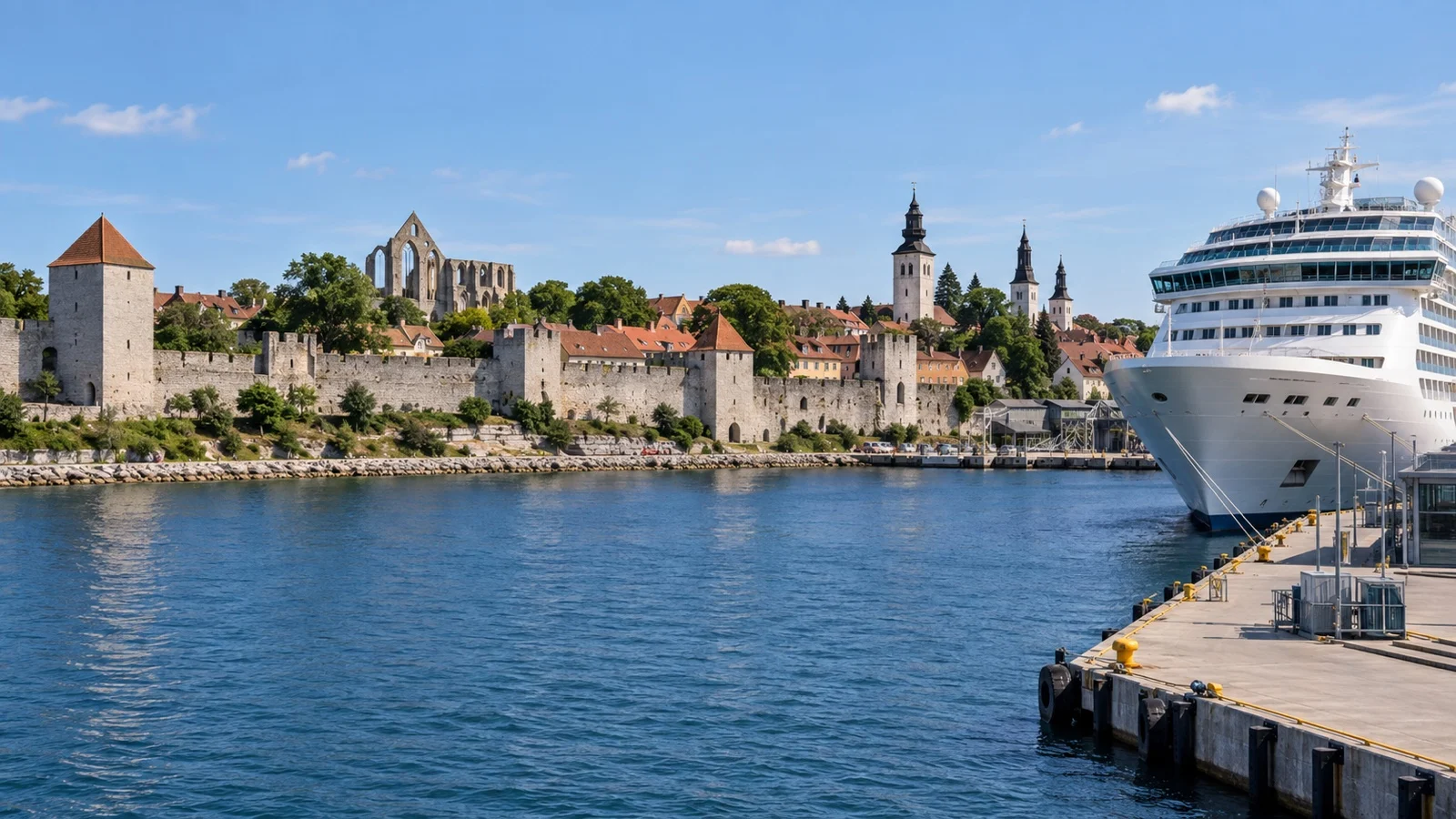
Most large cruise calls use the purpose-built quay at Cruise Port Visby, where ships can berth alongside and passengers enter through the terminal area. The quay is south of the walled center, so the first walk covers modern waterfront ground before the medieval skyline draws close.
Some cruise lines provide a shuttle or operate excursion transfers, while others expect independent guests to walk or use local transportation. Confirm the day’s drop-off, final shuttle, taxi pickup point, and terminal access before leaving the ship.
Tendering can still occur if berth availability, ship requirements, or weather changes the plan. When that happens, use the landing location and boat schedule announced onboard because your distance to the old town may differ.
From Ship to the City Wall
The walk from the cruise quay to the old town is realistic for many active visitors, but it is long enough to matter on the return. The route is generally easier outside the walls, then becomes more varied as historic paving, gates, slopes, and narrow streets enter the picture.
I photograph the terminal sign and any shuttle schedule before heading into Visby. If rain or fatigue appears later, knowing the correct pickup point is far more useful than remembering that the ship looked visible from a hill.
Use marked crossings and pedestrian paths around the active harbor. The shortest line on a map may cross a restricted port lane, parking area, or terrain that is unsuitable for a wheelchair.
The Wall Is a Route, Not Just a Photograph
Visby’s ring wall extends for roughly 3.4 kilometers and remains one of the defining elements of the UNESCO-listed town. Towers, gates, dry moats, and open ground around the fortifications reveal how the medieval commercial city protected itself.
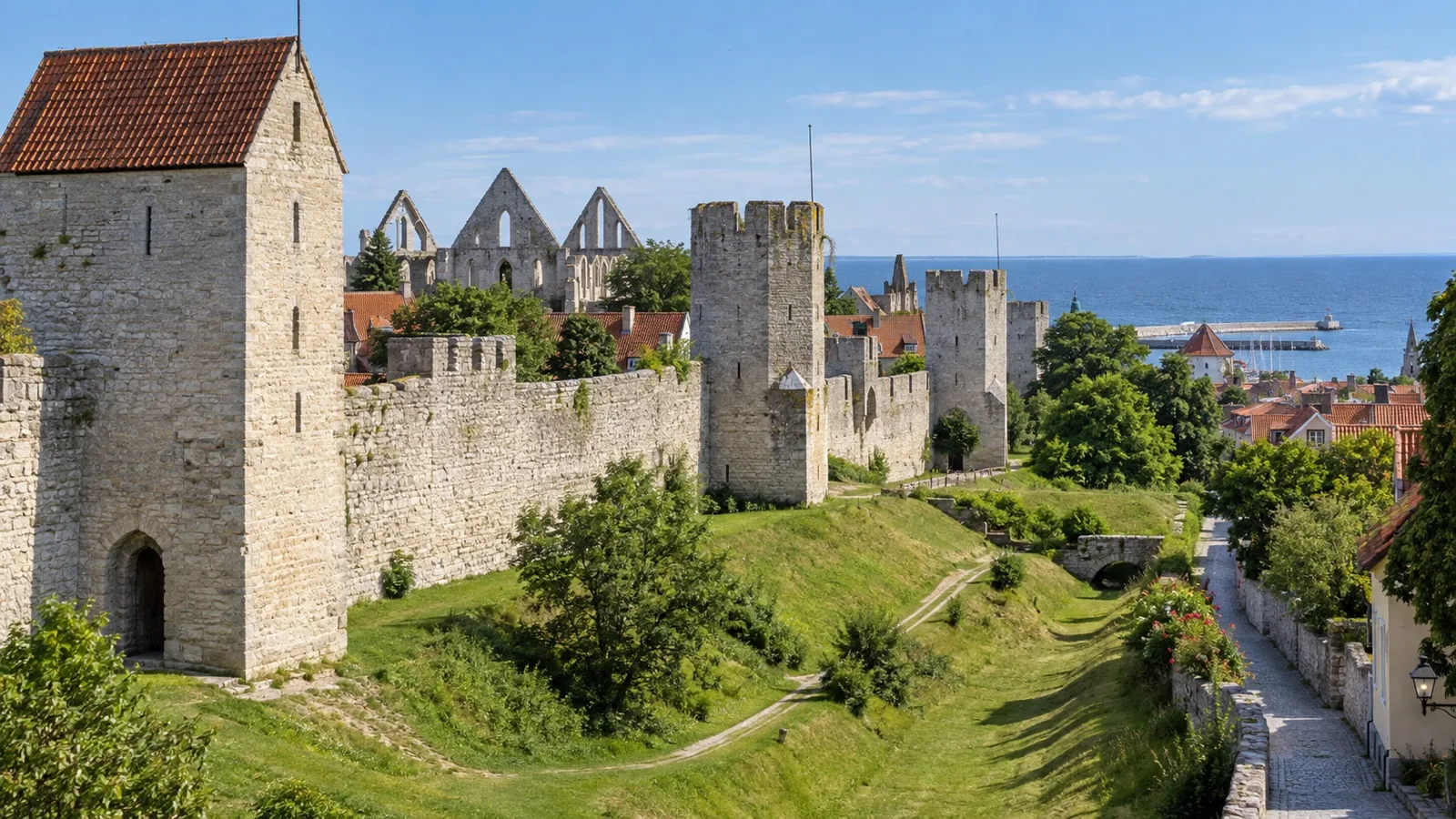
You do not need to circle the entire wall to appreciate it. A shorter section near one gate, a view across the moat, and a second perspective from inside the town often create a richer experience with less fatigue.
Do not climb on masonry, move barriers, or treat unstable edges as a photo platform. The wall is a protected monument within a living town, and conservation closures must be respected even when they interrupt a planned route.
Inside the UNESCO Town
UNESCO describes Visby as an exceptionally preserved northern European medieval walled trading town. Its street plan, warehouses, merchants’ houses, church ruins, walls, and later layers show both the power of Hanseatic trade and the continuity of a community that still lives here.
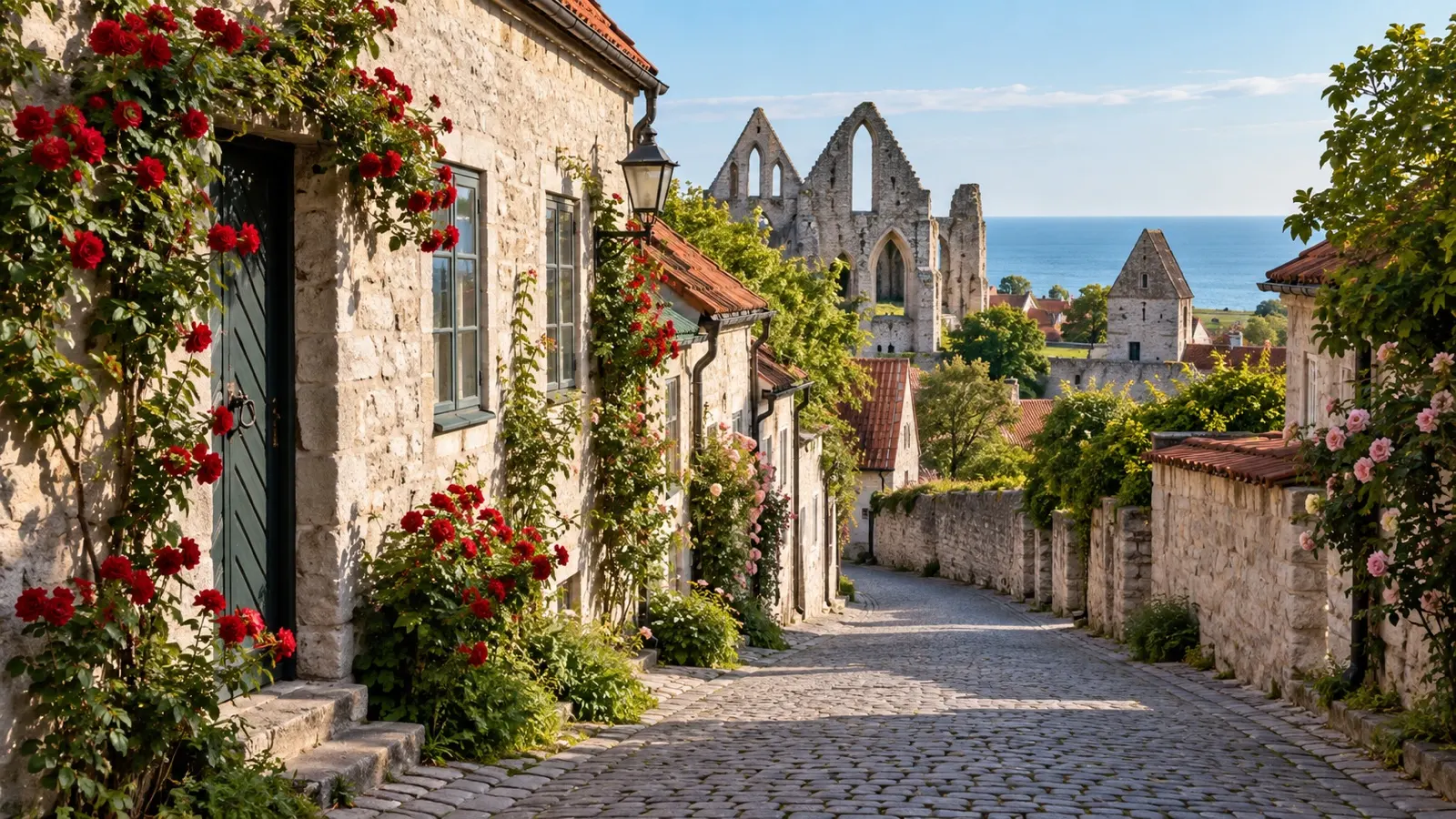
The lanes slope between the old harbor area and higher ground, so exploring is more vertical than the compact map suggests. Wear shoes with secure grip and let the street pattern guide you rather than crossing the town repeatedly for individual pins.
Residents share these narrow streets with visitors, deliveries, bicycles, and occasional vehicles. Keep doorways clear, lower your voice on residential lanes, and avoid photographing through windows.
Stora Torget and St Karin’s Ruin
Stora Torget is the social heart of the walled town, with restaurants, cafes, and historic buildings around an open square. The atmospheric ruin of St Karin rises beside it and gives an immediate sense of the many churches that once served medieval Visby.
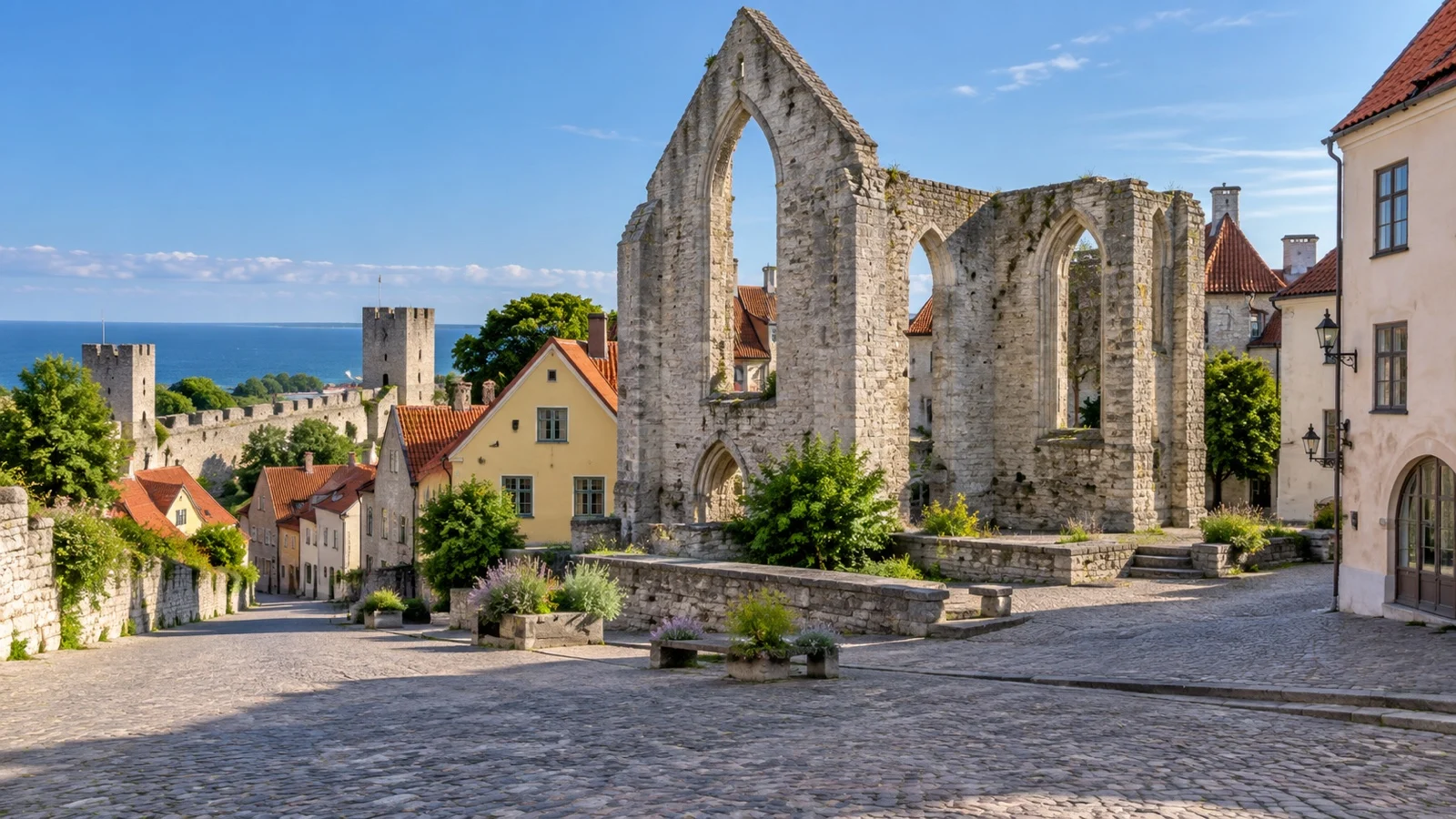
Ruins may host events or have temporary access restrictions, so check signs before entering. Stone floors, thresholds, and uneven ground can be slippery after rain, and not every interior has a step-free route.
This is a good place to pause for lunch, but summer crowds can fill outdoor tables quickly. If the service looks slow, choose a simpler meal and protect the time needed to walk back to the port.
St Mary Cathedral and Kyrkberget
St Mary Cathedral is the medieval church that remained in active use while many others became ruins. The cathedral area and nearby Kyrkberget viewpoints provide classic roofline views, although reaching the higher streets requires a noticeable climb.
Check the cathedral’s current visitor hours and respect services, private prayer, and posted photography rules. Modest behavior matters more than rushing through for the interior image.
The elevated viewpoint is rewarding, but it is not essential for travelers who need a level route. Similar limestone walls, towers, and streets can be enjoyed lower in town without forcing steep paving into the day.
Gotland Museum Supplies the Island Story
Gotland Museum is the place to understand why the island mattered long before and beyond the Hanseatic period. Its collections connect prehistoric life, picture stones, Viking-era wealth, medieval trade, conflict, and later Gotland history.
Exhibitions, entrances, and hours can vary by season, so use the museum’s own site for the current plan. Allow at least an hour if history is a priority because a quick dash past the signature objects barely scratches the surface.
The museum also offers an indoor refuge when Baltic weather turns wet or cool. Ask staff about elevators, accessible restrooms, seating, and the best route through its connected historic buildings.
Almedalen and the Botanical Garden Slow the Pace
Almedalen occupies ground associated with Visby’s old harbor and now forms an open green space near the waterfront side of the walls. It offers a gentler pause between the cruise route and the steeper historic lanes.
DBW’s Botanical Garden lies toward the north end of the walled city and is another peaceful choice in season. Opening, path conditions, events, and maintenance can change, so treat it as part of a route rather than a guaranteed standalone attraction.
Combining the garden with the cathedral and northern wall creates a beautiful circuit, but it leaves you farther from the cruise quay. Check your energy and the clock before continuing north.
A Four-Hour Visby Loop
Begin at the terminal and follow the approved route toward the southern or harbor-side edge of the walls. Continue through lower Visby to Gotland Museum, Stora Torget, and the cathedral area, then descend through a different lane toward Almedalen and the port.
This loop can be shortened at several points if the arrival runs late. Skip the upper viewpoint first, then reduce museum time, but never remove the final port buffer.
Add lunch near Stora Torget or the lower town only if service timing looks comfortable. A pastry or quick plate can be more satisfying than a formal meal spent checking the time every three minutes.
When to Leave Visby for Wider Gotland
Gotland is much larger than the medieval center, and its limestone coast, rural churches, caves, farms, and fishing settlements deserve time. A cruise call allows one carefully chosen radius, not a complete island tour.
Book a ship excursion or reputable local operator when leaving town because seasonal buses may not align with the call. Confirm the vehicle, pickup point, duration, walking demands, restroom stops, and guaranteed return.
Rental cars can be limited on busy dates and require additional time for collection, parking, fuel, and the port return. I would reserve well ahead and choose one destination rather than improvise a long scenic loop.
Lummelunda Cave Needs a Reservation
Lummelunda Cave lies north of Visby and offers a very different view of Gotland’s limestone landscape. A visit normally involves timed admission or a guided format, so verify the current product, language, duration, and opening season directly.
Cave conditions can include cool temperatures, damp surfaces, steps, narrow areas, and low light. Ask about the exact accessible route and whether anyone with balance, mobility, or enclosed-space concerns can participate comfortably.
Pairing the cave with a short coastal stop may work on a full call with arranged transport. Do not add the far north of Gotland simply because you are already traveling in that direction.
Högklint Is the Close Coastal Choice
Högklint south of Visby offers dramatic limestone cliffs and broad Baltic views without requiring a full island crossing. It fits well into a short guided panorama or private taxi outing when current access and road conditions are suitable.
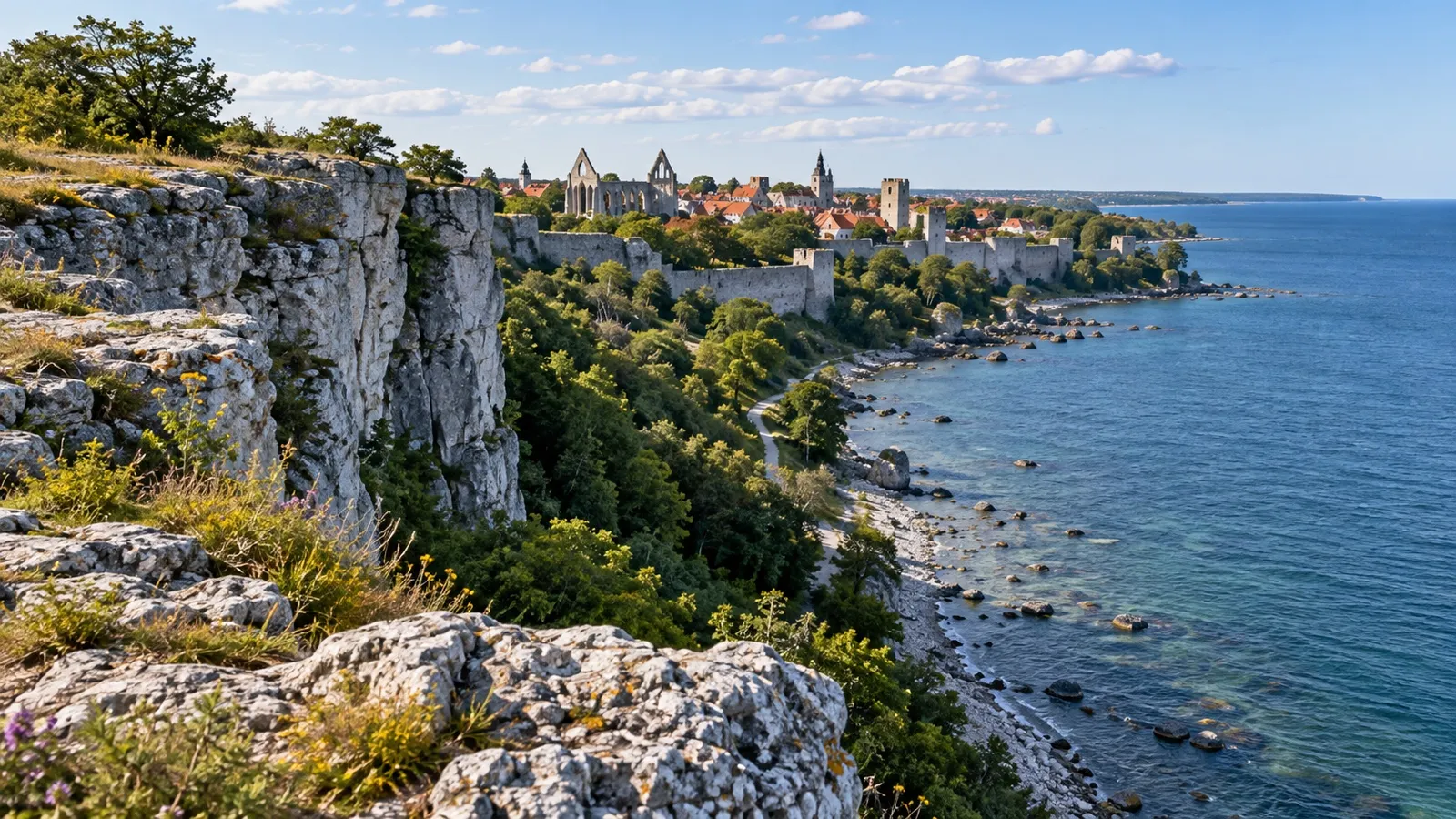
Cliff edges, exposed wind, rough ground, and limited barriers demand caution. Stay on designated paths, keep children close, and step back from the edge before lifting a camera.
A stop here can be combined with a shorter old-town visit, but the transfer still needs a confirmed return. Ask the driver to finish in Visby with enough time to walk or shuttle from town to the ship.
Fårö and Northern Sea Stacks Are Usually Too Far
The famous rauk sea stacks of northern Gotland and Fårö are compelling, but they require a long road journey and, for Fårö, a ferry crossing. They are rarely sensible additions to a normal Visby cruise call unless offered as a fully coordinated excursion.
Seasonal traffic, ferry queues, and stops across the island can erase the return margin quickly. Save the far north for a land stay if the ship does not provide a protected, port-timed tour.
Cobblestones, Wheels, and Accessibility
The cruise quay itself is modern, but the route through Visby includes distance, historic paving, slopes, curbs, and narrow passages. Ask the cruise line whether an accessible shuttle operates and where it drops passengers relative to a step-free gate.
Within the walls, the lower waterfront side is generally easier than the steep climb toward eastern and upper streets. A companion, sturdy wheelchair tires, and a route planned around gradual grades can make a large difference.
For tours, request vehicle step height, lift availability, secure mobility-device storage, walking distance, terrain, seating, and restroom details. Words such as panoramic or easy do not describe the actual transfer.
Weather Belongs in the Day Bag
Gotland can deliver bright sun, cool Baltic wind, quick showers, and a sharp temperature change between sheltered lanes and the waterfront. Dress in light layers and carry a compact waterproof shell even when the morning looks settled.
Cobblestones and limestone surfaces become slick when wet, so shoes need grip rather than fashion alone. Secure hats near the harbor and use sun protection on clear days because long outdoor walks add exposure.
Early and late-season calls may find reduced hours or attractions closed outside summer. Confirm every must-see venue shortly before sailing and build an outdoor route that still works if one door remains locked.
Food, Money, and Connectivity
Visby has cafes, bakeries, restaurants, and shops within the walls, with the greatest choice during the main visitor season. Look for local ingredients and Gotland specialties, but check current opening hours rather than relying on a summer recommendation.
Sweden is highly card oriented, and some businesses may not accept cash. Carry a payment card with a working PIN and a second method, then ask before ordering if you plan to use physical currency.
Download the walking map and save the terminal pin before leaving the ship. Mobile coverage is generally useful, but a stone lane and similar-looking gate can make offline directions surprisingly valuable.
Return Without Medieval Drama
Work backward from the ship’s all-aboard time and include the walk or shuttle from the old town, terminal security, and a weather delay. If tendering, add the final boat cutoff and the possibility of a queue at the landing.
Finish the day on the port side of town rather than at a distant northern gate. A visible ship is reassuring, but it does not remove the time needed to reach the approved terminal entrance.
Ship-sponsored tours normally provide the strongest coordination if a delay occurs, while independent plans remain your responsibility. I would return early enough to enjoy the wall one last time instead of sprinting across wet cobbles.
Visby Cruise Port Questions
Can I walk from the cruise terminal to the old town?
Yes, many active passengers do, but the distance is substantial enough to plan both ways. Confirm whether your ship also provides a shuttle and where it stops.
Do ships ever tender at Visby?
Yes, although the modern cruise quay handles many large calls alongside. Berth availability, ship requirements, or weather can still produce a tender operation.
Can I see Visby without an excursion?
Absolutely, because the walled center rewards independent walking and most major sights are close together. A guided walk adds historical context, while wider Gotland needs organized transport.
Is the old town wheelchair accessible?
Parts are manageable, especially lower routes, but cobblestones, slopes, curbs, and steps create barriers. Ask about an accessible shuttle and plan a specific step-free route with the tourist office or attraction.
Should I tour Gotland or stay in Visby?
First-time visitors with a normal call will find more than enough inside Visby. Choose wider Gotland only for one priority destination with confirmed transport and a generous return margin.
What Visby Does Best
Visby makes history feel present without turning the town into a museum set. The walls, ruins, homes, cafes, gardens, and harbor still form one lived-in place, which is why a slow route works better than an attraction sprint.
My ideal day stays inside the walls, gives Gotland Museum real time, and saves enough energy for the walk back. Choose one radius, respect the medieval fabric, and let the Baltic light do the rest.
Planning details were checked against Copenhagen Malmö Port, UNESCO’s Hanseatic Town of Visby listing, Gotland’s official visitor site, and Gotland Museum. Berths, shuttle arrangements, attraction hours, road conditions, and weather can change, so reconfirm them with your cruise line and the relevant official provider before you sail.