Split Cruise Port Guide: Diocletian’s Palace and the Old Town
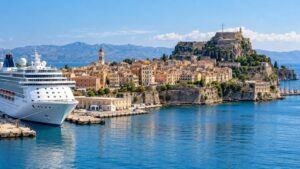
Split puts a living Roman palace beside a busy Adriatic harbor, which makes the historic center easy once you reach shore. The first thing to confirm is whether your ship is alongside or using tenders.
My quick take
Split is one of the most walkable ports in the Adriatic, and the headline sight is right there when you land. If you like this stretch of coast, pair it with my guides to Dubrovnik and Kotor.
For the bigger picture, see my Mediterranean cruise ports overview. Split slots neatly into almost any eastern-Med itinerary.
Our Split Cruise Port Guide cruise port hotel guide sorts the options by how easy the morning transfer is.
The quick facts
- Where you land: An assigned berth in the city port basin or a tender landing near the central harbor, run by the Split Port Authority.
- Dock or tender: Split handles both alongside calls and ships at anchor. Confirm the day’s arrangement because tender queues change how much usable time you have.
- Into town: About 5 to 10 minutes from a central berth or tender landing to the Riva and Diocletian’s Palace, with a longer transfer possible from another assigned berth.
- Currency and language: The euro (EUR), adopted in 2023, and Croatian.
- Time zone: Central European Summer Time (CEST, UTC+2) through the cruise season, CET (UTC+1) in winter.
- How often the call is missed: Low (roughly 1 to 2%): the sheltered berth is rarely limited by local weather.
Getting around
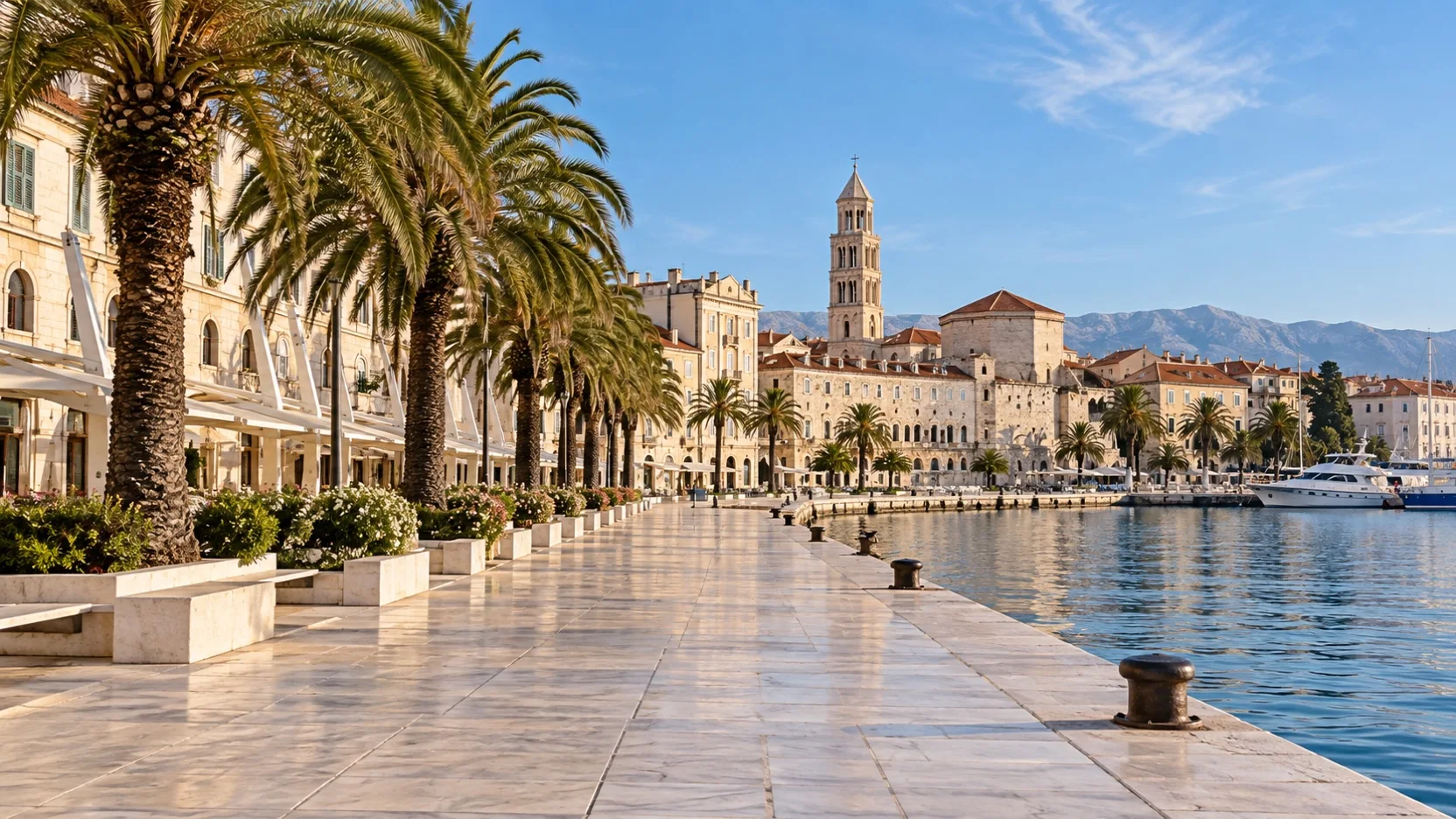
Honestly, the best transport in Split is your own two feet. The old town, the Riva, and the market are all within a few minutes of the pier.
- Walking: the palace and old town sit just along the waterfront from the berths, so no transfer is needed.
- Taxis and ride apps: line near the harbor for Marjan, the beaches, or day trips; agree the fare or use the meter.
- Ferries: the same harbor is the jump-off for the Dalmatian islands if you plan an independent island run.
The stops I would actually spend time on
Split rewards depth over box-ticking. These are the named, verifiable places I would build a port day around.
Diocletian’s Palace and the old town
This is the reason to come. UNESCO lists the palace, which Emperor Diocletian built between the late 3rd and early 4th centuries A.D.
Fun fact: Split’s old town grew up inside the palace walls, and people still live and trade among the Roman stones today. It has been a World Heritage Site since 1979.
The Peristyle
The Split Tourist Board calls the Peristyle the ceremonial heart of the palace, ringed by red granite columns. It is where Diocletian appeared before his subjects.
Today it is the atmospheric central square, often with live music. Grab a coffee on the steps and take it all in.
The Cathedral of St. Domnius and its bell tower
The cathedral occupies Diocletian’s former mausoleum, making it one of the oldest cathedral buildings in the world. It holds the relics of the city’s patron, St. Domnius.
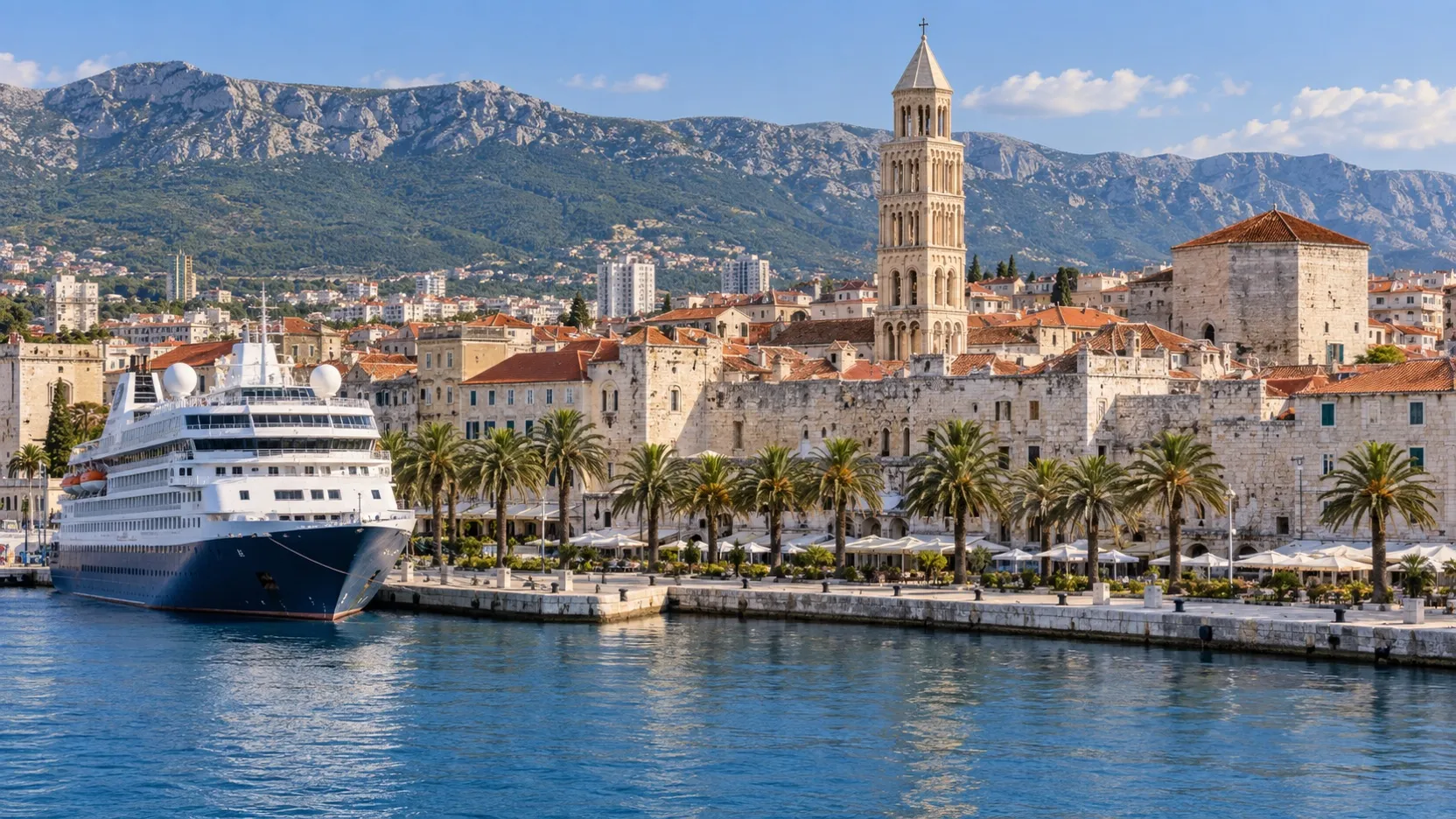
The tall Romanesque bell tower beside it is the icon of the Split skyline. The climb is steep but the harbor views pay off.
The palace substructures
Beneath the Riva, the cellars are among the best-preserved ancient complexes of their kind. They mirror the layout of the emperor’s lost apartments above.
They are cool, cavernous, and quick to see. Fans of Game of Thrones will recognize a few corners.
The Riva waterfront promenade
The Riva is described by the tourist board as the city’s living room. The palace’s southern facade forms its backdrop.
It is the natural walk between your ship and the old town. Palm trees, cafes, and passing ferries set the mood.
Marjan Hill
Locals call Marjan the lungs of Split. This pine-clad forest park rises just west of the old town.
Walk up for sweeping views over the rooftops and the Adriatic. It is the best breather from the busy center.
People’s Square and the Golden Gate
People’s Square (Pjaca) just west of the palace is the old town’s social hub, framed by Venetian-era buildings. It is a fine spot to pause between sights.
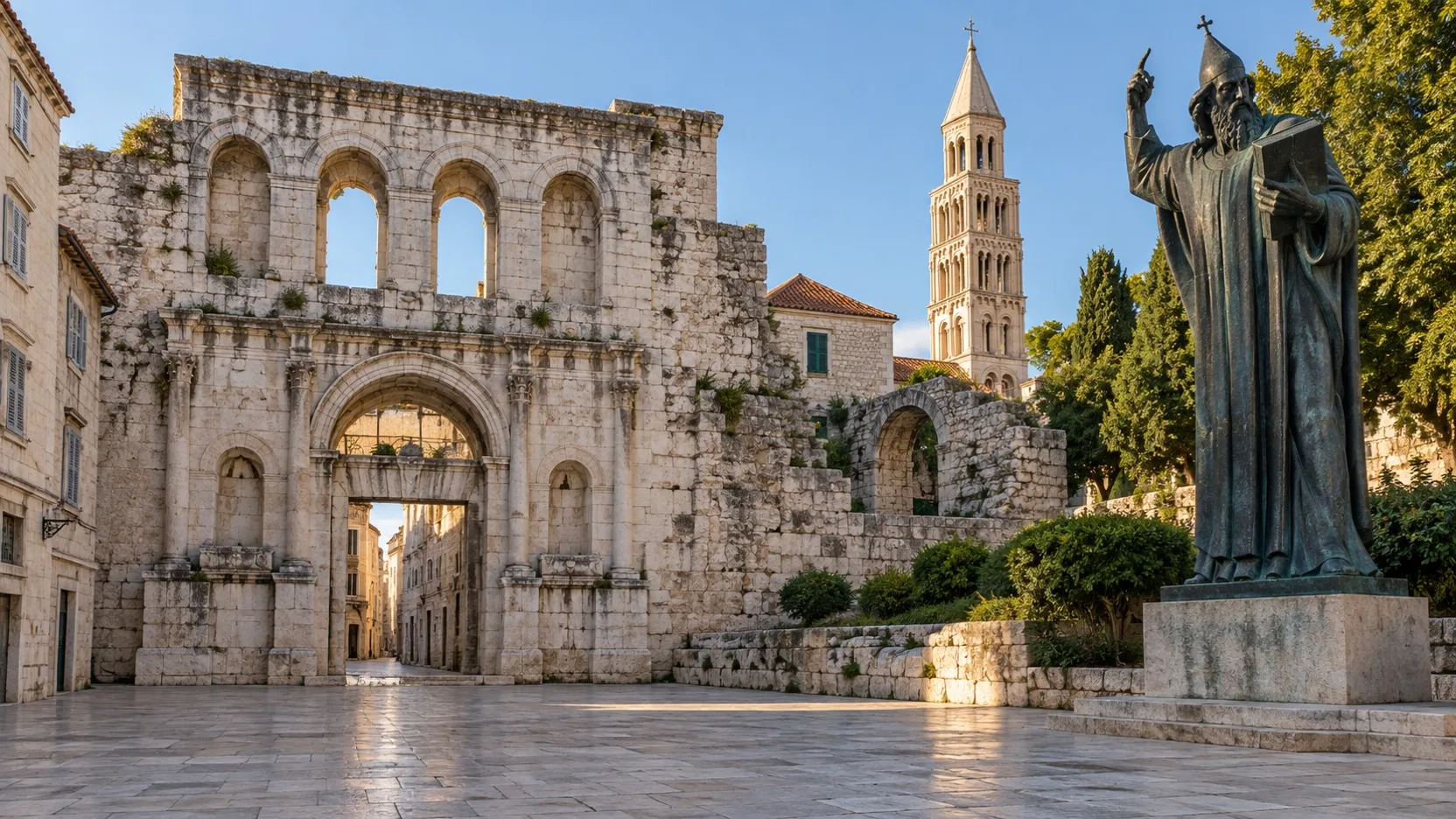
Nearby, the Golden Gate leads to Ivan Mestrovic’s towering Gregory of Nin statue. Rubbing its polished toe is the local good-luck ritual.
Heads up: some links below are affiliate links. If you book through one, I may earn a commission at no extra cost to you. It never changes which hotels or tours I recommend. Full disclosure.
Day trips worth the drive
If your port day is long, Split is a superb springboard. These three are the ones I would consider.
Trogir
A compact island town just up the coast, Trogir is a UNESCO World Heritage Site in its own right. Its medieval core and the Cathedral of St. Lawrence are the draw.
Krka National Park
Krka is the region’s waterfall park, roughly 1 to 1.5 hours each way depending on traffic and park entry. Timed tickets, seasonal transport inside the park, and the no-swimming rule at Skradinski Buk make a ship excursion or tightly managed transfer the sensible choice.
The island of Hvar
Reached by scheduled catamaran from the harbor, Hvar is known for its old town and island landscapes. The public timetable rarely lines up neatly with a cruise call, so do not attempt it simply by hoping to move quickly.
I would choose Hvar only when the outbound and return sailings are confirmed and at least one earlier backup return still gets you to Split well before all-aboard. A ship excursion is the lower-risk option because wind can disrupt fast ferries.
How I would plan the day
- 3 hours: Riva to the Peristyle, the cathedral, and a wander through the palace lanes.
- 5 hours: add the substructures, People’s Square, and a climb up the bell tower or Marjan.
- 8 hours: Put a ship excursion to Trogir or Krka first, then use any remaining time in the Old Town. Independent travelers should target the port 90 minutes before all-aboard, with more margin for a tender call.
Whatever you choose, build in a generous return buffer. Traffic and ferry timings can slip.
A realistic word on accessibility
The Riva itself is flat and smooth, which helps a lot. The palace lanes, however, are polished stone with steps and thresholds.
Gangway steepness varies with the tide and berth, while a tender adds vessel and transfer-step restrictions. Confirm arrangements with the cruise line; the bell tower and Marjan also involve serious stairs.
When to go, and the weather
Most cruises call between spring and autumn. Late spring and early autumn bring warm days and thinner crowds.
Midsummer is hot and busy, so start early and carry water. Strong bora or southerly winds can disrupt tenders and fast ferries even when the old town itself remains visitable.
Quick answers
Do ships dock or tender in Split?
Cruise ships typically berth alongside in the central city harbor, so you usually just walk off.
How far is the old town from the port?
It is a short, flat walk along the harbor and the Riva to Diocletian’s Palace.
What currency do I need?
Croatia uses the euro, and cards are widely accepted across the center.


New to sailing? My first-timer cruise ports guide and my wider European cruise ports hub will help you plan the rest of the trip.
How this guide was researched: Unless a first-hand visit is explicitly identified above, this guide is based on independent research using official port, tourism, transit, government, and attraction sources where available. Logistics and time-sensitive details were reviewed in September 2026; see our Editorial Policy.