Aalborg Cruise Port Guide: Denmark’s Waterfront Viking City
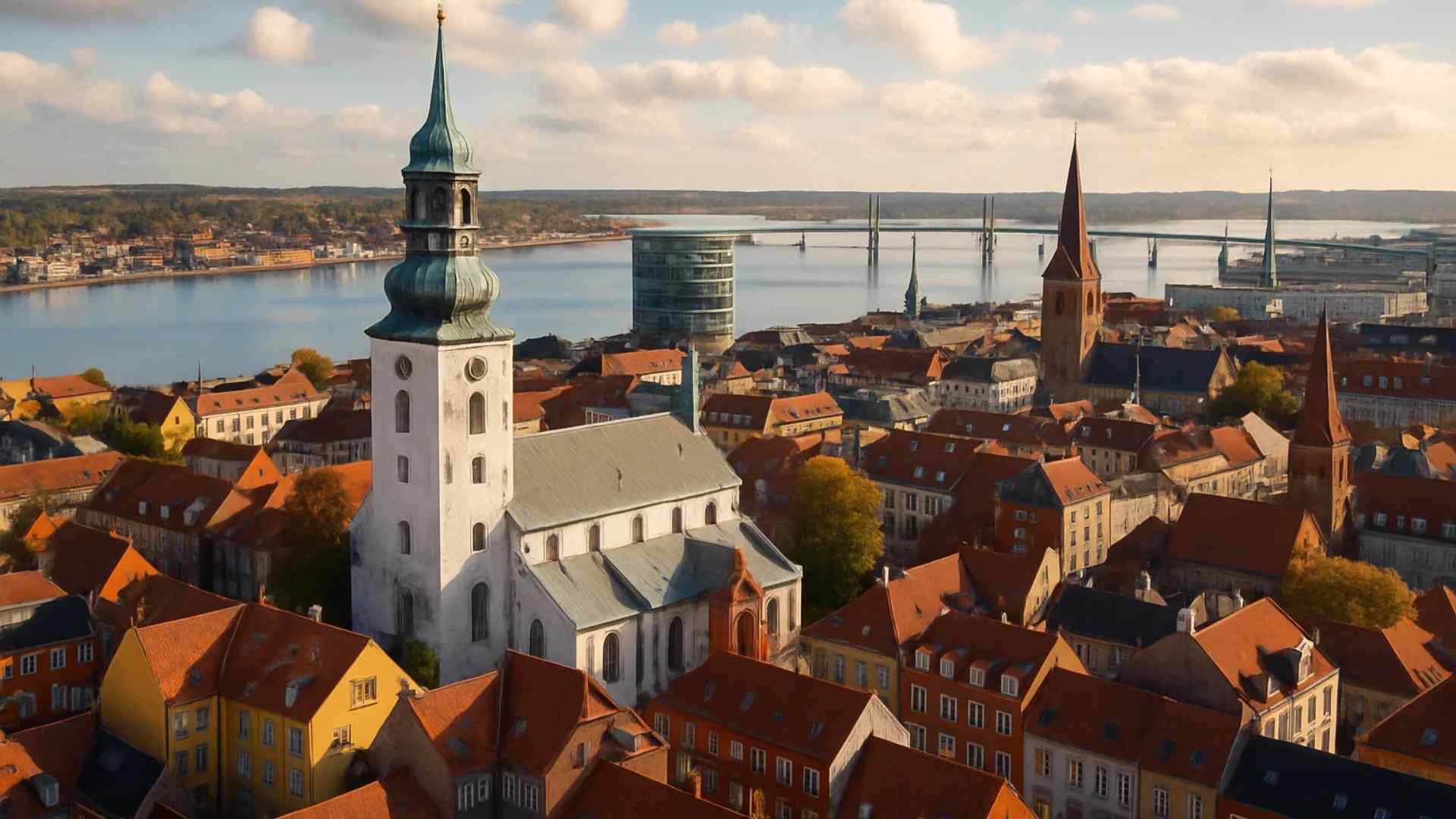
Aalborg gives cruise passengers one of Denmark’s easiest introductions to a real working city. The Limfjord waterfront, old streets, castle grounds, modern architecture, and café-filled center can all fit into a relaxed walking day when your ship uses the central quay.
The one major sight that requires transport is Lindholm Høje, an extraordinary Iron Age and Viking burial landscape north of the fjord. Put that first if it matters to you, then let central Aalborg fill the rest of the day without rushing.
My quick take
Aalborg works best with two anchors: Lindholm Høje for history and the waterfront for the city’s modern personality. Everything else can grow naturally around those choices.
If your call is short, skip the cross-fjord trip and stay central. The Utzon Center, Aalborghus Castle, Jens Bang’s Stone House, Budolfi Cathedral, and the harbor promenade create a satisfying route without a single complicated connection.
The city is flat and friendly to independent exploration, but do not drift into bicycle lanes while admiring the buildings. Danish cyclists move with purpose, and the visual distinction between sidewalk and cycleway is easy to miss when you are new.
Quick Facts
- Typical arrival: Honnørkaj is Aalborg’s signature central cruise quay, close to Aalborghus Castle and the city center.
- Berth changes: The assigned quay can vary, so use the ship’s daily program for the gangway, shuttle, and meeting point.
- Dock or tender: Cruise ships normally berth alongside rather than tender.
- Best walking area: The Limfjord waterfront, Utzon Center, Aalborghus Castle, old town, and Budolfi Cathedral fit one compact central loop.
- Best farther outing: Lindholm Høje combines an outdoor burial landscape with a museum across the fjord.
- Currency and language: Denmark uses the Danish krone, and Danish is the local language, with English widely spoken.
- Public transport: City buses and Plusbus serve destinations beyond the center, but routes should be checked in the current regional journey planner.
- Best planning rule: Visit Lindholm Høje early if it is a priority, then finish on foot near the ship.
Where the ship docks
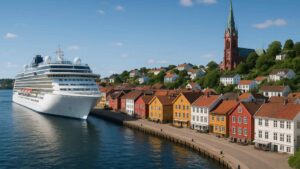
Honnørkaj, often called the Quay of Honor, is the arrival most travelers hope for because it places the ship directly on Aalborg’s central waterfront. Aalborghus Castle is beside the quay, while Nytorv, Gammeltorv, and the old pedestrian streets are only a short walk inland.
Not every call must use the same position. Port operations, vessel requirements, traffic, and the day’s schedule can produce another berth or a shuttle arrangement, so final ship information always outranks a generic port map.
Read the daily program before leaving the cabin and photograph any shuttle notice posted near the gangway. Confirm the final return time and exact stop because “cruise terminal” may not be enough for a driver or local resident to identify your quay.
A central berth makes independent sightseeing unusually simple. There is no need to pay for a panoramic coach merely to reach the old town unless guided commentary or limited mobility makes that format useful.
Arrival-day checks
Look at the gangway slope, weather, and distance to the secure port exit before committing to a route. A ship tied beside the center can still have a long internal walk depending on where passengers are released.
If your call uses a shuttle, find out whether it is continuous or timed. The downtown drop-off may also move for events, road closures, or traffic management.
A waterfront built for walking
Aalborg’s harbor front shows how dramatically the city has changed from industrial port to public cultural space. Broad paths, seating, lawns, water steps, architecture, and views across the Limfjord make it more than a route between attractions.
Begin near the ship and follow the water east toward the Utzon Center and Musikkens Hus. This direction keeps navigation obvious and gives you a strong no-reservation plan when museums are closed or the weather is uncertain.
The promenade is exposed to wind, even when old-town streets feel sheltered. Carry a layer that blocks the breeze, and do not assume a mild forecast means a warm hour beside the fjord.
Watch where walking space meets bicycle routes. Stop at the edge before taking a photograph rather than stepping backward into a lane while framing the ship.
The Utzon Center
The Utzon Center is Aalborg’s signature architecture stop, created in collaboration by architect Jørn Utzon and his son Kim. Its sculptural roofs and waterfront courtyards make the exterior worthwhile even when you do not enter.
Inside, exhibitions explore architecture, design, and ideas rather than presenting a conventional memorial museum. Check the current program and opening hours because changing exhibitions may determine how much time the visit deserves.
The center is an easy flexible stop on a cruise day. You can spend a focused hour inside, pause for the building and harbor views, or simply photograph it while continuing along the promenade.
Musikkens Hus and Nordkraft
Musikkens Hus gives the eastern waterfront a bold contemporary landmark, with concert spaces gathered around a tall central foyer. Daytime access depends on events, so treat the exterior as the guaranteed attraction and any interior visit as a bonus.
Nearby Nordkraft transformed a former power station into a cultural complex. Its cinemas, performance spaces, exhibitions, and sports facilities make it useful in poor weather, though individual venues follow their own schedules.
Together, the Utzon Center, Musikkens Hus, and Nordkraft tell Aalborg’s modern story better than a long historical lecture. They show a city that reused its industrial waterfront instead of turning away from it.
Aalborghus Castle and the old center
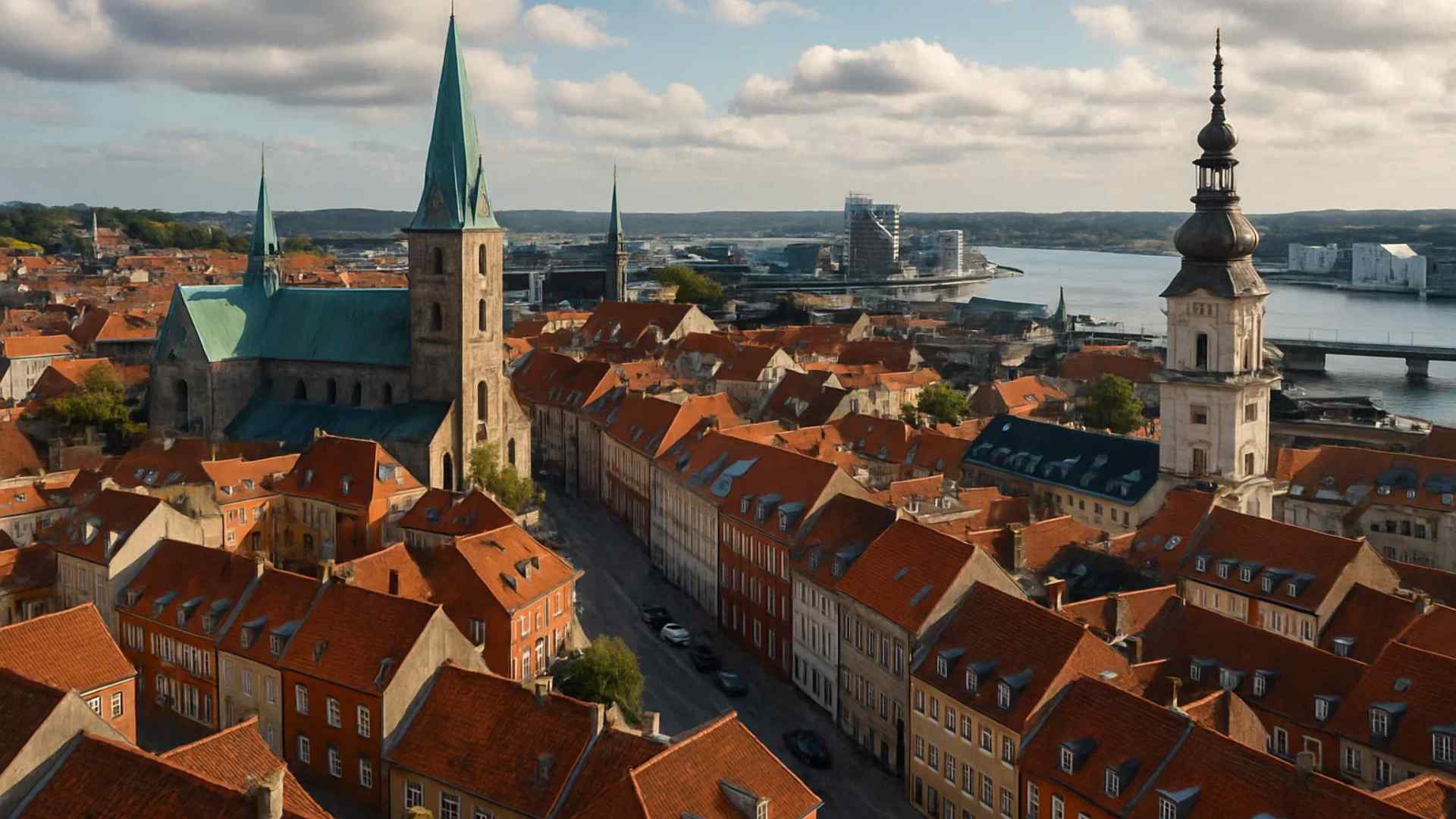
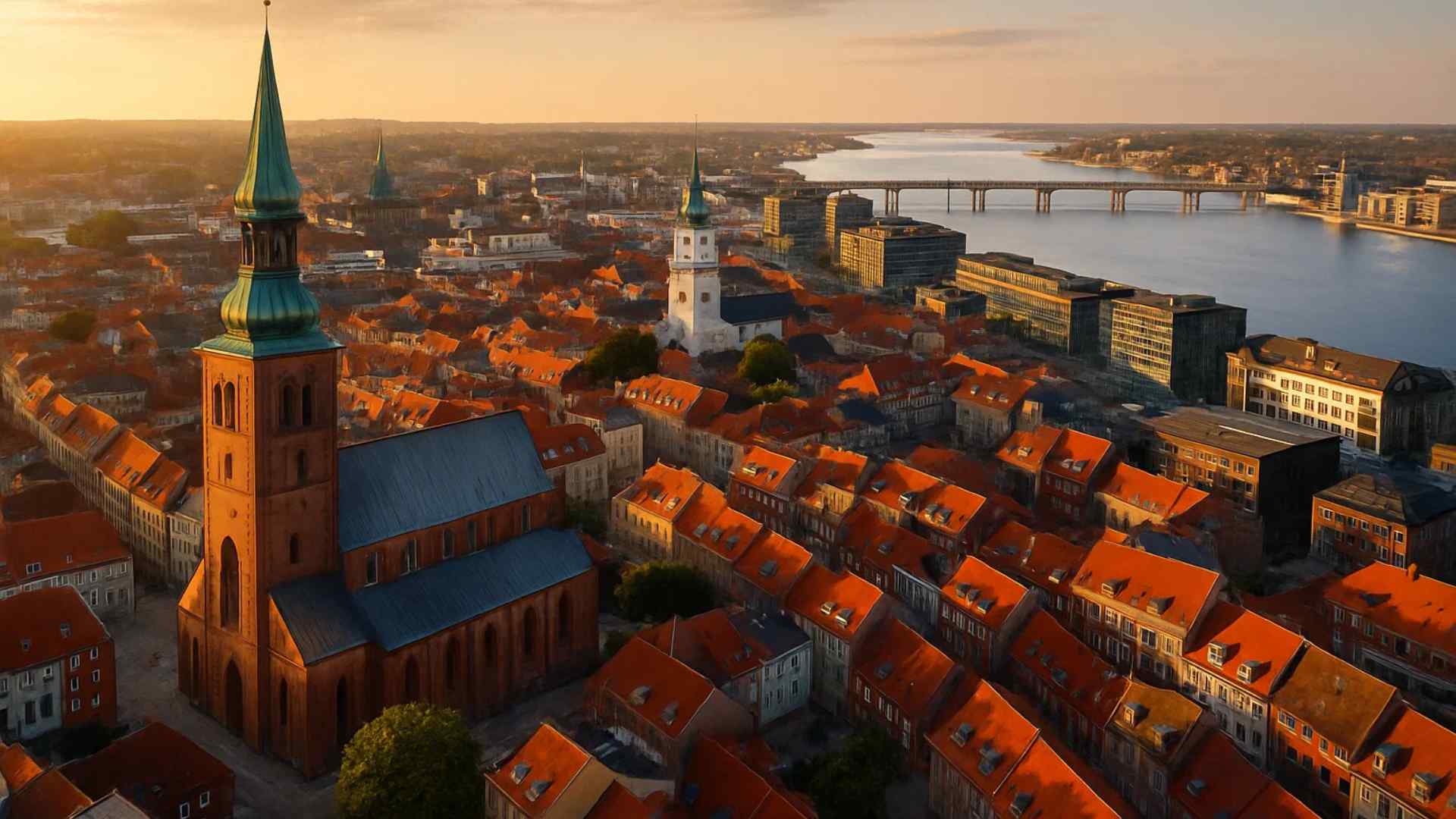
Aalborghus Castle sits low beside the central quay, more restrained than the turreted palace many travelers imagine when they hear “castle.” King Christian III began the present complex in the sixteenth century, and the setting still reads as a practical fortified residence beside the water.
The courtyard and grounds may be accessible without a long visit, while cellars, casemates, or other areas can have seasonal hours. Check the current VisitDenmark Aalborghus information before planning around an interior.
From the castle, move inland toward the main squares and pedestrian streets. Aalborg’s old center mixes preserved merchant houses, churches, shops, restaurants, and later buildings rather than presenting a sealed historic district.
Jens Bang’s Stone House
Jens Bang’s Stone House is the façade to look for in the old center. The richly decorated Renaissance merchant house stands out immediately, and its details reward a few quiet minutes across the street.
The building remains part of the living city, so do not assume every interior is open as a tourist attraction. Its exterior is the reason to include it, and that makes it an easy stop with no timing risk.
Budolfi Cathedral
Budolfi Cathedral’s white exterior and distinctive tower make it a useful landmark while walking through central Aalborg. Inside, the atmosphere offers a welcome pause from shopping streets and traffic when the church is open.
Access can change around services, ceremonies, and events. Enter quietly, follow signs, and accept that a functioning church may close to visitors without notice.
Gammeltorv and the pedestrian lanes
The old market area connects several of the city’s central sights and provides an easy place for coffee or a bakery stop. Side streets can be cobbled, but the overall center is compact enough to adjust the route around rougher surfaces.
Jomfru Ane Gade is famous for nightlife, yet daytime visitors see a much quieter restaurant and bar street. Walk through for context, then choose lunch based on the current menu rather than the street’s reputation after dark.
Aalborg rewards looking above shop level. Merchant façades, rooflines, carved details, and narrow cross streets survive even where the ground floor has become thoroughly modern.
Lindholm Høje: the one excursion I would prioritize
Lindholm Høje lies north of the Limfjord and combines an archaeological landscape with a museum. Stone settings spread across a grassy hill, marking burials from the Iron Age and Viking periods in forms that include ships and other outlines.
The experience is powerful because the site remains open to sky, wind, and changing light. It feels like a landscape first and an artifact display second, which is why I would go even if museums are not normally your thing.
The official Viking Museum Lindholm Høje page is the authority for opening hours, exhibitions, tickets, and visitor information. Check it on the day, especially outside the main summer season.
Allow time for both the hill and the indoor displays. The museum explains the settlement, burial practices, trade, and daily life that make the stones more meaningful than a collection of photogenic shapes.
How to get there
A direct taxi is the simplest use of limited port time, particularly for a small group. Agree on the destination, ask about a return pickup, and avoid assuming an empty taxi will wait outside when you finish.
Public transport can work well when the current schedule aligns with the call. Use the regional journey planner for the exact stop, walking leg, and return rather than copying a route number from an old article.
Visit early if possible, then return to central Aalborg for the flexible part of the day. This sequence protects the ship because the final hours are spent close to the waterfront.
Walking conditions at the site
The museum building is a different accessibility question from the outdoor burial field. Grass, slopes, uneven ground, rain, and wind can make the hill challenging even when the indoor exhibits are manageable.
Wear shoes with traction and let weather determine how far you explore. The view and nearest stone settings can still be rewarding without crossing every part of the site.
Do not climb on stones or disturb the landscape for a photograph. The site is archaeological evidence and a place associated with real burials, not an outdoor play area.
Other worthwhile choices
Kunsten Museum of Modern Art
Kunsten is the major art option for travelers willing to leave the immediate waterfront. The building itself is part of the attraction, with carefully controlled light and a strong relationship between galleries and surrounding landscape.
Check the current exhibition program before choosing it over Lindholm Høje or the old center. A focused art visit can be excellent, but it deserves enough time to avoid becoming a rushed indoor lap.
Aalborg Tower
Aalborg Tower offers a broad overview of city, fjord, and surrounding North Jutland when visibility and opening conditions cooperate. It pairs naturally with Kunsten because both sit away from the central quay in the same general direction.
Treat operating hours as seasonal and weather-sensitive. The structure may be visible from much of the city even when public access is unavailable.
Aalborg Maritime Museum
Travelers with a deep interest in ships can consider the maritime museum farther west along the Limfjord. Exhibits and preserved vessels expand the port story, but the location requires transport or a much longer walk than the central loop.
This is a specialist alternative, not something to squeeze into a day already containing Lindholm Høje. Choose it when maritime history is the point of the visit.
Street art and west Aalborg
Aalborg has developed a strong collection of murals and creative urban spaces beyond the oldest streets. A self-guided street-art walk can add color, but artwork changes and construction can alter a mapped route.
Use current local visitor information rather than expecting every mural from an old guide to survive. The pleasure is in the neighborhood walk as much as locating individual pieces.
Getting around without losing time
Walking
Walking is the default when the ship uses a central berth. The waterfront, castle, old squares, cathedral, Utzon Center, and shopping streets all fit within a compact area.
Surfaces are mostly manageable, but cobbles, curb transitions, construction, and wet paving still matter. Comfortable footwear is more important than a complicated transport pass.
Buses and Plusbus
Aalborg’s bus network and Plusbus connect the center with neighborhoods, the station area, and farther attractions. Buy or validate the correct ticket using current regional instructions, because payment rules can change.
Check the return before boarding outward. A frequent city service still deserves buffer when a ship’s gangway closes at a fixed time.
Taxis
Taxis are most useful for Lindholm Høje, limited-mobility travel, or a short call where waiting for a bus would consume too much time. Save the company details or arrange pickup if the attraction is outside the central rank area.
A direct ride can be good value for a group because it buys time as well as convenience. Confirm whether card payment is accepted if that matters to you.
Bicycles
Aalborg is bike-friendly, but that does not make a rental ideal for every visitor. Only ride if you are confident with urban cycle lanes, hand signals, intersections, and local traffic behavior.
Pedestrians should treat red pavement, lane markings, and curb-separated tracks as live traffic. Look both ways before crossing and never stop in a cycle lane to read a phone.
Three realistic Aalborg plans
The classic full day
Take a taxi or public transport to Lindholm Høje soon after arrival and explore the museum and burial hill. Return to the central waterfront for the Utzon Center, Aalborghus courtyard, old town, cathedral, and lunch.
Finish beside the Limfjord within easy reach of the ship. This plan combines what is unique outside the center with the city’s best walkable area.
A short central call
Walk east along the waterfront to the Utzon Center and Musikkens Hus, then loop through Nordkraft and back into the old town. Continue past Jens Bang’s Stone House, Budolfi Cathedral, and Aalborghus Castle before returning to the quay.
Everything remains flexible, so a late arrival or early all-aboard does not ruin the route. Skip an interior whenever the clock begins to feel intrusive.
An art and architecture day
Start with Kunsten and add Aalborg Tower only if it is open and visibility is good. Return to the waterfront for the Utzon Center, Musikkens Hus, and a slow walk beside the fjord.
This version leaves Viking history for another visit but creates a clear theme. A themed day is often more satisfying than collecting unrelated highlights.
Food and the right pace
Aalborg’s central streets offer bakeries, cafés, traditional Danish lunch choices, and contemporary restaurants. Smørrebrød on rye bread is an obvious midday option, but choose a place that fits the remaining schedule rather than chasing a single famous address.
Tell the server if you have a hard return time. A leisurely Danish lunch is lovely until the final course becomes a race back to the gangway.
A bakery stop can deliver plenty of local pleasure with almost no planning. Coffee and pastry also work well as a weather break between the waterfront and old streets.
Denmark uses the Danish krone, and card payments are common. Keep a backup payment method and do not assume euros will be accepted just because another cruise port used them yesterday.
If you want nightlife, remember that most cruise calls leave before Aalborg’s bar streets wake up. Daytime atmosphere is calmer, and that is an advantage for seeing architecture and finding a quiet meal.
Accessibility and reduced-mobility planning
A central Aalborg berth can make a very comfortable port day because the waterfront is flat and several major sights sit close together. The exact gangway, quay surface, and secure exit still need confirmation from the ship.
The promenade and modern cultural buildings are generally easier than historic interiors, but every venue has its own doors, elevators, restrooms, and temporary closures. Contact a priority attraction directly if a specific route is essential.
Old-town cobbles can be tiring for wheelchairs, scooters, walkers, and anyone with joint pain. Use smoother parallel streets where possible and approach the most decorative lanes in short sections.
Low-floor buses may serve useful routes, yet vehicle space and stop design vary. Confirm mobility-device access in the current transport information and avoid a return connection with no backup.
At Lindholm Høje, separate the accessible museum visit from the outdoor hill. A traveler may enjoy the exhibits and broad landscape view without covering uneven grassy ground.
Taxis with suitable equipment should be booked rather than assumed. Tell the company the device dimensions and whether the passenger can transfer to a standard seat.
Weather and what to carry
North Jutland weather can move between sun, cloud, showers, and fjord wind within one call. Dress in light layers and carry a waterproof outer shell.
The waterfront may feel colder than sheltered pedestrian streets. A layer you can remove easily is better than one bulky coat that becomes uncomfortable indoors.
Shoes need grip for wet paving, grass at Lindholm Høje, and occasional cobbles. An umbrella can help in the center but becomes awkward in wind beside the Limfjord.
Long summer daylight does not guarantee warmth. Pack for the actual forecast and keep one dry layer in your day bag.
If heavy rain arrives, shift time toward the Utzon Center, Nordkraft, Kunsten, or the Lindholm Høje museum. Aalborg has enough indoor culture that poor weather need not flatten the day.
Common mistakes I would avoid
The first is assuming every ship uses the same quay. Confirm the live berth and shuttle plan before following walking directions written for Honnørkaj.
The second is leaving Lindholm Høje until the final hours. Visit the farther attraction first and let central Aalborg become the flexible finish.
The third is walking in bicycle lanes. Pay attention at every curb because cycling infrastructure is part of daily traffic, not extra sidewalk space.
The fourth is overloading the day with museums. Choose one major interior, then use the waterfront and old town to keep the visit breathable.
The fifth is expecting a castle palace at Aalborghus. Appreciate the historic courtyard and restrained waterfront setting rather than looking for fantasy towers.
Finally, do not ignore the Limfjord. The water is the reason Aalborg developed here, and the promenade is the city’s most natural connecting thread.
Quick answers
Where do cruise ships dock in Aalborg?
Honnørkaj is the signature central quay, but assignments can change. Use the ship’s daily information for the exact berth, gangway, and shuttle.
Can I walk into Aalborg from the ship?
Usually yes from a central berth. The waterfront, castle, old center, and Utzon Center are close enough for a straightforward independent loop.
What is the best excursion?
Lindholm Høje is the most distinctive choice because it combines an Iron Age and Viking burial landscape with a museum. Go early, then return to the center.
Do I need Danish cash?
Cards are commonly accepted, but Denmark’s currency is the Danish krone. Carry a backup payment option rather than relying on euros.
Is Aalborg accessible?
The central waterfront is relatively easy, while cobbles, gangway conditions, and the grassy hill at Lindholm Høje require individual planning. Confirm each important segment rather than relying on a citywide label.
What can I do in bad weather?
Choose the Utzon Center, Nordkraft, Kunsten, the Lindholm Høje museum, cafés, and short old-town walks between showers. Keep the waterfront for any brighter interval.
The last word
Aalborg is an unusually forgiving cruise port when the ship reaches the central waterfront. Put the Vikings first if they matter, then let architecture, merchant streets, and the Limfjord fill the hours naturally.
For more Danish planning, compare Aalborg with my guides to Copenhagen and Aarhus. My broader European cruise ports guide helps place this relaxed North Jutland call in a larger itinerary.
How this guide was researched: This guide was independently researched using official port, Danish tourism, regional transit, museum, architecture, and attraction sources. Logistics and time-sensitive details were reviewed in September 2026; see our Editorial Policy.