Ayia Napa Cruise Port: A Cruiser’s Guide to a Cyprus Tender Day
Ayia Napa can give you a glorious Cyprus day of turquoise coves, limestone sea caves, Cape Greco trails, sandy beaches, a medieval monastery, and easy resort-town energy. The planning challenge is that a direct cruise call is ship-specific, so the destination name alone does not tell you whether you will tender, use another arranged landing, or arrive overland from a different Cyprus port.
Solve that first, then choose one stretch of coast. The day falls apart when you try to collect Cape Greco, every beach west of town, a boat trip, a museum, and lunch as though bright Mediterranean water somehow makes the clock run more slowly.
My quick take
For a first call with a generous schedule, I would visit Cape Greco early and return for one central stop, either the monastery area or Thalassa Museum. For a shorter or very hot call, I would stay close to town, add one beach, and preserve an easy return.
A coast boat can be excellent, but I would use it instead of a land-based Cape Greco circuit rather than stacking both. You already have a ship and possibly a tender in the day’s transport chain, so a second boat should earn its hours.
Most importantly, do not treat Ayia Napa Marina’s yacht specifications as proof that your cruise ship will dock there. Your cruise line’s daily program is the only useful source for the actual landing, transfer, and final return.
Quick Facts
- Arrival: The arrangement is ship-specific and may involve tendering, another local landing, or a coach excursion from a different Cyprus port.
- First task: Confirm the exact landing point, first and last boat, shuttle, and ship’s time before leaving.
- Best nature outing: Cape Greco National Forest Park for trails, viewpoints, sea cliffs, and the environmental center.
- Best cultural stops: Ayia Napa Monastery, Thalassa Museum, and the Makronissos Tombs.
- Best beach choice: Pick one that matches your route, such as a central beach, Nissi, Makronissos, or Konnos.
- Currency: Euro, with cards common and some cash useful for small purchases.
- Language: Greek is official, while English is widely used in the resort economy.
- Return rule: Leave extra margin when a bus, taxi, coast boat, and ship tender must all connect.
First, establish where your ship is going
Read the port name and arrival instructions in the ship’s daily program. Some eastern Cyprus itineraries offer Ayia Napa as an excursion from another port, while a direct call can use arrangements that vary by vessel and day.
Do not assume that “Ayia Napa” means the old harbor, a particular pontoon, or Ayia Napa Marina. Photograph the landing from shore, save the ship’s port-agent number, and note the final transfer time before you begin sightseeing.
The Ayia Napa Marina publishes specifications for yachts and superyachts. Those facilities are impressive, but they do not establish a universal berth for a mainstream cruise ship.
The old harbor serves local and excursion boats and may be involved in some visitor movements. Your captain and local authorities determine what applies to your call, so an online report from another vessel is background rather than instruction.
Wind and sea state can alter a tender operation even when the coast looks close. Stay alert for ship messages and be willing to shorten the day if the return operation changes.
My guide to tender ports explains the general transfer process. Your own ship’s boarding criteria, mobility rules, and cutoff remain the ones that count.
If you land near central Ayia Napa
A central landing makes a compact town day possible without elaborate transport. The harbor, monastery area, Thalassa Museum, promenade, restaurants, and several viewpoints can be joined at an easy pace.
Begin by confirming the return point from the land side. Harbors have a way of making one white canopy look exactly like another after lunch.
Walk inland early if you want the monastery or museum before beach time. The most exposed coastal stops are better saved for later only when heat and wind remain comfortable.
Central Ayia Napa is a resort town, so its personality changes by hour and season. Morning can feel relaxed and local, while afternoon brings more beach traffic and nightlife businesses begin to wake up.
Ayia Napa Monastery and the old center
Ayia Napa Monastery is the historical anchor in a town often reduced to nightlife and sun loungers. Its medieval complex, church, courtyard, stonework, and shaded setting connect modern Ayia Napa with a much older religious landscape.
Check current access because worship, conservation work, ceremonies, and seasonal hours can affect what is open. Dress respectfully, lower your voice, and never treat an active service as a photo opportunity with inconvenient people in it.
The surrounding square helps orient the inland center even if the monastery interior is closed. Pair it with a café, short town walk, or the museum rather than crossing the whole resort for another minor stop.
This is also a useful midday pause when the coast is brutally bright. Old stone and shade can do more for morale than one additional beach.
Thalassa Museum
Thalassa Municipal Museum explores Cyprus through the sea, connecting natural history, archaeology, maritime culture, and coastal life. Its displays make a strong counterweight to a day otherwise dominated by sand and boat photographs.
A central exhibit is associated with the ancient Kyrenia ship through a reconstruction, while galleries and temporary displays can change. Check the museum’s current official listing for opening, tickets, last admission, and accessibility.
I would choose Thalassa on a short call, a hot afternoon, or a day when wind removes a coast boat from the plan. It gives the visit local depth without requiring another transport chain.
Allow enough time to read rather than treating the museum as air conditioning with artifacts. Cyprus’ maritime history makes the modern resort coastline much more interesting.
Cape Greco deserves the first half of the day
Cape Greco National Forest Park lies between Ayia Napa and Protaras. The official Cape Greco Environmental Centre introduces the area’s ecosystems, marine setting, conservation work, and network of trails.
Visit Cyprus describes the protected landscape as sea cliffs, native and endemic flora, paths, cycling routes, viewpoints, and access to marine recreation. The center’s hours and fees can change, and its own page advises checking before a visit.
Choose one route according to heat, wind, walking ability, and return transport. A map full of trail lines is an invitation to choose, not a demand to complete the set.
Clifftop areas can be exposed and uneven. Stay behind barriers, respect closures, carry water, and ignore any unofficial path whose only recommendation is a dramatic social-media photograph.
A taxi or cruise excursion gives the most control over a short visit. Public buses can work, but only when the current timetable leaves ample recovery time.
Sea caves and viewpoints
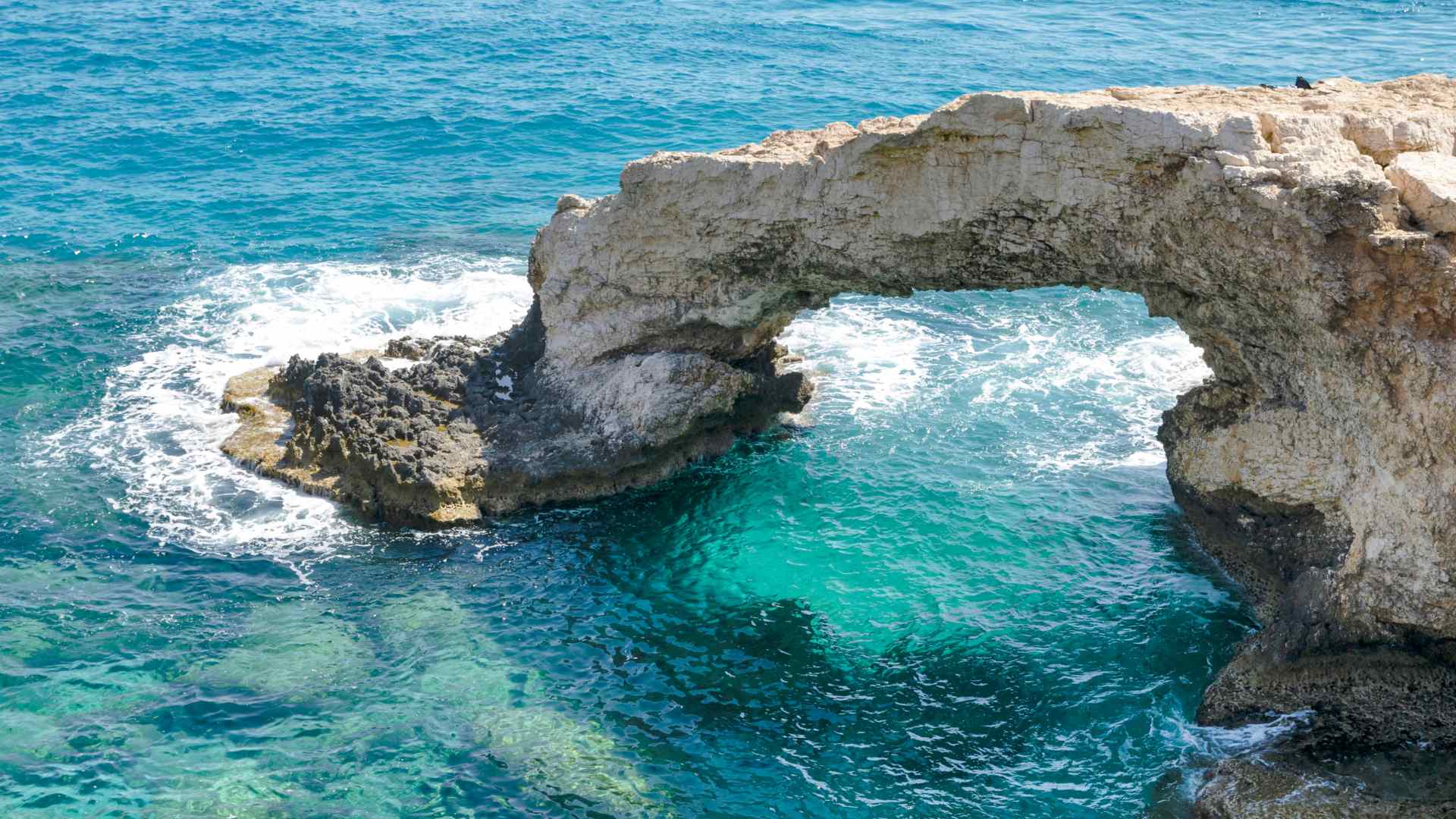
Ayia Napa’s eroded coast creates arches, caves, ledges, and striking water color around the headlands. See the formations from legal viewpoints or from a properly operated boat rather than descending improvised cliff routes.
Conditions can be placid in one bay and rough around the next point. A barrier, warning, or captain’s refusal is the end of the discussion, not an obstacle to outsmart.
Never jump from cliffs because other swimmers are doing it. Depth, submerged rock, swell, exit routes, and local restrictions can change, while the ship will not extend all aboard for a rescue demonstration.
Konnos Bay and the eastern beaches
Konnos Bay sits near Cape Greco and pairs naturally with a park visit. Its sheltered-looking curve is beautiful, but access, crowding, services, water conditions, and lifeguard coverage remain seasonal.
The road approach and path to the beach can add effort. Confirm the current stop, taxi pickup, and beach access if mobility or heat tolerance is limited.
Choose Konnos when nature and swimming are the point of the day. Do not add it merely because the water appeared on the same map as your viewpoint.
Follow posted flags and designated swimming areas. Clear water can still contain currents, sudden depth, rock, and busy watercraft.
Nissi Beach and the western beach strip
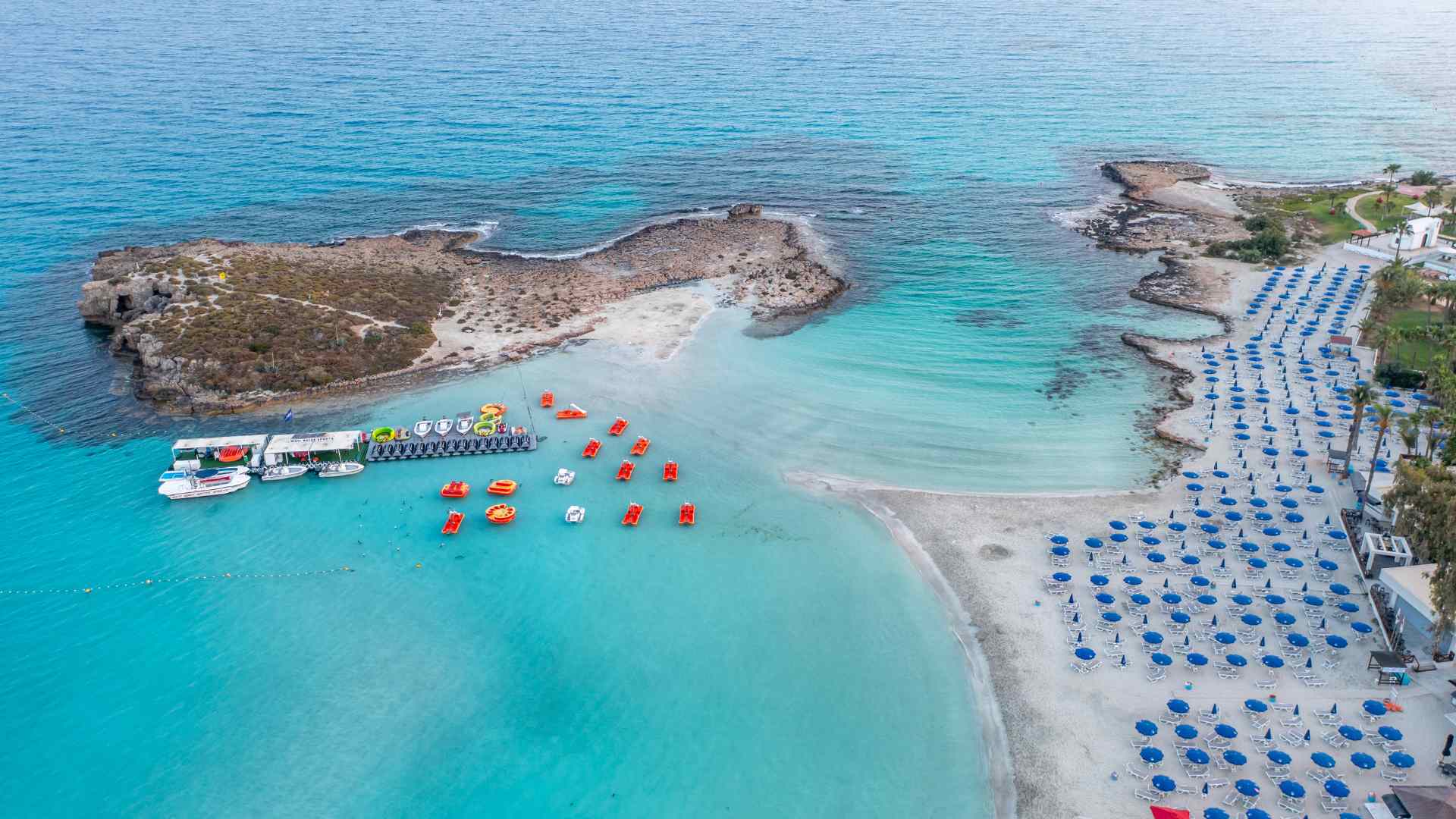
Nissi Beach is the famous lively option west of central Ayia Napa, known for pale sand, shallow-looking water, music, and a busy summer scene. It suits passengers who want activity more than seclusion.
Crowds, heat, traffic, and seasonal businesses can change the experience. Set a departure alarm before you settle in, because a beach has no natural ending until the ship sails without you.
Makronissos Beach lies farther west and pairs well with the nearby archaeological site. Ayia Thekla offers another shoreline and chapel setting, but its distance from the center makes a taxi or current bus plan more important.
Pick one beach, not the entire brochure. Moving among three coves mostly produces transport time, repeated changing, and a sophisticated relationship with damp swimwear.
Makronissos Tombs
The official Makronissos Tombs page describes a rock-cut archaeological complex with tombs, a small sanctuary, and an ancient quarry associated with Hellenistic and Roman use. It is a rewarding cultural stop for passengers already traveling to the western beaches.
Expect exposed archaeological terrain rather than a climate-controlled museum. Stone, sun, irregular ground, and limited shade make sturdy shoes and water more important than the short distance suggests.
Respect barriers and do not enter areas that current signs close. Check the live visitor information before building the day around access.
The site and neighboring beach create a sensible two-part outing. Adding Cape Greco on the opposite side of town turns that logic into a long cross-resort transfer.
Using the OSEA buses
The official OSEA route page publishes current timetables, stop sequences, maps, and live-arrival links. Routes 101 and 102 connect Ayia Napa with Cape Greco, Konnos, Protaras, and Paralimni, while local circular services cover central and western resort areas.
Route numbers and seasonal schedules can change, so use the current page rather than a screenshot from another year. Check the direction carefully because paired routes may run opposing ways.
Do not plan around the final bus that could theoretically get you back. Choose a departure that leaves time for traffic, a missed stop, the walk to your landing, and any tender queue.
A taxi is often worth the cost when several people travel together or when a beach day includes bags. Confirm meter or fare arrangements, pickup location, and whether the driver will return at an agreed time.
Is a coast boat worth it?
Local operators may offer sailings toward the sea caves and Cape Greco, but the phrase “coastal cruise” covers vessels with very different size, shade, restrooms, seating, boarding steps, and swimming procedures. Ask specific questions before paying.
Use a licensed operator whose schedule fits comfortably inside the ship’s return. Confirm the departure point, duration, route, flotation equipment, weather policy, and what happens if conditions stop a swim.
Wildlife may appear, but it should not be promised. Avoid any operator that chases animals, crowds caves, or turns risky cliff behavior into entertainment.
A morning sailing may offer a calmer rhythm, though only the captain can judge the actual sea. Leave enough margin between the local boat and your ship’s boat because two marine schedules have no obligation to cooperate.
For a first visit, I would choose either the coast boat or the land-based park. Doing both often repeats the same scenery while consuming the hours you hoped to spend ashore.
Three realistic day plans
A short central call
Stay near the harbor, visit the monastery area and Thalassa Museum, then take a promenade walk or short taxi to one nearby beach. Return before the tender line becomes the day’s final attraction.
This plan survives a delayed landing and avoids dependence on cross-town transport. It is also the kindest choice in peak heat.
Cape Greco with one town stop
Go first by excursion, taxi, or a verified OSEA bus to Cape Greco. Choose one safe viewpoint, trail segment, or Konnos Beach, then return for either the monastery or museum.
If the arrival starts late, cut the town stop rather than compressing the park and return. The headland deserves attention, not a sequence of vehicle doors and hurried photographs.
Makronissos history and beach
Travel west to the Makronissos Tombs, explore the site within the open areas, and spend the remaining time at the neighboring beach. Return directly to the confirmed landing without crossing back east for Cape Greco.
This is the most coherent western plan. It combines archaeology and swimming with fewer moving parts than a coast-spanning circuit.
Accessibility in practical terms
A tender transfer can be the decisive barrier and depends on ship design, platform, sea state, assistance limits, and mobility equipment. Ask the cruise line before travel for precise participation criteria rather than a vague promise that staff will help.
Central promenades and resort streets may be manageable, but curb cuts, crowded sidewalks, older paving, and heat vary. A short taxi can preserve energy for the museum or beach.
Cape Greco trails and cliff viewpoints include natural, uneven, and exposed ground. Use the environmental center and a vehicle-accessible viewpoint if a trail is unsuitable.
Makronissos has archaeological surfaces, while beaches involve sand and changing seasonal facilities. Verify beach mats, accessible restrooms, and assisted-water equipment directly for your date.
Buses may offer accessible features, but the correct vehicle, stop, and space need confirmation. My guide to wheelchair-friendly cruise ports provides a checklist for calls where the ship transfer and shore route both matter.
Heat, sun, and ordinary safety
Summer heat and ultraviolet exposure are serious planning factors. Put outdoor walks early, carry more water than you think you need, and use a hat, sunscreen, sunglasses, and shade.
Spring and fall are often gentler for hiking, but wind can affect tenders and coast boats in any season. Follow official forecasts, beach flags, park notices, and ship announcements.
Cyprus traffic keeps left. Look in both directions when crossing, and think carefully before using a rental vehicle for a short call with unfamiliar roads and parking.
Use licensed taxis and agree on the meter or fare arrangement. Save the landing location and ship contact offline in case mobile service or battery power fails.
Keep valuables controlled on beaches and boats. A waterproof pouch is useful for a phone and card, but it is not permission to swim into restricted areas.
Money, language, and food
Cyprus uses the euro, and cards are common in the resort area. Carry some cash for small vendors, local buses, or a business whose payment system is temporarily offline.
Greek is the official everyday language in this part of Cyprus, while English is widely used across tourism. A polite greeting and clear, simple questions work better than speaking louder.
A meze lunch can be wonderful, but the many small dishes take time. Order a shorter meal if your return includes a bus and tender rather than assuming lunch will arrive at cruise-ship speed.
Look for grilled fish, halloumi, salads, dips, bread, and seasonal produce. Ask about allergens carefully because shared plates can hide ingredients more easily than one simple dish.
Common planning mistakes
The first mistake is assuming Ayia Napa Marina is a cruise terminal because it has substantial yacht berths. Your ship’s confirmed arrival plan remains the only answer that matters.
The second is waiting until ashore to learn the final tender time. Photograph the information before leaving the landing.
The third is combining Cape Greco, Nissi Beach, Makronissos, a coast boat, and central museums in one call. The places are reachable, but the day becomes a transportation exercise.
The fourth is using the final workable bus. Seasonal service and road traffic deserve a backup departure.
The fifth is treating turquoise water as proof of safety. Flags, barriers, weather, currents, boat zones, and official closures still govern the coast.
Frequently asked questions
Does Ayia Napa have a regular cruise terminal?
Do not assume one standard mainstream cruise setup. Confirm whether your itinerary uses a direct ship-specific landing or brings you overland from another Cyprus port.
Will my ship tender?
It may, but your captain and cruise line provide the final answer for that call. Sea state can also alter the operation after arrival.
Can I visit Cape Greco independently?
Yes, by taxi or current OSEA service when the schedule provides enough margin. Choose one section of the park and arrange the return before you begin.
Which beach is best for a cruise day?
Choose by route rather than fame. Konnos pairs with Cape Greco, Makronissos pairs with the tombs, and a central beach minimizes transport.
Can I see the sea caves from land?
Yes, from legal viewpoints where access is open. Stay behind barriers and avoid improvised descents or cliff jumps.
Is a coast boat suitable for everyone?
No, because boarding steps, motion, shade, restrooms, seating, and swimming arrangements differ by vessel. Ask the operator for exact details before buying.
What is the best short-call plan?
Stay central for the harbor, monastery area, Thalassa Museum, and one nearby waterfront stop. A simple plan protects the return and still feels distinctly Cypriot.
The bottom line
Ayia Napa rewards a clear choice more than an ambitious checklist. Confirm the landing, choose the eastern nature coast or the western beach and archaeology route, then leave enough space for Cyprus to feel relaxed.
If you are comparing tender logistics, my guide to tender ports that still feel easy shows what makes a small-boat day work. Ayia Napa can feel simple too, but only after the ship-specific arrival and return have been confirmed.
How this guide was researched: Marina, Cyprus tourism, protected landscape, archaeology, bus, accessibility, and visitor details were checked against current primary sources on September 11, 2026. Landing arrangements, route schedules, and coastal access can change, so verify live notices and see our Editorial Policy.