Brindisi Cruise Port: Berths, Old Town and Lecce
Brindisi has spent more than two thousand years looking east across the Adriatic, and the harbor still feels like a threshold between Italy and the wider Mediterranean. For a cruise passenger, the key is knowing whether the ship is in the outer port at Costa Morena or closer to the inner waterfront, because that single detail changes the first and last part of the day.
Once you reach the center, Brindisi is refreshingly manageable. The Roman column, cathedral square, archaeological museum, harbor promenade, and small old town make an excellent independent route, while Lecce is the one ambitious extension that can fit when the timetable and ship hours are generous.
Brindisi Cruise Port Quick Facts
- Arrival: Large cruise ships may use Costa Morena or another assigned port berth, while smaller vessels can receive a different position.
- Transfer: Costa Morena is in a working outer port, so use the ship or port shuttle when one is provided.
- City center: The inner harbor promenade and old town are compact and comfortable to combine on foot.
- Roman landmark: The surviving Roman column stands above the harbor near the Virgil Steps and traditionally marks the Brindisi end of the Appian Way.
- UNESCO context: Via Appia, Regina Viarum, including Brindisi components, joined the World Heritage List in 2024.
- Museums: The Francesco Ribezzo Provincial Archaeological Museum is beside Piazza Duomo, subject to current opening arrangements.
- Lecce: Direct trains can be quick, but the station transfers and the walk into Lecce must be included in the schedule.
- Ostuni: The rail station is outside the hilltop old town, making the excursion less simple than the train time suggests.
- Currency: Italy uses the euro, and cards are common, though some cash helps with small purchases.
- Return rule: Allow time for the train or road journey, city transfer, port security, and shuttle from the gate to the ship.
Your Berth Determines the First Move
Brindisi has an extensive natural harbor with inner, middle, and outer sections serving ferries, freight, industry, and passenger ships. Cruise vessels commonly use Costa Morena in the outer port, but the exact berth is an operational assignment, so a previous visitor’s walking directions may begin from the wrong place.
Read the ship’s daily program for the berth name, shuttle, gate, and all aboard time. If the ship provides a transfer into central Brindisi, identify the exact return stop and final shuttle before leaving, because reaching the city bus stop is not the same as reaching a vessel behind port security.
Costa Morena Is Not an Old Town Pier
Costa Morena belongs to the working port and should not be treated as a pleasant waterfront walk into town. Distances, commercial traffic, security restrictions, and limited pedestrian routes make the authorized shuttle or a properly arranged taxi the sensible connection.
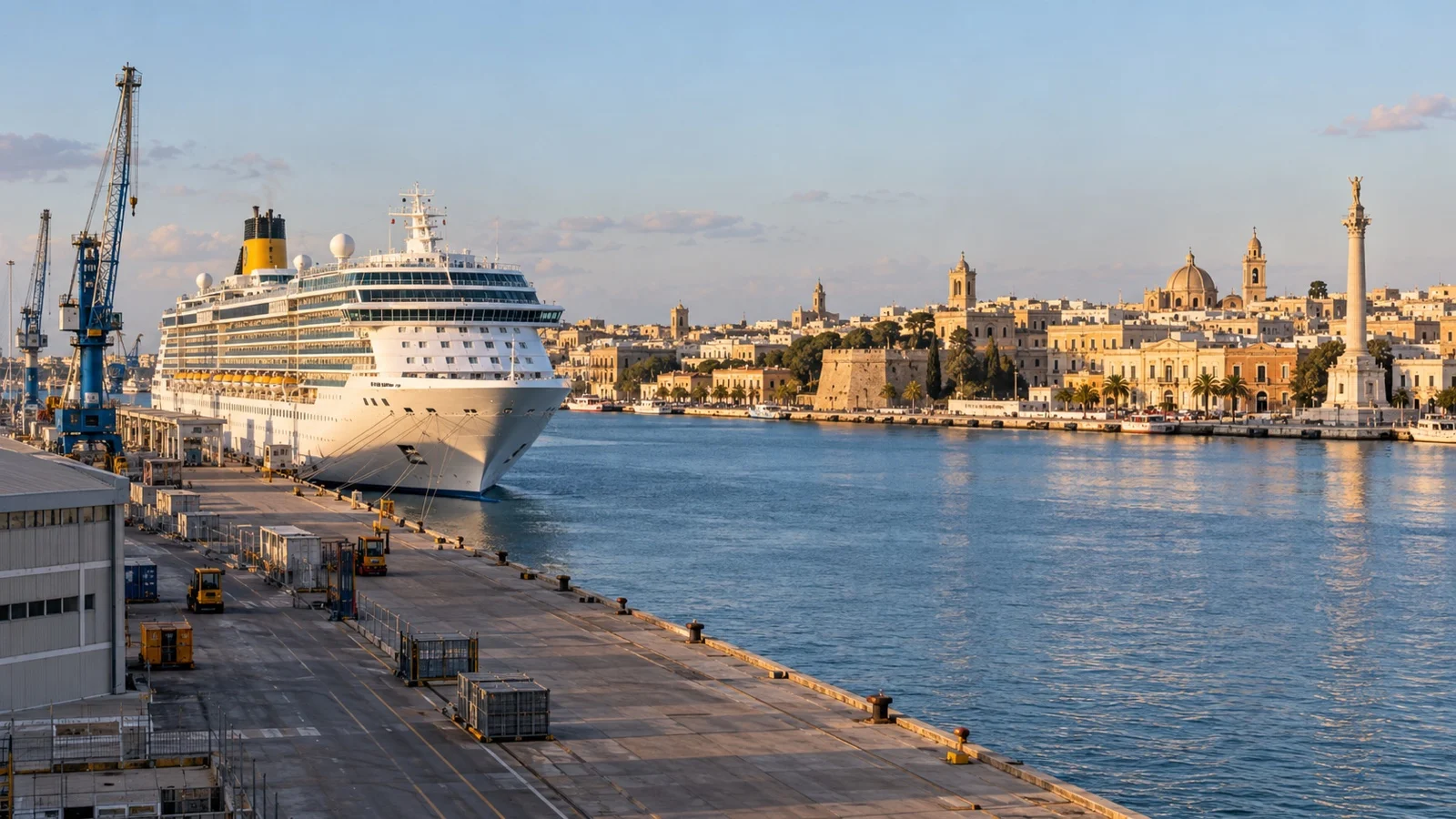
Do not step around barriers or follow truck lanes because the city appears close across the harbor. Port staff may change the route during active operations, and their instructions take priority over any map saved before arrival.
Arriving at the Inner Harbor
The city transfer usually reveals Brindisi at its best, with a long promenade curving around calm water and the Monument to the Italian Sailor visible across the harbor. Confirm the return landmark immediately, then begin on foot with the ship’s schedule already translated into a personal turnaround time.
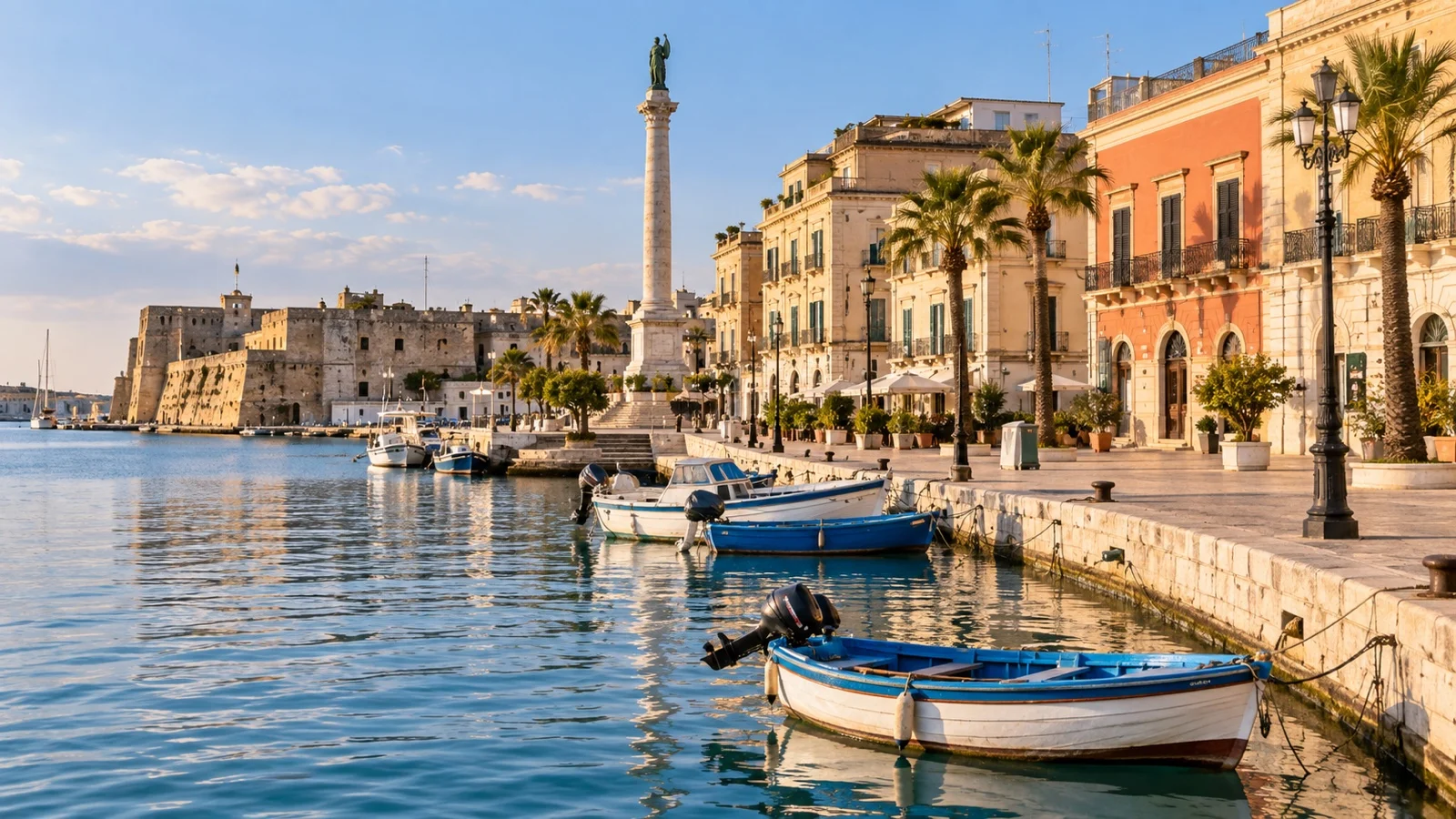
The center is relatively flat compared with many Apulian hill towns, though old paving, curbs, steps, and summer heat still matter. The harbor provides an easy orientation line, while the railway station sits inland beyond the central grid.
Begin at the Roman Column
At the top of the Virgil Steps stands the surviving Roman column associated with the end of the ancient road system from Rome. Its companion column is no longer intact here, but the setting above the harbor still gives the monument an extraordinary sense of arrival and departure.
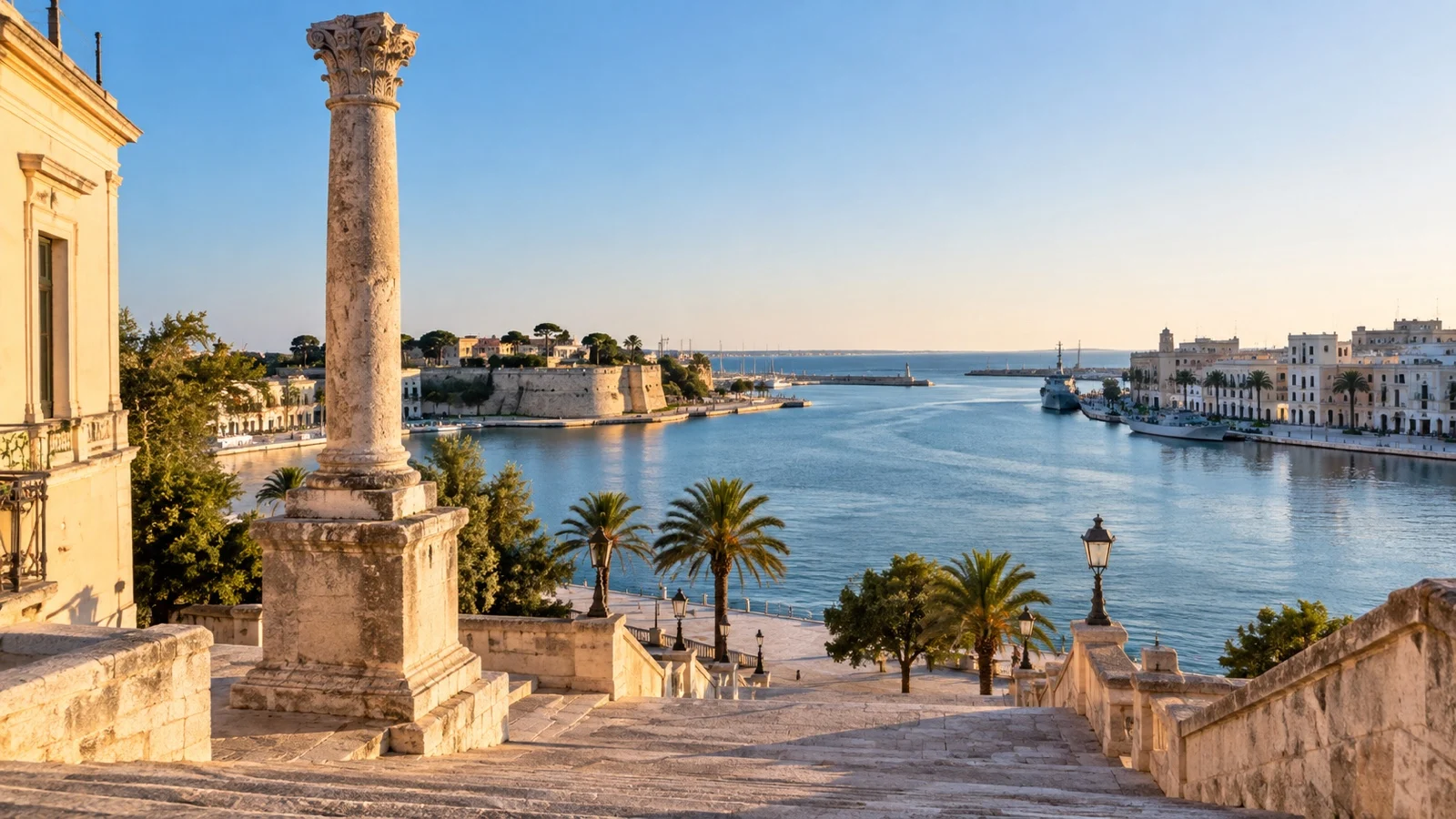
The 2024 inscription of Via Appia, Regina Viarum, on the UNESCO World Heritage List adds useful context to Brindisi’s role. This was not merely a distant endpoint on a map but a port linking roads, military movement, trade, travelers, and the eastern Mediterranean.
Use the Steps as a Viewpoint, Not a Race
The Virgil Steps create a handsome approach from the waterfront, but travelers who avoid stairs should seek the street route around the upper level. Ask locally about current access, because construction or event barriers can change the most convenient path.
From above, pause for the harbor geometry and working traffic rather than rushing directly inland. Brindisi’s story makes more sense when you can see why this protected waterway mattered.
Piazza Duomo and the Cathedral
A short walk leads to Piazza Duomo, an elegant, contained space surrounded by religious and civic history. The cathedral has been rebuilt after earthquakes and wartime damage, so what you see is a layered survivor rather than an untouched monument from one period.
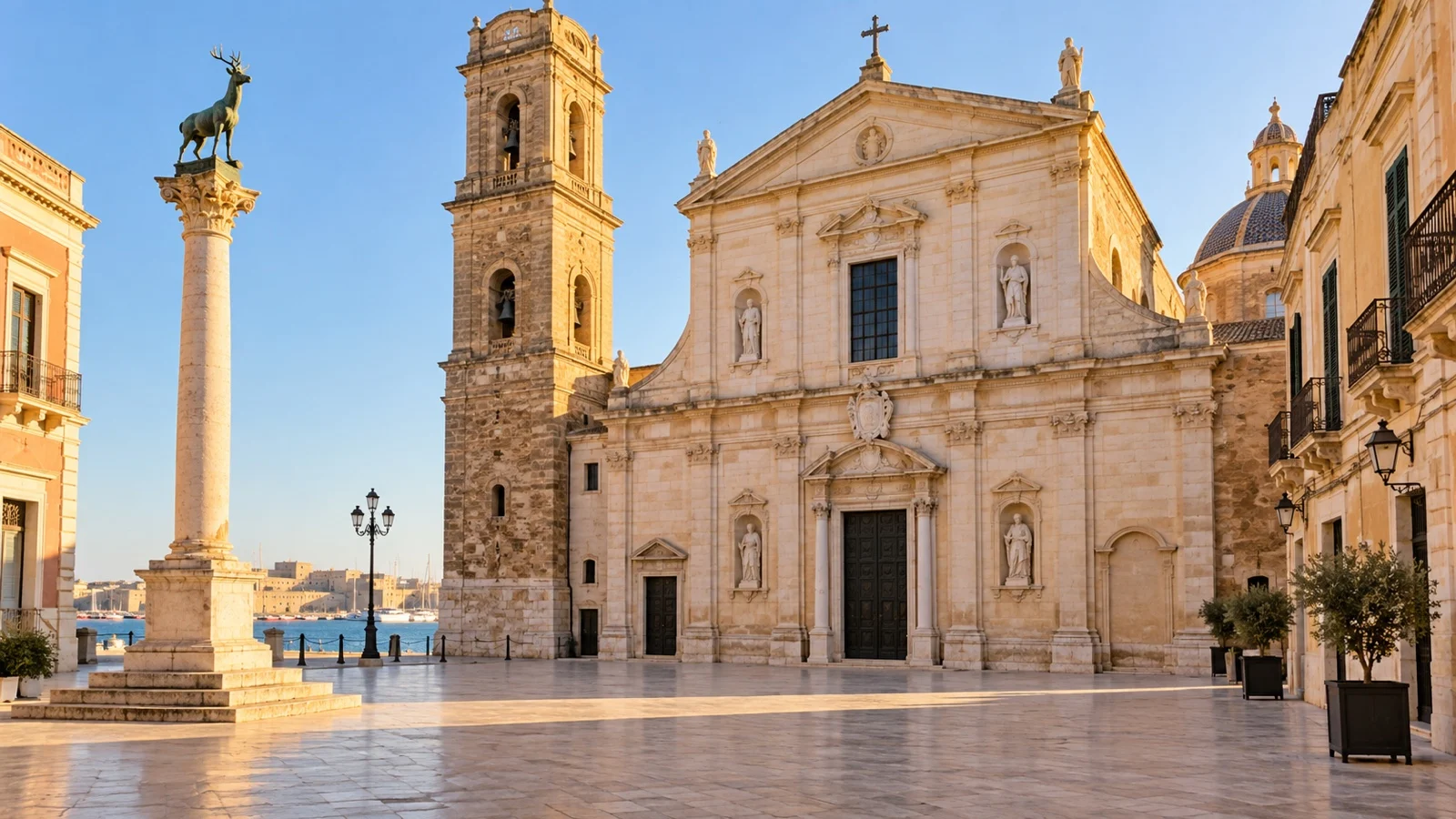
Churches remain places of worship, and access can pause for services, weddings, funerals, or private observance. Dress respectfully, keep voices low, and do not assume that every chapel or treasury is open because the main door is unlocked.
The Ribezzo Archaeological Museum
The Francesco Ribezzo Provincial Archaeological Museum stands by Piazza Duomo and provides the clearest indoor introduction to ancient Brundisium and the surrounding territory. Collections can include archaeology from the Messapian, Greek, and Roman worlds, along with material connected to maritime trade.
Check current opening days, admission, and gallery access through official local channels before building the day around it. Provincial museums can change hours seasonally or close sections for exhibitions and maintenance, and a cruise call may fall on a quiet weekday or holiday.
Travelers with mobility needs should ask about the entrance, elevator, restroom, and route through the displays. A historic building can offer modern access in some areas without making every threshold or gallery identical.
San Giovanni al Sepolcro
The circular church of San Giovanni al Sepolcro is one of Brindisi’s most atmospheric small monuments, with medieval architecture and carved details that reward close attention. Opening can depend on local management and volunteers, so treat an interior visit as a welcome bonus rather than a guaranteed appointment.
The surrounding streets offer a quieter old town experience than the main commercial avenues. Give residential doorways room, ask before photographing people, and remember that silence often suits the building better than a running commentary.
A Harbor Walk Tells the Modern Story
Return toward the Lungomare Regina Margherita for cafés, palms, boats, and open views across the inner harbor. The promenade connects ancient references with a modern port city whose identity also comes from ferries, naval history, energy, and commerce.
Across the water, the Monument to the Italian Sailor rises above the Casale side. A local harbor boat or taxi may make it accessible, but the service and opening arrangements must be checked that day, because crossing the water adds another timetable to the return plan.
The Appian Way Does Not End at One Stone
It is tempting to reduce Brindisi’s Roman identity to the column, yet the UNESCO property recognizes a much larger system of routes and associated places. Use the column as an invitation to notice harbor access, street alignments, museum objects, and the city’s enduring position between land and sea.
Avoid buying coins, pottery fragments, or objects presented as genuine antiquities. Italian cultural property laws are strict, and a responsible souvenir should come with clear modern provenance rather than a persuasive story about something found in a field.
A Brindisi Day With Room to Breathe
A satisfying first route links the shuttle stop, harbor promenade, Roman column, Piazza Duomo, the Ribezzo Museum, San Giovanni al Sepolcro, and lunch. Everything stays near the inner harbor, which makes the plan resilient if the ship arrives late or the shuttle takes longer than expected.
Choose two interiors rather than forcing every door into the schedule. Brindisi’s light, water, and lived in streets are part of the experience, not empty space between attractions.
Lecce Is the Natural Day Trip
Lecce lies southeast of Brindisi and is famous for the exuberant local Baroque architecture carved from warm limestone. Piazza del Duomo, the Basilica of Santa Croce, the Roman amphitheater area, and the central lanes can fill several hours without needing transport once you reach the historic center.
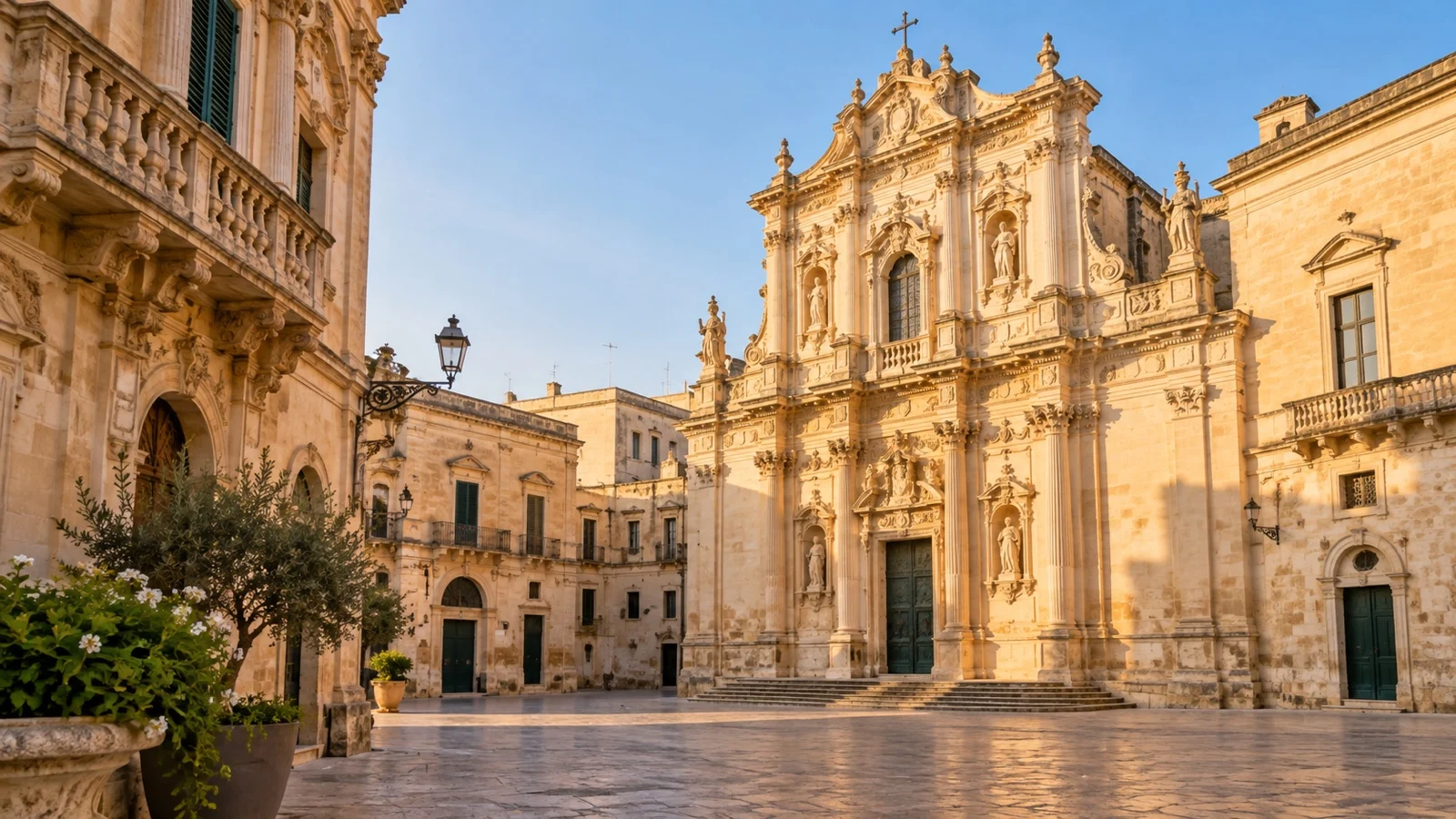
Direct Trenitalia services between Brindisi and Lecce can be relatively quick, but the train ride is only one piece of the day. You must first travel from the cruise berth or shuttle stop to Brindisi station, then walk or transfer from Lecce station into the central sights.
How to Make Lecce Cruise Safe
Check the exact outbound and return trains on Trenitalia for your date, including service alerts and any 2026 infrastructure work. Buy the correct ticket, validate it when the fare rules require that step, and choose a return that leaves at least one realistic backup train behind it.
Do not use the ship’s departure as your station deadline. Work backward through the walk from Lecce’s center, the train, Brindisi station, the transfer to the port shuttle, security, and the final vehicle ride to Costa Morena.
A ship excursion or private driver reduces some connection risk, though road traffic still matters. Tell a private driver the berth and all aboard time before confirming, and insist on a conservative return rather than a last minute photo stop.
Ostuni Is Beautiful but Less Simple
Ostuni’s white old town rises dramatically above the coastal plain, but its railway station is below and outside the historic center. A train arrival therefore requires a bus, taxi, or prearranged transfer before you begin climbing the lanes.
That extra connection makes independent timing more fragile than Lecce, especially on a short or late call. A ship excursion or private vehicle is usually the more controlled option, while a long port day can support rail only when both station transfers have been solved in advance.
Alberobello and the Itria Valley
The trulli landscape around Alberobello is farther from Brindisi and deserves more time than many cruise schedules allow. Road travel, crowds, and parking can consume the margin, so this is best handled by a ship excursion or a reputable private operator with port experience.
Do not combine Alberobello, Ostuni, and Lecce in one ordinary call simply because they all appear on regional tour lists. Choose one inland destination and let it be the focus.
Beaches Near Brindisi
The Adriatic coast north of the city has beach areas, but the cruise berth is not a resort terminal with an effortless swimming strip beside it. Seasonal facilities, water conditions, transport, and return taxis all need current confirmation.
Ask the local visitor service or a trusted operator for the most practical open beach on your date. Bring water shoes if needed, guard valuables, never dive into unfamiliar water, and arrange the ride back before the busiest late afternoon period.
Food in a Port City
Brindisi is a good place for orecchiette, vegetables, seafood, mussels, focaccia, local cheeses, olive oil, and wines from the Salento area. Order according to the clock, because a relaxed lunch near the harbor can become stressful if payment begins just before the final shuttle.
Tell staff about allergies clearly, especially with shellfish, dairy, nuts, wheat, and shared fryers. Ask what is local and available today rather than treating a fragile online menu as a promise.
Getting Around Independently
Walking is the easiest way to explore the inner harbor and old town once you have reached the center. Taxis are useful for the station, airport side, beaches, and private regional trips, but agree on the destination and approximate charging method before leaving.
Local bus and harbor boat services can add flexibility, though routes, fares, and frequency may change by season. Use the current operator information and preserve a backup rather than depending on the final possible connection.
Rental cars rarely improve a simple Brindisi or Lecce day because port pickup, city traffic, parking, fuel, and agency return all consume time. They make more sense for a carefully planned regional route on a long call with one driver comfortable on Italian roads.
Accessibility From Berth to Old Town
The hardest access issue may be the transfer from Costa Morena rather than the center itself. Ask the cruise line whether the shuttle has a lift or low floor, whether mobility devices must fold, and how far the accessible boarding point is from the gangway.
Central Brindisi is comparatively level, but the Virgil Steps, old paving, curbs, and historic interiors require separate assessment. A waterfront route with an accessible museum or taxi link can be more rewarding than forcing a landmark whose entrance does not fit your needs.
For Lecce or Ostuni, request exact details about vehicle steps, securement, drop off points, restrooms, and walking surface. The word accessible is not enough when limestone lanes, restricted traffic zones, and old church thresholds are involved.
Heat, Wind, and Adriatic Weather
Summer heat can be intense on stone streets and open harbor paving. Begin outdoor sights early, carry water, use sun protection, and place a museum, church, or lunch break in the hottest part of the call.
Wind can make the waterfront cooler and affect small harbor services even when the sky is clear. Check Italy’s national weather service or regional civil protection guidance, then follow the ship and port if conditions alter gangways or transfers.
After rain, polished stone and painted crossings become slippery. Shoes with grip are more useful than thin sandals for the old town and station route.
Money, Language, and Everyday Courtesy
Italy uses the euro, and cards are widely accepted, though a little cash helps with small purchases and occasional ticket machines. Choose euros when a card reader offers conversion, and keep valuables controlled in station or shuttle crowds.
Italian is the main language, while English is common in visitor settings. A written berth name and terminal address help a taxi driver distinguish Costa Morena from a vague request for the cruise port.
Dress respectfully inside churches and avoid photographing worshippers. Brindisi receives fewer sightseeing crowds than some Apulian cities, which makes considerate behavior in quiet streets and local businesses especially noticeable.
Documents and Port Security
Italy is in the Schengen Area, but identification and entry requirements depend on your nationality and the cruise itinerary. Carry what the cruise line tells you to carry ashore, and use official government guidance for visas rather than a general port article.
The return to Costa Morena may involve controlled gates and a shuttle through operational areas. Keep the cruise card and required identification accessible, and do not leave port screening until the final minute.
Return Planning for Brindisi
Work backward from all aboard time and include every link between your final stop and the ship. From central Brindisi, that means the walk or taxi to the shuttle point, waiting time, port security, and the ride through the outer harbor.
From Lecce, add the walk to its station, a backup train, the Brindisi station transfer, and the port shuttle. From Ostuni or a beach, add the local connection before the main road or rail journey even begins.
Finish near the confirmed pickup point rather than across the harbor from it. A final coffee with the ship transfer in sight is a much better ending than watching the margin disappear behind a closed bridge or missed boat.
Brindisi Cruise Port Questions
Where do cruise ships dock?
Many larger cruise ships use Costa Morena or another berth in Brindisi’s outer port, while assignments vary by vessel and operations. The cruise line will provide the exact berth, gate, and shuttle plan.
Can I walk from Costa Morena to the old town?
Treat Costa Morena as a shuttle or taxi berth inside a working port, not as a sightseeing promenade. Follow the authorized transfer because pedestrian routes may be restricted or unsuitable.
What can I see in central Brindisi?
The harbor promenade, Roman column, Virgil Steps, Piazza Duomo, Ribezzo Museum, and San Giovanni al Sepolcro form a compact route. Current opening hours determine how many interiors fit.
Can I take the train to Lecce?
Yes, direct trains can make Lecce practical on a generous call, but the station transfers and walk into its center must be counted. Check Trenitalia on the day and return on a service with another viable train behind it.
Is Ostuni easier than Lecce?
Not usually by public transportation, because Ostuni station is outside the hilltop old town and needs another transfer. A tour or private driver makes the trip more predictable.
What is the easiest low stress plan?
Use the ship shuttle into central Brindisi and explore the old town and inner harbor on foot. This keeps the day close, flexible, and rich in Roman, medieval, and maritime history.
Brindisi Is More Than a Gateway
It is easy to treat Brindisi as the road to Lecce, yet the harbor rewards travelers who stay. Follow the Appian story to the water, give the old town time, and let one excursion choice fit the ship rather than dominate it.
For current planning, consult the Southern Adriatic Sea Port Authority, Trenitalia, the UNESCO Via Appia listing, and Puglia’s official tourism portal. Always follow your cruise line’s live berth, shuttle, security, and all aboard instructions, because ship operations take priority over any general guide.