Ancona Cruise Port: A Cruiser’s Guide to the Adriatic and Conero Coast
Ancona is a working Adriatic port that quietly places a Roman arch, a hilltop cathedral, broad piazzas, and a city beach within one compact call. The Conero coast waits beyond town, but Ancona itself is not a waiting room for somewhere prettier, and treating it that way misses the city’s best trick.
The quick facts
- Where you land: a berth in the passenger port of Ancona, immediately below the old town. This is a busy ferry and cargo harbor, so you may be walked or shuttled through a controlled area to the gate near the Arch of Trajan.
- Dock or tender: Ships come alongside inside the breakwater and you walk off, although the exact berth varies with ferry traffic.
- Into town: From the authorized passenger gate, central Ancona is often about a 10-to-15-minute walk. The exact berth, security route, and any port shuttle can change that estimate.
- Currency and language: Euro (EUR) and Italian, with English common in tourism businesses.
- Time zone: Central European Summer Time (CEST, UTC+2) during the cruise season, CET (UTC+1) in winter.
- Call reliability: Ancona normally uses a sheltered alongside berth, but berth allocation and port procedures can still change. Treat the ship’s daily notice as the authority.
- Best first visit: Stay in Ancona for the Arch of Trajan, San Ciriaco, the historic center, and Passetto. Choose the Conero coast only when scenery or beach time is your clear priority.
- Return margin: Aim to be back at the authorized passenger gate well before the ship’s all-aboard time. Allow extra margin from Portonovo, Sirolo, or Numana because road and seasonal transit conditions vary.
From ship to city, with one important caveat
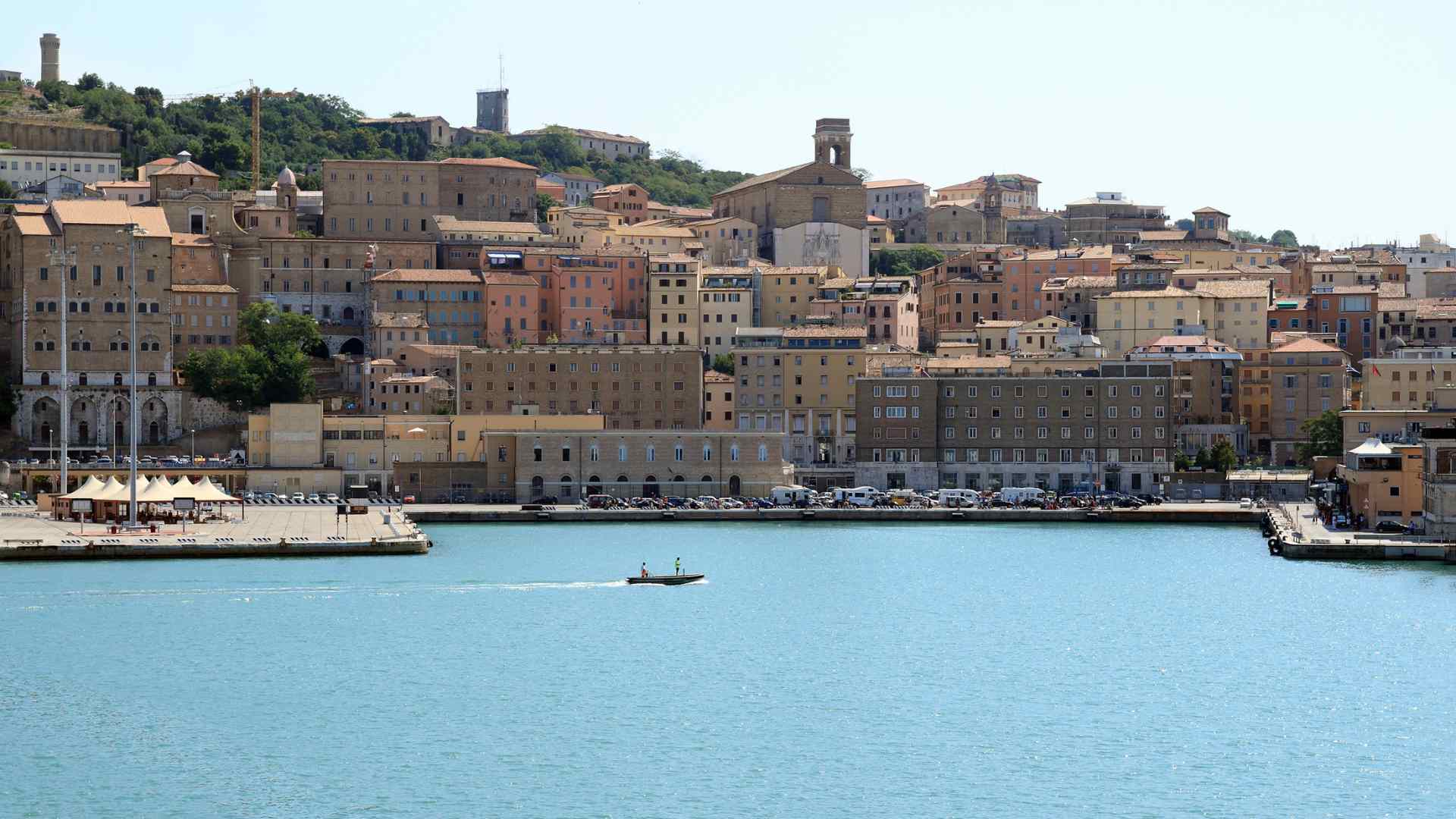
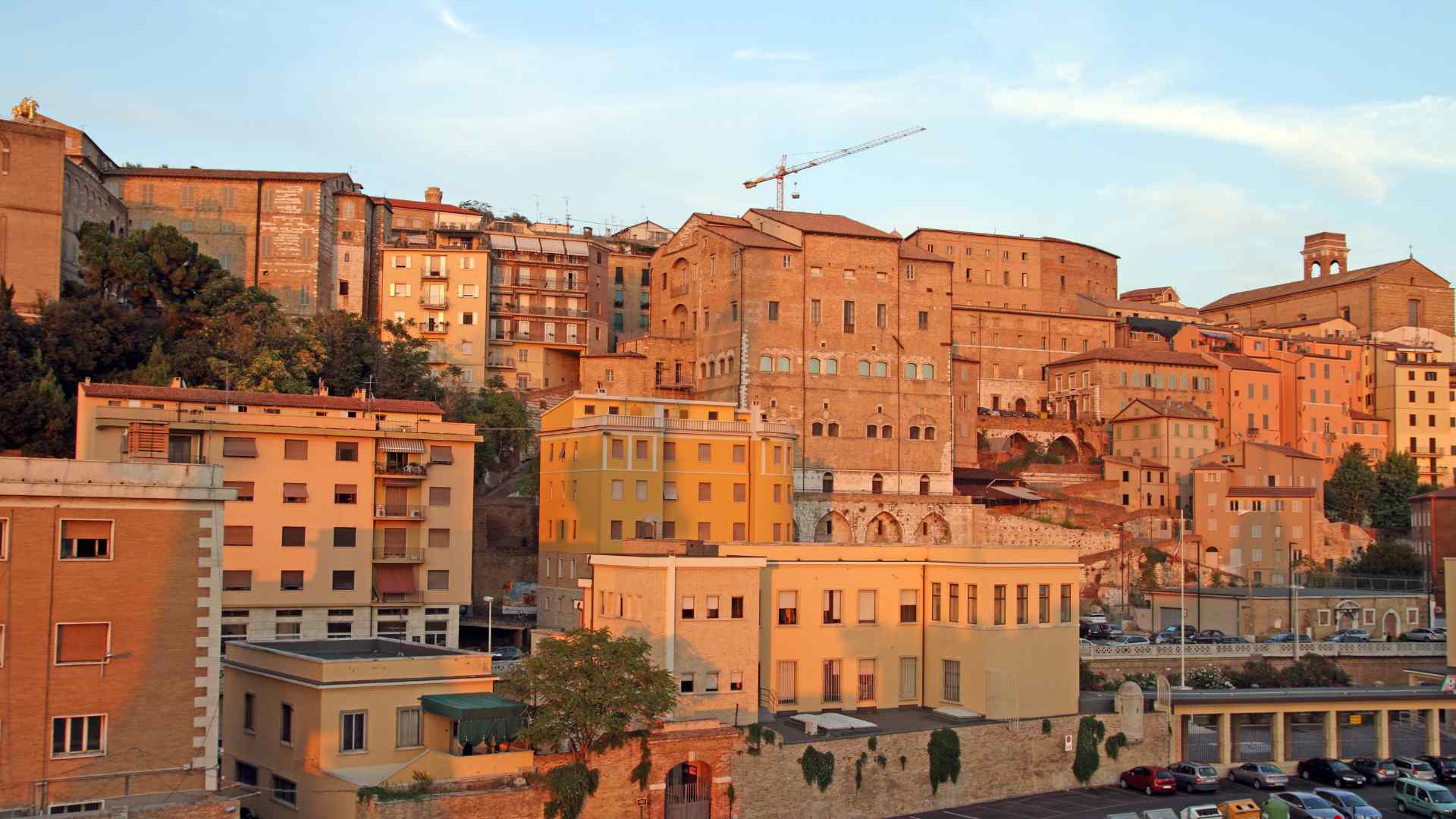
The Port of Ancona sits beside the historic center and handles ferries, cargo, and cruise traffic. Your ship may berth within a secure operational area, so follow the marked pedestrian route, shuttle, or port instructions rather than wandering toward the nearest city wall.
The port authority states that the passenger port is centrally located and connected with local transport. Cruise-specific arrangements still vary by ship and berth, and the ferry check-in terminal is not automatically your cruise meeting point.
Once outside the controlled area, central Ancona is walkable but hilly. The port is low, the Cathedral of San Ciriaco is high, and the Mediterranean has declined to install an escalator between them.
Photograph any shuttle stop and final return information. A day that ends near the Arch of Trajan can still require time for security and the correct gate.
The port-to-cathedral walk tells the city’s story
Begin with the Arch of Trajan, a Roman monument near the harbor attributed to the early second century and the emperor Trajan. It stands in an active port landscape, which makes the ancient celebration of harbor improvements feel unusually relevant.
Nearby, the Arch of Clementino represents a later chapter in the port’s development. Access around both monuments can be affected by port works or security boundaries, so use signed public paths.
From the waterfront, climb toward San Ciriaco Cathedral on Guasco Hill. The church occupies a commanding site above the Adriatic and incorporates layers of religious history, including its relationship to an earlier temple area.
The ascent is real, whether approached by steps, sloping streets, taxi, or local transport. Visit early in summer, dress for an active church, and check current access around services.
Views from the hill explain Ancona’s name and geography better than a diagram. The city sits around a bent coastline, and from the right position you understand why it has long faced the sea in more than one direction.
Descend through the historic center
Piazza del Plebiscito, often called Piazza del Papa, is one of the city’s most inviting social spaces. Its levels, church façade, cafés, and civic architecture reward a pause rather than a brisk diagonal crossing.
The Pinacoteca Civica “Francesco Podesti” houses the municipal art collection, subject to current exhibition and opening arrangements. It is a smart choice in heat or rain, especially for travelers who want something more substantial than a second espresso and a shop window.
Continue along the pedestrian center toward Piazza Roma and Piazza Cavour. The official city tourism service promotes a port-to-Passetto route of roughly 1.25 miles from the central area, but detours and slopes will increase the real effort.
Ancona’s Fontana del Calamo, known for its row of sculpted masks, provides a quick historical stop. Do not assume the water is potable unless current signage explicitly says so.
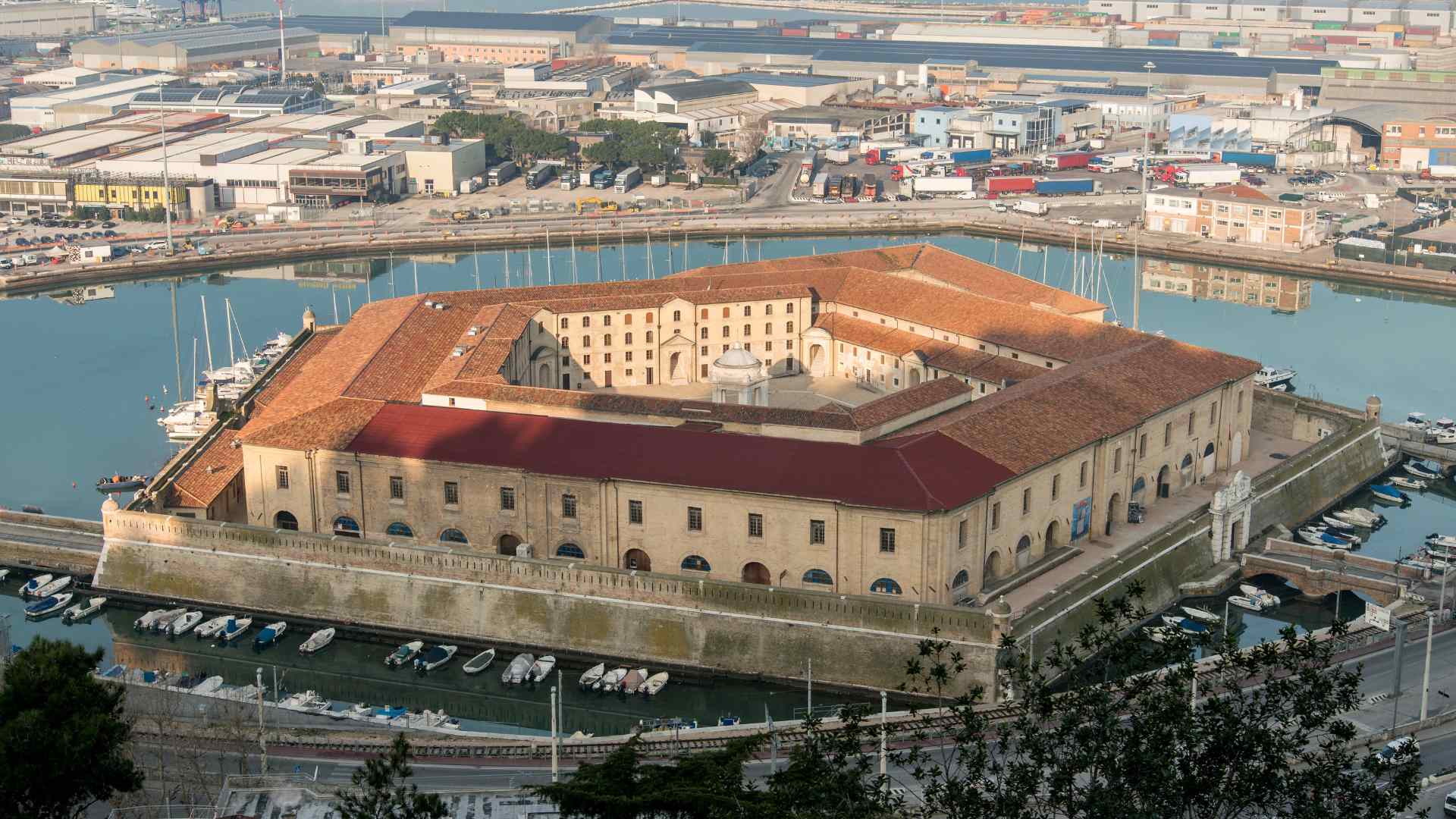
The Mole Vanvitelliana, a pentagonal former quarantine complex on an artificial island, lies on the opposite side of the inner harbor from some central routes. It hosts cultural spaces and events, with opening depending on exhibitions rather than on the building merely looking interesting from outside.
Passetto is the city’s coastal finale
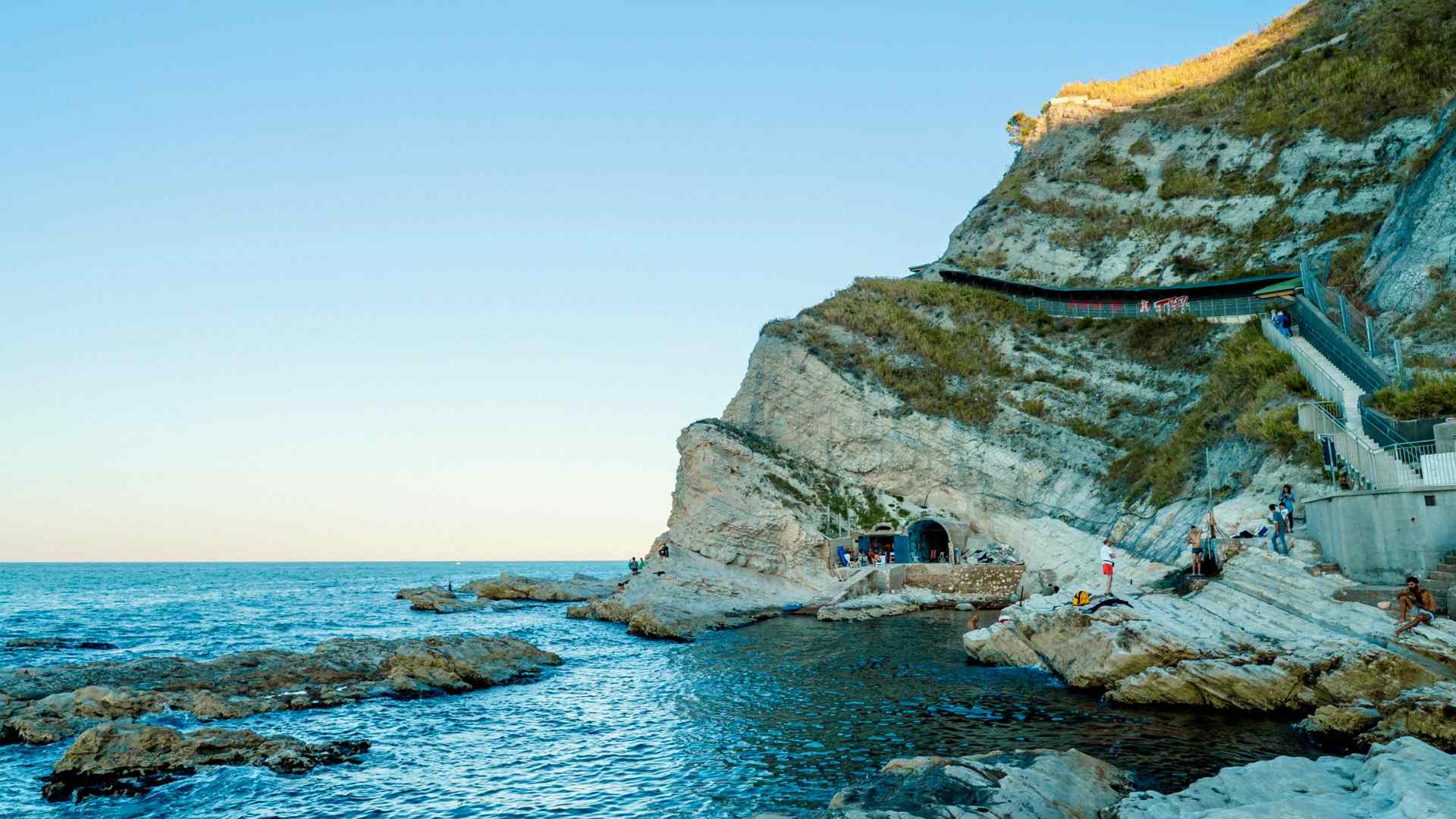
The Passetto Monument stands at the end of Viale della Vittoria above a cliffed shoreline. A grand staircase and a seasonal elevator connect the upper promenade with the beach area, where white stones and fishermen’s caves define the scene.
Conerobus lists the Passetto elevators as the connection between urban buses and the beach below. Check the current service notice on your call date, especially when the stairs are not an option.
The “caves” are hundreds of man-made boat shelters with colorful doors, many associated with local families. They are part of living coastal culture, not unattended changing rooms or decorative props.
The beach is pebbly, and sea access can be awkward. Wear water shoes, heed local conditions, and do not swim near rough water or boating activity simply because locals with decades of experience appear relaxed.
Passetto makes an excellent endpoint for a city walk, followed by a bus or taxi back toward the port. Walking both ways is possible for fit passengers, but it uses energy that might be better invested in gelato.
Portonovo and the Conero coast
Portonovo Bay lies south of Ancona within the Monte Conero area. It offers beaches, natural scenery, historic buildings, and a greener coast than the urban waterfront.
Summer access is managed because parking and road capacity are limited. The official Conerobus Portonovo page identifies dedicated seasonal lines and shuttles, but routes, dates, and stops must be checked for the exact day.
A taxi or organized excursion gives more control, though return traffic can still be slow. Agree on pickup clearly, since mobile reception, crowds, and multiple beach areas can make “meet by the bay” a poor transport contract.
Portonovo beaches combine pebbles or stones with clear-water possibilities under good conditions. Facilities vary by section, and some areas are connected by paths that may be uneven or unsuitable for wheels.
The Romanesque church of Santa Maria di Portonovo and the Torre de Bosis are among the bay’s historic features. Access and opening are not constant, so appreciate the exterior unless a current official source or guide confirms entry.
Sirolo and Numana require a dedicated outing
Sirolo and Numana sit farther along the Conero Riviera. They provide elevated village views and beach access, but they are not sensible extras after a full Ancona walking loop.
Public transport can connect the area seasonally, yet a cruise deadline makes a guided excursion or prearranged driver easier. Check the official Conerobus journey planner and avoid relying on a last return that may be crowded.
Some celebrated beaches require steep paths, shuttles, or boats. “Beach excursion” can therefore involve more mobility and timing complexity than the phrase suggests.
Choose Sirolo or Numana when coastal scenery is the priority and accept that central Ancona will receive only a short introduction. The downside is giving up the satisfying historical sequence from Roman port to hilltop cathedral.
Build the full Portonovo transport chain
Seasonal buses and shuttles can make Portonovo affordable, but their dates, stops, crowding, and last return are not designed around every ship. A prebooked driver costs more but is the better fit for a short call, limited mobility, or anyone unwilling to gamble the final connection.
Confirm the exact drop-off, beach surface, restroom, shade, and return pickup before leaving Ancona. Pebbles, paths, limited parking, and road controls can turn “at the bay” into a longer transfer than the map suggests.
Plan to reach the passenger gate 60 to 90 minutes before all aboard, with more time from Sirolo or Numana. Keep a central Ancona route as the fallback when the official transit planner, weather, or beach access does not support the coast.
Three plans that fit a call
The complete Ancona walk
Visit the Arch of Trajan, climb or ride to San Ciriaco, descend through Piazza del Papa and the central streets, then continue to Passetto. Return by local bus or taxi with time for port security.
This plan is varied, inexpensive, and specific to the city. The drawback is substantial walking with hills, summer heat, and surfaces that are not uniformly smooth.
Art, architecture, and less climbing
Use a taxi to San Ciriaco, descend through the center, visit the Pinacoteca or a current Mole Vanvitelliana exhibition, and have lunch near the pedestrian streets. Skip Passetto if the weather or elevator status is poor.
This keeps the cultural strengths while reducing uphill effort. It still contains slopes and historic-building access constraints, so “less climbing” does not mean level.
Conero coast day
Take a ship excursion or prearranged transfer to Portonovo, with one beach and one verified historical stop. Return early enough for a short Piazza del Papa or Arch of Trajan walk near the port.
This provides the prettiest natural coast. It depends on seasonal access, road traffic, and beach conditions, while sacrificing much of Ancona’s urban story.
Food and a glass of something local
Ancona’s food reflects the Adriatic and the Marche hinterland. Brodetto all’anconetana is a local fish stew, while moscioli is the regional name associated with wild mussels from the Conero area under protected production rules.
Availability is seasonal and sustainable harvesting matters. Ask what is local that day rather than demanding a supposedly authentic ingredient out of season.
Olive all’ascolana, filled and fried olives associated with the wider Marche region, make a convenient snack. Pair them with something fresh and remember that “just one more” is a system designed by the olive.
Marche wines include Verdicchio and Rosso Conero. Enjoy a glass with lunch if desired, but preserve good footing for cathedral streets, Passetto stones, and the port return.
Italy uses the euro, and cards are common. Carry modest cash for small purchases, then compare the practicalities with our wider Mediterranean cruise ports guide.
Accessibility and practical limits
Central pedestrian streets include broad sections, but hills, cobbles, curbs, and occasional construction interrupt smooth routes. A taxi to San Ciriaco followed by a mostly descending plan can reduce effort.
The Passetto elevator improves access when operating, though the lower beach still has pebbles, uneven approaches, and no guarantee of effortless water entry. Confirm elevator and accessible-route details through the municipality or Conerobus.
Historic churches and museums have individual access arrangements. Contact the venue directly if an elevator, accessible restroom, or step-free entrance determines the visit.
Portonovo and more remote Conero beaches are less predictable. Ask a tour provider for the exact drop-off surface, walking distance, gradients, beach access, and vehicle specifications rather than accepting “suitable for all.”
Heat, weather, and safety
Summer can be hot and bright, especially on the climb to the cathedral and the exposed walk toward Passetto. Carry water, wear a hat, use sunscreen, and schedule indoor stops.
Thunderstorms or strong Adriatic conditions can change a beach day. Follow lifeguard flags and local warnings, and keep away from cliff edges or closed coastal paths.
Ancona is a working port and ferry hub. Stay outside restricted zones, watch for vehicle traffic, and use the authorized route even when a shortcut appears to shave three tempting minutes.
Normal city precautions apply in crowds and on buses. Keep valuables secure and be attentive around ticket machines, lines, and busy squares.
What I would skip
I would skip trying to combine central Ancona, Portonovo, and Sirolo. The coast deserves a dedicated choice, not a series of hurried drop-offs.
I would skip walking up to San Ciriaco at midday in peak summer if a bus or taxi is available. Saving energy improves the visit and leaves pride completely unharmed.
I would also skip dismissing Ancona for the Conero Riviera. Few ports let you walk from Roman harbor history to a hilltop cathedral and a local city beach in one coherent line.
The verdict
First-time visitors should spend the day in Ancona, using a taxi for the initial climb if necessary and finishing at Passetto when the elevator and weather cooperate. Choose Portonovo only when swimming and natural coast outrank museums, piazzas, and city history.
Ancona’s appeal is not theatrical. Give its hills a sensible route, then compare its easy urban access with our walkable cruise ports and wheelchair-friendly cruise ports guides.
How this guide was researched: Unless a first-hand visit is explicitly identified above, this guide is based on independent research using official port, tourism, transit, government, and attraction sources where available. Logistics and time-sensitive details were reviewed in September 2026; see our Editorial Policy.