Sri Lanka Cruise Ports: Colombo, Galle and Hambantota
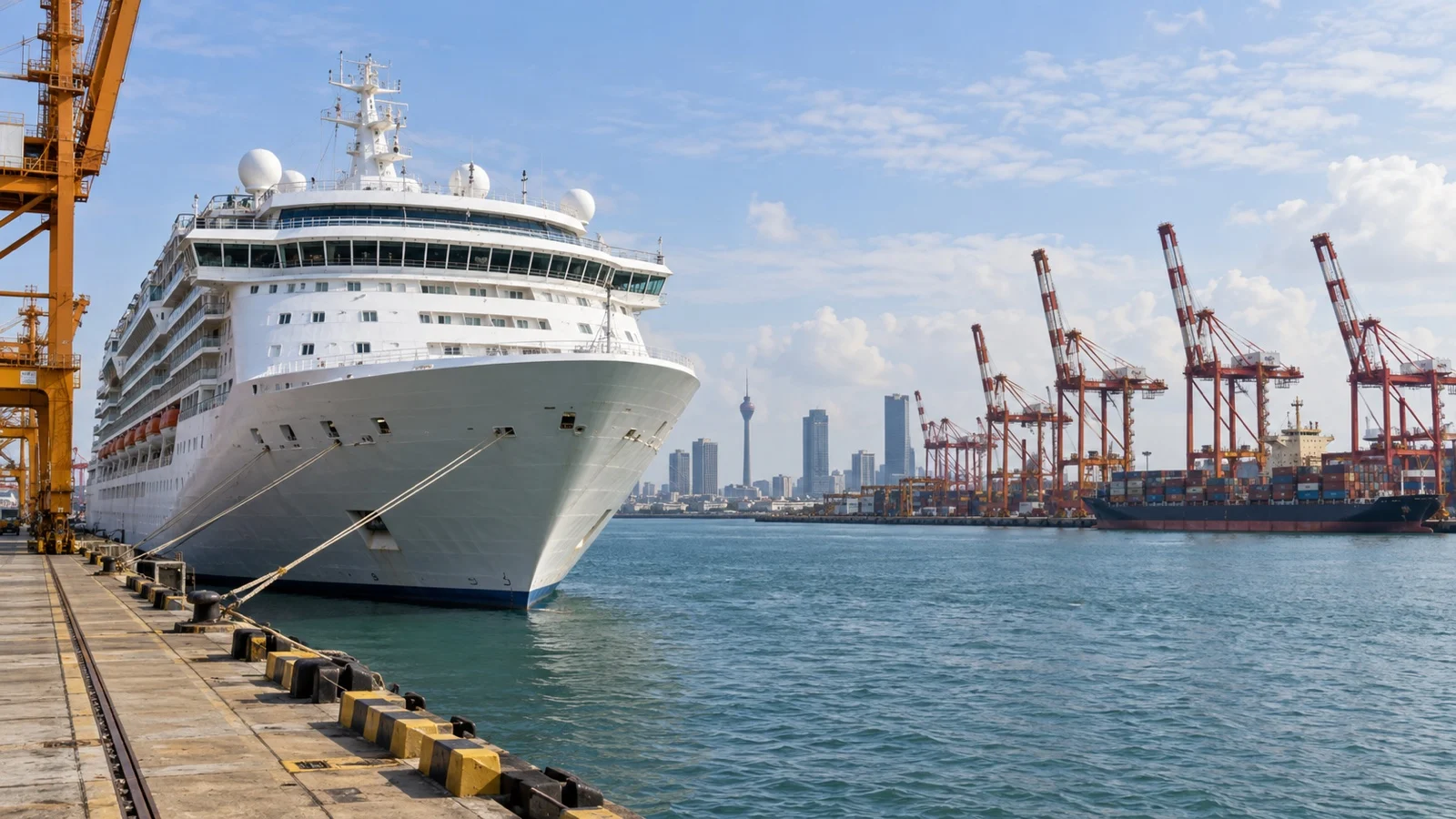
Your ship ties up in Colombo inside one of the busiest container ports in South Asia, and there is no strolling off the gangway. The fort everyone wants to photograph is a two hour drive south of it.
My quick take
Sri Lanka is worth a port day, and it is a port where the plan matters more than the place. Colombo hands you a real working city with temples, a colonial grid and a market district, and it also hands you a country that is far bigger than one day.
What I would not do is spend the day in a van. Kandy is the classic trap, and the southern coast is the near miss that catches people out because it looks so close on a map.
The quick facts
- Main port: Colombo, an alongside berth inside a busy commercial harbor with a controlled gate.
- Second port: Galle, a small natural harbor right beside the fort, and only small ships call.
- Third port: Hambantota, a deep water cargo port on the south coast with a long drive to anything scenic.
- Season: Most calls land between November and April, which is also the drier stretch for the west and south.
- Money: Sri Lankan rupees, with cash for tuk tuks and markets and cards fine in hotels and larger restaurants.
What kind of ship actually stops here
Sri Lanka sits almost exactly on the sailing line between the Gulf and Southeast Asia, which is why it shows up on so many long itineraries. World cruises, repositioning runs between Dubai and Singapore, and India focused sailings are the three that put Colombo on a schedule.
That shapes the day more than most people expect. You are usually one stop in a chain that also includes Cochin or Mumbai, so if you already have a plan for the Indian ports on the same itinerary, Colombo should be planned the same way and not treated as the exotic outlier.
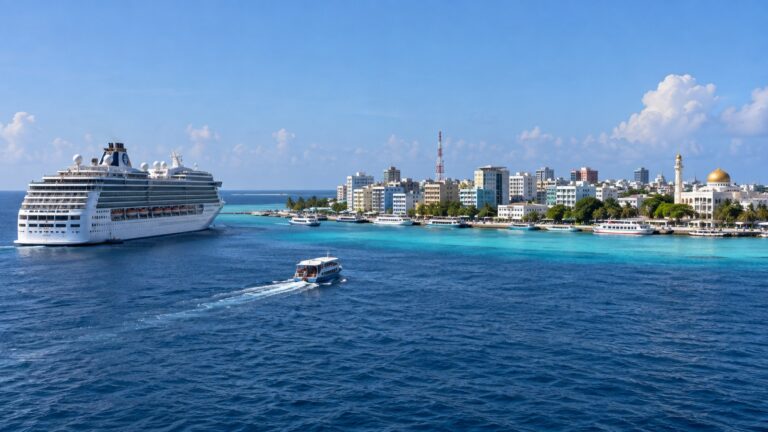
Many of those same sailings also pause in the Maldives a day or two away, which is a completely different kind of port day. The season for the whole run is roughly November through April.
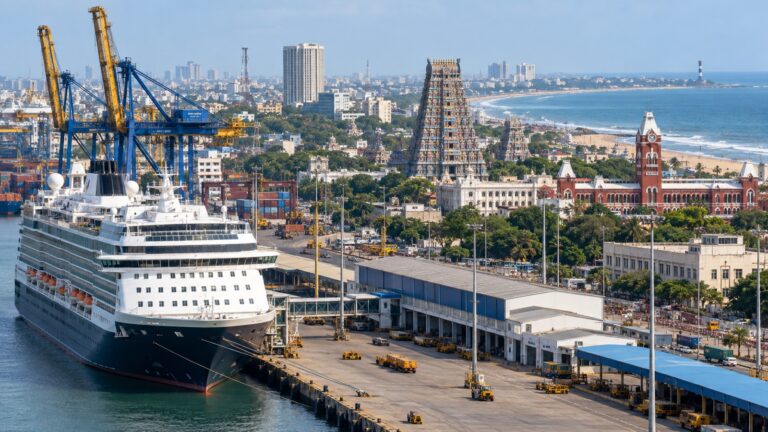
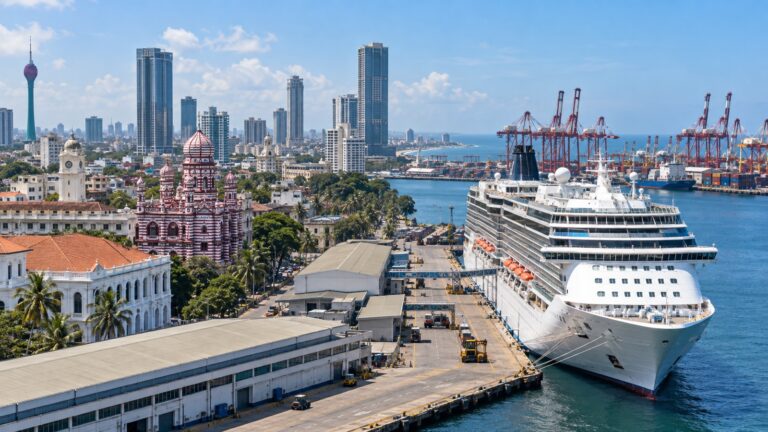
Colombo is a cruise berth inside a container port
This is the single thing to understand before you book anything. Ships berth alongside in the working Port of Colombo, and the area between your gangway and the public street is an active commercial terminal with cranes, trucks and security.
You do not walk out. You leave by shuttle, excursion coach or an authorized vehicle, and you come back in the same way, which means a security and ship card check in both directions.
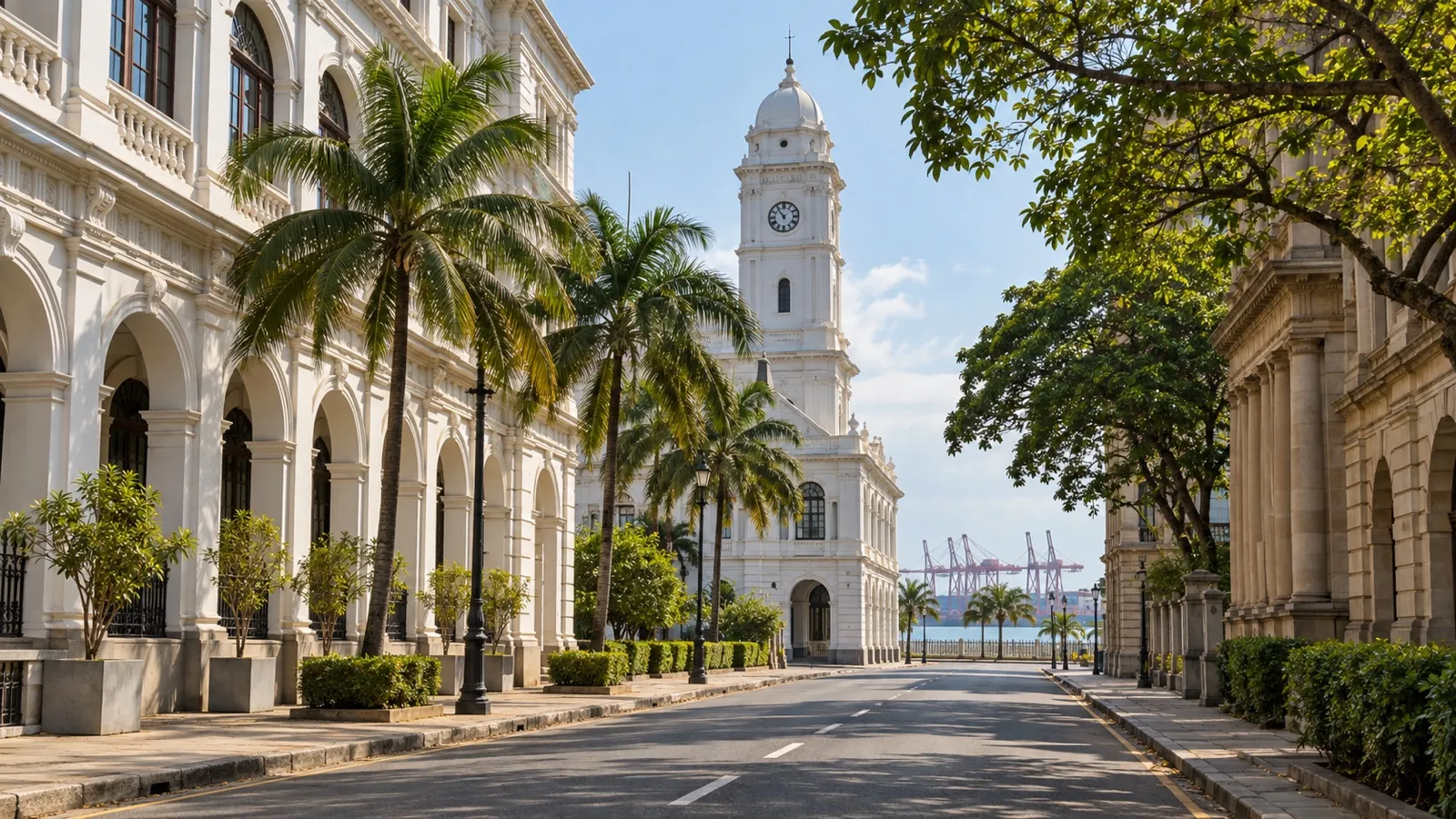
The good news is that the gate is close to the part of Colombo you want. Fort and Pettah sit right against the port edge, so once you are through, you are already downtown rather than in an industrial suburb.
My habit at ports like this is to photograph the shuttle stop and write down the last shuttle time before I walk anywhere. The full Colombo port guide goes deeper on berths and gate logistics, and the exact arrangement can change from one call to the next.
What a Colombo day is actually good for
Colombo rewards a compact plan and punishes a greedy one. The traffic is genuinely slow, and every extra stop you add costs more in the car than it gives you on foot.
These are the pieces I would build a day from:
- Fort and Pettah: Colonial era streets running straight into a dense market district, best with a guide the first time.
- Jami Ul-Alfar Mosque: The red and white striped mosque in Pettah, and one of the most photographed buildings in the country.
- Gangaramaya and Seema Malaka: A busy working temple and a quiet platform temple on Beira Lake, close enough to pair.
- Colombo National Museum: Worth a focused hour if the weather turns, and it often does.
- Galle Face Green: A seafront promenade for the breeze and the street food, not for swimming.
Pick three of those, not five. A half day that ends with a long lunch and an early return beats a full day that ends with you sweating in traffic and watching the clock.
Galle is a small harbor attached to the best fort in the country
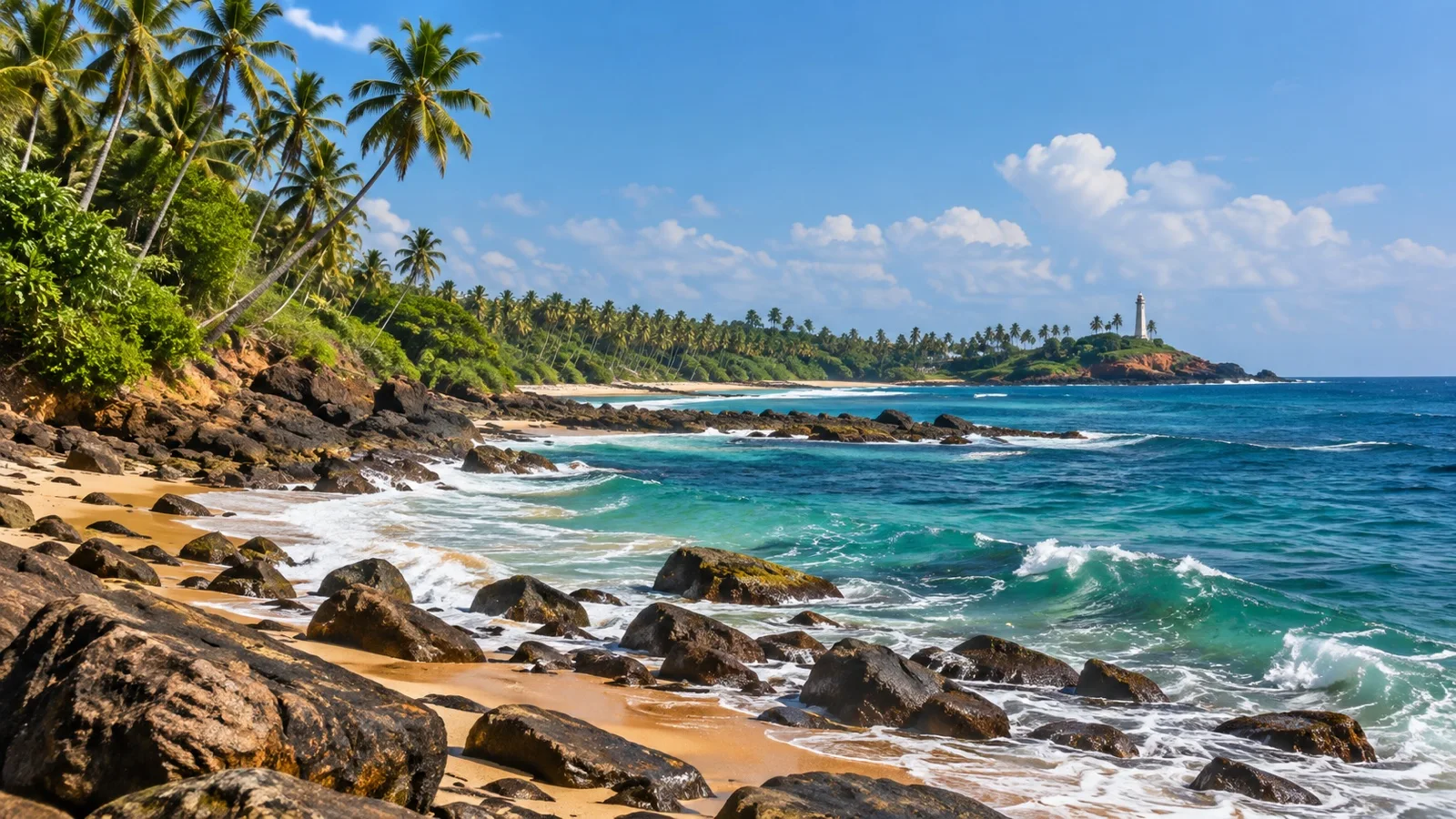
Galle sits on the southwest coast, and the harbor is a small natural one tucked under the fort walls. It handles yachts and small vessels rather than big white ships, so a genuine Galle port call is something you get on a small ship or an expedition itinerary, not on a 3,000 passenger vessel.
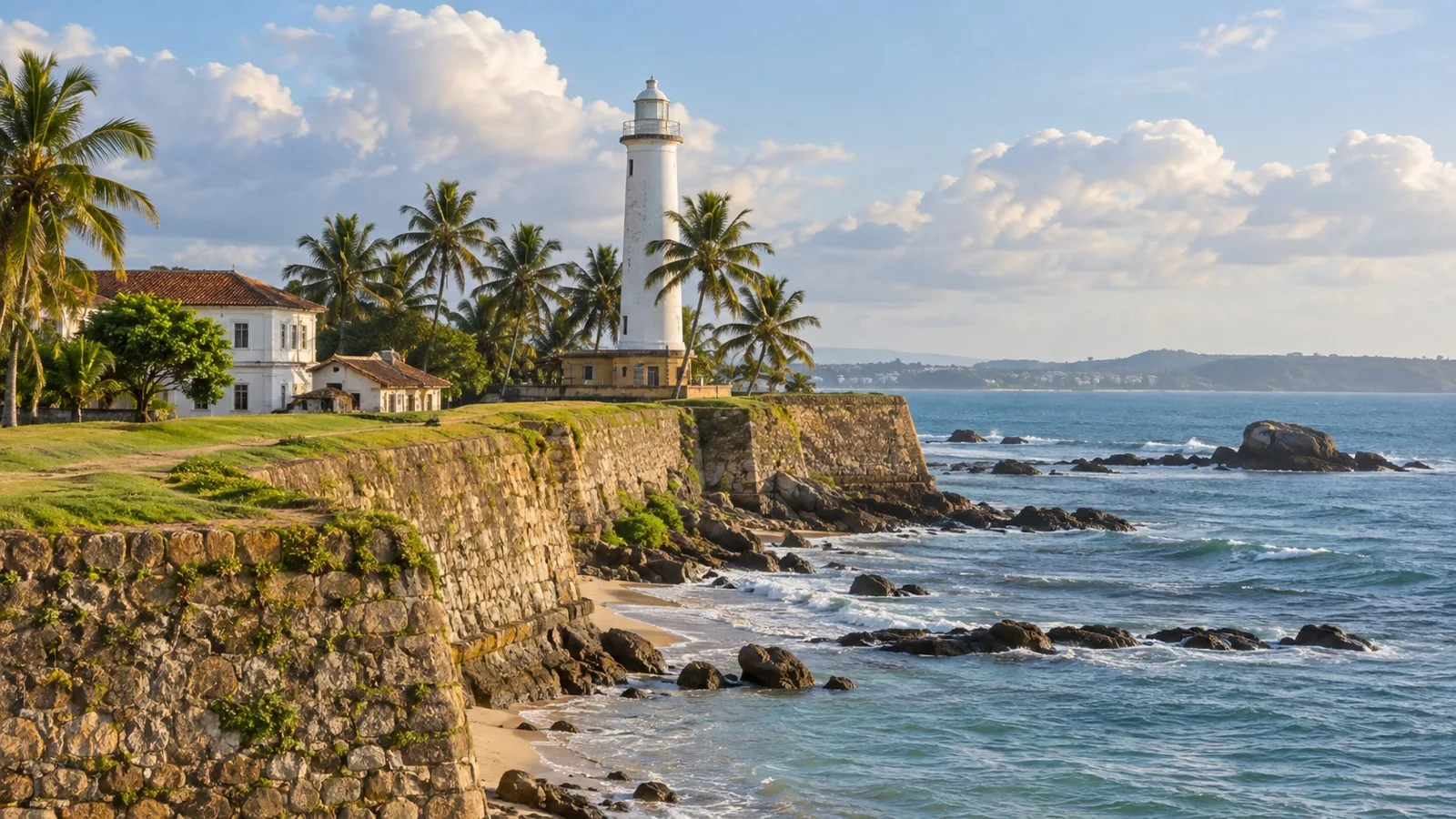
If you do get one, it is the easiest good day in Sri Lanka. The fort is right there, and it is a World Heritage site for its Dutch era fortifications, the finest surviving example of European coastal defense in South Asia.
Inside the walls it is a compact grid of narrow streets, verandas, courtyards and a lighthouse, and you can walk the ramparts most of the way around. That is a two to three hour walk at a real pace, plus lunch, which fits a port day without a single vehicle involved.
The confusing part is that most people who see Galle Fort on a cruise do not arrive by ship at Galle. They arrive in a van from Colombo, which is a completely different day and I cover the math for it below.
Hambantota is a working port with a long drive attached
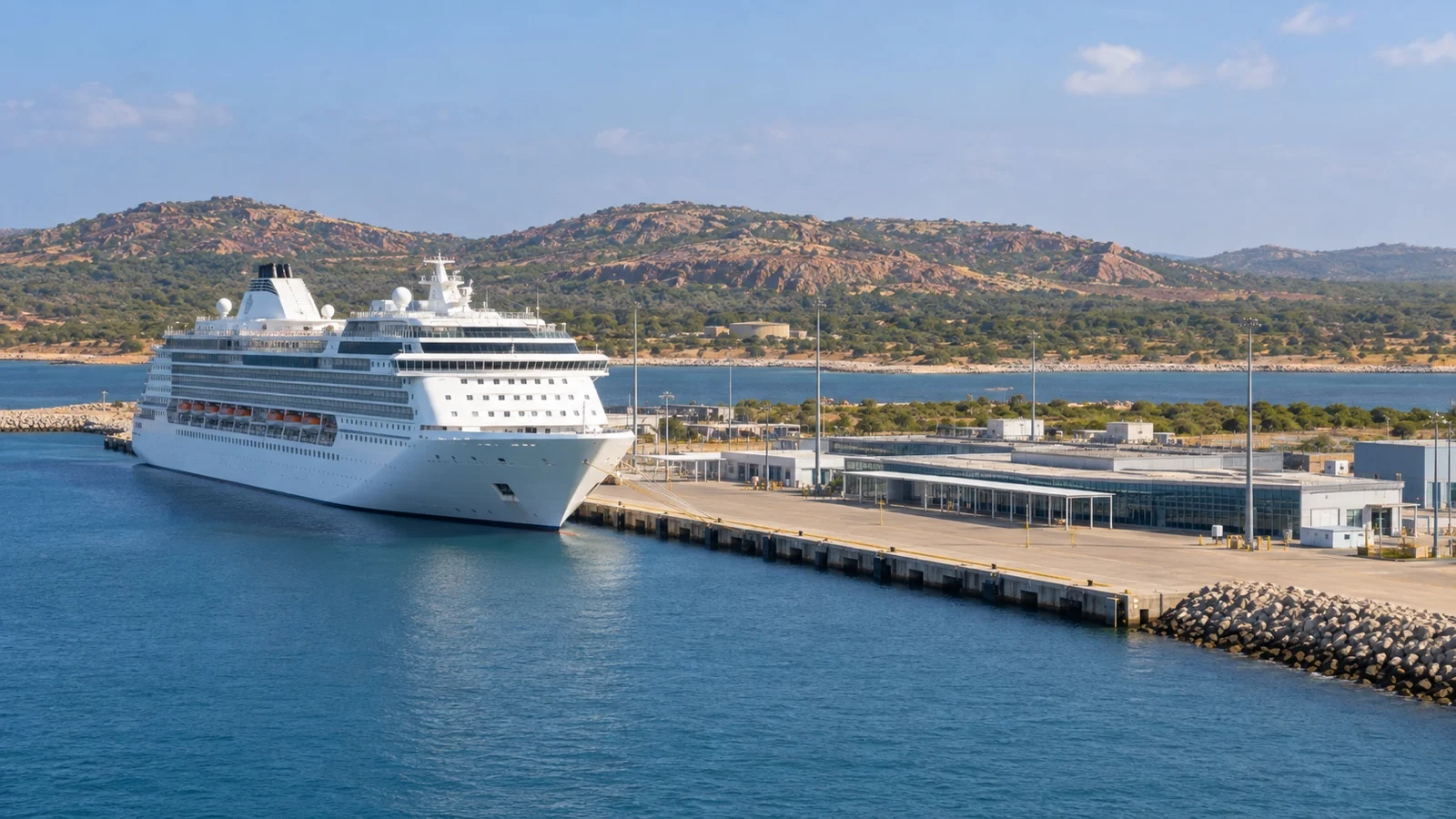
Hambantota is a deep water port on the dry south coast, built for transshipment, vehicle carriers, bulk cargo and bunkering. It is set up to handle cruise calls alongside that cargo business, which is not the same thing as being somewhere you would choose to spend a day.
There is very little within walking distance of the berth, and the town itself is small. The reason a ship calls here at all is what sits inland and east, which is safari country.
Yala National Park and Bundala are the draws, and both are a real drive with a real early start. This is a port where I would book the ship excursion and stop arguing with myself about it, because a missed jeep connection in a national park is not a problem you fix with a taxi app.
Colombo is roughly 150 miles (240 km) away by road, so do not plan a Hambantota call around seeing the capital. If your itinerary lists both, treat them as two unrelated days.
The other Sri Lankan ports you will probably never see
Trincomalee, on the northeast coast, has one of the largest natural deep water harbors anywhere, and it takes the occasional call from a smaller ship. Kankesanthurai in the far north appears now and then on very specialized itineraries.
Neither belongs in a normal cruise plan, and neither should influence which sailing you book. If one shows up on your itinerary you have chosen an unusual ship, and you probably already know it.
Which port I would pick, and it is not close
Galle wins on quality of day and loses on availability. If two otherwise equal itineraries were in front of me and one called at Galle on a small ship, I would take it without much thought, because you step off and the good part is immediately in front of you.
For everyone else the answer is Colombo, and that is a fine answer. It is the only Sri Lankan port where an independent day works reliably, where the sights are close to the gate, and where a plan that falls apart still leaves you somewhere interesting.
Hambantota is last, and it is only worth it if you actively want the safari. As a general day out it is a long drive bookended by a cargo terminal.
Kandy in a day: run the numbers before you book
Kandy is around 70 miles (115 km) inland from Colombo, and that sounds like nothing until you see the road. Three hours each way is a normal outcome, and worse is common, because the route climbs and the traffic does not cooperate.
On a standard eight or nine hour call, that leaves you an hour or two at the Temple of the Tooth and a great deal of time looking out a window. I would not build a port day around it.
The exception is a genuinely long call, say an overnight or a very late all aboard, and even then I would only do it on a ship excursion. When the drive is that long, the value of the ship waiting for you is the entire product.
The southern coast in a day: better odds, still a stretch
Galle is roughly 75 miles (120 km) south of Colombo, and the expressway makes that a much friendlier trip than Kandy. Under two hours each way is realistic when the road flows, and it frequently does.
That is a real option on a long call, and it is the one southern day I would consider. Four hours of driving to get two or three hours inside the fort walls is a trade some people are happy to make.
The catch is the first and last mile. Getting out of the port and through Colombo traffic to reach the expressway eats time that nobody includes in the estimate, so I would add a buffer of at least an hour to whatever a driver quotes you.
If you cannot bear the risk, this is a port where letting the ship carry the timing risk is worth the markup. That is not a sentence I write often.
Tuk tuks, taxis and what you should actually pay
Colombo tuk tuks are cheap, useful and occasionally a negotiation you did not ask for. Many are metered, and a metered ride across the central area typically costs a few dollars rather than tens of dollars.
The rule is simple. Either the meter runs, or you agree the whole fare in rupees before you sit down, and you never accept a vague “we sort it out later”.
Ride hailing works in Colombo, with both an international app and a strong local one covering cars and tuk tuks. What is less certain is whether a driver can reach you at the port gate, which is why I check app coverage before I sail rather than on the pier and never make it the backbone of the plan.
The other thing to know is the gem shop detour. A driver offering a cheap all day rate and then steering you toward a jewelry or spice showroom is a well documented pattern, and the pressure to buy overpriced stones is the actual product.
Temple rules that are not suggestions
Cover your shoulders and your knees, take your hat off, and take your shoes off where you are told to. Socks are your friend, because stone courtyards in the middle of the day get hot enough to genuinely hurt.
The rule people break without meaning to is the photo. Turning your back to a Buddha image to pose for a picture is treated as a serious offense here, not a faux pas, and visible Buddha tattoos have caused problems for travelers at the border.
Stand beside the image, not in front of it, and keep your camera pointed the same direction you are facing. It costs you nothing and it removes the entire category of problem.
The monsoon split nobody explains properly
Sri Lanka does not have one wet season, it has two, and they hit opposite sides of the island. The southwest monsoon runs roughly May through September and soaks the west and southwest, which is exactly where Colombo and Galle are.
The northeast monsoon runs roughly November through January and delivers its rain to the north and east instead. That is why cruise season here clusters in the drier western window and why a December call in Colombo behaves very differently from a July one.
None of this means a washout. Rain in the tropics tends to arrive hard and then leave, and a lightweight rain shell plus a willingness to duck into a museum handles most of it.
Heat is the bigger factor on most days. Lowland Sri Lanka sits in the 80s and low 90s Fahrenheit (high 20s to low 30s C) with heavy humidity, and my honest advice is the same as it is for any monsoon season sailing in Asia, which is to plan the walking for the morning.
Money, water and the small stuff that decides your day
The currency is the Sri Lankan rupee, and US dollars are not broadly accepted for ordinary transactions. Pull rupees from a bank ATM rather than changing money at the pier, and carry small notes, because a tuk tuk driver with no change is a negotiation you will lose.
Cards work in hotels, malls and established restaurants and nowhere else you will actually want to buy something. My approach to carrying cash and cards ashore applies here almost word for word.
Sinhala and Tamil are the official languages and English is widely used in tourism, so you will be fine. Having your destination written down in English still helps, and having it in Sinhala helps more.
Drink sealed or treated water and be a little choosy about where you eat, favoring busy places with turnover. And check whether your line handles your immigration clearance as a group or whether you need your own travel authorization arranged in advance, because that answer varies by ship and is not something to discover at the gangway.
Quick answers
Can you walk from the Colombo cruise berth into the city?
No. You are inside an active commercial port and you must leave by shuttle, coach or an authorized vehicle, though the gate does put you close to Fort and Pettah.
Is Kandy doable on a cruise day from Colombo?
Realistically no on a standard call, because three hours each way is normal and leaves you almost no time there. Only consider it on an overnight or a very late departure, and only with the ship.
How much should a tuk tuk cost in Colombo?
A short metered hop around the central area is usually a couple of dollars in rupees, and a longer cross city run is still cheap. Insist on the meter or fix the total price before you get in.
What do you wear to a temple in Sri Lanka?
Shoulders and knees covered, hat off, shoes off where instructed. Bring socks for hot stone floors and never pose with your back to a Buddha image.
When is the best time to cruise to Sri Lanka?
December through March is the sweet spot for Colombo, Galle and the south coast, which is where nearly all cruise calls land. That window also lines up with when most Indian Ocean itineraries actually operate.
Final word
Sri Lanka punishes ambition and rewards restraint, which is an annoying thing to hear about a place this interesting. The people who come back happy are the ones who picked three things near the port and did them properly.
If you get Galle, take it and walk the ramparts. If you get Colombo, which you probably will, plan a tight morning of temples and market streets and stop trying to reach the postcard two hours down the road.
How this guide was researched: Port access arrangements, monsoon timing, entry rules and the road distances between Colombo, Galle, Kandy and Hambantota were checked in November 2026. Berth assignments, shuttle arrangements, tuk tuk fares and excursion timings change often, so confirm the details for your own sailing before you commit to a plan. See our Editorial Policy.