The EU Entry/Exit System at Cruise Ports: What Changes for US Cruisers
The Schengen area now records eligible short-stay visitors digitally at its external borders. For most US cruisers, that means a passport scan, a facial image, and fingerprints instead of a routine ink stamp.
My quick take
The first registration usually involves more steps than a later crossing, but I would not promise a camera-and-go experience. Officers may need to verify fingerprints, collect data again, or move you to a staffed check.
What I actually care about is the day count. EES helps officers track your 90 days in any rolling 180-day period, but you still need to check the dates yourself and challenge any incorrect record through the official correction process.
The quick facts
- What it takes: A facial image, fingerprints where required, your passport data, and the date and place of each recorded external-border entry and exit.
- Who it covers: Most non-EU visitors on short stays, including most US tourists, with exemptions for certain residents, long-stay visa holders and qualifying family-card holders.
- Where it applies: External border crossings of the 29 countries using EES, which leaves out Ireland, Cyprus and the United Kingdom.
- How long it lasts: Entry and exit records are generally kept for three years, while an individual file can remain for three years and one day after the last exit and some records are kept longer.
- What it costs: Nothing. There is no EES authorization to buy, although some countries offer an optional official app for advance data submission.
Which US travelers are exempt
Most Americans visiting for a short vacation are registered, but an American passport does not automatically make EES apply. You may be exempt if you hold a qualifying residence permit, long-stay visa, or family residence card from a country covered by the rules.
There are other narrow exemptions too, so check the European Commission’s current exemption guidance if your situation is anything other than a standard tourist visit. Bring the physical permit or visa document that proves the exemption, not just a photo on your phone.
What the machine actually takes from you
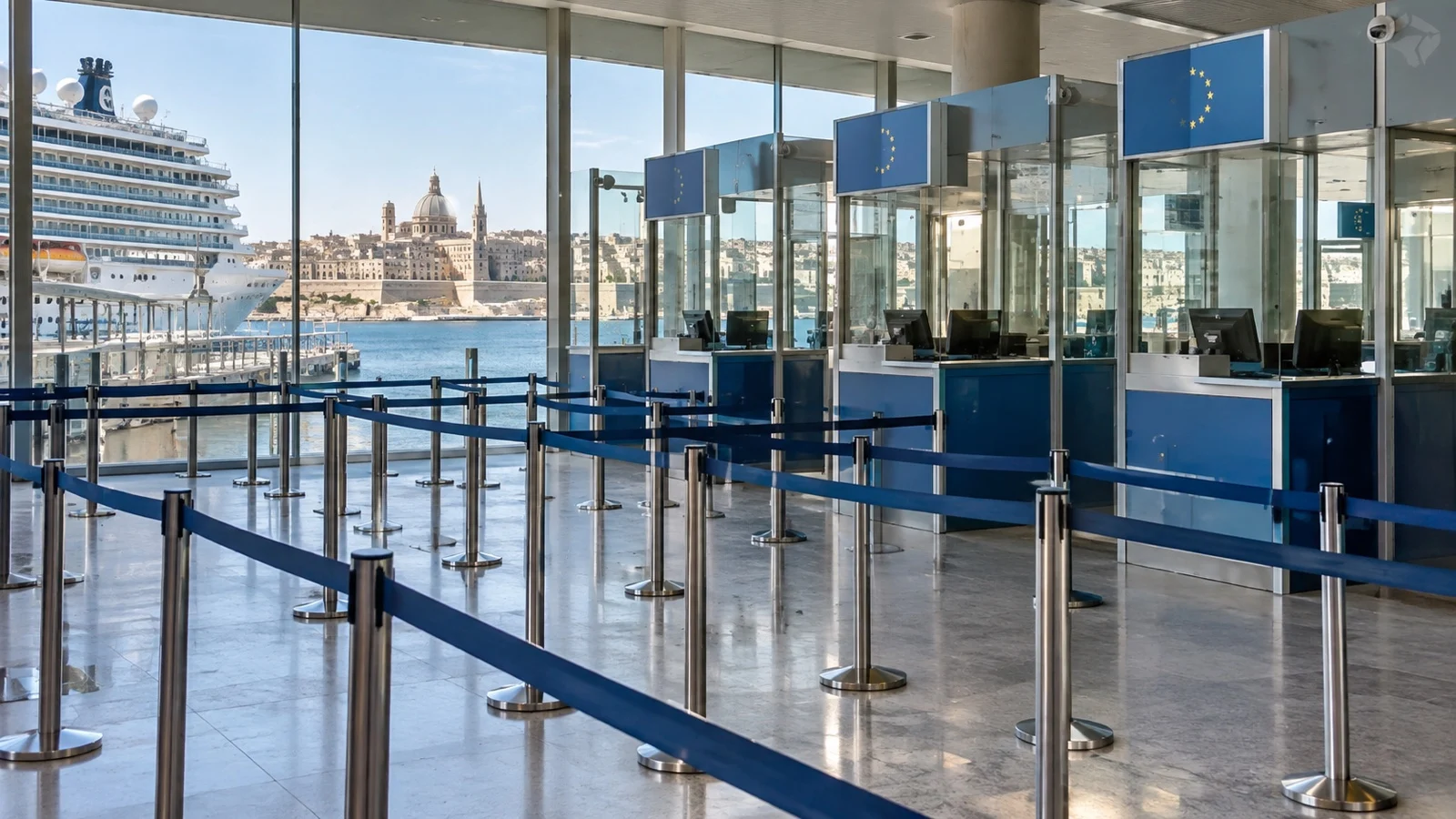
For an eligible visa-exempt traveler, initial registration normally includes four fingerprints, a facial image, passport data, and a timestamped record of the crossing. Children under 12 and people for whom fingerprinting is physically impossible do not have to provide fingerprints.
Refusals of entry are recorded too. The European Commission gives a plain summary of what EES records, but there is no official promise that every registration takes the same amount of time.
The retention rules use more than one clock. Entry, exit, and refusal records are generally stored for three years, while an individual file can remain for three years and one day after the last exit and a record without a matching exit can be kept for five years.
If an entry or exit is missing or wrong, the responsible country can correct, complete, or erase the record. Keep boarding passes and itinerary documents until you have confirmed the dates, especially if you are close to the 90-day limit.
Why the first external-border crossing can be the slow one
Initial registration happens when an eligible traveler first meets EES at a Schengen external border. Later crossings usually verify stored data, but a fresh collection or staffed check can still be required.
If you fly into Barcelona and then board a cruise that stays inside Schengen, the airport will usually be your external-border check. The cruise terminal may still inspect documents for security, but that is not the same as a new EES entry.
If you sail into Schengen from somewhere outside it, many eligible passengers may need processing at the first external-border port. That is not the morning I would book a private tour with a hard 8:00 start.
Where this happens on a cruise, and it is not always a kiosk
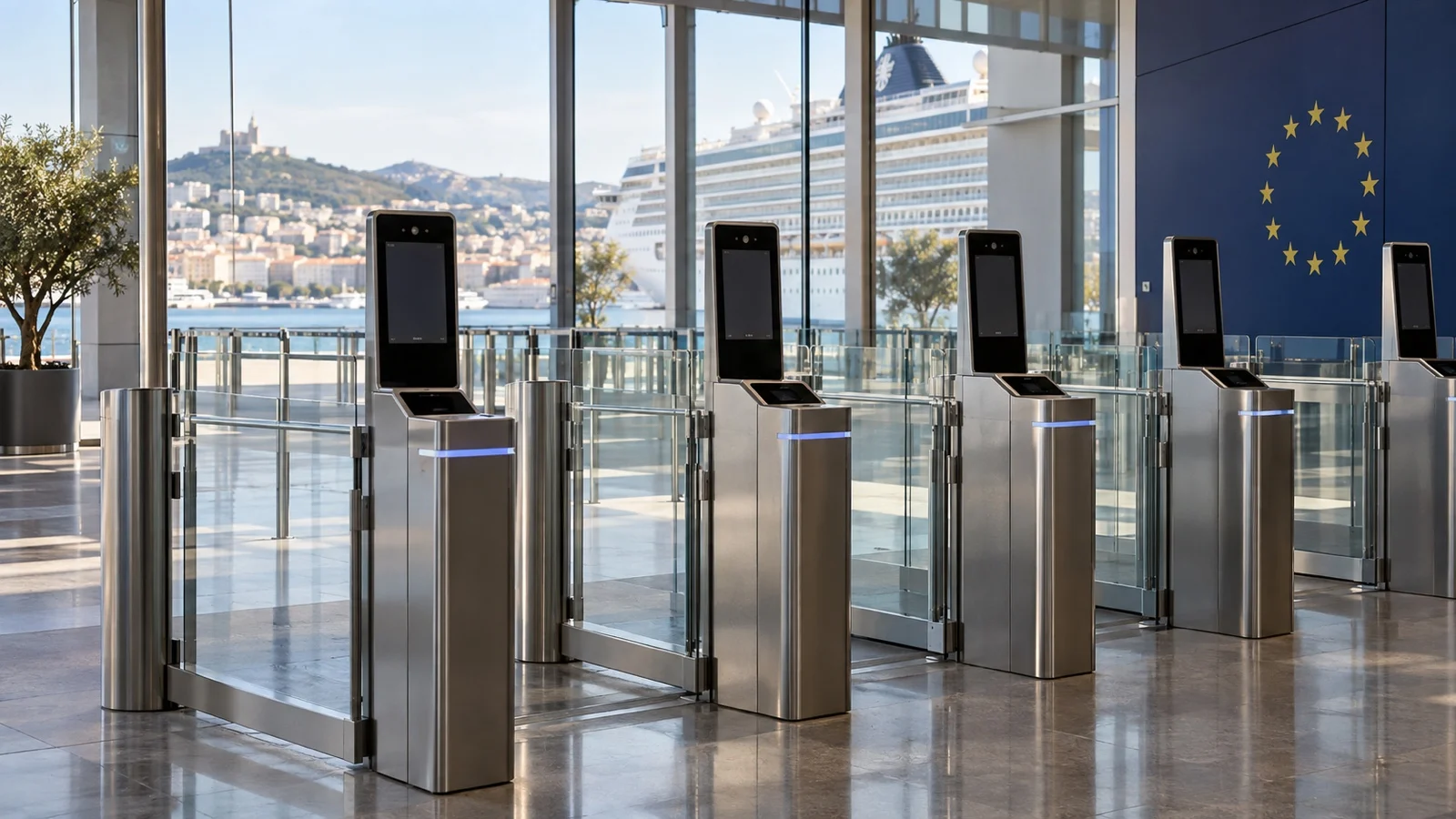
Large turnaround ports may use automated gates or self-service kiosks, but equipment varies by terminal and route. Barcelona’s port planning, for example, described a procurement program for more than 100 EES units, which is not the same as promising that every berth has a working kiosk.
Smaller ports can use staffed desks or portable equipment rather than a bank of kiosks. The important part for you is to follow the ship’s meeting time and location, because the check may not happen where you expect.
Authorities may arrange document or biometric processing onboard when local procedures allow it. If the daily program assigns a lounge and time slot, treat that as a real border appointment, not a casual ship activity, and see why some ports require an in-person immigration check.
There is also an official app that lets you pre-fill your passport and trip details before you arrive. Adoption is up to each country, it does not replace the border check, and I would treat it as a nice-to-have rather than a plan.
Turnaround port versus port of call is the whole ballgame

Boarding or leaving a ship at a Schengen port is not automatically an EES crossing. EES records an entry or exit when the itinerary crosses Schengen’s external border, while walking off for six hours in Naples during an internal call is usually just a ship-security movement.
Schengen’s cruise procedures also allow some passengers at a port-of-call stopover to avoid individual entry or exit checks, including certain organized day visitors. Your ship may be cleared from its manifest while you use a keycard ashore, but that process depends on the itinerary and the authorities.
Do not turn that into a blanket promise that every port day is scan-free. Border officers can still require checks, and the stopover procedure does not decide whether a calendar day belongs in your authorized Schengen stay.
A cruise that never leaves the area barely notices any of this
Rome to Barcelona by way of Marseille and Palma is one internal move from start to finish. There is no external border in that itinerary, so there is nothing to register between ports.
You still get processed on the way in and on the way out of Europe, most likely at the airport. The cruise itself is the easy part.
The itineraries that generate paperwork are the ones that cross the line. Anything that starts or ends outside the area, or ducks out to a non-Schengen country midway, has at least one recorded crossing in it.
Check your rolling 180-day allowance before booking
The rule has not changed. You get 90 days inside the area in any rolling 180 day window, and it has always been a rolling window rather than a calendar reset.
What changed is how the crossings are recorded. EES gives border officers a digital calculation instead of relying on passport stamps, but it does not change the legal allowance.
Use the European Commission’s short-stay calculator before you book if you are anywhere near the limit, and remember that entry and exit dates both count. If the EES record is wrong, you have a right to ask the responsible country to correct it.
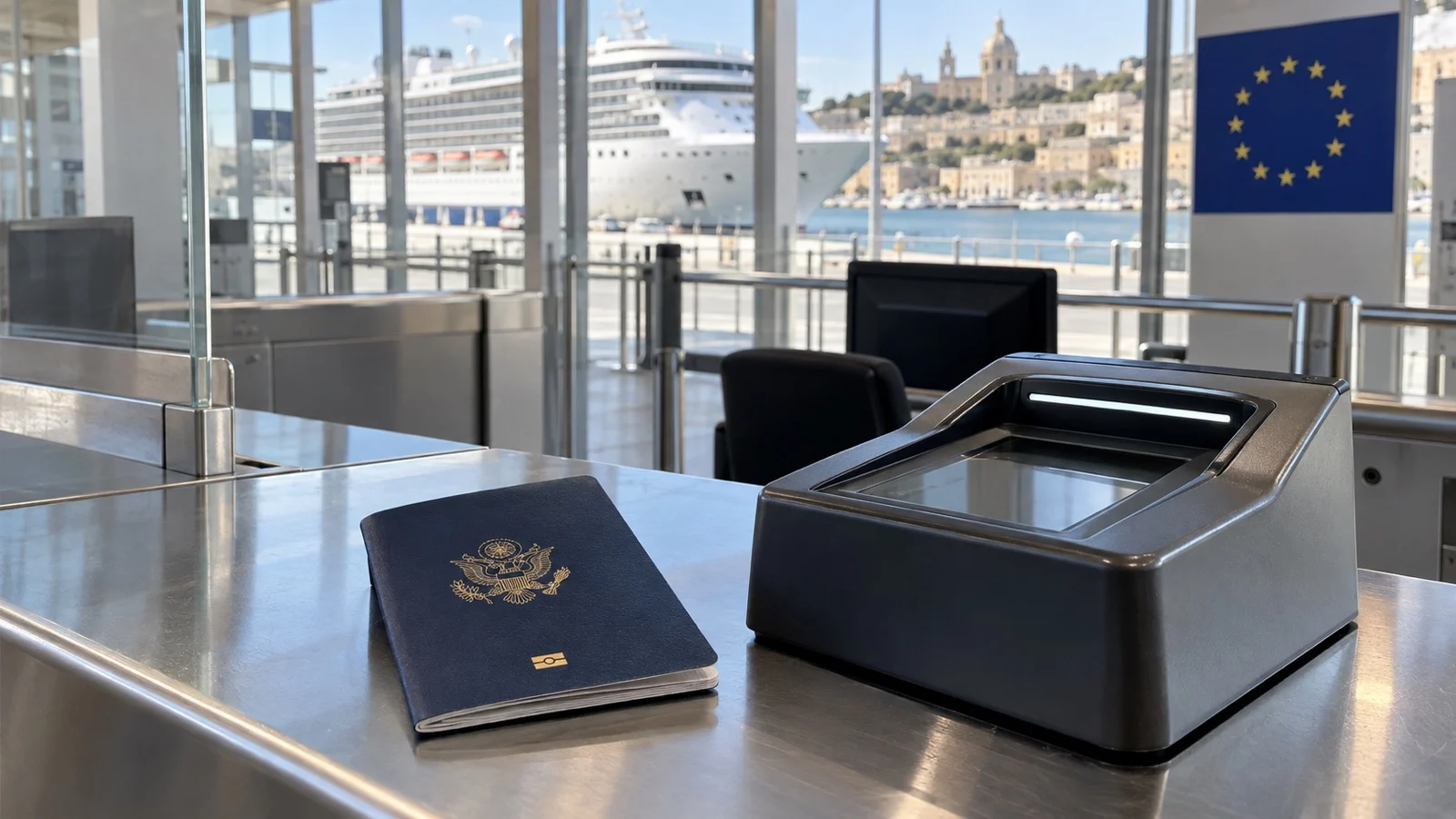
Back to back sailings and world cruise segments are where people get caught
Two 12-night Mediterranean sailings do not automatically equal 24 Schengen days, because calendar entry and exit dates, nights between cruises, and any external-border crossings all matter. Enter the actual dates in the official calculator instead of adding the cruise labels.
World cruise segments are the sneakiest version. People join in one European port, leave in another, come back three months later for the next leg, and never think of it as one continuous 180 day window.
If that sounds like your year, count every Schengen day in the rolling 180-day lookback rather than treating each cruise separately. It helps to understand how turnaround day works on a back-to-back and which turnaround ports world-cruise segments use, because itinerary labels do not control the legal count.
What happens when your ship ducks out of the area midway
Plenty of Mediterranean itineraries touch Turkey, Morocco, Montenegro, Tunisia or Egypt. A Baltic season might include a non-Schengen call, and Adriatic sailings often mix in a country that is outside the zone.
Calendar days spent completely outside Schengen do not count toward the 90-day total. That can preserve some allowance, but it does not automatically give you an equal number of old days back because the 180-day window keeps moving.
What it does not do is reset anything. The 180 day window keeps rolling backward regardless of where you are, and stepping out for a week does not buy you a fresh 90.
The countries that surprise people
The map does not match the one in your head, and cruise itineraries cross the seams constantly. Here is the version that matters on a ship.
- Inside: Norway, Iceland and Switzerland are in the zone despite not being EU members.
- Outside: Ireland and Cyprus are EU countries that sit outside the zone, so Dublin and Limassol are separate crossings.
- Not close: The United Kingdom is neither, so Southampton, Dover and Greenock run their own border entirely.
- The odd one: Svalbard sits outside the zone even though it is part of Norway.
Greenland and the Faroe Islands are outside as well, which matters on far-north itineraries that hop between them and Iceland. Check their separate entry rules and count the actual external-border crossings rather than assuming Denmark’s Schengen status covers its territories.
Kids, fingerprints and the family line
Children under 12 have their photo taken but do not give fingerprints. Eligible travelers age 12 and older normally provide fingerprints unless doing so is physically impossible.
For a family of four whose members are all covered by EES, expect each person to be handled individually. Budget for that when you are deciding whether to be first off the ship or last.
Keep passports together but hand them over one at a time, and leave drinks in your bag while you use the equipment. The calmer you make the handoff, the easier the family line tends to be.
ETIAS is a different thing, and people keep merging them
The biometric border system is what happens to you at the border. ETIAS is a travel authorization you apply for online before you leave home, and the two are separate programs with separate timelines.
As of September 10, 2026, ETIAS is not operating, applications are not open, and the EU has not announced a specific start date. The standard fee will be €20, with applicants under 18 or over 70 exempt from that fee, and the law provides an initial transition before full enforcement.
Check the status before every European sailing rather than trusting what you remember from last year. My guide to ETIAS, Schengen days and visas for US cruisers goes deeper on the authorization side.
What to have in your hand before you step off
The line moves at the speed of the slowest person in it, and the slowest person is always hunting for something. Have these ready and you are not that person.
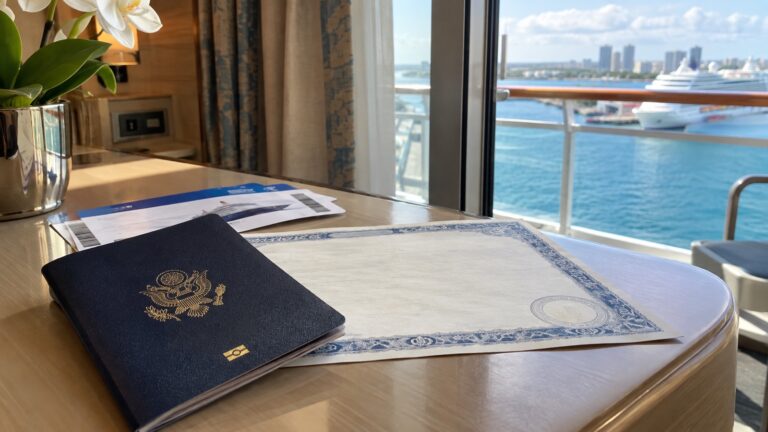
- Your actual passport: Bring the physical passport tied to your booking. A photo of the picture page is not a travel document.
- Validity margin: For a short Schengen stay, the passport must be valid for at least three months after your planned departure and issued within the previous 10 years on entry. Your cruise line may require more validity.
- Clean fingertips: Keep your hands clean and dry for the scanner. If your fingerprints cannot be captured, let the officer handle the approved fallback.
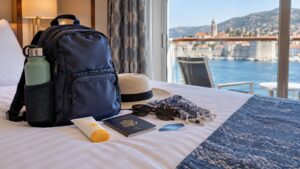
- Glasses and hat ready to remove: Follow the officer’s instructions so the camera can capture a usable facial image.
- Your trip details: Keep your ship name, lodging, return ticket and onward plans handy because border officers may ask for proof of your stay.
Cruise lines will collect passport details in advance through their app, and that helps them, not the border. You still show up in person with the physical document.
What to expect now that EES is fully operating
EES launched progressively on October 12, 2025, and became fully operational at participating external border points on April 10, 2026. That means eligible travelers now use the digital process instead of routine manual passport stamping at those crossings.
Cruise terminals have to process groups arriving on a ship’s schedule, so timing can be uneven even when the equipment works normally. Barcelona’s port planning shows how much terminal coordination EES can require, but your actual wait depends on the ship, route, staffing and local procedure.
I would leave extra time only for a call where the ship says immigration processing is required, especially the first external-border entry on your route. An ordinary call between two Schengen ports should not be treated as a fresh EES enrollment.
What does not change at all
US tourists still do not need a visa for a standard short Schengen visit of up to 90 days in any rolling 180-day period. EES records the stay, but it does not shorten or expand the allowance.
Ports outside the zone still run their own rules, and some of them want documents your passport does not cover. That is a separate planning problem, and the ports where your passport alone is not enough is the version of it that ruins port days.
You should no longer expect a routine Schengen entry or exit stamp when EES applies. Keep decorative stamps out of your passport and collect them on a postcard or travel journal instead.
Quick answers
Do I need to register for EES before my cruise?
No paid authorization or mandatory EES application is required. Some countries offer an optional official app for advance data submission, but you still complete the border check in person.
Will I be scanned at every port on my Mediterranean cruise?
Almost certainly not. Once you are inside the zone, moving between Schengen ports is an internal move, and day visits ashore are usually not individually processed.
How long does the biometric registration take?
There is no reliable one-size-fits-all time. Initial registration usually has more steps, while later checks may be quicker but can still require fingerprints, fresh data collection or a staffed desk.
Does a stop in Turkey or Morocco reset my 90 days?
No, but those days do not count against you either. The 180 day window keeps rolling no matter where the ship is.
Do my kids have to give fingerprints?
Children under 12 are exempt from fingerprints but still have a facial image recorded when EES applies. Eligible travelers age 12 and older normally provide fingerprints unless collection is physically impossible.
Final word
For a straightforward cruise inside Schengen, EES may appear only at the external-border entry and exit. A sailing that crosses in and out of the zone can create more checks, so mark those crossings before you book tight tours.
The people who need extra care are those stacking sailings, joining world-cruise segments, or combining a cruise with long land stays. Count the days before you book and keep proof of your crossings in case the digital record needs correction.
How this guide was researched: EES scope, exemptions, biometric rules, data retention and correction rights were checked against European Commission, Council of the EU and EUR-Lex sources current on September 10, 2026. Schengen membership, passport validity and the 90-in-180 calculation were checked against official EU guidance, while port processing remains subject to the ship and local border authority.
See our Editorial Policy.
More on this topic: browse every guide on choosing a cruise.