Face-to-Face Immigration on a Cruise: Why Some Ports Make You Line Up
A face-to-face cruise immigration check means an officer needs to see some or all passengers in person instead of clearing everyone from the ship’s manifest alone. The procedure can affect your morning, but it is not identical at every country, port, or sailing.
My quick take
An in-person check is a border procedure, not a sign that anything is wrong. Authorities may use it at an external border, after an itinerary change, for selected travelers, or when local rules require physical document or biometric checks.
Protect the morning by avoiding a nonrefundable independent tour until the line publishes clearance instructions. The tradeoff is simple: a ship excursion may coordinate better with uncertain release times, while an independent plan can cost less if it starts later and allows changes.
The quick facts
- What it is: Immigration officers require designated passengers, and sometimes everyone aboard, to present in person.
- What it costs: Time varies from a quick individual check to a ship-wide process lasting hours.
- What you bring: Exactly what the ship requests, often a passport or other travel document, ship card, and any required form.
- Who goes first: The ship and authorities set the order. Excursion groups may receive coordinated times, but priority is not guaranteed.
- Can you skip it? Follow the ship’s instructions even if you plan to stay onboard. Some checks cover the whole manifest, while others apply only to travelers going ashore.
Why some ports do this and most do not
Cruise lines normally transmit passenger and crew information before arrival, allowing authorities to review the manifest in advance. That does not guarantee paper-only clearance, because border officials decide whether anyone must appear in person.
An officer may compare a traveler with the passport, ask entry questions, stamp a document, or collect biometrics where the law requires. The process can apply to everyone or only a subset of passengers.
A first external-border call is a common trigger, but itinerary sequence, nationality, visa status, and port procedure matter. Customs and immigration are separate functions, even when the ship schedules them together.
How the morning actually runs
A ship may assign times by deck, muster station, cabin, nationality, excursion, or another grouping. The check can happen onboard, in a terminal, or at the gangway, so read the daily program and any letter delivered to your cabin.
Bring the requested document and any visa or arrival form, then answer the officer’s questions directly. The individual check may be brief, but a large ship, limited officers, document problems, or biometric enrollment can lengthen the total operation.
Some ports hold all shore access until the vessel is cleared, while others release passengers in approved groups. Only the line and local authorities can tell you which procedure applies that day.
Where you will most often meet it
You can encounter in-person checks in any region when a ship crosses an external border or local authorities require them. Past experience at the same port does not guarantee the next sailing will use the same process.
In Europe, a call that crosses the Schengen external border may involve entry or exit controls. The EU Entry/Exit System can add digital registration and biometrics for covered non-EU short-stay travelers, but cruise procedures and lawful exceptions depend on the route and port.
Do not rely on a regional list of ports that supposedly always or never checks passengers. Requirements can change with nationality, itinerary, security needs, new border systems, or a decision by authorities on arrival.
The passport surrender question
On some itineraries the ship collects passports for immigration processing and returns them later. Whether that happens depends on the countries, route, and line rather than the region alone.
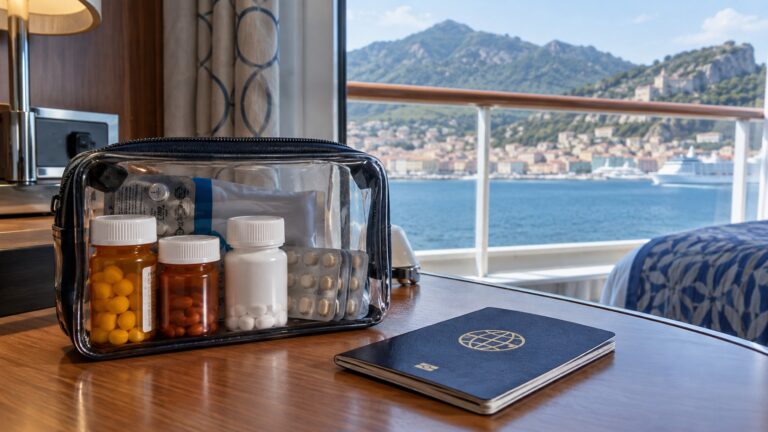
If the ship collects your passport, ask for a receipt or confirm how the line tracks it and when it will be returned. Keep a paper copy and encrypted phone image separately, knowing that neither replaces the passport for travel.
The State Department still recommends carrying a passport book on any cruise, because you need one to fly home in an emergency. Knowing where yours physically is at any moment matters more than usual on these sailings.
What to bring to the inspection
- Your passport: The physical book or other travel document specified by the ship, unless the line is holding it for processing.
- Your ship card: Bring it whenever instructed so the crew can record who has completed the process.
- Any arrival form: Complete it accurately before your assigned time if the ship distributes one.
- Visa documentation: Carry it in the format the destination and cruise line require, which may be printed or electronically linked to the passport.
- Patience and coffee: Not officially required, genuinely helpful.
Missing paperwork is where these mornings turn from slow to serious. My guide to cruise port visa requirements covers what needs sorting long before you reach the gangway.
How much of your day this really eats
Do not assign a fixed one- or two-hour delay before the ship announces the procedure. Build a flexible morning because clearance can be faster or substantially slower.
An independent guide should receive your ship name, scheduled arrival, and a warning that release depends on immigration. Choose a meeting time and cancellation policy that move with the ship’s actual clearance.
My guide to what you can realistically do in a six-hour port call is worth rereading if an inspection lands on an already-short day.
Ship tours get called first, and that matters
A line may coordinate early processing for ship excursions, but immigration officials control the process and no priority is universal. Ask whether excursion departure is tied to clearance rather than assuming it will leave first.
A ship excursion can be worth the higher price when the port day is short and the operator will wait for the ship’s release. An independent tour still works when it starts later, allows changes, and does not require nonrefundable advance transport.
If you go independent, tell the guide that release depends on immigration and may not happen until later in the morning. Confirm in writing that the start time can move without losing the booking.
Tender ports plus inspections
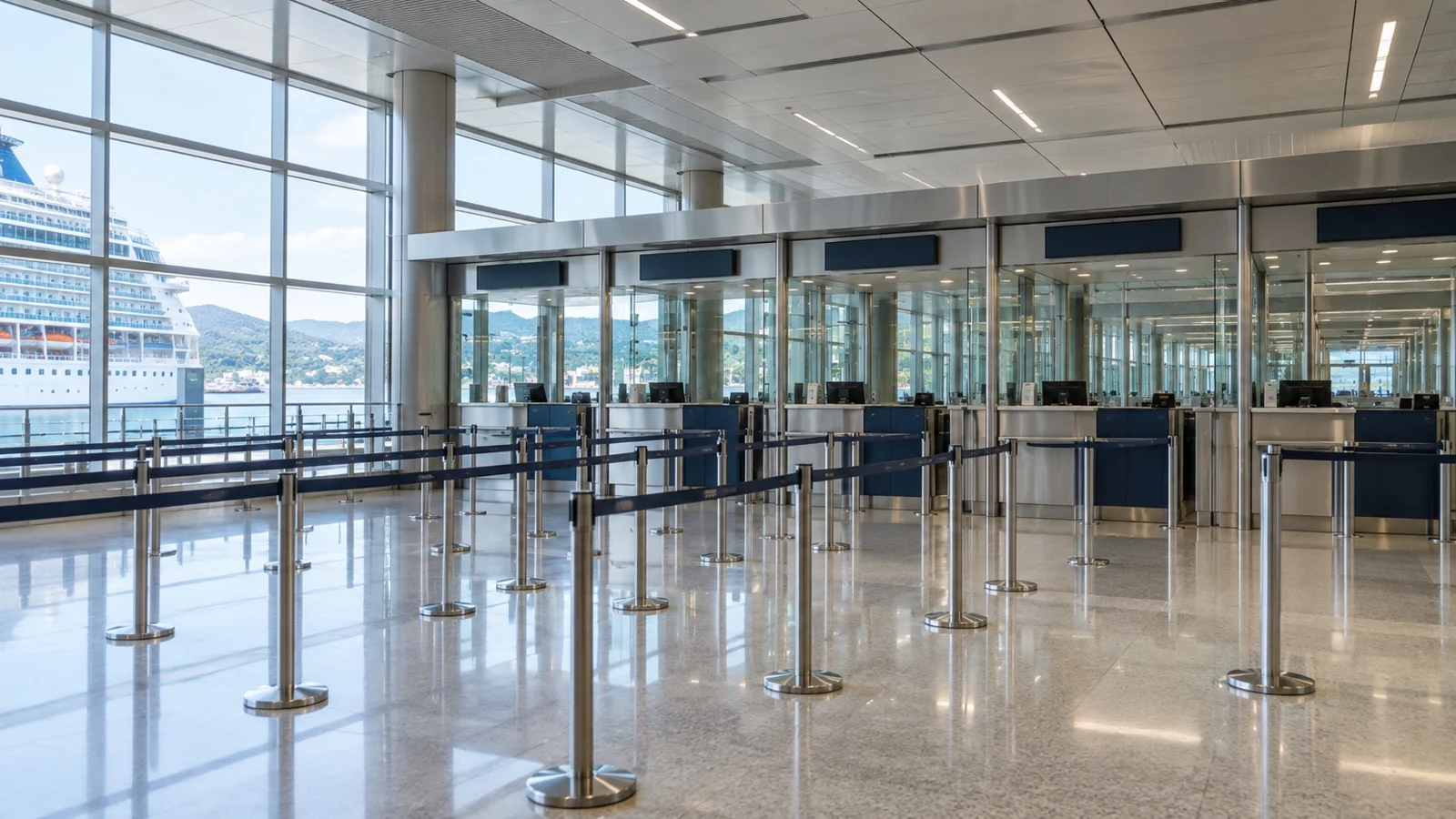
This is the combination that genuinely compresses a day. You clear immigration onboard, then you queue for a tender, then you ride to shore.
Immigration and tendering create two separate queues, so use the ship’s estimated first-ashore time rather than the scheduled arrival. My guide to how tendering changes your time ashore helps calculate a realistic day.
Clearing back in, and clearing out
Some countries also inspect on departure, meaning an exit formality before the ship sails. That can pull the all-aboard time earlier than a normal port day.
Read the daily program rather than assuming the usual half-hour buffer applies. This is exactly the situation my guide to missing the ship at a port of call exists for.
Norwegian’s travel documents page gives a sense of how country-specific these requirements get, with different rules by nationality and port. Other major lines publish comparable breakdowns.
Coming home is an inspection too
After an international cruise, arriving travelers are subject to CBP inspection at the US homeport. Mobile Passport Control, facial-comparison processing, or Global Entry may be available only at participating locations and for eligible travelers.
CBP explains what to expect on return, including inspection and the duty to declare purchases and agricultural items. A paper form is not universal, so follow the process used at your terminal.
The health screening cousin
A destination may separately require a health declaration, vaccination evidence, or screening. That is a public-health requirement rather than immigration itself, even when the ship schedules both together.
Answer health questions accurately and bring any required certificate in the specified format. A reported symptom may lead to assessment by ship or port health officials, and the outcome depends on current rules.
Screening can delay clearance or affect whether a traveler may go ashore, so do not assume it adds only a few minutes. Check destination health requirements alongside visas before departure.
Why the queue is worse than it needs to be
Follow the assigned time because arriving early can crowd the venue without moving your group forward. If the notice gives a window rather than an exact time, ask crew whether later in that window is acceptable.
Have the documents open to the requested page and remove passport covers if instructed. Small preparation helps the line move a large group, but it cannot control the number of officers or a border-system delay.
Do not skip your call or deliberately arrive late unless crew approve it. A missing passenger can delay the ship’s clearance when the authorities require the whole manifest to be processed.
Traveling with someone who cannot stand in line
Tell the accessibility desk or guest services as early as possible if you cannot stand in line or reach the inspection venue. The ship can ask authorities about seating, an accessible route, or another accommodation, but the available solution is port-specific.
Bring necessary mobility aids and allow more time because a terminal inspection may involve a longer route than an onboard check. My guide to planning port days for someone who cannot walk far covers the rest of the day.
Quick answers
What is a face-to-face immigration inspection on a cruise?
It is a border check in which designated passengers, and sometimes everyone onboard, must appear before an immigration officer. It supplements the manifest review and may include document, identity, entry-question, stamp, or biometric steps.
Can I skip it if I am staying onboard?
Do not assume you can skip it. Some authorities require the whole manifest to appear, while others process only travelers going ashore, so follow the ship’s written instruction.
How long does it take?
There is no reliable universal estimate. Ship size, number of officers, biometrics, document issues, terminal layout, and whether release happens by group can turn it into minutes or several hours.
Will the ship take my passport for the whole cruise?
On some itineraries, the line may hold it for part or much of the voyage, so ask how it is tracked and returned and keep a separate copy for reference.
Do ship excursions really go first?
Sometimes, but not as a universal rule. The line may coordinate excursion groups, while local immigration authorities retain control of processing and release.
Final word
A face-to-face check is manageable when the morning remains flexible. Read the ship’s instructions, prepare the requested documents, and avoid promising an independent guide a fixed early meeting.
Do not generalize from another ship or last year’s call at the same port. The destination authorities and your cruise line’s notice for that sailing are the sources that decide who appears, what to bring, and when anyone can go ashore.
How this guide was researched: This guide was checked in September 2026 against US Department of State cruise guidance, US Customs and Border Protection arrival procedures, EU Entry/Exit System guidance, and Norwegian’s published document requirements. Destination authorities set inspection procedures, and the ship’s instructions apply to the sailing; see our Editorial Policy.
More on this topic: browse every guide on port logistics and timing.