Cruising Deaf or Hard of Hearing: What to Request and When
Ninety days. That is how far ahead Norwegian’s Access Desk asks for a sign language interpreter, and it is the deadline that quietly shapes the whole booking.
The alert kit, the captions and the amplified handset are easier. The port is where planning still earns its keep.
My quick take
Ask for the interpreter first and then request the cabin equipment. Portable kits may be limited, and an interpreter needs far more lead time than a strobe or amplified handset.
The word I would read twice is shared. Carnival says its interpreters work on a shared basis and cover the main production shows, the port and shopping presentations and other major organized activities, which describes a schedule rather than a personal service.
Do not assume a ship carries the same equipment as its sister. Norwegian’s current accessibility information should be checked for the named ship because TTY, portable phones, messaging and alert equipment can change during refits.
The quick facts
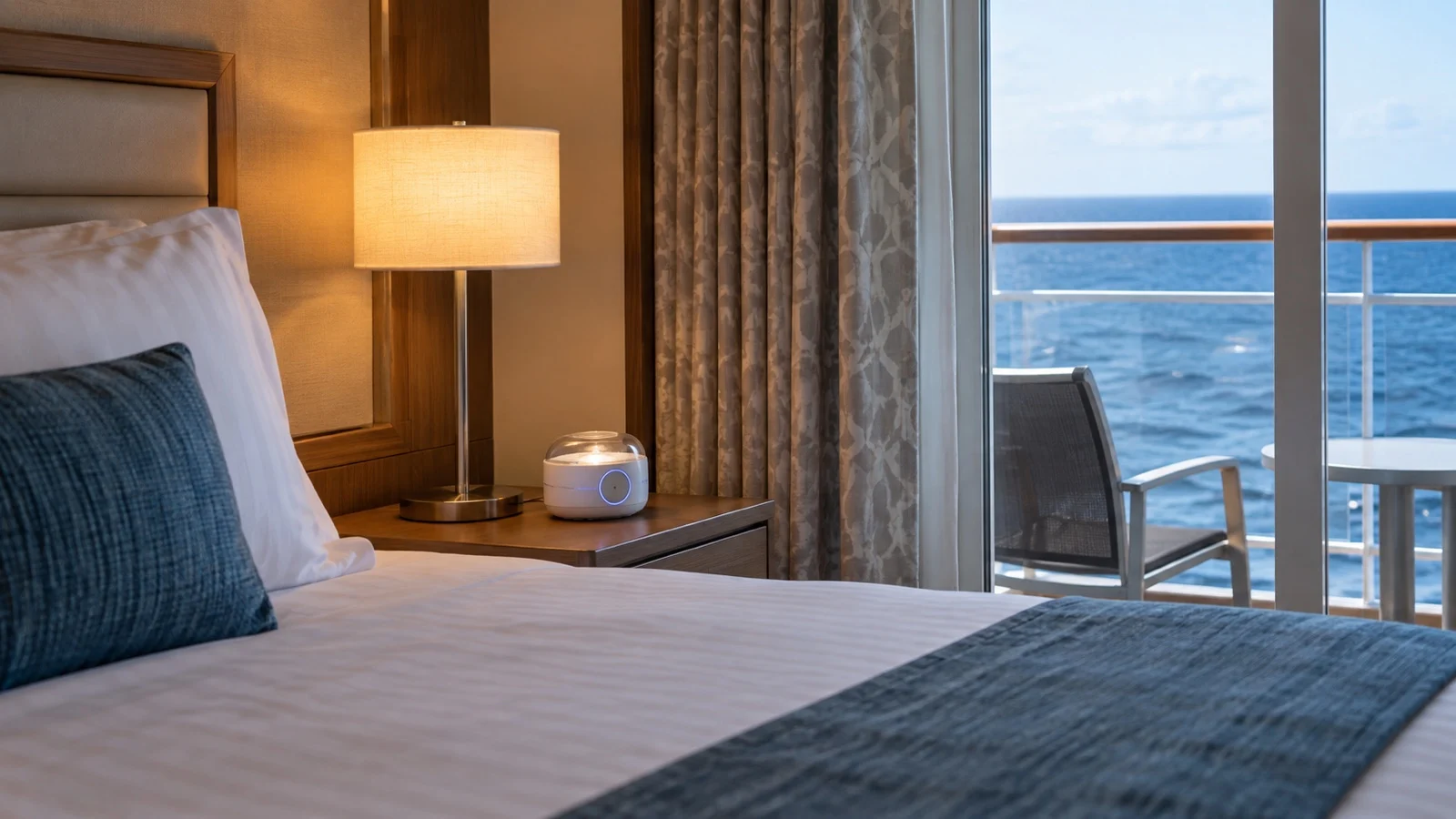
- Visual and tactile alert kits: Royal Caribbean, Celebrity and Carnival all describe a portable stateroom kit covering a door knock, the telephone, an alarm clock and the smoke detector. Princess calls its version the All-In-One-Kit and includes a TTY telephone, an under-pillow shaker and a flashing light signal.
- Hard-wired cabins: Norwegian publishes staterooms wired for a visual and tactile alert system on Norwegian Sky, Norwegian Sun and Pride of America. Portable kits cover the rest of that fleet.
- Telephones: Royal Caribbean lists amplified telephones in staterooms and in public areas across its ships. Carnival’s TTY interfaces with the guest services switchboard and is available 24 hours a day.
- Assistive listening: Royal Caribbean says assistive listening systems sit in the main theater on all of its ships, Norwegian says they are available on many vessels through the Guest Services Desk, and Holland America lists them in its show lounges. Princess hands them out in the venue on a first-come, first-served basis.
- Captions: Carnival says all Carnival-created television content is captioned and that the self-mustering safety video plays with open captions on the cabin television during embarkation. Princess adds the honest caveat that films get captions when the distributor supplies them.
- Interpreters, and the fine print: Carnival and Norwegian both restrict sign language interpreting to sailings that depart from or return to a US port. Carnival states that it cannot take requests for a specific interpreter.
- The deadlines: Norwegian asks for interpreter requests no later than 90 days before sailing, Royal Caribbean and Celebrity ask for 60 days, Carnival strongly encourages 60 days, and Holland America wants its Special Requirements Information form at least 45 days out.
The deadlines are not the same number twice
This is the part people assume is standardized, and it is not. Norwegian runs two clocks, 90 days for an interpreter and 45 days for other accessibility needs, while Holland America works to a single 45-day form deadline.
Royal Caribbean and Celebrity both publish 60 days for American Sign Language interpreting, and both add that the service is subject to interpreter availability. Princess asks for interpreter requests at the time of booking and says the same thing about availability.
Those notice periods were checked against the lines’ own accessibility pages on September 10, 2026. File the request when you book because published lead times are not guarantees of availability.
In the cabin, and what to check on day one
Confirm whether the kit will be installed or collected from Guest Services, and check it as soon as you board. If anything is missing, report it before the first safety briefing rather than waiting until bedtime.
Then test the pieces before you go to dinner. Have someone knock while you are in the bathroom, check that the telephone strobe fires, and find out whether the smoke detector unit in the kit is a light, a shaker or both.
Closed captioning on the stateroom television is fleetwide on Royal Caribbean and Celebrity, and Princess says every stateroom television is caption-capable. Capable is not the same as switched on, so find the setting on day one.
The shows, and who is interpreting them
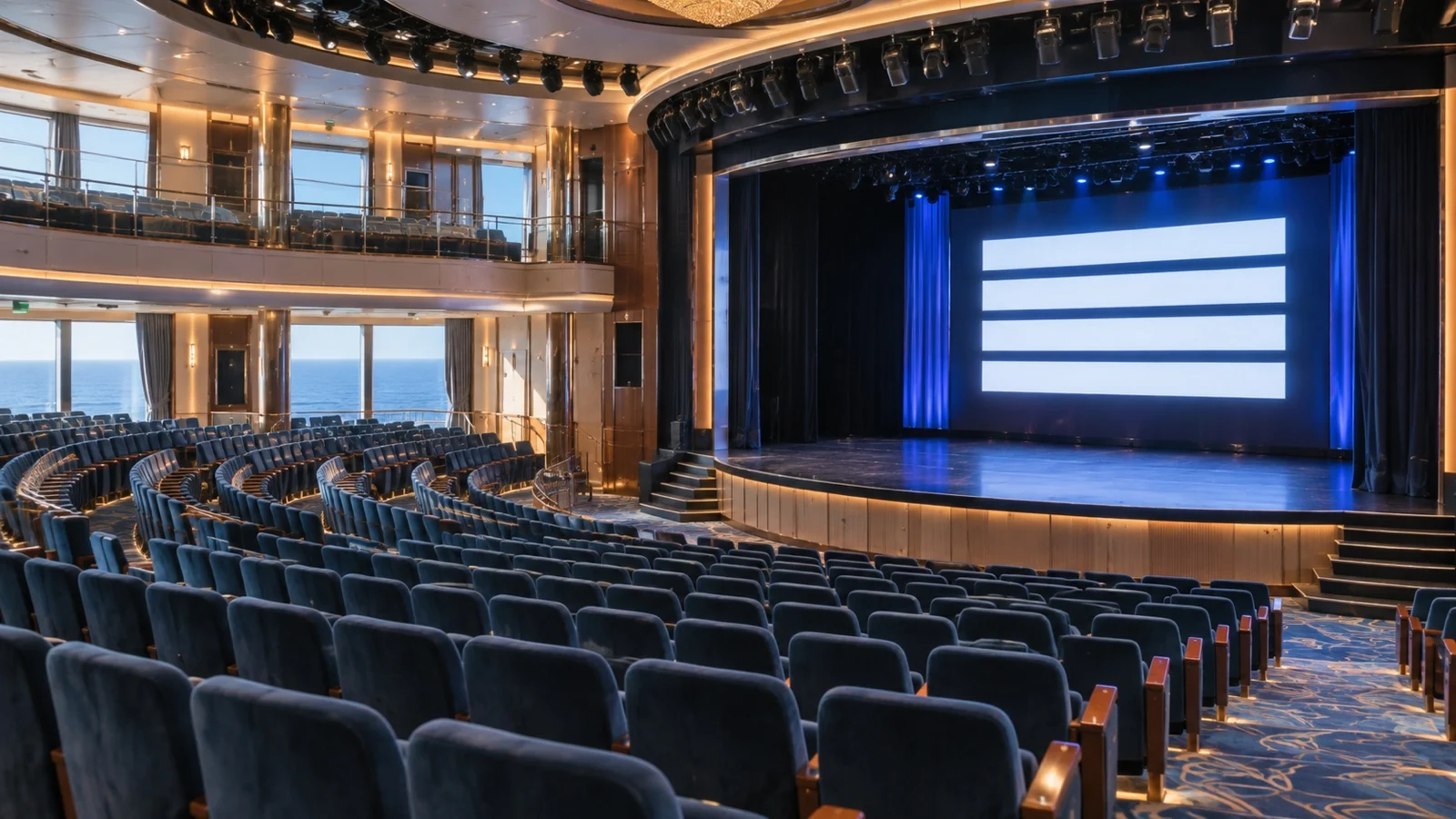
Assistive listening is the workhorse here and it is easy to underuse. Royal Caribbean and Celebrity put systems in the main theater, Norwegian issues them from the Guest Services Desk, and Princess tells you to ask any staff member in the entertainment venue.
Interpreting is a narrower service than most people expect. Carnival lists production shows, port and shopping presentations and other major organized activities, which leaves out trivia, the piano bar and anything you decide to attend on impulse.
Carnival also offers headsets at guest services that amplify the sound of the shows, which is a separate thing from the assistive listening system and worth asking about by name.
The muster drill, and announcements made by voice alone
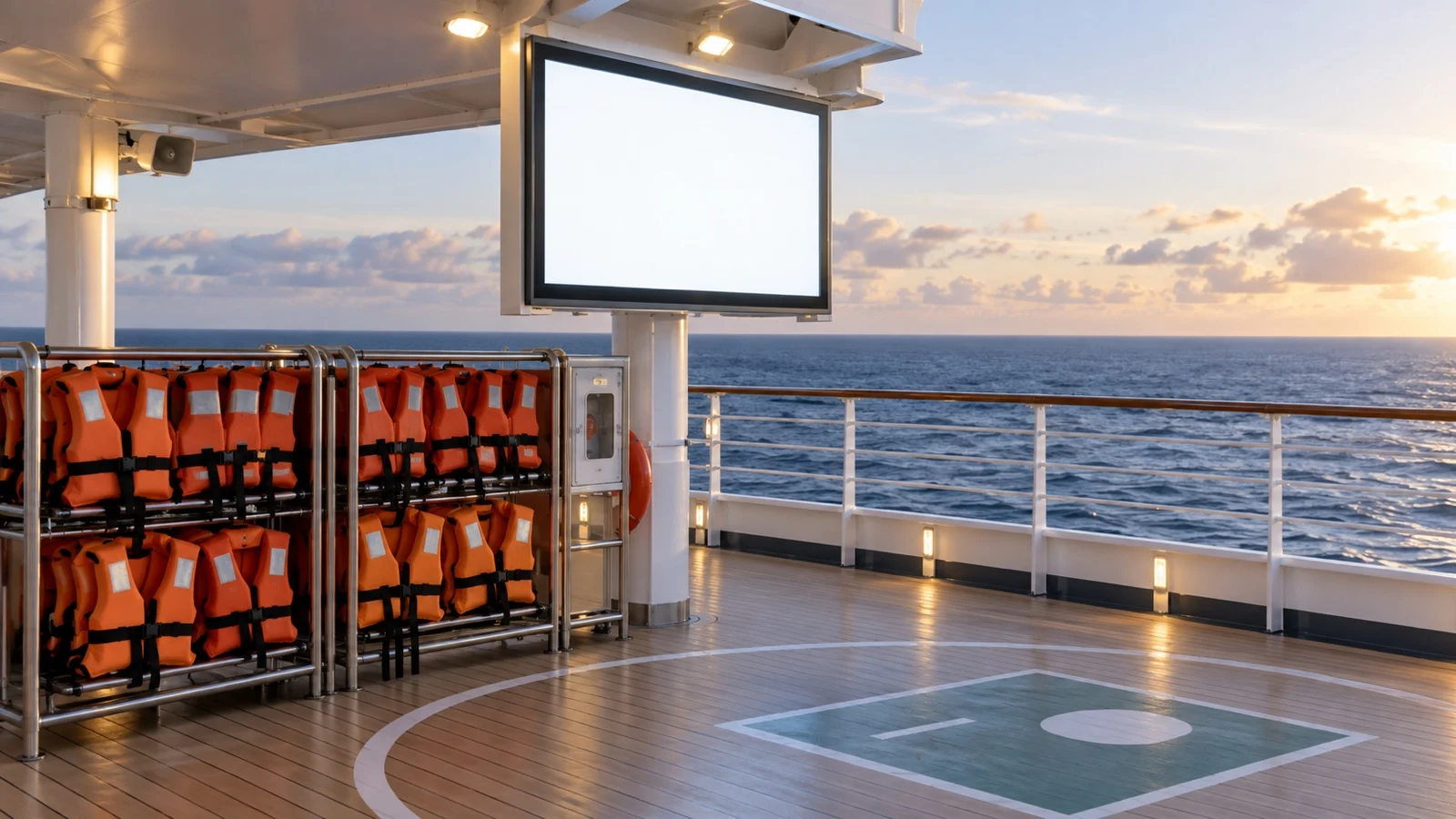
Electronic muster has made the safety briefing much better for this. Carnival plays a self-mustering video with open captions on the cabin television during embarkation, and Celebrity publishes closed-captioned safety videos.
Live announcements are the remaining gap, and there are more of them than the brochure suggests. Gangway openings, tender group numbers, a changed all-aboard time and a delayed departure are all made over a public address system.
Norwegian publishes an announcement-alert system for deaf or hard-of-hearing guests, but the equipment and message detail should be confirmed for your named ship. An alert that an announcement occurred is not the same as receiving the announcement text.
On any ship, agree on a backup communication plan with Guest Services. Ask how urgent announcements, tender groups and changed all-aboard times will reach you in writing or by a visual or vibrating alert.
Ashore: headsets, guides and the excursion desk
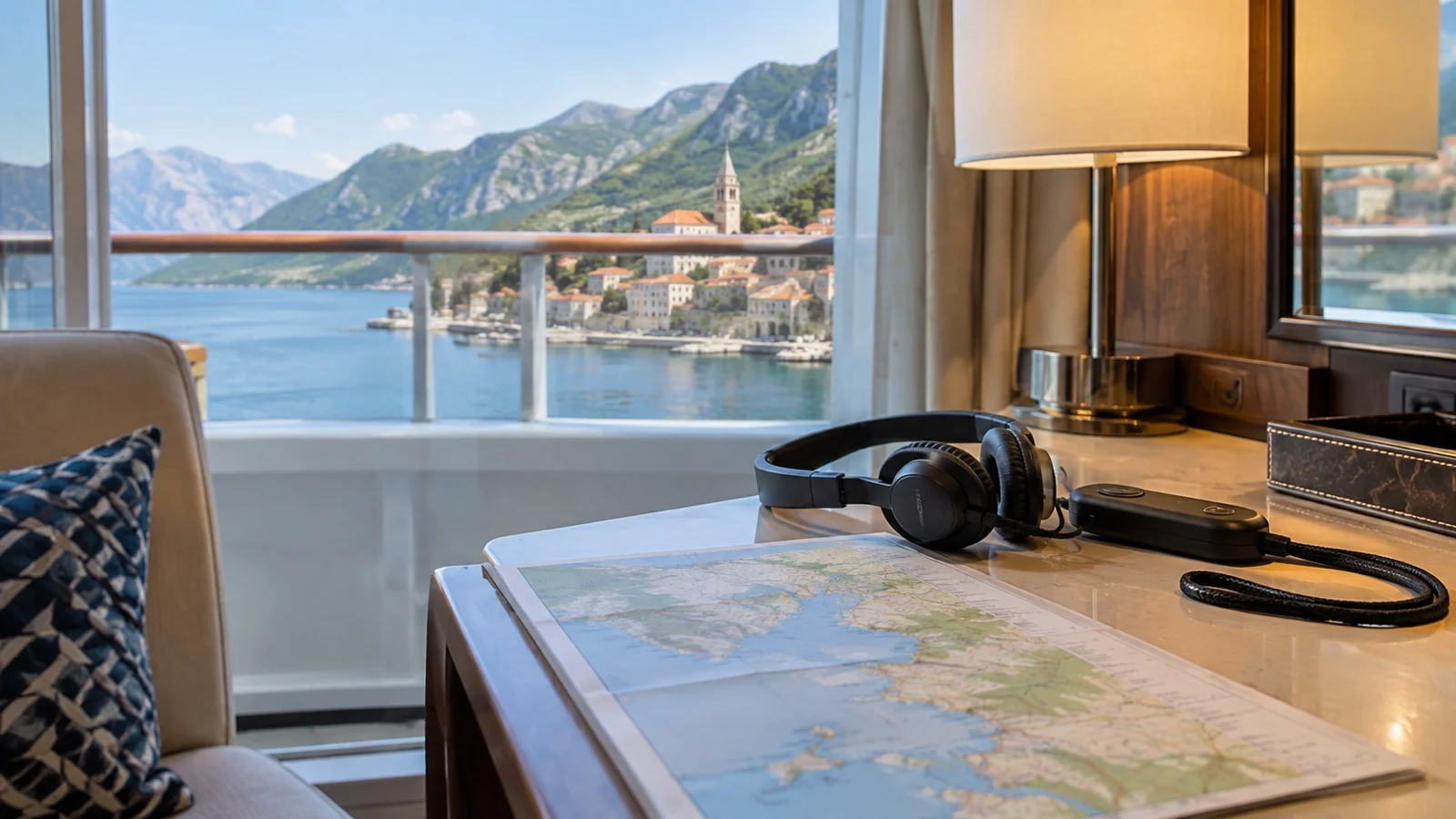
European walking tours run on whisper headsets, the little receivers you hang around your neck in Rome, Ephesus or Pompeii. They are a transmitter and an earpiece, not an assistive listening system, and they will not couple to a telecoil unless you bring your own neckloop.
So I ask two questions at the shore excursion desk before booking rather than after. Does this tour use a headset system, and can the operator provide the itinerary and the guide’s notes in writing.
Tender days are the ones I would plan hardest. Groups are called by number over the public address system, so ask the crew at the collection point to come and tap you, and read my explainer on what a tender port actually means before you pick an itinerary full of them.
The things I would actually do
- Put the interpreter request in the calendar first: 90 days for Norwegian, 60 for Royal Caribbean and Celebrity, and 60 strongly encouraged by Carnival. Everything else on this list can wait a week; this cannot.
- Name the ship and the sailing date in every email: equipment differs between sister ships and a fleet-wide answer is not a booking record. Save the reply to your phone before you travel.
- Claim the kit on embarkation day: go to guest services rather than waiting for it to appear, and test the door knocker and strobe before dinner.
- Collect the all-aboard time in writing: ask at the gangway on the way out and photograph the board. Announced changes are the ones that catch people, and a photograph plus a note from the desk covers you.
- Bring your own neckloop or audio cable: tour headsets and some assistive listening receivers use a standard jack, and the one thing nobody ashore can lend you is the piece that connects to your own devices.
- Talk to the shore excursion desk before booking: ask which tours use headsets, which are walking tours in traffic noise, and which are small enough that the guide can face you.
Fun fact: the humblest piece of hardware in this whole subject may be Norwegian’s announcement pager, a plain vibrating unit available on every ship in the fleet whose only job is to say that the public address system just did something. It does not tell you what was said, which is oddly the point, because knowing an announcement happened is most of the problem solved.
How I would actually decide
If interpreting matters to your trip, the itinerary shape decides it before the ship does. Carnival and Norwegian both tie the service to sailings that depart from or return to a US port, which quietly rules out a lot of European and Asian departures.
Then I would look at the port list the way I look at it for any group with mixed needs, which is the same logic in my guide to choosing excursions when everyone has a different activity level. Self-guided walkable ports carry less communication load than bus tours with a live guide.
A realistic word on accessibility
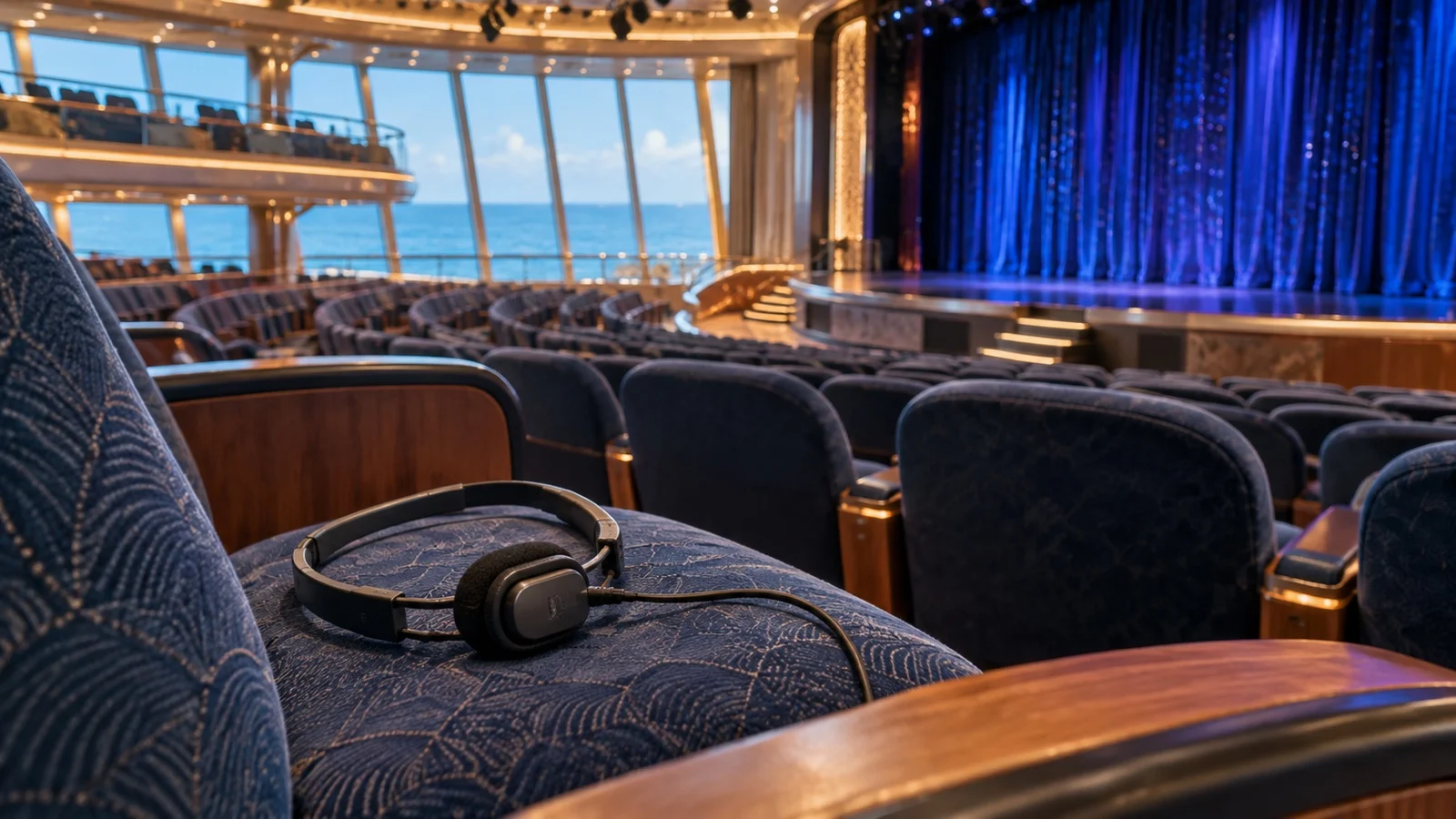
The onboard picture is decent and the shore side is thin, and it helps to say that plainly. Interpreting is scheduled and shared, assistive listening is venue by venue, and captions on movies depend on what the distributor sent.
I could not confirm fleetwide live captioning of public-address announcements across the mainstream lines reviewed. Ask the line what the named ship provides and set up a written or vibrating backup for operational changes.
Ashore there is no standard at all, which is the same conclusion I reach for travelers with low vision or blindness. A terminal in Seattle or Fremantle may have visual information boards and a staffed desk, and a Caribbean tender pier will have a crew member with a bullhorn and nothing else.
Confirm every accommodation in writing with the line before final payment, and ask them to name the ship, the sailing date and the specific equipment. If busy terminals are also stressful for you, the roundup of cruise ports that feel manageable for anxious first-time travelers overlaps more than you would think.
When to go, and the weather
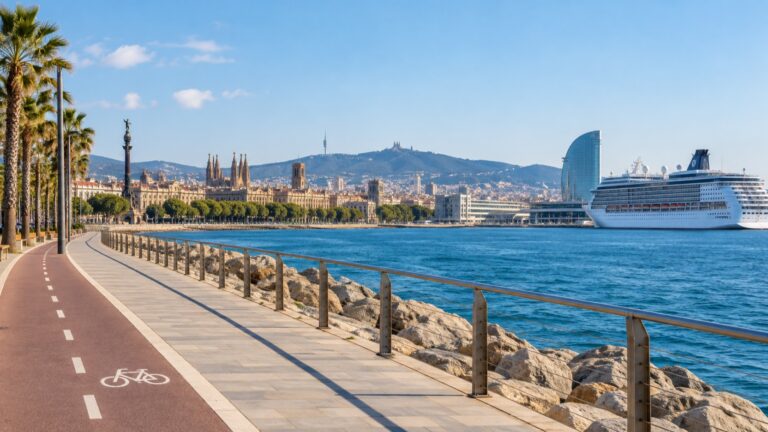
Because Carnival and Norwegian tie interpreting to US round trips, the practical seasons are the Caribbean year round and Alaska from May to September. A Mediterranean summer sailing that starts in Barcelona sits outside that rule on both lines.
Weather changes where the entertainment happens, which matters more than it sounds and matters again for travelers with autism and sensory needs. A warm Caribbean evening moves music and games out to the pool deck, where there is no assistive listening system, no captions and a lot of engine and wind noise.
Weather can move events between indoor and outdoor venues, which changes acoustics and access to assistive-listening equipment. Check the daily program and choose a quieter seating location rather than relying on a seasonal temperature assumption.
Humidity, rain and sea spray can affect hearing aids and processors. Pack the batteries, charger, drying supplies and water protection recommended by your device manufacturer or audiology team.
Quick answers
Do cruise ships provide sign language interpreters?
Some do, on some sailings; Carnival and Norwegian both limit interpreting to cruises that depart from or return to a US port, Royal Caribbean and Celebrity ask for 60 days notice, and Norwegian asks for 90.
What is in a stateroom alert kit?
Carnival, Royal Caribbean and Celebrity describe a portable kit with a door knock alert, a telephone alert, an alarm clock and a smoke detector alert; Princess bundles a TTY telephone, an under-pillow shaker and a flashing light signal into its All-In-One-Kit.
Are cruise ship shows captioned?
Live production shows generally are not, and assistive listening in the main theater is the usual provision instead; Carnival captions its own television content and plays an open-captioned safety video, and Princess says films carry captions when the distributor provides them.
How will I know about announcements in port? Ask the line which written, visual or vibrating alert is available on your ship, then agree on a backup with Guest Services and gangway staff; Always photograph the posted all-aboard time before leaving.
Do tour headsets work with hearing aids?
Not reliably, because a whisper headset is an earpiece rather than a hearing loop; Bring your own neckloop or cable, and ask the shore excursion desk which tours use headsets before you book.
The last word
The onboard half of this is a paperwork problem with known deadlines, and paperwork problems are the good kind. File early, name the ship, keep the reply, and most of what the lines publish will actually be waiting for you.
The shore half is a different job, and it is the one worth the planning hours. A port you can walk yourself, a written all-aboard time and a tour that does not depend on a voice in a crowd will do more for the week than any piece of equipment.
If you are sailing with a mixed group, the same thinking runs through my guide to choosing port activities for a multigenerational family, because the skill in both cases is picking days that suit everyone rather than days that need fixing.
How this guide was researched: Equipment, interpreting policies and notice periods were checked against current official information from Carnival, Norwegian, Royal Caribbean, Celebrity, Holland America and Princess. Details were rechecked on September 10, 2026, but availability varies by ship and sailing, so confirm each accommodation in writing.
More on this topic: browse every guide on accessible and family cruise planning.