Cruising With Low Vision or Blindness: What Ships Provide
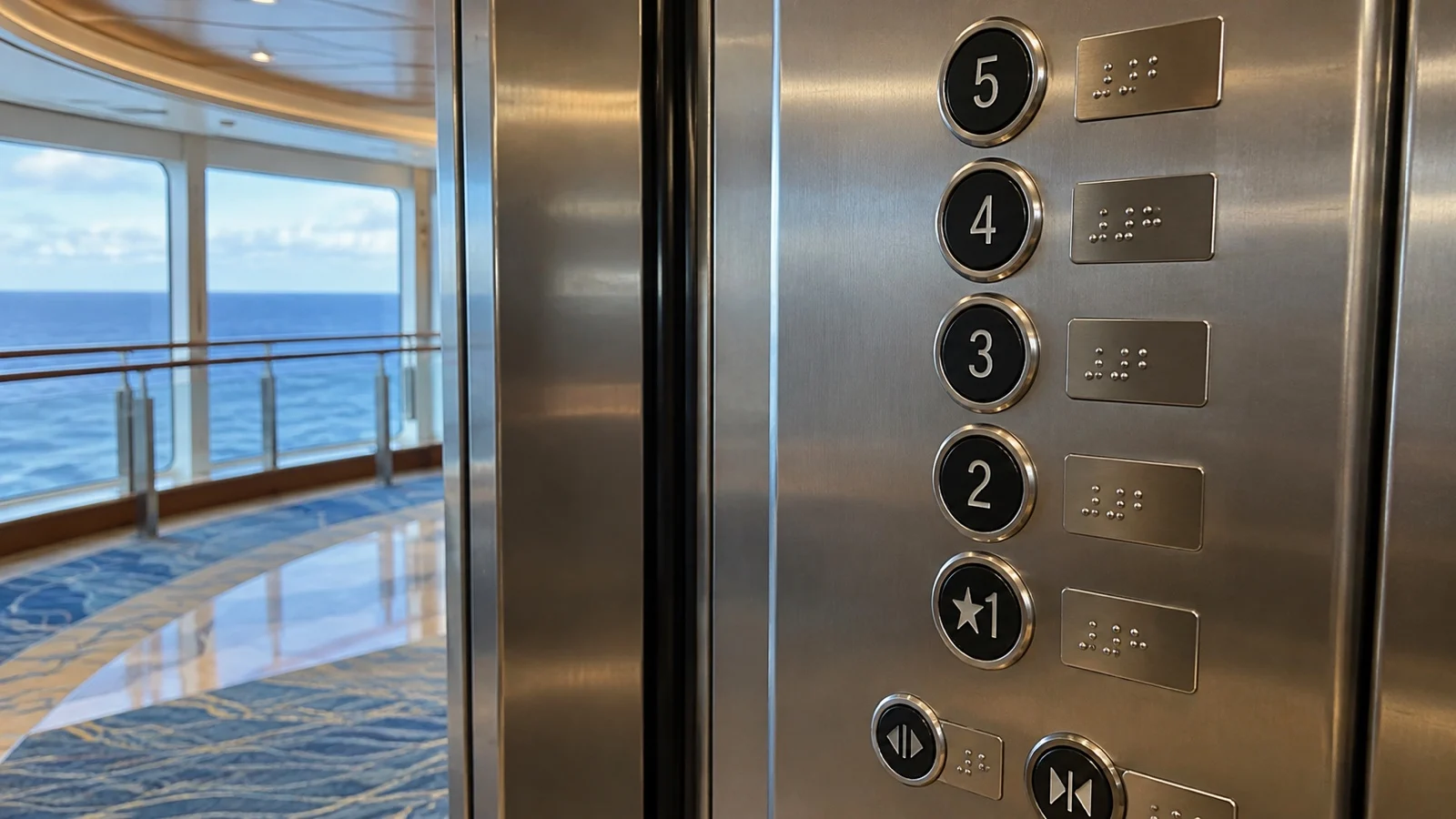
Cruise ships can provide Braille or tactile signs, alternate-format menus, audible elevator cues, screen readers, and an orientation tour. The important wrinkle is that some features are built into a particular ship, while others require a form, advance notice, or an onboard request.
Then comes the gangway, where the ship’s policy stops and the port’s surfaces, transportation, laws, and excursion operator take over. This guide separates the promises from the possibilities, so you know what to request and what to verify.
My quick take
Cruising can work well for a traveler who is blind or has low vision because the same routes, venues, and cabin stay in place for the whole trip. The best preparation is not asking for “help” in general, but listing the exact format, task, and moment where assistance matters.
Send the line’s accessibility form as soon as you book, keep the response, and ask again if the ship or itinerary changes. A submitted form records a request, but it is not proof that every request has been approved or that every advertised feature exists on your exact ship.
The quick facts
- Built-in features vary: Cruise lines publish combinations of Braille or tactile signs, audible elevator cues, and accessible digital tools. Confirm the exact ship because fleet pages are not a ship-by-ship guarantee.
- Alternate formats are often request-based: Carnival asks guests to request large-print menus and daily programs before sailing. Princess publishes large-print, Braille, and electronic menus and says at least 60 days’ notice helps have them ready on arrival.
- Orientation is not a personal guide: Carnival offers a first-day familiarization tour on request, and Norwegian offers a vessel orientation tour plus an embarkation-day accessibility meeting. Carnival expressly says it does not provide a sighted guide throughout the cruise or one-to-one assistance.
- Deadlines differ: Norwegian asks for 45 days for most accessibility needs, while Holland America recommends its Special Requirements Information form immediately after booking or at least 45 days before departure when possible. Princess uses 60 days for alternate-format menus.
- Personal care is separate: Crew can explain routes, read information, or coordinate an accommodation within line policy, but they are not personal attendants. A guest who needs help with eating, dressing, toileting, transfers, or continuous navigation may need to travel with a capable companion.
- Service dogs need two plans: Arrange the dog with the cruise line and satisfy the animal-entry rules for every country or territory where the dog may leave the ship. Emotional-support animals do not receive the same treatment under the ADA or the cruise policies reviewed here.
- Shore access is never automatic: Dock, gangway, water-shuttle, terminal, vehicle, guide, and walking-surface conditions can all change the answer. Ask about each port and excursion individually, including the return route.
What is required, and what is line-specific?
Do not treat a cruise-line webpage as a complete statement of your legal rights. The US Access Board says its passenger-vessel design guidelines are still proposed, so there is no finalized federal vessel design standard that makes every ship physically identical.
Applicable disability law can still require nondiscrimination and reasonable access, but a particular device or service may be line-specific, ship-specific, request-based, or subject to availability. Braille menus, first-day tours, screen-reader tablets, and dedicated accessibility staff should therefore be confirmed for your booking rather than assumed.
If a problem arises on a US departure or aboard the ship, ask Guest Services for the accessibility contact or Complaint Resolution Official available under that line’s policy. Keep names, dates, and the written request, because “the website said so” is much harder to resolve than a booking record.
What the major lines currently publish
Carnival lists Braille signs for stateroom numbers and public rooms, audible elevator signals, large-print menus and daily programs on advance request, an audible daily program on cabin TVs, and a first-day familiarization tour. Its dining team can review a menu aloud, but the line does not promise a cruise-long sighted guide or one-to-one help.
Norwegian lists Braille or tactile signs, a vessel orientation tour on request, and an embarkation-day meeting with the staff member handling accessibility needs. It directs guests to the Accessibility and Medical Questionnaire and asks for at least 45 days’ notice for most needs.
Princess lists Braille or tactile signs, audible elevator arrivals, a reader-equipped computer terminal, a cabin-TV text reader, and accessible digital portals. It also warns that some ships’ signs may not yet be in place or meet its stated ADA standard unless the ship has undergone remediation, which is your cue to ask about the exact hull.
Princess says 60 days’ notice helps make large-print, Braille, or electronic menus ready, and some screen-reader tools are available only on request or first come, first served. Its large-screen portals require guests to bring their own headset, so confirm the connection type instead of guessing.
Celebrity publishes Braille in public areas and elevators and routes questions through its Access Department. The public page is light on the scope and timing of reader assistance, so ask what a “qualified reader” can cover on your ship rather than interpreting that phrase as a personal guide.
Holland America recommends contacting Guest Accessibility and sending its Special Requirements Information form immediately after booking or at least 45 days before departure when possible. The same team handles requests for deaf and hard-of-hearing guests, while equipment timelines can differ from oxygen and CPAP arrangements.
The request list that gets useful answers
Contact the accessibility department before paying a nonrefundable balance and name the ship, sailing date, reservation number, preferred format, and exact task. “Please provide an electronic dinner menu compatible with VoiceOver” is easier to fulfill than “I need accessibility.”
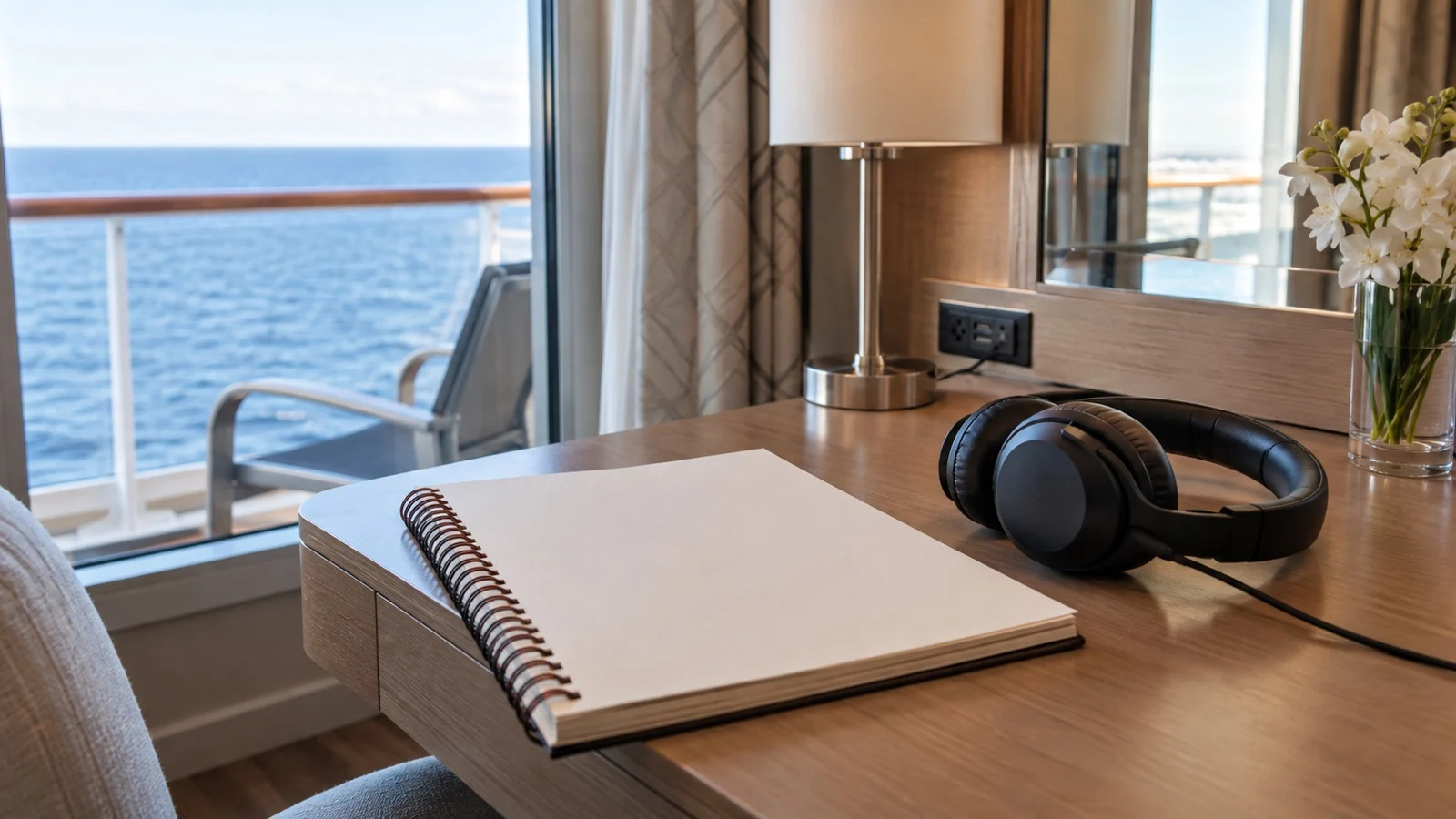
- Accessible information: Request the daily schedule, menus, emergency information, excursion descriptions, and account statements in the format you use. Ask whether the file, app screen, or onboard portal works with your device and screen reader.
- Ship orientation: Request the line’s familiarization or vessel-orientation tour, then ask to practice the routes from your cabin to the muster station, main dining room, Guest Services, and your preferred elevator bank.
- Dining: Ask for a large-print, Braille, or accessible electronic menu before sailing and confirm whether staff can read changing specials aloud. Note any lighting or seating needs without assuming the same table is guaranteed every night.
- Safety: Tell the line how you receive written or visual information and what assistance you may need during muster or an emergency. Ask how your need is recorded and where to report on embarkation day.
- Digital access: Download the cruise app and offline deck plan before travel, test them with your accessibility settings, and ask what onboard features require headphones. Also ask what happens if the app or ship Wi-Fi is unavailable.
- Port days: Give the excursion team the type of cane or dog you use, your walking tolerance, lighting needs, and whether you need verbal description. Ask for a written answer from the operator rather than relying on the excursion title.
File early, but do not treat the published deadline as permission to wait. If you book inside a deadline, contact the access desk immediately and ask what can still be arranged without assuming the answer is no or yes.
Learning the ship without memorizing a floating city
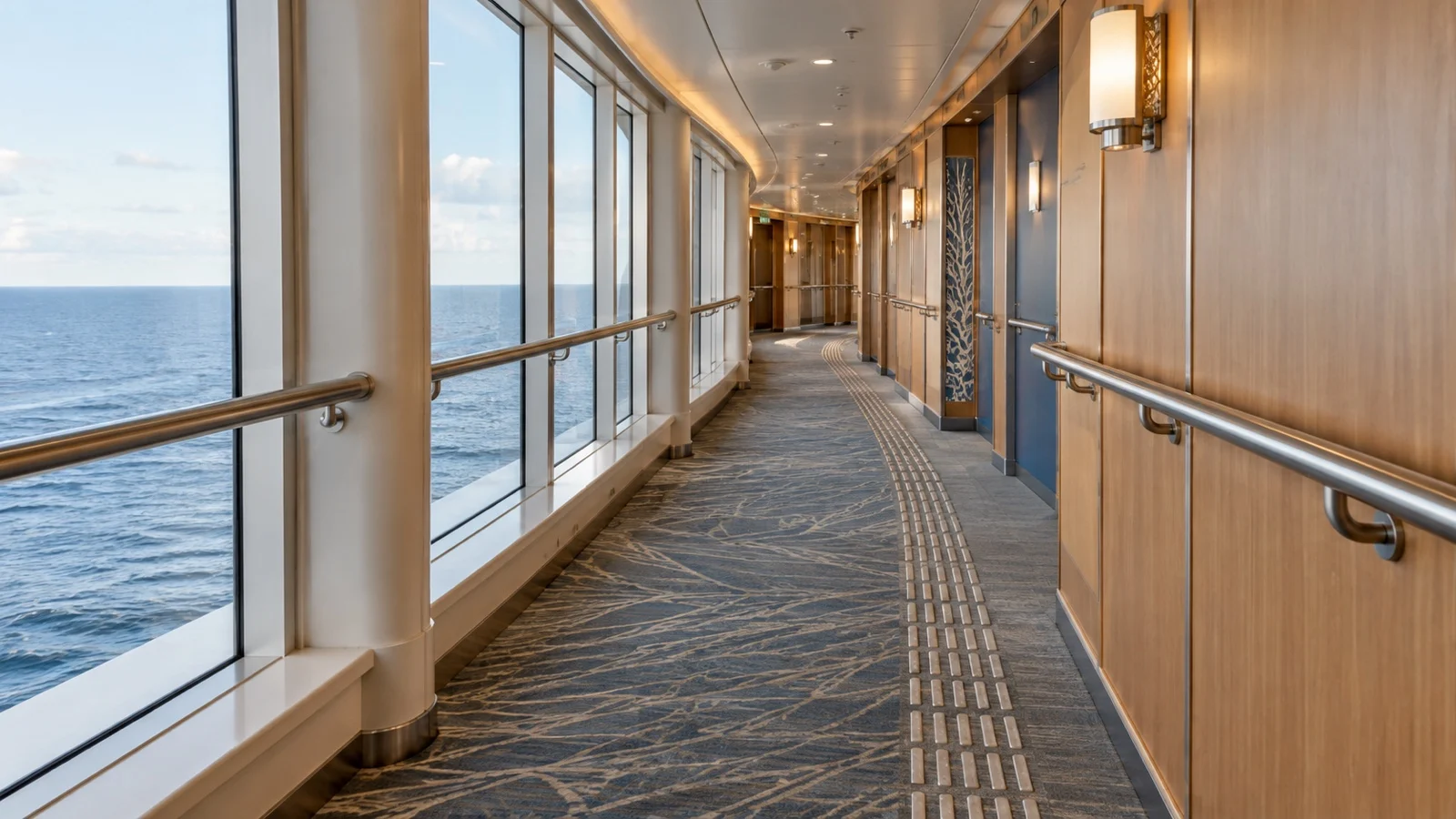
Pick one elevator bank as home base and learn a few stable landmarks near your cabin, dining room, theater, and outdoor deck. Ask crew to describe turns, thresholds, door direction, and which side of the corridor contains the landmark rather than pointing with a cheerful but useless “over there.”
The first route to practice is cabin to muster station, followed by cabin to Guest Services. Then add the venues you will actually use, because learning six reliable paths beats trying to swallow a 15-deck plan before lunch.
Cabin location can reduce daily navigation, but “near the elevator” needs a little finesse because lobby noise may matter. Ask for the number of cabin doors between your room and the elevator lobby, the corridor side, and any turns or fire doors.
Crowded elevator lobbies, buffet lines, and show exits can be trickier than the quiet ship toured on embarkation afternoon. A consistent meeting point and a charged phone help, but they do not replace an agreed plan for a separated travel party.
Safety briefings and emergency assistance
Tell the line before sailing if you need the safety briefing in an alternate format or help locating the muster station. On embarkation day, confirm the request with Guest Services and the crew member at your assigned station.
Ask what assistance is planned during an actual emergency, how crew will identify you, and what route applies if the normal path is unavailable. Do not invent your own cabin marker or attach anything to a ship surface without permission.
Shore access: break the day into six links
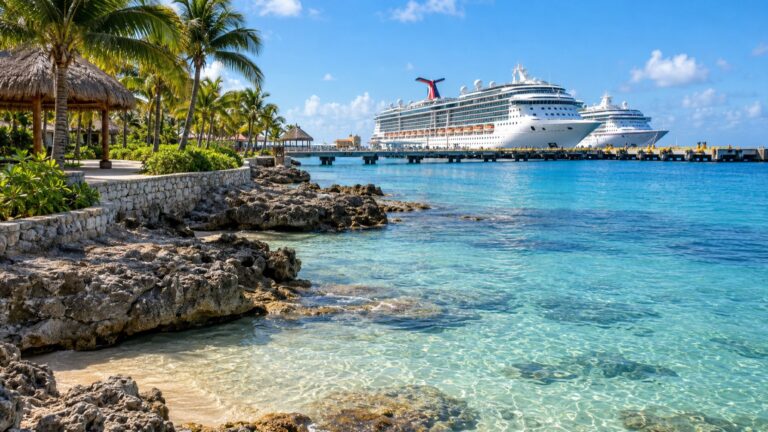
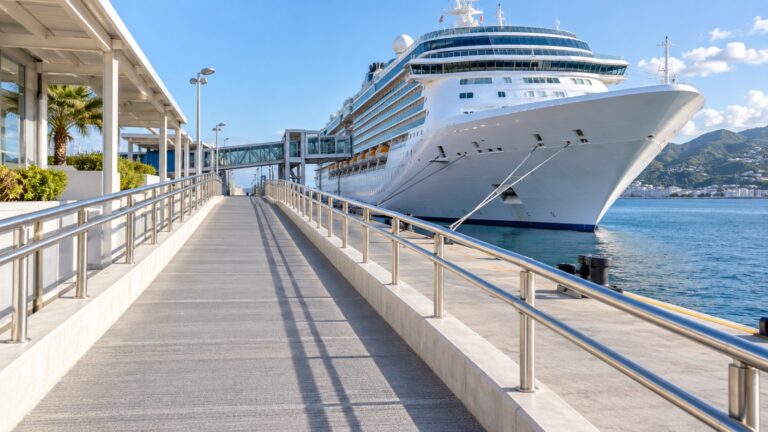
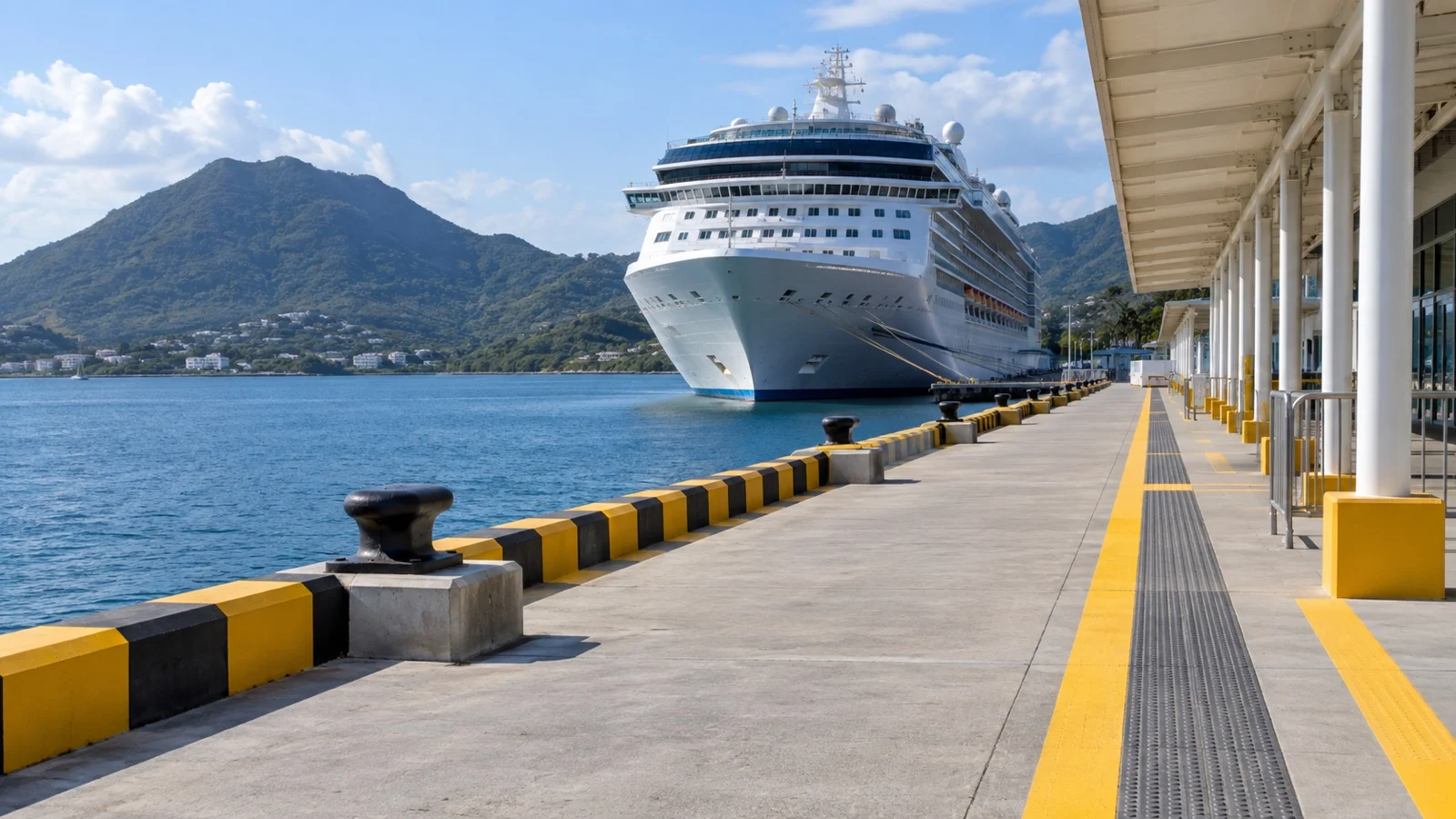
A port day is only as accessible as its weakest link: ship exit, gangway or water shuttle, pier, terminal, vehicle, and attraction. A smooth terminal tells you nothing about the curb, guide communication, or drop-off point two hours later.
For each stop, ask whether the ship docks or uses a tender, which can also help you compare tender ports that tend to feel easier. Water-shuttle use can change with sea and weather conditions, and the captain makes the final safety decision.
Gangway help is not the same as a guide along the pier, through the terminal, or around town. Ask where assistance begins and ends, whether a shuttle is running, how to identify it, and whether someone can escort you to the agreed meeting point.
Do not assume an excursion labeled accessible includes verbal description or individual navigation help. Send the operator questions about steps, curbs, cobbles, low branches, lighting changes, unprotected edges, vehicle entry, guide-to-guest ratio, restroom route, and the walk back to the ship.
Celebrity, for example, asks guests to email its accessible-excursions team with the itinerary and interests so staff can recommend available options. A recommendation is still not a guarantee that a third-party guide will provide continuous sighted guidance, so get the specific support in writing.
A companion may make a complex port day workable, but the traveler should decide what guidance technique feels safe and respectful. The same terrain checks used in our wheelchair-friendly port guide and limited-walking port plan are useful because surfaces, grades, traffic, and gaps affect more than wheels.
Service dogs require an itinerary-wide plan
ADA.gov defines a service animal as a dog trained to perform work or a task directly related to a disability. Emotional-support or comfort alone does not meet that ADA definition, and cruise lines may use their own procedures for advance notice and onboard arrangements.
Tell the cruise line when booking, request the relief-area material and location, and ask how to reach it during closed-deck weather or an emergency. The owner remains responsible for the dog’s food, supervision, cleanup, and behavior.
Celebrity currently asks for notice no later than 30 days before sailing if a 4-by-4-foot cypress-mulch relief area is needed. Princess requires prior approval and notes that the relief-area material varies by ship, while Carnival directs travelers to a separate Service Animal Form.
The ship cannot waive a country’s animal-entry rules, and staying aboard does not always erase every documentation question. The USDA Animal and Plant Health Inspection Service says every destination sets its own requirements and the process can take weeks or months.
Work with a USDA-accredited veterinarian early, check every port and the return-to-US rules, and carry originals plus copies in the format each authority requires. If the dog cannot go ashore, ask the line before booking what care arrangement is permitted because ship staff generally do not care for or supervise the animal.
Low-vision details that change the day
Glare, backlighting, and wet reflective surfaces can be more limiting than the distance on a map. Ask for tour times that suit your vision, carry the sun protection and contrast tools you use at home, and build in a pause when moving from bright decks into a dark theater or terminal.
A flat modern promenade may be easier than a short lane of polished stone, irregular cobbles, or café furniture. The site’s walkable cruise-port roundup is a starting point, not an accessibility certificate.
Crowd flow can matter too, especially where loud music, announcements, or queues make orientation harder. The planning questions in our sensory-needs cruise guide can help identify quieter embarkation, dining, and shore-excursion times.
A realistic word on accessibility
No major line provides a personal attendant as part of the fare, and ordinary crew assistance has practical limits. If you need continuous sighted guidance or help with personal care, ask the line what it can provide and plan a capable travel companion when the remaining tasks require one.
Ship age alone does not prove access, and a refit does not guarantee every tool works for every traveler. Ask for ship-specific details, then reconfirm after any vessel substitution.
Ports and excursion companies operate under different local laws and infrastructure standards. A line may help coordinate an option, but it cannot make a steep gangway, missing tender, inaccessible vehicle, or historic street behave itself.
If an accommodation is essential to travel safely, confirm it in writing before final payment and carry the access department’s contact details. Also keep a backup that protects your dignity and independence if a printer, app, headset, or staffing plan fails.
Quick answers
Do cruise ships have Braille or tactile signage?
Several major lines publish Braille or tactile signs, but placement and compliance can vary by ship; Princess specifically warns that some signs may not be in place or meet its stated standard unless the ship has undergone remediation.
Can I get a Braille, large-print, or electronic menu?
Sometimes, and advance notice matters: Princess asks for at least 60 days to help have those formats ready, while Carnival asks for large-print requests before sailing and can have dining staff review the menu aloud.
Will a crew member guide me around all week?
Do not count on it because Carnival expressly excludes continuous sighted-guide and one-to-one assistance, while orientation tours or limited task-based help depend on the line and request.
When should I file the accessibility form?
File as soon as you book, even when the stated cutoff is later: Norwegian asks for 45 days for most needs, Holland America recommends its form immediately or at least 45 days before departure when possible, and some Princess menu requests use 60 days.
Does accessible mean the shore excursion includes verbal description?
No, so ask the operator about guide communication, individual navigation help, surfaces, lighting, vehicle boarding, and exactly where assistance begins and ends.
Can my service dog leave the ship in every port?
Not automatically because each destination controls entry, the traveler handles permits and health documents, and the cruise line cannot waive those government rules.
The last word
The sweet spot is a ship whose built-in features fit you, an access desk that confirms the requested pieces, and a port list planned link by link. Get specific early, keep the answers, and save your onboard energy for the fun bits rather than a scavenger hunt for an accessible menu.
How this guide was researched: Unless a first-hand visit is explicitly identified above, this guide is based on independent research using official cruise-line, government, and accessibility sources. Onboard services and deadlines were checked against Carnival, Norwegian, Princess, Celebrity, and Holland America.
Service-animal guidance was checked against ADA.gov and USDA APHIS, and the vessel-design standard against the US Access Board. Policies were reviewed in September 2026, so reconfirm essential accommodations directly with the line in writing before sailing.
See our Editorial Policy.
More on this topic: browse every guide on accessible and family cruise planning.