Cruising With Oxygen, CPAP or Dialysis: How It Works
Here is the whole process for sailing with oxygen, a CPAP machine or dialysis supplies, from the form you file to the crate that meets you at the terminal. It is paperwork and delivery logistics.
None of it is medical advice.
Why this is worth ten minutes
The avoidable failure is often logistical: an approval is missing, a supplier cannot enter the terminal, or essential equipment arrives after boarding closes. Start with the line’s written process, then confirm each handoff with the vendor and terminal.
Every line I read puts that delivery on the passenger rather than on the ship. Carnival’s oxygen form states that guests are responsible for arranging the pickup and delivery of their own oxygen.
Notice periods vary by line and request. Royal Caribbean asks for advance notice for supplies such as distilled water and an approved extension cord, while Carnival’s current oxygen form says to submit early and to follow up if no email arrives within three business days.
What you are actually looking at
Three organizations have to agree before your equipment reaches your cabin. The cruise line’s access department, an outside medical supply vendor, and the terminal operation that physically moves a box up the gangway.
The line’s job is permission and paperwork. It clears the delivery, records what you are bringing, and tells the ship to expect it.
The vendor’s job is the physical supply. Holland America says plainly that all oxygen and oxygen equipment rental arrangements must be made by the guest and the third party provider.
The terminal’s job is the part nobody thinks about. Disney Cruise Line states that stevedores at the port terminal are unable to coordinate the transfer of oxygen cylinders, which is why hand carrying a week of supply is not a plan.
Step one, the form and the deadline
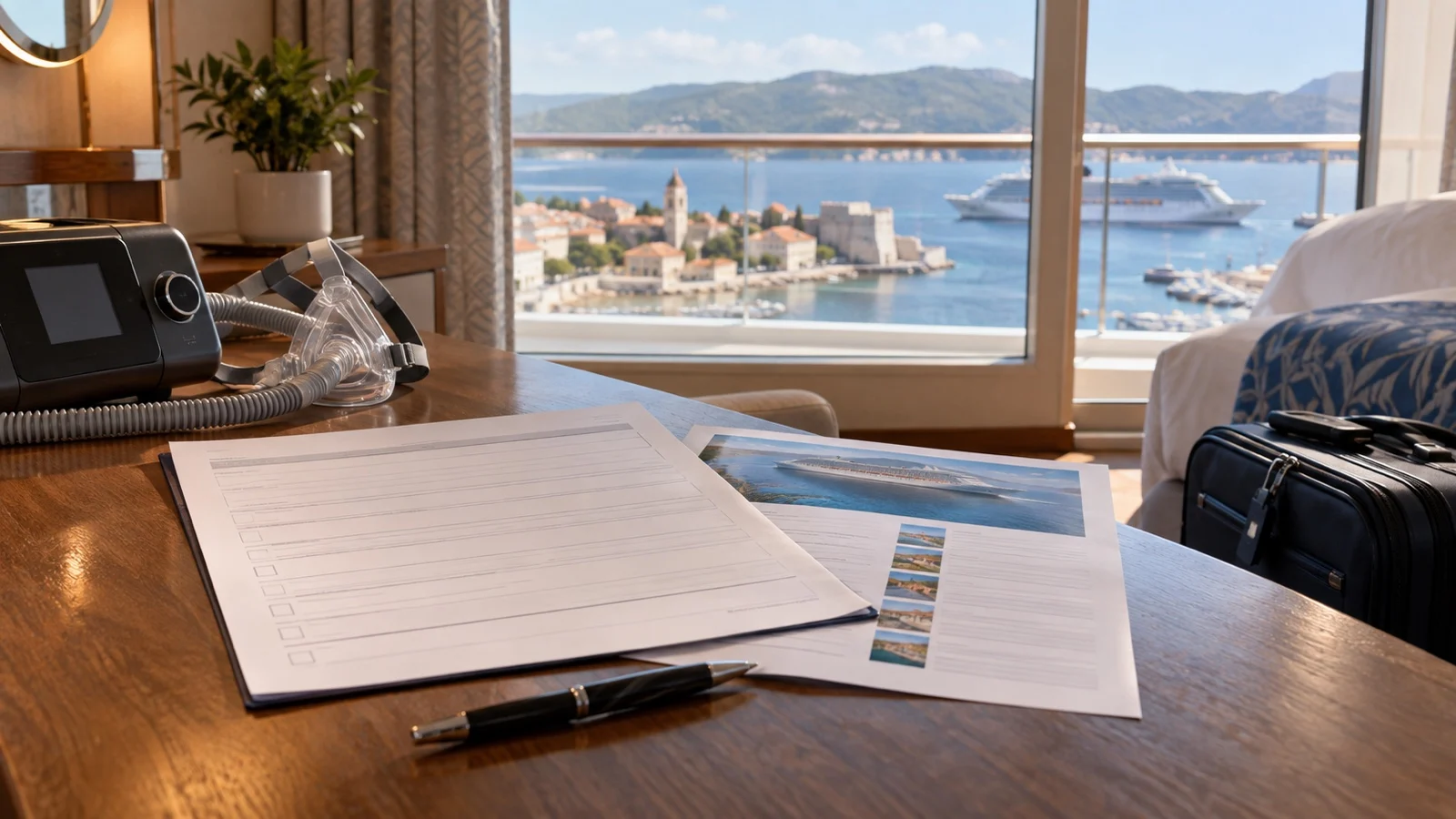
Each line has its own form and process. Carnival uses an Oxygen, Concentrator and CPAP Machine Form plus a separate Dialysis Form, but its current online oxygen form does not state the old 30-day deadline, so submit it promptly after booking and keep the response.
Royal Caribbean uses a Guest Special Needs Form and publishes request-specific notice periods. Princess’s Mobility Device Information Form and Norwegian’s general access deadlines cover different needs, so do not treat those dates as an oxygen or dialysis rule unless the line says they apply.
Ask the access team for the exact deadline attached to your equipment, delivery and sailing. Work to the earliest confirmed date, since a general accessibility deadline does not replace a vendor or terminal cutoff.
File it the week you book rather than at the deadline. Nothing bad happens if you are early, and a great deal happens if the ship sails without knowing.
Save the confirmation email and the form itself as a PDF. Confirm every policy detail in writing with the line, and clear the trip itself with your doctor, because a form tells you what a company will carry and not what suits you.
Step two, oxygen and who actually delivers it
Do not plan on a ship’s medical center supplying routine oxygen. Carnival says its medical-center oxygen is for emergencies and guests arrange their own supply, while Royal Caribbean and Holland America also direct oxygen-dependent guests to arrange approved equipment.
Princess describes the oxygen in its medical center as being for emergency use only. Holland America says the same and names two suppliers, Scootaround and Special Needs at Sea, adding that deliveries will not be accepted from any other companies.
Holland America’s approved-vendor restriction matters: a supplier that serves your home may still be refused for ship delivery. Confirm the line’s current vendor list before paying a nonrefundable supplier charge.
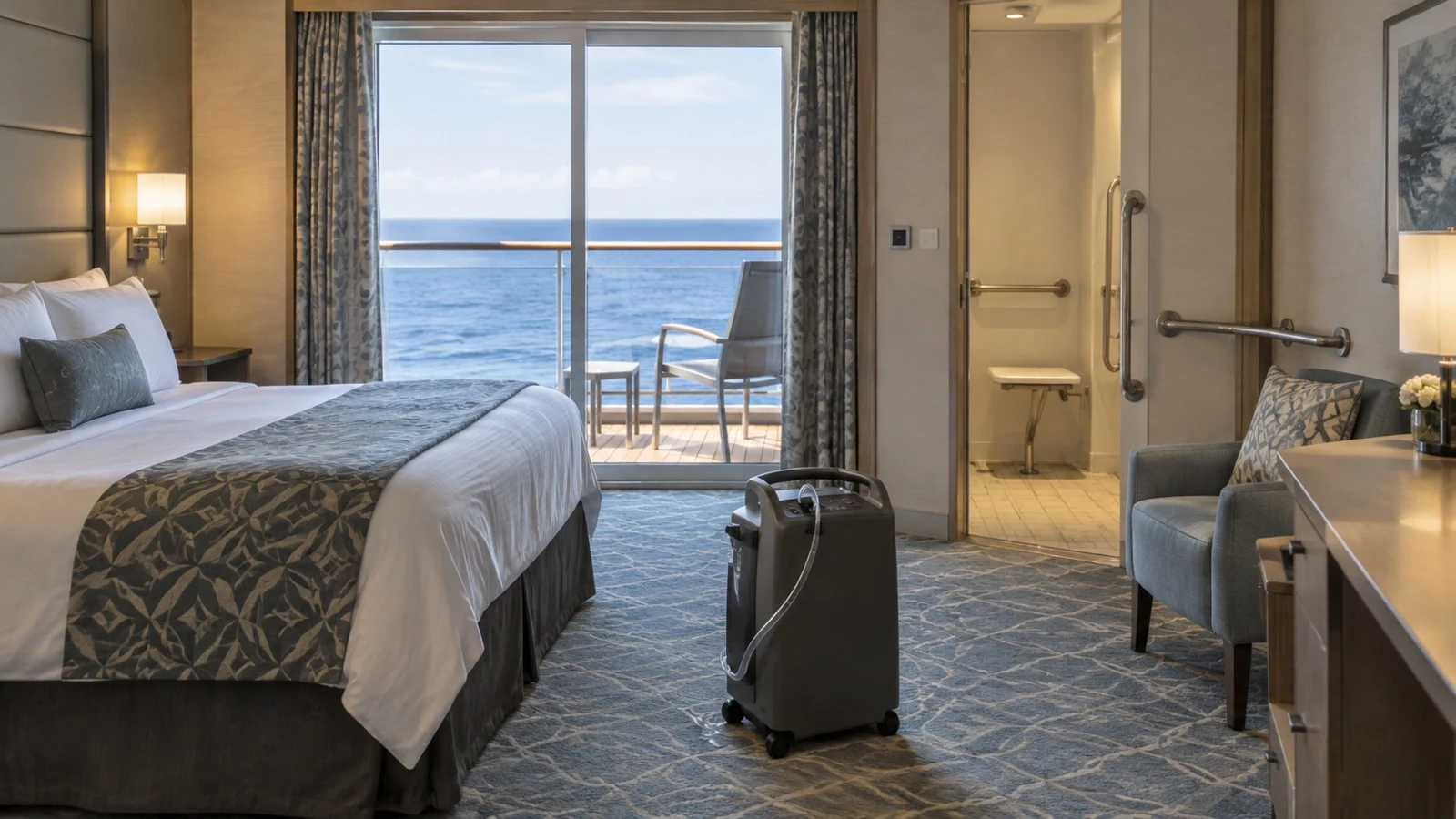
Carnival’s form is specific about embarkation day. Oxygen cylinders in checked luggage are prohibited, sending them through security x-ray machines is prohibited, and only one compressed cylinder or concentrator may stay in your stateroom overnight, with the rest held by Guest Services.
Disney Cruise Line limits hand carried cylinders to two and does not permit liquid oxygen or cylinders larger than E or M-24 size. Disney also allows only one cylinder aboard its own ground transportation, which quietly rules out the airport transfer for some travelers.
Step three, CPAP machines, distilled water and cords
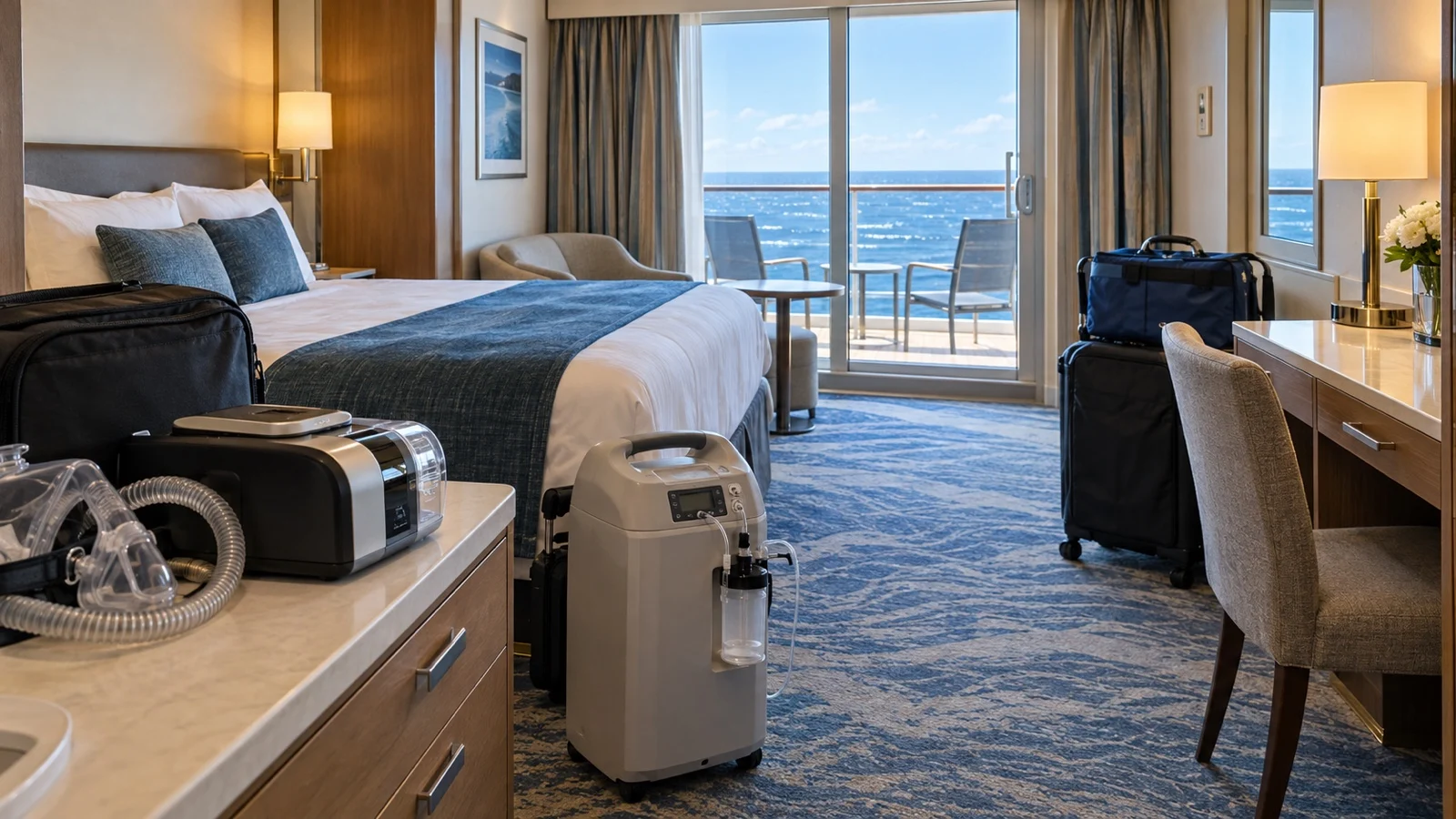
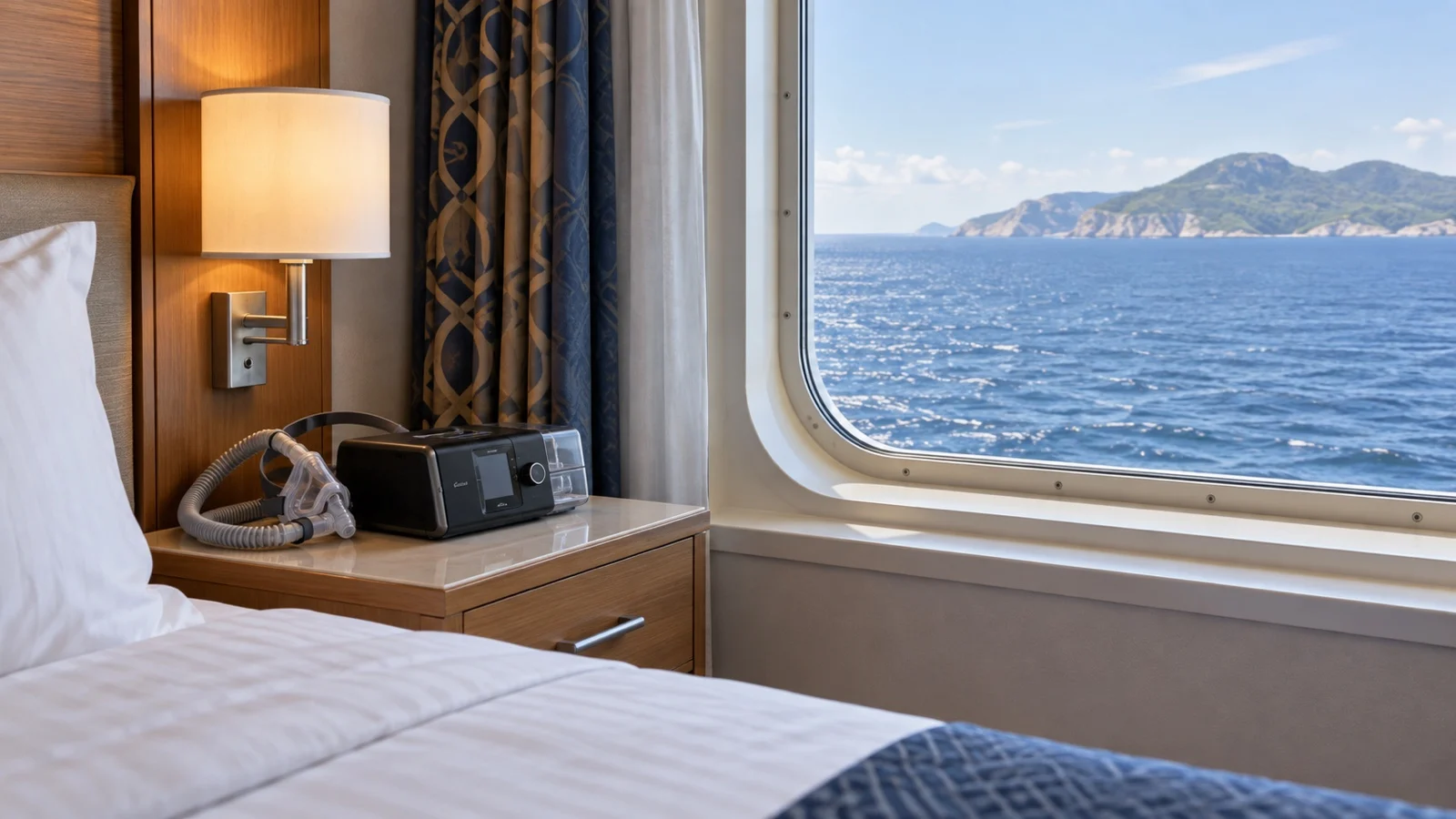
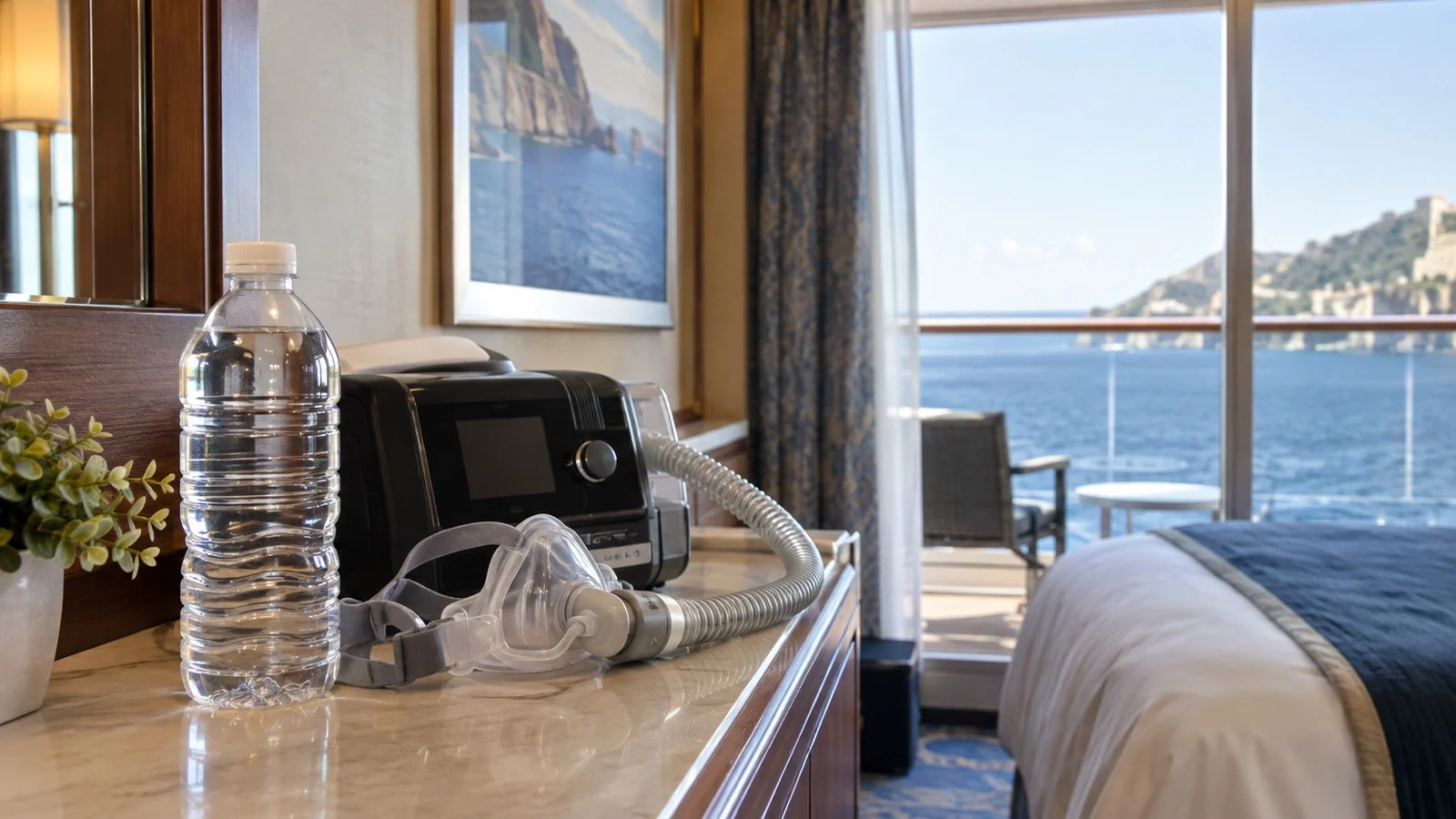
This is the easiest of the three and it still has a trap in it. Holland America says oxygen concentrators, CPAP, BiPAP, APAP, nebulizer and ventilator machines are allowed to be used on board, with no advance permission needed to bring them.
Royal Caribbean goes further and lists distilled water and an extension cord among the items it will provide, which is exactly what its 30 day advance notice list is for. Carnival takes a different line and says distilled water can be bought before the cruise or on board.
Do not assume you can bring your own cord. Carnival’s list of what you may bring allows an extension cord without surge protection, prohibits an extension cord with surge protection, and lets ship staff remove a power strip they consider unsafe.
Fun fact: that Carnival rule draws the line in a place most people find backward, because the safety feature is the disqualifying part. The cord is fine and the surge protection is not.
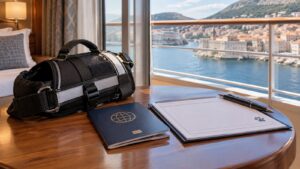
Pack the machine in your carry-on. Carnival’s guidance is explicit that hand carried medical equipment including CPAP machines belongs in carry-on luggage, and Holland America notes that crew cannot handle medical equipment during boarding or disembarkation.
Step four, where the supplies live once you are aboard
A standard cabin is small and a week of dialysis solution is not. Carnival’s answer is to hold the surplus at Guest Services and release it as you need it, and the same logic applies to spare oxygen cylinders.
Power matters more than storage for anything that plugs in. Carnival’s dialysis form states that its United States based ships run 110 volts at 60 cycles and its Australia based ships run 230 volts at 50 cycles.
Batteries are the real gap. Carnival and Holland America both state that their ships do not carry back-up battery support for dialysis related equipment, so a power interruption is your problem to plan around.
Step five, dialysis and what a ship will not do
Two lines publish real detail here and both are blunt about it. Holland America says its onboard medical staff is not equipped or trained to perform any type of dialysis, and asks that guests be stable on treatment for at least 12 months on self administered hemodialysis or peritoneal dialysis.
Carnival’s dialysis form is equally direct, stating that guests requiring peritoneal or hemodialysis travel on its ships at their own risk. Princess states that there is no nephrologist available on any Princess cruise ship.
Peritoneal supplies are the easier case to arrange. Royal Caribbean’s form lets you bring peritoneal supplies or have a vendor deliver them, while hemodialysis sends you to a direct conversation with its Access Department.
Holland America wants a Vendor Information Form no later than one week prior to sailing when an outside company is delivering. That is a second deadline sitting inside the first one, and missing it is a common way for supplies to be refused.
The sailings marketed as dialysis at sea are group charters that put nursing staff and equipment aboard an ordinary cruise. I could not verify a current program of that kind on a cruise line’s own site in September 10, 2026, so treat any such offer as something to confirm with the line itself.
Step six, the port day
Everything above gets you aboard. The port is where a plan built around a wall outlet meets a day built around walking, the same shift that catches travelers managing food allergies once they leave the ship.
Concentrators need charging and cylinders need counting. Work your hours ashore against your supply before you book a full day tour, and treat the all aboard time as the real deadline.
Tender ports are the hardest version of this, and my explainer on what a tender port actually means covers the mechanics. A tender is a small boat with a moving deck, and getting equipment down shifting steps is a different proposition from rolling off a fixed pier.
If a port looks marginal, a half day is a reasonable answer. So is staying aboard, which is a decision I would make without a shred of guilt on a day the logistics look heavy.
The details that matter most
- The deadline is request-specific: Carnival’s current oxygen form does not show the older 30-day statement, while Royal Caribbean, Norwegian, Princess and Holland America publish different notice periods for different services. Submit as soon as you book and ask for the exact equipment and delivery cutoff in writing.
- The vendor list can be closed: Holland America accepts oxygen deliveries only from Scootaround and Special Needs at Sea and says deliveries will not be accepted from any other companies. Ask your own line for its list in writing before you order anything.
- Carry-on, never checked: Carnival prohibits oxygen cylinders in checked luggage and through x-ray screening, and asks that CPAP machines travel in carry-on. Your airline has its own separate rules for the same equipment, so check both.
- Distilled water is a line by line answer: Royal Caribbean lists distilled water and an extension cord among the items it provides on request. Carnival instead points guests to buying it before the cruise or on board.
- Storage is negotiated, not assumed: Carnival holds all but one cylinder or concentrator at Guest Services overnight. Ask what your line will hold, where it sits, and how quickly you can reach it in the middle of the night.
- There is no battery backup: Carnival and Holland America both state that their ships carry no back-up battery support for dialysis related equipment. Plan your own redundancy, or plan a different itinerary.
What I check first, in order
First, the line’s own accessibility page and the exact name of the form, because the deadline lives on the form rather than in the brochure. Save the PDF with the date you downloaded it.
Second, whether the line restricts which vendors may deliver to the ship. That single answer decides who you call next.
Third, the itinerary’s sea days and tender ports, since a run of consecutive sea days is the stretch where supply and power planning has the least slack.
Fourth, the embarkation port and how the equipment gets from the airport to the terminal. Disney’s single cylinder limit on its own transfers is the kind of rule that only surfaces if you go looking.
Fifth, insurance, and specifically whether medical evacuation is covered. Holland America tells dialysis guests to buy coverage that includes evacuation, and that reads as sensible advice for anyone traveling with equipment they cannot replace.
A realistic word on accessibility
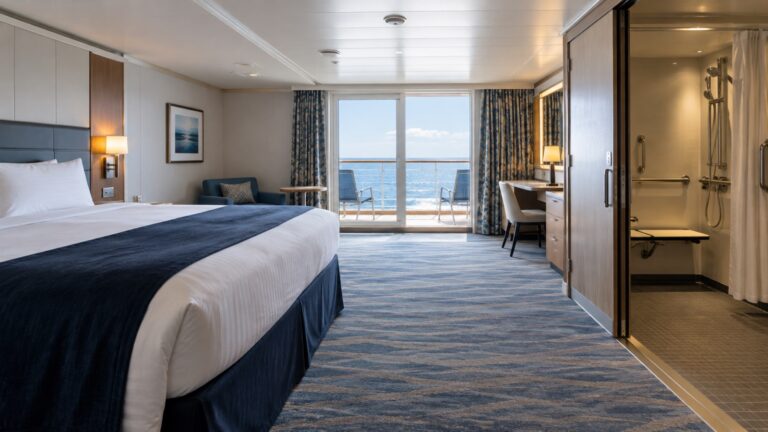
Access at sea is conditional, which is just as true for travelers with low vision or blindness, and pretending otherwise does nobody any favors. A concentrator that works beautifully in a fully accessible cabin can be awkward in a standard one where the only free outlet is behind the desk.
Ports vary far more than ships do, and the walk from the gangway to a taxi is what actually decides the day. My guide to planning a port day when you cannot walk far goes through that ground terminal by terminal.
If a shore day looks heavy, there is usually a gentler version of it. My roundup of port day activities that work with limited mobility is where I would start on the ports themselves.
Quick answers
Does the ship’s medical center supply oxygen for daily use?
Not as a routine service on the lines I checked; Princess describes its medical center oxygen as being for emergency use only, and Royal Caribbean says guests who depend on oxygen must supply their own.
How far ahead do I have to tell the cruise line? It depends on the line, equipment, supplier and terminal; Submit the line’s current form as soon as you book, then get the deadline and delivery approval in writing rather than copying a date from another type of accessibility request.
Can I bring my own extension cord for a CPAP machine?
Carnival allows an extension cord without surge protection and prohibits one with surge protection; Royal Caribbean lists an extension cord among the items it will provide if you ask 30 days ahead.
Can I do hemodialysis on a mainstream cruise ship?
Not with the ship’s own staff; Holland America states that its medical staff is not equipped or trained to perform any type of dialysis, and Royal Caribbean asks hemodialysis guests to contact its Access Department directly.
What happens if my supplies do not arrive before sailing?
Carnival’s form warns that boarding may be denied if the vendor has not confirmed delivery before departure; Get written confirmation from the vendor and carry a copy to the terminal.
The last word
Sailing with oxygen, CPAP or self-managed dialysis requires medical planning plus careful logistics. The forms are manageable, but supplier approval, terminal delivery, storage, power and contingency plans all need written confirmation.
Build the trip around the ports as much as the ship, because the ports are where a good plan gets tested. My write up of port days better spent on a nearly empty ship is a fair description of what a rest day at sea level looks like.
Confirm every detail in writing with the line before final payment, and confirm with your doctor before you commit to the itinerary. Paper settles arguments at a pier gate a lot better than memory does.
How this guide was researched: Oxygen, CPAP and dialysis requirements were checked against current official access pages and forms from Carnival, Royal Caribbean, Holland America, Princess, Norwegian and Disney. Details were rechecked on September 10, 2026, but requirements vary by equipment, vendor, port and sailing, so confirm the medical plan with your clinician and the logistics with the line.
More on this topic: browse every guide on accessible and family cruise planning.