Which Cruise Tender Ports Will Not Take a Wheelchair?
A tender port does not have one universal wheelchair rule. The answer changes with the cruise line, the type of chair, whether you can take a few steps, and the conditions on the day.
This guide separates the ports a cruise line currently flags as having no accessible water shuttle from the ports where access is possible but never guaranteed.
Why this list exists
Some parts of the decision are knowable before you travel. Royal Caribbean and Virgin Voyages publish standing rules for folding manual chairs, powered wheelchairs, scooters, and a guest’s ability to take steps.
The final operational call comes later. Weather, tides, sea state, the tender design, and the landing can all change whether a transfer is safe, so the captain or ship staff can refuse a transfer even when the same port worked on another sailing.
Royal Caribbean’s current guidance also says a ship scheduled to dock can switch to tendering. That is why I would never treat the little anchor or dock icon on an itinerary as a promise.
The policies and port lists below were checked on September 10, 2026. Reconfirm your ship, ports, and exact mobility device with the line’s access team before final payment.
How to read the answer for your chair
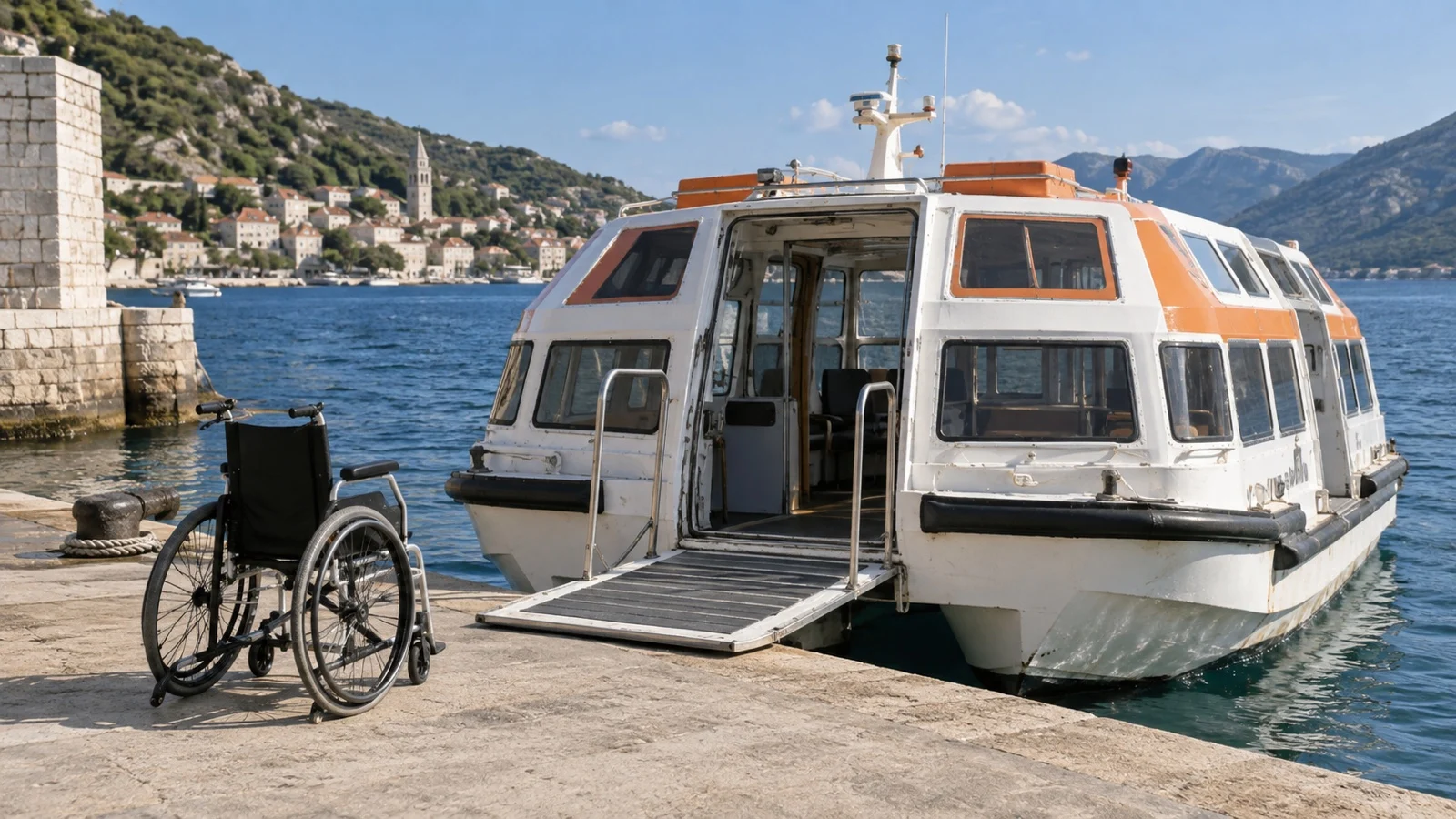
There are two transfers, not one. You have to move from the ship onto the tender and then from the tender onto the landing, and either end can stop the day.
A folding manual wheelchair has the best chance on Royal Caribbean and Virgin Voyages, but both lines say the guest generally must be able to take steps. Their published language does not promise that crew will lift the guest or the chair.
A powered wheelchair or scooter is a different question. Royal Caribbean and Virgin Voyages say those devices cannot go on most tenders unless roll-on capability is available, and both warn that roll-on access is not guaranteed.
Carnival goes one step further by marking its current water-shuttle list with three useful labels: limited accessible shuttles, no accessible shuttles, and ports where tendering or accessible equipment varies by sailing. Those labels are the clearest port-specific answer I found.
What the cruise lines actually publish
- Royal Caribbean: most tenders require a guest to take steps and use a collapsible manual wheelchair. Powered chairs and scooters need roll-on capability, which is not guaranteed, and the line tells guests to ask Guest Relations onboard.
- Carnival: its accessibility guidance says the captain makes the final boarding decision and crew cannot carry a person onto or off a water shuttle. Its port list identifies where accessible shuttles are limited, unavailable, or dependent on the sailing.
- Princess: its current mobility form says wheelchair and scooter access is limited at tender ports and disembarkation is at the captain’s discretion. Princess’s published passage terms also warn that some tender ports may keep a wheelchair user aboard for safety reasons.
- Virgin Voyages: its mobility page requires most tender users to take steps and limits manual chairs to collapsible models. Powered chairs and scooters need roll-on access, and crew cannot carry a guest.
- Holland America: its shoreside guidance focuses mainly on excursion vehicles rather than promising tender access. Depending on local equipment, a guest may need to transfer into a sedan, use a boarding chair and lift, ride a lift on a scooter, or arrange another option in advance.
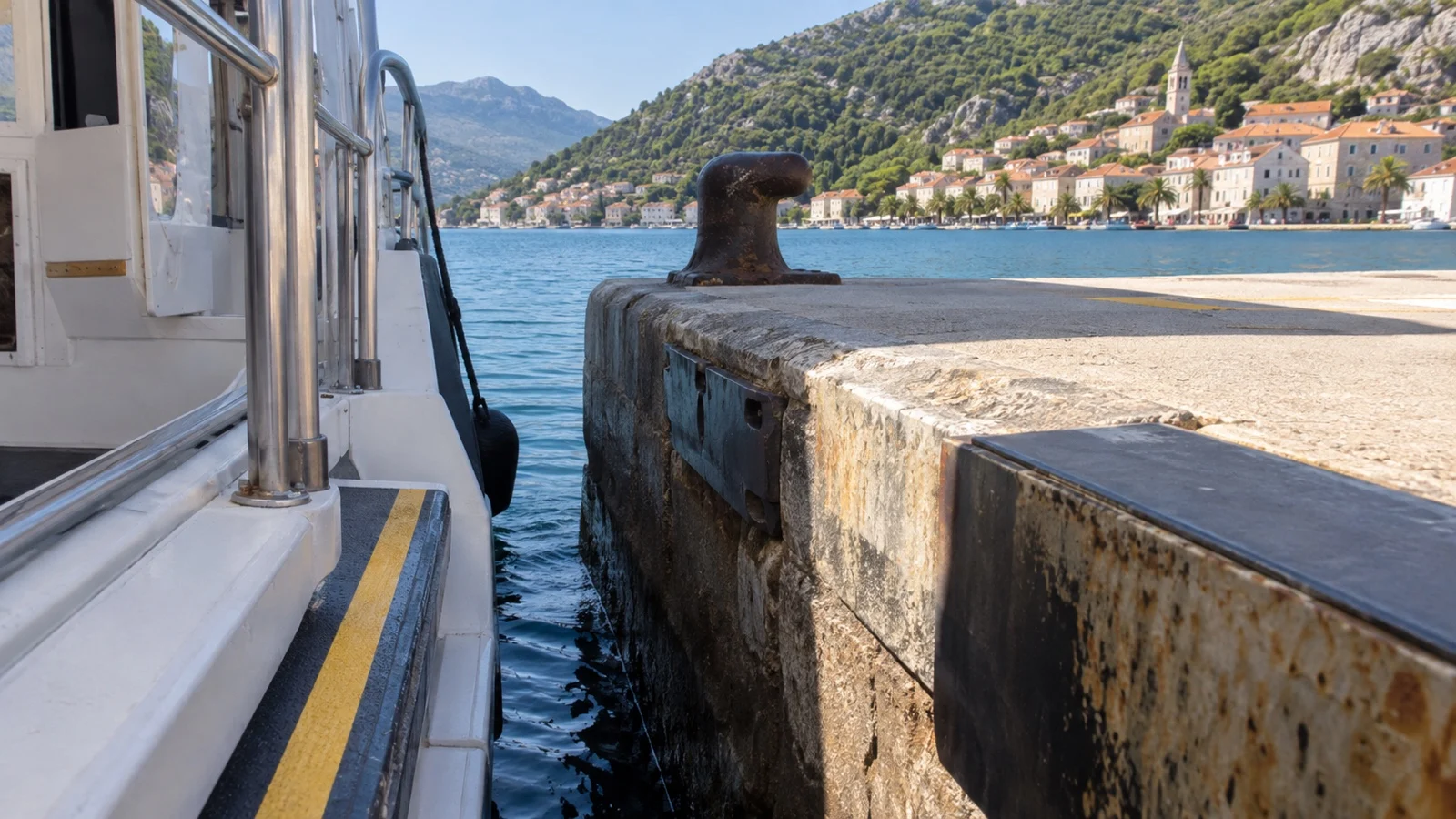
Ports Carnival marks as having no accessible water shuttle
As of September 10, 2026, Carnival marks the following ports with its exact warning, “No accessible water shuttles available.” I would treat these as stay-onboard calls if your chair has to travel with you, then ask Guest Access whether your specific sailing has any alternative arrangement.
- Australia: Airlie Beach, Kangaroo Island, Moreton Island, Port Arthur in Tasmania, and Port Douglas.
- New Zealand: Bay of Islands.
- Hawaii: Kona.
- Fiji and Vanuatu: Dravuni Island, Port Denarau, and Mystery Island.
- New Caledonia and French Polynesia: Lifou and Moorea.
- Papua New Guinea: Kiriwina Island.
That warning is Carnival-specific, not a permanent fact about the port for every ship. A different line may use different boats, and port infrastructure can change.
Ports Carnival marks as limited or variable
Carnival labels Belize City, Grand Cayman, and Dun Laoghaire near Dublin as having limited accessible water-shuttle availability. Limited is not the same as reserved, so I would not pay for a nonrefundable independent tour until the ship confirms the transfer.
Carnival says water shuttles are only sometimes required at Bermuda, Haines, Holyhead, Icy Strait Point, Juneau, Kavala, Ketchikan at Ward Cove, Kirkwall, Mykonos, Prince Rupert, Half Moon Cay, Sitka, and Skagway. Its page warns that accessible shuttles may not be available when those calls tender.
Ports on Carnival’s list without an accessibility marker still are not guarantees. Cabo San Lucas, Catalina Island, Kotor, Lerwick, Santorini, St. Peter Port, and the other unmarked calls remain subject to the captain, conditions, and local equipment.
Royal Caribbean and Virgin Voyages publish their own tender-port lists, but neither list assigns a dependable wheelchair status to every port. Use those lists to spot a possible tender, then apply the device and transfer rules above.
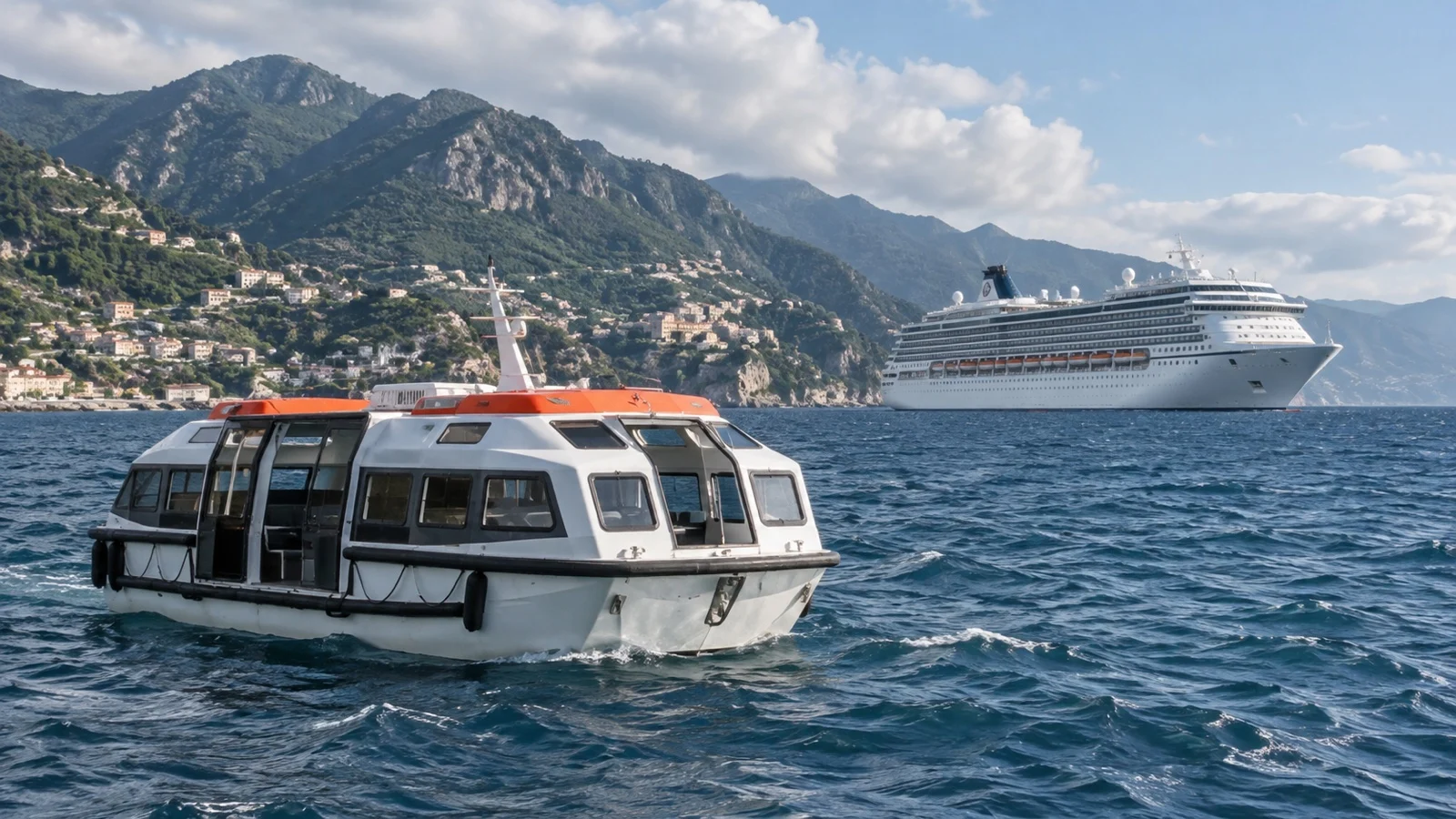
What this means for a powered wheelchair or scooter
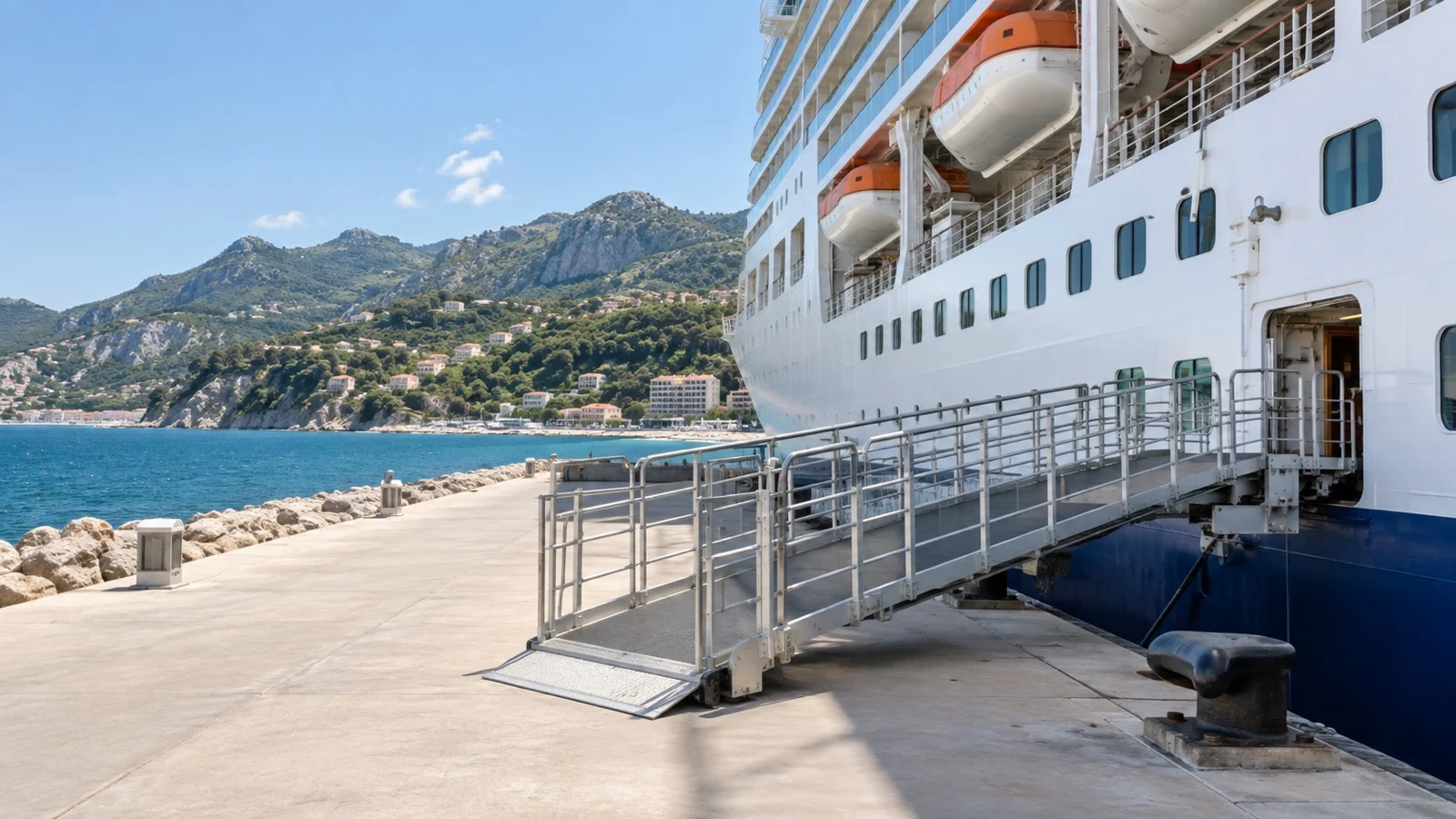
On Royal Caribbean and Virgin Voyages, I would plan as if a powered device will stay aboard at every tender port unless the line confirms roll-on access for that sailing. Even then, their policies allow the final answer to change with conditions.
Do not assume a lightweight scooter counts as a folding manual chair. Ask the access team to answer using the device’s exact type, dimensions, weight, battery, and whether it folds without removing essential parts.
A manual chair rented only for tender days can help someone who can safely take the required steps, but it is not a workaround for everyone. It can also leave you with less range ashore, especially when accessible restrooms are several blocks from the landing.
If you cannot transfer out of your device, say that plainly in the first email. “Wheelchair user” is too broad to get a useful answer because the line needs to know which part of the transfer is possible and which is not.
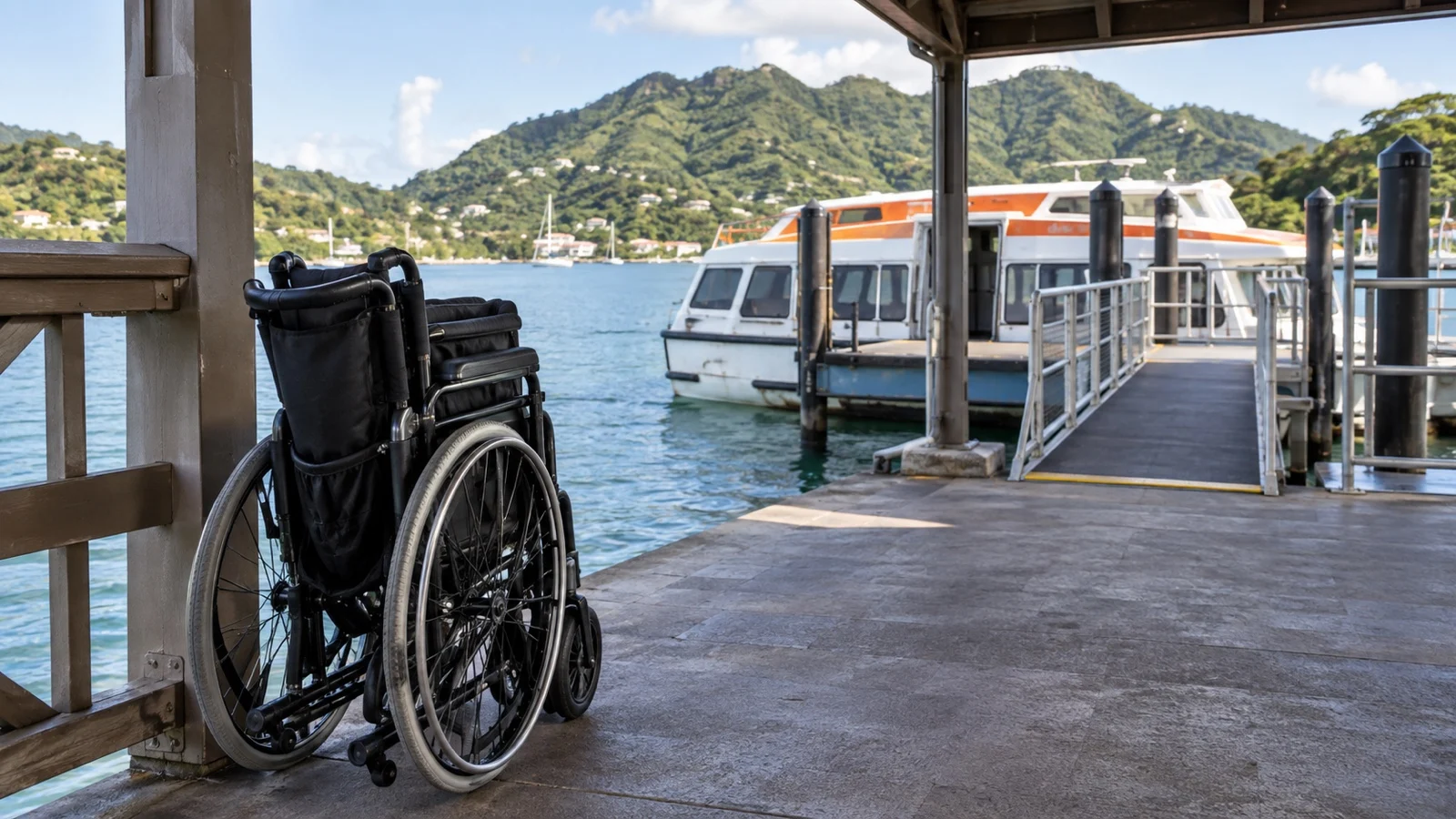
What this means for a folding manual wheelchair
A folding manual chair improves the odds, but it does not make a tender accessible by itself. Royal Caribbean and Virgin Voyages still require most guests to take steps, while Carnival says crew cannot carry a person on or off the shuttle.
Ask how many steps are involved, whether there are handrails, whether the chair travels in the same boat, and who is permitted to handle it. Royal Caribbean specifically says staff cannot lift guests or equipment, although it provides reasonable assistance with manual wheelchairs and other aids.
The landing matters just as much as the boat. A chair that gets ashore may still face sand, steep ramps, cobblestones, missing curb cuts, or a tour vehicle that requires a separate transfer.
This is where the word “accessible” on a shore excursion needs unpacking. Ask whether the guest can remain in the chair, whether there is a lift, and whether the chair or scooter can be secured inside the vehicle.
The exceptions worth knowing
- Roll-on access can exist without being promised: a suitable tender and landing may allow a powered device to roll aboard. Royal Caribbean and Virgin Voyages both tell guests that this capability varies and cannot be guaranteed.
- A scheduled dock can become a tender: Royal Caribbean explicitly warns that this can happen. Construction, berth changes, port damage, weather, and other operational issues can change the plan.
- The trip back can be different: Virgin Voyages notes that weather can worsen after a safe outbound transfer. Ask the crew about the return window and follow any earlier accessible-tender time they give you.
- Crew assistance has limits: Carnival and Virgin Voyages prohibit crew from carrying guests, while Royal Caribbean says staff cannot lift guests or equipment. Never build the plan around an informal promise that someone will lift you.
- No-refund language is narrower than it sounds: Royal Caribbean and Virgin Voyages say they do not provide a port refund or credit when the guest cannot tender or disembark for the stated circumstances. Separately purchased excursions, refundable taxes, package-law rights, and travel insurance follow their own terms.
What I would ask before booking
Start with the line’s access desk, not a general reservations agent. Send the ship, sail date, every possible tender port, the device model, dimensions, weight, battery type, folding method, and the guest’s transfer ability.
Ask for three separate answers: whether the chair can board the ship’s tender, whether the landing accepts it, and whether the chosen excursion vehicle can carry it. One yes does not answer the other two.
I would count possible tender calls before comparing ships because the itinerary matters more than the newest onboard features here. If two itineraries are otherwise equal, the one with more confirmed docked calls is the calmer choice.
Keep the written answer, but treat it as planning evidence rather than a boarding guarantee. The captain still controls the transfer when the tender is moving against the ship or the landing becomes unsafe.
Finally, look at what you can enjoy onboard if the port becomes a sea day. Pricing a tender call as a bonus sounds conservative, but it protects the trip from hinging on one transfer.
How to choose a safer itinerary
For a guest who cannot take steps or must remain in a powered chair, I would favor an itinerary with large cruise terminals and few anchorages. My roundup of wheelchair-friendly cruise ports is built around dock access, flatter routes, and practical facilities ashore.
For someone who can transfer and use a folding chair briefly, a tender port may be workable, but I would keep the day simple. Choose a short route from the landing, identify a restroom, and avoid a nonrefundable plan that depends on an exact arrival time.
Season matters because rough water can stop tendering, but no month guarantees calm conditions. Use seasonal weather as one planning factor, not proof that the transfer will run.
If walking far is not realistic, build the shore plan backward from the landing using my guide to short, low-strain port days. The best plan is the one that still works after you remove its longest transfer.
Quick answers
Can I take a mobility scooter on a cruise tender?
Not on most Royal Caribbean or Virgin Voyages tenders unless roll-on capability is available. Ask about your exact sailing, but plan for the scooter to remain aboard until that access is confirmed.
Which tender ports does Carnival say have no accessible shuttle?
The current list flags Airlie Beach, Bay of Islands, Dravuni Island, Kangaroo Island, Kiriwina Island, Kona, Lifou, Moreton Island, Moorea, Mystery Island, Port Arthur, Port Denarau, and Port Douglas.
Who decides whether I can board the tender?
The line’s standing device rules apply first, then the captain or ship staff make the final safety decision for the actual conditions. A favorable answer before sailing cannot override an unsafe transfer on the day.
Will the crew lift me or my equipment?
Do not count on it. Carnival and Virgin Voyages prohibit crew from carrying guests, and Royal Caribbean says its staff cannot lift guests or equipment.
Do I automatically get a refund if I cannot get ashore?
No automatic port credit is promised under Royal Caribbean’s and Virgin Voyages’ cited tender policies. Check the separate terms for any booked excursion, port taxes, package rights, and insurance claim.
The last word
The honest answer is that very few tender ports are permanently “yes” or “no” for every wheelchair user. Carnival’s no-access markers give you the clearest red flags, while the other lines make the device, transfer, and daily conditions part of the answer.
If your trip depends on taking the chair ashore, choose dock-heavy itineraries and get the details in writing before final payment. Treat any tender call as a bonus until the chair is safely on the boat.
If the mechanics are new to you, my plain-English tender port guide walks through the process from ship to shore.
How this guide was researched: Unless a first-hand visit is explicitly identified above, this guide is based on independent research using official cruise line accessibility pages. Tender and mobility-device policy was checked against Royal Caribbean International, Carnival Cruise Line, Princess Cruises, Virgin Voyages, and Holland America Line on September 10, 2026.
Cruise line policies, port infrastructure, and tender assignments change without notice, so confirm your sailing and device in writing before final payment. See our Editorial Policy.
More on this topic: browse every guide on accessible and family cruise planning.