Koh Chen River Cruise Port: A Silver Village Landing Near Phnom Penh
Koh Chen is a small craft-village stop on Cambodia’s Tonle Sap River, north of Phnom Penh, where river-cruise groups visit workshops known for silver and copper work. This is not a conventional port with a terminal, taxi line, and independent sightseeing menu.
The landing, walk, demonstrations, and return are usually organized as one ship-led village visit. Go for the chance to see artisans at work and understand a local craft tradition, not for a polished attraction or a long shopping list.
My quick take
Stay with the cruise manager or local guide unless your operator explicitly allows independent time. Riverbank access can be steep or slippery, workshops are active family spaces, and the ship may move or use a different landing as water levels change.
Watch the process before shopping, ask what material an item contains, and buy only what you genuinely want. A friendly visit does not require a purchase, but respectful direct spending can support the workshop when the provenance and price feel clear.
Koh Chen quick facts
- Waterway: The Tonle Sap River, not the Mekong Delta.
- Arrival: A simple riverbank or local landing arranged by the vessel; conditions vary with water level.
- Main experience: Guided walking visit to workshops producing silver- and copper-colored ceremonial and decorative pieces.
- Independent access: Possible by road with advance planning, but not the practical default during a cruise call.
- Currency: Cambodian riel and U.S. dollars are commonly encountered; carry small, clean notes and confirm the quoted currency.
- Accessibility: Potentially difficult because of gangways, riverbank slopes, uneven paths, thresholds, heat, and limited adapted facilities.
- Most important rule: Follow the guide’s return time and landing instructions because the ship controls the stop.
Getting ashore: a working river landing
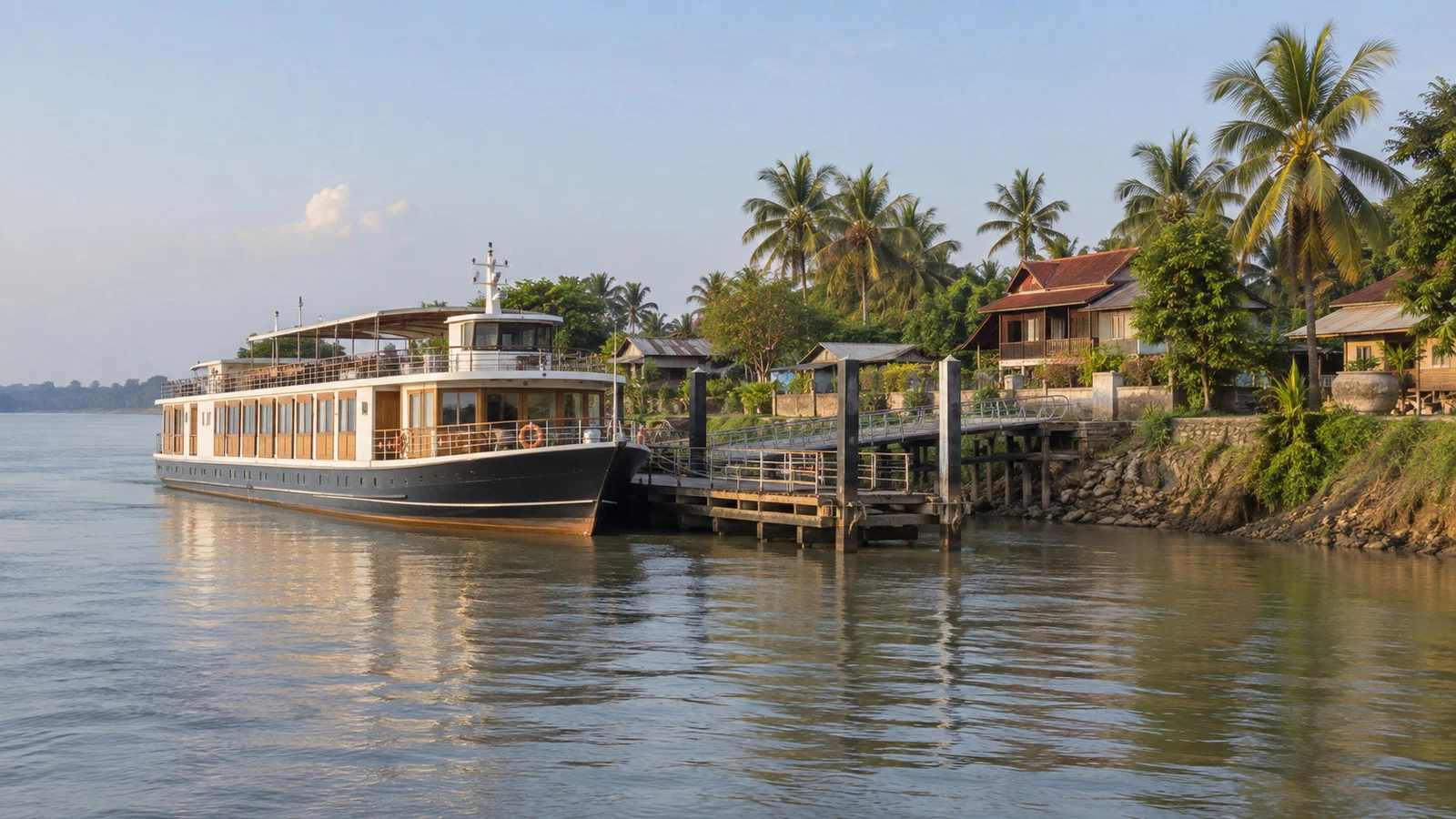
Koh Chen calls are built around the river and village rather than a permanent passenger terminal. The vessel may come alongside a simple landing or use a smaller boat, and CroisiEurope warns generally that Tonle Sap riverbanks can be steep and slippery depending on water level.
Do not promise “no pier” or “always tender” across every ship and season. Wait for the crew’s instructions, use handrails and assistance, and keep both hands available for the transfer.
What changes with the river
The Tonle Sap system reverses direction seasonally as Mekong floodwater pushes toward the lake, and water levels transform the banks and navigation. That can change the height, angle, surface, and location of the passenger route.
Cruise operators may modify stops or excursions for navigation and safety. A changed Koh Chen visit is a normal operational decision, not evidence that the crew overlooked the published itinerary.
What the village visit actually includes
Current CroisiEurope itineraries describe Koh Chen as a small village where craftspeople specialize in silver and copper work. The exact household, demonstration, walking route, and time ashore can vary by operator and sailing.
Expect a guided walk rather than a formal museum tour. Workshops may be open to the lane or family courtyard, with tools, hammering, shaping, polishing, finished goods, and everyday village life sharing the same space.
The craft process
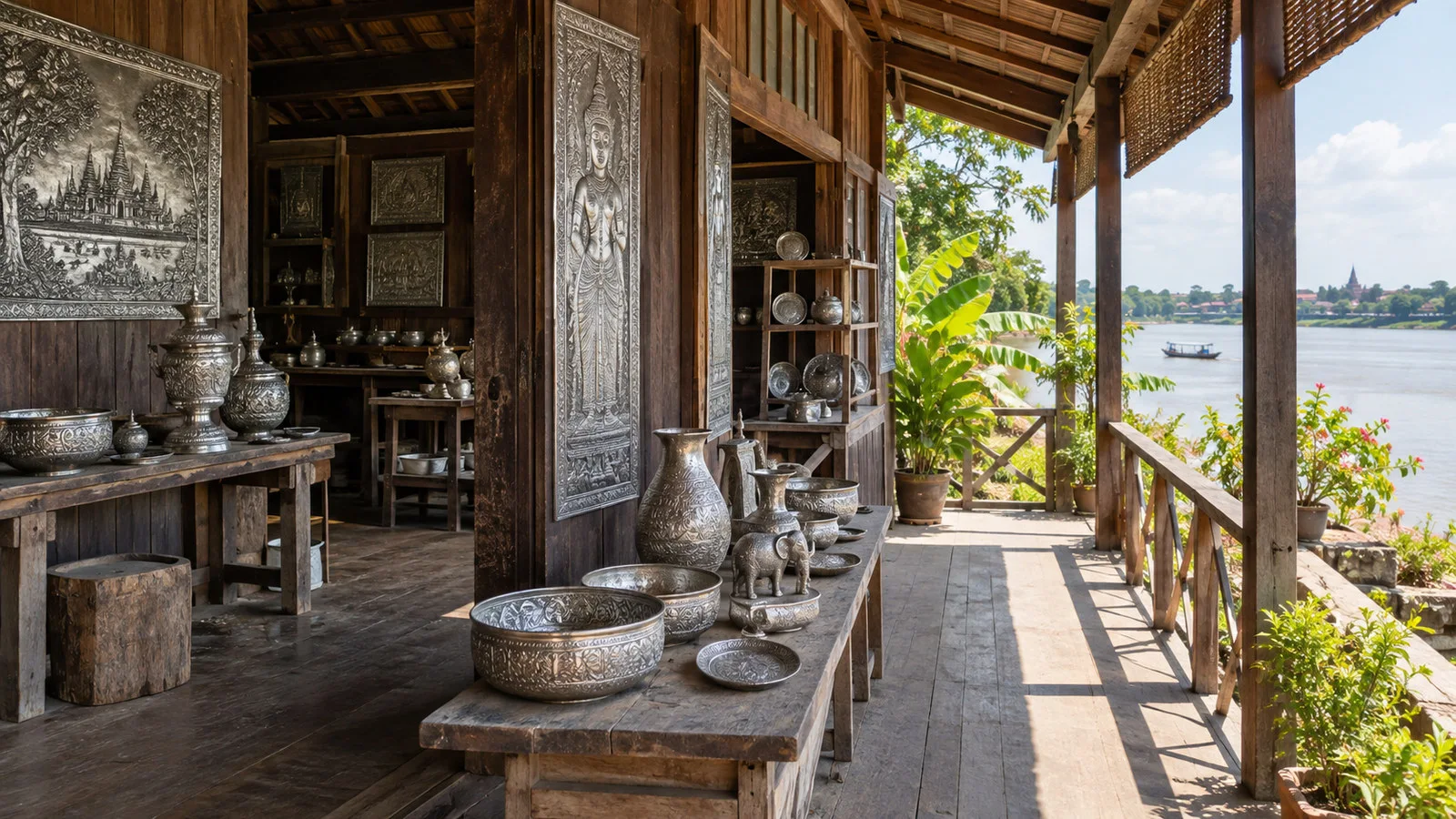
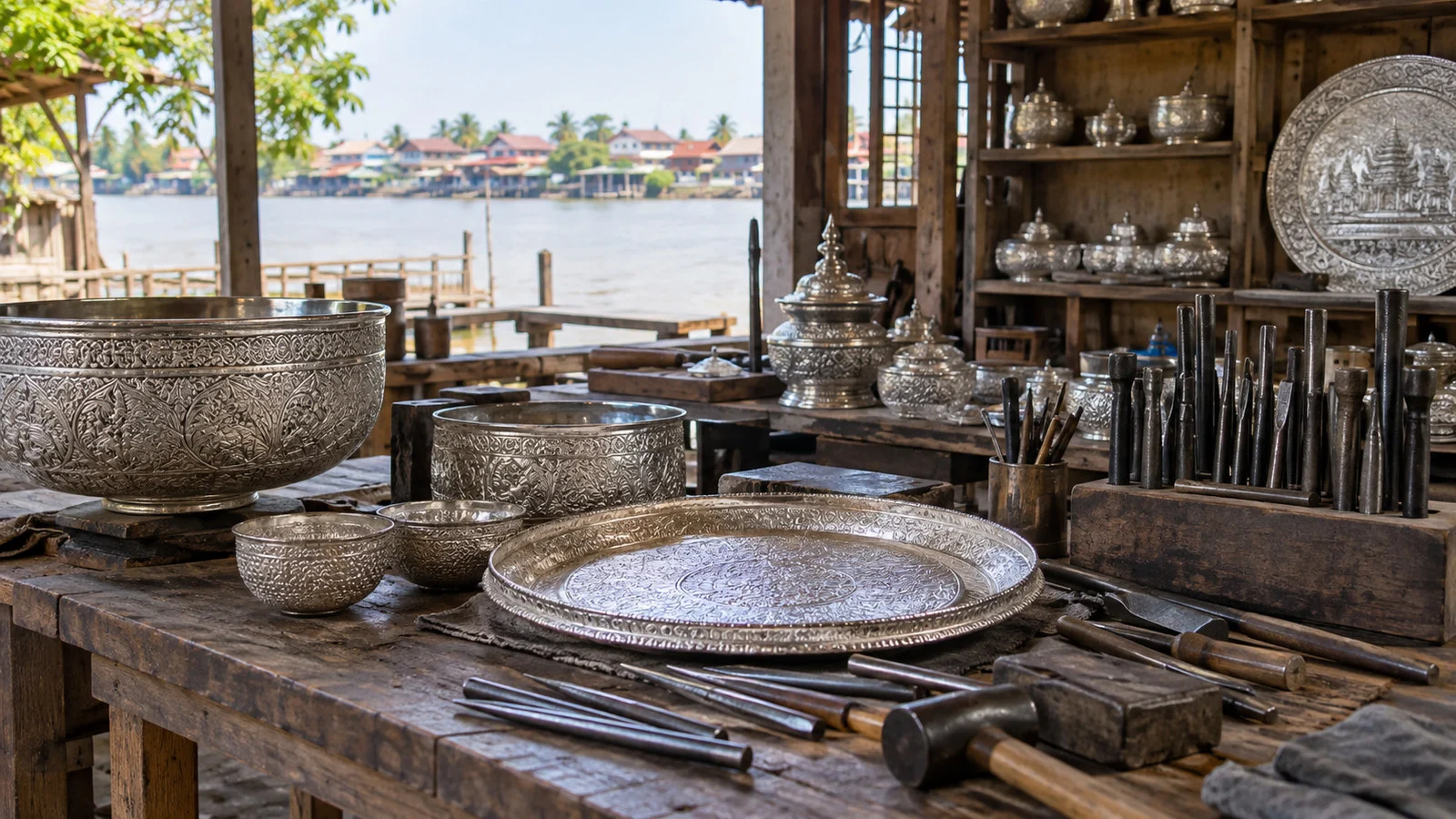
A guide may explain how sheet metal is cut, hammered, shaped, chased, joined, or polished into bowls, boxes, trays, ornaments, and ceremonial objects. Not every workshop performs every stage during every visit, so treat a live demonstration as likely rather than guaranteed.
Stay behind the guide when tools, sharp metal, heat, or chemicals are in use. Ask before photographing an artisan closely, a child, a private room, or a work process.
Silver, copper, and honest buying questions
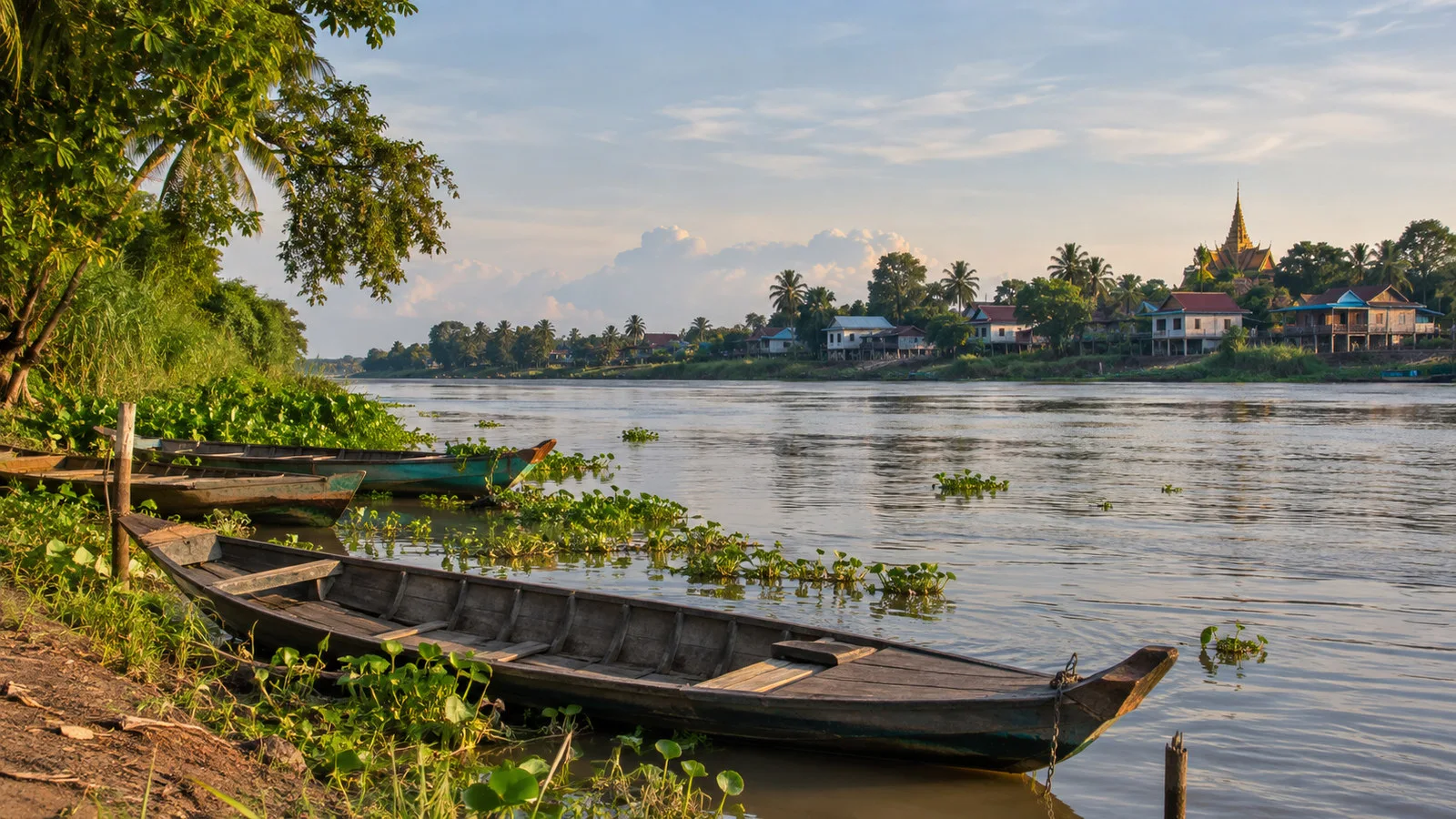
“Silversmith village” does not mean every shiny object is solid silver. Pieces may use different metals, alloys, plating, or decorative finishes, and the seller should be asked to identify the material and price clearly.
Useful questions are simple: What metal is this, was it made in this workshop, is the price in dollars or riel, and how should it be packed? Avoid asking a guide to guarantee purity unless the item carries documentation that actually supports the claim.
Shopping without making it awkward
Bring small-denomination cash if the cruise line recommends it, because a household workshop may not accept cards or make change for a large note. U.S. dollars are widely used in Cambodian tourism, but damaged notes can be refused and conversion rates should be agreed before payment.
Inspect edges, lids, hinges, and decorative work before buying, then ask for protective wrapping. Consider airline baggage rules and customs declarations before choosing a heavy vessel, sharp-edged object, antique-looking piece, or anything that could be mistaken for protected cultural property.
Polite bargaining may be acceptable when invited, but this is not the place for a theatrical negotiation over a small difference. If the price does not feel right, thank the seller and move on.
Ship excursion or independent visit?
For cruise passengers, the ship-organized village walk is the sensible choice because it coordinates the landing, local access, guide, and departure. Current CroisiEurope programs include Koh Chen as an excursion before continuing toward Kampong Tralach rather than presenting it as an open-ended port day.
Independent road access may be possible from Phnom Penh or elsewhere in Kandal Province, but it requires a driver who knows the correct village and workshop area. During a cruise call, arranging that separately adds risk without adding much freedom.
Do not confuse Koh Chen with Oudong
Koh Chen and Oudong can appear in the same broader region or itinerary, but they are different experiences. Koh Chen is the craft-village visit, while Oudong centers on a former royal capital and hilltop religious monuments.
Only combine them when the cruise line or a prebooked operator provides the full transport plan. A short village landing does not create enough time for an improvised tuk-tuk or taxi detour.
Getting around once ashore
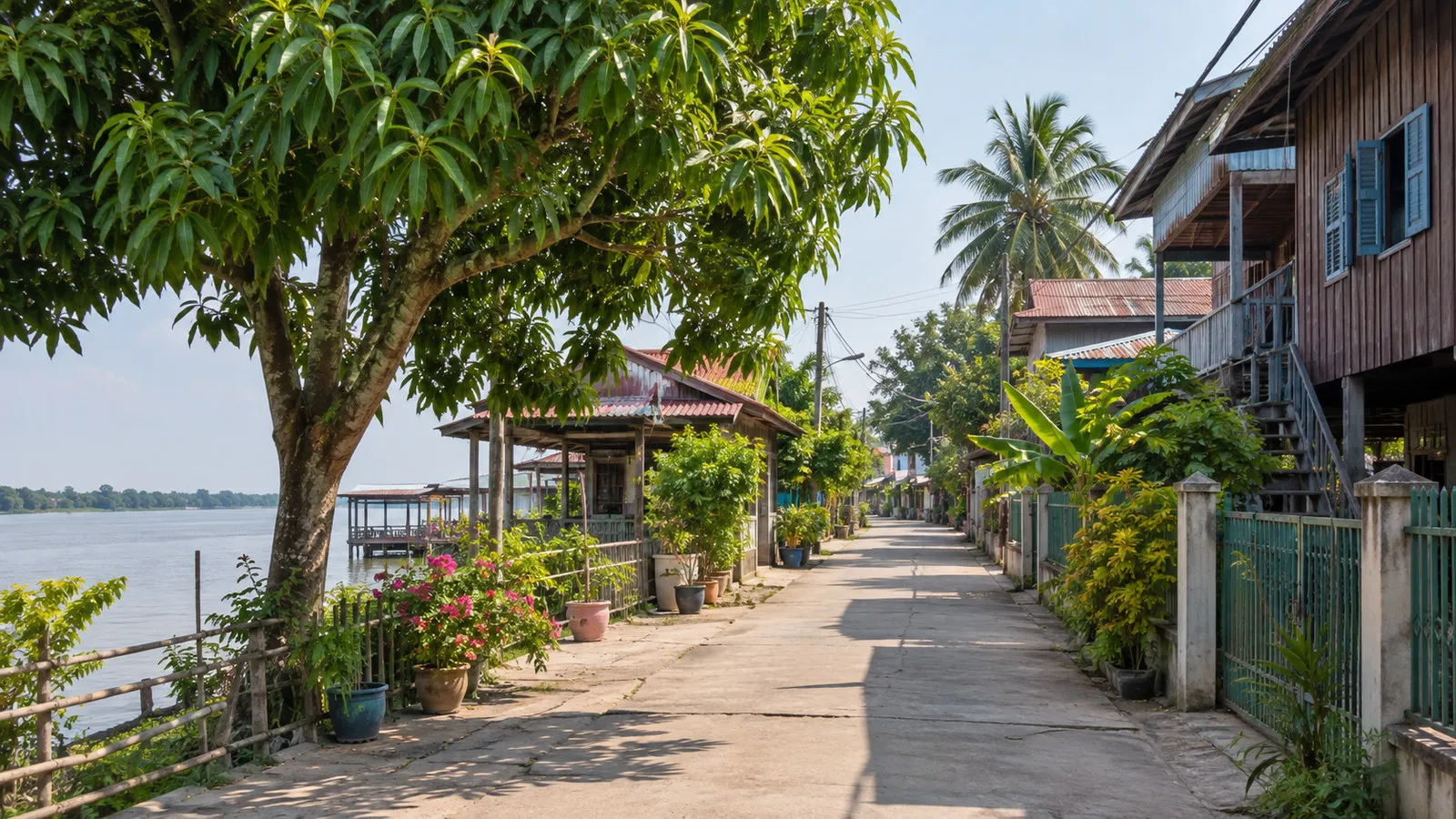
The visit is primarily on foot through a lived-in village. Surfaces may include packed earth, concrete, broken pavement, narrow paths, steps, workshop thresholds, and puddles or mud after rain.
Wear closed shoes with grip and keep valuables secure without treating residents as a spectacle. Follow the guide’s route because the correct landing may not be obvious from another part of the riverbank.
Accessibility
This can be a difficult stop for travelers with limited mobility because the vessel transfer and riverbank come before the village itself. Ask the cruise line for the expected gangway, tender or launch procedure, step count, slope, assistance policy, and whether a wheelchair or scooter can be transferred.
A manual wheelchair may still face narrow paths, thresholds, mud, and limited turning space, while powered devices may be too heavy or unsafe for a small boat. Request a frank answer about which portion can be done and whether viewing a demonstration closer to the landing is possible.
There may be few formal restrooms, seats, railings, or cooling spaces. Travelers with heat sensitivity should carry water, sun protection, medication, and a plan to return early with staff assistance.
Heat, rain, and what to wear
Cambodia is hot and humid, and a short village walk can feel more demanding than its distance suggests. Wear breathable clothing, use sunscreen and insect repellent, and carry drinking water if the operator permits it ashore.
In the wetter season, rain can make the bank and unpaved surfaces slippery. A light rain layer is safer than juggling a large umbrella during a gangway or small-boat transfer.
Dress modestly if the itinerary includes a pagoda, monastery, or Oudong on the same day. Covered shoulders and knees also help with sun exposure.
Safety and respectful behavior
Use only the passenger route designated by the crew and do not climb a bank or cross a boat independently for a better photograph. Keep fingers away from pinch points when vessels move against a landing.
Ask permission before photographing people at close range, especially children. Do not touch tools, unfinished work, religious objects, or household belongings unless invited.
Cambodia’s tourism ministry is a useful starting point for current national visitor information, while your cruise line controls the immediate shore plan. Save the ship’s emergency contact and stay within earshot of the guide.
Timing your return
Koh Chen is usually a scheduled group stop rather than a day with continuous independent access. The guide’s meeting time controls, even if another workshop looks more interesting at the end of the lane.
Return with the group so crew can account for everyone before the vessel moves. River schedules may depend on daylight, water level, bridge clearances, another landing, or the next included excursion.
How Koh Chen fits a Cambodia river cruise
Koh Chen commonly appears north of Phnom Penh as ships transition from the capital toward Tonle Sap River stops such as Kampong Tralach and Kampong Chhnang. It is a short, human-scale counterpoint to palaces, museums, and temple complexes.
It should not be described as a Mekong Delta village or grouped geographically with Vietnamese calls such as Cái Bè. The wider itinerary may be marketed as a Mekong cruise, but Koh Chen’s local waterway is the Tonle Sap River.
Quick answers
Is Koh Chen a normal cruise port?
No, it is a village landing and guided cultural stop rather than a terminal with independent port services. Your vessel and river conditions determine the exact arrival method.
Will I see artisans working?
Many itineraries are designed around silver and copper workshops, and a demonstration may be part of the visit. The exact activity depends on the household, timing, and operator, so live production should not be guaranteed.
Do I have to buy something?
No, a purchase is optional. If you do buy, confirm the material, maker, quoted currency, total price, and packing before paying.
Can I explore without the ship group?
That is usually impractical during the cruise stop because the landing and schedule are organized around the vessel. Independent travelers can arrange a road visit separately, but they need a knowledgeable driver and advance confirmation.
Is Koh Chen suitable for wheelchairs?
It may be difficult because of the vessel transfer, steep or slippery riverbank, uneven paths, and workshop thresholds. Ask the cruise line about your exact device and request a realistic description of every transfer.
Is Koh Chen near Oudong?
They are in the same broader region but are different stops with different logistics. Combine them only through an itinerary or driver that has confirmed the full route and return.
What cash should I carry?
Small U.S. dollar notes and Cambodian riel can both be useful, subject to your operator’s current guidance. Keep notes clean and confirm which currency a price refers to before agreeing.
The last word
Koh Chen works when you approach it as a brief visit to a living craft community, not a retail attraction staged for unlimited browsing. Follow the guide, watch the work carefully, ask respectful questions, and buy only when the object and story genuinely connect with you.
The next major urban contrast is Phnom Penh, while the next rural rhythm often continues toward Kampong Tralach or Kampong Cham on a different part of the Cambodian route.
How this guide was researched: Unless a first-hand visit is explicitly identified above, this guide is based on independent research using current cruise itineraries, government tourism information, river-safety guidance, and regional sources where available. Logistics and time-sensitive details were reviewed in September 2026; see our Editorial Policy.