Ferradosa River Cruise Port: The Douro Stop Most Itineraries Skip
Ferradosa is a small Douro quay in the municipality of São João da Pesqueira, not a conventional town-center cruise port. Ships may use it as an itinerary stop, a coach-transfer point, or the start of an organized wine-country excursion.
That makes the daily program more useful than the port name alone. Some current itineraries continue toward Pinhão after a Port Wine Route excursion, while some day cruises disembark here for São João da Pesqueira and return by coach.
The quick take
Do not book Ferradosa expecting a walkable collection of sights beside the gangway. Book it for an upper-Douro journey where vineyard scenery, a coordinated inland excursion, or a quiet sailing interval matters more than port facilities.
If the line offers an excursion you want, the organized option is usually the practical choice because transport at a small rural quay is limited and the ship may move while guests are away. Staying aboard can also be sensible when scenery and rest sound better than another coach ride.
Ferradosa is one piece of a Douro river cruise itinerary, not proof that a sailing is quieter, less crowded, or more wine-focused than every alternative. Compare the full route, excursion list, and hours in motion.
Ferradosa quick facts
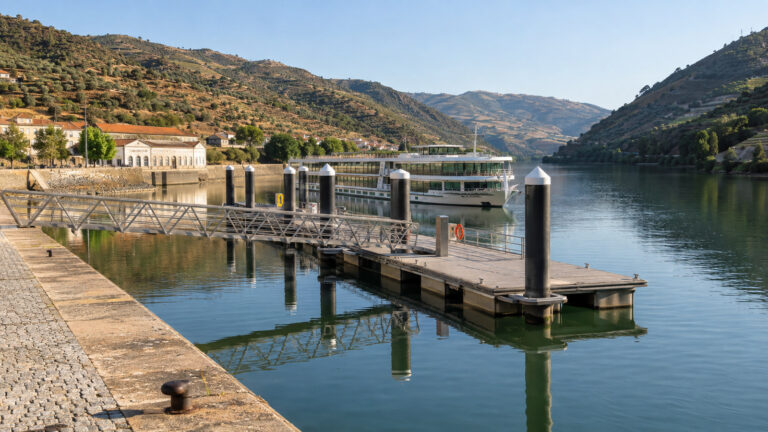
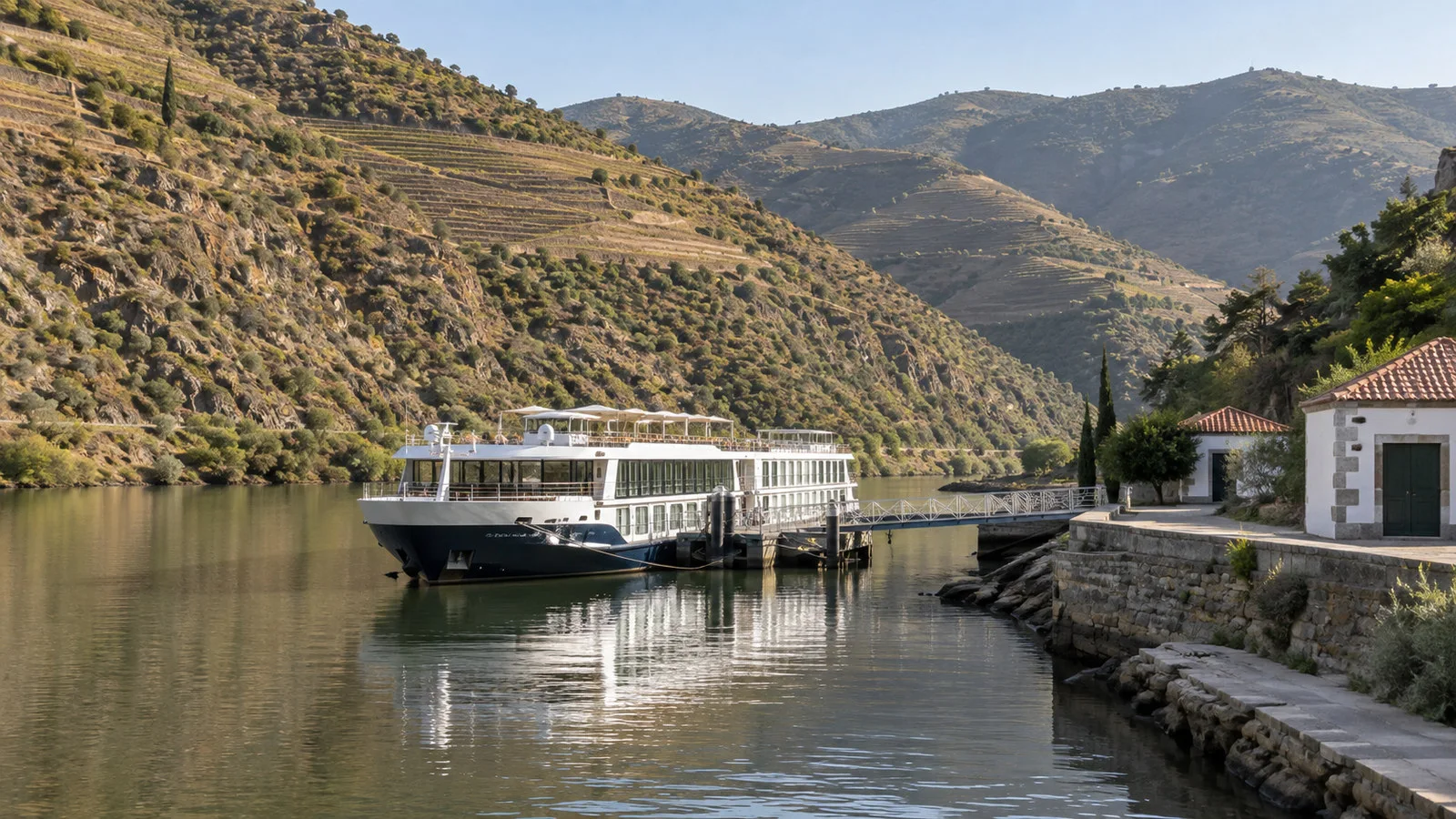
- Docking: Cais da Ferradosa is a rural quay on the upper Douro near Vale de Figueira in São João da Pesqueira municipality. Final mooring position and any rafting depend on the operator and day.
- Into town: There is no major sightseeing center at the quay. Organized programs may go to São João da Pesqueira, Pinhão, wineries, viewpoints, or other Douro stops, so read the exact excursion description.
- Rail: Ferradosa has a halt on the active Douro Line between Porto and Pocinho, but not every train stops and the timetable may not fit a ship call. Do not improvise a rail outing without checking the current CP schedule and the ship’s departure plan.
- Currency and time: Mainland Portugal uses the euro and Western European Time, with summer daylight time observed. Neighboring mainland Spain is normally one hour ahead.
- How often the call is missed: High, roughly 65% in this site’s itinerary-screening estimate. That means many Douro itineraries do not schedule Ferradosa at all, not that 65% of booked Ferradosa calls are canceled.
Where Ferradosa actually is
Ferradosa sits on the Douro in the parish of Vale de Figueira, within São João da Pesqueira municipality. It is downstream of Pocinho and upstream of the Valeira lock, in the reservoir reach between Valeira and Pocinho.
The old article repeatedly sent travelers toward Alfândega da Fé, across the river and well inland in a different municipality. Current local and operator information instead connects Cais da Ferradosa with São João da Pesqueira, its Wine Museum, São Salvador do Mundo viewpoint, or wine-route excursions toward Pinhão.
The São João da Pesqueira municipality describes itself as the heart of the Douro wine country and maintains the municipal Wine Museum. An excursion may visit those places, but only the booked program can confirm what is included on your sailing.
What the quay is like
Expect a functional riverside landing rather than a terminal with a tourist desk, taxi rank, or a row of shops. Exact gangway position can change with the vessel, mooring order, and water level.
Ask at the briefing whether guests cross another ship, whether the excursion coach meets at the gangway, and whether the ship remains at Ferradosa. Those three answers determine how much independence is realistic.
Save the Portuguese name “Cais da Ferradosa” and the ship’s contact information offline. A generic map search can return the rail halt, marina, village, or quay, which are related but not interchangeable pickup points.
Yes, Ferradosa still has train service
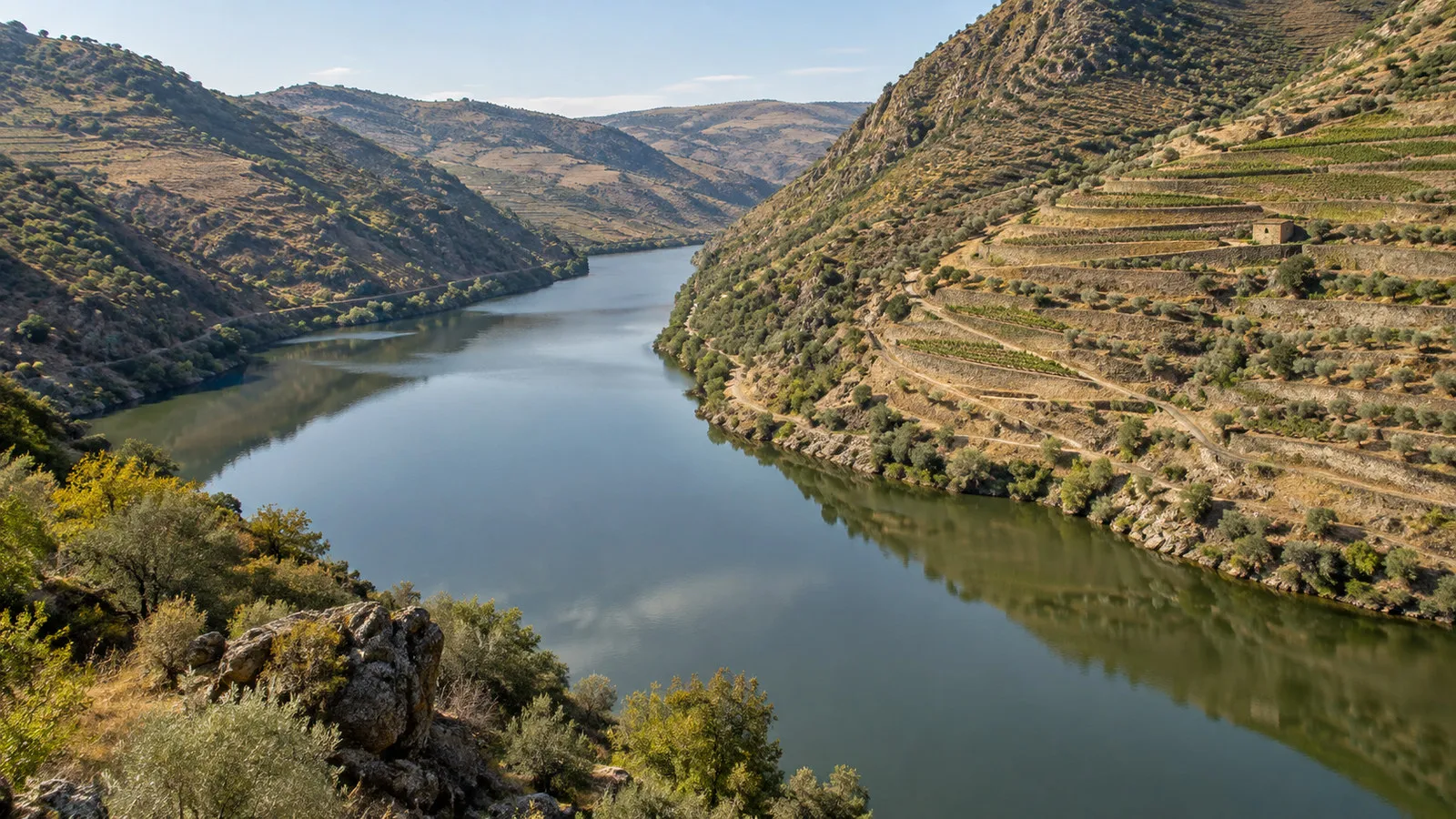
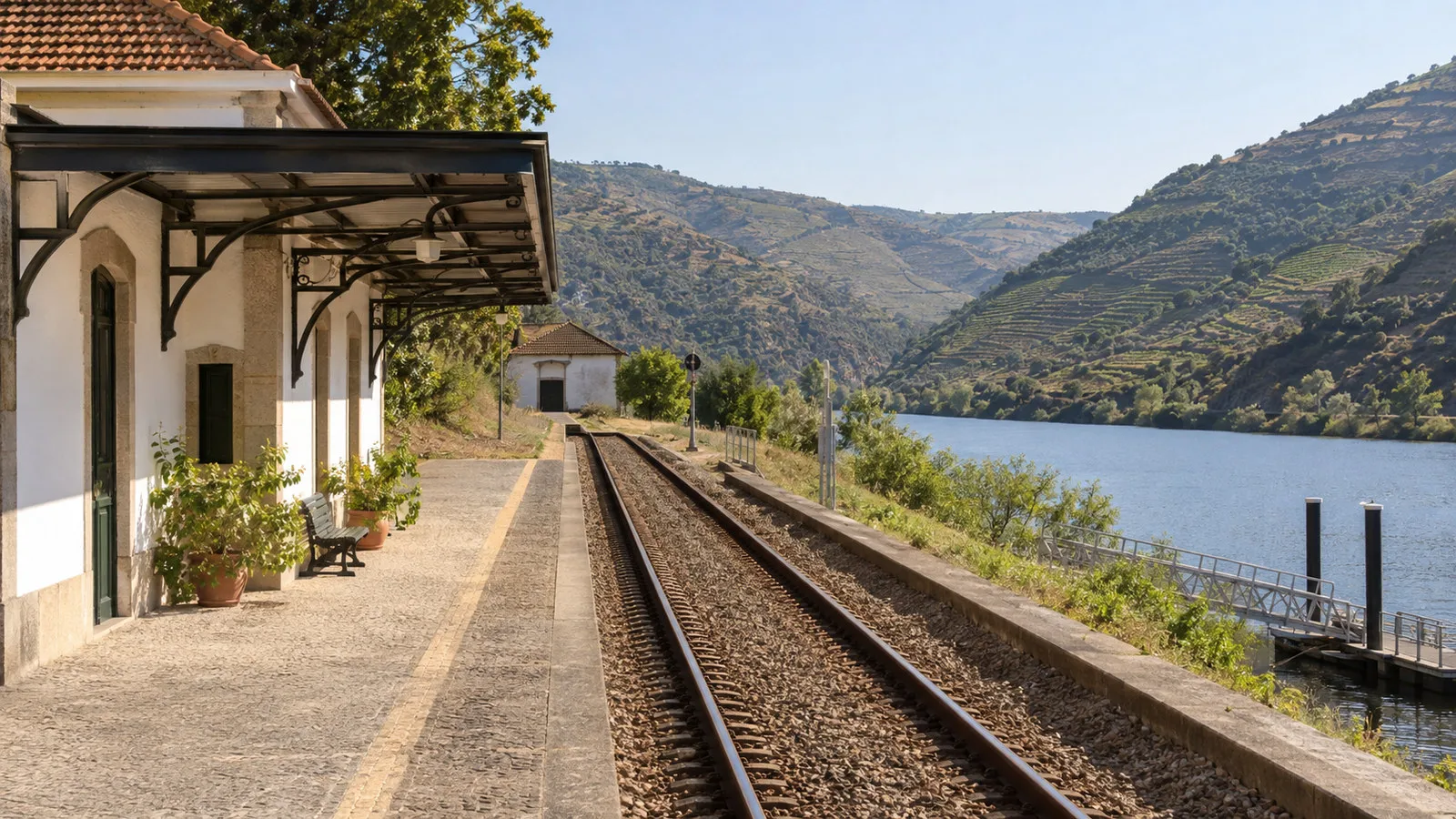
The original Ferradosa station was replaced after the rail alignment changed around the Valeira dam, but the current Ferradosa halt remains on the active Douro Line. The fact that CP trains run only as far east as Pocinho does not mean they skip Ferradosa, which is on the route before the terminus.
Check the current CP Douro Line timetable for the exact date and direction because service patterns and stops vary. Rail is best treated as preplanned transport, not a spontaneous cruise-port shuttle.
Do not board unless the train, station access, ticketing, and a fallback ride all fit comfortably inside the ship’s instructions. On some itineraries the vessel continues to another quay while guests are on tour, so returning to Ferradosa could be the wrong plan even if the train runs perfectly.
What excursions may do from Ferradosa
Current cruise programs show why one blanket description does not work. CroisiEurope’s 2026 and 2027 Portugal and Spain itinerary sails from Barca d’Alva to Ferradosa, then offers a Port Wine Route and Pinhão excursion before the voyage continues.
A current Douro day-cruise program uses Ferradosa differently, disembarking guests for a coach transfer to São João da Pesqueira. Its listed stops include a wine cellar, São Salvador do Mundo, the historic center, and the Wine Museum before returning to Régua by road.
Your river line may offer neither of those exact plans. Verify whether the activity is included or optional, how much coach time is involved, how long guests spend walking, whether tastings have a nonalcoholic alternative, and where the ship will be afterward.
The landscape is the constant
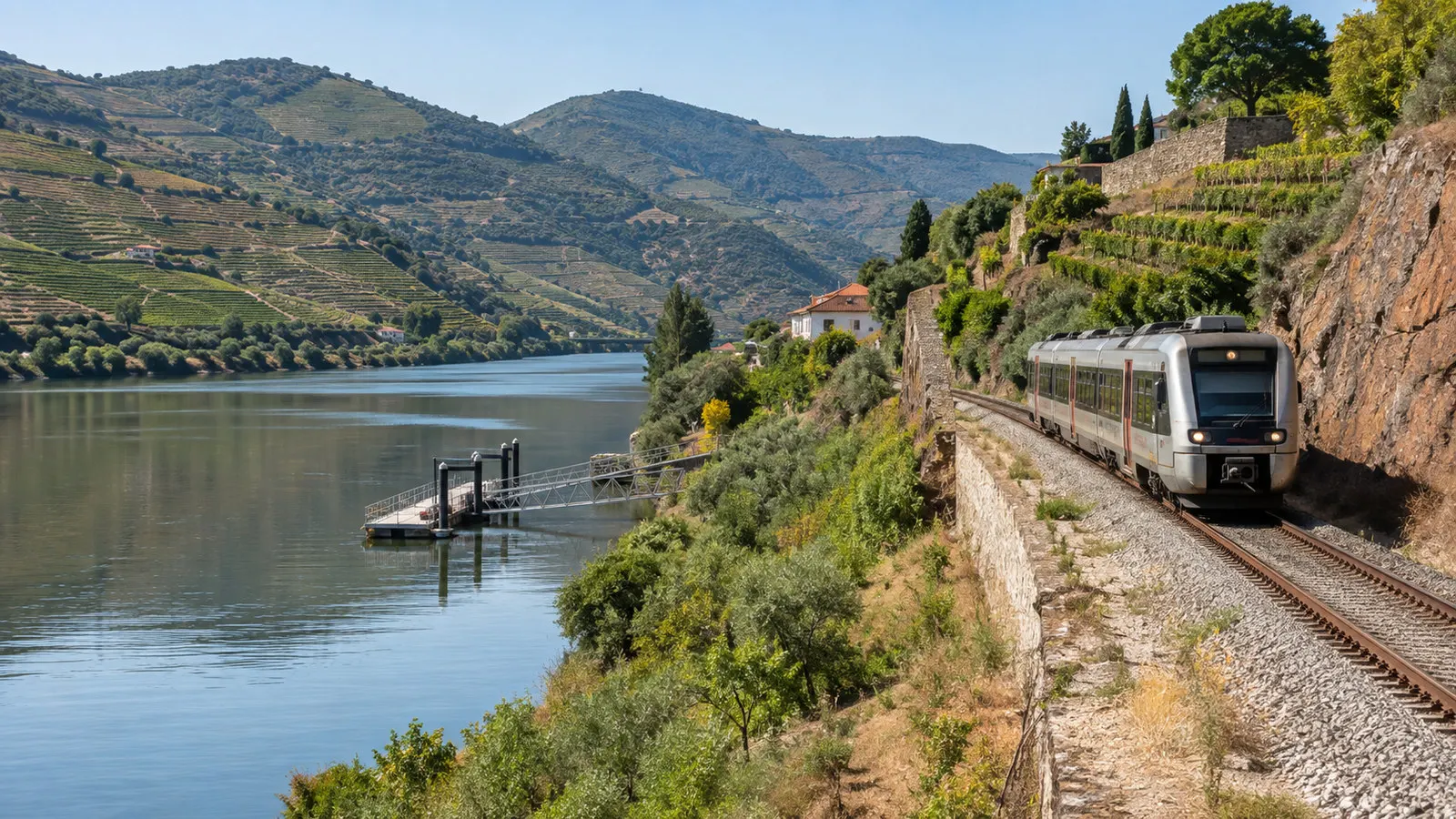
Whatever the excursion, the river approach sits within the cultural landscape of the Alto Douro Wine Region. UNESCO records about 24,600 hectares, roughly 60,800 acres, in the World Heritage property and a much larger buffer zone.
UNESCO’s official listing says wine has been produced in the region for about 2,000 years and Port wine has been regulated for quality since 1756. The designation covers a living landscape of terraces, quintas, villages, roads, and chapels rather than one visitor attraction.
The oldest pre-phylloxera socalcos are narrow, irregular terraces held by schist walls. Wider, regularly shaped terraces became prominent during vineyard rebuilding in the late 19th and early 20th centuries.
That makes deck time worthwhile even if Ferradosa is mainly a transfer point on your sailing. Keep a hat and camera handy, then let the ship’s commentary identify estates rather than guessing from an unlabeled hillside.
Ship excursion or explore independently?
Choose the organized excursion when the ship moves during the tour, transport is bundled, or the destination lies inland. It removes the hardest part here, which is matching rural transport to a moving vessel and a lock-controlled sailing schedule.
Independent plans can work with advance reservations, current train times, the exact berth, and written confirmation of where to rejoin. Do not expect a taxi rank, walk-up rental car, or rideshare coverage at the quay.
Staying aboard is not “missing Ferradosa” when the stop is operational and the excursion repeats wine visits elsewhere in the week. Compare the outing with the Pinhão, Régua, and Salamanca days before adding another coach.
Accessibility at Ferradosa
No primary source supports a blanket claim that the quay has no ramps or elevators, and those labels do not answer the real question. Ask the line about the exact gangway angle, steps, handrails, rafting, pier surface, and distance to the coach for your ship.
For the excursion, ask whether the coach has steps or a lift and how wheelchairs or scooters are stored. Then request walking distance, grade, surfaces, restroom access, seating, and step-free entry at every named stop.
The train should not be treated as an automatic accessible backup. Confirm the Ferradosa platform, the exact train, boarding assistance, and destination station with CP before travel.
Heat, sun, and seasonal conditions
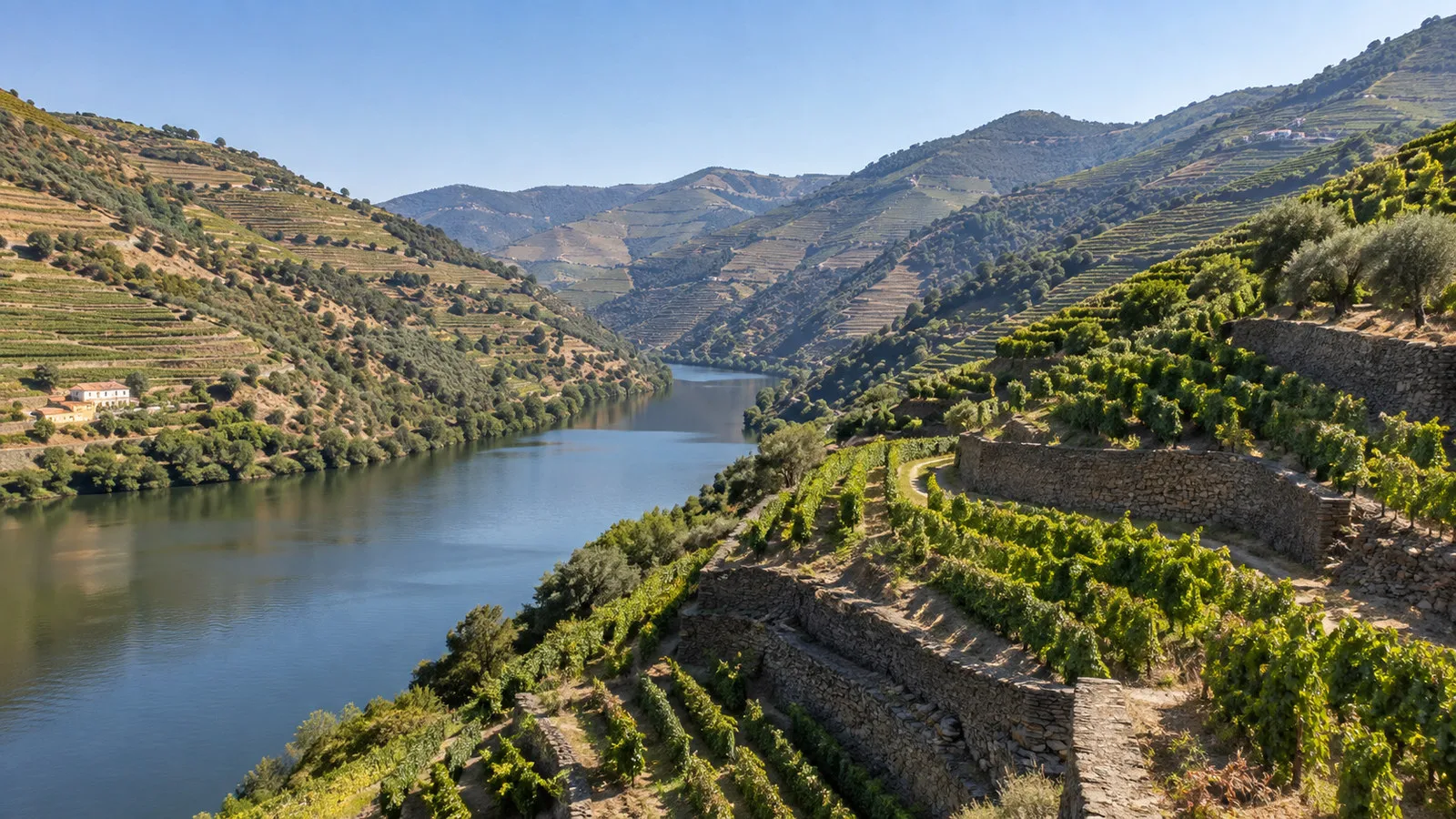
The upper Douro can feel much hotter and drier than Porto during summer, especially on exposed roads, viewpoints, and vineyard terraces. Carry water, sun protection, and a light layer for an air-conditioned coach rather than relying on the river breeze.
Spring and fall can bring cooler mornings and changing weather, so use layers and check the short-range forecast. Almond bloom and grape harvest timing varies by weather and elevation, which makes both seasonal highlights rather than promises tied to one month.
Wear shoes with grip for gangways, gravel, cobbles, or cellar floors. Wine-country scenery is gorgeous, but it is not obliged to be level.
Locks, water, and itinerary changes
APDL, the Douro waterway authority, describes a navigable route of about 210 kilometers, roughly 130 miles, from the river mouth to Barca d’Alva with five locks overcoming about 125 meters, or 410 feet, of elevation. Ferradosa lies on the reservoir reach between the Valeira and Pocinho locks.
The authority publishes navigation notices for maintenance, events, channel work, and hydrologic conditions. A schedule can change for more reasons than “low water,” so follow the captain’s briefing and use the Douro locks and dams guide for the larger system.
Our river-cruise water-level guide explains common responses such as adjusted sailing times, swapped ports, coach transfers, or a ship change. No article can predict which response an operator will use on a particular departure.
Getting back to the ship without drama
First confirm whether “back to the ship” means Ferradosa, Pinhão, or another quay. On an organized tour, stay with the stated meeting points because the vessel may sail while the coach travels by road.
Photograph the daily program, carry the ship and cruise-director contact details offline, and keep a working phone. Rural signal can vary, so do not make app access your only copy of the plan.
For an independent outing, build a buffer around the line’s all-aboard time and any lock window, not an invented universal number. If the fallback taxi or train fails, the road distance to the next berth can be substantial.
How Ferradosa fits a Douro itinerary
Ferradosa is not simply an alternative to pushing toward the Spanish border. Current CroisiEurope routes include Ferradosa after Barca d’Alva, showing that one itinerary can include both the border section and this quay.
It may appear as a named stop even when guests spend most of the time on a wine-route excursion or the ship resumes sailing. Read the day-by-day wording for “dock,” “cruise,” “excursion from,” and “rejoin,” because each describes a different use of Ferradosa.
Compare it with Pocinho, Pinhão, and Régua by the experience offered, not by how famous the port name sounds. The better itinerary is the one that balances scenic sailing, coach time, and the inland places you actually want to see.
Quick answers
Is Ferradosa a major cruise port?
No. It is a small Douro quay used by some multi-day itineraries, day cruises, private boats, and transfer-based programs.
What town does Ferradosa serve?
The quay is near Vale de Figueira in São João da Pesqueira municipality. Some organized programs transfer to São João da Pesqueira, but others head toward Pinhão or wine estates.
Can I walk to the sights?
Not to the major sights normally named in cruise programs. Treat the quay as a transport point unless your operator gives a specific nearby walking plan.
Is there a train at Ferradosa?
Yes, Ferradosa has a halt on the active Douro Line to Pocinho. Not every service necessarily stops, and the schedule may not match the ship, so check CP and the cruise line before relying on it.
Should I take the ship excursion?
Usually, if you want to leave the quay and the ship moves during the outing. Stay aboard when the excursion duplicates other wine days or its coach time outweighs the stops for you.
Is Ferradosa wheelchair-friendly?
There is not enough reliable public detail for a universal answer. Ask the line about the exact gangway, rafting, pier surface, coach, and every excursion stop before booking.
The bottom line
Ferradosa is useful because it connects river travel with inland Douro wine country, not because it is an undiscovered town beside the quay. Its value depends entirely on what the operator has scheduled from it.
Check the destination, coach time, rejoining point, mobility demands, and whether the ship moves before saying yes to an excursion. If those details do not suit, the vineyard view from the ship is a perfectly respectable plan.
How this guide was researched: Geography and local attractions were checked against São João da Pesqueira municipality, rail guidance against CP, river operations against APDL, the wine landscape against UNESCO, and current stop patterns against cruise-operator itineraries. Schedules, moorings, excursions, and access change, so verify the daily program for your sailing; see our Editorial Policy.