Monheim am Rhein River Cruise Port Guide
Monheim am Rhein is a small Rhine port with a modern landing, a walkable old town, and one genuinely distinctive Roman site. It offers a quieter day than nearby Cologne or Düsseldorf without leaving cruise passengers short of things to do.
The best plan depends on your time ashore and the opening day of local attractions. Check the ship’s exact schedule before leaving because some calls may also include regional touring.
My quick take
Monheim works best as a compact local stop, not as a rushed gateway to every famous city nearby. Walk the riverside and Altstadt, then add Haus Bürgel only if your schedule and transportation make the extra trip comfortable.
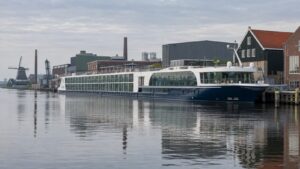
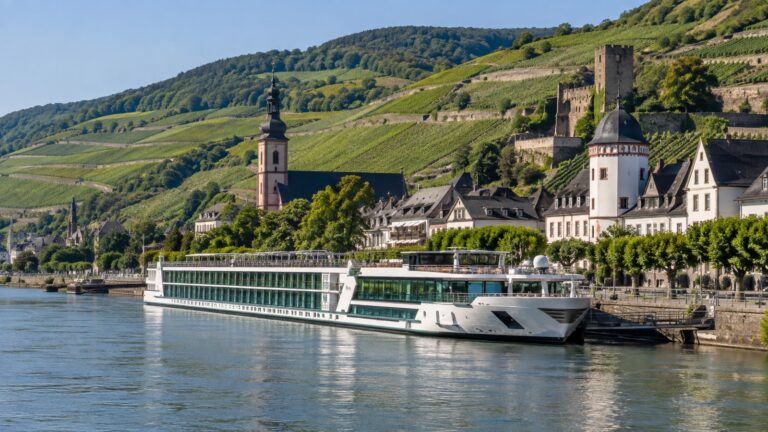
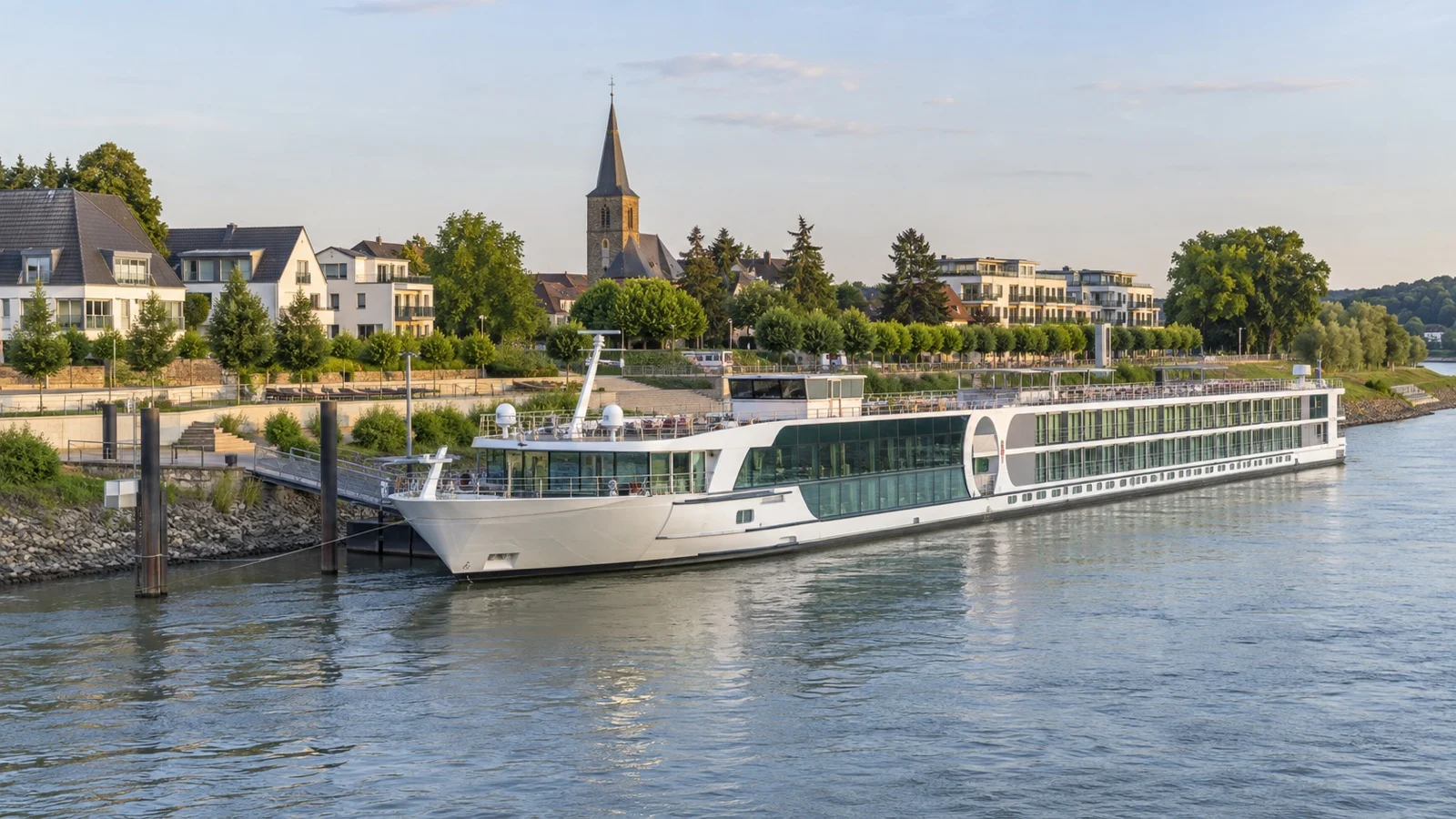
The city has invested heavily in its Rhine frontage, so older descriptions of Monheim as little more than passing scenery are out of date. Official visitor information says the modern landing receives day boats as well as large hotel and cruise vessels.
I would choose the historic center for a short call and Haus Bürgel for a longer one. Repeat Rhine travelers may appreciate the slower pace most after several headline ports in a row.
Monheim am Rhein quick facts
- Docking: Ships use the modern Schiffsanleger on the Rheinpromenade, close to the Altstadt and the K714 cultural venue.
- Best short plan: Follow the riverfront toward the Altstadt, see the Schelmenturm, and leave time for a cafe or beer garden.
- Best longer plan: Add Haus Bürgel and the Urdenbacher Kämpe by arranged vehicle, bicycle, or public transportation.
- Currency: Germany uses the euro, and a small amount of cash is sensible for minor purchases.
- Time zone: Central European Time applies in winter, with Central European Summer Time during daylight saving months.
Where river ships dock in Monheim
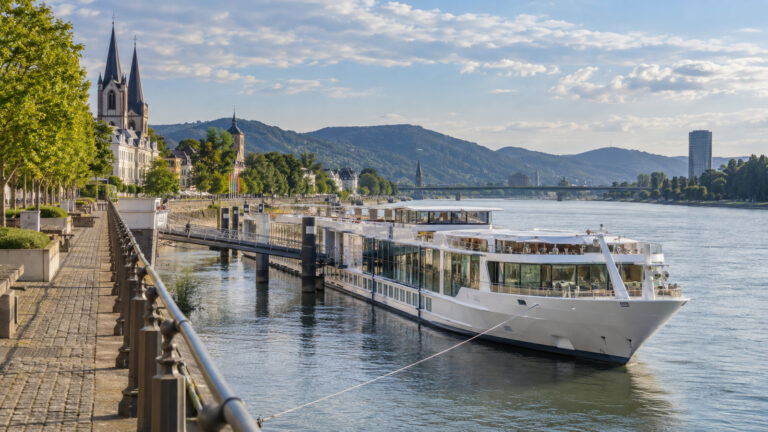
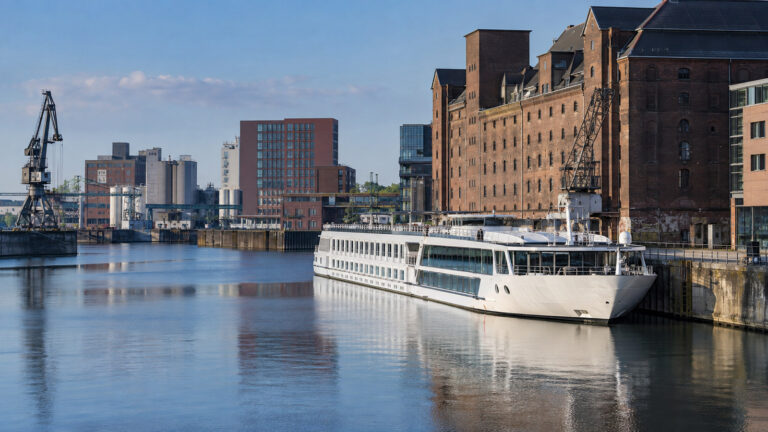
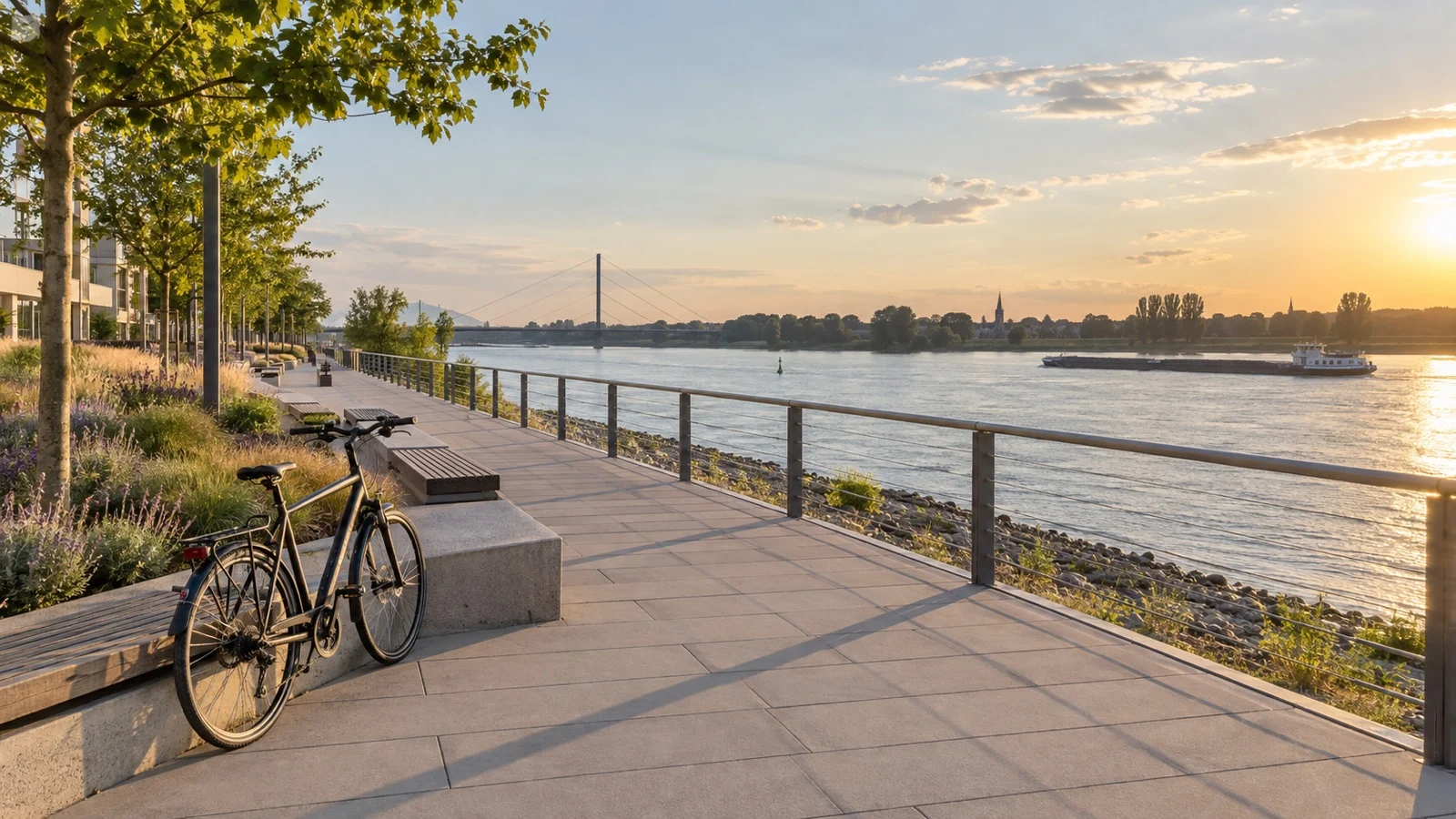
The Monheim landing is on the Rheinpromenade near the city’s cultural waterfront. This is an actual modern ship landing, not merely an informal path beside the river.
The official Monheim visitor site describes it as a starting point for exploring the city and the region. It also says increasing numbers of day excursion boats, large hotel vessels, and cruise ships call there.
Do not assume that every vessel will use precisely the same shore arrangement. River levels and the ship’s configuration can affect the gangway, so listen to the crew’s arrival briefing.
There is no reason to expect the airport style facilities found at a major ocean terminal. Think of the landing as a convenient waterfront arrival point with the town beyond it.
Walking from the landing to the Altstadt
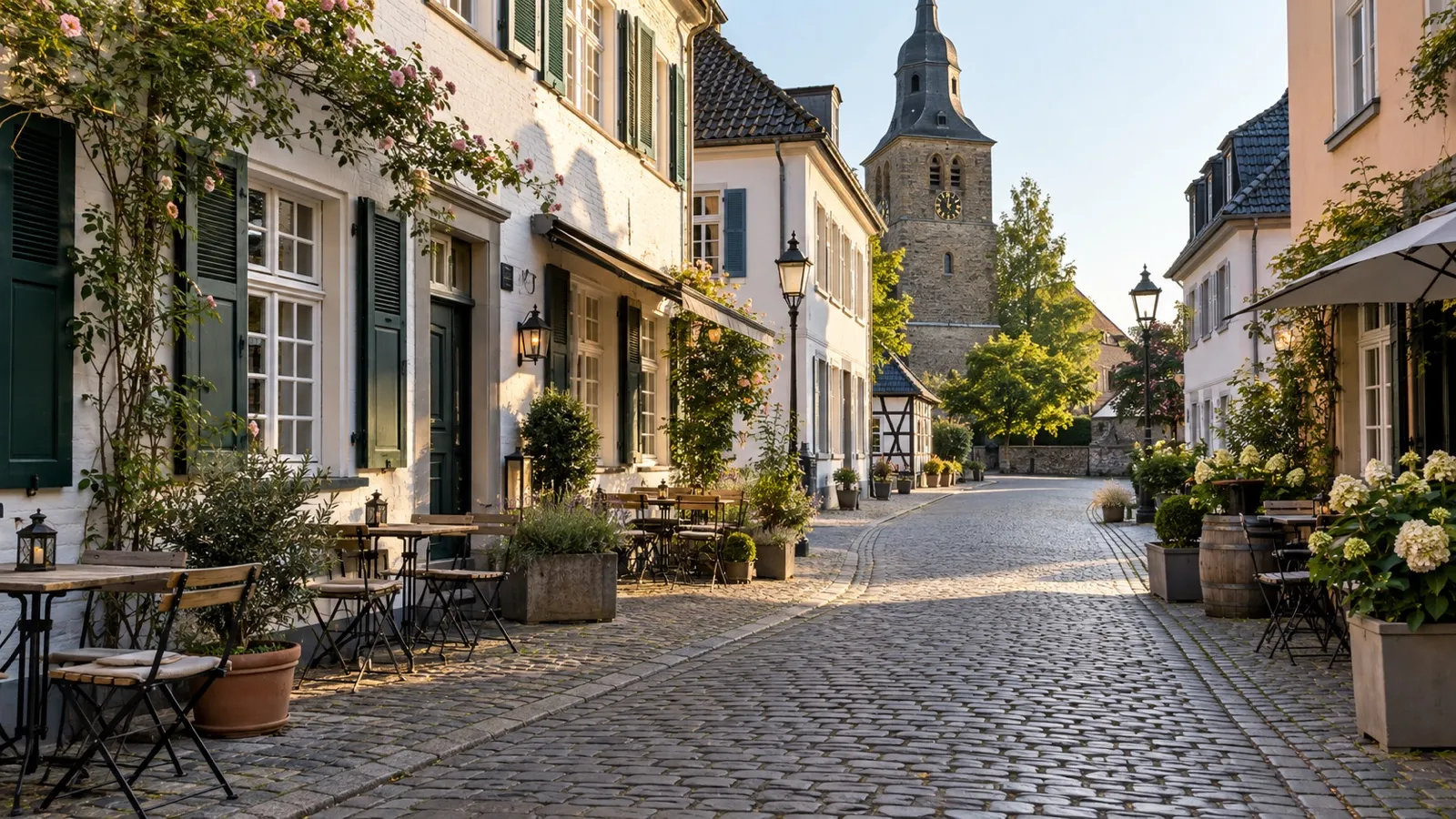
The historic center is near the landing, and the river gives you an easy visual anchor for the start and end of your visit. Confirm the gangway location and all aboard time before setting off.
Monheim’s Altstadt is made for an unhurried wander rather than a checklist sprint. Restored houses, small lanes, cafes, pubs, and beer gardens give the district its appeal.
The official Altstadt guide identifies the area as both a historic attraction and the city’s social and dining center. Kradepohl, a shaded old town square with a fountain and benches, is a good place to pause.
A phone map is useful, but the center is compact enough that getting slightly turned around is not a disaster. Keep the river and the tower area in mind, and do not base your return on an untested walking estimate.
Schelmenturm and the Monchronik
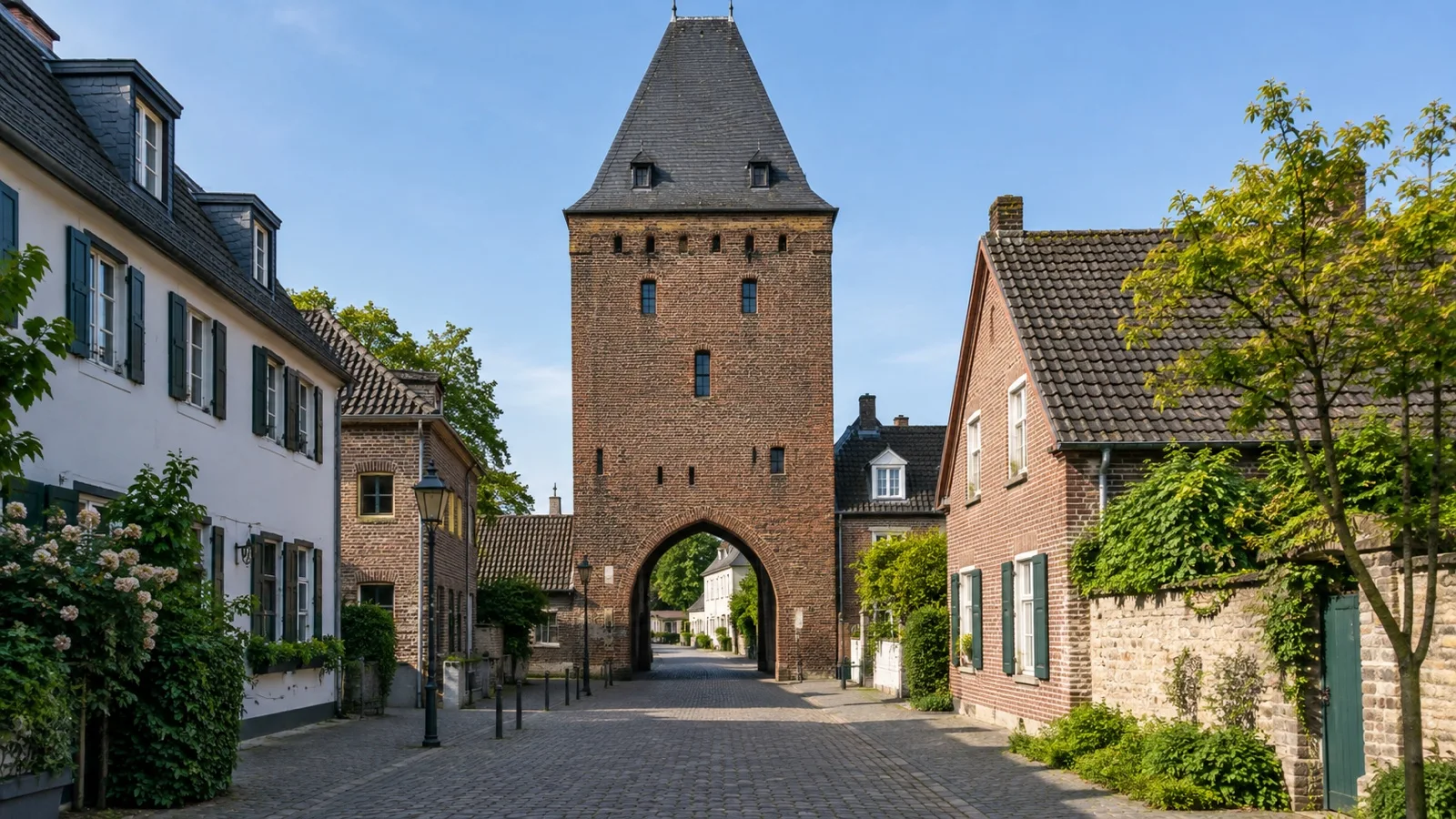
The Schelmenturm is Monheim’s clearest old town landmark. The 26 meter tower is the surviving part of a defensive system built around 1423, and it later served as a prison.
The tower now contains a multimedia exhibition covering roughly 600 years of local history. Displays explain the building’s changing uses, the former fortifications, and the story of its bell.
According to the official Schelmenturm page, the exhibition is open Saturdays, Sundays, and public holidays from 11 a.m. to 5 p.m., except Christmas and New Year holidays. Admission is free and advance registration is not required.
Those limited opening days matter on a cruise call. Even when the interior is closed, the tower still marks the entrance to the historic district and is worth seeing outside.
Haus Bürgel is the standout excursion
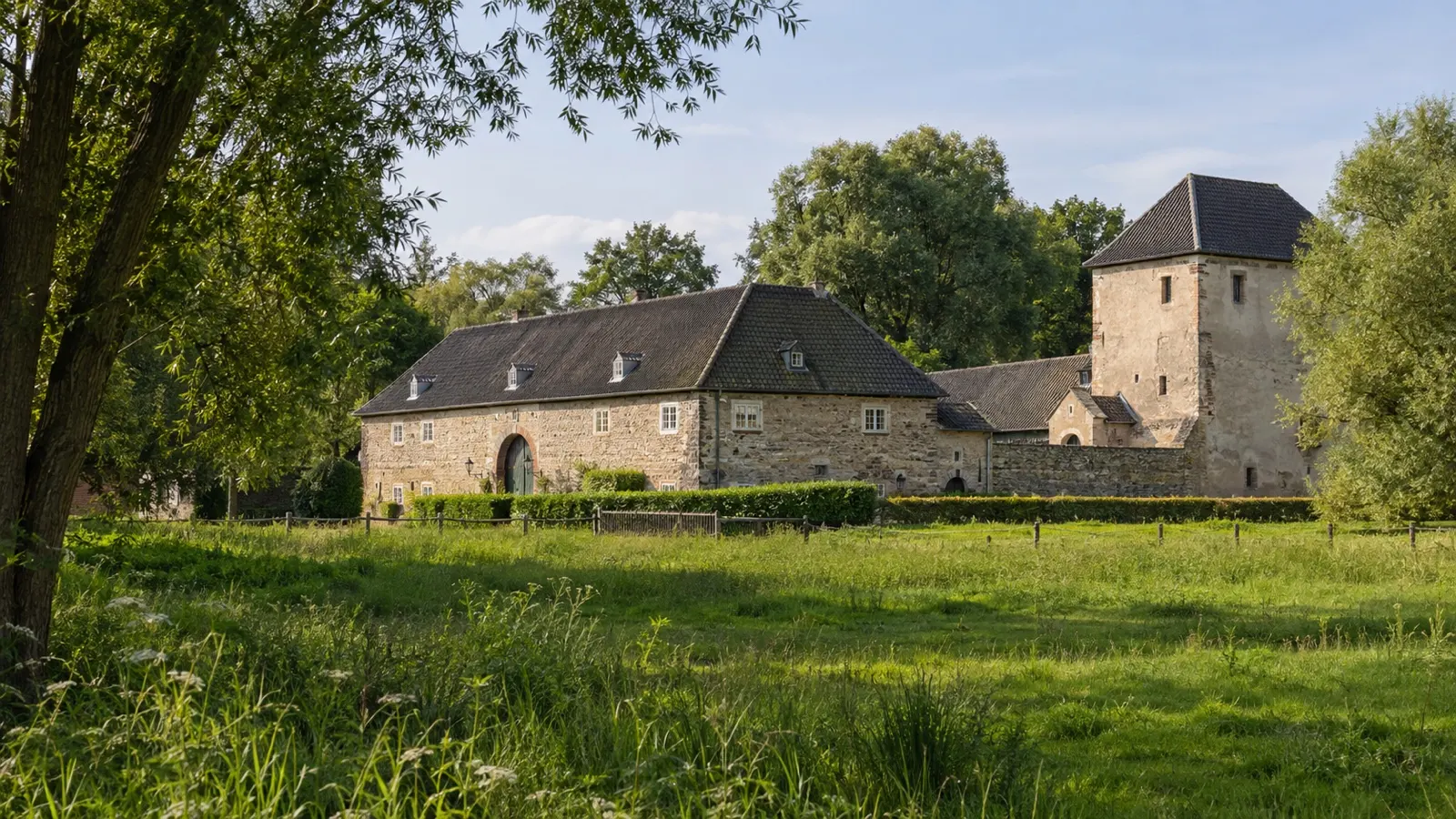
Haus Bürgel is the strongest reason to venture beyond central Monheim. The former Roman fort stands in the Urdenbacher Kämpe and combines archaeology, a Roman museum, a biological station, and a working horse farm.
The site became part of the UNESCO listed Lower German Limes in July 2021. Its preserved Roman fabric and objects excavated on the property help explain life along the empire’s Rhine frontier.
This is not a quick extension of an old town stroll. Official visitor information recommends arriving by public transportation, bicycle, or on foot because parking is limited.
The Monheim tourism page for Haus Bürgel lists museum hours as 10 a.m. to 6 p.m. on Saturdays, Sundays, and public holidays. It also lists a winter closure from December 1 through January 31.
Open guided tours are normally offered on the first Sunday of each month, while groups can request tours separately. Check the Haus Bürgel website close to your visit because hours and events can change.
The surrounding floodplain is part of the experience, not empty space between attractions. Paths, wet meadows, and woodland make this a good choice for travelers who enjoy both history and nature.
How to choose your day
For about two hours ashore, stay near the Rheinpromenade and Altstadt. Add the Schelmenturm interior only when it is open and you have a clear return margin.
With three or four hours, Haus Bürgel becomes realistic if transportation is settled before you leave the ship. A taxi or organized vehicle can reduce uncertainty, but availability should be checked rather than assumed.
Do not try to combine Monheim, Haus Bürgel, and a major city on a modest port call. Cologne and Düsseldorf each deserve more time than a rushed transfer allows.
If your cruise line includes a regional excursion, compare its actual stops with what you can see independently in town. The organized option becomes more valuable when it provides reserved transportation or access.
Public transportation and regional connections
Monheim does not have its own mainline railway station, so regional trips usually combine a bus with a train. The city says S6 trains serve nearby Langenfeld, Langenfeld Berghausen, and Düsseldorf Hellerhof, with regular buses connecting those stations to Monheim.
Regional rail is also available from Düsseldorf Benrath and Leverkusen after a bus connection. These links make independent travel possible, but they add waiting time and another point where a delay can affect your return.
Use the Bahnen der Stadt Monheim journey planner or app for current routes, tickets, and service information. Buy the correct visitor fare because the Monheim Pass benefit for residents does not make ordinary tourist travel free.
For a same day city detour, work backward from the ship’s required boarding time. Build in a missed connection cushion instead of relying on the fastest trip shown by a planner.
Cycling and the riverside
The flat Rhine setting makes cycling appealing, particularly for reaching nature areas beyond the center. Monheim promotes marked routes, public bicycle pumps, and charging points for electric bicycles.
A bicycle can make Haus Bürgel more practical for an active traveler, but only if the rental return process is clear. Do not let a pleasant ride erase the buffer you need at the ship.
North of central Monheim, Baumberg offers more river scenery and local history. Its Aalfischerei Museum uses the preserved fishing boat Fiat Voluntas to tell the story of eel fishing on the Rhine.
The boat museum is specialized and its interior presents access challenges. The city’s guide says the surrounding area is wheelchair accessible, but reaching the deck involves a steep ramp followed by a narrow staircase.
Accessibility at the port and in town
The modern ship landing was designed to be wheelchair accessible. The city’s accessibility guide warns that low Rhine water can increase the slope of the landing bridge, which may make assistance advisable.
The Rheinpromenade and central public spaces are generally easier than many steep river towns. Even so, the gangway, water level, and your ship’s boarding setup are variables that only the crew can confirm.
In the Altstadt, a bronze model of the historic center includes standard text and Braille. Monchronik locations also incorporate accessible interpretation such as audio, tactile elements, and simplified presentation, although access differs by building.
Haus Bürgel has an accessible restroom listed by the city, but the wider visit includes outdoor terrain. Travelers using a wheelchair or walker should ask both the ship and attraction about their intended route.
Accessible public toilets are listed in Monheim Mitte and the Altstadt, with availability tied to facility opening hours. The public toilet in Landschaftspark Rheinbogen is one city listed option near the historic area.
Food, drink, and the local mood
Monheim sits between the cultural pull of Cologne and Düsseldorf, and the local beer conversation reflects that position. The city cheerfully calls this the beer equator between pale Kölsch and darker Altbier.
You do not need to choose sides. Order what sounds good, ask whether the kitchen is serving, and keep enough time for the bill before heading back.
The Altstadt is most appealing for a casual meal because its restaurants and beer gardens sit in a historic setting. Monheim Mitte has a broader everyday offer if practicality matters more than atmosphere.
Cards are common in Germany, but a little euro cash remains useful for a small purchase or a minimum card amount. Check the total before tapping and remember that service customs may differ from home.
Weather, clothing, and river conditions
Lower Rhine weather can change quickly, and the exposed promenade often feels cooler than sheltered streets. A light waterproof layer and shoes with dependable grip are useful in most seasons.
Summer can be warm, so bring water and use shade when available. In colder months, short daylight and the Haus Bürgel winter closure make a central town plan more dependable.
High or low water may affect river operations even when the town is functioning normally. Follow your cruise line’s messages because docking locations, arrival times, and excursions can change.
Safety and practical cautions
Monheim is a compact urban destination where ordinary travel awareness is usually enough. Keep valuables secure, pay attention around bicycles, and do not enter cycle lanes without looking.
The river edge deserves respect, especially in rain or after dark. Stay on public paths and follow temporary barriers around construction or events.
If you leave town by bus or train, save your ship’s contact details and the landing location offline. A screenshot helps when mobile service or battery life becomes unreliable.
German is the everyday language, though staff in visitor facing businesses may speak English. A translated address for the Schiffsanleger can help a taxi driver or transit employee understand your return point.
How Monheim fits a Rhine itinerary
Monheim adds contrast to an itinerary built around cathedrals, major museums, and crowded old towns. Its appeal is the mix of a modern riverfront, a modest historic center, and a Roman frontier site in a protected landscape.
First time Rhine cruisers should still weigh marquee calls carefully, including nearby Cologne and Düsseldorf. Monheim is worthwhile, but it offers a different scale and pace.
For repeat visitors, that smaller scale can be the selling point. A calm walk and a focused museum visit may feel better than another hurried day of major landmarks.
Quick answers
Is Monheim am Rhein a real river cruise port?
Yes. The city has a modern Rheinpromenade landing that receives day excursion boats as well as hotel and cruise vessels.
Can I walk from the ship into Monheim?
Yes, the landing is near the Altstadt and the riverfront is a practical starting point. Confirm the precise gangway location with your crew because arrangements can vary.
What is the best attraction in Monheim?
Haus Bürgel is the most distinctive sight because it combines a Roman fort and museum with a floodplain nature setting. The Schelmenturm is better for a short visit centered on the Altstadt.
When is Haus Bürgel open?
The official tourism site lists the museum as open from 10 a.m. to 6 p.m. on Saturdays, Sundays, and public holidays, with a winter break from December 1 through January 31. Check its website before travel for changes.
Is the Monheim landing wheelchair accessible?
The city says the landing was built for wheelchair access. Low water can make the landing bridge steeper, so some travelers may prefer assistance.
Can I visit Cologne or Düsseldorf from Monheim?
Public transportation can connect you by bus and train, but a transfer adds delay risk. Attempt it only with time for the full round trip and a generous return cushion.
The last word
Monheim am Rhein is no longer just scenery between two bigger cities. Its proper cruise landing, friendly old town, and UNESCO linked Roman heritage make it a worthwhile small port.
Keep the day simple, protect your return buffer, and let the quieter pace be the point. That is where Monheim earns its place on a Rhine itinerary.
How this guide was researched: Unless a firsthand visit is explicitly identified above, this guide is based on independent research using official port, tourism, transit, government, and attraction sources where available. Logistics and time sensitive details were reviewed in September 2026.
See our Editorial Policy.