Bonn River Cruise Port Guide: Beethoven, Old Town, and Rhine Walks
Bonn is one of the Rhine’s most satisfying city calls for travelers who enjoy music, modern history, and an old center that feels manageable in a few hours. Beethoven was born here, West Germany governed from here for four decades, and the riverfront places both stories within easy reach of a practical sightseeing plan.
The city is quieter than nearby Cologne, but that is part of its appeal. Instead of racing between monumental sights, you can visit Beethoven-Haus, see Bonn Minster, browse the market area, and return to the Rhine without turning the call into a transportation exercise.
Bonn Quick Facts
- Country: Germany
- State: North Rhine-Westphalia
- River: Rhine
- Best-known resident: Ludwig van Beethoven, born in Bonn in 1770
- Main local sights: Beethoven-Haus, Bonn Minster, Market Square, Old Town Hall, and Alter Zoll
- Longer-call option: Haus der Geschichte on the Museum Mile
- Currency: Euro
- Language: German, with English commonly used at major visitor attractions
- Best for: Music, postwar history, cafes, and an independent city walk
- Key timing rule: Confirm the ship’s exact berth and all aboard time before setting out
Where River Cruise Ships Stop
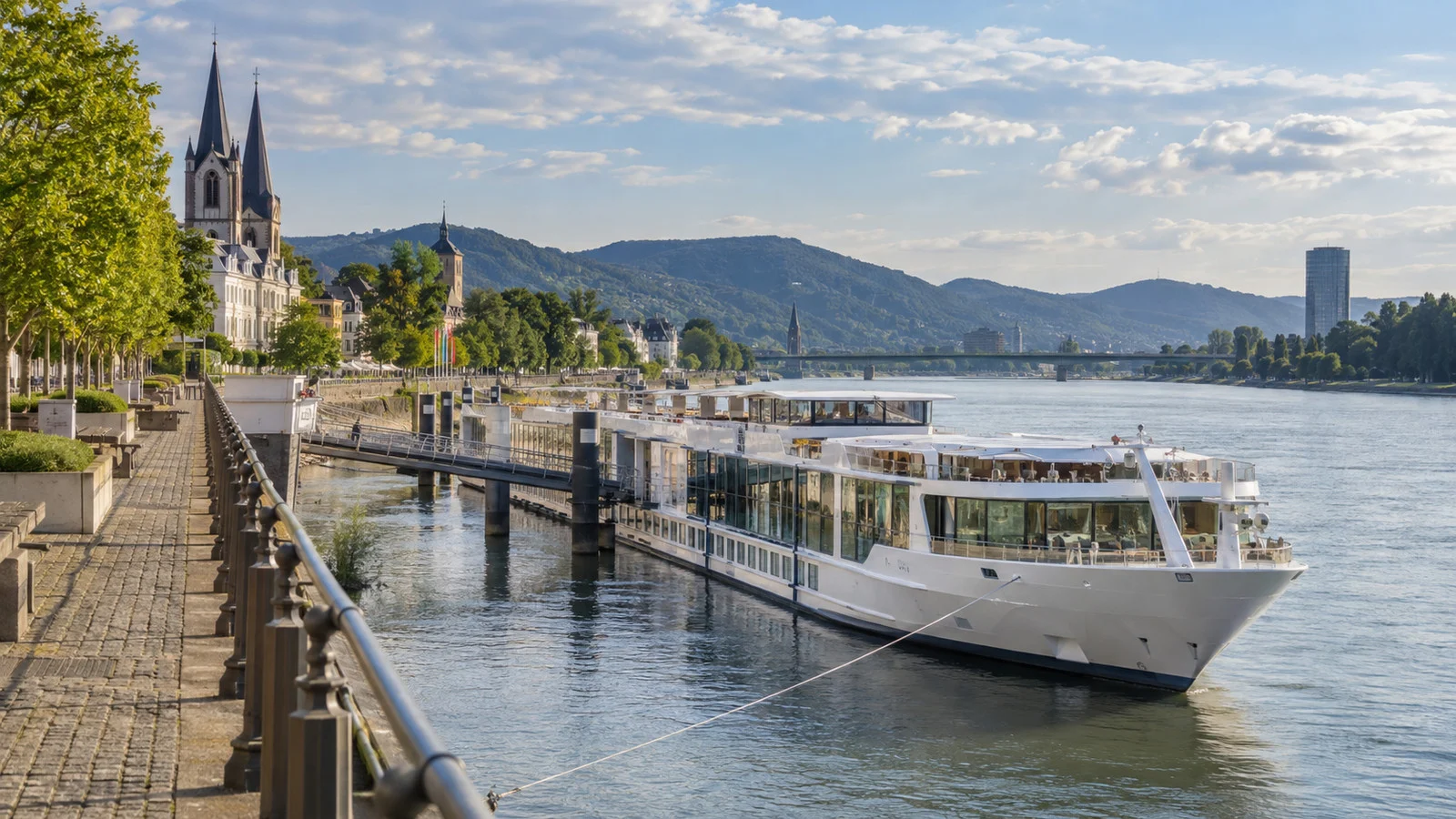
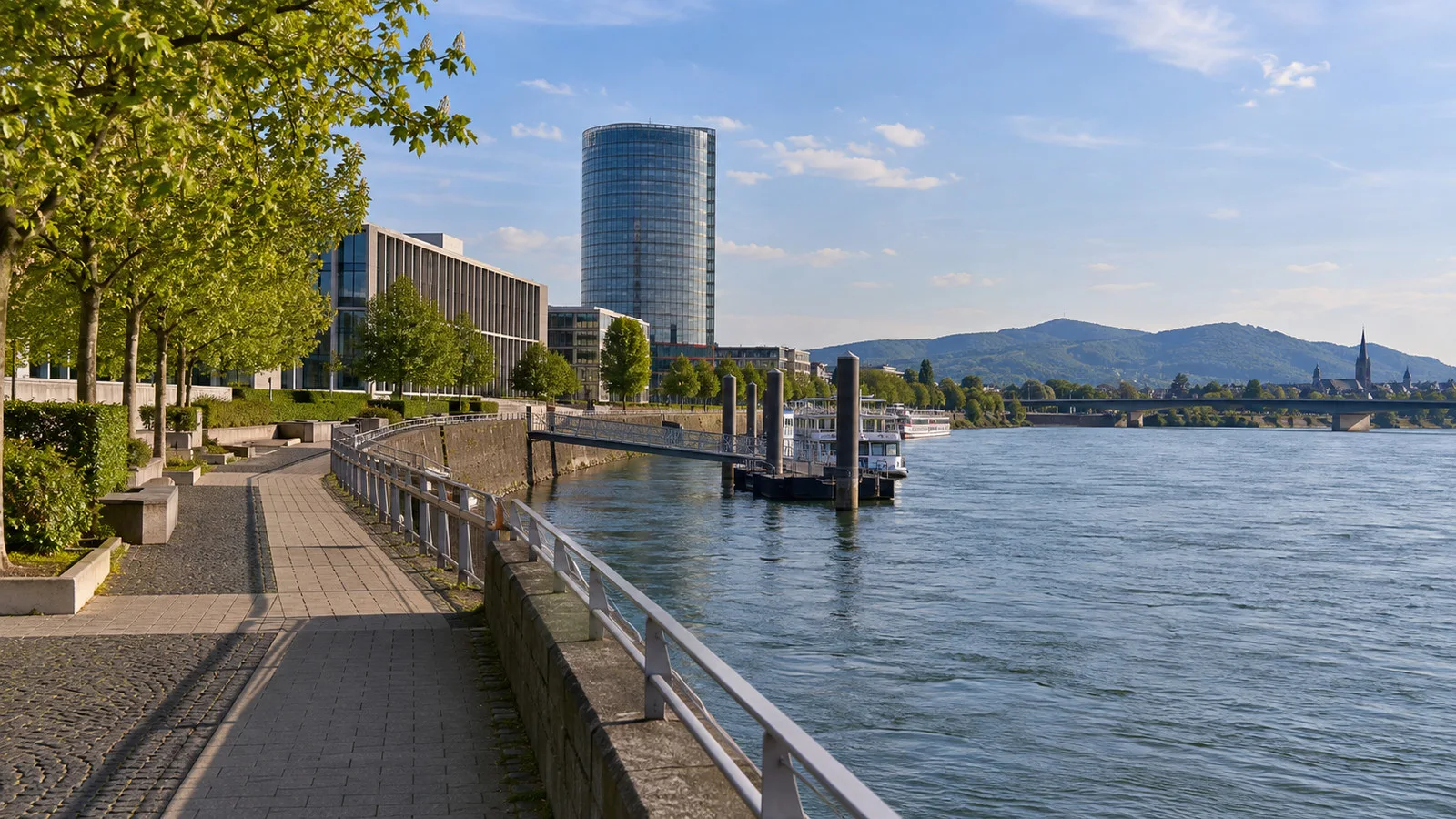
Bonn has passenger landing stages along the Rhine near the central riverfront, including the Alter Zoll area used by local sightseeing vessels. Hotel ships and river cruise vessels may use different positions, so do not assume every operator places its gangway at the same point.
Water levels, river traffic, rafting arrangements, and local assignments can change the final location. The cruise line’s app, daily program, or reception desk is the reliable source for your call’s berth, excursion meeting point, and departure deadline.
Once ashore near central Bonn, the Rhine promenade provides an easy orientation line. The old center lies inland, while the Alter Zoll terrace offers broad river views toward the hills of the Siebengebirge.
The Best Independent Walking Route
Begin at the riverfront and climb gently toward Alter Zoll, the former customs bastion beside the university’s historic main building. From there, continue into the center through the pedestrian streets toward Market Square and the Old Town Hall.
The market area is a natural pause for coffee, shopping, or a quick look at daily city life. Bonn’s center is active rather than museum-like, and the mix of students, government offices, residents, and visitors gives it more energy than its tidy scale suggests.
Beethoven-Haus on Bonngasse should be the priority for music lovers. Bonn Minster and Münsterplatz fit easily into the same central circuit, while the Rhine is never far away when it is time to turn back.
Allow more time than an online map suggests because historic streets, crossings, browsing, and attraction entry all slow the pace. Photograph the gangway area before leaving and set a personal turnaround time earlier than all aboard.
Beethoven-Haus
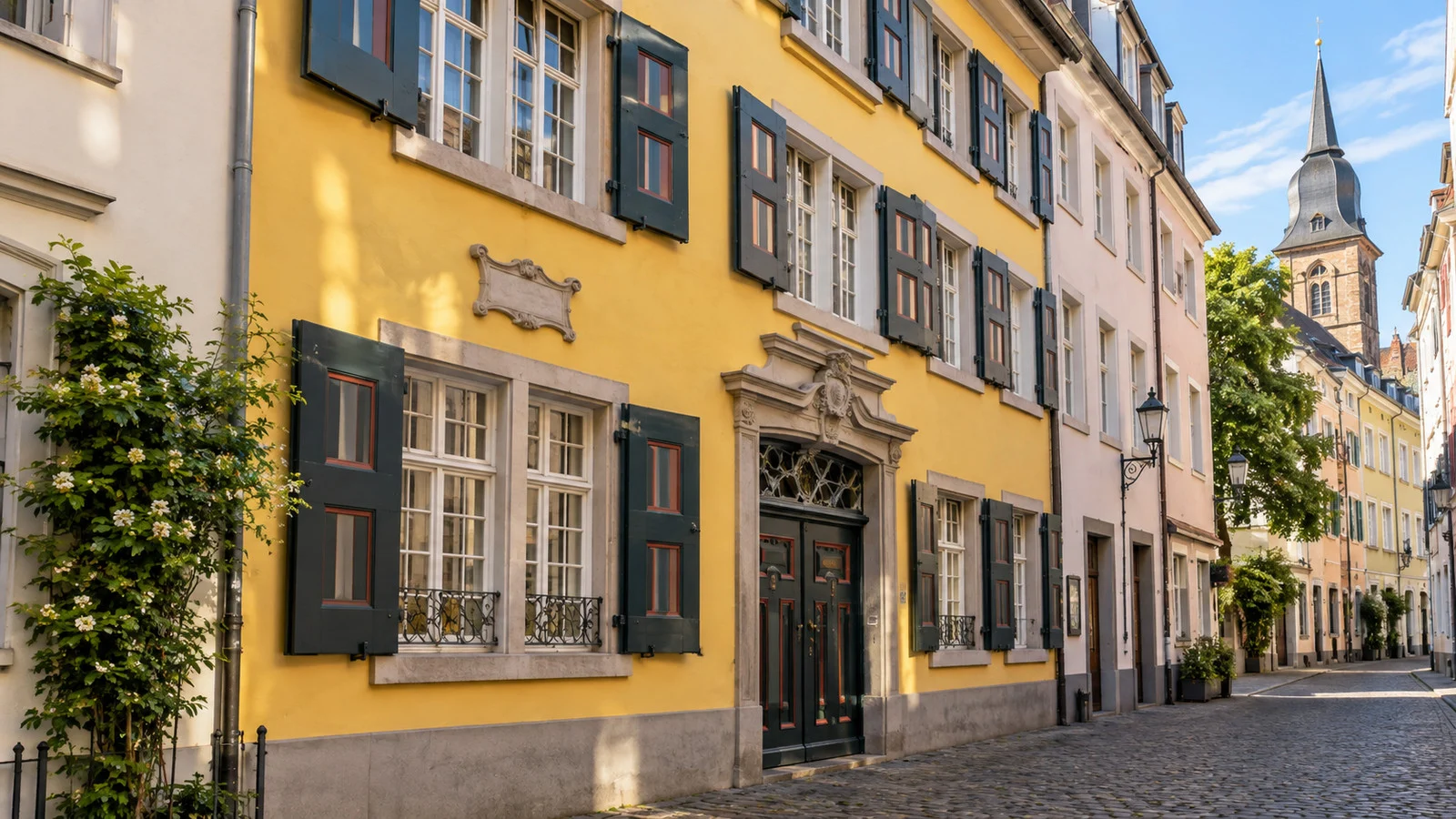
The Beethoven-Haus museum occupies the composer’s birthplace and neighboring buildings in the heart of Bonn. Its permanent exhibition uses original manuscripts, instruments, portraits, personal objects, and modern interpretation to explain Beethoven’s life, work, and influence.
The birthplace is an 18th-century house with earlier cellars, small rooms, level changes, and the intimate scale of a real family home. That setting makes the visit memorable, but it also requires more care than a purpose-built modern museum.
The museum’s published schedule is Wednesday through Monday from 10 in the morning to 6 in the evening, with Tuesdays reserved for prebooked groups. Holiday closures and special exhibitions can alter access or ticket prices, so check the official museum page for your date.
Online booking is useful during busy periods, especially when a temporary exhibition raises interest. A focused visit can fit into about an hour, while devoted music fans may want longer for the collection and media interpretation.
Bonn Minster and the Historic Center
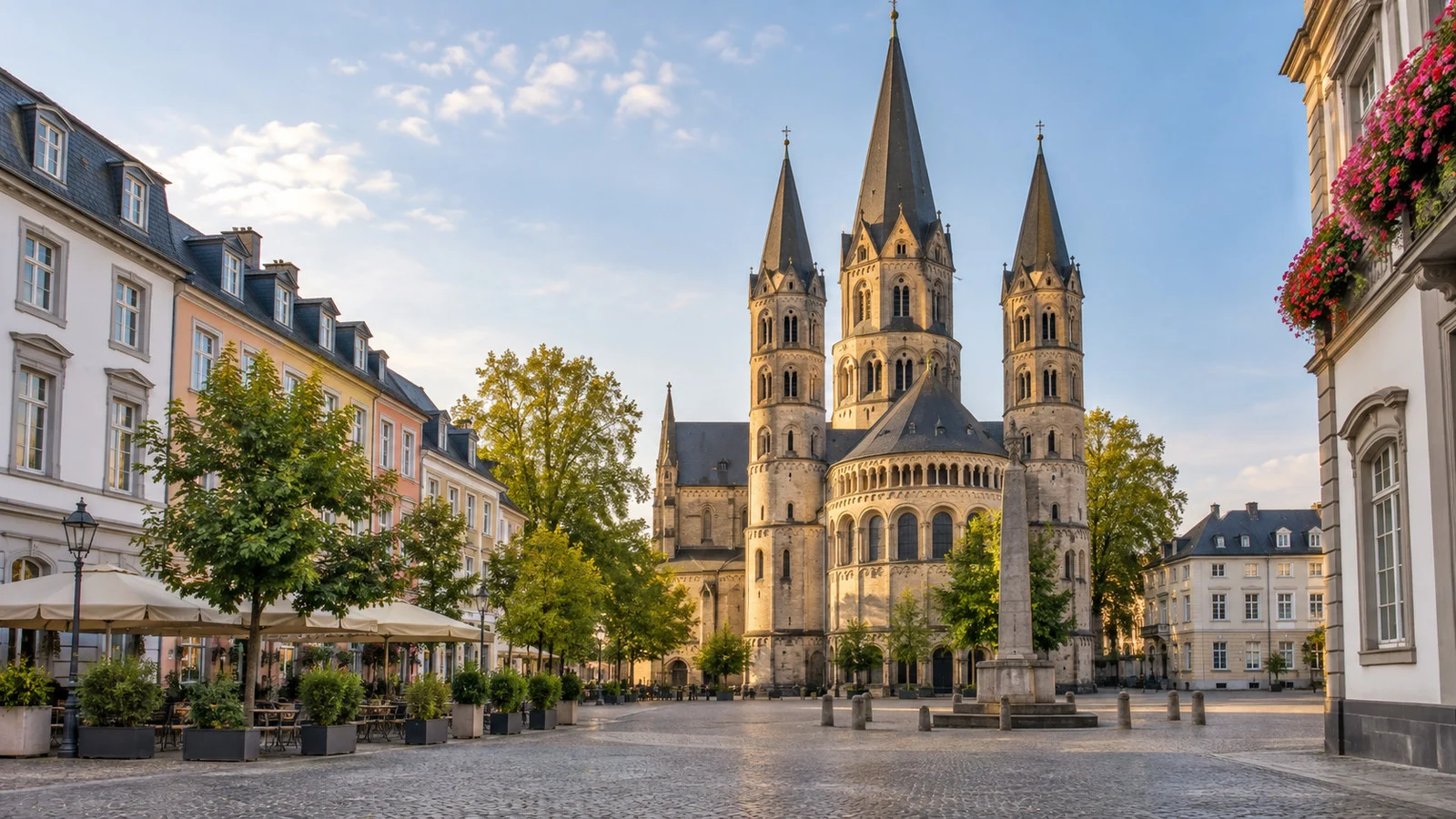
Bonn Minster is a major Romanesque church in the center and remains an active place of worship. Its origins and later layers span nearly a thousand years, and the cloister is one of the details worth seeking when access permits.
Visitor hours must yield to services, ceremonies, and parish needs. Consult the church’s official schedule if entry is important, dress respectfully, and keep voices low inside.
Münsterplatz is also home to the large Beethoven Monument and works as a convenient meeting point. Nearby pedestrian streets connect the church with shops, cafes, the market area, and the route back toward the Rhine.
Do not confuse Bonn’s officially named Altstadt neighborhood with only the central sightseeing zone. Cruise visitors usually mean the historic core around the market, minster, Bonngasse, and riverfront when they talk about walking the old town.
Bonn’s Capital-City Story
Bonn served as the capital of the Federal Republic of Germany from 1949 until the seat of government moved to Berlin after reunification. The city still retains federal institutions, international organizations, and several United Nations offices, which give this modest Rhine city an unusually global role.
Travelers interested in that period should consider Haus der Geschichte on the Museum Mile. Its exhibitions examine German history since 1945, and admission to the museum and exhibitions is currently free according to the institution.
The museum is south of the compact center, so use local transit or a taxi rather than treating it as an automatic extension of the main walk. Check the current exhibition program because renovation, installation work, or special events can affect what is open.
A short call is usually better spent downtown, while a longer call can support a deliberate Museum Mile visit. Choose one district as the focus instead of spending the day moving back and forth.
Ship Excursion or Independent Visit?
Bonn’s central sights are well suited to independent exploration when the ship lands near the city center. A guided excursion adds historical context and fixed timing, but it is not essential for travelers comfortable with maps and urban walking.
Book an organized tour when it includes a destination beyond central Bonn, when mobility support is clearly described, or when you value a specialist guide. Read the itinerary carefully to see how much time is allocated to Beethoven-Haus, the minster, museums, or free exploration.
Independent travelers gain flexibility for museum timing, cafes, and shopping. They also carry responsibility for monitoring the clock and handling any berth or schedule change announced by the ship.
Trips to Cologne or the Siebengebirge

Cologne is close enough by train to tempt travelers with a long call, but a second city adds station walks, platform time, and delay risk. If Cologne Cathedral is a priority, a ship excursion or itinerary that actually calls in Cologne is usually the cleaner choice.
The Siebengebirge hills and Drachenfels make another appealing regional outing south of Bonn. Reaching them requires transportation and enough time for the ascent, attraction, and return, so this is not the default plan for a short stop.
Check live rail and local transit information immediately before any independent side trip. Select a return service that leaves at least one viable backup and never let the final possible connection become your plan.
Public Transportation
Bonn’s buses and Stadtbahn light rail connect the center, main station, Museum Mile, Bad Godesberg, and nearby communities. Routes and stop patterns can change during construction or events, so use the local SWB or regional VRS journey planner for live information.
Beethoven-Haus identifies Bertha-von-Suttner-Platz as its nearby transit stop, with multiple tram and bus routes. The museum is also within walking distance of Bonn’s main railway station, though the route from your ship depends on the actual berth.
Validate or activate the correct ticket as required by the fare system. If the machine or app is unclear, ask staff before boarding rather than assuming a payment card tap automatically creates a valid fare.
Accessibility and Comfort
Central Bonn is relatively flat, but cobbles, curb transitions, crowds, and uneven older paving can make a short distance tiring. River height also changes gangway steepness, so request exact boarding information from the cruise line.
Beethoven-Haus warns visitors about low ceiling beams, unusual stair spacing, and different floor levels in its listed historic building. Contact the museum directly about current accessible routes and assistance rather than relying on a general statement about the site.
Haus der Geschichte provides dedicated accessibility information and is a more modern museum environment. The trip there still requires transit or a vehicle, so include that connection in your evaluation.
A comfortable lower-effort plan stays along the Rhine, uses Alter Zoll for the view, and makes a short loop through the market area. Add indoor sights only when their access works for your needs and the ship’s timing.
Food, Drinks, and Shopping
Bonn’s center has bakeries, cafes, restaurants, and market stalls that fit a port call better than a remote attraction meal. A bakery lunch or coffee and cake is easy to manage when time is limited.
Regional menus may feature hearty German dishes, seasonal produce, local beer, and wines from nearby Rhine and Ahr growing areas. Kitchen hours vary, and some restaurants pause between meal services, so confirm before sitting down.
Cards are common, but a modest amount of euros remains useful for small businesses, markets, or public restrooms. Keep coins handy and avoid assuming every vendor accepts the same mobile wallet.
Beethoven-themed souvenirs are easy to find near Bonngasse and Münsterplatz. Museum-shop purchases are a more meaningful choice than generic city merchandise if music is the reason for your visit.
Weather and Safety
Rhine cruise weather can shift from sun to cool rain quickly during spring and fall, while summer afternoons may be warm. Carry a light waterproof layer, water, and comfortable shoes with good grip.
Bonn is a normal university and administrative city, so use ordinary urban awareness in busy shopping areas and around the station. Keep valuables secure, especially in crowds or on public transportation.
Germany’s emergency number for fire and ambulance is 112, while police can be reached at 110. Save the ship’s local contact details as well because the onboard team is often the best first call for a delayed return.
How to Use a Short Call
With roughly two hours ashore, choose Beethoven-Haus or an exterior-focused city walk rather than trying to do both museums and the minster. Keep the riverfront, market, and one headline attraction as the core.
With three to four hours, combine Beethoven-Haus with Bonn Minster, Market Square, and a relaxed cafe stop. A longer visit can include Haus der Geschichte, but only when transportation and opening hours fit cleanly.
Do not fill every minute on paper because admission lines, temporary closures, and walking detours are normal. A spare half hour is more valuable than one final rushed sight when a ship departure is fixed.
Returning to the Ship
Note the official all aboard time before leaving and distinguish it from the sailing time. Cruise lines usually require passengers back earlier so the crew can complete departure procedures.
Stay aware of announcements if the ship is rafted beside another vessel because the route to your gangway may change. Allow extra minutes for security, crossing another ship, or navigating a waterfront event.
If you use trains or travel beyond central Bonn, start back early enough to survive one missed or canceled connection. A taxi is not a guaranteed rescue plan during busy periods, so keep the ship’s contact number available.
Final Take
Bonn succeeds as a river cruise call because its best stories are varied and approachable. Beethoven’s birthplace, a nearly thousand-year-old minster, postwar German history, a lively center, and a handsome Rhine promenade can all shape a good day.
Confirm the berth, choose one clear focus, and leave distant side trips for a genuinely long call. Bonn rewards travelers who slow down and listen to the city rather than treating it as a smaller version of Cologne.
Research note: This guide draws on official information from Beethoven-Haus Bonn, Haus der Geschichte, and Bonn Minster. Port and visitor details can change; confirm the berth with your cruise line and live access information with the relevant operator.