New York City River Cruise Port: Hudson Small-Ship Guide
New York City is the rare river-cruise port where the hardest part is not finding the river. It is figuring out which of Manhattan’s many numbered piers, terminals, marinas, ferry landings, and sightseeing docks your small overnight ship actually means.
This guide is only for Hudson River small-ship cruises that embark, disembark, or call in New York. For Norwegian, MSC, Cunard, Princess, Royal Caribbean, and other ocean departures, use our separate NYC Cruise Port guide.
New York City River Cruise Port Quick Facts
Into Town: Final documents control. Small Hudson ships may use a Manhattan waterfront berth; included hotel transfers often deliver embarking guests directly to the vessel.
Currency and Language: U.S. dollar; English is primary, with Spanish and many other languages widely spoken. Cards and contactless payment are standard.
Time Zone: Eastern Time: EST (UTC-5) in winter and EDT (UTC-4) during daylight saving time.
Call reliability: Severe weather, Hudson conditions, berth restrictions, security, or operational changes can shift, shorten, or cancel the city call. No audited local missed-call rate is published.
Are Hudson River Cruises Active in New York in 2026?
Yes. American Cruise Lines’ current Hudson River schedule lists 2026 summer and fall cruises between New York and Albany, plus date-specific programs that include New York as a call.
The current schedule includes 2026 Hudson sailings and a New York-to-Albany fall-foliage departure, with later seasons also listed. New York can be the beginning, middle, or end of a program depending on the sailing and direction.
American also scheduled a 32-day Revolutionary War journey in October 2026 that uses New York during a multisegment trip. These are overnight domestic small-ship itineraries, not Circle Line laps, dinner cruises, commuter ferries, or one-hour Statue of Liberty boats.
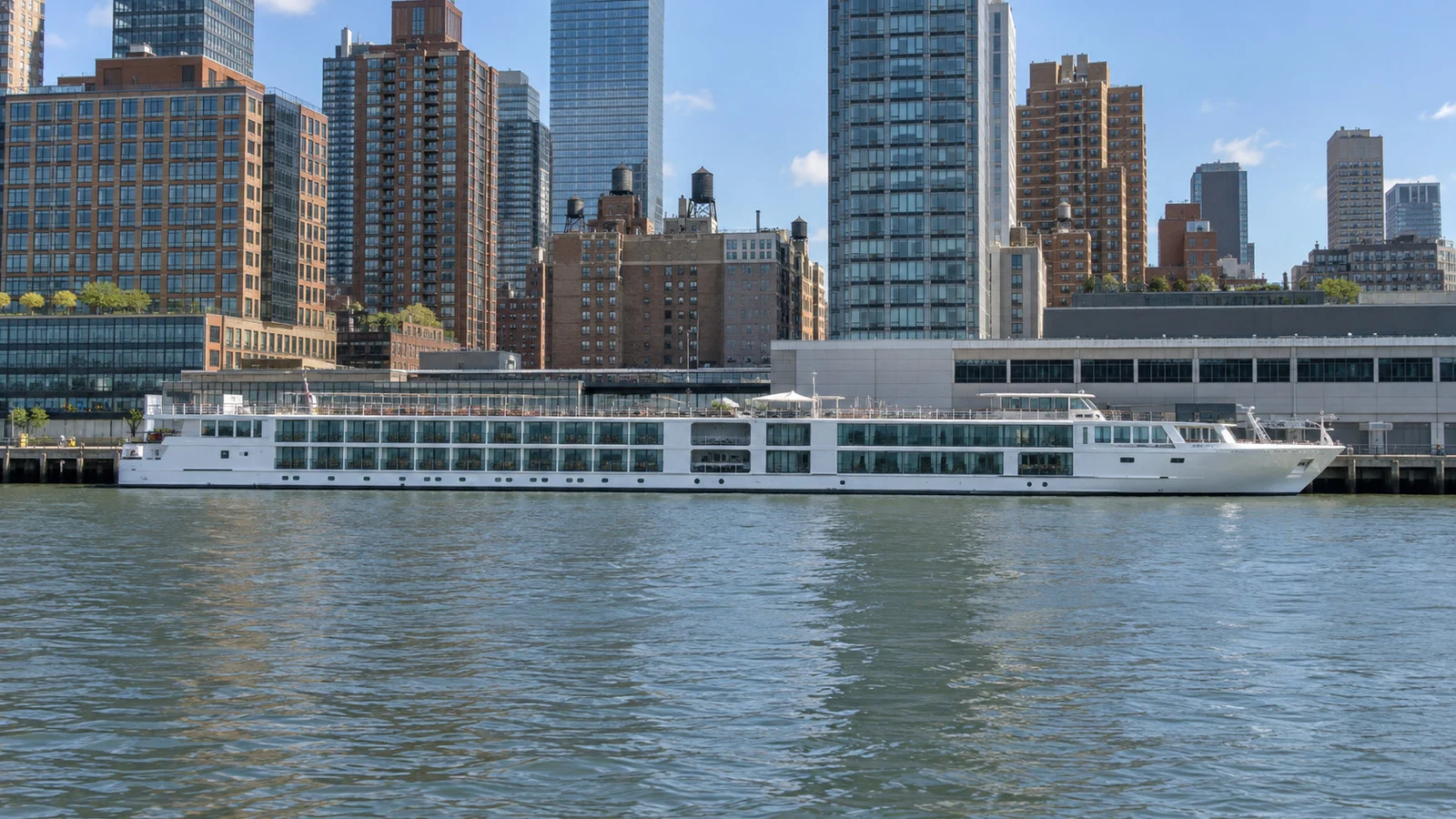
The line markets vessels around 100 to 130 passengers on many Hudson programs, with ship assignment varying by date. A small passenger count makes the experience intimate, but it does not create a permanent private terminal in Manhattan.
“New York, NY” Is a Destination, Not a Pier Address
American Cruise Lines publicly identifies New York as a start, finish, or call, but its current consumer itinerary does not assign every 2026 sailing to one permanent numbered pier. Final documents, the included hotel transfer notice, and same-day operator communication should control.
Berth availability can depend on vessel, date, port permissions, security, tide, commercial traffic, special events, and other ships. A location used on last October’s sailing is evidence of last October, not a boarding pass for next June.
Do not ask a driver for “the New York river cruise port.” Show the exact pier number, cross street, terminal name, operator, and vessel from your final paperwork.
If those documents do not name a pier, contact the cruise line rather than selecting the most convincing map result. New York has mastered the art of placing three unrelated boats within one confidently wrong search radius.
The Included Hotel Transfer Changes the Embarkation Plan
For new American Cruise Lines bookings made on or after August 7, 2025, the line’s current FAQ says a one-night hotel stay, luggage service, and transportation to the ship are included. The 2026 New York departure page specifically describes a downtown hotel, breakfast, ship transfer, and luggage delivered to the stateroom.
That means the hotel is the operational meeting point for many Hudson embarkations. Travel from the airport or train station to the assigned hotel, follow the luggage-tag instructions, and board the line’s transfer at the stated time.
Do not send checked bags to a guessed pier or leave the hotel independently because a map makes the waterfront look close. The transfer may be timed to a security window or berth that the public itinerary never names.
Policies can differ for older reservations, charters, linked segments, and passengers who decline an included stay. Read your confirmation, because “included for new bookings” is not the same as “identical procedure for every guest.”
Manhattan Cruise Terminal Is Not the Default Answer
The official Manhattan Cruise Terminal occupies Piers 88 and 90 between West 48th and West 50th Streets, with its main office at 711 12th Avenue. It is the big facility most travelers find when they search “New York cruise terminal.”
Cruise NYC confirms that Piers 88 and 90 are operational and equipped for passenger processing, security, baggage, customs, and large vessels. The terminal can also receive some smaller cruise ships, so ship size alone neither proves nor rules out its use.
What the official terminal page does not do is assign every Hudson River departure to Pier 88 or 90. Unless your cruise documents name the Manhattan Cruise Terminal, do not drive there merely because it is a cruise terminal on the Hudson.
Brooklyn Cruise Terminal in Red Hook and Cape Liberty in Bayonne serve different operations across a large harbor. A Hudson itinerary labeled New York should not be redirected to either without explicit operator instructions.
Why Chelsea Piers Creates So Much Confusion
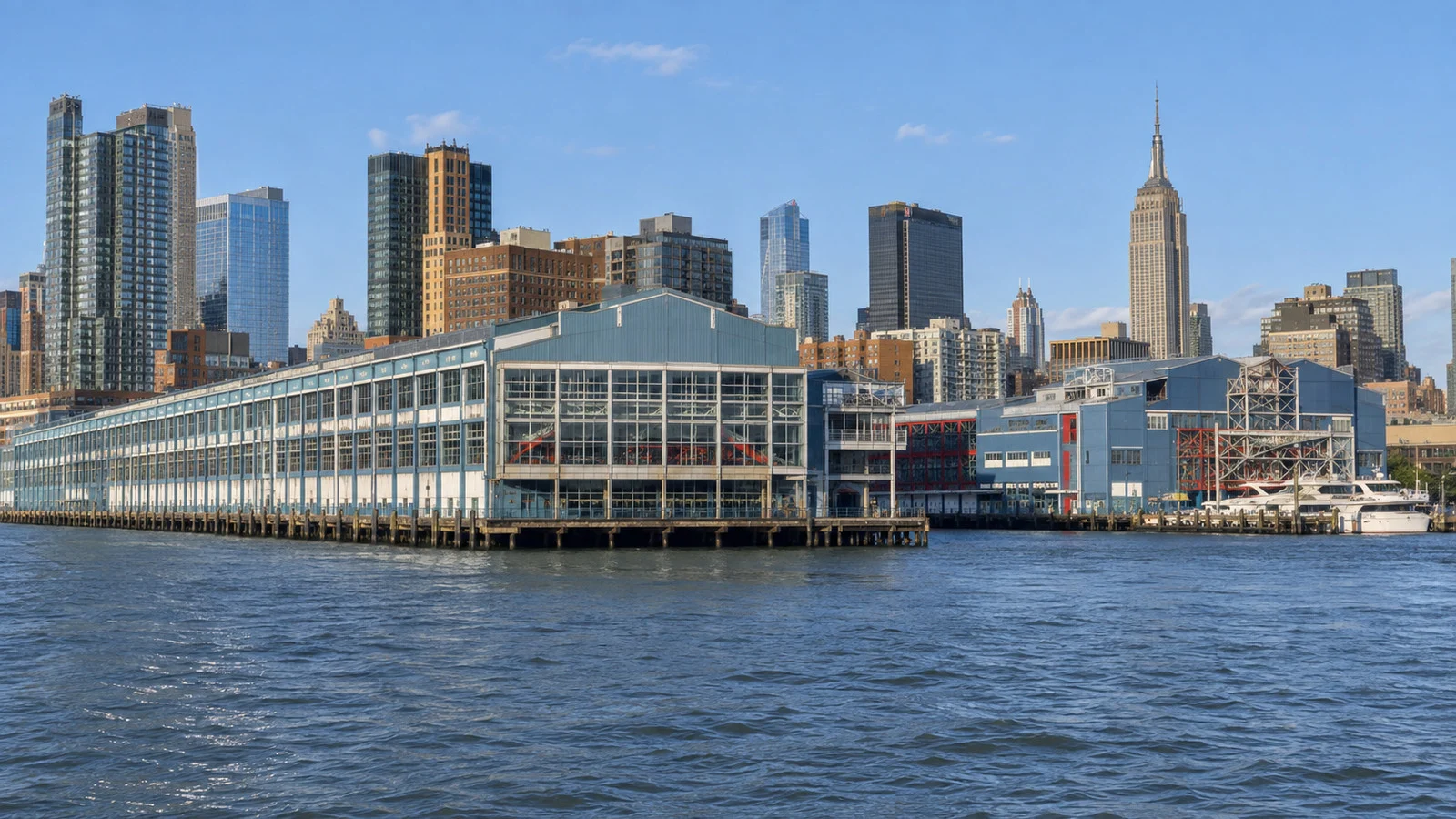
Chelsea Piers spans Piers 59, 60, and 61 around West 18th to West 22nd Streets, with Pier 62 immediately north in Hudson River Park. The complex contains sports, event, dining, marina, and excursion-boat operations, not one generic passenger terminal.
City Cruises officially boards several sightseeing and dining products at Pier 61. Classic Harbor Line identifies Pier 62 as its Manhattan sailing location, while adjacent event venues use Pier 59, 60, or 61 addresses.
Those official listings prove where those local products board. They do not prove an American Cruise Lines overnight vessel will use the same pier on your date.
If final documents do name Chelsea Piers, read the number and cross street twice. “Meet at Chelsea Piers” without the pier number is like agreeing to meet “at the airport” and hoping destiny handles the terminal.
Sightseeing Docks Are Not River-Cruise Berths
Manhattan’s west side also has Circle Line at Pier 83, excursion boats around Chelsea, ferry slips, marinas, and seasonal charter locations. Lower Manhattan adds Battery Park and North Cove operations, while the East River and Brooklyn waterfront contribute even more plausible-looking pins.
A skyline cruise ticket page may use the words Hudson River and cruise, yet describe a boat returning after 90 minutes. Match the operator name and vessel, not just the activity words.
NYC Ferry is public transit and uses its own landings. A ferry schedule cannot confirm that an overnight cabin ship may occupy the same float.
What Embarkation Day Usually Looks Like
American’s current general instructions say guests normally board between 11:30 a.m. and 12:30 p.m., with departures at 2 p.m. or earlier if everyone has arrived. Your date-specific hotel transfer or cruise documents outrank that general window.
Place the line’s current luggage tags on bags before hotel collection, remove tags from an older cruise, and keep medication, passport or identification, electronics, valuables, and a change of clothes with you. Crew normally moves tagged luggage to the stateroom.
Domestic itineraries still require the identification specified by the line, and a coastal segment may have different documentation from a purely Hudson schedule. Do not assume “never leaves New York State” without checking the full itinerary.
Complete required forms before the transfer and keep the vessel name visible on your phone. Manhattan traffic is not the ideal setting for discovering that your confirmation lives only in an email attachment that refuses to load.
If You Must Reach the Pier Independently
First obtain the exact address and approved arrival time from the operator. Then send the location to everyone in the party and compare the pier number with the cross street.
A taxi or licensed rideshare is simplest with luggage, but street closures and West Side Highway traffic can add substantial delay. Leave at least 30 to 45 minutes beyond the app’s initial estimate for a same-borough hotel transfer.
That buffer is an editorial planning recommendation, not a prediction. Rain, a major event, a large-ship turnaround, road work, or a blocked cross street can turn a short map line into a small urban epic.
Use only official taxi lines or rideshare pickup procedures at airports and stations. The Port Authority specifically warns travelers not to accept unsolicited ride offers from airport hustlers.
Subway and Bus Basics
The subway is excellent for reaching Manhattan, but no line runs directly along the Chelsea or Midtown Hudson edge. The final leg often requires a crosstown bus, taxi, or a walk with busy avenues and the Hudson River Greenway to cross.
As checked September 12, 2026, the MTA base fare is $3 for subway and local bus service, with OMNY contactless payment. Use the same card or device for each traveler only as the current fare system allows, because fare caps and transfers are tied to the payment credential.
The M23 SBS serves the West 23rd Street corridor and enters the Chelsea Piers area, which is useful only if your confirmed destination is there. A Manhattan Cruise Terminal assignment farther north needs a different route.
Elevator outages and weekend service changes can break an otherwise step-free plan. Check the live MTA trip planner and elevator status before leaving the hotel.
Penn Station and Grand Central
Moynihan Train Hall and Penn Station are the most convenient rail hubs for Amtrak travelers and sit around West 31st to West 33rd Streets. A Chelsea waterfront location can be roughly 10 to 25 minutes by vehicle or 25 to 40 minutes on foot, depending on the exact pier and traffic.
Grand Central Terminal is on Manhattan’s east side and needs a crosstown trip. Allow roughly 20 to 45 minutes by vehicle to a west-side berth, with event traffic capable of making that estimate look adorably optimistic.
Those are editorial ranges, not guaranteed transfer times. If an included hotel stay applies, go to the hotel rather than bypassing it for the waterfront.
JFK, LaGuardia, and Newark Airports
JFK, LaGuardia, and Newark Liberty can all serve a Manhattan embarkation, but none deserves a same-day, tight connection to a small ship. Construction, weather, bridge and tunnel traffic, rail disruptions, and baggage delays stack risk quickly.
The Port Authority airport hub links the current airport websites and ground-transport information. JFK generally works well with AirTrain plus Long Island Rail Road to Penn Station, while Newark can use AirTrain and New Jersey Transit when the live service plan permits.
LaGuardia relies on bus connections, taxis, and rideshares rather than a direct rail station. Always check the airport’s current construction and pickup instructions before choosing ground transportation.
For a Midtown or Chelsea hotel, plan about 30 to 75 minutes from LaGuardia, 45 to 100 minutes from JFK, and 40 to 90 minutes from Newark by road. These broad editorial ranges deliberately include ordinary congestion but cannot absorb a major incident.
Arrive at least one day early, which aligns neatly with the included hotel model. Our hotels near New York cruise ports guide can help compare neighborhoods, but your operator’s assigned property controls when a hotel stay is included.
Driving and Parking
Do not reserve Manhattan Cruise Terminal parking until the line confirms that terminal. A small ship using another berth can leave you and your luggage inconveniently separated from both car and vessel.
Chelsea Piers has commercial parking, but its rate, access, height, event demand, and overnight permission need direct confirmation. Nearby garages are not automatically suitable for a weeklong stay or an oversized vehicle.
Manhattan’s congestion-pricing zone, garage rates, tolls, and traffic can make rail or a one-way car service simpler. If you drive, reserve only after receiving the exact boarding point and ask whether the ship returns to the same city.
A New York-to-Albany itinerary is not roundtrip transportation. Leaving a car in Manhattan makes little sense when the final morning is several hours north unless you have a deliberate return plan.
Disembarking in New York
American says most ships reach the final port the evening before the official disembarkation morning, with breakfast served and guests generally leaving by 8:30 a.m. This is a general practice, not permission to book a flight based on an assumed overnight arrival.
The line also states that a complimentary ship-to-airport transfer is provided at the end of a cruise, with schedules confirmed onboard. Verify which airports are served, the departure window, luggage procedure, and whether your flight meets the operator’s minimum time.
A New York call in the middle of a cruise is different from disembarkation. Guests may have an organized city excursion, independent time, or a transfer directly from the vessel, so follow that day’s program.
Accessibility for Small-Ship Embarkation
Accessibility begins with the actual berth, gangway, tide, and vessel, not with New York’s general transit network. A floating dock may change angle, while a fixed pier can still require a steep gangway or narrow transition.
Ask the cruise line about your specific wheelchair or scooter, gangway width and slope, boarding assistance, elevator access onboard, accessible cabin route, coach lift, hotel room, and luggage handling. Confirm again near departure because a berth change can alter the path.
The included hotel transfer may be the easiest sequence if the assigned coach and hotel are accessible. Do not independently substitute public transit until the line confirms that your mobility device, transfer, and new meeting plan are compatible.
New York buses are accessible and many subway stations have elevators, but the network is not universally step-free. Compare our wheelchair-friendly cruise ports guide, then rely on live MTA elevator status and cruise-line confirmation.
Hudson Conditions and Weather
The lower Hudson at Manhattan is tidal, busy, and exposed to wind around the harbor. Current, tide, fog, thunderstorms, coastal weather, and marine traffic can affect maneuvering or the sailing schedule.
Summer brings heat, humidity, and sudden storms, while October can deliver glorious foliage weather, cold rain, strong wind, or all three before lunch. Pack layers and a waterproof outer shell if deck time matters.
High or low water farther north can alter Hudson Valley landings even when New York itself remains accessible. An itinerary change at Kingston, Albany, or Sleepy Hollow does not automatically mean the New York endpoint moves, and the reverse is also true.
Travel insurance should be read for missed connections, itinerary changes, and independent hotel costs rather than assumed to cover every disappointment. The passenger contract and operator notice determine remedies.
Safety on the West Side Waterfront
Keep luggage close in hotel lobbies, curbside areas, stations, and crowded piers. Do not hand a bag to someone unless the uniform, transfer manifest, or ship staff clearly identifies the service.
The Hudson River Greenway is a busy bicycle route between Manhattan and the water. Cross at marked points, look both ways, and do not stand in the bike lane while studying a pier sign.
Stay behind gates and barriers around working berths, and never step onto a sightseeing vessel to ask whether it is your overnight ship. Call the cruise line before improvising access through a secured pier.
Call 911 for police, fire, or medical emergencies. For a transfer delay, misplaced luggage, or wrong pier that is not an emergency, use the cruise line’s day-of-travel contact.
What to Do Near the Ship Without Repeating a Full NYC Guide
If your documents confirm a Chelsea-area berth and independent time, the High Line, Chelsea Market, Little Island, and Hudson River Park are nearby. Exact walk times depend on the pier entrance and can range from roughly 10 to 30 minutes.
If you are at the Manhattan Cruise Terminal, the Intrepid Museum is the closest major attraction and Midtown lies east. A berth elsewhere changes the entire list, which is why this article refuses to build a port day around an imaginary gangway.
Do major New York sightseeing during the included pre-cruise hotel day rather than after luggage transfer begins. Once the group is moving to the ship, staying with the plan is far more relaxing than attempting one last Broadway-adjacent bagel quest.
A Practical New York Hudson Embarkation Plan
Arrive the day before, check into the assigned hotel, attach current luggage tags, and confirm the morning collection and transfer time. Keep essentials in a small personal bag that stays with you.
On embarkation morning, eat breakfast, settle the hotel bill for extras, and be in the designated meeting area early. Let the included transfer solve the pier question unless the operator explicitly instructs independent arrival.
If disembarking in New York, confirm airport-transfer timing onboard before buying a tight rail or flight connection. Add a post-cruise night when a delay would jeopardize an expensive international ticket.
Final Verdict
New York is an excellent Hudson River gateway because the skyline announces the voyage before the scenery turns green and quiet upriver. The operational trick is to treat “New York, NY” as a destination label until the cruise line supplies the real meeting point.
Use the included hotel transfer, distrust generic pier search results, and keep ocean terminals separate from small-ship logistics. In a city of eight million experts giving directions, your final cruise document still gets the last word.
Let the final document outrank every New York map pin
A Hudson small-ship itinerary can use an assigned Manhattan berth and included hotel transfer without publishing one permanent pier to consumers. Do not send luggage to Piers 88, 90, Chelsea Piers, Brooklyn, or Bayonne unless the date-specific cruise document names that place.
International visitors need the U.S. visa or ESTA required for their passport, and a domestic cruise does not waive entry rules. Arrive at least one night early, keep identification and medicine in hand luggage, and protect the flight home with a post-cruise buffer when the ticket is separate.
Ask the line about hotel-transfer fees or inclusion, baggage limits, gratuities, parking, check-in, and same-day contact before travel. A rideshare is the practical independent backup, but West Side traffic, events, security windows, and pier entrances require more time than the first app estimate.
Accessibility depends on the assigned dock, tide, gangway, ship, coach, and hotel as one continuous route. Confirm a specific wheelchair or scooter in writing, then recheck after any berth change because an accessible ocean terminal does not prove a temporary small-ship landing is accessible.
How this guide was researched: No firsthand sailing is claimed; current schedules, embarkation guidance, terminal records, fares, and airport information were checked against American Cruise Lines, Cruise NYC, the MTA, and the Port Authority of New York and New Jersey. Operational and time-sensitive details were reviewed September 12, 2026.
Confirm the live berth, daily program, entry rules, accessibility, and cancellation terms before travel; see our Editorial Policy.