Iquitos and Nauta River Cruise Port: Amazon Embarkation Guide
An Amazon cruise “from Iquitos” often begins with an airplane, an airport greeting, and a two-hour road trip before the ship appears. It is a perfectly sensible system once somebody explains that the river-cruise gateway and the river-cruise gangway may be in different towns.
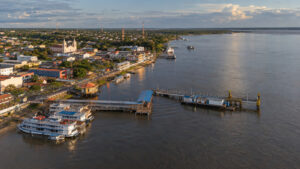
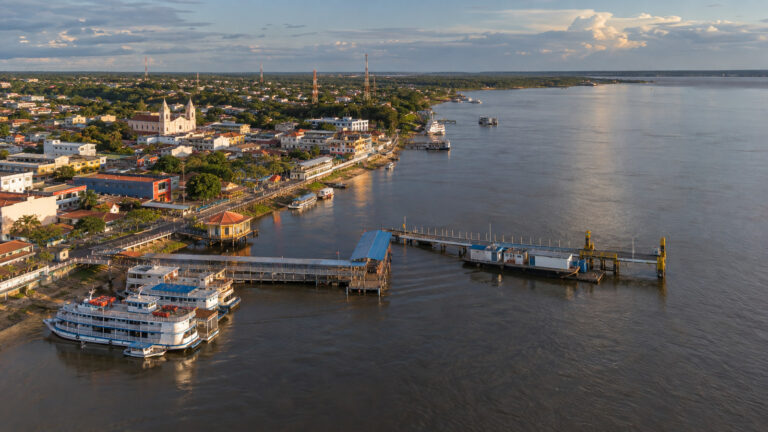
Iquitos supplies the airport, hotels, city services, and most operator meeting points. Nauta, about 65 miles south by road, supplies the common embarkation base on the Marañón River for ships heading toward the Pacaya Samiria National Reserve.
My quick take
Iquitos and Nauta form one active Amazon embarkation chain in 2026, used by Aqua Expeditions, Delfin Amazon Cruises, National Geographic-Lindblad Expeditions, and other regional operators. Many travelers never board a cruise ship in central Iquitos even though every booking page calls the journey an Iquitos Amazon cruise.
For most sailings, the operator meets recommended flights at Iquitos airport, groups passengers, and drives them to a private facility in Nauta. Selected Aqua itineraries instead list Iquitos Main Port, which is why copying another traveler’s embarkation address is an unusually adventurous form of trip planning.
Arrive in Iquitos at least one night early if your operator allows independent pre-cruise arrangements and provides a separate transfer plan. Same-day recommended-flight programs can work, but a delayed flight has fewer recovery options when the ship is already moving into the rainforest.
Quick facts
- Into Town: Most guests meet in Iquitos, then ride about two hours to Nauta; some Aqua itineraries instead board at Iquitos Main Port.
- Currency and Language: Peruvian sol and Spanish. English is used aboard international cruises; carry small soles for local tips and purchases.
- Time Zone: Peru Time, UTC-5 year-round, with no daylight saving time.
- Operational Notes: Flight disruption, road conditions, extreme river levels, or operational changes can alter the transfer, landing, or embarkation point.
No airline, port, road authority, or cruise operator publishes an audited missed-embarkation rate for this route. Check the operator’s current flight, meeting, transfer, and wharf instructions for your sailing.
Are Iquitos and Nauta active Amazon cruise ports in 2026?
Decisively yes. Aqua Expeditions’ current Amazon program lists the Aqua Nera and Aria Amazon, with embarkation options at its private Nauta wharf and at Iquitos Main Port depending on itinerary.
Delfin Amazon Cruises publishes 2026 itineraries for Delfin I, Delfin II, and Delfin III. Its current transportation policy says the package transfer runs from Iquitos airport to the port of Nauta, where the vessel departs.
National Geographic-Lindblad also operates year-round Upper Amazon expeditions. Its current itinerary flies guests to Iquitos and then continues overland to Nauta, where Delfin II or Delfin III awaits.
These are active multi-day expedition cruises, not generic jungle tours that happen to use a motorboat. The ships carry cabins, dining rooms, crews, naturalists, and excursion skiffs for exploring narrower waterways.
Iquitos versus Nauta in one minute
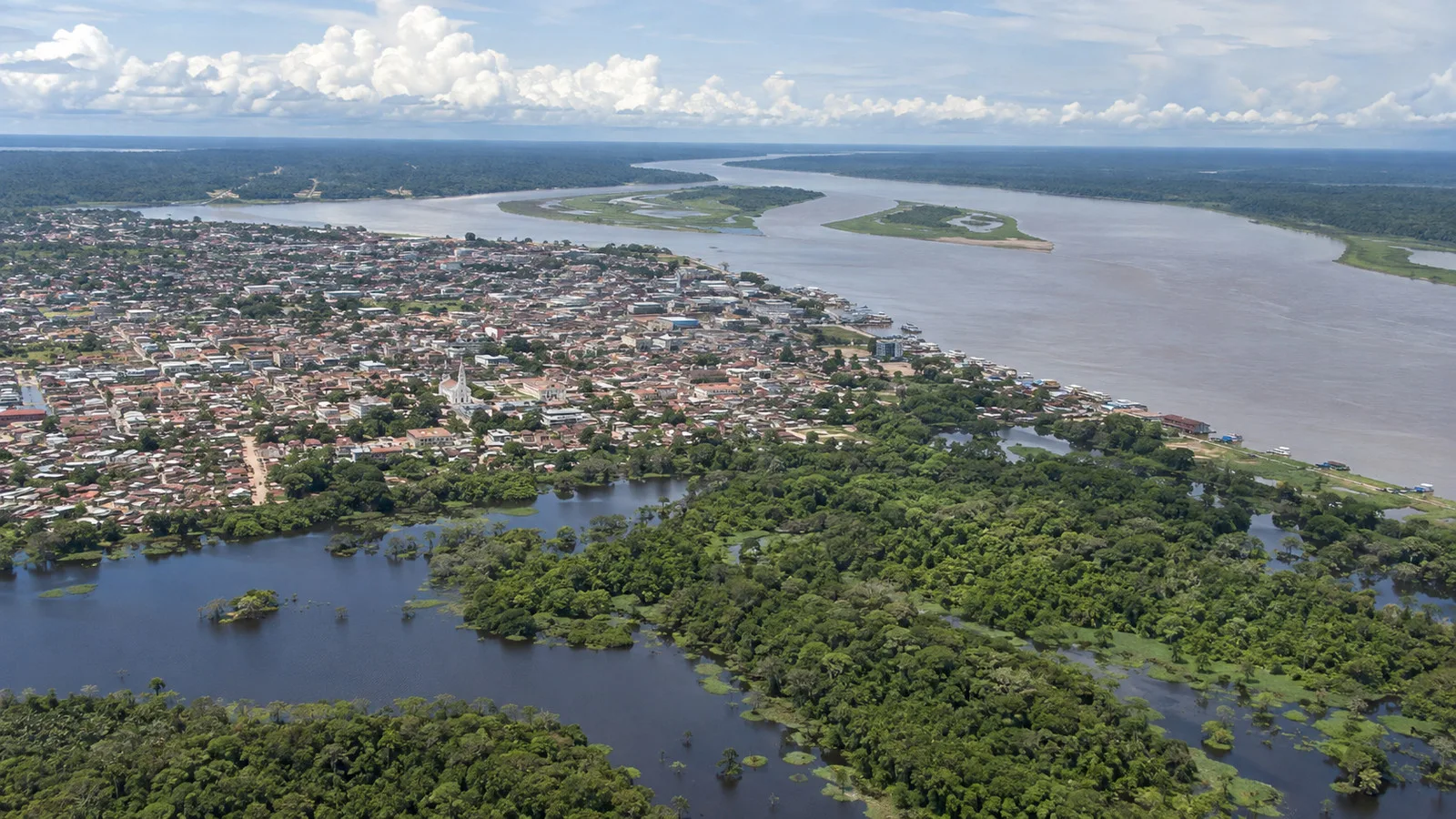
Iquitos is the major city and aviation gateway, served by Coronel FAP Francisco Secada Vignetta International Airport, code IQT. It is surrounded by rivers and forest and has no conventional highway connection to Lima.
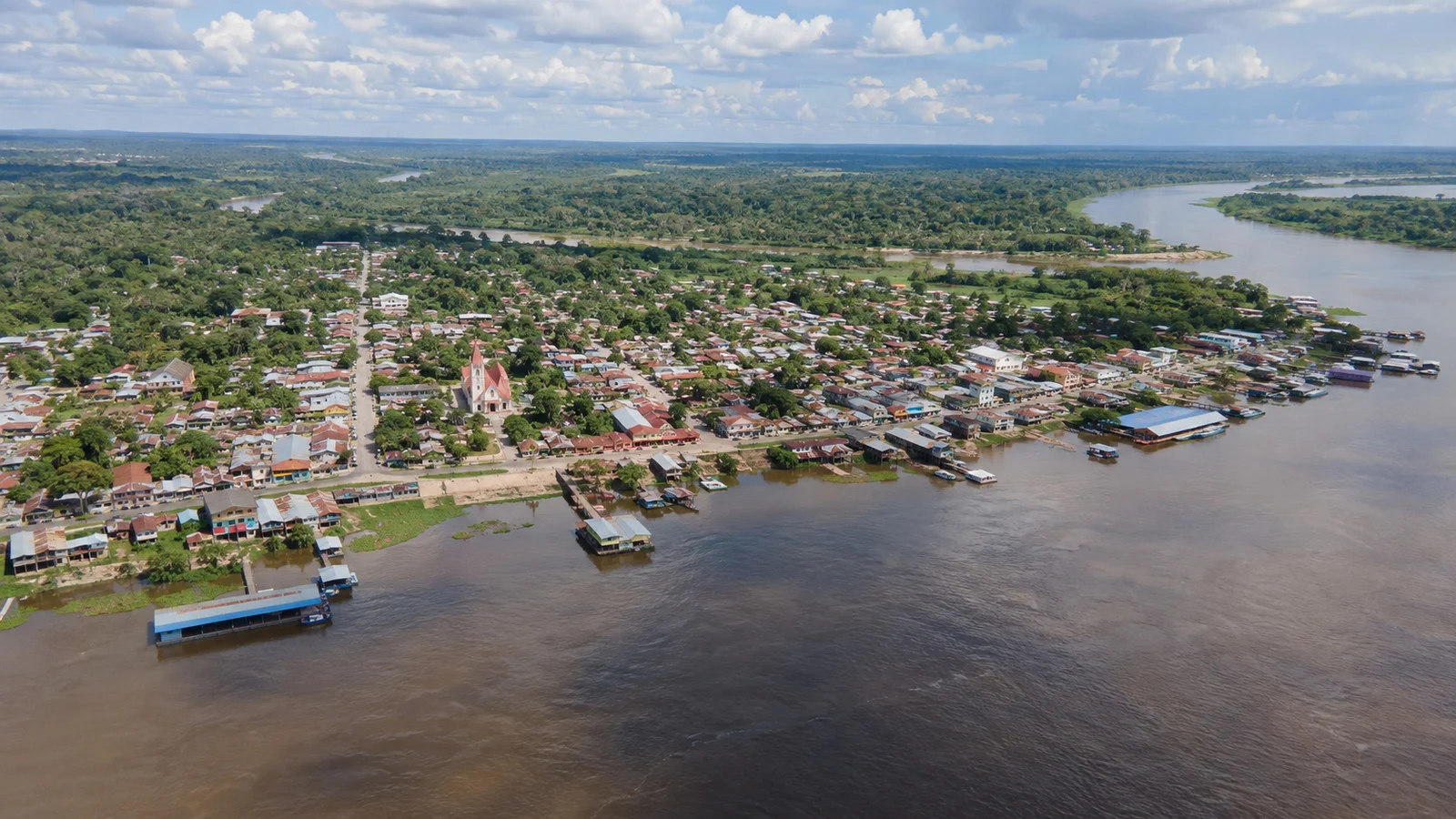
Nauta is a smaller river town reached from Iquitos along the paved Iquitos-Nauta road. It stands on the Marañón, close to the confluence region where the Marañón and Ucayali form the Amazon River under the most widely used geographic convention.
The Peruvian protected-areas service, SERNANP, gives the Iquitos-to-Nauta route as about 65 miles and about two hours by road. Cruise operators commonly quote roughly one hour and 45 minutes to two hours, depending on traffic, stops, and their facility.
So your booking may say “Iquitos” because that is where guests fly and meet. Your actual first step aboard may happen in Nauta because the town provides efficient access to the Marañón and Pacaya Samiria.
What happens at Iquitos airport?
Operators usually build a shared transfer around a recommended Lima-to-Iquitos flight. Staff meet arriving passengers, identify luggage, and move the group toward lunch, a short city program, a lounge, or the Nauta road according to the itinerary.
Recommended flight numbers and times change. Aqua currently publishes a suggested arrival around early afternoon, while Delfin ties included group transportation to its own recommended flights and warns that other arrivals may require added services.
Use the flight instructions issued for your departure date rather than the example on a general webpage. A screenshot taken months ago is not a boarding pass, and the Amazon is not known for holding ships while passengers debate that distinction.
If you arrive early, confirm whether the operator will collect you from an Iquitos hotel, return you to the airport meeting point, or charge for a private transfer. “Transfers included” often means included only inside a specific flight and meeting arrangement.
Should you stay overnight in Iquitos?
An extra night creates protection against missed domestic connections and gives you time to acclimate to heat and humidity. It also lets you see a city that cruise logistics can otherwise reduce to luggage claim and a van window.
Plaza de Armas, the Iron House, cathedral, historic buildings from the rubber-boom era, and the riverfront boulevard make a manageable central walk. Conditions vary by block, so use hotel advice for current routes, transportation, and after-dark plans.
Travelers connecting through Lima may also want a buffer there. CruisePorts.co’s Callao cruise port guide explains the airport, port, and city geography, while our Lima and Callao hotel guide helps with an overnight before the domestic flight.
Do not add an independent hotel night without checking the operator’s meeting instructions. The safe version is a planned buffer with a documented pickup, not quietly disappearing from the recommended-flight manifest and hoping everyone feels intuitive.
The road transfer from Iquitos to Nauta
The transfer uses the paved road south through Loreto’s lowland landscape. SERNANP describes the road as in good condition, but journey time can still change with traffic, rain, road work, stops, or local conditions.
Expect about two hours in an air-conditioned vehicle as a planning baseline, not a guarantee. Some programs include a lunch box, while others stop at a lounge or serve a welcome meal before embarkation.
Keep medication, passport, phone, a light rain layer, and anything needed that afternoon in a small personal bag. Large luggage may be handled separately, and opening the suitcase under everybody else’s carefully stacked bags is not an elegant way to begin an expedition.
Motion-sensitive travelers should sit where the ride feels most comfortable and use clinician-approved medication if needed. Road transfer vehicles, restroom stops, and seat-belt arrangements should be confirmed with the operator when they are consequential.
Where do ships embark in Nauta?
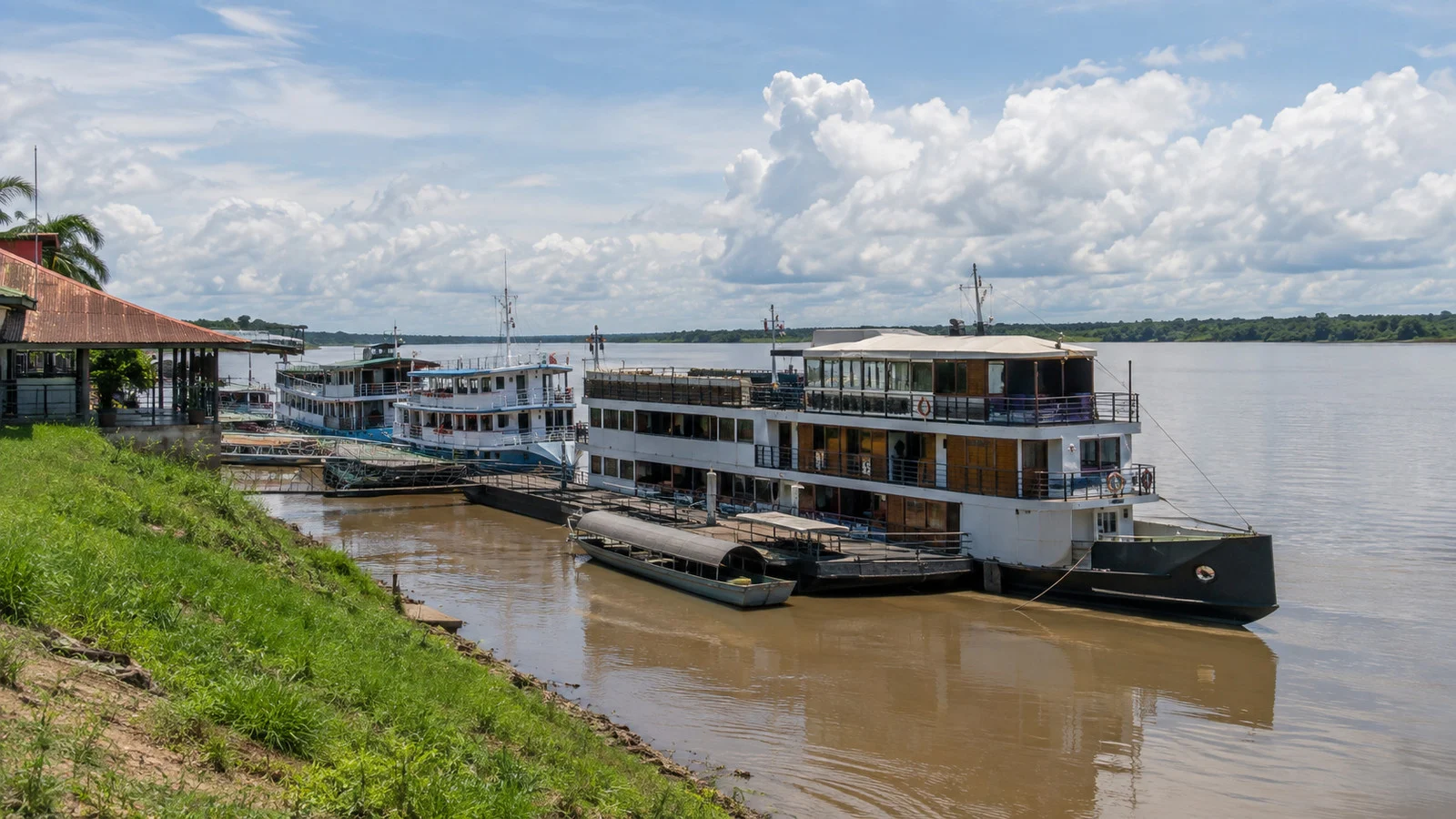
There is no single universal Nauta cruise terminal for every operator. Aqua identifies a private wharf, while Delfin describes a private port and VIP reception before boarding.
Other operators maintain their own lounges, docks, or controlled landing arrangements. The precise access may change with vessel, season, river height, maintenance, and local operations.
Nauta fronts the Marañón, not the central-city waterfront of Iquitos. Ships can depart from here toward the Amazon confluence, tributaries, and protected waterways without using Iquitos as the actual embarkation berth.
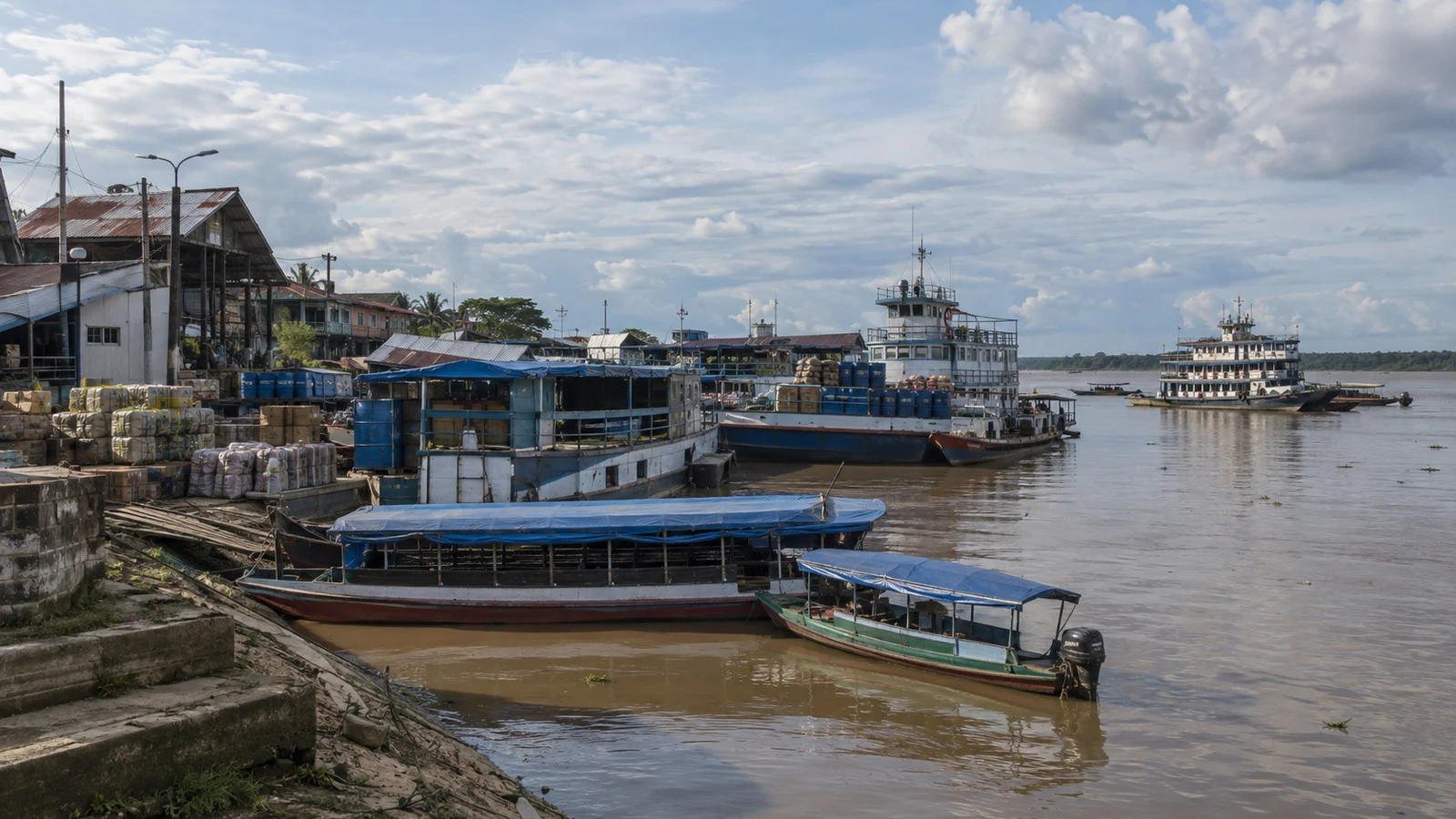
Even at a private facility, do not assume a level airport-style jet bridge. The ship, floating dock, ramp, stairs, bank, and gangway all respond differently as the river rises and falls.
When do cruises embark in Iquitos itself?
Aqua’s live destination page lists Iquitos Main Port as an embarkation and disembarkation option in addition to Nauta. That makes Iquitos a genuine ship port on selected programs, not merely an airport label.
The operator does not promise that every Aqua Nera or Aria Amazon departure uses the city port. Your final itinerary must identify the meeting point, embarkation point, and time for the specific date.
“Iquitos Main Port” should also not be confused with every public market landing, ferry area, fuel dock, or local passenger-boat terminal along the urban waterfront. Use the operator’s transfer rather than asking a mototaxi driver to locate a ship from its glossy brochure photo.
Can you explore Nauta before boarding?
Sometimes, but organized embarkation days are tightly sequenced. Nauta has a central plaza, market life, river views, and local identity worth seeing, yet free time depends on the operator’s transfer and security plan.
Aqua lists cycling through Nauta on some programs, while other itineraries move directly from a private welcome facility to the ship. Do not leave an operator lounge unless staff confirm the meeting time and return route.
Nauta is not a polished cruise-terminal district designed around independent passengers. That is part of its reality, but it means heat, traffic, uneven surfaces, limited signage, and Spanish-language communication deserve respect.
High water and low water are both cruise seasons
The Peruvian Amazon does not have a simple “good” and “bad” season. Aqua explains that high water opens flooded forest, creeks, and lakes to skiffs, while low water reveals beaches and more walking trails.
Operators commonly describe high water from roughly November or December through May and lower water from June through October or November. The transition follows rainfall across a huge watershed, not a switch flipped on a published date.
River level changes where a ship can approach, how steep a gangway feels, which tributaries are accessible, and whether an activity uses a skiff or a trail. Itinerary substitutions are normal expedition operations rather than evidence that the entire cruise has failed.
Flooding, drought, storms, sediment, floating vegetation, and local navigation decisions can still move the embarkation point. Our Peru cruise ports guide helps place this inland river gateway beside the country’s Pacific ports.
Pacaya Samiria is not a theme park
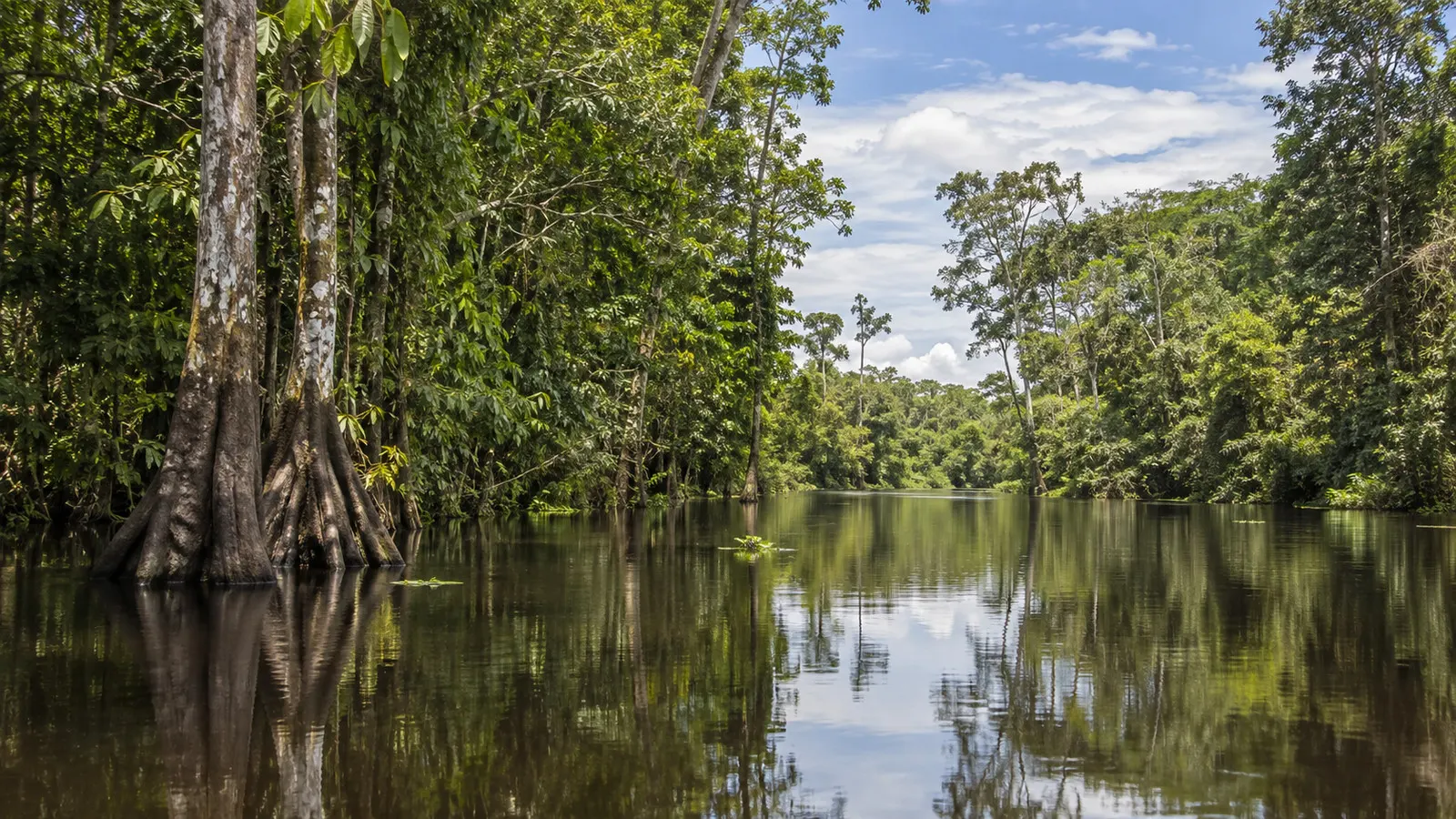
Many Nauta-based voyages explore the Pacaya Samiria National Reserve, a protected area of more than 4.9 million acres. It contains flooded forest, lakes, channels, wildlife habitat, and communities whose lives are connected to the rivers.
The official SERNANP visitor guide requires travelers to enter with an authorized tourism operator and follow ranger instructions. It also prohibits disturbing wildlife, leaving designated trails, and bringing single-use plastics such as bags, straws, and expanded-polystyrene containers into the protected area.
Wildlife sightings are never guaranteed. Pink dolphins, monkeys, sloths, caimans, macaws, and giant water lilies live in dynamic ecosystems rather than maintaining appointments beside the breakfast room.
Community visits should be approached as encounters with living communities, not staged displays for collecting photographs. Follow the guide on permission, photography, purchases, gifts, and culturally appropriate behavior.
Accessibility and physical demands
This is a demanding embarkation chain even when the ship itself is comfortable. It can include airport walking, a long vehicle transfer, steps or ramps at a private wharf, a moving gangway, interior ship stairs, and repeated transfers into small excursion skiffs.
Accessibility differs substantially among Aqua Nera, Aria Amazon, Delfin I, Delfin II, Delfin III, and other vessels. Never assume that an elevator reaches every deck or that a wheelchair can remain occupied during skiff boarding.
Before paying a deposit, request written details for the airport vehicle, restroom stops, wharf surface, gangway width and slope, cabin route, shower access, skiff transfers, wet or uneven landings, and emergency evacuation. Ask whether crew can safely assist with your specific device without requiring manual lifting that the operator cannot provide.
High water may reduce one bank walk while increasing ramp angle somewhere else. Low water may provide more trails but expose steeper or less stable approaches, so “best season for accessibility” cannot be declared in one tidy sentence.
Health preparation and evacuation reality
Loreto is a tropical region with mosquito-borne disease risk and limited advanced medical care once the ship leaves the city. Arrange a travel-health consultation well before departure and disclose relevant mobility, allergy, cardiac, respiratory, and medication needs to the operator.
The CDC’s current Peru traveler guidance includes Iquitos and Loreto in its malaria and yellow-fever planning information. Recommendations depend on age, health, itinerary, and medical history, so use a clinician rather than a travel blog as the prescribing authority.
Buy insurance that explicitly covers the cruise activities, medical treatment, and evacuation from a remote river region. Satellite communication can help coordinate an emergency, but it does not turn a narrow Amazon channel into an urgent-care parking lot.
Pack prescription medication in original labeled containers and carry extra within legal and medical guidance. Keep essential medication with you during the road transfer and skiff excursions rather than in luggage you cannot reach.
What to pack for embarkation day
Choose light, breathable clothing, closed walking shoes with grip, sun protection, and a compact rain layer. Humidity is not a minor weather detail here; it is practically a travel companion with no concept of personal space.
Bring binoculars, a refillable bottle, insect protection recommended by your clinician, and dry protection for electronics. Avoid bringing prohibited single-use plastics into Pacaya Samiria and follow the operator’s luggage-size guidance.
Soft-sided luggage is easier to store in compact cabins, while a small day bag is useful for skiffs. A camera strap matters because river dolphins are quick and gravity remains undefeated.
Three realistic arrival plans
Lowest stress: one night in Iquitos
Fly to Iquitos a day early, stay centrally, and use a transfer confirmed in writing by the cruise operator. This provides a flight buffer and a proper look at the city.
Operator standard: recommended flight
Take the exact flight named for your departure and meet the representative at the stated airport point. Keep the operator’s emergency number available in case baggage or arrival timing goes wrong.
Long Peru trip: connect through Lima
Build at least one buffer night between an international or coastal cruise arrival and the Iquitos flight. Review our Pisco and Paracas guide if the wider itinerary also explores Peru’s Pacific coast.
Arrive in Iquitos before the recommended flight day
Most programs meet guests in Iquitos and drive about two hours to a private Nauta wharf, while some Aqua departures use an Iquitos port. Use the operator’s flight, hotel, and transfer instructions because neither city offers one universal cruise terminal that an independent driver can infer.
Peruvian entry rules depend on nationality, and Amazon health planning should be discussed with a clinician well before travel. Review current yellow fever, malaria, mosquito, food, and water guidance, then carry medicine in hand luggage because the vessel is far from advanced care.
Pacaya Samiria is a protected reserve, not a guaranteed list of wildlife sightings or landings. Follow SERNANP and naturalist instructions, keep distance from animals, and accept route changes between skiffs, flooded forest, beaches, and trails as normal river operations.
Skiff steps, uneven banks, heat, humidity, insects, and long periods seated are the key accessibility constraints. Ask how guests transfer, whether a companion can assist, what evacuation insurance is required, and arrive a day early so a delayed Lima connection does not end the cruise.
Quick answers
Do Amazon cruises leave from Iquitos or Nauta?
Both, depending on the operator and itinerary. Nauta is the common embarkation point, while Aqua also documents selected departures from Iquitos Main Port.
How far is Nauta from Iquitos?
SERNANP gives the paved road distance as about 65 miles and the journey as about two hours. Operators may quote roughly one hour and 45 minutes under their planned conditions.
Is the transfer included?
Often, but usually around specific recommended flights and meeting points. Travelers arriving earlier, later, or independently may need a separately arranged and paid transfer.
Can I arrive in Iquitos on embarkation day?
Yes, if you use the operator’s recommended flight and transfer program. An earlier arrival adds protection, but only when the hotel pickup or meeting arrangement is confirmed.
Will low water cancel the cruise?
Not automatically. Ships and skiffs adjust routes and activities between high- and low-water seasons, although extreme conditions can change landings or the broader itinerary.
The last word
Iquitos and Nauta make much more sense as a pair than as competing port names. One receives the outside world by air, while the other places you on the Marañón at the doorstep of one of the planet’s greatest river landscapes.
Confirm the exact flight, meeting point, transfer, and wharf for your sailing, then let the expedition become flexible after that. In the Amazon, careful logistics earn you the freedom to be surprised by everything else.
How we researched this guide
This guide was researched and fact-checked on September 12, 2026, using live Aqua Expeditions, Delfin Amazon Cruises, and National Geographic-Lindblad programs, SERNANP’s official Pacaya Samiria access guidance, airport records, and current public-health guidance. Road times and town walking ranges are labeled planning estimates where no operator or authority publishes a universal guarantee.
We have not claimed a personal visit, wildlife sighting, or gangway experience. For how CruisePorts.co distinguishes current operations from estimates and corrects material errors, read our Editorial Policy.
How this guide was researched: This guide was checked against current official port, waterway, immigration, transit, attraction, operator, and weather information. Operational and time-sensitive details were reviewed September 12, 2026; confirm the live berth, daily program, entry rules, accessibility, and cancellation terms before travel.
See our Editorial Policy.