Dresden River Cruise Port: Elbe Berths, Old Town and Water Levels
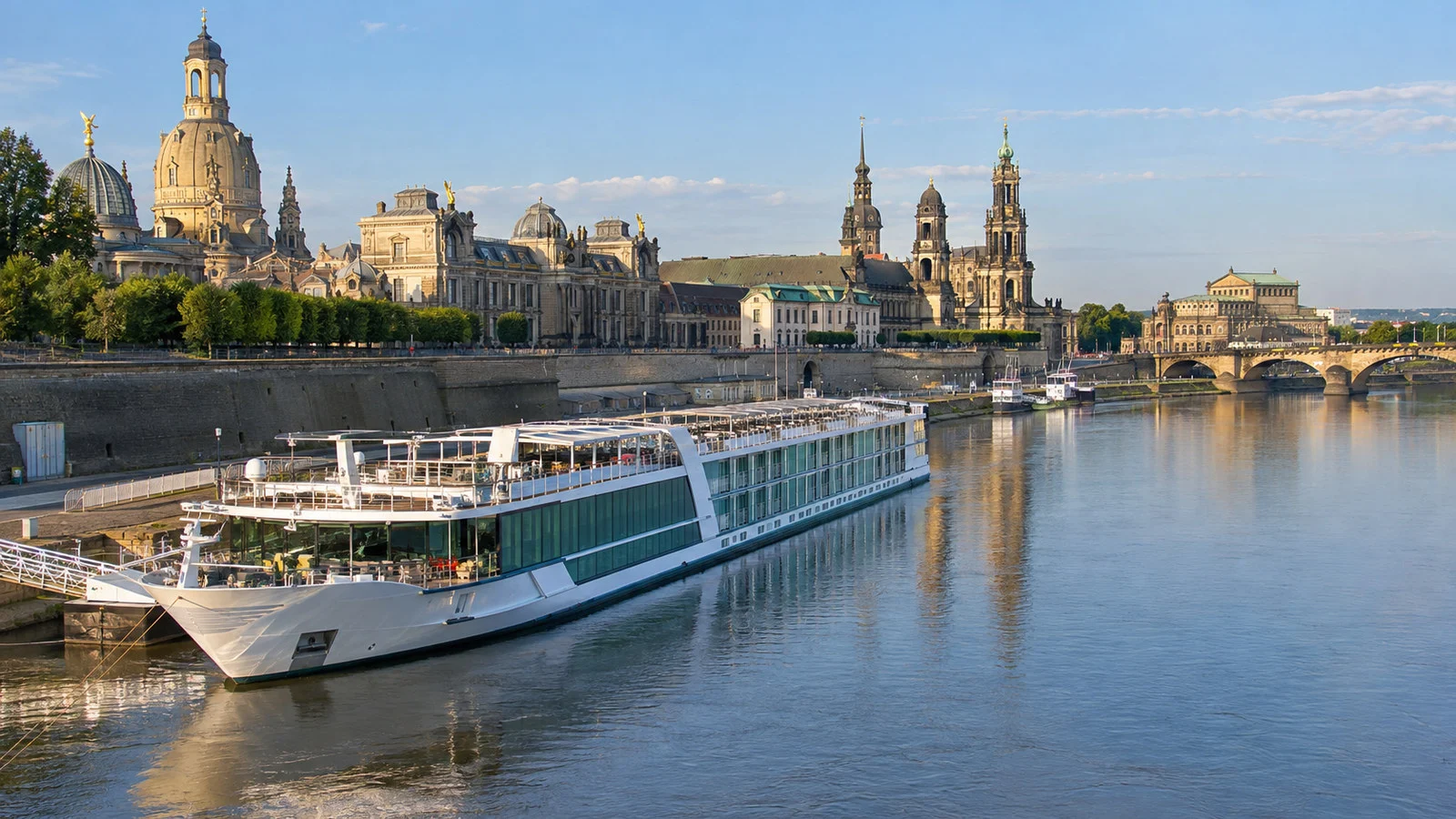
Dresden is one of those river ports where the skyline starts sightseeing before you do. The Elbe slides past domes, terraces, palace roofs, and the Semperoper with the confidence of a city that knows its good side.
The landing answer is less theatrical. Dresden has a long row of famous sightseeing-boat piers, several small-boat harbors, and comparatively few overnight cabin ships, so an itinerary that says “Dresden” does not identify your gangway.
Dresden River Cruise Port Quick Facts
Into Town: A central Elbe landing can be 5 to 15 minutes from Old Town. Alternative moorings may require a shuttle; confirm onboard.
Currency and Language: Euro. German is the official language; English is common at major museums, hotels, restaurants, and visitor services.
Time Zone: Central European Time: CET (UTC+1) in winter and CEST (UTC+2) during daylight saving time.
How Often the Call Is Missed: No reliable percentage is published. Low or high water, bridge clearance, berth access, or itinerary changes can prevent the scheduled ship call.
No authority or cruise line publishes a Dresden missed-call percentage. Operators may preserve the Dresden visit by motorcoach even when the ship cannot reach its planned berth.
Do River Cruises Really Stop in Dresden?
Yes, but the Elbe cruise market is much smaller than the Rhine or Danube market. CroisiEurope currently sells multiple 2026 and 2027 Elbe itineraries that include Dresden aboard MS Elbe Princesse.
Its Prague-to-Berlin program places Dresden between Bad Schandau and Meissen, while other 2026 departures combine Dresden with the Vltava and Prague. The company explicitly reserves the right to change routes and warns that Elbe water levels can require hotel nights around Berlin or Prague.
That is firm proof of an active destination and equally firm proof that the scheduled ship call is conditional. Dresden may remain on the sightseeing program even if guests reach it by motorcoach rather than by gangway.
Where Do River Cruise Ships Dock in Dresden?
No current public operator page assigns every overnight cruise to one numbered Dresden berth. Treat the cruise director’s same-day announcement as the controlling source, especially when water level, construction, another vessel, or navigation restrictions affect the city reach.
A central landing along the Old Town riverfront provides the easiest access to Brühl’s Terrace, Frauenkirche, the Royal Palace, Zwinger, and Theaterplatz. Exact location can still shift along the bank, changing the walk by several minutes.
Alternative operational positions may be farther from the historic center and need a bus. Never arrange a taxi using only “Dresden port,” because the city has several waterfront facilities with entirely different users.
Rafting alongside another cabin ship is possible in European river cruising, but we found no official source describing it as Dresden’s standard arrangement. Ask onboard if crossing another vessel or negotiating extra gangways would affect your mobility.
Terrassenufer Is Mostly a Sightseeing-Boat Zone
Terrassenufer is the photogenic waterfront below Brühl’s Terrace between the Augustus Bridge and Albert Bridge. The Sächsische Dampfschifffahrt identifies it as the central landing area for its White Fleet of local excursion vessels.
Those numbered floating piers serve historic paddle steamers, lunch cruises, evening cruises, and scheduled sightseeing trips. A White Fleet schedule therefore proves that a local boat departs from Terrassenufer, not that your multiday cabin ship uses the same pontoon.
If your cruise line confirms a nearby central berth, the location is excellent. From the river edge, the climb or ramp connection to the historic core is short, and the major monuments begin almost immediately.
The partial collapse of the Carolabrücke in September 2024 temporarily disrupted river and riverfront access. The city reported that the shipping channel reopened in August 2025 and Terrassenufer reopened to traffic in September 2025, although bridge replacement work can still affect local routing in 2026.
What About Neustädter Hafen and Alberthafen?
Neustädter Hafen is a marina on the north bank at Elbe kilometer 57.3. Its operator publishes 60 berths for recreational boats up to about 33 feet long, which makes it plainly unsuitable as a normal berth for a large overnight river-cruise ship.
The marina website’s claim of a 15-minute walk to Old Town is useful for recreational boaters, not proof that cruise passengers land there. Do not send a driver to Neustädter Hafen unless the vessel has specifically named it.
Alberthafen in Friedrichstadt is a commercial inland port west of the center. It belongs to Dresden’s working-waterfront geography, but its existence should not be converted into a passenger-terminal promise.
Pieschener and Loschwitzer harbors also appear on maps and in local maritime history. None should be treated as your berth without direct operator confirmation.
How Far Is Dresden Old Town?
From a central Old Town river position, allow roughly 5 to 15 minutes to Theaterplatz, Brühl’s Terrace, or the Frauenkirche area. That range is an editorial estimate from the city-center bank, not a ship-door guarantee.
Gangway position, bank ramp, temporary fencing, tour-group assembly, bridge work, and your walking pace all move the number. A farther operational berth can turn the same destination into a shuttle call.
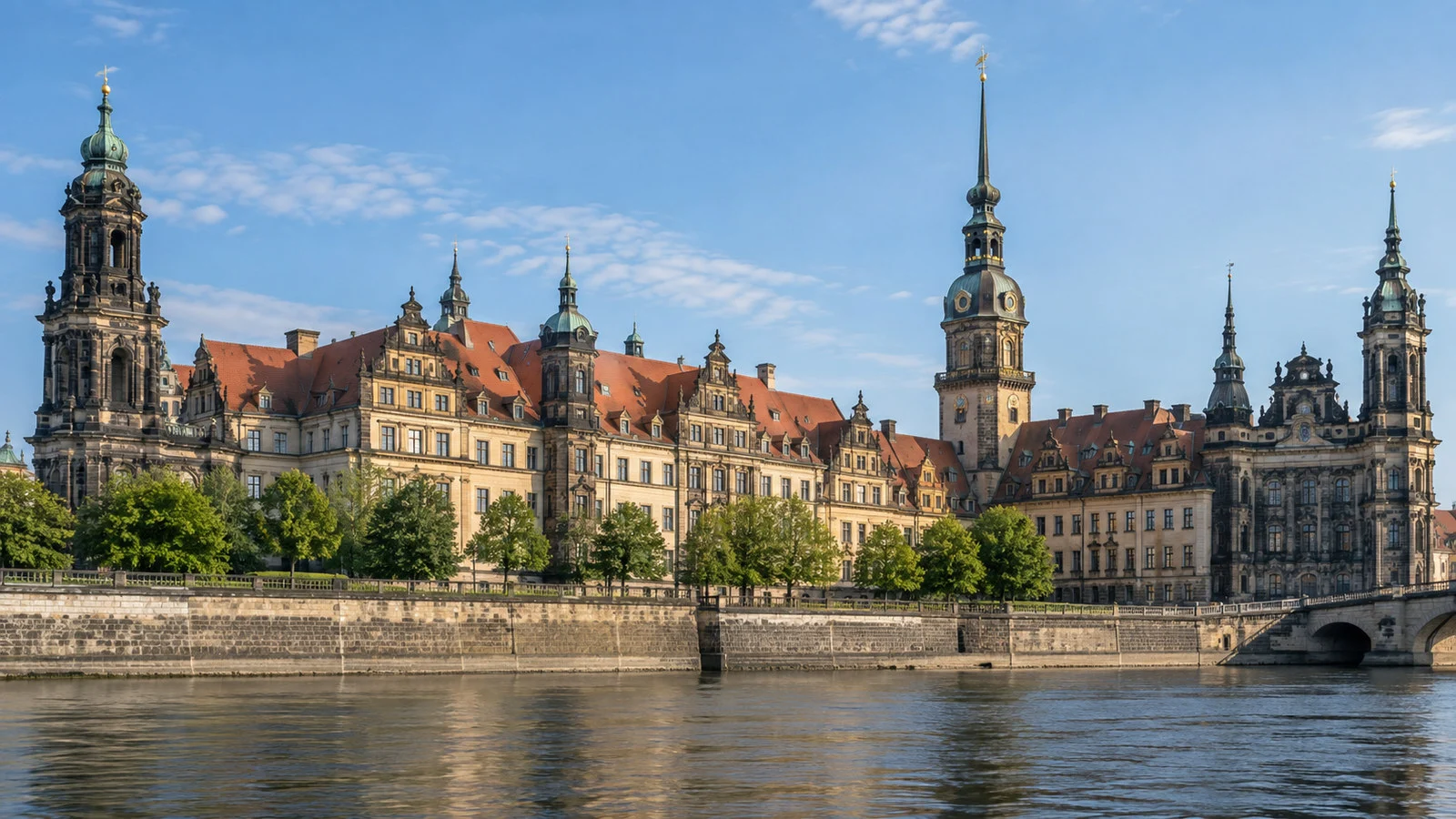
Dresden’s signature sights are unusually concentrated once you reach the historic center. The Frauenkirche, Royal Palace, cathedral, Semperoper, Procession of Princes, Zwinger, and Brühl’s Terrace fit inside a compact walking loop.
The center is mostly level, but expect stone paving, curbs, occasional construction, and ramps between the lower riverbank and upper terrace. The dome climb at Frauenkirche and the Hausmannsturm are separate vertical projects, not casual extensions of a flat city stroll.
The Best First Hour Ashore
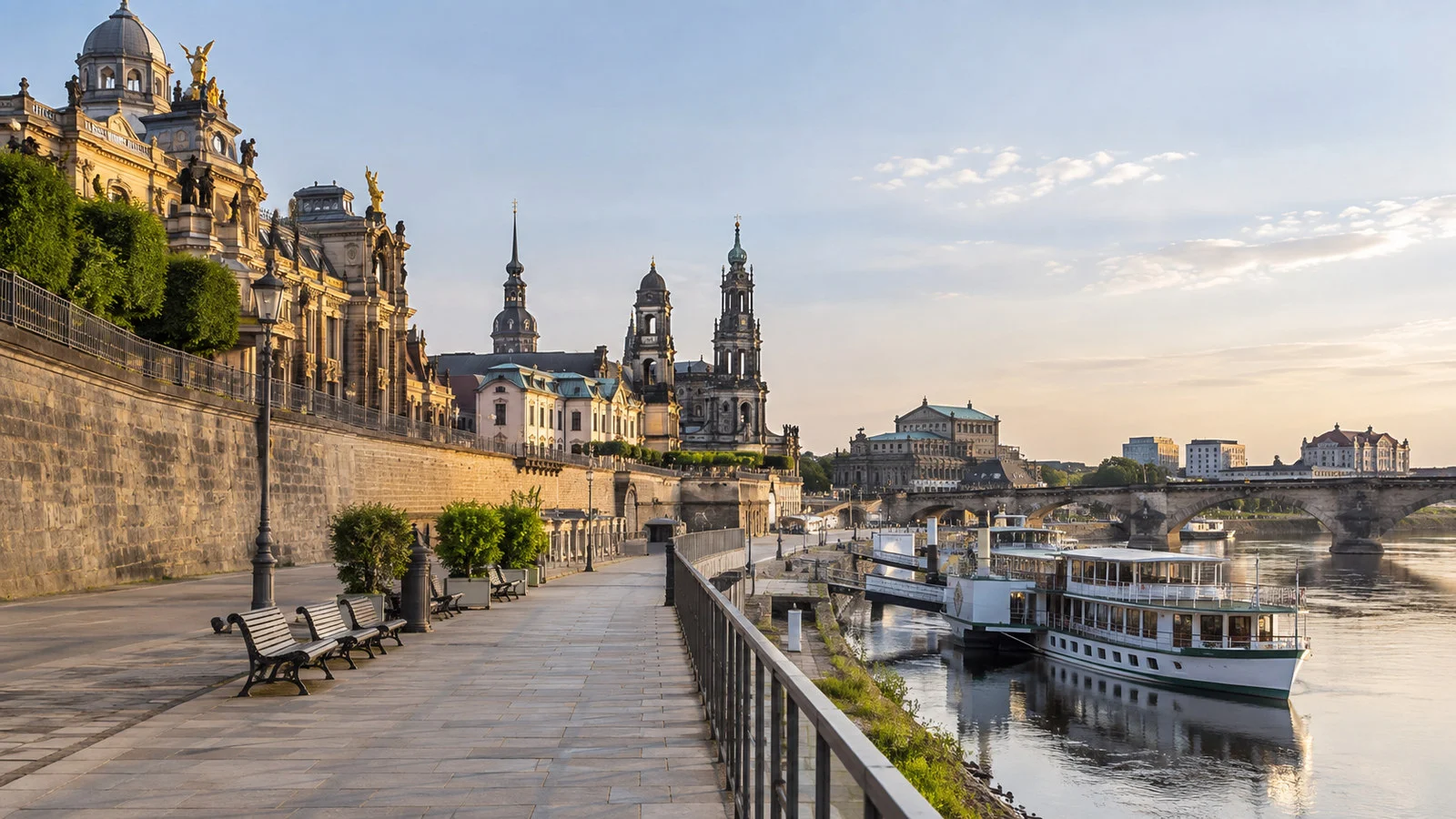
Begin along Brühl’s Terrace for river views, then pass the cathedral and enter Theaterplatz between the Semperoper, Royal Palace, and Zwinger. Continue through the palace quarter to the Procession of Princes and finish at Neumarkt in front of Frauenkirche.
This compact loop gives a strong sense of Dresden even if a late lock, water restriction, or motorcoach transfer shortens the call. It also keeps you close enough to pivot when a museum line looks less charming than the courtyard.
Allow 60 to 90 minutes without entering a major attraction. Add at least another hour for one museum, and far more if you are the sort of person who reads every porcelain label with the intensity of a diplomatic cable.
Frauenkirche
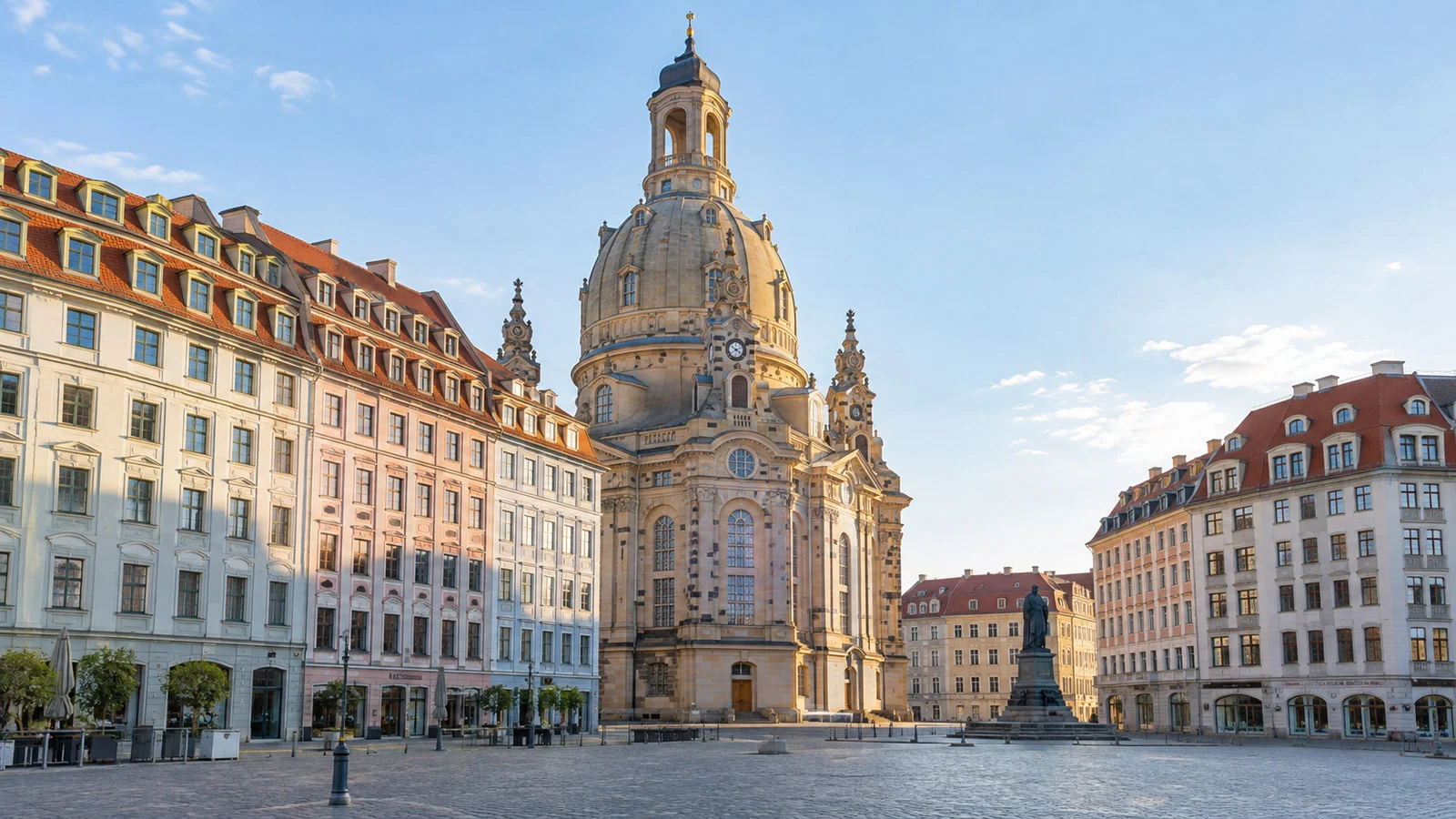
The Frauenkirche’s reconstructed dome is Dresden’s most recognizable landmark. The original church collapsed after the February 1945 bombing and fire, while the rebuilt church was consecrated in 2005 using salvaged stones where possible.
It remains an active Lutheran church, not simply a monument. Worship, rehearsals, concerts, maintenance, and special events can close or restrict visitor access, so check the official church calendar on the day.
General entry to the church and ascent to the dome are different visits. The dome route includes an elevator for the first section, followed by ramps and stairs, so it is not wheelchair accessible to the viewing platform.
Photography rules and quiet periods deserve respect. The church’s destruction, ruins, reconstruction, and reconciliation work carry more weight than a quick “before and after” photo comparison.
Zwinger and the Old Masters
The Zwinger is a Baroque palace complex of pavilions, galleries, courtyards, fountains, and museums. Its courtyard is rewarding even without a ticket, while the interior collections can consume most of a port day without making the least apology.
The Old Masters Picture Gallery holds works by Raphael, Rembrandt, Vermeer, Cranach, and others. The Zwinger ticket also covers the Mathematical and Physical Salon and Porcelain Collection, subject to gallery closures.
The State Art Collections’ current ticket page lists the Old Masters gallery from 10 a.m. to 5 p.m. and the other principal collections from 11 a.m. to 5 p.m., with all closed Monday. It also says the Porcelain Collection is closed from September 7 through October 30, 2026 for building work.
Online SKD pages have shown different 2026 ticket amounts during updates, so the live booking cart should control. Reserve ahead when a particular gallery is nonnegotiable, and do not treat the open courtyard as proof every museum is open.
Royal Palace and the Green Vault
Dresden Royal Palace contains the New Green Vault, armory, print and coin collections, state apartments, and other displays. It is the best choice for travelers who want one concentrated encounter with Saxon court art and ceremonial excess.
The Historical Green Vault uses timed admission because of its intimate rooms and exceptional collection. A general palace ticket does not automatically include it, so verify the ticket name rather than assuming every shade of green lives behind one barcode.
Security screening and bag restrictions take time. Plan at least 90 minutes for a focused palace visit, and longer if combining the Historical and New Green Vaults.
The museums generally provide elevators and accessible routes, but individual historic spaces, tower routes, and temporary exhibitions differ. Contact visitor services in advance for a large power chair, companion assistance, sensory need, or step-free route question.
Semperoper
The Semperoper faces Theaterplatz with a facade worth seeing even when the auditorium is closed. Interior access normally requires a performance ticket or scheduled guided tour.
Tour languages, times, and backstage access vary around rehearsals and productions. Book the exact language and date rather than counting on a walk-in English tour during a short call.
A performance can work on an overnight stay, but only if the ship’s departure is genuinely late and independent guests may remain ashore. River conditions can revise sailing time, so obtain explicit onboard permission before buying a nonrefundable evening seat.
Neustadt, Albertinum, and the Blue Wonder
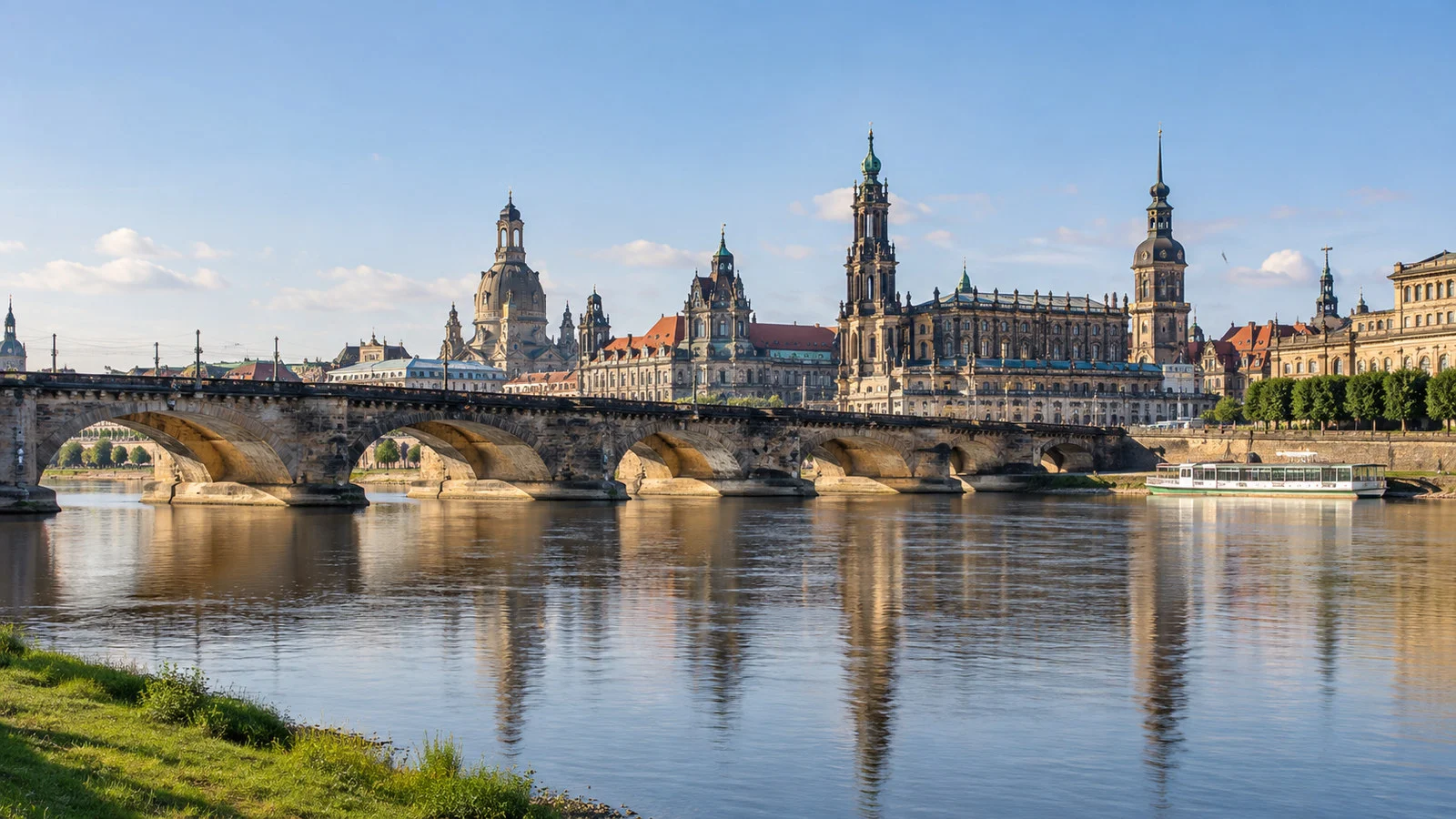
Cross the Augustus Bridge for the classic Canaletto-style view back toward Old Town, then continue into Inner Neustadt for the Golden Rider, broad Baroque streets, cafes, and shops. Outer Neustadt lies farther north and has a livelier, more contemporary personality.
The Albertinum at the east end of Brühl’s Terrace focuses on art from Romanticism through modern periods. It is an excellent alternative when the Zwinger is closed Monday or when one more jeweled cup would cause a small personal rebellion.
The Loschwitz Bridge, commonly called the Blue Wonder, lies several miles upstream and requires a tram, bus, taxi, bicycle, or excursion boat. Nearby funicular and suspension railway operations can close for maintenance, so check local transit status before building a day around them.
Pillnitz Palace is farther upstream again and normally needs a half-day combination of transit, boat, or organized tour. The palace’s Decorative Arts Museum location remains closed throughout 2026 for construction, though the grounds and other visitor experiences may operate separately.
Public Transportation
Dresden’s yellow trams make longer city trips straightforward, and major Old Town stops include Theaterplatz, Altmarkt, Postplatz, and Pirnaischer Platz. Service changes around construction mean the live DVB journey planner should outrank a saved route screenshot.
The DVB ticket finder lists 2026 Dresden-zone fares from April 1 at €3.60 for a one-hour one-way ticket and €9.50 for a day ticket. Tickets bought before boarding must be validated, while tickets purchased onboard are already stamped.
A central berth rarely requires transit for the core monuments. Use the tram for Neustadt, museums outside the central cluster, Loschwitz, or as an energy-saving return rather than adding complexity merely because the yellow cars are adorable.
Accessibility at Dresden River Cruise Port
Accessibility begins with the day’s berth and gangway. A central pontoon may involve a sloped bridge, changing ramp angle, cobbled transition, bank incline, or another vessel, while an alternative berth may add a motorcoach transfer.
Ask the cruise line whether your specific wheelchair, scooter, walker, or transfer need can be handled at Dresden under the expected water level. Then confirm again onboard, because a perfectly accessible planned berth is irrelevant if the captain must use another one.
Old Town offers many step-free exterior routes, broad squares, elevators in major museums, and low-floor public transportation. Stone surfaces, terrace elevation changes, construction, and crowded Christmas-market lanes still need planning.
The Frauenkirche worship space is more accessible than its dome platform, and the central museum complexes are better choices than towers. Compare our broader wheelchair-friendly cruise ports guide, then verify Dresden-specific details with the ship and attraction.
Why Elbe Water Levels Matter So Much
The upper Elbe is free-flowing through this region rather than regulated by the dense lock-and-dam system familiar on parts of the Rhine, Main, or Danube. Extended drought can leave too little depth, while floods can create excessive current and inadequate bridge clearance.
CroisiEurope designed its shallow-draft paddlewheel ship for the river, but even specialized equipment has limits. The operator explicitly warns that water variation may lead to hotel accommodation and modified navigation.
A disrupted sailing does not necessarily erase Dresden. The line may bus guests into the city, move the vessel, change the sequence, shorten the visit, or substitute hotel nights while maintaining major excursions.
Travel insurance should be read for itinerary changes, missed ports, trip interruption, and hotel substitution rather than assumed to cover disappointment. The cruise contract and operator notice govern what compensation, if any, applies.
Weather and Seasonal Planning
Spring can be cool and changeable, summer ranges from pleasant to hot, and fall brings crisp mornings with shorter daylight. Pack a light waterproof layer, comfortable shoes with grip, and something warmer for the river deck.
Summer drought raises low-water risk, while prolonged rain or snowmelt can produce high water. Neither problem follows a polite calendar, so a September sailing is not automatically safe from both.
December cruises add the Striezelmarkt and other Christmas markets, lights, concerts, and a very persuasive case for hot spiced drinks. They also add darkness, cold, slick paving, crowds, and narrower walking channels.
Our Christmas market cruise ports guide helps with winter pacing. In Dresden, keep market plans flexible because the ship may visit the city by road if navigation changes.
Airport and Train Connections
Dresden Hauptbahnhof is south of Old Town, roughly 20 to 30 minutes on foot from Neumarkt or a short tram ride. Dresden-Neustadt station is more convenient for the north-bank neighborhoods and some hotels.
Dresden Airport has an S-Bahn station beneath the terminal, with S2 trains connecting to Dresden-Neustadt and Hauptbahnhof. Allow about 20 to 25 minutes to the central station as a planning estimate, then add the transfer to your hotel or ship meeting point.
Verify embarkation instructions before choosing a station. “Dresden” on an itinerary may describe a call rather than the cruise’s boarding point, and water conditions can move the actual embarkation to another city.
Arrive at least one day early for an Elbe cruise. A delayed flight plus a changed ship position is a grim little duet, and the specialized river program may not offer an easy same-day catch-up.
Safety and Independent Exploring
Dresden’s central tourist areas are generally straightforward, but use normal city precautions around wallets, phones, crowded trams, and market stalls. Keep the ship’s contact number and exact gangway location offline in case mobile data disappears at the least poetic moment.
Use signed crossings on Terrassenufer and watch bicycle lanes before stepping from the curb. The Elberadweg carries fast commuters as well as relaxed vacation riders.
Do not walk onto a pontoon that belongs to another operator or around a secured gangway gate. River current, slippery edges, changing ramp angles, and moving vessels make the working waterfront more than scenery.
Call 112 for police, fire, or medical emergencies. For a late return or changed pickup that is not an emergency, call the ship or cruise line directly.
A Practical Dresden Port-Day Plan
With two to three hours, walk Brühl’s Terrace, Theaterplatz, the palace exterior, Procession of Princes, and Neumarkt. Enter Frauenkirche only if access is open and the line is short.
With four to five hours, add one major collection such as the Old Masters, Royal Palace, or Albertinum. One is a satisfying cultural visit; three is an art-history hostage situation.
With a full day, combine the Old Town loop and museum with Neustadt, the Blue Wonder, or Pillnitz. Choose only one farther district and preserve enough buffer for a tram disruption or relocated gangway.
Return 30 to 60 minutes earlier than the operator requires when exploring independently. A low-water itinerary is already doing enough improvisation without adding a missing passenger.
Final Verdict
Dresden is an outstanding Elbe destination because its river, architecture, art, destruction, reconstruction, and living city all meet within a compact center. The practical catch is not what to see but whether the ship reaches the expected berth at all.
Confirm the gangway, keep a motorcoach substitution emotionally acceptable, and pick one museum instead of speed-dating Saxony’s entire collection. Travelers comparing simple DIY calls may also like our most walkable cruise ports guide.
How We Researched This Guide
This guide was researched and fact-checked on September 12, 2026 using current CroisiEurope schedules and water-level notices, Dresden city records, Sächsische Dampfschifffahrt landing information, State Art Collections tickets, Frauenkirche visitor information, and official DVB fares.
Walking and transfer times and possible berth scenarios are explicitly editorial planning estimates. We do not claim a personal visit, and we distinguish documented sightseeing piers and small-boat marinas from an unverified universal overnight-cruise berth.
Water levels, berths, museum openings, fares, construction, and excursions can change after publication. Our Editorial Policy explains sourcing, corrections, and how we label desk research.
How this guide was researched: This guide is based on independent research using CroisiEurope, the City of Dresden, Sächsische Dampfschifffahrt, Dresden State Art Collections, Frauenkirche Dresden, and DVB. Time-sensitive details were reviewed on September 12, 2026; see our Editorial Policy.