Wesel River Cruise Port: Rhine Landing, Cathedral and Citadel
Wesel sits at the point where the Lower Rhine begins to feel both spacious and industrious. River meadows, freight infrastructure and a city rebuilt with stubborn care all share the same stretch of water.
This is not a famous Rhine Gorge stop with a castle posing above every bend. It is a working river city with a genuine cruise landing, a handsome late Gothic cathedral, a formidable citadel and enough distance between them to make route planning useful.
The key is not to confuse the cruise pontoon with the excursion-boat dock, yacht harbor or industrial quays around it. Wesel has several waterfront identities, and only one of them has your gangway.
Wesel river cruise port quick facts
- Into Town: Lower Rhine cruise ships use Rheinpromenade landings; Großer Markt is roughly a 20-to-30-minute walk, depending on the assigned gangway.
- Currency and Language: Euro (EUR). German is official; English is common on organized cruise tours, but less assured in small independent businesses.
- Time Zone: Central European Time, UTC+1 in winter and UTC+2 during daylight saving time.
- Operational Notes: Rhine levels, current, berth availability, and wider itinerary changes can alter the call.
Wesel and its cruise operators do not publish an audited missed-call rate. A motorcoach visit, different Rhine landing, or altered call time may still deliver the planned city program.
My quick take
Choose the included tour if it combines the city with Xanten or another regional attraction, because those outings are not practical independent add-ons. For a Wesel-focused call, the cathedral, Großer Markt and citadel form a strong half-day.
The center is walkable from the cruise riverfront for travelers comfortable with roughly 1 mile each way, urban crossings and an exposed promenade. A shuttle or taxi is better when the call is short, the weather is unkind or walking energy belongs inside the museum.
Wesel rewards people who enjoy the less lacquered Rhine. The river carries working barges past a city that was almost destroyed in 1945 and rebuilt its landmarks piece by piece.
Do river cruises really call at Wesel?
Yes. Viking’s 2026 Holland and Belgium itinerary gives Wesel a full port day and highlights Willibrordi Cathedral, the citadel and excursions to Xanten or Schloss Anholt.
That current Viking program is enough to establish active 2026 cruise use. Other lines have called in recent seasons, but a previous port list should never be treated as proof that the same operator returns this year.
Wesel Tourism reported 31 scheduled Viking calls and 15 A-ROSA dates during its 2025 season. The same official update says guests receive organized land programs and free time in the center, which explains why buses can be waiting even though the city is not impossibly far away.
The best-documented long-ship landing
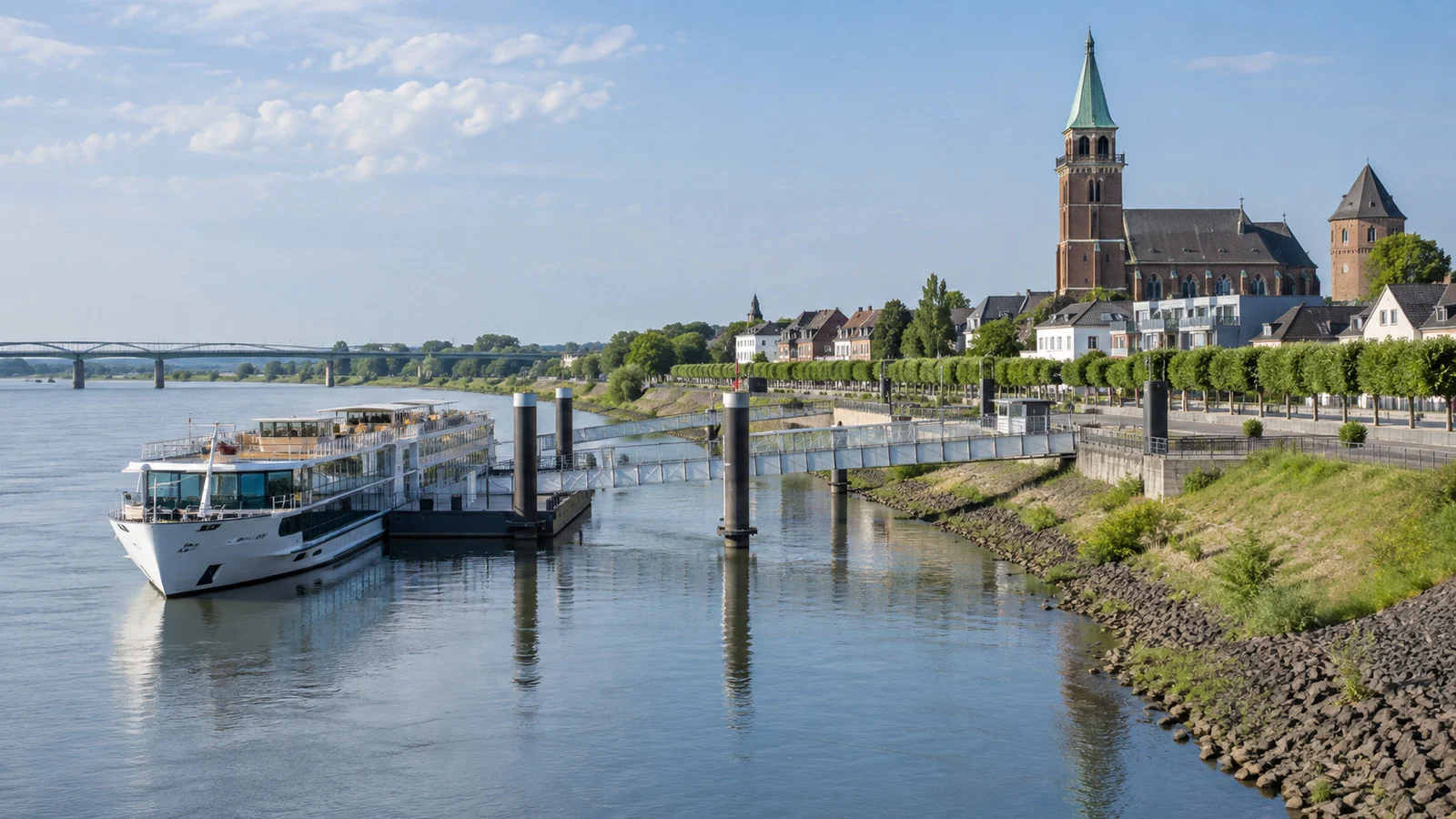
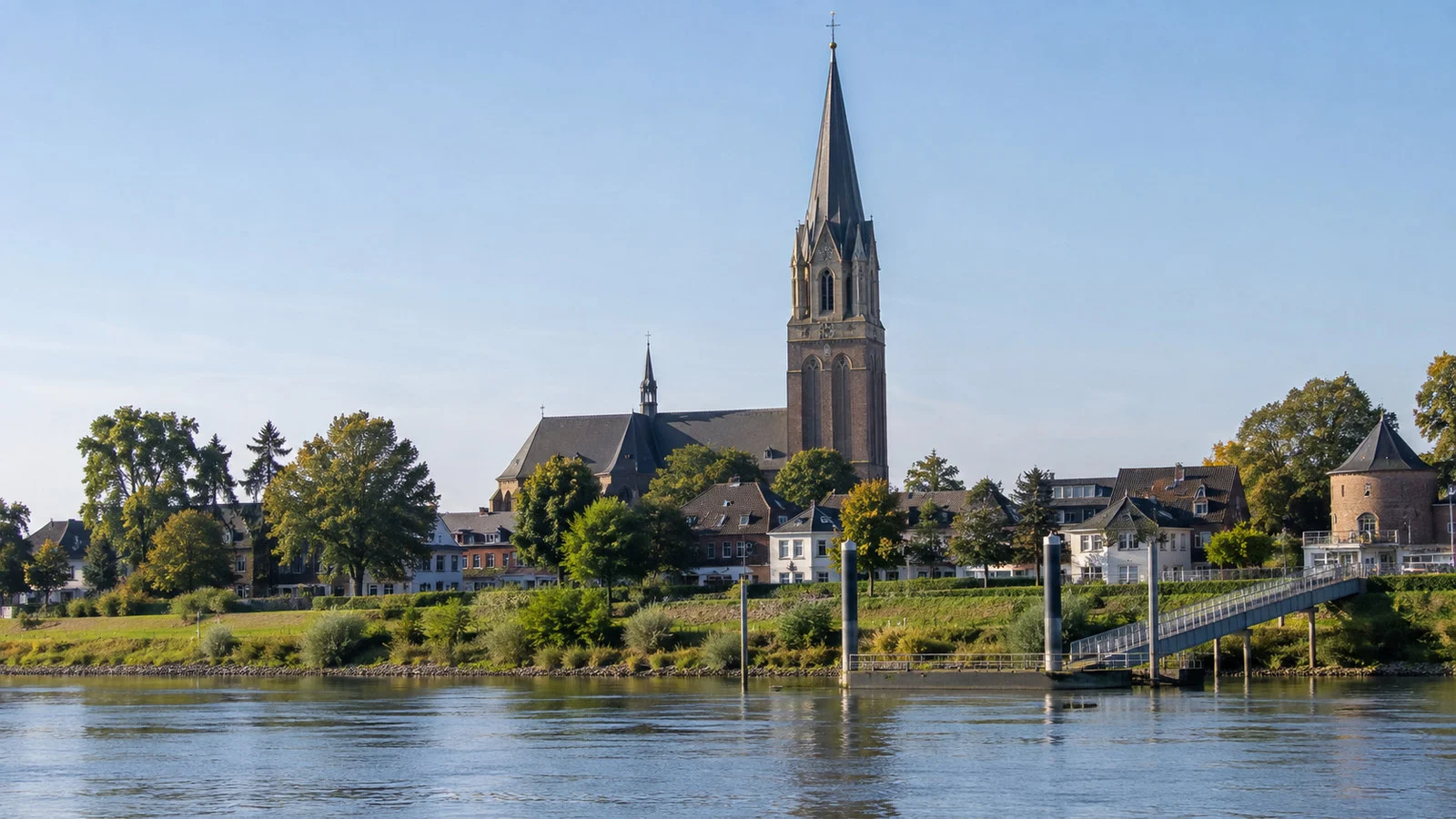
The clearest cruise facility is a floating landing at approximately Rhine kilometer 815.3 on the right bank near Wesel’s Rheinpromenade. City records say Viking first called at the end of March 2022, while current tourism material continues to place cruise arrivals on the promenade.
Wesel Tourism’s official cruise-season announcement confirms Viking and A-ROSA ships at the Rheinpromenade, plus a bus stage serving cruise guests. It does not publish a daily allocation between pontoons or promise that every operator uses the same gate.
In practical terms, expect a direct riverbank gangway in an open promenade setting rather than an enclosed terminal. Ship rafting, river height and operational assignment can change the path ashore.
Use the crew’s gangway notice for the exact position and return point. A pin saved from another traveler’s sailing is interesting evidence and poor navigation policy.
Four waterfront facilities that are not interchangeable
The river-cruise landing: Long hotel ships use designated Rheinpromenade passenger infrastructure, with the Viking-branded pontoon the best-documented example. Other operators’ precise assignments can differ.
The River Lady dock: Wesel’s Mississippi-style day boat advertises a separate passenger landing on the promenade. Its sightseeing schedule does not reveal where a roughly 443-foot hotel ship will berth.
The yacht harbor: The marina entrance lies around Rhine kilometer 816.5 and serves recreational craft. It has useful facilities for small boats, but it is not the default river-cruise terminal.
The industrial ports: DeltaPort operates Wesel’s city and Rhine-Lippe port network for bulk, heavy, liquid and containerized cargo. Its official port description is a reminder that the surrounding quays, rail lines and roads are workplaces rather than a scenic pedestrian shortcut.
How far is downtown Wesel?
From the best-documented cruise position near Rhine kilometer 815.3, Großer Markt is approximately 1 mile away. That is an editorial map estimate, not a measured guarantee from every possible gangway.
Allow 20 to 30 minutes on foot in ordinary conditions. The route must negotiate promenade access and major roads before reaching the compact center, so it is more than a lazy roll straight off the ship.
Some cruise programs provide a motorcoach or organized walk, while independent guests may be free to continue into town. Confirm whether the shuttle is included, where it stops and when the final return runs before declining it with athletic confidence.
The return can feel longer because the final stretch is exposed to wind off the Rhine. Leave at least 30 minutes for a normal walk back, plus the operator’s requested gangway buffer.
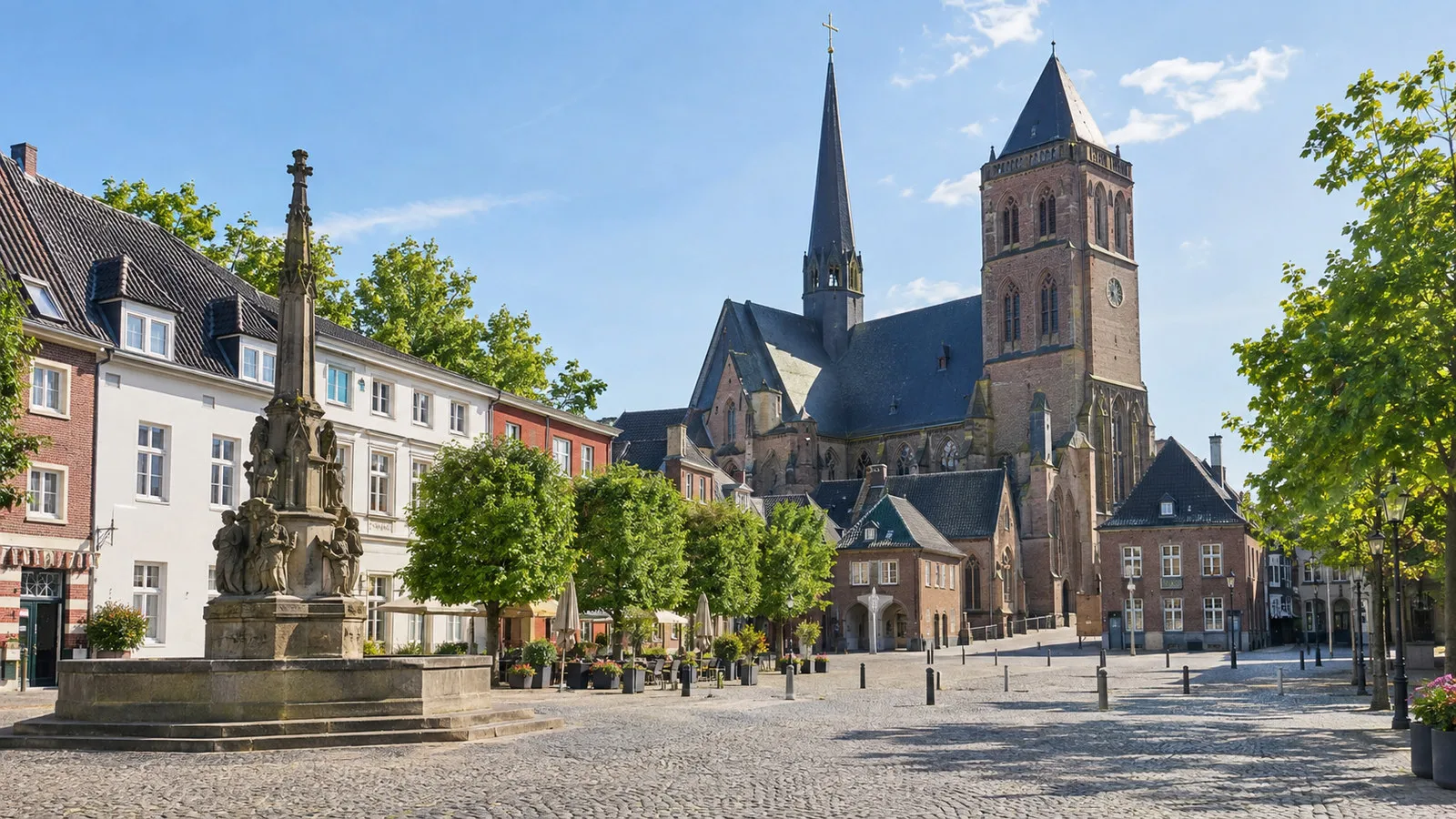
Start at Großer Markt and Willibrordi Cathedral
Großer Markt contains Wesel’s two most visible reconstruction stories. The ornate historic town hall facade faces the broad late Gothic Willibrordi Cathedral, restoring the civic and religious pairing that defined the square before World War II.
The cathedral’s official history describes a five-aisled basilica built around 1500, with its tower dating from 1478. Wesel joined the Reformation in 1540, and the church remains an active Protestant city church rather than a museum with pews.
The current cathedral page publishes limited seasonal visiting hours around services and music. Check the exact day before depending on an interior visit, keep voices low and never treat an organ rehearsal as ambient entertainment provided for a photo session.
Inside, look for the restrained Protestant space, reconstructed late Gothic details and modern glass. Outside, the rebuilt town hall facade makes the strongest single frame of Wesel’s determination to recover a civic center.
The pedestrian center is an easy extension
From Großer Markt, continue east through the pedestrian zone toward Berliner Tor. This gives you shops, cafes and the everyday center rather than a sequence of grand monuments pretending the bombing never happened.
Berliner Tor was built between 1718 and 1722 as part of Wesel’s Prussian fortress system. The surviving Baroque gate helps connect the city-center story with the military landscape waiting at the citadel.
A Großer Markt to Berliner Tor walk takes roughly 15 to 25 minutes without shopping, an editorial range. Add twice that if window displays, coffee or a bakery begins negotiations.
The citadel is a district, not one ticketed room
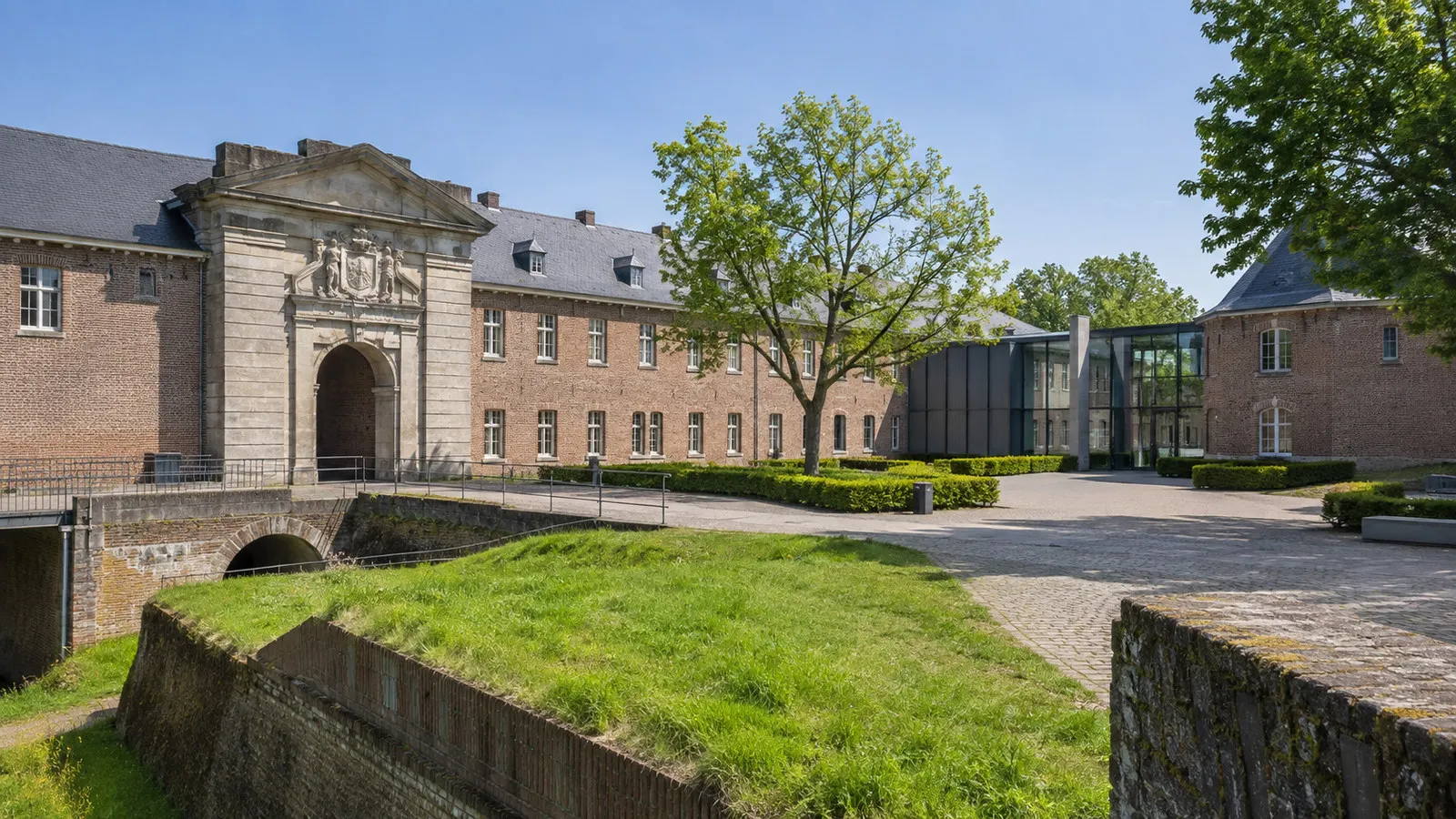
Wesel’s citadel began in the late 17th century as part of an extensive fortress guarding a strategically important Rhine crossing and supply point. Surviving gates, walls and casemates now form a cultural district rather than a completely preserved star fort.
The exterior architecture can be appreciated independently, but individual interior spaces may belong to museums, archives, the music school or event programs. Do not assume every brick doorway opens for casual touring.
The citadel lies south of the main pedestrian center, making it a reasonable second stop after Großer Markt. From the cruise landing, a direct walk can work, but the most legible first visit uses the center and citadel as a loop with current navigation.
LVR-Niederrheinmuseum is the reliable citadel interior
The LVR-Niederrheinmuseum occupies the citadel complex and interprets the Lower Rhine as a landscape of trade, ideas, borders and cultural exchange. Its refreshed displays cover both cultural and geological history rather than offering a simple parade of Prussian uniforms.
The museum’s official visitor page currently lists Tuesday through Sunday hours from 11:00 to 17:00, with Monday closure except specified holidays. Verify the date because a Monday port call changes the citadel plan substantially.
Allow 75 to 120 minutes for a useful visit, an editorial range based on selecting highlights rather than reading every panel. The English media guide makes this a better independent choice than an unscheduled fortress tour.
The museum is not merely sheltered by historic walls. It is the most dependable way to understand why Wesel’s Rhine position connected German, Dutch and wider European histories.
Accessibility needs two separate checks
First ask the cruise operator about the gangway, rafting, gradient and motorcoach lift because no public ship-by-ship accessibility specification was found for the landing. Rhine height can materially alter the angle between pontoon and shore.
The open promenade and downtown route include distance, road crossings and possible surface changes. A central shuttle can remove the longest stretch, but confirm device storage and the exact drop point.
The LVR-Niederrheinmuseum offers much stronger published detail. It reports level access from street and parking areas, elevators to all exhibition floors, an accessible restroom, seating and a certified accessibility review.
Cathedral and outdoor citadel access can vary by door, event and route, so request current confirmation for step-free entry. The site’s river cruise accessibility guide provides a practical checklist for the ship, shuttle and attraction.
Can you visit Xanten independently from Wesel?
Not comfortably on a short call. Xanten Archaeological Park is a separate destination northwest of Wesel, and a cruise excursion controls the transport and return timing.
Viking currently lists Xanten as an included Wesel excursion and Schloss Anholt as another choice. If either matters, reserve through the operator or arrange a private vehicle with the exact all-aboard time in writing.
Do not assume you can tour central Wesel, visit the citadel museum and improvise Xanten after lunch. The Rhine has no interest in waiting while a regional bus connection develops character.
A realistic independent port day
Take an available shuttle to the center, or walk from the confirmed gangway to Großer Markt. Visit the cathedral if open, see the town hall facade and continue through a short section of the pedestrian zone.
Next, walk or take a taxi to the citadel and spend 75 to 120 minutes in the LVR-Niederrheinmuseum. Return to the ship with at least 45 minutes in hand if walking, an editorial buffer for crossings, wrong turns and gangway lines.
On a Monday, replace the closed museum with a longer center walk, Berliner Tor and exterior citadel circuit. On a short call, choose either the center or museum instead of proving that haste is technically possible.
Rhine promenade, food and practical comforts
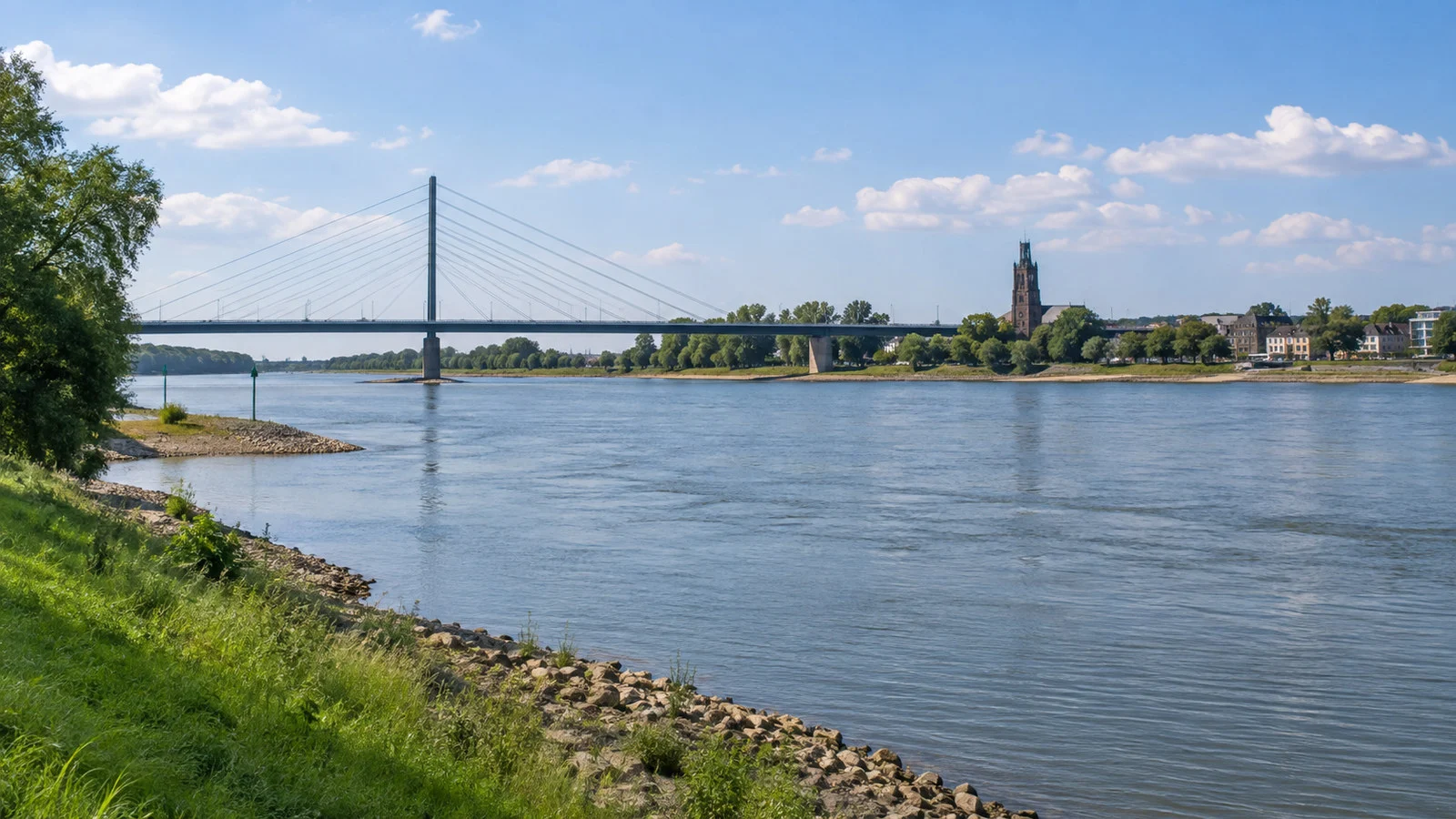
The Rheinpromenade is worth a short walk for broad Lower Rhine views and close observation of one of Europe’s busiest working waterways. Stay on public paths and treat rails, service roads and cargo access as boundaries rather than compositional suggestions.
Wesel uses the euro, and cards are common in larger businesses, though a little cash helps with small bakeries or market stalls. Cafe timing is generally less risky than a formal lunch when the ship is only a brisk walk away on paper.
For a local joke, ask about the Wesel donkey and the echo phrase associated with the city’s name. The donkey souvenirs are easier to carry than an explanation of German wordplay, which may be part of their commercial success.
How reliable is the Wesel call?
Wesel lies on the free-flowing Lower Rhine, where depth, current and berth access respond to changing river conditions. Low water can affect draft and gangway geometry, while high water brings strong current and may make a landing unsafe.
Germany’s federal ELWIS service maintains the official Wesel gauge for navigation. Passengers should use their cruise line’s operational notice rather than interpreting a raw gauge number without ship draft, trend and berth thresholds.
Traffic, port operations, and changes elsewhere on a Holland-and-Belgium itinerary can also move the call. No public audited cancellation series exists for Wesel, so use ELWIS and operator notices rather than a percentage.
The site’s river cruise low-water guide explains why an operator may shorten, relocate or replace a stop. A bus visit can preserve Wesel even when the expected pontoon cannot.
The practical checks I would make before Wesel
Ask for the documented passenger landing, rafting position, and shuttle because Wesel’s cruise pontoon, excursion-boat dock, marina, and industrial quays are not interchangeable. The roughly one-mile walk into the center only applies after the actual exit route is known.
The cathedral, market, and citadel museum make a good Wesel day, while Xanten or Schloss Anholt should be the main organized excursion. I would use the ship’s protected return for either and keep at least 75 minutes before all aboard for any independently reserved vehicle.
Check Germany and Schengen entry rules, current museum fees, regional transit, and ELWIS river notices. Exposed promenades, urban crossings, rafted access, citadel surfaces, heat, wind, and high or low Rhine water can change the effort and timing.
Quick answers
Where do river cruises dock in Wesel:
The best-documented long-ship landing is on the Rheinpromenade near Rhine kilometer 815.3, but operators control the exact daily position.
Can I walk from the ship to central Wesel:
Yes if comfortable with roughly 1 mile each way, but use a shuttle when offered if time or mobility is limited.
Is the River Lady dock the cruise terminal:
No; it serves a local sightseeing vessel and should not be treated as the guaranteed gangway for your hotel ship.
Is Willibrordi Cathedral open to cruise visitors:
It publishes limited seasonal visitor hours around worship and events, so check the current church schedule for the call date.
Is Wesel Citadel free to explore:
The exterior cultural district can be walked, but interior spaces have separate uses and the LVR museum follows ticketed opening hours.
Is LVR-Niederrheinmuseum wheelchair accessible:
The museum reports level entry, elevators to every exhibition floor, accessible restrooms and seating, though the ship-to-museum route needs separate confirmation.
Research note
This guide was desk-researched on August 20, 2026 using Wesel Tourism, Viking’s current itinerary, DeltaPort, the LVR-Niederrheinmuseum, Willibrordi Cathedral and Germany’s ELWIS navigation service. It does not claim a personal sailing, gangway inspection or firsthand museum visit.
Berth assignments, walking distances, and timing are qualified or labeled editorial estimates because no public ship-specific 2026 allocation was found. No missed-call probability is stated because no audited cancellation series was found; verify the gangway, shuttle, accessibility, and all-aboard time for your sailing, and see the Editorial Policy for sourcing and corrections.
How this guide was researched: This guide was independently checked on September 12, 2026, against Wesel Tourism, LVR-Niederrheinmuseum visitor information, Germany’s ELWIS navigation service, Federal Foreign Office entry guidance, the official sites linked in the article, and current cruise-line instructions. Reconfirm the mooring, rafting or ship movement, transportation, protected-site rules, entry documents, weather, accessibility, costs, and reboarding point because live operations can change.
For more background on changing river conditions, see our river cruise low-water guide.