Mainz River Cruise Port: Rhine Berths and Old Town Guide
Mainz makes an unusually easy Rhine stop because the riverfront, cathedral, market squares, museums, and wine taverns sit close together. The catch is that Mainz has several landing stages, so a good day starts with the exact berth rather than a generic pin labeled “Mainz port.”
This guide focuses on what cruise passengers can realistically do during a port call, including the temporary location of the Gutenberg Museum and the practical limits of the old city’s paving. Save your ship’s gangway time, landing-stage number, and emergency contact before walking away from the Rhine.
Quick Facts
- Country: Germany
- River: Rhine
- Landing stages: Mainz lists 11 river landing stages, with a mix of city-managed and shipping-company facilities
- Main sightseeing area: Old Town around Mainz Cathedral, Markt, Kirschgarten, and Augustinerstraße
- Typical walk: Many central berths are roughly 10 to 20 minutes from the cathedral, but the exact time depends on the assigned stage
- Signature sights: Mainz Cathedral, Gutenberg Museum MOVED, St. Stephen’s Church, and the historic center
- Local specialty: Rheinhessen wine, especially Riesling and Silvaner, plus seasonal Federweißer in autumn
- Currency: Euro
- Best independent plan: Cathedral, Old Town, Gutenberg Museum, and a relaxed wine or café stop
- Accessibility note: The riverfront is mostly level, while cobbles and a few historic interiors require more care
Where River Cruises Dock in Mainz
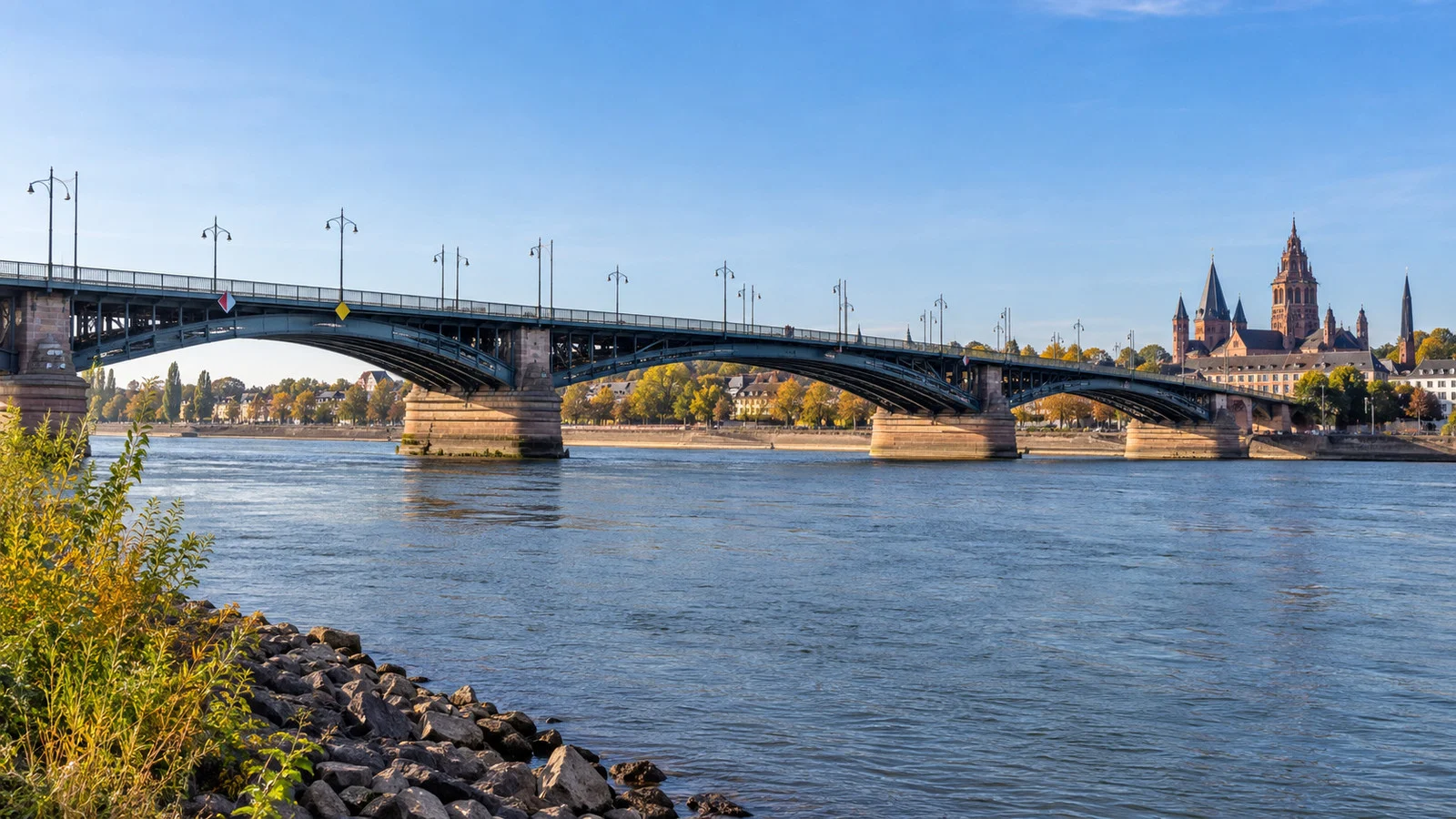
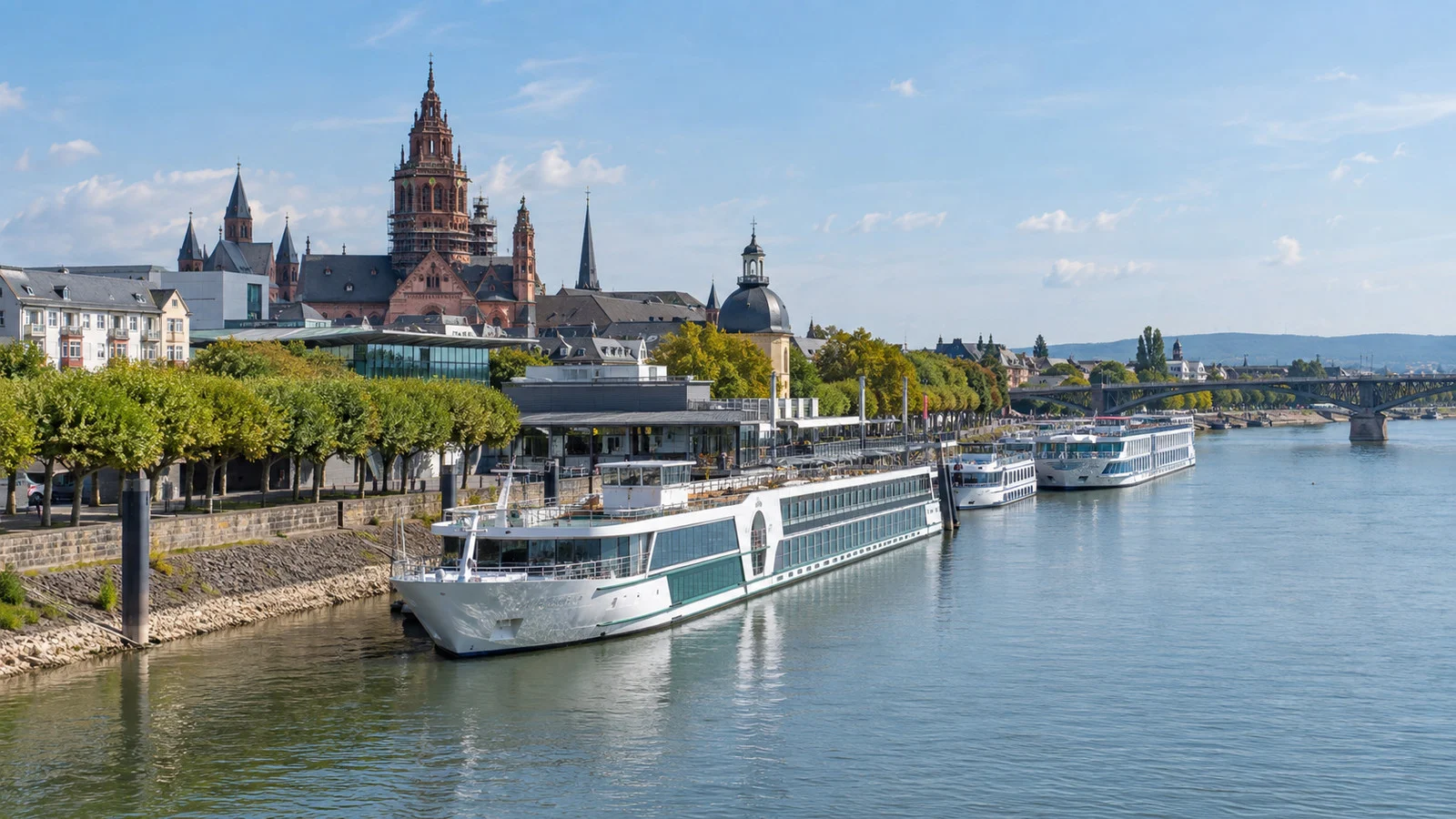
Mainz does not have one single cruise terminal. The city’s official landing-stage information identifies 11 Steiger along the Rhine, seven belonging to shipping companies and four managed by the municipal operator.
That distinction matters because two passengers on different sailings can have noticeably different walks into town. Your daily program or reception desk should provide the stage number, and that is the detail worth saving to your phone.
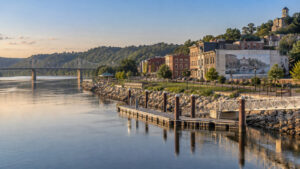
The central riverbank is a pleasant promenade, and the cathedral towers provide a useful visual reference once you turn inland. Still, use the named berth for the return journey because multiple vessels may be moored along similar-looking sections of quay.
The city says its four municipal stages have offered shore power since summer 2024. That operational improvement is good news for the riverfront, though it does not change the passenger routine of checking the gangway location and all-aboard time.
Walking From the Rhine to Old Town
From a central berth, aim first for Mainz Cathedral and the Markt square beside it. The direct route is generally simple, but road crossings, riverside paths, and the precise mooring position can add time.
Once you reach Markt, the city becomes compact and intuitive. The cathedral, colorful market houses, Gutenberg sights, Kirschgarten, and Augustinerstraße all fit comfortably into a focused walking loop.
Do not overplan this port with a long checklist. Mainz rewards slow details, from carved doorways and red sandstone to bakery windows and the easy rhythm of a wine city that is also the capital of Rhineland-Palatinate.
Mainz Cathedral
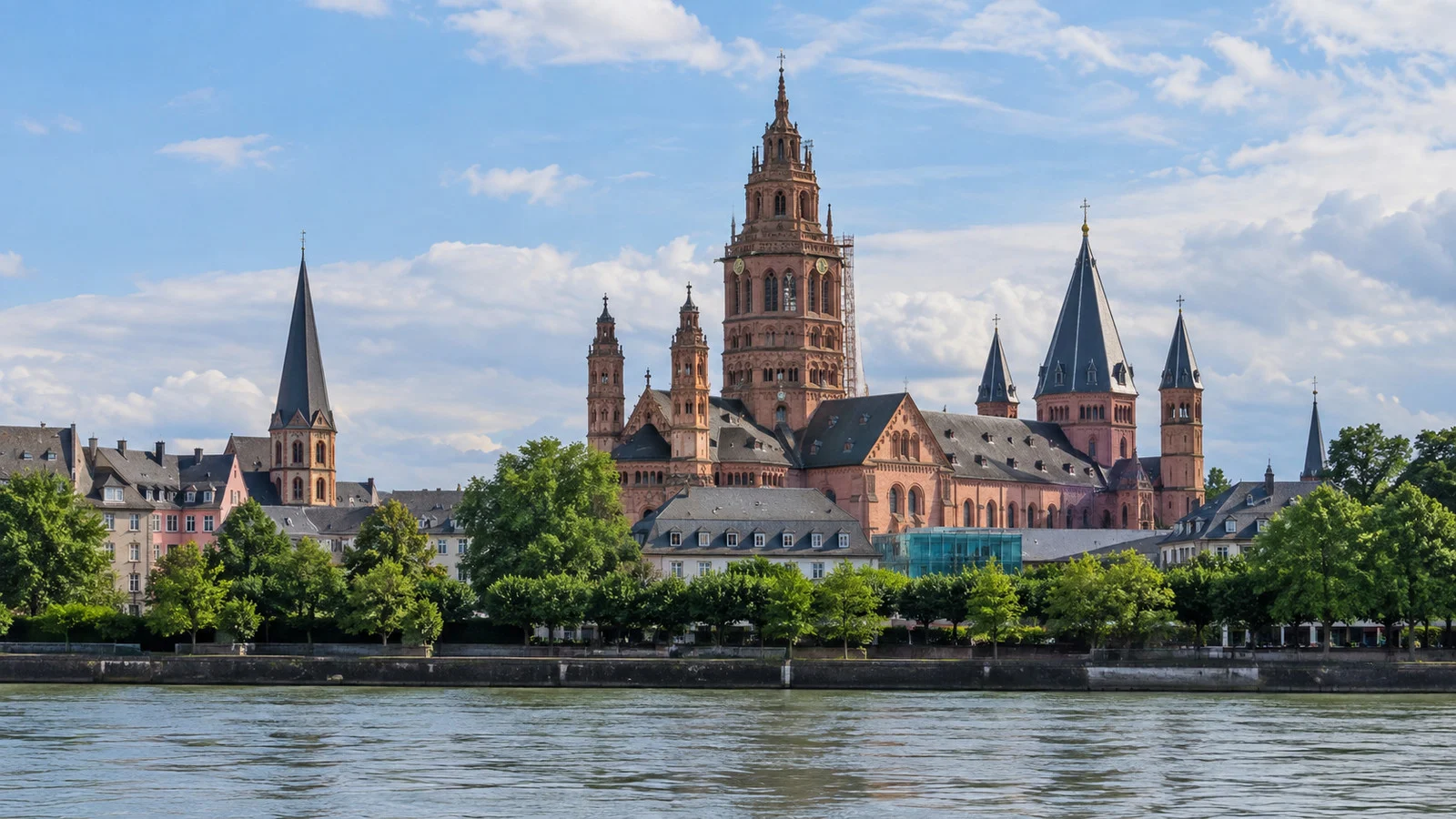
The thousand-year-old cathedral is the natural anchor for a first visit. Its massive red sandstone exterior dominates the center, while the interior brings together Romanesque foundations, later additions, funerary monuments, chapels, and a sense of history that survives even when the square outside is busy.
Admission to the main church is normally free, but worship always takes priority over tourism. The cathedral’s official visitor information lists general opening hours of 9 a.m. to 5 p.m. on weekdays and 1 p.m. to 5 p.m. on Sundays and public holidays outside liturgical services, so recheck before relying on a narrow time window.
The main entrance at Markt and the Domstraße entrance are step-free. An accessible restroom is near the Domstraße entrance, although the transept, Gotthard Chapel, and lower chapels are difficult or inaccessible for wheelchair users.
Give the cathedral at least 30 minutes if you enjoy architecture. If your call is short, a quiet circuit of the nave and a look at the cloister area can still deliver a meaningful visit without turning the day into a race.
Gutenberg Museum MOVED
Johannes Gutenberg was born in Mainz, and the museum devoted to printing is one of the city’s essential stops. The original museum complex near the cathedral is being replaced, so visitors must use the temporary exhibition officially branded “Gutenberg Museum MOVED” at Reichklarastraße 1.
Do not follow an old guidebook straight to the former entrance and assume the museum is closed. Use the temporary address in your map, then allow extra walking time from the cathedral compared with the old location.
The official visitor service currently lists opening from 9 a.m. to 6 p.m. Monday through Wednesday and Friday through Sunday, with extended Thursday opening until 8 p.m. Adult admission is listed at €10, and the temporary museum is wheelchair accessible with an elevator.
Highlights center on Gutenberg’s achievement, early printed books, type, and the transformation of communication. Even travelers who do not usually choose technical museums often find the combination of craftsmanship and world-changing ideas more engaging than expected.
The museum’s print shop has separate hours and programming, so do not assume every demonstration runs throughout the full museum day. Check the official schedule if hands-on printing is a priority.
Old Town Streets, Squares, and Wine
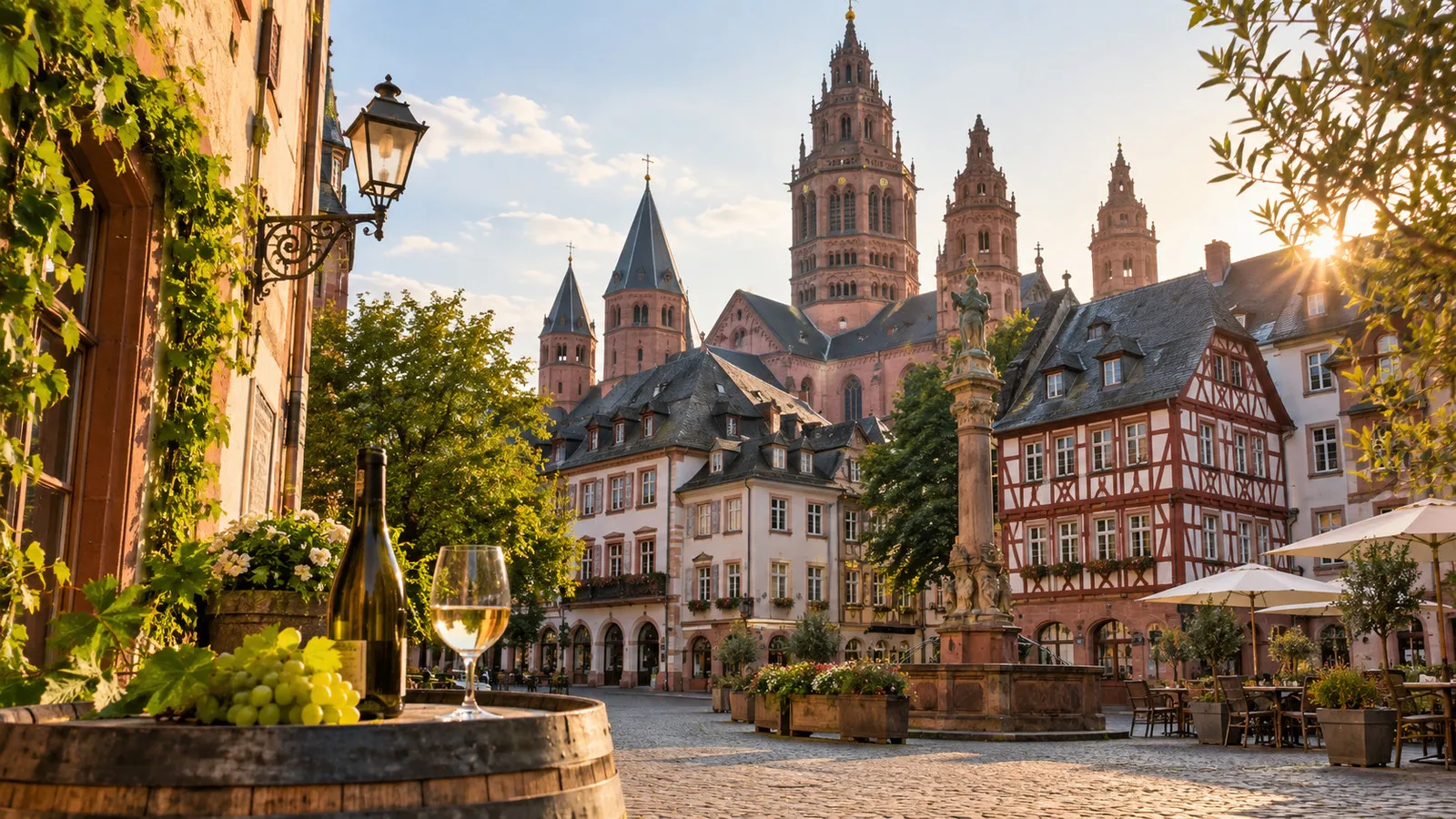
Kirschgarten is the postcard corner of Mainz, framed by half-timbered houses and narrow lanes. It is lovely, compact, and often photographed, so it works best as one part of a broader wander rather than the sole goal.
Continue along Augustinerstraße for shops, façades, cafés, and the richly decorated Augustinerkirche. The church can be easy to miss from the street, but its interior is one of the most memorable Baroque spaces in the center when open.
Mainz sits in Germany’s largest wine-growing state and acts as a gateway to the Rheinhessen region. A glass of local wine in a Weinstube can be as characteristic as another monument, provided you leave a sensible buffer before sailing.
Look for seasonal dishes and regional cooking rather than expecting one universal Mainz menu. Wine taverns range from traditional rooms to modern bars, and opening patterns can favor late afternoon or evening, which does not always align with a daytime call.
St. Stephen’s and the Chagall Windows
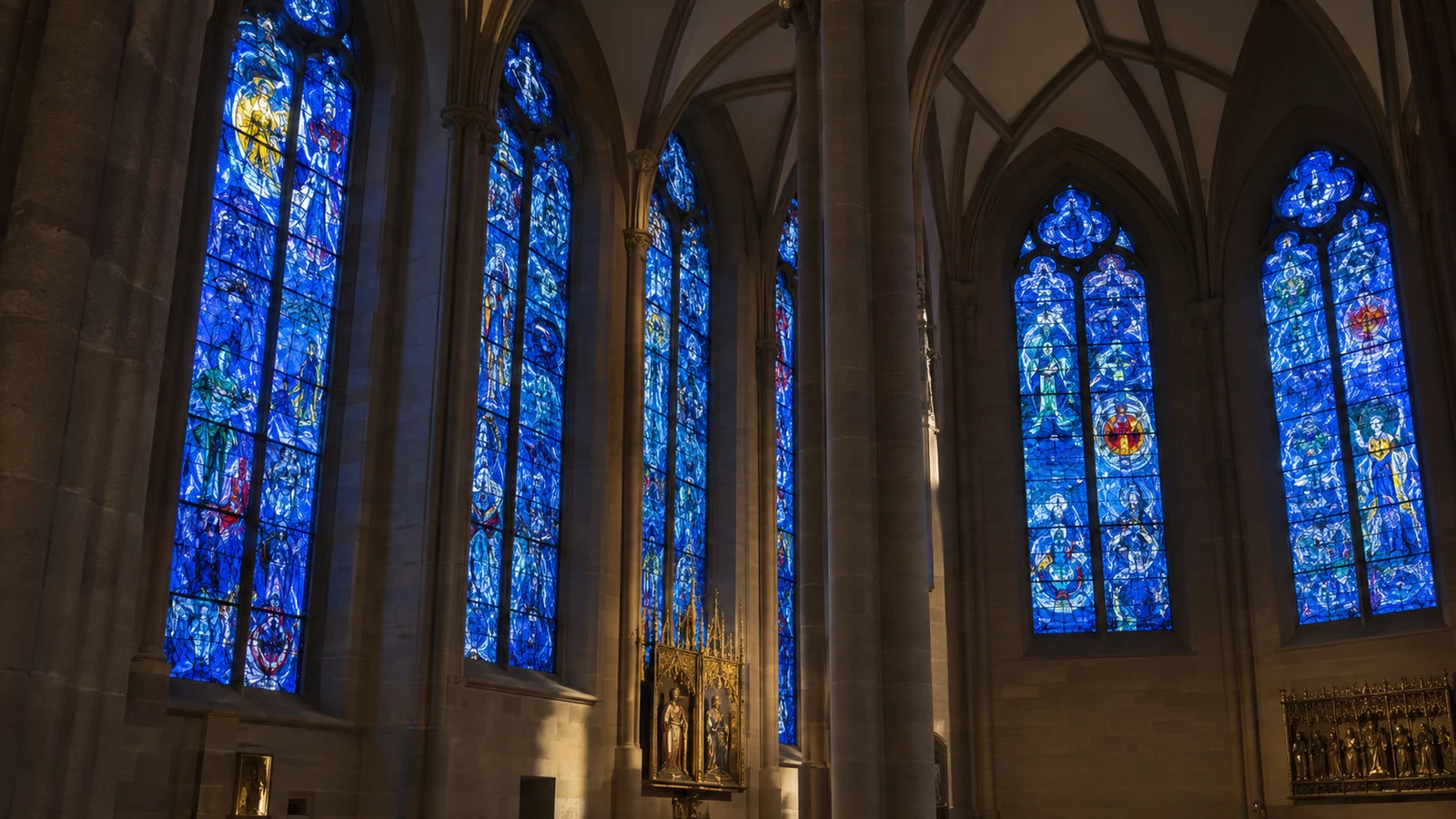
St. Stephen’s Church is famous for luminous blue stained-glass windows by Marc Chagall. The interior feels completely different from the cathedral, and the windows carry a message of reconciliation that gives the visit more depth than a quick photo stop.
The church stands uphill from the oldest streets, so budget both time and effort. Travelers with limited mobility may prefer a taxi for this portion, especially if rain makes the route less comfortable.
Opening can be affected by services, concerts, and church needs. Check the parish information close to your visit and remain quiet if prayer is underway.
Roman and Jewish Mainz
Mainz began as Roman Mogontiacum, and traces of that long history appear across the modern city. The Roman Theatre near Mainz Römisches Theater station is among the most visible remains, while museum access and exhibition status can change as institutions renovate or reorganize.
The city also shares in the Jewish heritage of the ShUM communities of Speyer, Worms, and Mainz, recognized by UNESCO. Much of this story requires context rather than a single dramatic monument, so a specialist guided walk can be worthwhile for travelers who want to understand it properly.
Do not treat the Jewish cemetery as a casual shortcut or photo backdrop. If you visit a religious or memorial site, follow posted rules, dress respectfully, and allow its history to shape the pace of the stop.
Using Local Transit
Mainz has buses, trams, regional trains, and an S-Bahn connection across the Rhine to Wiesbaden and toward Frankfurt. For a standard Old Town visit from a central berth, most passengers will not need transit at all.
Transit becomes useful for Mainz Hauptbahnhof, St. Stephen’s, more distant berths, or an independent trip beyond the center. Check Mainzer Mobilität or the regional transport planner on the day, because ticket zones, prices, construction diversions, and stop patterns can change.
Validate or activate the correct ticket as instructed by the operator rather than assuming every ticket works the same way. Keep enough time for the return, and remember that a delayed regional train does not change your ship’s departure.
Mainz, Wiesbaden, or Rüdesheim?
Wiesbaden is just across the Rhine and offers grand nineteenth-century architecture, thermal-spa heritage, and a more formal urban atmosphere. It is a reasonable independent option on a longer call, but it uses time that could otherwise go to Mainz’s core sights.
Rüdesheim delivers vineyards, the Drosselgasse, cable-car views, and a classic Rhine tourism experience. It is better suited to a ship excursion or a carefully timed rail plan, and many Rhine itineraries call there separately.
For a first Mainz call of half a day, staying local is usually the stronger choice. The cathedral, printing history, old lanes, and wine culture form a coherent day without transport risk.
Accessibility and Comfort
The Rhine promenade is largely level, and several principal streets have smoother sections. Challenges include gangway gradients, cobbles, curb transitions, construction, and the uphill approach to St. Stephen’s.
Ask the ship about the specific gangway and berth because river levels can change the boarding angle. A companion, compact mobility aid, or short taxi ride may make a bigger difference than the map suggests.
Mainz Cathedral provides step-free entry through the Markt and Domstraße entrances, but not every chapel is accessible. Gutenberg Museum MOVED is listed as wheelchair accessible and has an elevator, making it one of the easier major indoor choices.
Public restrooms are not always obvious in historic centers. Use facilities when available at museums or cafés, and keep small euro coins or a payment card ready in case an attended facility charges a fee.
Weather, Water Levels, and What to Wear
Rhine weather can shift quickly, and exposed riverfront sections often feel cooler or windier than sheltered squares. Layers, a light waterproof jacket, and shoes with grip work better than dressing for the forecast’s warmest hour.
High or low water may alter a river cruise itinerary, mooring location, or transportation arrangement. Follow the cruise director’s same-day guidance, since a general port guide cannot predict operational changes for a particular sailing.
Three Practical Mainz Plans
A Short Call
Walk from the berth to Markt, visit Mainz Cathedral, circle through Kirschgarten and Augustinerstraße, then return by the riverfront. Add a bakery or coffee stop only after confirming that your time buffer is intact.
A Balanced Half Day
Start with the cathedral before crowds build, continue to Gutenberg Museum MOVED, and finish with the Old Town lanes and a local lunch. This plan gives Mainz’s two strongest themes, religion and printing, enough room to breathe.
A Longer Cultural Day
Combine the cathedral, Gutenberg Museum, and Old Town with St. Stephen’s or a guided Roman and Jewish heritage walk. Choose one deeper extension rather than attempting Wiesbaden and Rüdesheim on the same port call.
Common Questions
Can I walk into Mainz from the ship?
Usually yes from the central landing stages, but Mainz has 11 stages and walking time varies. Confirm the exact berth before deciding whether everyone in your party is comfortable with the route.
Is the Gutenberg Museum closed?
The former museum complex is being replaced, but the collection has a temporary presentation called Gutenberg Museum MOVED at Reichklarastraße 1. Check the official museum page for current hours, tickets, and print-shop programming.
What should I see first?
Mainz Cathedral is the best first landmark because it is central, visually distinctive, and close to the oldest streets. Pair it with the Gutenberg Museum if printing history interests you, or with St. Stephen’s if stained glass is the priority.
Is Mainz good for independent sightseeing?
Yes, especially for passengers comfortable walking and navigating with a saved berth pin. The main caution is not distance but losing track of which similar-looking landing stage belongs to your ship.
How much time should I keep for the return?
Build in more time than the outbound walk took, particularly if you are using transit or visiting uphill St. Stephen’s. Return deadlines from the ship always take priority over a museum’s closing time or one final shop.
Final Take
Mainz is at its best when treated as a compact city of big ideas rather than a launchpad for too many side trips. Get the berth right, give the cathedral and Gutenberg story proper time, then let the old lanes and wine culture fill the space between them.
How this guide was researched: No firsthand visit is claimed. Berth, shore-power, cathedral, museum, accessibility, and transit details were checked September 12, 2026, against the City of Mainz, Wirtschaftsbetrieb Mainz, the Diocese of Mainz, Gutenberg Museum, Mainz Tourism, and official transit sources.
Information and opening times can change, so verify critical details with the cruise line and official local sources before your visit. This guide is for general planning and does not replace your operator’s same-day instructions.