Maastricht River Cruise Port: Maas Landings, Caves and Old Town
Maastricht is the Netherlands with the geography turned up a notch. The Maas cuts through a compact old city, limestone hills rise just beyond the center and an entire underground world waits beneath Sint Pietersberg.
For river cruisers, the happy surprise is that Maastricht is usually a walk-off city rather than a motorcoach-to-the-center puzzle. The important qualification is “usually,” because hotel ships, local sightseeing boats and private vessels do not all use one universal pier.
Read the daily program before plotting your first coffee, then enjoy a city whose Romanesque churches, formidable fort and excellent pastry habits can comfortably fill a call. Maastricht does not need windmills to prove it is Dutch.
Maastricht river cruise port quick facts
- Into Town: River-cruise stages near Stadspark and Graanmarkt are central; exact gangway varies, but the historic center is normally walkable.
- Currency and Language: Euro (EUR). Dutch is official; Limburgish is widely spoken locally, and English is common in visitor-facing businesses.
- Time Zone: Central European Time, UTC+1 in winter and UTC+2 during daylight saving time.
- Operational note: Meuse flow, locks, bridge clearance, berth scheduling, and route changes can alter the call. No audited local missed-call rate is published.
A shifted berth, motorcoach visit, or altered arrival time does not necessarily remove the Maastricht visit. Follow the operator’s daily program and current Rijkswaterstaat notices.
Quick take
First-time visitors should walk from the river to Onze Lieve Vrouweplein, Vrijthof and Markt, then choose one deeper experience. Make that the North Caves if you enjoy unusual guided history, or Fort Sint Pieter if views and military architecture win.
Do not casually add “the caves” to a city stroll. Cave access is guided, tickets have times, the meeting points differ and Sint Pietersberg sits uphill from the old center.
If the call is short, stay in the center and let Maastricht be Maastricht. Stone lanes, two basilicas and Limburg vlaai make a stronger afternoon than a cave reservation approached at the speed of panic.
Do river cruises really call at Maastricht?
Yes. Maastricht is an active Maas, or Meuse, river-cruise call on itineraries linking the Dutch waterways with Belgium and the Rhine system.
AMADEUS publishes a 2026 Holland and Belgium itinerary that schedules Maastricht from 13:00 to 19:00. Nicko Cruises also lists a 2026 Maastricht call on a route using the Rhine, Meuse, Scheldt and connecting canals.
Those examples prove current cruise activity, not which pier your vessel will use. Operators can adjust timing and routing for navigation, and embarkation sailings may use a different operational position from a six-hour transit call.
The landing system in plain English
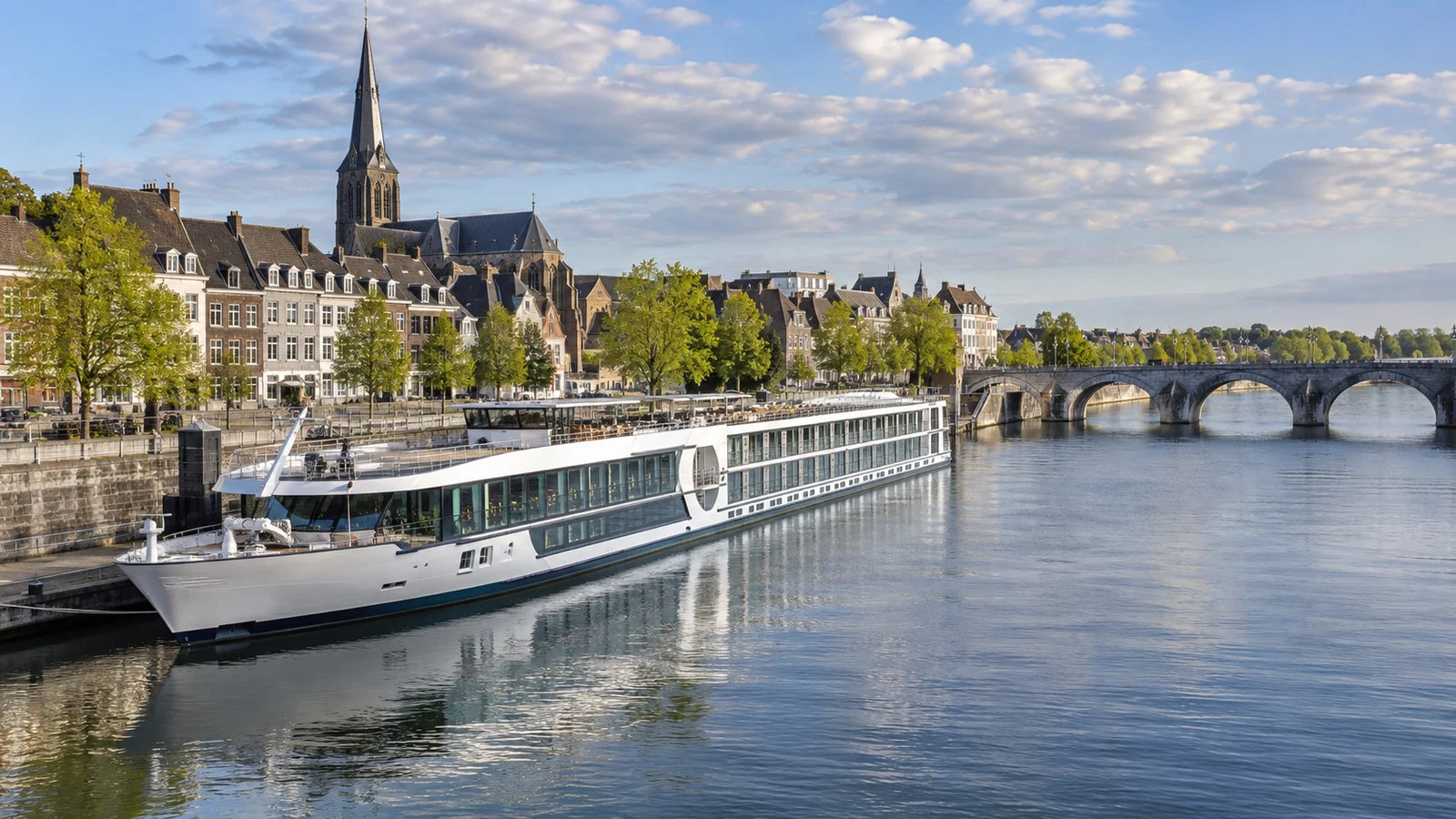
Maastricht does not have one branded terminal where every hotel ship reports. The useful public record is a municipal river-cruise landing project describing two stages near Stadspark and Graanmarkt on the west side of the Maas.
The City of Maastricht’s official landing-stage file says the river-cruise facilities were operated by Rederij Stiphout under a Rijkswaterstaat concession. The upgrade design reserved the stage near Sint Servaasbrug for smaller boats and planned the Hoge Brug-side position for larger vessels up to about 443 feet.
That document is excellent evidence of intended infrastructure, but it dates from the upgrade process and is not a 2026 ship-assignment board. Your operator’s final instructions decide the precise gate, rafting arrangement and luggage-transfer point.
Expect a direct riverbank gangway, not an ocean terminal with check-in halls and rows of taxis. Facilities immediately ashore depend on the exact stage, and gangway slope changes with the river.
Do not confuse the hotel-ship pier with the sightseeing-boat docks
Rederij Stiphout advertises its local sightseeing-boat docks at Maaspromenade 58 between Sint Servaasbrug and Wilhelminabrug. Those excursion vessels offer city cruises, lock trips and sailings toward Liège.
The operator’s current departure page is useful if you have independently booked one of its outings. It does not prove that your roughly 361-foot or 443-foot hotel ship will tie up beside the same ticket office.
Likewise, Maastricht Marina at Pietersplas serves private vessels and boats up to about 115 feet, not standard long river-cruise ships. A map search for “marina” can therefore send you somewhere impressively wrong.
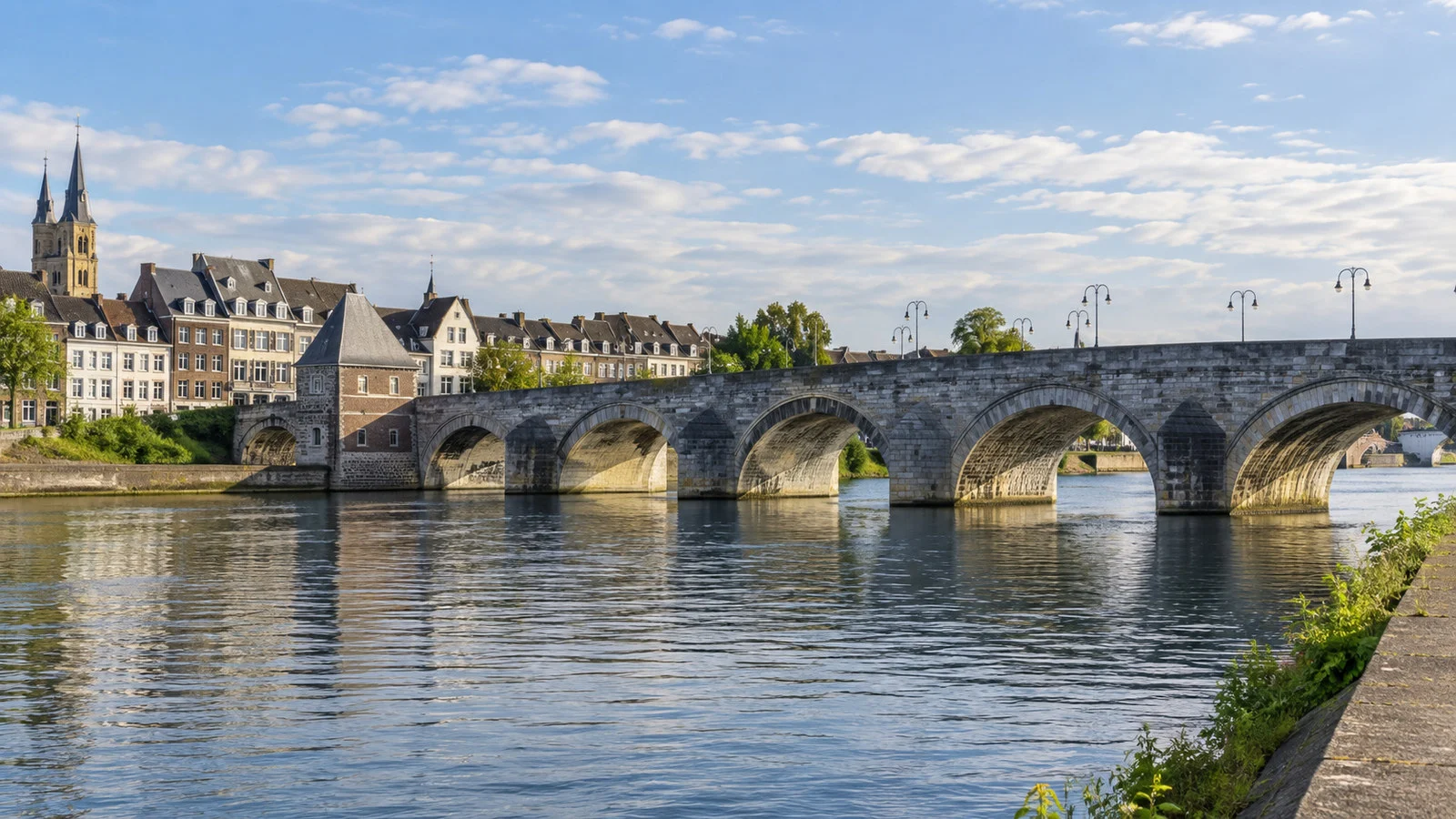
How far is the historic center?
From the Stadspark and Graanmarkt cruise area, the old center begins almost immediately. Onze Lieve Vrouweplein is the natural first target, followed by the narrow shopping streets, Vrijthof and Markt.
Allow roughly 10 to 20 minutes from the gangway to the heart of the center, an editorial walking range rather than a fixed port measurement. The exact stage, rafting, traffic crossings, cobblestones and your preferred relationship with shop windows all affect it.
If assigned farther north or moved for operations, follow the crew’s route instead of assuming the Graanmarkt walk. Maastricht remains compact, but “city-center call” is not a substitute for knowing where the gangway landed today.
A walking route that earns its vlaai
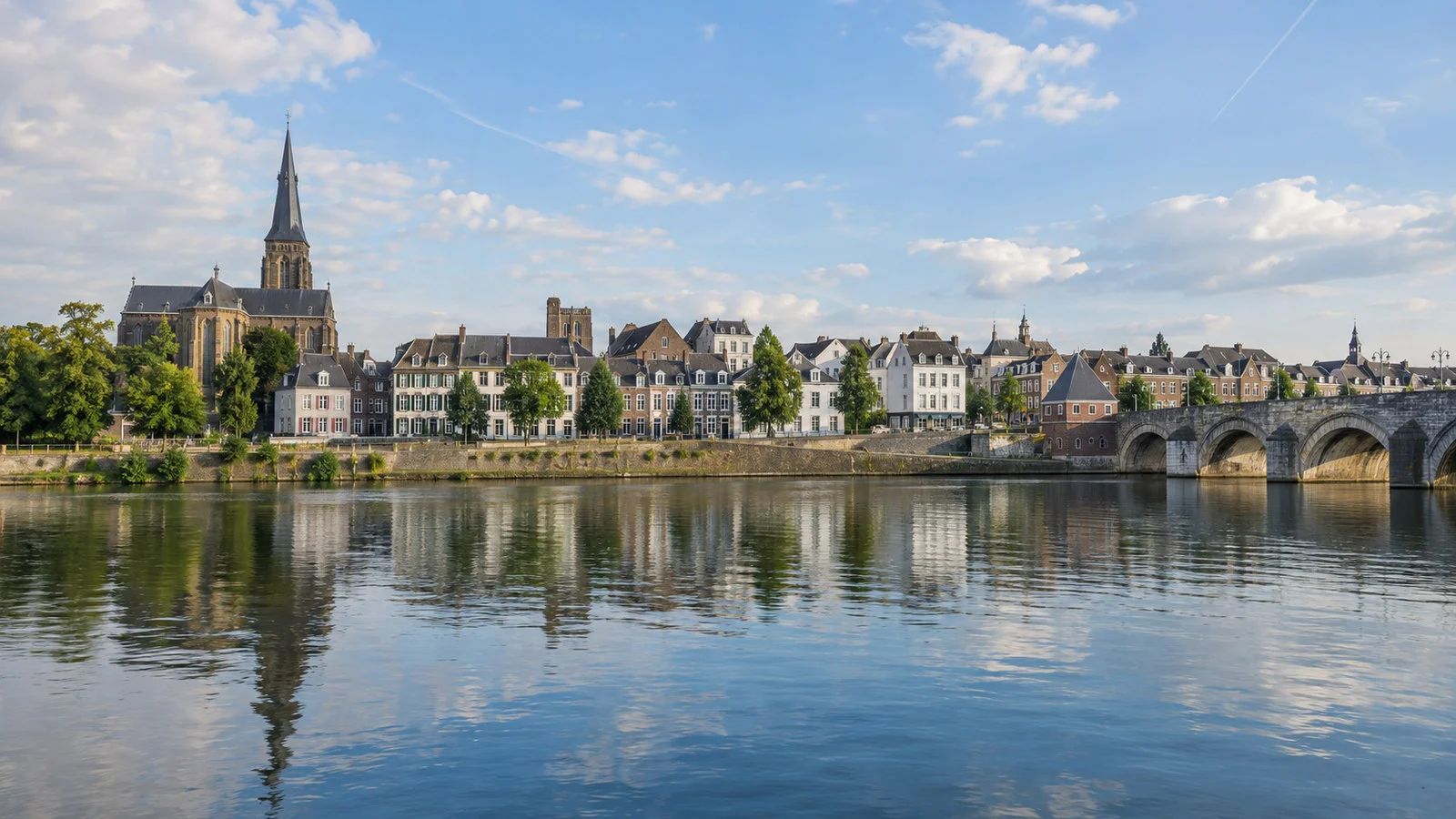
Begin at the Maas and walk toward Onze Lieve Vrouweplein, where the heavy westwork of the Basilica of Our Lady makes an immediate architectural statement. Continue through the old lanes to Vrijthof, Maastricht’s broad gathering square.
At Vrijthof, the Romanesque Basilica of Saint Servatius and red tower of Saint John’s Church stand side by side. Church hours, services and paid areas can change, so check the door notice and treat active worship spaces as more than photogenic interiors.
Continue to Dominicanen, a bookstore inside a former Dominican church, then finish at Markt with the 17th-century town hall. Loop back by Sint Servaasbrug, the historic stone bridge that gives you a fine look at both banks and the neighboring Wyck district.
Budget two to three hours for this loop with one church interior, coffee and browsing, an editorial range. Maastricht rewards looking into courtyards and side lanes, which is why a rigid checklist feels unusually impolite here.
Fort Sint Pieter is close, uphill and not casual
Fort Sint Pieter sits south of the center at Luikerweg 80, high above the Maas. Built around 1701, it protected Maastricht’s southern approach and now opens through guided visits rather than unrestricted wandering through every passage.
The official Fort Sint Pieter guide describes underground corridors, restored defenses and broad views over the city. The attraction is reachable on foot, by local transportation or taxi, but the final approach climbs.
Explore Maastricht places the fort roughly 30 minutes on foot from its visitor center in the old city. From a river landing, allow more margin and use live directions because your starting point and the hill matter.
The fort tour is not wheelchair accessible and is unsuitable for many people with walking difficulties due to stairs and historic surfaces. The exterior viewpoint may still be possible with suitable transport, but confirm the route rather than extrapolating from the parking icon.
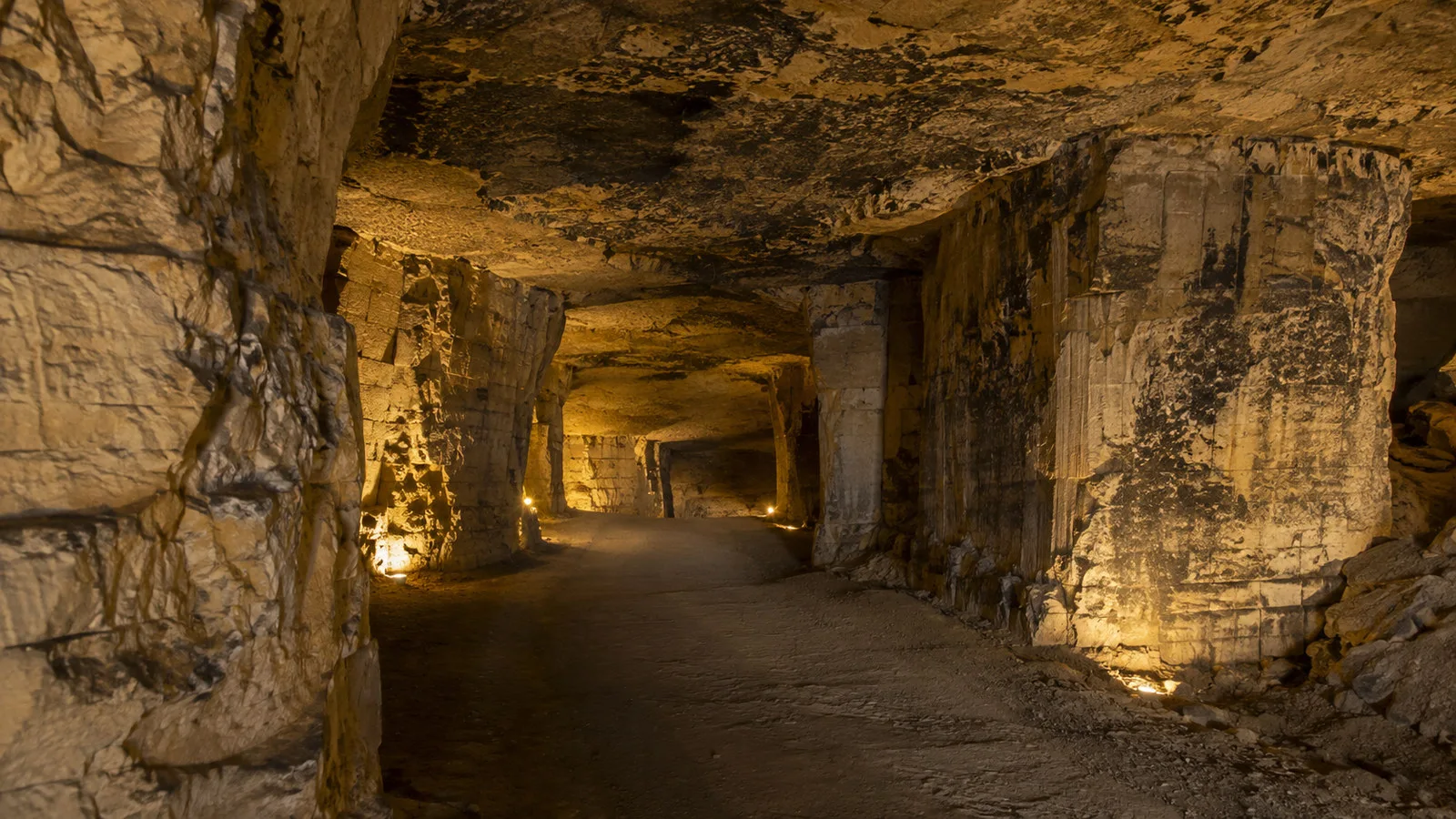
The Maastricht caves are guided-only attractions
Maastricht’s famous “caves” are primarily networks of human-cut marl passages, not natural caverns with stalactites. North Caves and Zonneberg Caves have different entrances, stories and tour products.
The official Maastricht Underground schedule lists guided experiences for the North Caves, Zonneberg, Fort Sint Pieter, the Casemates and a former NATO headquarters. You cannot safely explore these systems without a guide, and the operator expressly prohibits independent entry.
A standard North Caves tour lasts about 70 minutes and begins at Luikerweg 80 beside Fort Sint Pieter. The passages include drawings and inscriptions, while a separate extended product visits the wartime art-storage vault.
Zonneberg tours begin at Slavante 1, farther south, so a North Caves ticket and a Zonneberg map pin are not interchangeable. Read the product name, meeting address, language and start time before leaving the riverfront.
The temperature underground stays around 52°F throughout the year. Bring a layer and shoes with grip, even when the riverside weather suggests that sleeves are a personal failure.
Cave accessibility has an important asterisk
Explore Maastricht says the North and Zonneberg cave systems can accommodate wheelchair users, but the route from meeting point to cave entrance includes a steep slope. It recommends an electric wheelchair and advises against the caves for visitors relying on a walker, cane or crutches.
The fort and Casemates are not wheelchair accessible because of many stairs. Those differences are exactly why “underground tour” is not a useful accessibility category by itself.
Contact the attraction and cruise operator before purchasing if you need step-free transport, companion assistance or device storage. The site’s river cruise accessibility guide provides a concise list of gangway and excursion questions.
Can you combine the center, fort and caves?
Yes on a long call, but only with a reservation and disciplined transport. A sensible sequence is a morning or early-afternoon cave tour, a look at the fort exterior, then a downhill return for Vrijthof and the old center.
On a shorter call, use the operator’s stated return margin between the advertised end of your underground tour and all-aboard. Leave extra time for the uphill meeting route, tour overrun, return transport, and a possible rafted berth.
Do not book North Caves and Zonneberg back to back unless the operator sells the combination and explains the transfer. The two entrances are separated, and the word “caves” has caused enough false confidence already.
A gentle Maastricht plan
Stay near river level and focus on Onze Lieve Vrouweplein, the shopping lanes, Markt and the edge of Vrijthof. Build in a seated cafe stop, because Maastricht takes hospitality seriously and your feet deserve diplomatic relations.
Cobblestones, curb transitions and bridge approaches still require care, but the central route is more adaptable than the fort. Ask the visitor center about a step-conscious route, and never assume an old church entrance is step-free because the square is flat.
If the ship offers a panoramic city ride, verify whether it uses a low-entry vehicle and whether mobility devices can be carried. A tourist train is transportation-shaped, but that does not make every model accessible.
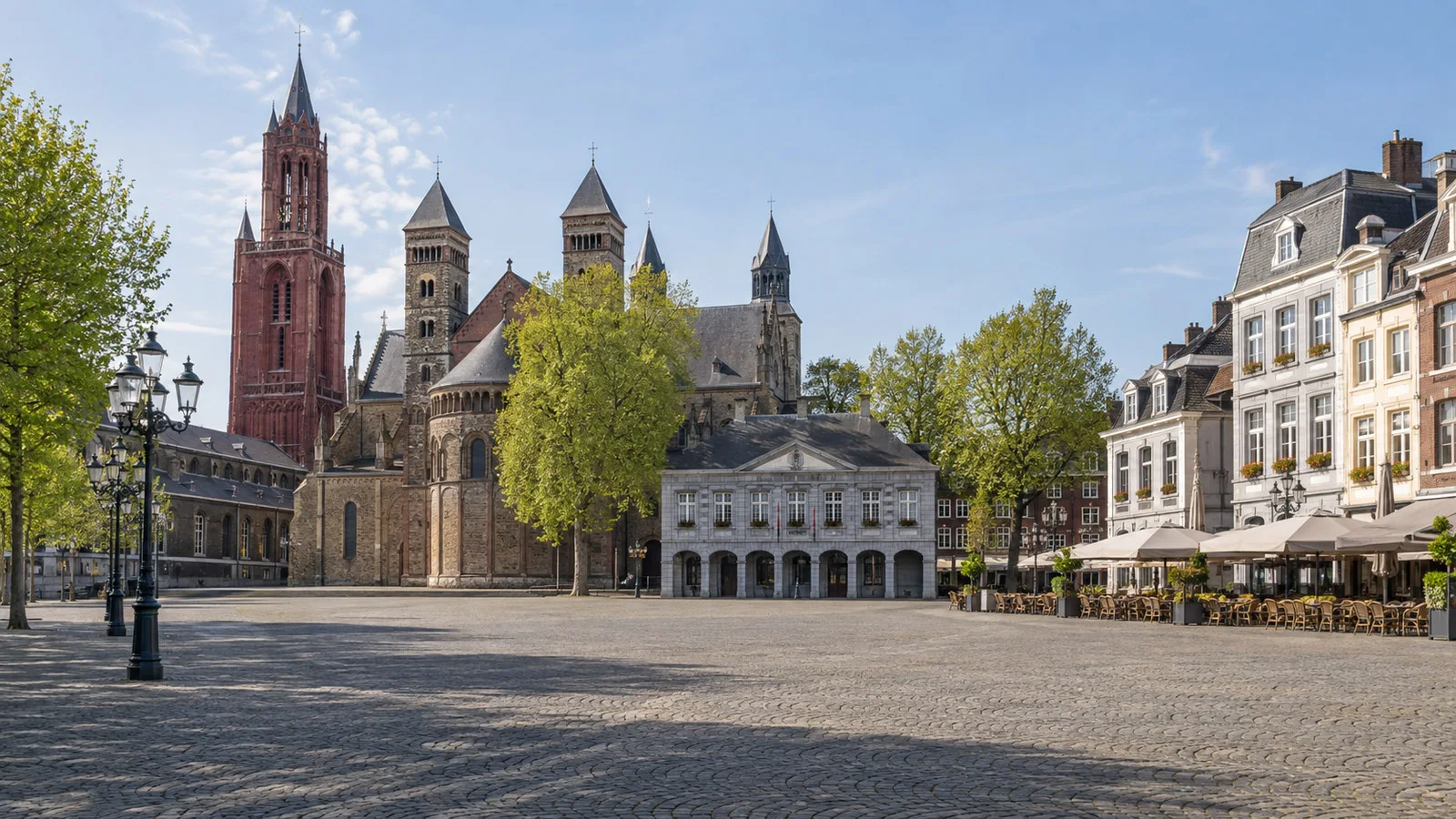
Food and money ashore
Maastricht uses the euro and cards are widely accepted, though a small amount of cash remains useful for market purchases and tiny businesses. Ask whether a card minimum applies before assembling a very committed pastry order.
Limburgse vlaai is the obvious local treat, traditionally a shallow yeast-based pie with fruit, rice or other filling. Choose a bakery or cafe displaying whole slices rather than sacrificing the schedule to a formal lunch.
The city also has a strong cafe and restaurant culture shaped by its position near Belgium and Germany. Reserve any destination meal, disclose your departure deadline and leave enough time to walk back without converting dessert into cardio.
How reliable is the Maastricht call?
The Maas route is managed with locks, weirs and canals, which makes it navigable but not immune to disruption. Rijkswaterstaat explains that seven weirs regulate depth on the Dutch Maas and that commercial traffic uses the Julianakanaal where the undammed Grensmaas is not navigable.
Rijkswaterstaat’s official Maas waterway page also links live water levels and navigation notices. High discharge can create difficult currents near Borgharen, while extreme conditions or infrastructure incidents can restrict the route.
Low water may also affect draft, gangway angle or an operator’s ability to maintain the wider itinerary, even where controlled reaches retain navigable depth. Bridge clearance, lock timing and berth conflicts can matter as much as the number on a water gauge.
No audited Maastricht cancellation series was found. The site’s river cruise water-level guide explains why operators may change a call, transfer guests, or reroute through connected waterways.
Practical checks before Maastricht
Ask for the exact Maas landing, rafting position, and return landmark because the hotel-ship berth is not the same as every local sightseeing-boat dock. A changed position can still be central, but it can alter the walk, gangway, coach pickup, or accessible route.
Keep the old town as the base plan and reserve either Fort Sint Pieter or one named cave tour as the timed addition. The caves are guided only and use specific meeting points, so follow the operator’s return guidance from Sint Pietersberg and do not combine separate entrances without checking the schedule.
Check Netherlands and Schengen entry rules, current tour prices, clothing advice, and cancellation terms before booking. Raft crossings, hill gradients, cave darkness and surfaces, stairs, cool underground temperatures, rain, and Maas navigation can each affect timing or accessibility.
Quick answers
Where do river cruises dock in Maastricht:
Municipal records identify river-cruise stages near Stadspark and Graanmarkt, but the operator controls the exact stage and rafting arrangement.
Can I walk from the ship to Maastricht’s old center:
Usually yes from the central river-cruise stages; confirm the gangway location before relying on a specific walking time.
Are the Maaspromenade sightseeing docks my cruise berth:
Not necessarily; they are Rederij Stiphout’s advertised local departure point, while hotel-ship assignments use separate operational instructions.
Can I visit Maastricht’s caves without a tour:
No; official Maastricht Underground sites require guided entry, and North Caves and Zonneberg use different meeting points.
Are the Maastricht caves wheelchair accessible:
The operator says both main cave systems can accommodate wheelchairs, preferably electric because of a steep approach, while the fort and Casemates cannot.
What should I do on a short call:
Walk the old center between Onze Lieve Vrouweplein, Vrijthof and Markt, then sample vlaai rather than forcing in an uphill cave tour.
How this guide was researched: No firsthand visit is claimed; current cruise, landing, waterway, sightseeing-boat, fort, and cave details were checked against AMADEUS, Nicko Cruises, the City of Maastricht, Rijkswaterstaat, Rederij Stiphout, and Explore Maastricht. Operational and time-sensitive details were reviewed September 12, 2026.