Namibia Cruise Ports: Walvis Bay and Lüderitz Compared
Namibia’s two principal cruise ports deliver the same unforgettable meeting of desert and Atlantic in completely different ways. Walvis Bay is the larger gateway for dunes, lagoon wildlife, and Swakopmund, while Lüderitz feels smaller, stranger, and beautifully shaped by diamond history.
Neither port is a place to improvise a distant desert route without understanding access, road conditions, fuel, and ship timing. Choose one focused excursion, confirm the terminal pickup, and let the scale of the landscape be the experience.
Quick Facts About Namibia Cruise Ports
- Main cruise ports: Walvis Bay and Lüderitz
- Currency: Namibian dollar, with South African rand accepted at equal face value in Namibia
- Largest cruise gateway: Walvis Bay
- Best lagoon wildlife: Walvis Bay
- Best ghost-town excursion: Kolmanskop from Lüderitz
- Best desert town extension: Swakopmund from Walvis Bay
- Weather surprise: The coast can be cool and foggy even when inland desert areas are hot
- Golden rule: Use a reputable operator for remote dunes, coast, and desert roads
Why These Ports Feel So Different
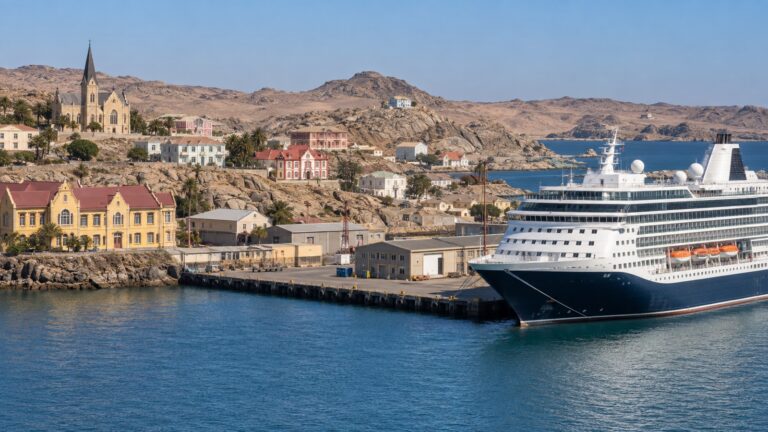
Walvis Bay is Namibia’s main seaport and includes a dedicated passenger berth within a large commercial harbor. Lüderitz is a smaller southern port surrounded by rugged coast, old German colonial architecture, and the restricted landscapes of the former diamond region.
Both calls can involve controlled port access, shuttles, taxis, or tour vehicles rather than a casual walk from the gangway. Follow the ship and Namport instructions for the active berth because cargo operations and security shape the passenger route.
Distances on a map can also be deceptive. A desert attraction may appear close while sand, permit zones, unpaved roads, fog, or a single access route makes the journey specialist territory.
Walvis Bay Cruise Port
Best for: Lagoon wildlife, Sandwich Harbour, dunes, Swakopmund, and marine trips
Arrival style: Dedicated passenger berth inside an active commercial port
Planning style: Prebook the main outing and confirm port pickup
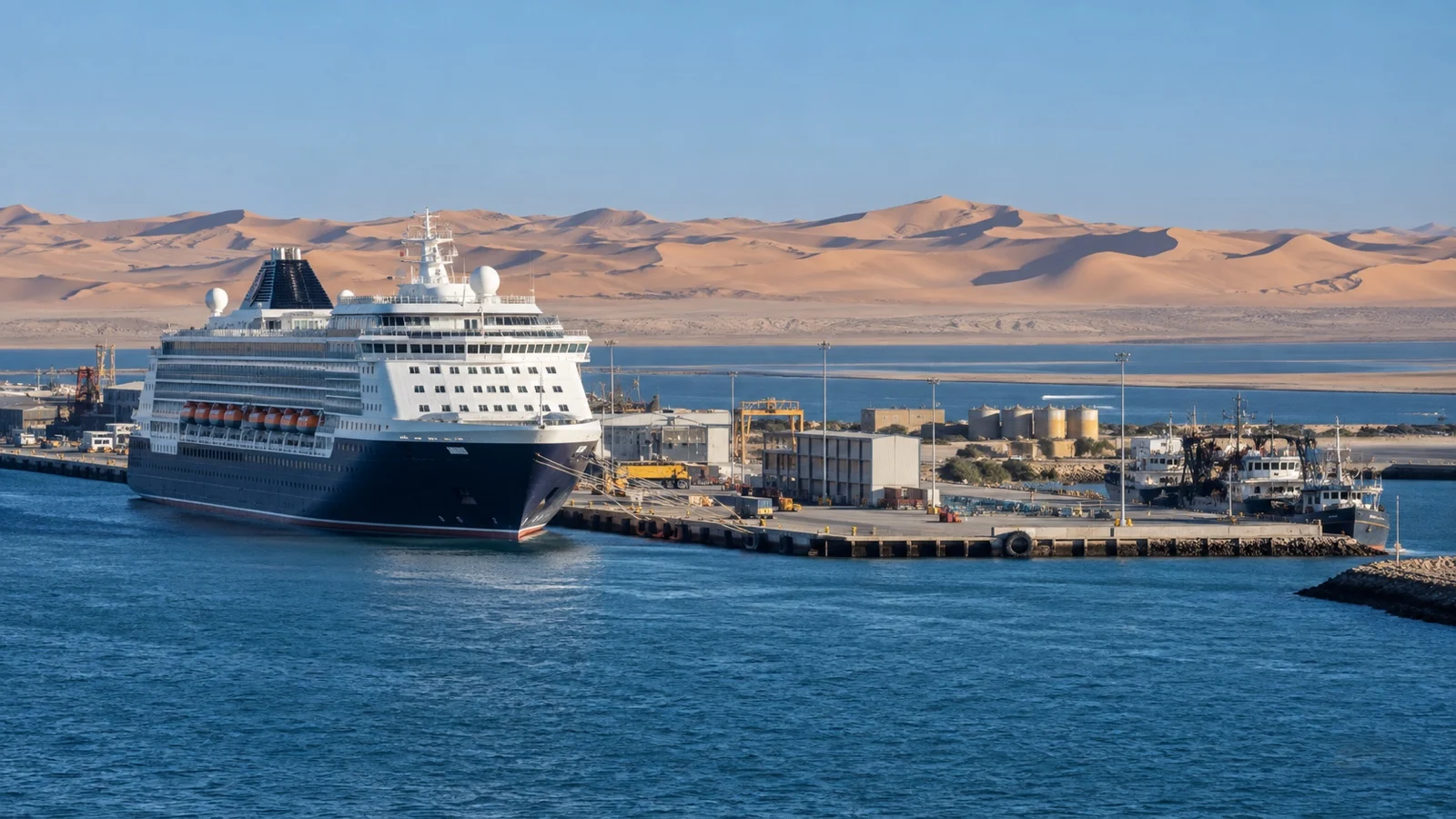
Walvis Bay is the more versatile port because it offers wildlife, desert, ocean, and town experiences within one broad region. The difficult part is resisting the urge to combine everything into a frantic loop.
Namport identifies a dedicated passenger berth among the port’s commercial facilities. That makes the ship-to-city route operational rather than scenic, so use the official shuttle, approved transport, or tour instructions.
The Walvis Bay Lagoon
The lagoon is the gentlest independent option, with birdlife, coastal views, and the chance to see flamingos when conditions and natural movement cooperate. Wildlife sightings are never guaranteed, and respectful distance matters more than a close photograph.
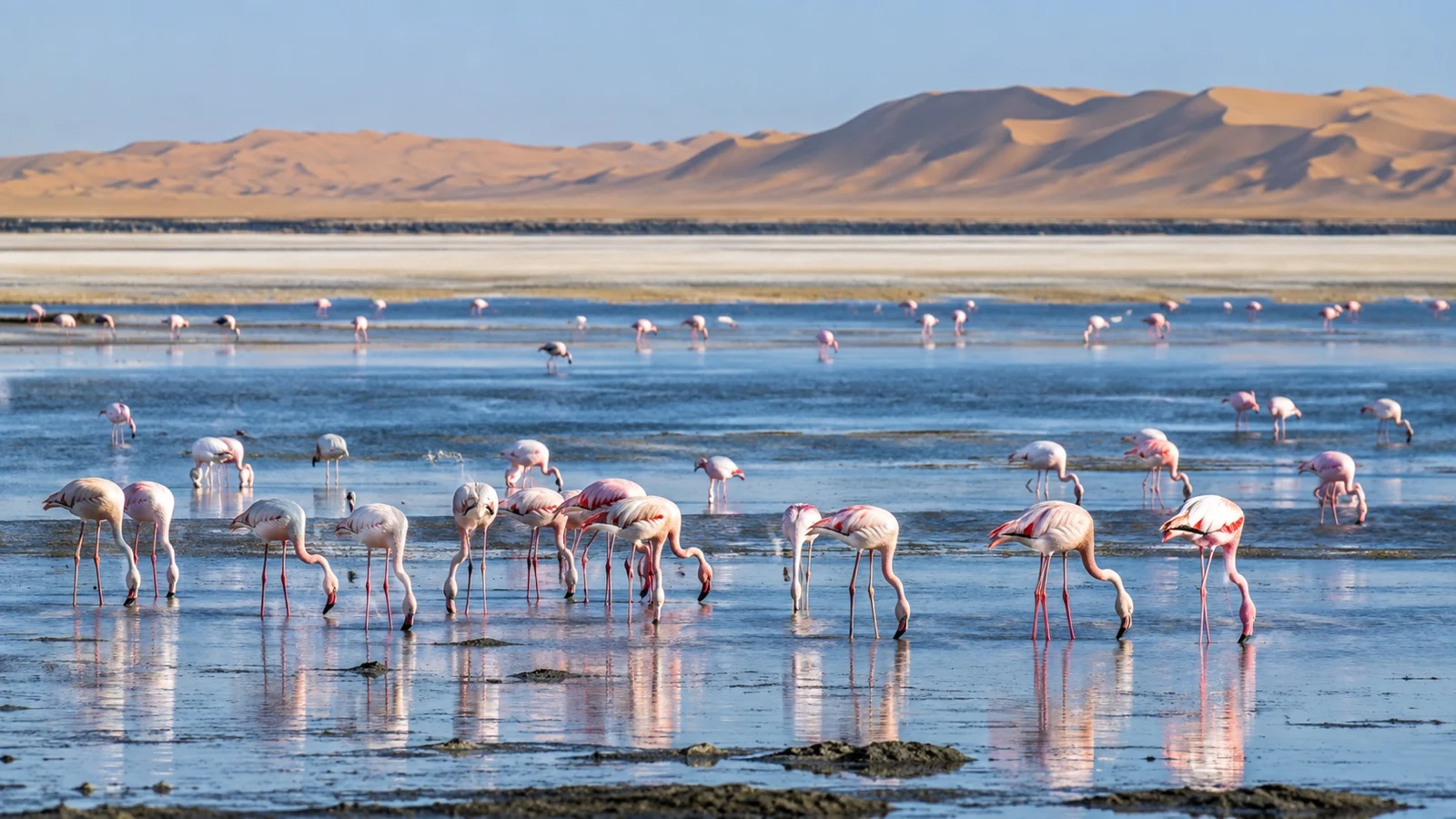
A short lagoon drive pairs well with lunch or a waterfront stop. Travelers with limited mobility should confirm whether the vehicle can reach the main viewing areas and whether surfaces are firm.
Sandwich Harbour
Sandwich Harbour is the headline adventure, where massive dunes meet the Atlantic in a landscape that feels almost impossible. Access depends on tides, sand, protected-area rules, and skilled four-wheel-drive operation.
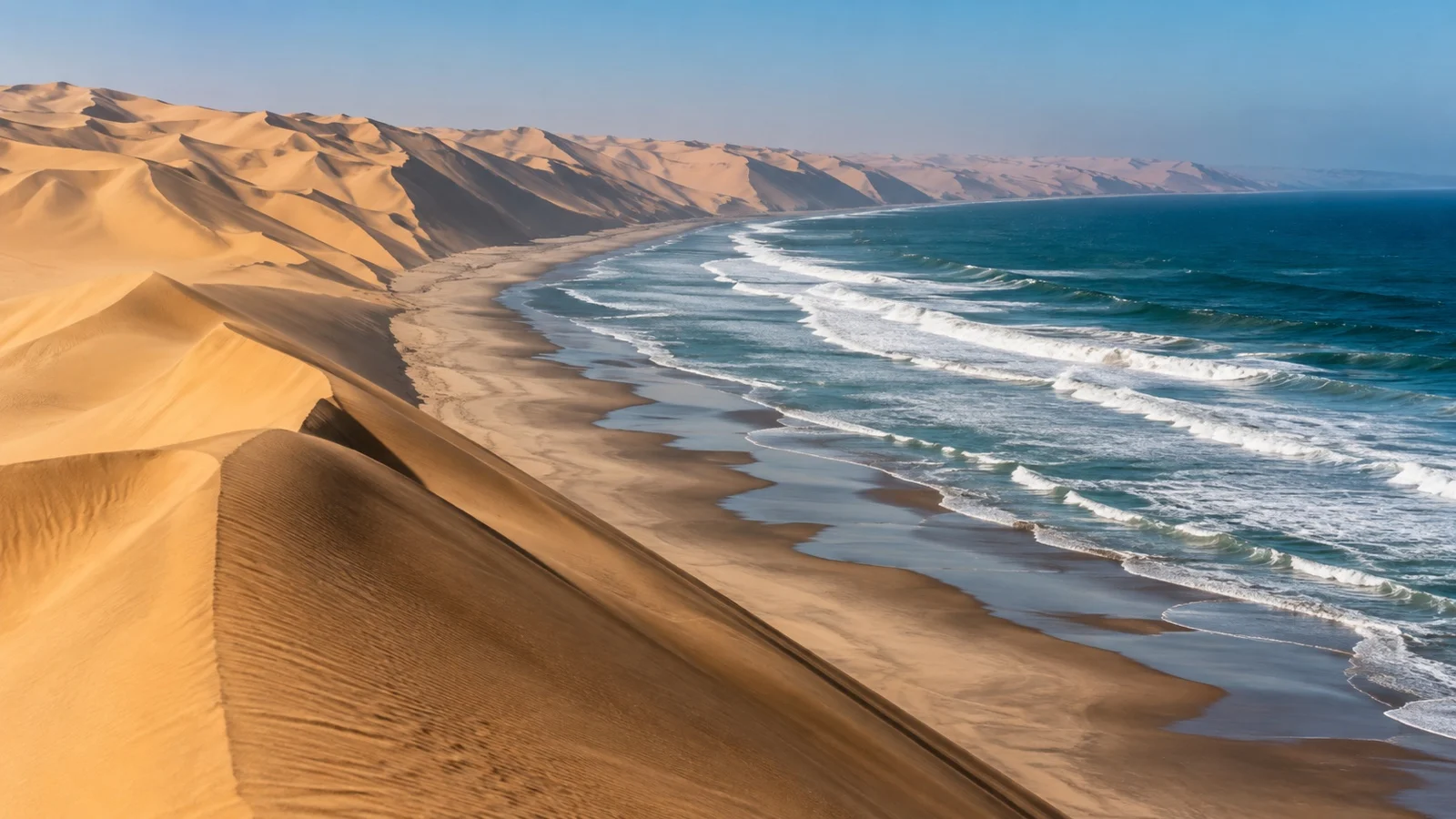
This is not a rental-car experiment or a casual beach drive. Use a permitted specialist operator, disclose mobility concerns, and understand that the route may change when conditions make the shoreline unsafe.
Swakopmund
Swakopmund adds German-influenced architecture, cafes, museums, and adventure activities to the desert coast. It is a satisfying alternative for travelers who want more town than dune driving.
The road from Walvis Bay is straightforward by Namibian standards, but fog, traffic, and stops still affect timing. A driver or organized excursion makes the return easier to protect.
Marine Cruises and Kayaking
Boat trips can bring pelicans, seals, dolphins, and broad views across the bay, while kayaking offers a quieter connection with the coast. Species, numbers, and behavior vary naturally, so avoid operators that promise physical contact or guaranteed encounters.
Wind and swell can change a marine program at short notice. Ask about warm layers, flotation, boarding steps, restroom access, and the cancellation plan.
A Lower-Energy Walvis Bay Day
A port shuttle, lagoon viewpoint, waterfront meal, and short town drive create a rewarding day without a rough desert excursion. This plan leaves room for fog, slow port access, and an early return.
Lüderitz Cruise Port
Best for: Kolmanskop, coastal history, German architecture, and stark desert scenery
Arrival style: Berthing or tendering can vary by ship and conditions
Planning style: Book timed attractions and protect transport
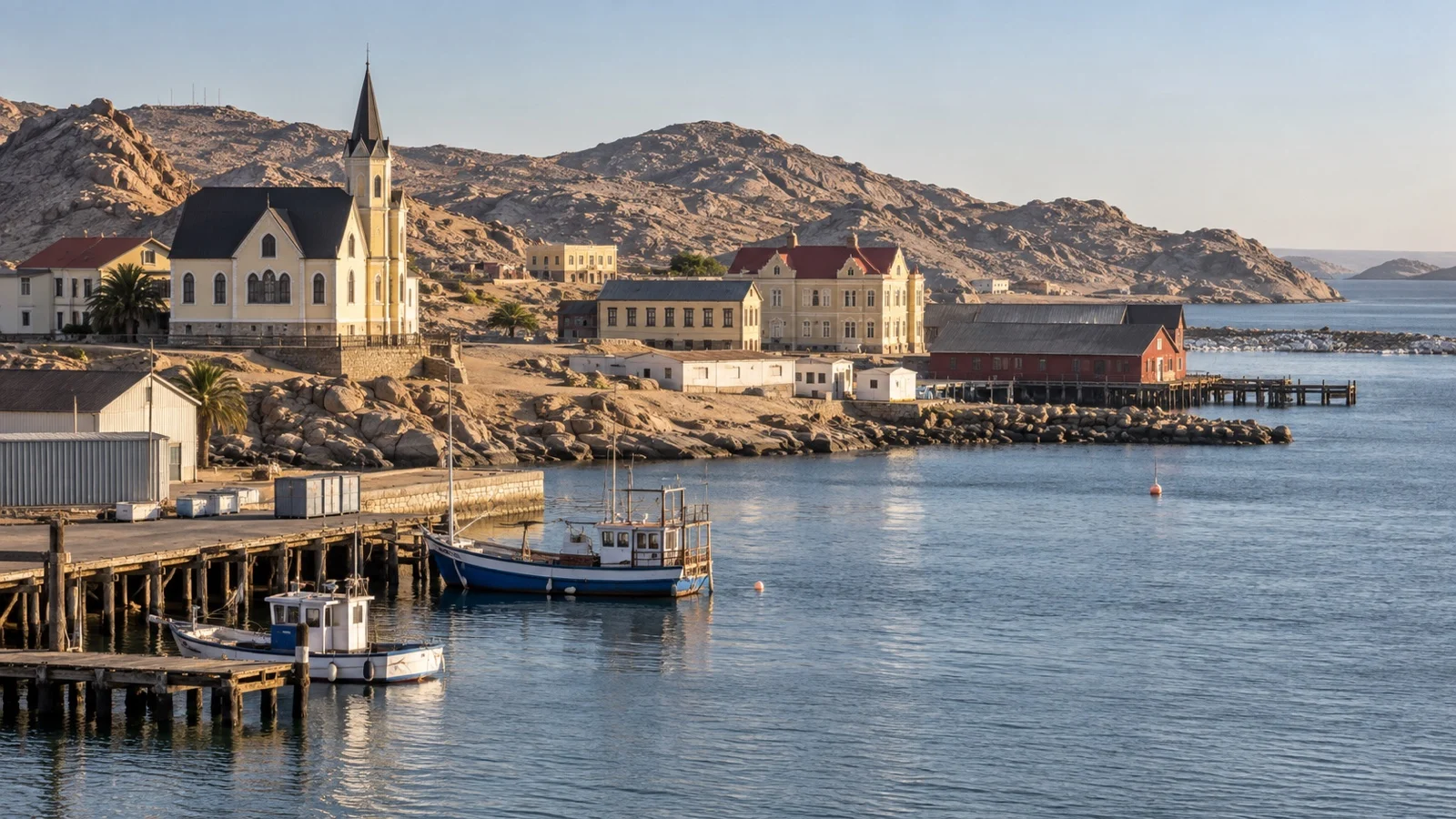
Lüderitz is smaller and more atmospheric, with colorful buildings set against bare rock and cold Atlantic water. It feels remote in a way that no cruise-terminal landscaping could imitate.
Ships may berth or use tender arrangements depending on the vessel and operational conditions. Confirm the landing point, shuttle, and final tender before booking an independent tour.
Kolmanskop
Kolmanskop is the essential excursion, a former diamond settlement slowly filling with sand outside Lüderitz. The abandoned interiors are haunting and photogenic, but access is controlled through permits and tour schedules.
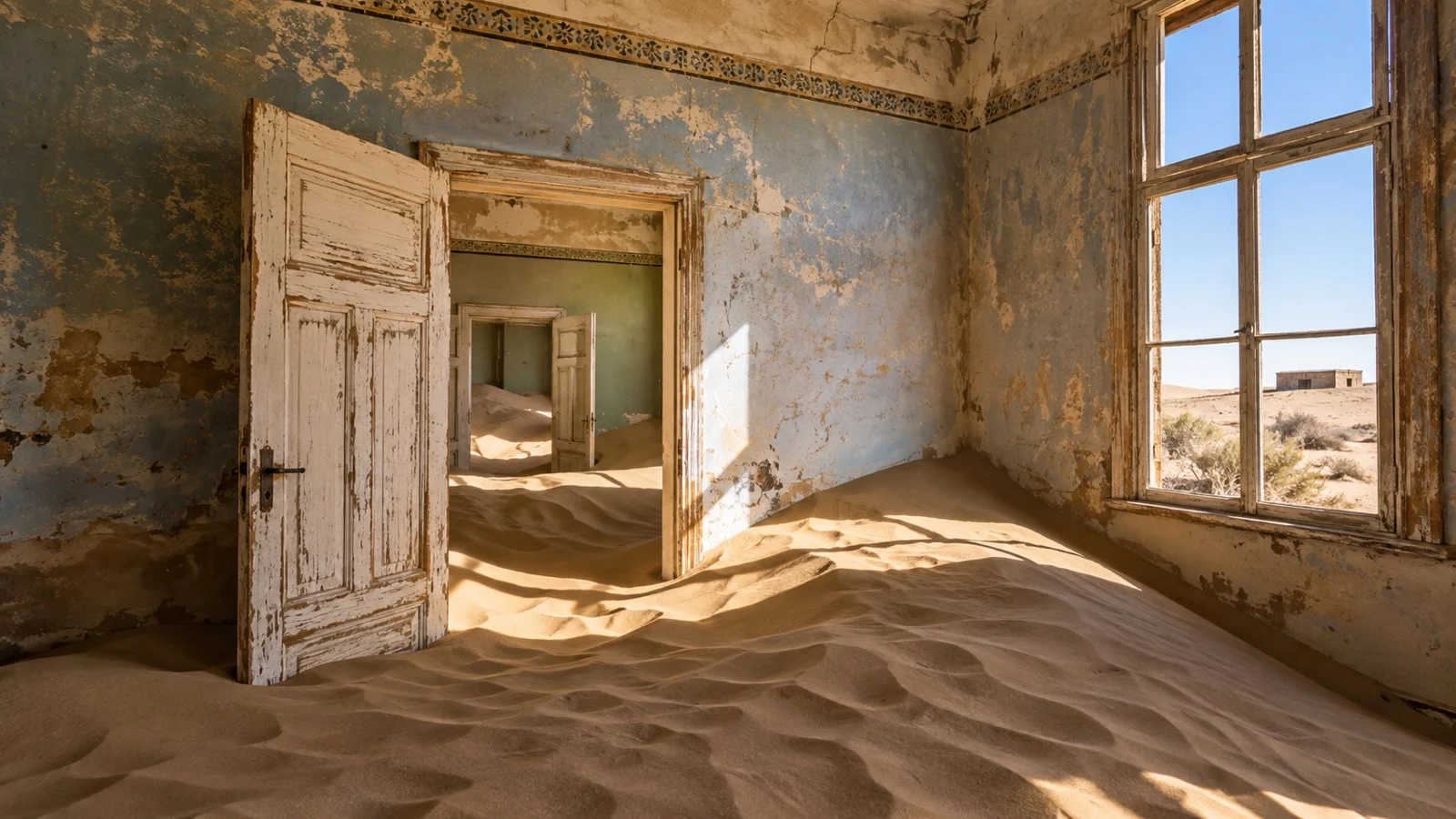
Official operating hours and guided departures can change by day, season, or private booking. Reserve ahead, carry the confirmation, and do not assume you can arrive whenever the ship clears.
Lüderitz Town
The town itself rewards a slower walk among distinctive buildings, harbor views, shops, and traces of colonial history. Interpretation should acknowledge the violence and dispossession within Namibia’s colonial past rather than treating architecture as a decorative theme.
Wind, slopes, and uneven surfaces can make a short route tiring. Use a vehicle between scattered sights if stamina or mobility is limited.
The Lüderitz Peninsula
The peninsula brings rocky coves, birds, open ocean, and a feeling of immense space. Roads and weather can be rough, so a local driver is more useful than a rigid list of stops.
Diaz Point and other coastal sites may involve wind, steps, or damaged access after harsh weather. Confirm current conditions and stay behind safety barriers near cliffs and surf.
A Lower-Energy Lüderitz Day
A guided town drive with one museum or historic stop can be deeply satisfying. It also leaves a flexible window for port shuttles or tender delays.
Walvis Bay or Lüderitz: Which Is Better?
Walvis Bay is better for a first Namibia call because it offers the broadest range of wildlife, desert, marine, and urban options. Its larger tourism network also creates more backup plans when weather changes.
Lüderitz is better for travelers drawn to industrial history, abandoned places, austere landscapes, and a less polished port. Kolmanskop gives the call a singular experience that Walvis Bay cannot duplicate.
An itinerary containing both is ideal because the ports complement rather than repeat each other. Choose a dunes-and-lagoon day in Walvis Bay, then a history-and-coast day in Lüderitz.
Transportation and Timing
Reputable cruise excursions, established local operators, hotel-arranged vehicles, and approved taxis are the useful choices. Confirm passenger count, luggage or mobility equipment, pickup inside or outside the gate, and the latest safe return time.
Remote Namibian roads can have limited services, weak signal, blowing sand, fog, or wildlife. An experienced operator carries local knowledge and a backup plan that a short-term rental does not.
Do not plan Sossusvlei as a casual day trip from Walvis Bay during a normal cruise call. The distance and road conditions make it an overland or multi-day experience unless the cruise line offers a specifically protected program.
Weather and What to Wear
The Benguela Current keeps the Atlantic coast surprisingly cool, and morning fog is common. Inland dunes can become hot and intensely bright on the same day, so layered clothing is essential.
Wind can affect tenders, marine trips, sand, and exposed coastal walks. Carry eye protection, a secure hat, sun protection, and a light windproof layer.
Rain is scarce along the coast, but rare does not mean impossible. Weather elsewhere in Namibia can also affect roads even when the port remains dry.
Accessibility and Comfort
Commercial ports, tenders, sand, boats, and high four-wheel-drive vehicles create very different accessibility challenges. Ask for the complete route from gangway to seat, including steps, grab points, toilets, and whether a mobility device stays assembled.
Dune driving can involve jolting, steep angles, and long periods away from facilities. Travelers with back, neck, heart, or motion-sensitivity concerns should discuss the ride honestly before booking.
A lagoon or town tour can provide excellent scenery with less physical strain. Request cruise-line assistance separately because a tour operator does not control the gangway or port shuttle.
Money, Documents, and Safety
The Namibian dollar is the national currency, and South African rand notes circulate at equal face value within Namibia. Change in Namibian dollars may not be useful outside the country, so avoid withdrawing more cash than you need.
Cards are accepted in many established businesses, but remote operators and signal-dependent terminals can create problems. Carry a modest backup and confirm the currency used in every quote.
Follow current government travel advice, use reputable transportation, protect valuables, and do not enter restricted port or diamond-mining areas. Keep required identification, ship card, medication, water, and emergency contact details with you.
Namibia Cruise Port Questions
Which port is best for a first visit?
Walvis Bay offers the broadest introduction through lagoon wildlife, desert scenery, Swakopmund, and marine excursions. Lüderitz is more specialized and unforgettable for Kolmanskop and the southern coast.
Do ships dock or tender?
Walvis Bay has a dedicated passenger berth, while Lüderitz arrangements can vary by ship and conditions. Always follow the live cruise-line and Namport instructions.
Can I explore independently?
Town and lagoon plans can work independently once the port exit and transport are clear. Sandwich Harbour, remote dunes, Kolmanskop, and distant coastal routes benefit from an established operator.
Should I book a ship excursion?
A ship excursion is most valuable for remote or tide-sensitive routes and any day involving long distances. Independent local tours can work when the operator is reputable and the return policy is clear.
What should I pack?
Bring layers, sun and wind protection, water, secure shoes, and a camera protected from blowing sand. Add medication, required identification, small currency, and the port return details.
My Final Take
Choose Walvis Bay for variety and Lüderitz for atmosphere, then let one excellent excursion define each day. Namibia’s scale deserves respect, and the calmest port plan is the one with a specialist driver, weather flexibility, and a generous return margin.
This guide was independently checked on September 11, 2026, using official information from Namibian Ports Authority, Namibia Tourism Board, Kolmanskop’s official visitor information, protected-area guidance, and current cruise-line instructions. Reconfirm the berth or tender, port shuttle, tour permit, road and tide conditions, weather, accessibility, documentation, and all-aboard time before committing to nonrefundable arrangements because live operations can change.