Pinhão River Cruise Port: The Station Is Close, the Vineyards Climb
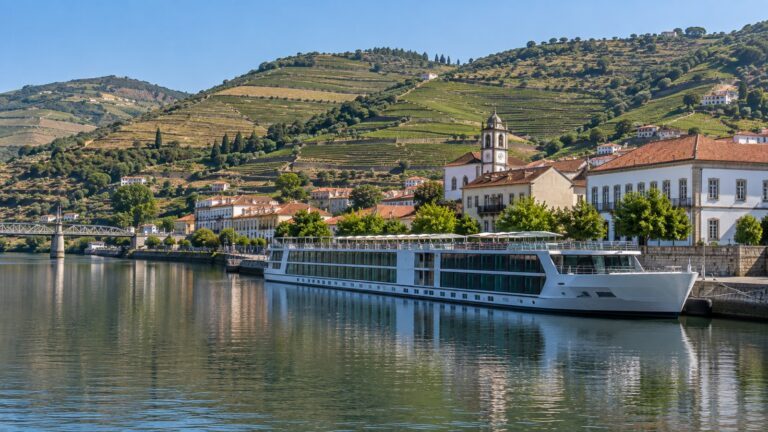
Pinhão puts its station, boat quay and wine estates within sight of one another, then sends the vineyard roads climbing for comic relief. The village is tiny, but “nearby winery” still deserves coordinates.
You can build an excellent independent day without a vehicle. The railway station qualifies as an attraction before any train arrives.
My quick take
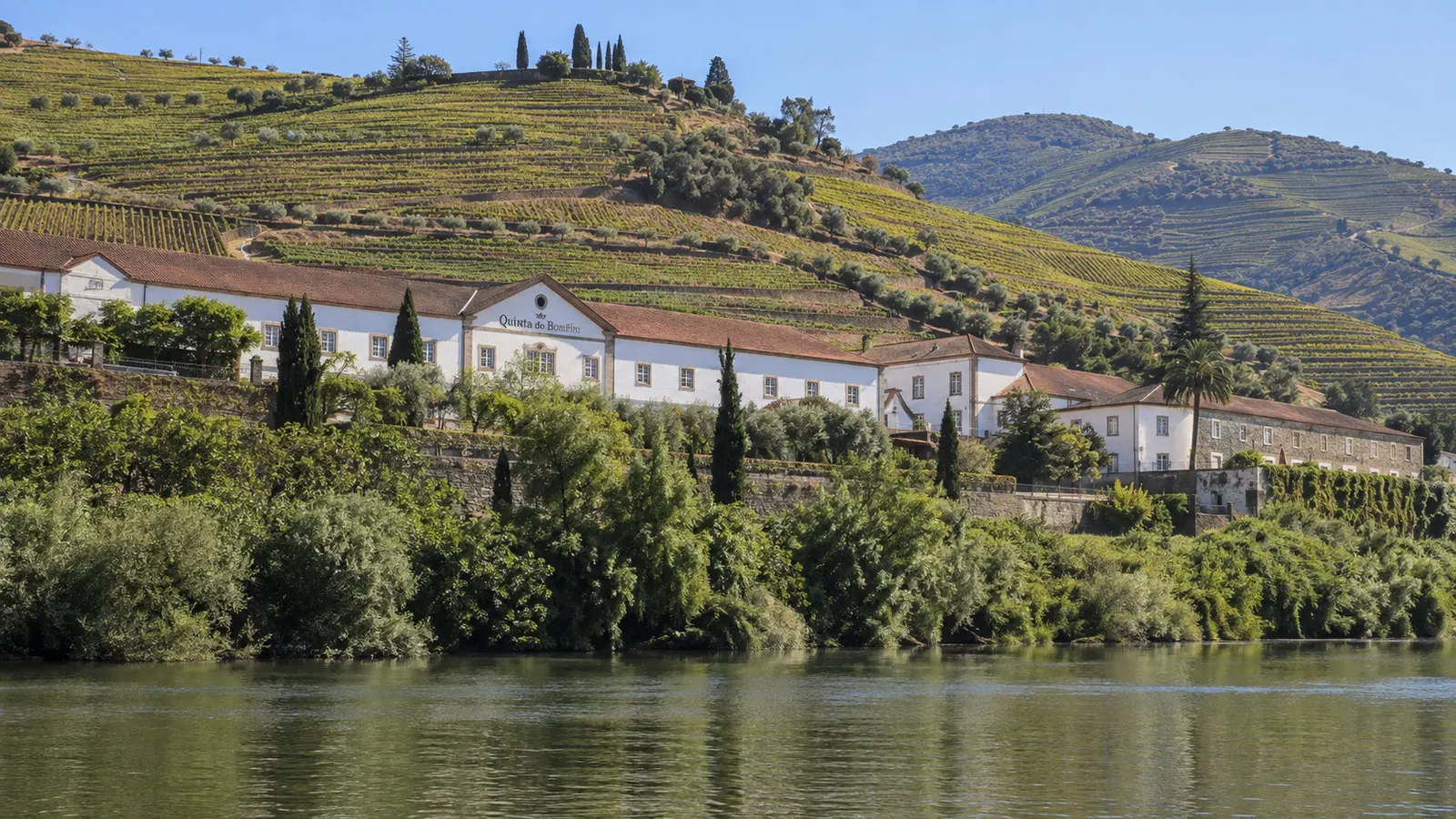
Pinhão is a walk-off Douro call with a central berth. The station tiles, waterfront, bridge views and Quinta do Bomfim fit into a compact loop, although a tasting reservation should control the order.
Reserve one winery rather than attempt a progressive lunch made entirely of Port. Add the station and either a riverside walk or one-hour boat trip.
For estates outside the center, prearrange both directions. A road can be scenic, steep and profoundly uninterested in producing a taxi when the ship is ready to leave.
The quick facts
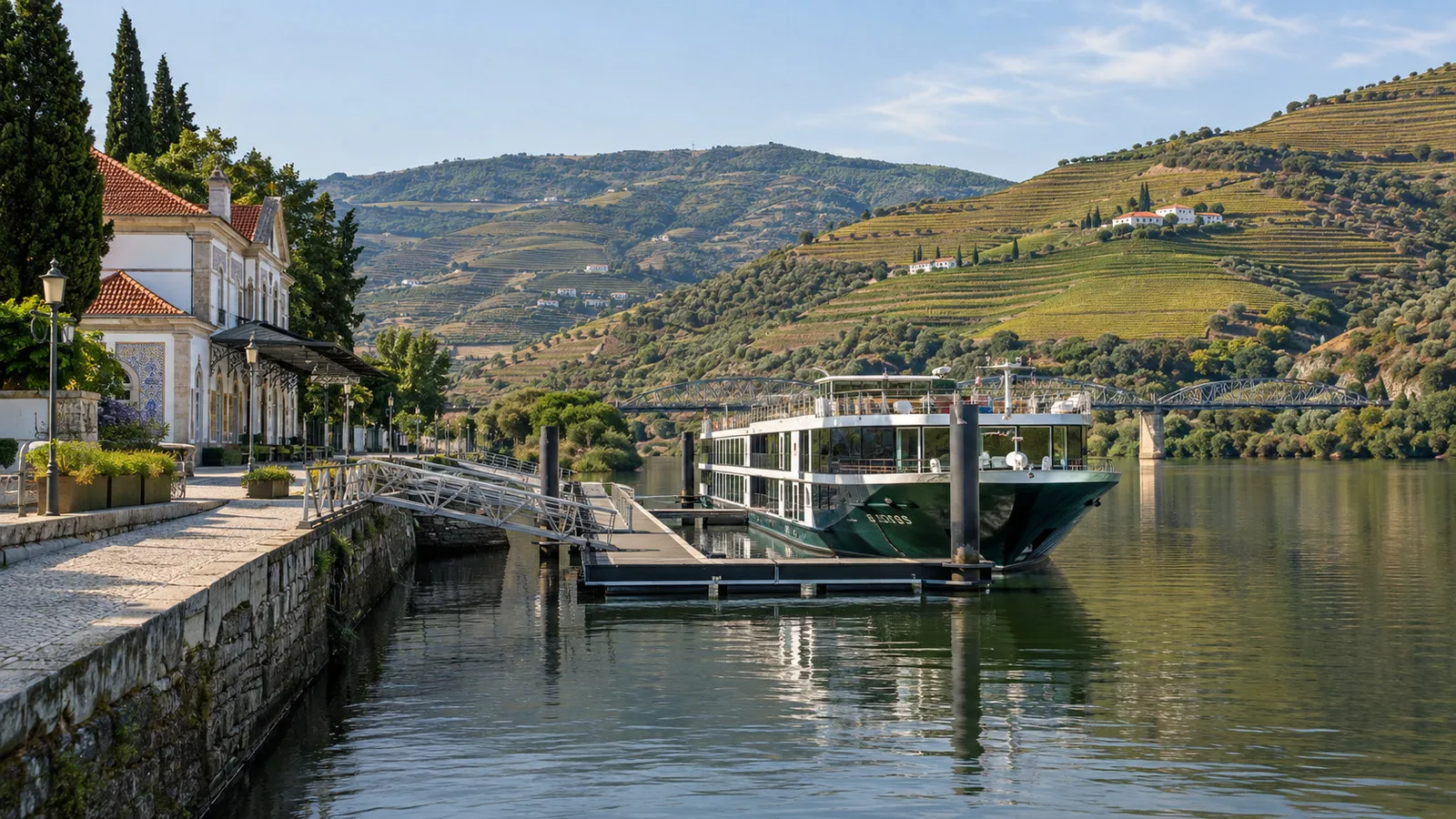
- Where you land: Ships use Pinhão’s central Douro quay, but the assigned pontoon or alongside position varies and rafting can shift the effective gangway.
- How you get ashore: By gangway, without a tender. Busy calls may require crossing another vessel, while water level changes slope and step count.
- Into Town: The waterfront and station are an estimated 5 to 10 minutes away; exact time depends on the assigned berth.
- Currency and Language: The euro and Portuguese; English is common at established wine estates and tour businesses, but less certain elsewhere.
- Getting around: Walk for central Pinhão and Quinta do Bomfim; reserve a taxi, estate transfer or excursion for hillside and outlying properties.
- Time Zone: Western European Time, UTC+0, moving to UTC+1 from the last Sunday in March through the last Sunday in October.
- Disruption risk: High flow, lock restrictions, fog, or wider itinerary changes can cancel, shorten, or relocate the call; no audited local missed-call rate is published.
No authority or cruise line publishes a Pinhão missed-call rate. Every walking or driving time in this guide is a map-based estimate affected by berth, road, and pace.
The quay is central, but the gangway can move
Pinhão’s passenger quay sits on the north bank of the Douro near the mouth of the Pinhão River. The Douro waterway authority lists Cais do Pinhão at river kilometer 124, along with a nearby Sabrosa (Pinhão) landing.
Larger overnight vessels may occupy different positions or tie alongside one another when calls overlap. The site’s guide to river-cruise rafting and double docking explains why a gangway location can change without the ship changing ports.
Ask onboard for the berth or return landmark before leaving. This is usually when people discover two nearly identical vessels.
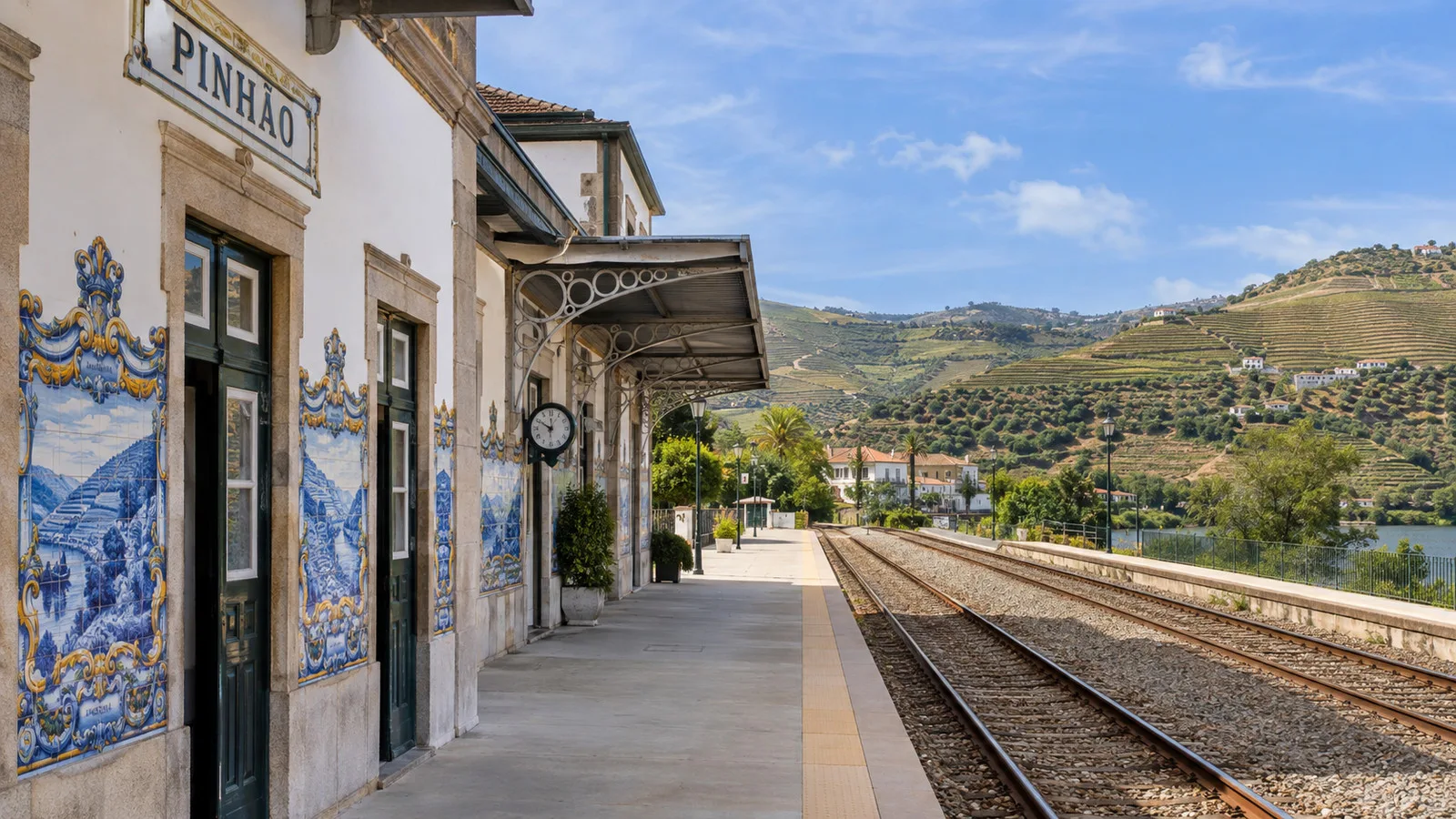
Pinhão station is an open-air gallery with trains
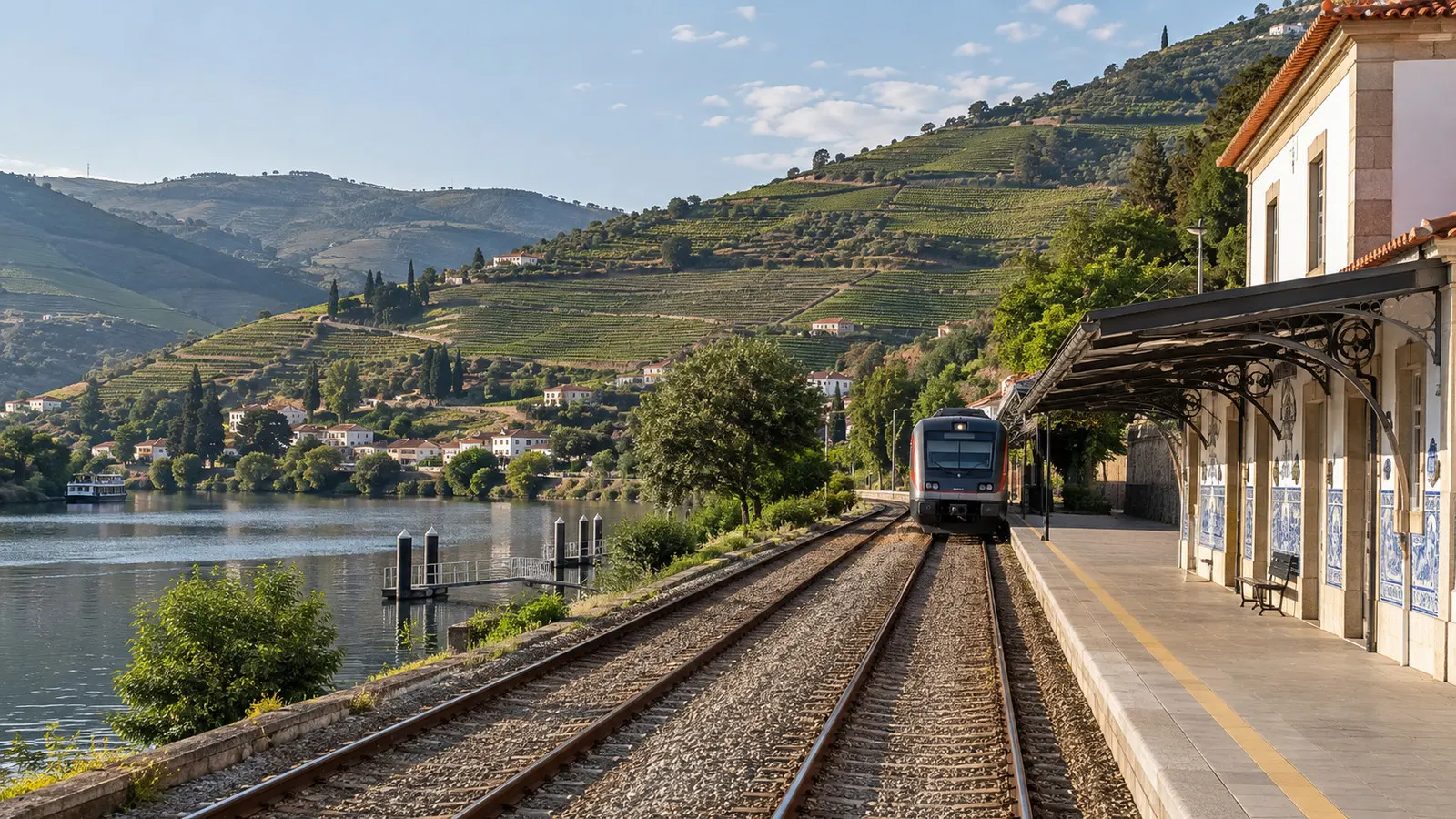
The active railway station stands an estimated 5 to 10 minutes from the central quay. Its exterior and platform-side walls turn regional wine work into blue-and-white scenes of harvests, landscapes, barrels and rabelo boats.
Infraestruturas de Portugal’s heritage authority records 24 panels made from more than 3,000 tiles. They were produced by the Aleluia factory in Aveiro and adapted to the station by João Oliveira and Lourenço Limas in 1937.
Turismo de Portugal’s page counts 25 panels, so even official sources disagree, likely because of how separate tile compositions are counted. This guide follows the rail-infrastructure owner’s count rather than pretending the discrepancy does not exist.
The station remains operational, not a museum set. Stay behind platform markings and check live information before making a rail trip part of the port day.
Quinta do Bomfim is the easiest serious tasting
Quinta do Bomfim sits beside Pinhão, an estimated 5 to 10 minutes from the station and about 10 to 15 minutes from a central quay position. Its winery, lodge, vineyards and river setting provide a full estate visit without gambling on a rural taxi.
The official visitor page lists daily hours from 10 a.m. to 7 p.m. March through October, with the last visit at 5:30. Winter hours are 9:30 a.m. to 6:30 p.m., and the estate closes December 25 and January 1.
Book ahead because tour types, tasting sizes and languages have limited capacity. Harvest usually falls around September into early October, but agricultural timing follows grapes rather than a brochure.
This is the estate I would choose for a short independent call. Walkability leaves more room for wine and less room for explaining to reception why the taxi is still considering the matter.
Quinta de la Rosa is walkable only by a generous definition
Quinta de la Rosa lies roughly 1.25 miles west of central Pinhão along the river. The estimated walk is 25 to 35 minutes each way on a road that can feel narrow, hot and less pedestrian-friendly than the distance suggests.
The estate’s official tour page advises advance booking and lists English and Portuguese winery visits. Current options range from a 30-minute tour to longer tastings and steep guided vineyard walks.
A prearranged taxi or transfer is the calmer choice, especially in summer or after tasting. Do not assume a tasting-room booking includes transportation unless the confirmation says so.
Quinta da Roêda needs an appointment and a ride
Croft’s Quinta da Roêda spreads across terraces east of Pinhão. The visitor center is a short drive from town, but the narrow N222 and vineyard approach make casual walking a poor port-day plan.
The official estate page says visits are by appointment and available in Portuguese, English, Spanish and French. Published hours are daily from 9:30 a.m. to 6 p.m., with last entry at 5 and closure on December 25 and January 1.
Reserve the visit and transportation together when possible. Grape treading, picnics and special experiences require additional advance arrangements and should never be assumed from the standard tasting booking.
Port and Douro wine are related, not interchangeable
Port is fortified wine made under Douro rules, while Douro DOC includes unfortified red, white and rosé wines. A tasting can cover both, so ask what is included.
Spit cups are professional tools, not an insult to the producer. They are also useful when a schedule combines several fortified pours with a sunny walk back to a moving hotel.
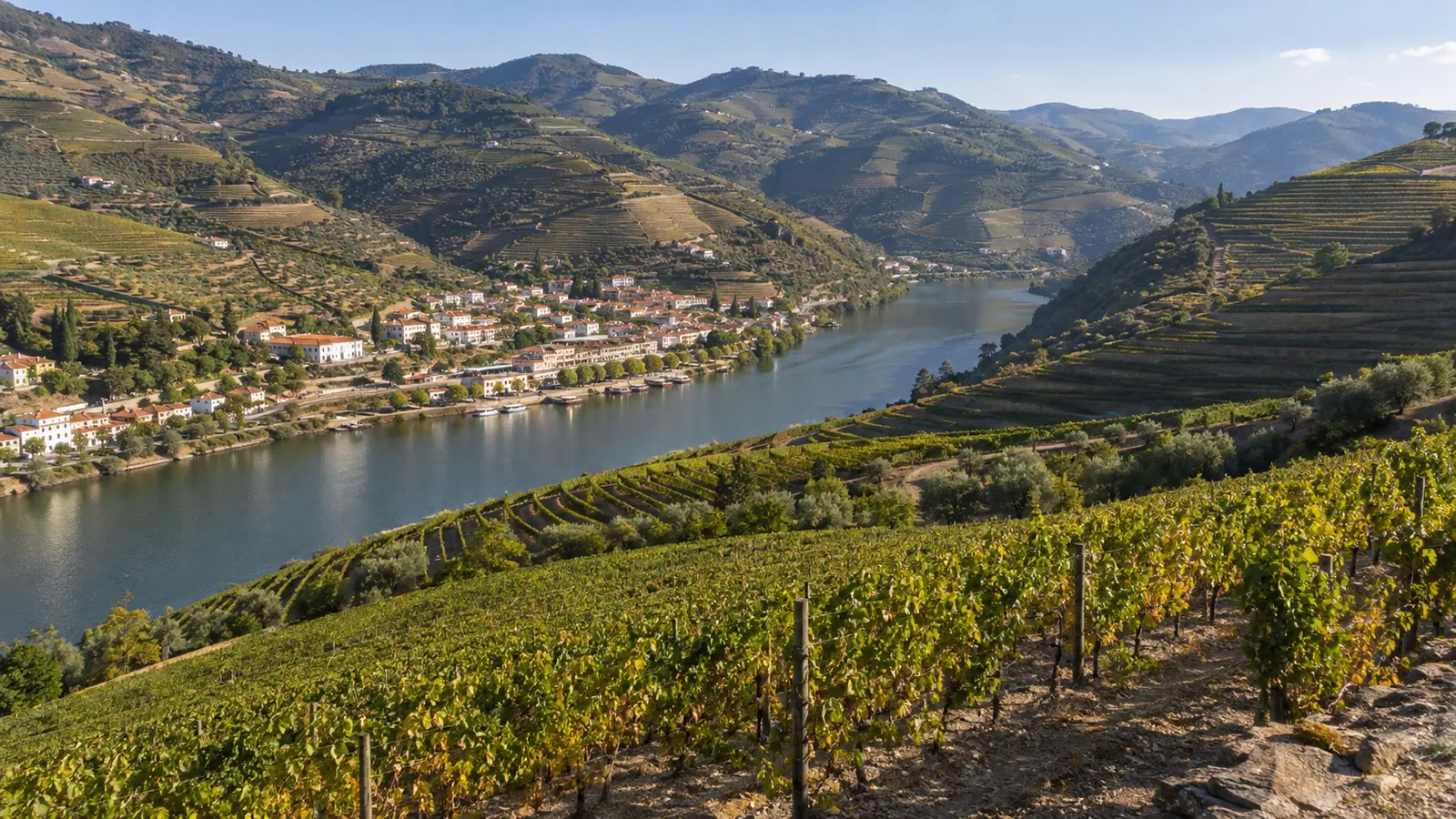
The UNESCO-listed Alto Douro Wine Region is a working cultural landscape shaped by roughly two millennia of viticulture. The terraces, estates, villages and roads are the heritage.
Should you add a one-hour rabelo cruise?
Local boats leave Pinhão quay for short trips through vineyard scenery not always visible from the road. One current operator lists a one-hour Pinhão-Romaneira return at 15 euros, with half-hourly departures in much of the day.
The smaller boat offers a lower viewpoint and may cover a different reach. Add it only after confirming the return time and all-aboard deadline.
I would choose the boat over a second tasting on a warm, clear day. Variety is useful, and the river is less likely to describe blackberry, graphite and elegant tannins for the fourth time.
How I would plan the call
With three usable hours, see the station first, complete a reserved Quinta do Bomfim visit and walk the waterfront back to the ship. This sequence protects the timed tasting while keeping every transfer on foot.
With five or six hours, add a local boat trip or one prearranged outlying estate, not both plus Bomfim. Appointments can run long enough to make sprinting inappropriate.
The Douro river cruise ports guide compares Pinhão with Régua, Barca d’Alva and the valley’s other calls. The Douro locks and dams guide explains the navigation system controlling the journey between them.
A realistic word on accessibility
Gangway slope changes with river level, and rafting may introduce steps or another vessel to cross. The central waterfront and station are comparatively level, although paving, curbs and platform gaps still require attention.
Quinta visits differ substantially. A tasting room may be accessible while a vineyard path, cellar or historic lodge is not, so confirm the exact booked experience directly with the estate.
Steep vineyard walks, summer heat and narrow roads matter beyond formal wheelchair access. Quinta do Bomfim is the simplest central option, but confirm individual arrangements.
Heat and navigation disruptions
Pinhão can be intensely hot in summer, with an estimated daytime planning range around 85 to 98 Fahrenheit during hotter periods. Shade, water and a hat matter even when the day’s official activity is drinking things indoors.
High river flow, planned dam maintenance, lock restrictions, or operational changes elsewhere can shorten a call. Confirm the day’s plan onboard because no audited local missed-call rate is published.
The practical checks I would make before Pinhão
Confirm the exact Pinhão quay, rafting order, and return landmark because the gangway can move along the waterfront or sit outside another vessel. Ask whether the ship remains in Pinhão during the visit, since a navigation schedule can replace a walk-back plan with a later pickup elsewhere.
Reserve one winery and build the station, bridge views, and waterfront around it rather than trying to collect tastings. For an estate outside the village or a scheduled boat trip, arrange both directions and aim back at least 60 minutes before all aboard because taxis are scarce and vineyard roads are slow.
Check Portugal and Schengen entry rules, official tasting prices, booking terms, and the boat operator’s live schedule. Heat, steep estate lanes, cobbles, raft crossings, alcohol, locks, and changing Douro levels all matter more than the short distances shown on a map.
Quick answers
Where do river cruise ships dock in Pinhão?
They use the central passenger quay on the north bank of the Douro. Exact pontoon and rafting position vary, so confirm the gangway landmark onboard.
Can I walk from the ship to Pinhão station?
Yes. The station is an estimated 5 to 10 minutes from a central berth, depending on the ship’s assigned position.
How many azulejo panels are at Pinhão station?
Portugal’s rail-infrastructure heritage authority counts 24 panels made from more than 3,000 tiles. Turismo de Portugal says 25, an official discrepancy likely caused by counting separate compositions differently.
Which Pinhão winery is easiest without a car?
Quinta do Bomfim is the simplest serious walkable visit from the quay and station. Reserve a time rather than assuming same-day capacity.
Do I need an excursion in Pinhão?
No for the village, station and Quinta do Bomfim. An excursion, booked taxi or estate transfer is useful for Roêda, more distant vineyards and multi-estate touring.
The last word
Pinhão rewards restraint. Reserve one good tasting, read the station walls like a regional history book and leave enough unstructured time to look at the landscape producing all that ceremony.
The Porto river cruise port guide covers the Douro’s larger embarkation puzzle. Up here, the port day is smaller, hotter and refreshingly close to the grapes.
How this guide was researched: This guide was independently checked on September 12, 2026, against the Douro waterway authority, Infraestruturas de Portugal’s station heritage record, UNESCO’s Alto Douro listing, Portugal’s Ministry of Foreign Affairs visa portal, the official estate sites linked in the article, and current cruise-line instructions. Reconfirm the mooring, rafting order, border processing, transportation, attraction rules, entry documents, weather, accessibility, costs, and all-aboard point because live operations can change.