Douro River Cruise Ports: Regua, Pinhao, Barca d’Alva and Vega de Terron
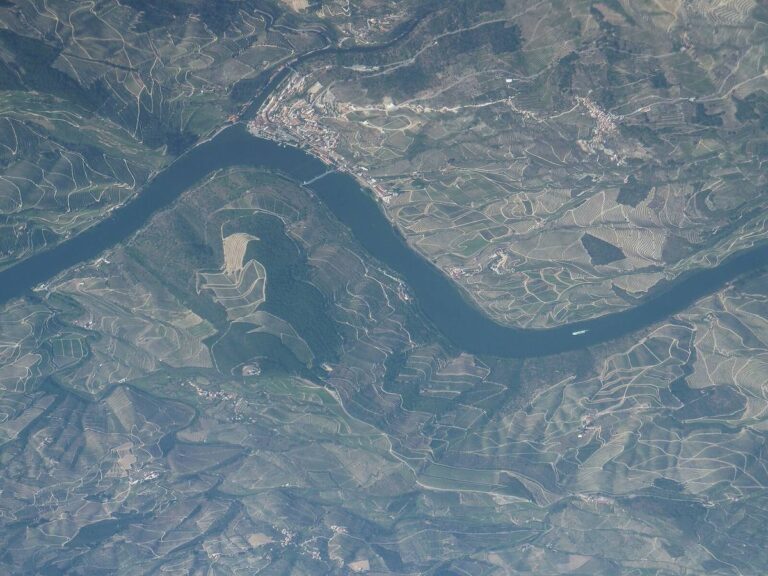
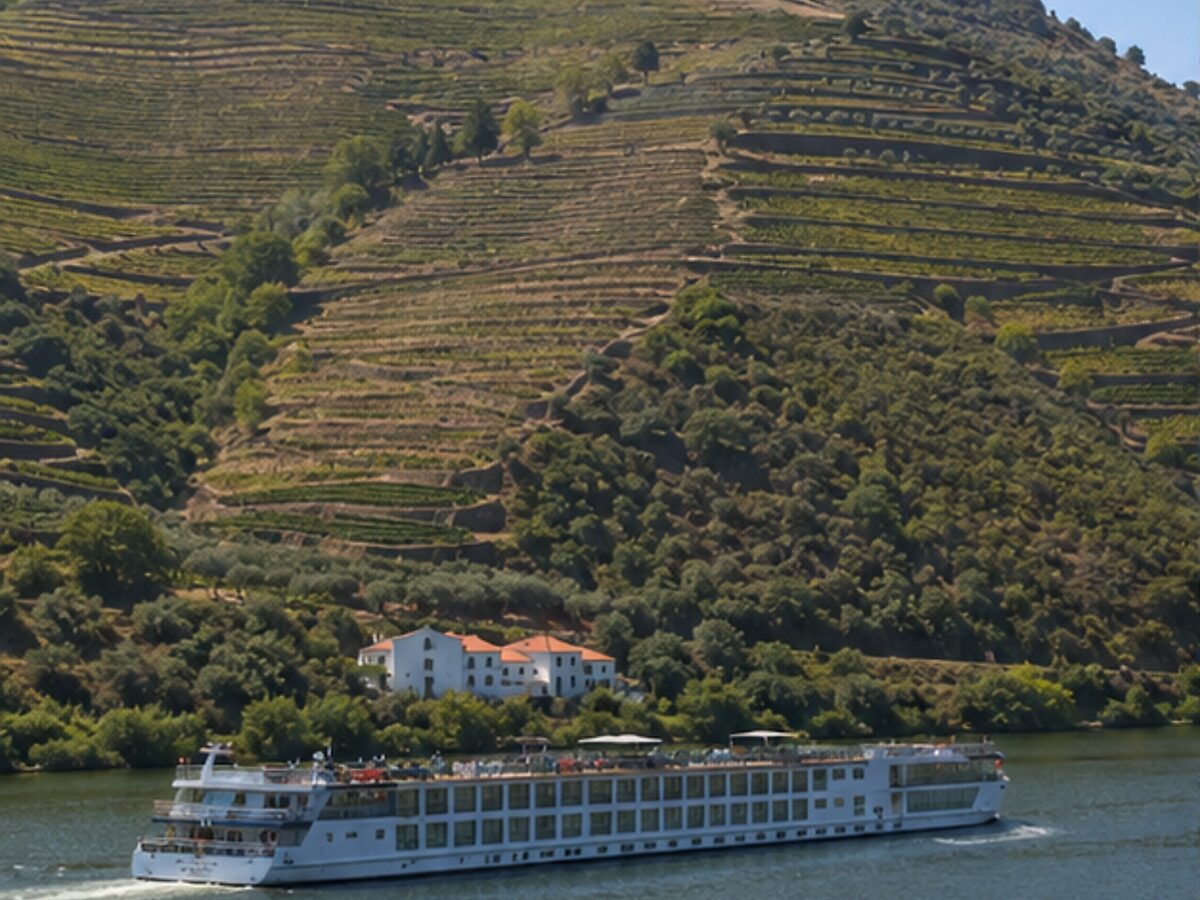
The Douro is a river cruise where the scenery refuses to wait for an excursion. Terraces stack above the water, white quintas appear on impossible slopes, locks lift the ship through a controlled mountain river, and villages arrive just as breakfast goes cold.
Its ports are small, and that is both the charm and the planning problem. Peso da Régua and Pinhão let you walk ashore, while Barca d’Alva and Vega de Terrón mostly function as gateways to long coach trips, so the name on the daily program does not always describe what you will actually spend the day doing.
My quick take
Book the Douro for the river itself, then let the towns and estates deepen the landscape. This is not the Rhine with grand cities every few hours, and trying to force that rhythm onto it produces too many buses and not enough valley.
I would give Régua one proper excursion, enjoy Pinhão slowly, and think very carefully before trading an entire upstream day for Salamanca. The Spanish city is magnificent, but the coach journey is a real part of the bargain rather than fine print.
Quick Facts
- Main river-cruise stops: Porto or Vila Nova de Gaia, Peso da Régua, Pinhão, Barca d’Alva, and Vega de Terrón
- How you go ashore: Gangway to a quay or pontoon, sometimes through rafted ships
- Currency: Euro in Portugal and Spain
- Languages: Portuguese in Portugal and Spanish in Spain
- Time: Spain is normally one hour ahead of mainland Portugal
- Best walk-off stop: Pinhão for its station and compact center
- Best regional base: Régua for the Douro Museum and inland excursions
- Most demanding excursion: Salamanca from the Spanish-border landing
- Main operational risks: Lock restrictions, high or low water, heat, wildfire, fog, and road delays
Why the ports feel different here
The Douro valley rises quickly from the river, leaving little flat space for quays, roads, stations, and towns. A ship may tie up beside a village center while the vineyard or sanctuary on the day’s itinerary sits high above it.
River cruise lines solve that geography with motorcoaches that shadow the ship. The coach may collect you at one port and return you to another after the vessel has passed a lock, which means independent plans must start with the day’s actual reboarding point.
Ask reception whether the ship will remain at the same quay, raft beside other vessels, or move while you are away. A printed itinerary written months earlier cannot account for the final berth order.
There are no tenders on a standard Douro river cruise, but rafting creates its own version of a transfer. You may cross another ship’s lobby, sun deck, or gangway to reach land, with steps and level changes that vary through the day.
Porto and Vila Nova de Gaia
Most Douro itineraries begin or end around Porto and Vila Nova de Gaia, where the river meets a dense urban landscape of bridges, historic streets, and port-wine lodges. The exact river berth depends on the operator and local arrangements, so confirm the address before booking a hotel transfer.
Porto deserves extra nights because an embarkation afternoon cannot absorb the historic center, riverfront, cellars, food, and hills. Arriving early also gives luggage and flight disruptions time to resolve before the ship leaves the city behind.
The river cruise berth is not the same as the ocean cruise port at Leixões. Travelers transferring from an ocean ship need a road journey between separate ports rather than a walk along the Douro.
Vila Nova de Gaia’s famous lodges interpret and serve port, while vineyards lie upriver in the demarcated region. The relationship between the valley, aging warehouses, and export city makes more sense when you see both ends of the chain.
Entre-os-Rios and smaller landings
Some itineraries use smaller western river landings such as Entre-os-Rios for coach excursions, meals, or operational positioning. These stops may have very little to do beside the quay if you decline the organized program.
Read the day’s destination line carefully because a named village can be a pickup point rather than the sightseeing focus. When the ship sails during the excursion, staying behind is not a harmless choice.
Independent travelers should ask for the exact next berth, taxi availability, road time, and ship contact before leaving the group. A few miles by river can become a much longer drive over bridges and valley roads.
Peso da Régua
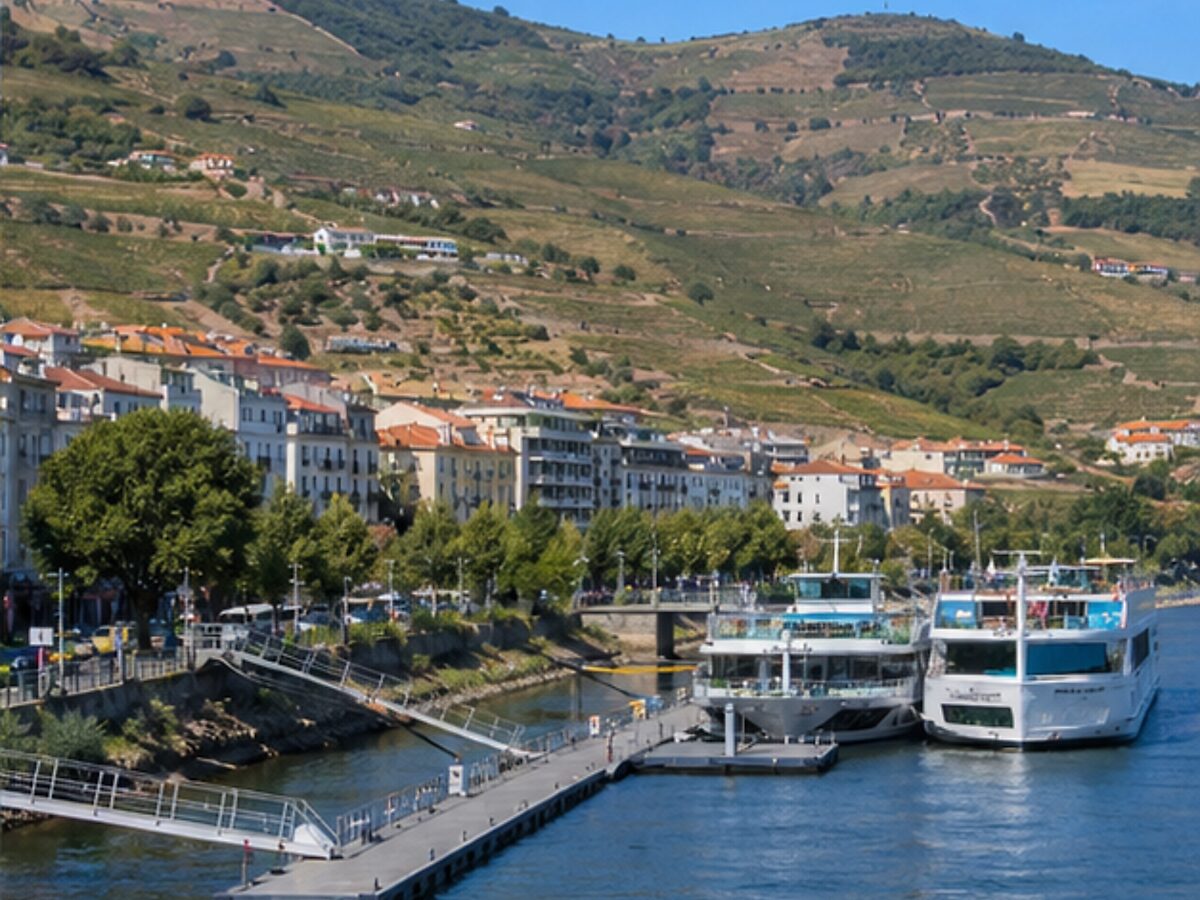
Peso da Régua is the closest thing the middle Douro has to a practical river-cruise hub. Quays, cafes, the rail line, and the Douro Museum sit within a real town rather than at an isolated landing.
Régua grew through the wine trade and transport systems that connected the demarcated valley with Porto. It is not the prettiest village on the river, but it is the place where the region’s working story becomes legible.
Ships can use different quay positions and may raft when traffic is busy. Identify the gangway and return deadline before leaving, especially if several nearly identical river ships are tied side by side.
The Douro Museum
The Douro Museum is the best independent stop for understanding the landscape beyond a tasting. Its exhibitions explore the demarcated wine region, labor, transport, communities, and the culture shaped by the river.
Current exhibitions and opening arrangements should be checked on the museum’s official site. A temporary program can change the time you need, and group visits may briefly crowd a compact gallery.
The museum gives useful context before a quinta visit because it explains why terraces, grape varieties, regulation, and river transport matter. Wine becomes more interesting when it stops being only a glass handed to you at the end of a tour.
Lamego from Régua
Lamego is a classic Régua excursion, known for the Sanctuary of Nossa Senhora dos Remédios and the long decorative staircase descending toward town. Coaches commonly approach from above, while independent visitors need to solve the climb and transport in both directions.
The sanctuary remains a place of worship, so dress and behave accordingly. If a religious service or event is underway, let local use take priority over a cruise group’s photography schedule.
Lamego also has a cathedral, museum, cafes, and a historic center, making it more than one staircase. Give the city enough time or accept that the organized excursion may show only a narrow slice.
Casa de Mateus
Casa de Mateus near Vila Real pairs baroque architecture with formal gardens, a chapel, collections, and cultural programming. Its famous facade appears on wine labels, but the estate is a distinct institution rather than the winery behind every bottle bearing the image.
The official foundation currently lists daily opening from 09:00 to 18:00, with separate visit formats for the park, chapel, museum, guided interior, and wine experiences. Reserve the correct product because a garden ticket does not automatically unlock every room.
Casa de Mateus lies inland, and pairing it with Lamego can create a rushed day because the two sit in different directions from Régua. Choose the place that interests you most rather than counting coach stops.
Pinhão
Pinhão is the small Douro stop most travelers picture before sailing: river, steep vineyard slopes, a compact waterfront, and a railway station decorated with blue and white tile panels. It does not need a long checklist to justify the call.
The station’s azulejos show scenes of wine work and valley life, turning an ordinary transport building into one of the river’s essential visual documents. Platforms remain part of an operating railway, so stay behind safety lines and do not block passengers.
The town offers cafes, tasting rooms, small boat trips, and access to surrounding estates. Opening hours and transportation beyond the center are limited enough that a specific tasting should be reserved rather than improvised at the gangway.
A short walk through Pinhão is lovely, but the celebrated viewpoints sit above town and require a vehicle or serious climb. Summer heat makes an uphill route far harder than its distance suggests.
Visiting a quinta
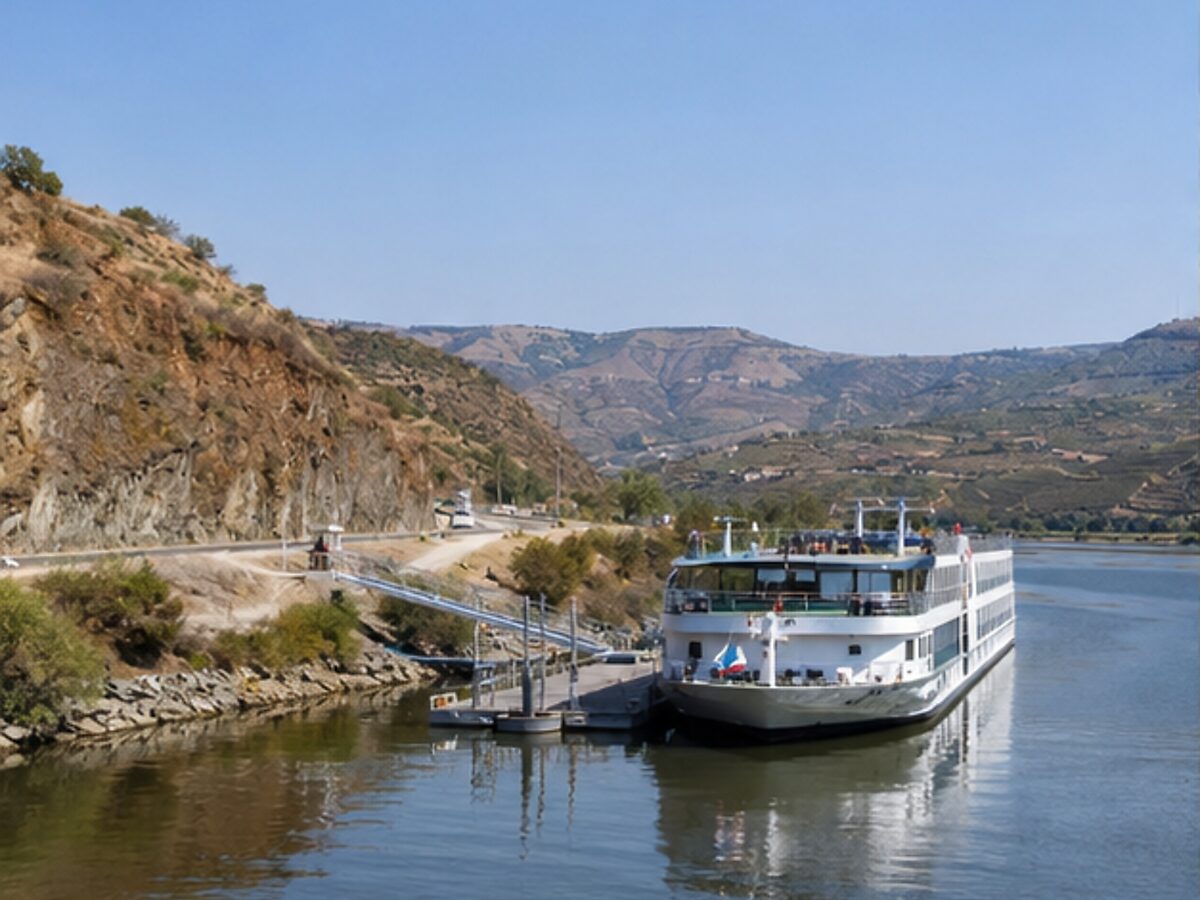
A quinta visit connects the terraces outside your cabin with the work of growing, harvesting, fermenting, aging, and selling wine. Some estates are active producers with historic cellars, while others have purpose-built visitor centers and a more polished route.
Neither format is inherently more authentic, but they offer different experiences. Ask what spaces the tour includes, how much walking is involved, whether the tasting is seated, and whether production work will actually be visible.
Working estates often have gravel, steep drives, cellar thresholds, uneven floors, and steps between levels. Travelers with mobility needs should request the exact accessible route, not merely ask whether the winery welcomes wheelchairs.
Tasting pours add up quickly across a cruise with wine at lunch and dinner. Drink water, eat, and remember that buying a bottle is optional even after a generous presentation.
Port and Douro wines use protected names and rules overseen by the Instituto dos Vinhos do Douro e do Porto. Look for clear labeling and producer information instead of choosing by souvenir packaging alone.
The Alto Douro Wine Region
UNESCO inscribed the Alto Douro Wine Region as a cultural landscape shaped by a long tradition of viticulture. The designation recognizes the interaction between people and difficult terrain, not a landscape that has remained untouched.
Terraces, walls, villages, roads, estates, and vegetation reveal different periods of adaptation. Listen for the difference between older narrow terraces, later mechanized layouts, and contemporary conservation rather than treating every slope as one ancient design.
The valley is beautiful because it is worked, and harvest can alter visitor access. Respect crews, equipment, and private land when walking near vineyards.
Pocinho and the Côa Valley
Pocinho lies farther upstream on the Portuguese rail line and can serve as a road gateway toward the Côa Valley. River itineraries more often use coaches from another landing than present Pocinho as a long independent port call.
The Côa Valley is internationally important for prehistoric rock art, with protected open-air sites reached through controlled guided visits. The Côa Museum provides the essential context and does not make every engraved outcrop freely accessible.
Book the correct visit through Côa Parque and follow restrictions on touching, lighting, and photography. Heat and rough terrain can affect an outdoor site tour, while the museum itself offers a more controlled experience.
Do not attempt to assemble a same-day taxi to a remote rock-art site without a reservation. The visitor capacity, guide, vehicle, and site access are part of the protection system.
Barca d’Alva
Barca d’Alva is the last Portuguese river landing before the Spanish border zone used by many itineraries. It is a quiet staging point with limited independent sightseeing rather than a town designed to occupy hundreds of passengers.
Some lines begin the Salamanca excursion from here, while others proceed to or use Vega de Terrón. The ship may sail or reposition while passengers travel by coach, so declining an excursion requires a direct conversation with reception.
Barca d’Alva and Vega de Terrón look close on the river but are not interchangeable road addresses. Border crossings and bridge locations can make the drive between them much longer than the water distance implies.
Vega de Terrón
Vega de Terrón is a river landing on the Spanish side, built to connect ships with coaches rather than offer a full town visit. If you stay near the berth, expect quiet river scenery and very limited facilities.
This is the point where timekeeping becomes particularly important. Mainland Spain is normally one hour ahead of mainland Portugal, while the ship may keep one chosen time to simplify operations.
Never change a watch based only on the flag at the landing. Follow the ship’s written time and ask staff how the Salamanca return is stated.
Carry the identity document required by the line for crossing into Spain, even though both countries participate in Schengen arrangements. Temporary controls and operator procedures can still require documents.
The Salamanca excursion
Salamanca is a magnificent university city whose historic center is recognized by UNESCO. Plaza Mayor, the old and new cathedrals, university buildings, warm sandstone, and dense streets easily justify a full day once you are there.
The decision is about the journey, not the quality of the city. The river landing sits far from Salamanca, and a round-trip consumes several hours on a coach before guided walking, lunch, and free time begin.
A line excursion is the safest version because the ship and coach coordinate the border, timing, and reboarding point. An independent driver should be booked by name, know the vessel’s next location, and provide a return far earlier than the minimum deadline.
Ask how much free time the tour includes, where restrooms are available, and whether lunch is part of the schedule. A passenger who struggles with coach journeys or long walking blocks may prefer the Côa Valley or a quieter river day.
Salamanca deserves attention beyond a square and cathedral facade. If the excursion offers only a breathless loop, consider returning on a land trip rather than treating the longest bus day as mandatory.
Locks and dams shape the itinerary
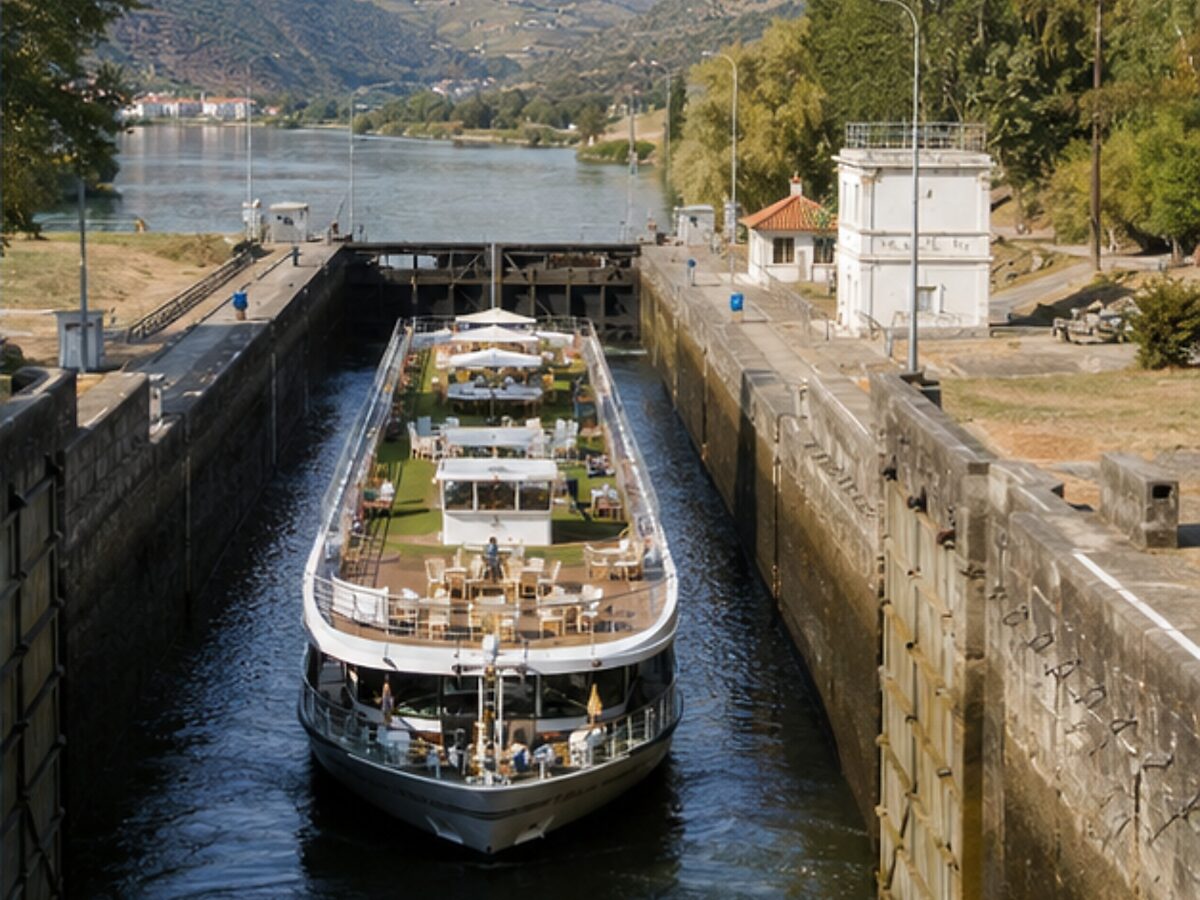
The navigable Douro depends on a chain of dams and locks that turned a once-dangerous river into a controlled shipping route. Lock schedules, maintenance, river flow, wind, and traffic influence when a vessel can move between reaches.
A lock passage is part of the attraction, especially when the chamber walls rise beside the ship. Follow crew instructions, keep hands and cameras inside railings, and never lean over near moving structures or wet decks.
Delays can force a coach to meet the ship at a different landing or compress an excursion. Listen to the cruise director’s operational update rather than assuming the printed program has failed.
High water, low water, and route changes
Sustained rain can raise flow and affect safe navigation, while drought and operational restrictions can also disrupt a river schedule. The exact threshold depends on the location, vessel, dam system, and port authority decision.
The Douro is isolated from Europe’s interconnected Rhine and Danube river system, so a ship cannot casually relocate from another river when capacity changes. When a section becomes impassable, the operator’s response is usually altered sailing, coaches, hotel arrangements, or a modified itinerary.
Read the contract and travel updates for your specific line. A river cruise is a transportation product operating in nature, and no company can guarantee that every kilometer will be sailed.
Travel insurance should cover the risks that matter to you, but policy language differs sharply. Ask the insurer how itinerary changes, missed ports, and trip interruption are treated before purchase.
Using the Douro railway independently
Portugal’s rail line follows sections of the river through Régua, Pinhão, and onward toward Pocinho, offering wonderful views and a useful alternative perspective. It is still a scheduled railway, not a hop-on attraction timed to your ship.
Check the official CP timetable for the exact date and direction, including engineering work and replacement transport. Verify where the ship will be when you return because it may have sailed to another port.
Buy the correct ticket before boarding when required and validate it according to current rules. Keep a conservative backup rather than relying on the final train that can possibly reach the ship.
Accessibility and mobility
Douro ships and quays can be challenging even before an excursion begins. Rafting may require crossing another vessel, and gangway angles change with water level and berth arrangement.
Some ships have elevators that do not reach the sun deck, while others have no passenger elevator. Ask about the named vessel, cabin deck, restaurant access, and emergency procedures before booking.
Régua and Pinhão offer relatively level riverfront sections, but towns and vineyard roads climb quickly. Lamego’s famous stairway, estate gravel, cellar thresholds, and historic Salamanca paving all add separate barriers.
Motorcoaches may have steep steps and no lift, even when the attraction offers an accessible entrance. Request the full route from cabin to coach to venue, including restrooms and the possibility of a changed reboarding port.
A river line may carry a folding wheelchair while refusing powered scooters for size or safety reasons. Written confirmation from the operator is more useful than a general travel-agent assurance.
Weather and what to wear
The Douro’s inland valley can be much hotter than coastal Porto, especially in July and August. Exposed terraces, stone towns, and coach parking areas intensify the heat, while shade may be scarce.
Spring and fall often offer gentler walking conditions, but rain, cool mornings, and sudden heat remain possible. Dress in light layers, carry sun protection and water, and use shoes with grip for stone and cellar floors.
Wildfire and smoke can affect roads, air quality, and excursions during hot, dry periods. Follow Portuguese and Spanish civil-protection instructions and accept route changes without attempting to bypass a closure.
Autumn harvest brings energy to the valley but also working vehicles, busy estates, and altered tours. Stay clear of equipment and never enter production areas unless guided.
Money, language, and connectivity
Portugal and Spain both use the euro, and cards are widely accepted at established museums, wineries, and restaurants. Carry modest cash for small cafes, tips where appropriate, or a terminal failure in a village.
Portuguese and Spanish are distinct languages. A polite greeting in the local language is appreciated, and speaking louder in one does not turn it into the other.
Mobile coverage can weaken between steep valley slopes, inside cellars, and near remote landings. Download maps, tickets, and the ship contact before leaving onboard wireless access.
Save the name of the next berth in writing. A driver needs a precise place, not a ship name that may be shared across operators or translated unpredictably.
Three ways to pace the river
A gentle itinerary
Take one included excursion from Régua, walk Pinhão independently, and remain near the river at the border. This protects energy for scenery, locks, meals, and evening programs.
A wine-focused itinerary
Choose estates with different styles, pairing one producing quinta with the Douro Museum or IVDP interpretation. Avoid stacking tastings until every terrace and cellar begins to blur into the same story.
A culture-focused itinerary
Prioritize Lamego, Casa de Mateus or the Côa Valley, and Salamanca according to your tolerance for coaches. Each deserves space, so do not measure value by the number of distant landmarks collected.
Quick answers
Can I walk into Régua and Pinhão?
Usually yes, because both have riverfront landings close to their centers. The exact quay and any rafting arrangement still affect the first steps ashore.
Is Vega de Terrón a town?
It functions primarily as a Spanish river landing and coach gateway. Passengers declining the excursion should expect limited independent activity.
Is Salamanca worth the coach ride?
Yes for travelers who value architecture, history, and university cities and tolerate a long road day. It is not compulsory, and the river or Côa Valley may suit others better.
Are Barca d’Alva and Vega de Terrón the same port?
No, one is in Portugal and the other is in Spain. Their closeness on the river does not make them the same road pickup point.
Can low or high water change the cruise?
Yes, along with lock maintenance, wind, traffic, and other operational limits. The line may change sailing, coaches, ports, or hotel arrangements.
My last word
The Douro is at its best when you stop asking every quay to entertain you. The river, terraces, locks, farms, and changing light are not empty hours between ports; they are the reason the ports exist.
Choose excursions for depth, verify the moving reboarding point, and keep the upstream bus day honest. A slow afternoon in Pinhão with the ship still in sight can be more memorable than one more distant palace reached at coach speed.
How this guide was researched: No firsthand Douro river cruise is claimed. This guide was checked September 12, 2026 against current official information from APDL, the Douro Museum, Casa de Mateus, the Instituto dos Vinhos do Douro e do Porto, Côa Parque, and the UNESCO World Heritage Centre; berths, rafting, locks, rail schedules, coach routes, attraction access, border procedures, and weather can change, so confirm every time-sensitive detail before leaving the ship.