Vega de Terrón and Salamanca River Cruise Guide
Vega de Terrón is a river quay, not a destination town with a café-lined waterfront. Its value to most cruise travelers is the road connection to Salamanca, one of Spain’s great historic university cities.
That makes this a very different Douro stop from Porto, Régua, or Pinhão. The ship brings you to the Spanish side of the border, then a coach usually does the heavy lifting for the main day ashore.
My quick take
I would book the organized Salamanca transfer unless I had a confirmed private driver and a generous schedule. The long ride and isolated quay leave little room for casual improvisation.
Salamanca is worth the journey, but you need realistic expectations about how much time remains after the road transfer. Pick a compact set of sights, protect the meeting time, and resist the urge to turn free time into a race.
Quick Facts
- Port: Vega de Terrón river quay near La Fregeneda in western Spain.
- Main excursion: Salamanca, reached by a substantial motorcoach transfer.
- Dock area: Rural reception and parking facilities rather than a walkable town center.
- Currency: Euro in both Spain and Portugal.
- Local language: Spanish at Vega de Terrón and in Salamanca.
- Time caution: Spain is one hour ahead of mainland Portugal, but always follow the ship’s stated time.
- Alternative activity: Camino de Hierro, only with advance tickets and a schedule that fits the ship.
- Emergency number: Call 112 in Spain.
What the Vega de Terrón quay is really like
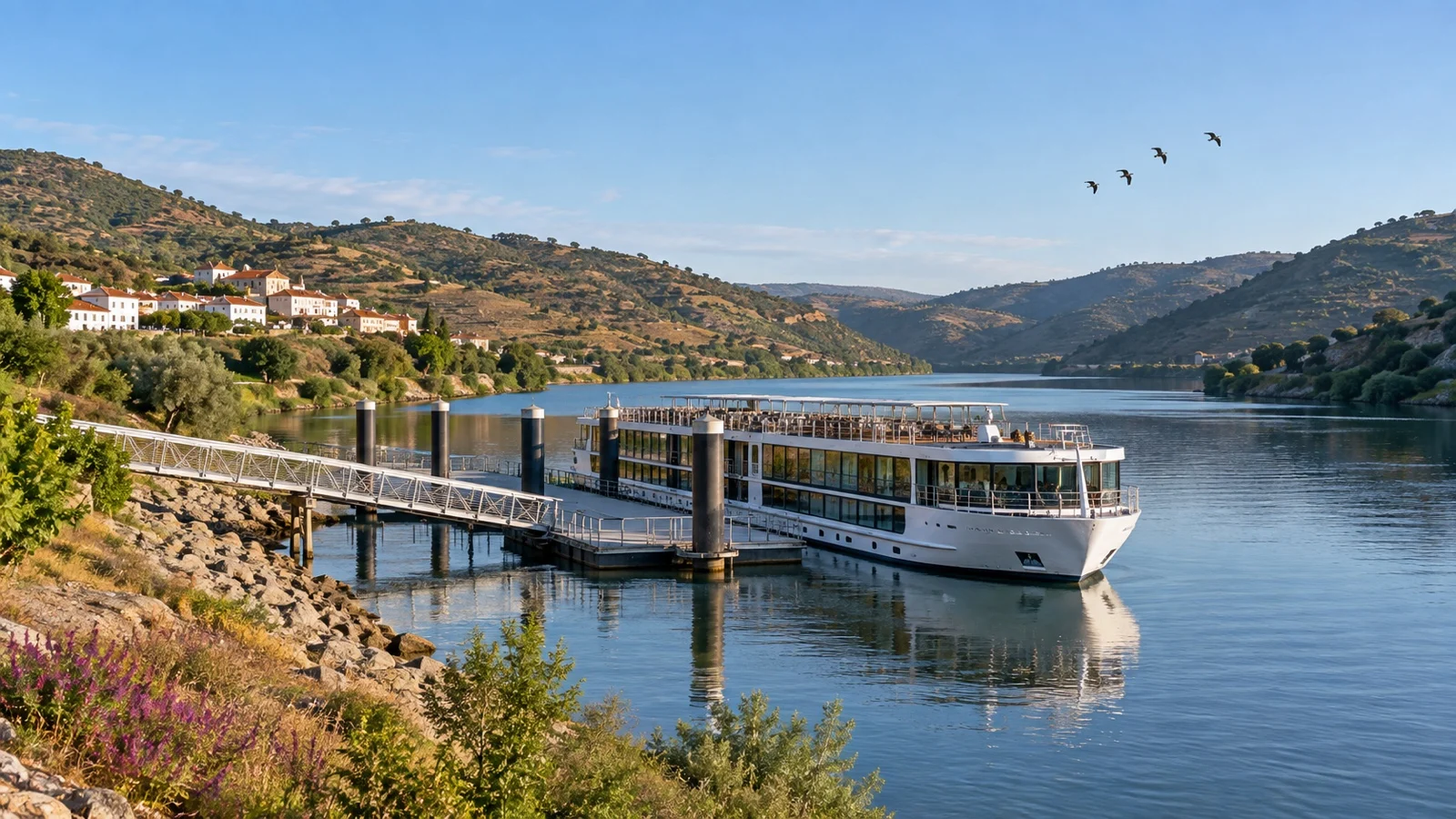
The official Camino de Hierro information identifies its visitor reception center at the Vega Terrón river quay. It also describes this as the only river quay in Castilla y León, which is a useful clue to how isolated the setting feels.
When your ship berths locally, expect a direct gangway to the quay rather than a conventional tender operation. The exact berth, gangway angle, and coach meeting point remain daily operational details, so check the ship’s announcement before leaving your cabin.
Do not count on the quay to provide the services of a town center. Eat, use the restroom, fill your water bottle, and collect medication or documents before joining the excursion group.
This is also not a place where I would expect to find a taxi at the last minute. Any independent transportation should be booked and reconfirmed in advance, with the driver given the precise meeting point and ship deadline.
The transfer to Salamanca
Salamanca is well inland from the river, so the coach ride takes a meaningful share of the port day. Ask your cruise line for the scheduled drive time on your sailing because traffic, route, rest stops, and the day’s parking plan can all affect it.
Use the journey as recovery time rather than arriving frustrated that sightseeing did not start at the gangway. The road crosses a sparsely populated border landscape before reaching the busier approaches to Salamanca.
The coach from Vega de Terrón to Salamanca stays within Spain. Your ship may have crossed between Portugal and Spain on the river, which is why border and clock questions can feel more confusing than the road trip itself.
Carry the identification required by your cruise line even though routine controls may not occur. A traveler should never leave a passport or required document behind based only on an assumption about the Schengen Area.
The time-zone trap
Mainland Spain is one hour ahead of mainland Portugal. Phones can change automatically near the border, while a cruise line may keep its own published ship time for operational clarity.
The only safe deadline is the one announced by the ship and excursion leader. Write it down with the time standard attached, and do not let a phone setting overrule the crew.
Set a separate meeting alarm before free time begins in Salamanca. A clear label such as coach meeting, ship time is more useful than an unlabeled alarm when two clocks are competing for attention.
Why Salamanca is worth the ride
The Old City of Salamanca has been on the UNESCO World Heritage List since 1988. UNESCO highlights its Romanesque, Gothic, Renaissance, and Baroque monuments, with the university and Plaza Mayor central to the city’s identity.
The historic core is compact enough for a strong guided walk, but dense enough that a short visit will never cover everything. I would rather enjoy four nearby landmarks properly than sprint between eight doors without remembering what was inside.
Salamanca’s warm colored stone gives the center a golden appearance in strong light. The visual unity helps even a brief visit feel coherent, rather than like a collection of unrelated monuments.
Plaza Mayor
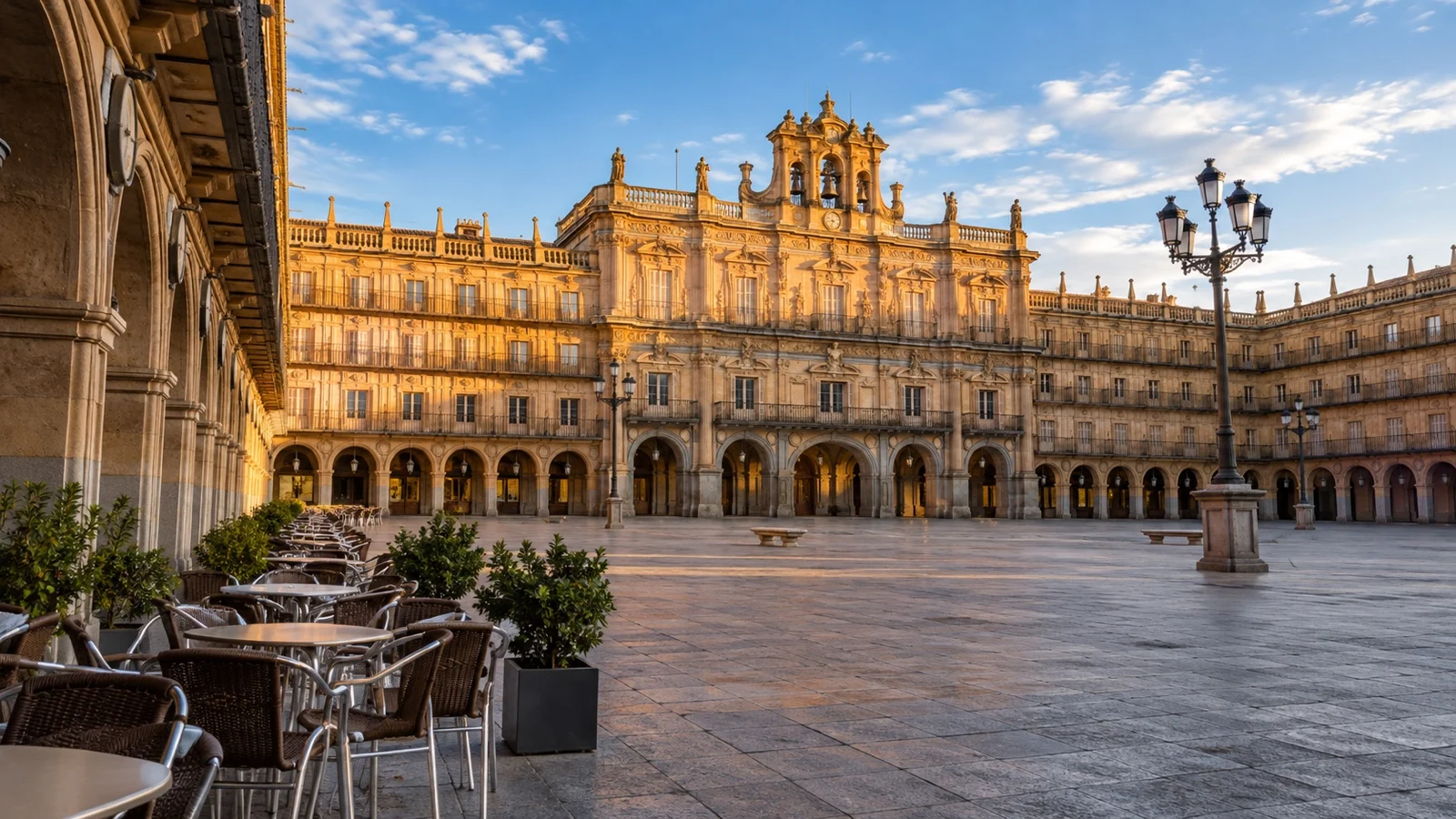
Plaza Mayor is the natural anchor for a short visit and an easy place to understand the city’s social rhythm. UNESCO calls particular attention to its galleries and arcades, while Spain’s official tourism site describes it as Salamanca’s main meeting point.
Do not spend all your free time at a terrace unless that is exactly what you want from the day. The square is beautiful, but the university, cathedrals, and Casa de las Conchas sit close enough to justify a compact walking loop.
The University of Salamanca
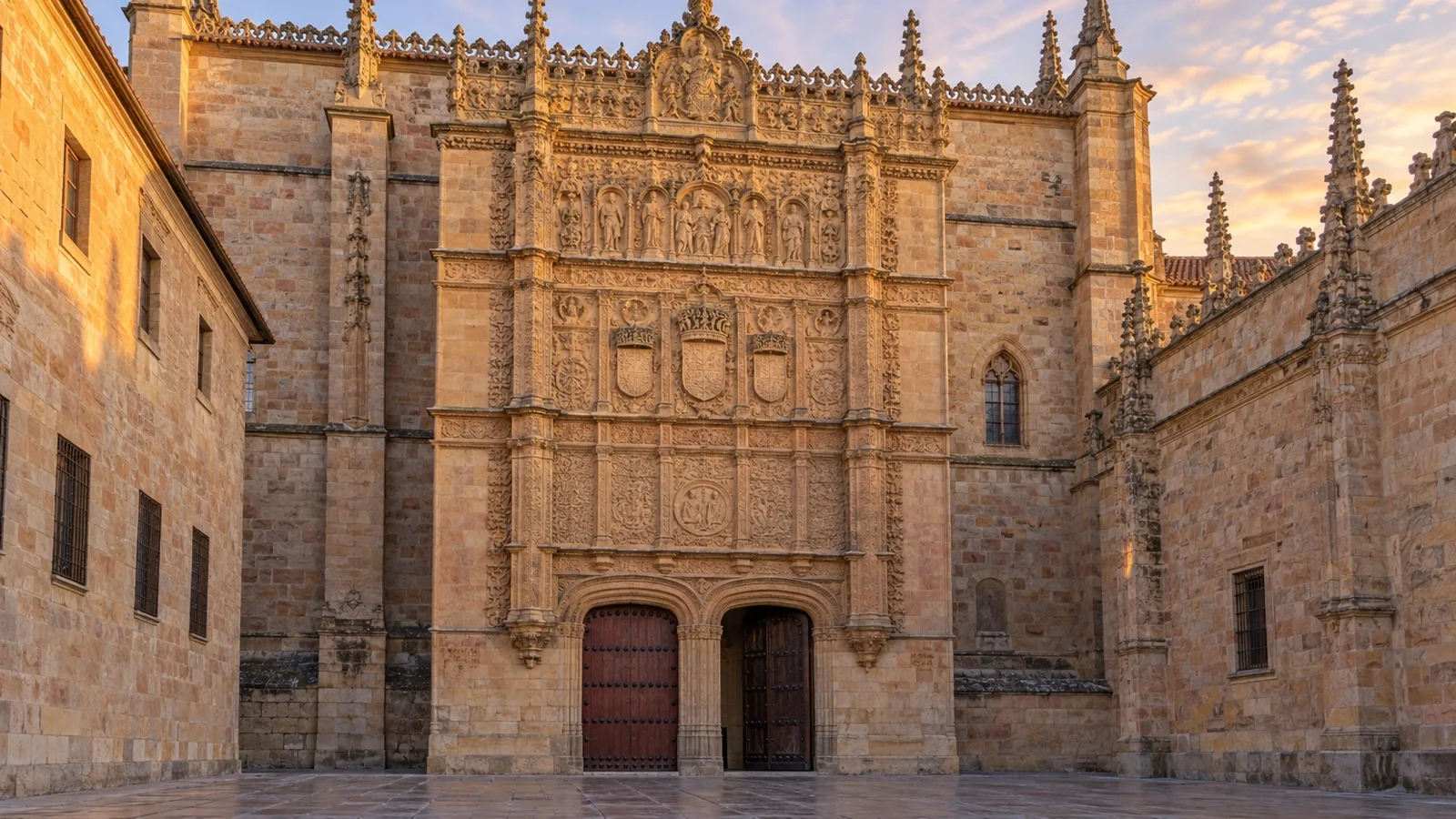
The university is one of the oldest in Europe and the defining institution of the historic city. Its ornate façade is famous for a tiny carved frog that visitors search for among the stone decoration.
The frog hunt is fun, but the building’s greater story is the role of scholarship in shaping Salamanca over centuries. If your guide offers a concise explanation of the façade and university quarter, stay for it before wandering off for photos.
Interior access, lines, and academic activity can affect what a short excursion sees. Treat the exterior as the dependable highlight and any interior visit as something to confirm on the day’s schedule.
The Old and New Cathedrals
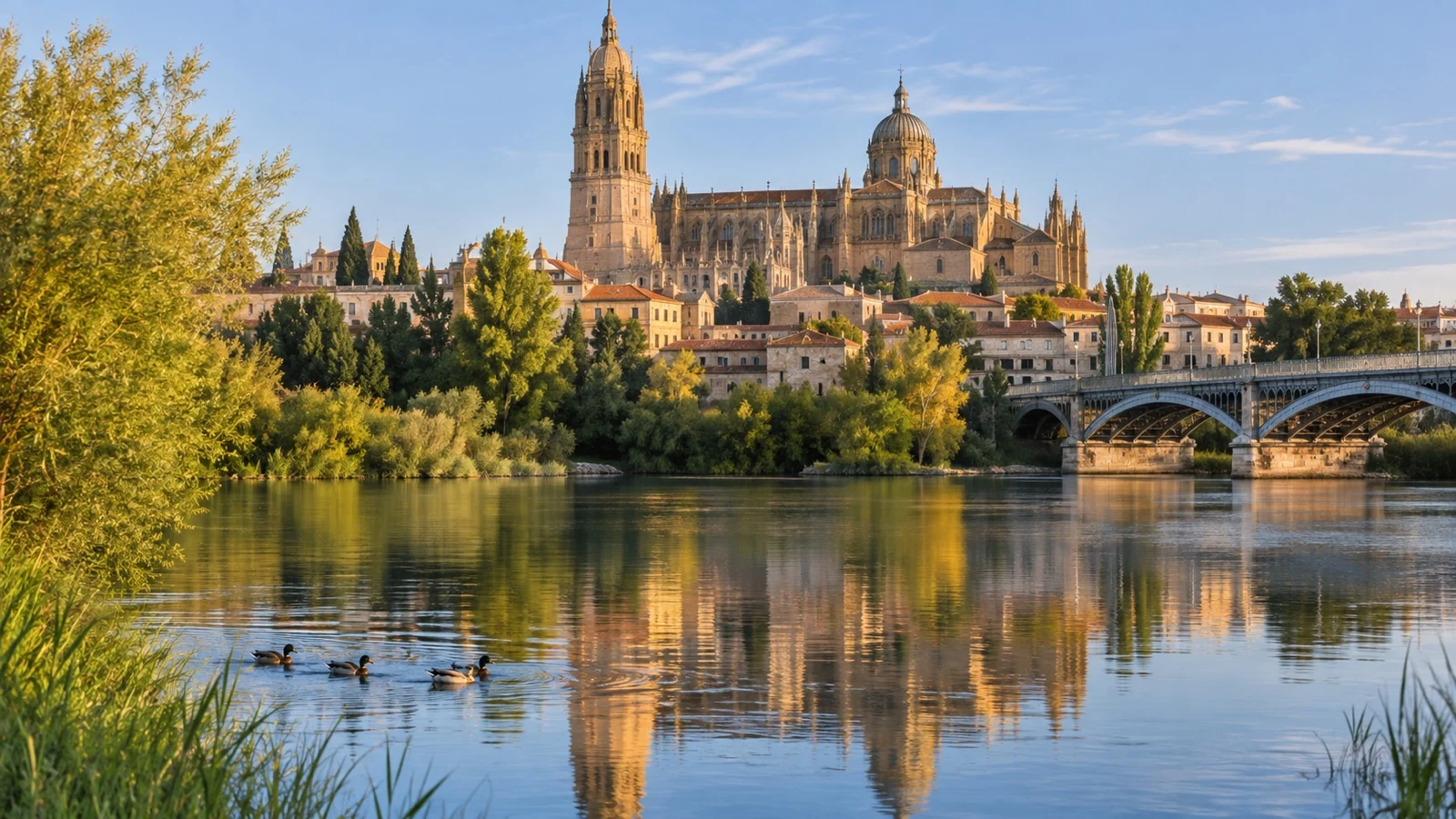
Salamanca’s two cathedrals stand together, creating one of the city’s most unusual monumental complexes. The contrast between older Romanesque fabric and the larger later cathedral makes the site useful even when time permits only an exterior explanation.
Tower routes can add memorable views, but they also add stairs, queues, and a fixed amount of time. I would attempt a climb only if the excursion leader confirms that it fits comfortably before the coach meeting.
The official tourism site also points visitors toward the modern astronaut carving on the New Cathedral’s Puerta de Ramos. It is a lighthearted detail, though the broader architecture deserves more attention than a single scavenger hunt.
Casa de las Conchas and a compact walking loop
Casa de las Conchas is instantly recognizable by the carved shells across its façade. Its position between major sights makes it a practical stop on a route linking Plaza Mayor, the university quarter, and the cathedrals.
A sensible short loop begins at Plaza Mayor, continues toward Casa de las Conchas and the university, then reaches the cathedral complex before returning. Confirm the final meeting point first because some tours end in a different square from where the guided walk began.
Food and free time in Salamanca
Spain’s official tourism site highlights Guijuelo ham, regional cured meats, and hornazo, a savory filled pastry. These are practical local tastes for a short stop because you can order quickly or buy something to take away when permitted.
Plaza Mayor is the simplest place to find a café, but convenience may matter more than hunting for the perfect local table. Check how long you actually have before ordering a meal that turns free time into a clock watch.
Carry a card and a small amount of euros. Spain and Portugal both use the euro, so crossing the river border does not require a currency exchange.
Ship excursion or independent visit
The ship excursion is the sensible choice for most travelers because it connects an isolated quay with a city far inland. It also ties the return coach to the cruise operation if ordinary traffic delays affect the group.
A private driver can work for travelers who want more control, but only with careful advance planning. Confirm the vehicle, pickup point, travel time, parking plan, driver contact, cancellation terms, and a conservative return target.
Public transportation is not a practical foundation for a same-day cruise visit from this quay. The problem is not reaching Salamanca in theory, but building a reliable round trip around a fixed departure in a remote area.
The Camino de Hierro alternative
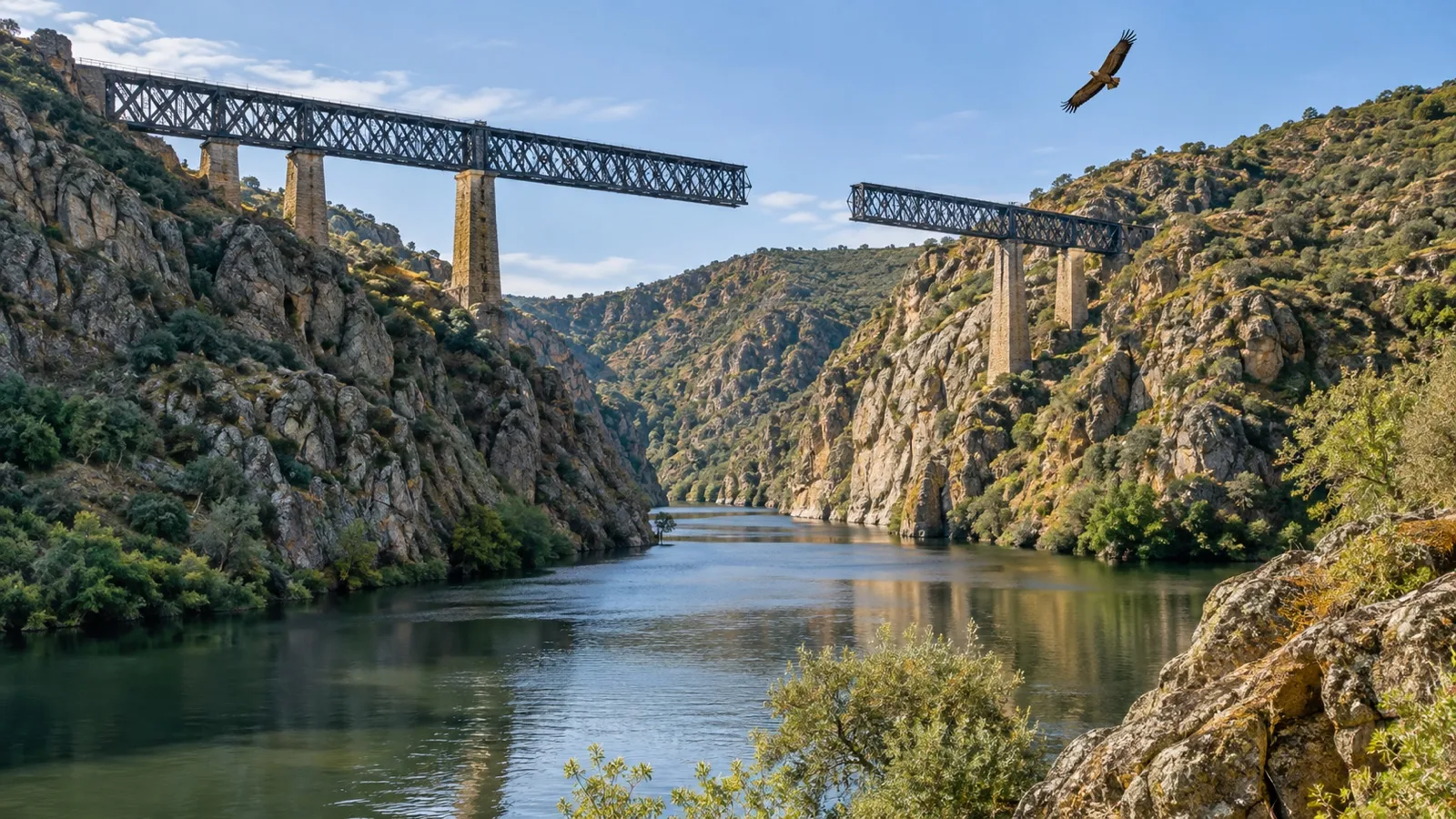
The Camino de Hierro begins operationally at the visitor reception center on the Vega Terrón quay. Ticket holders check in there, then the attraction’s transport takes them to the selected trail starting point.
The full route is 17 kilometers, or about 10.6 miles, and is listed at roughly four and a half hours. When Tunnel 3 is closed, the detour increases the route to 18 kilometers and adds elevation change.
The short route is 9 kilometers, or about 5.6 miles, and is listed at roughly three hours. Both versions carry a medium to high difficulty rating and use tunnels, bridges, and exposed sections of the former railway.
This is not a spontaneous stroll to begin after breakfast. You need an advance ticket, the correct check-in time, hiking equipment, ample water, and a schedule that returns comfortably before the ship’s deadline.
The official guidance specifically flags vertigo and claustrophobia as concerns. I would choose Salamanca instead if tunnel length, heights, heat, or a fixed hiking pace makes the route feel marginal.
Accessibility at the quay and in Salamanca
Ask the cruise line about the gangway slope and surface at the assigned berth because river levels can change the angle. Also confirm the distance from the ship to the coach and whether assistance is available.
In Salamanca, the historic center mixes pedestrian streets with old paving, slopes, thresholds, and crowded monument entrances. A coach tour labeled panoramic may involve less walking than a guided old city route, so read the activity description closely.
Travelers using wheelchairs or mobility devices should ask about coach steps, lift availability, device storage, accessible restrooms, and the route from parking to Plaza Mayor. These details can change by vehicle and tour departure.
The Camino de Hierro is not a substitute for an accessible city tour. Its distance, tunnels, bridges, uneven walking surface, and medium to high difficulty make it a serious hike.
Weather and comfort
The inland plateau around Salamanca can feel very different from the river valley. Summer sun can make the old city hot and exposed, while cooler seasons bring wind, cold mornings, and occasional rain.
Dress in light layers and take water from the ship. Shoes should handle polished stone, old paving, coach steps, and a full walking tour without becoming the thing you remember most.
For the Camino de Hierro, follow its stronger equipment guidance rather than ordinary city advice. The official route recommends abundant water, sun protection, food, and clothing and footwear appropriate for hiking.
Safety and emergencies
Spain’s general emergency number is 112. Save the excursion leader’s contact information separately because a nonmedical delay or lost meeting point should usually go through the tour team first.
Keep valuables secure in the busiest parts of Salamanca and pay attention when the group moves through narrow streets. The larger operational risk, however, is losing track of the coach time rather than facing an unusual local hazard.
Return timing without a close call
The return to Vega de Terrón is long enough that you cannot fix a late departure with a quick taxi ride. Be at the meeting point early, verify the correct coach, and tell the guide immediately if a companion is missing.
Independent travelers should set a return target with a substantial buffer before all aboard. That margin needs to cover city traffic, rural road delays, the final approach to the quay, and reboarding.
Photograph the coach number and meeting place before free time begins. A visual reference is faster than trying to translate a half-remembered square name under pressure.
How this stop fits a Douro cruise
Vega de Terrón usually appears near the eastern end of a Douro itinerary, after the vineyard landscapes and lock passages upstream from Porto. It provides a Spanish city day that contrasts sharply with the smaller Portuguese river towns.
Our Douro river cruise ports guide explains how these calls fit together. The guides to Régua and Pinhão show why the walk-off experience there is different from this coach-based stop.
The Douro locks and dams guide adds useful context for the engineering that makes navigation this far upriver possible. Seeing the route as a connected system makes Vega de Terrón feel less like an isolated endpoint.
Quick answers
Is there a town at Vega de Terrón?
No walkable town center sits at the quay. It is a rural transfer point with visitor reception and parking tied to local activities.
Should I take the ship excursion to Salamanca?
For most cruise travelers, yes. It solves the long round-trip and coordinates the return with the ship’s schedule.
How long is the ride?
Treat it as a substantial transfer and check the current excursion description for your sailing. Road conditions, stops, and city access can change the scheduled duration.
Can I hike the Camino de Hierro during the call?
Only if you have advance tickets and the fixed check-in and route duration fit the ship’s port time with a safe margin. The full and short routes are both rated medium to high difficulty.
Which time zone should I follow?
Follow the time printed or announced by the ship. Spain is one hour ahead of mainland Portugal, and automatic phone changes can create confusion near the border.
What should I see first in Salamanca?
Start with Plaza Mayor, then connect the university quarter and cathedral complex if time allows. Keep the route compact and confirm the coach meeting point before exploring.
The last word
Vega de Terrón makes sense when you stop expecting a port town and start planning for a gateway. Let the ship handle the long road to Salamanca, choose a few excellent city sights, and give the return clock more respect than your phone.
How this guide was researched: Unless a first-hand visit is explicitly identified above, this guide is based on independent research using official UNESCO, Spanish tourism, hiking route, government, and cruise information where available. Logistics and time-sensitive details were reviewed in September 2026 under our Editorial Policy.